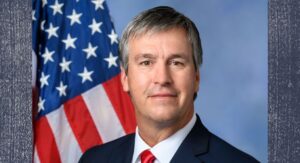
Terri Sewell honors Rosa Parks, urges passage of bill to honor her with federal holiday
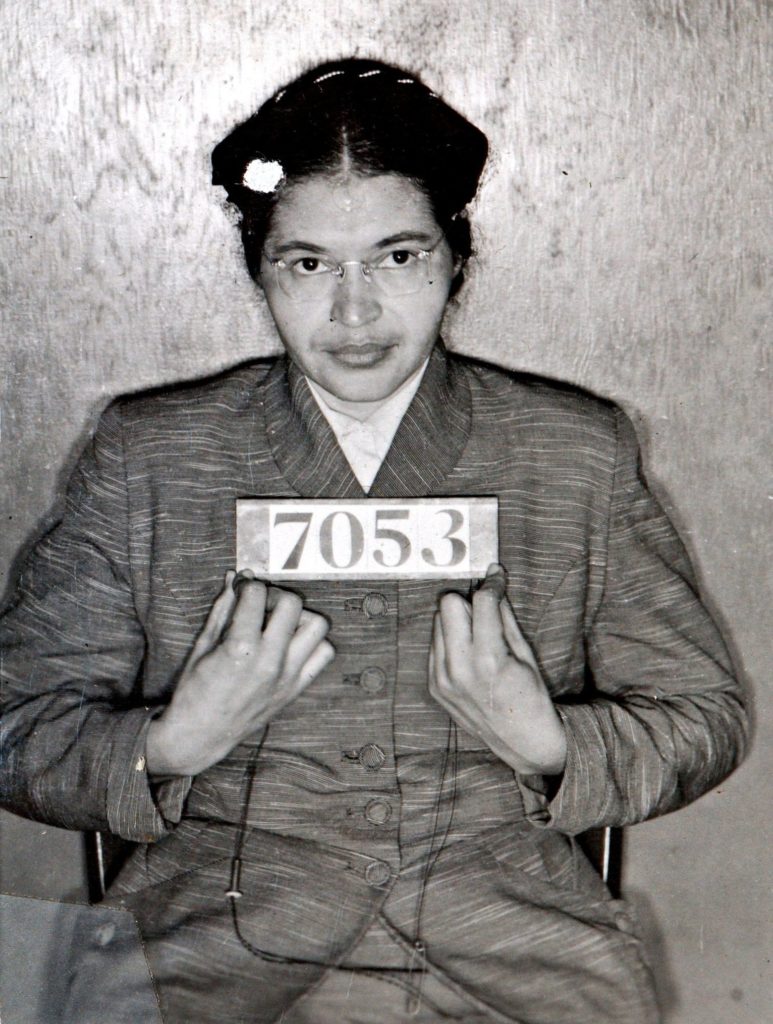
Today, Rep. Terri Sewell spoke on the Floor of the House of Representatives to commemorate the 67th anniversary of the arrest of Rosa Parks. Rosa Parks was arrested in Montgomery, Alabama when she refused to give up her seat on a city bus to a white man and was charged with violating Montgomery’s segregation law. Her arrest inspired the Montgomery Bus boycott – a significant turning point in the civil rights movement. She was awarded the Congressional Gold Medal, and Congress recognized Rosa Parks as the “first lady of civil rights.” On Twitter, Sewell wrote, “On this day in 1955, #RosaParks refused to give up her seat. Her dignified courage sparked the beginning of the Montgomery Bus Boycott and changed the very fabric of our nation. May we never forget the power of ordinary Americans to achieve extraordinary social change.” Rep. Sewell stated, “On this day, December 1st, in 1955, in Montgomery, Alabama, Rosa Parks refused to give up her seat, taking a bold stand against Montgomery’s segregated bus system. Her dignified courage sparked the beginning of the Montgomery bus boycott and changed the very fabric of our nation.” Sewell urged legislators to pass H.R. 5111, the Rosa Parks Day Act. “As the Representative of Alabama’s 7th Congressional District, I am proud to be an original co-sponsor of H.R. 5111, the Rosa Parks Day Act, which would designate today, December 1st, as a federal holiday in her honor. This bill would ensure that her brave sacrifice will live on in American history forever, and I urge my colleagues to sign on,” Sewell said. In 2021, Tennessee Rep. Jim Cooper, along with Reps. Sewell and Joyce Beatty introduced the Rosa Parks Day Act, a bill to honor Parks by designating a new federal holiday. California and Missouri recognize Rosa Parks Day on her birthday, February 4. Ohio and Oregon celebrate the day she was arrested, December 1.
High court’s Alabama ruling sparks alarm over voting rights
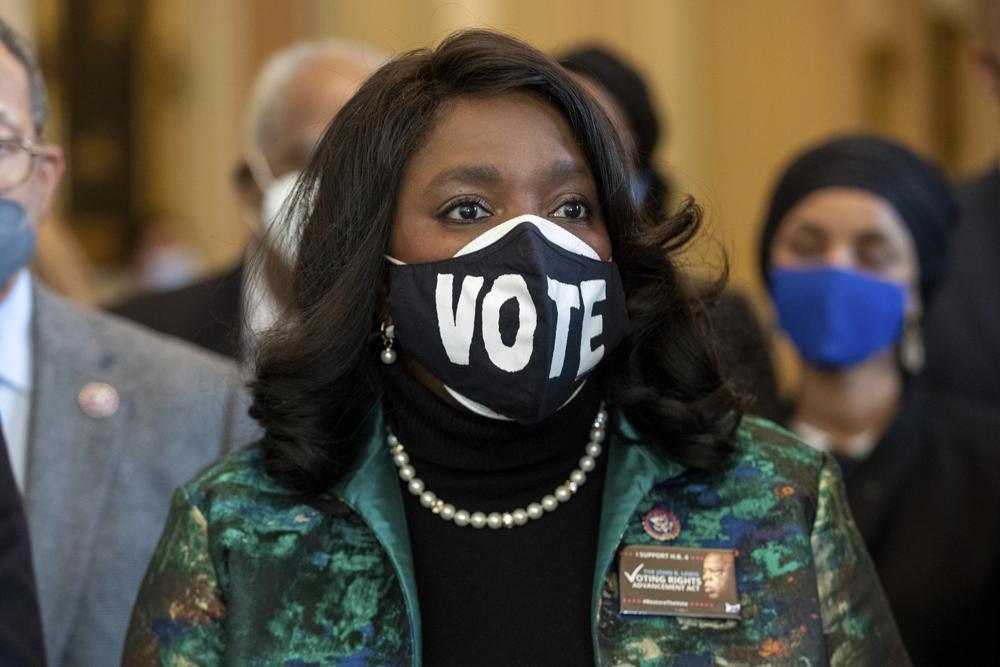
The Supreme Court’s decision to halt efforts to create a second mostly Black congressional district in Alabama for the 2022 election sparked fresh warnings Tuesday that the court is becoming too politicized, eroding the Voting Rights Act and reviving the need for Congress to intervene. The Supreme Court’s conservative majority put on hold a lower court ruling that Alabama must draw new congressional districts to increase Black voting power. Civil rights groups had argued that the state, with its “sordid record” of racial discrimination, drew new maps by “packing” Black voters into one single district and “cracking” Black voters from other districts in ways that dilute their electoral power. Black voters are 26% of Alabama’s electorate. In its 5-4 decision late Monday, the Supreme Court said it would review the case in full, a future legal showdown in the months to come that voting advocates fear could further gut the protections in the landmark Civil Rights-era law. It’s “the latest example of the Supreme Court hacking away at the protections of the voting rights act of 1965,” said Sen. Dick Durbin, D-Ill., chairman of the Judiciary Committee. “Congress must act. We must restore the Voting Rights Act.” The outcome all but ensures Alabama will continue to send mostly white Republicans to Washington after this fall’s midterm elections and applies new pressure on Congress to shore up voter protections after a broader elections bill collapsed last month. And the decision shows the growing power of the high court’s conservative majority as President Joe Biden is under his own pressures to name a liberal nominee to replace retiring Justice Stephen Breyer. Rep. Terri Sewell, the only Black representative from Alabama, said the court’s decision underscores the need for Congress to pass her bill, the John R. Lewis Voting Rights Advancement Act, to update and ensure the law’s historic protections. “Black Alabamians deserve nothing less,” Sewell said in a statement. The case out of Alabama is one of the most important legal tests of the new congressional maps stemming from the 2020 census count. It comes in the aftermath of court decisions that have widely been viewed as chiseling away at race-based protections of the Voting Rights Act. Alabama and other states with a known history of voting rights violations were no longer under federal oversight, or “preclearance,” from the Justice Department for changes to their election practices after the court, in its 2013 Shelby v. Holder decision, struck down the bill’s formula as outdated. As states nationwide adjust their congressional districts to fit population and demographic data, Alabama’s Republican-led Legislature drew up new maps last fall that were immediately challenged by civil rights groups on behalf of Black voters in the state. Late last month, a three-judge lower court, which includes two judges appointed by former President Donald Trump, had ruled that the state had probably violated the federal Voting Rights Act by diluting the political power of Black voters. This finding was rooted, in part, in the fact that the state did not create a second district in which Black voters made up a majority or close to it. Given that more than one person in four in Alabama is Black, the plaintiffs had argued the single Black district is far less than one person, one vote. “Black voters have less opportunity than other Alabamians to elect candidates of their choice to Congress,” the three-judge panel wrote in the 225-page ruling. The lower court gave the Alabama legislature until Friday to come up with a remedial plan. Late Monday, the Supreme Court, after an appeal from Alabama, issued a stay. Justices Brett Kavanaugh and Samuel Alito, part of the conservative majority, said the lower court’s order for a new map came too close to the 2022 election. Chief Justice John Roberts joined his three more liberal colleagues in dissent. “It’s just a really disturbing ruling,” said Sen. Cory Booker, D-N.J., a member of the Judiciary Committee, who called the Supreme Court’s decision “a setback to racial equity, to ideals of one person, one vote.” Rep. Joyce Beatty, D-Ohio, and the chair of the Congressional Black Caucus said the decision “hits at the guts of voting rights.” She told The Associated Press: “We’re afraid of what will happen from Alabama to Texas to Florida and even to the great state of Ohio.” White House Press Secretary Jen Psaki said the court decision exposes the need for Congress to legislate to protect voting rights. The erosion of those rights is “exactly what the Voting Rights Act is in place to prevent.” Critics went beyond assailing the decision at hand to assert that the court has become political. “I know the court likes to say it’s not partisan, that it’s apolitical, but this seems to be a very political decision,” said Democratic Sen. Chris Van Hollen of Maryland. Rep. Hakeem Jeffries, D-N.Y., tweeted that the court majority has “zero legitimacy.” Rep. Barbara Lee, D-Calif., tweeted that the court’s action was “Jim Crow 2.0.” Alabama Republicans welcomed the court’s decision. “It is great news,” said Rep. Mo Brooks, who is running for the GOP nomination for Senate. He called the lower court ruling an effort to “usurp” the decisions made by the state’s legislature. The justices will, at some later date, decide whether the map produced by the state violates the voting rights law, a case that could call into question “decades of this Court’s precedent” about Section 2 of the act, Justice Elena Kagan wrote in dissent. Section 2 prohibits racial and other discrimination in voting procedures. Voting advocates see the arguments ahead as a showdown over voting rights they say are being slowly but methodically altered by the Roberts court. The Supreme Court in the Shelby decision did away with the preclearance formula under Section 5 of the Voting Rights Act. And last summer, the conservative majority in Bronvich vs. the Democratic National Committee upheld voting limits in an Arizona case concerning early ballots that a lower court had found discriminatory under Section 2. With the Alabama case, the court
Terri Sewell supports bill to honor Rosa Parks with a new federal holiday
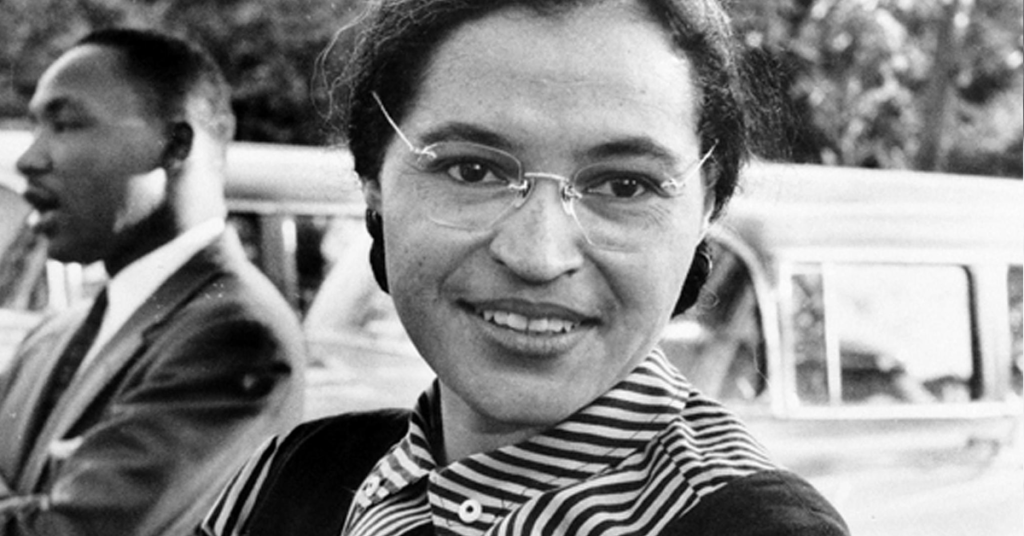
Tennessee Rep. Jim Cooper along with Reps. Terri Sewell and Joyce Beatty introduced the Rosa Parks Day Act, a bill to honor civil rights leader Rosa Parks by designating a new federal holiday. California and Missouri recognize Rosa Parks Day on her birthday, February 4. Ohio and Oregon celebrate on the day she was arrested, December 1. This act wants to make the holiday recognized in all states. Rosa Parks was arrested in Montgomery, Alabama when she refused to give up her seat on a city bus to a white man and was charged with violating Montgomery’s segregation law. Her arrest inspired the Montgomery Bus boycott – a major turning point in the civil rights movement. She was awarded the Congressional Gold Medal, and Congress recognized Rosa Parks as the “first lady of civil rights.” Cooper stated, “Nashville led the nonviolent Civil Rights Movement, but there may not have even been a movement were it not for the bravery of a young woman from Alabama named Rosa Parks. There is no more fitting or deserving person in American history to award the honor of a new national holiday than Rosa Parks.” “On December 1, 1955, in Montgomery, Alabama, Rosa Parks sat so that this nation could stand up for the values that our democracy holds so dear,” said Rep. Sewell. “Her quiet, dignified courage helped inspire a civil rights movement that changed this country for the better. As the U.S. Representative for Montgomery, I’m so proud to introduce the Rosa Parks Day Act to make December 1st a national holiday in her honor. Such a day will ensure the memory of her brave sacrifice lives on in America’s story for generations to come.” Beatty commented, “Through her willingness to sit, Rosa Parks stood up for what she believed in. As a state legislator, I was proud to lead the push to make the Buckeye State the first state to officially recognize Rosa Parks Day. It’s now time for us to come together as a nation to honor this American hero through a new national holiday.”
From toast of town to toxic: Mark Zuckerberg on outs with democrats
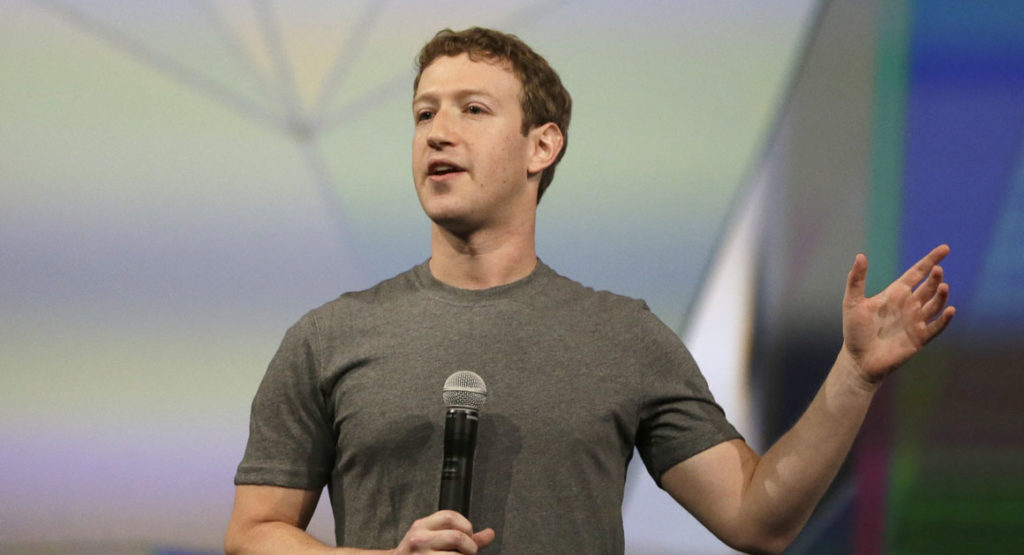
Mark Zuckerberg’s social network in Washington is shrinking. Bipartisan hostility against Facebook has been building for months, fueled by a series of privacy scandals, the site’s role in Russian meddling in the 2016 presidential campaign and accusations that Facebook crushes competitors. Now, with the 2020 elections approaching, Democrats especially are homing in on the conduct of the social media giant and its refusal to fact-check political ads and remove false ones. “When you’re the No. 1 monopoly, people are going to come after you,” says John Feehery, a veteran Republican communications strategist. The challenge for Democrats, as he sees it: “They’re facing a base that is very angry and restive. So they have to be much more aggressive in taking on corporations.” Zuckerberg enjoyed a cozy relationship with the Obama administration. But in the face of growing public outrage, the co-founder of the upstart born under the motto “Move fast and break things” is learning the art of smoothing over and piecing back together. His new strategy: a personal blitz featuring serial private meetings in Washington with key lawmakers of both parties and President Donald Trump; small, off-the-record dinners at his California home with conservative journalists and opinion makers; and the occasional public address or TV interview. Addressing criticisms from Democratic lawmakers and civil rights groups over Facebook’s track record on fighting discrimination, Zuckerberg and Chief Operating Officer Sheryl Sandberg planned to host a dinner Monday night with civil rights leaders. The two executives want to hear the leaders’ “direct perspective and feedback,” the company said. The Rev. Al Sharpton said last week that Zuckerberg would meet with him and others to discuss concerns such as Facebook’s handling of political messages. Misinformation on the platform can contribute to the suppression of voting by African Americans and other minorities, civil rights leaders say. Zuckerberg has become lobbyist-in-chief for a tech giant that has about 60 people officially playing that role. The company spent an estimated $12.6 million on federal influencing last year. The political ad issue hits close to home for Democrats. Facebook, as well as Twitter and Google, refused in September to remove a misleading video ad from Trump’s reelection campaign that targeted top-tier Democratic candidate Joe Biden. Sen. Elizabeth Warren, another top Democratic contender, chose to hit back by running her own ad and making it personal by falsely claiming that Zuckerberg had endorsed Trump for 2020. Warren, who has called for breaking up Facebook and other tech giants, acknowledged the ad’s deliberate falsity to make her point. Then came Zuckerberg’s speech last month at Georgetown University in which he promoted free expression as the foundation for Facebook’s refusal to take down content it deems newsworthy, even if the material violates company standards. The next week, during prickly questioning by Democratic lawmakers at a televised House hearing, Zuckerberg dug in on not fact-checking politicians’ speech and the handling of hate speech and potential incitements to violence. “This really is not about money,” Zuckerberg insisted. “It is important that people can see for themselves what politicians are saying.” Facebook says political advertising accounts for less than half of 1 percent of its total revenue. Separately from political advertising, Facebook has policies and improved technology that it says now enables it to more efficiently detect terrorist content in many languages. Following the mass shooting in New Zealand last spring, for example, Facebook now prohibits livestreaming by people who have violated rules covering organizations and individuals deemed dangerous and potentially violent. In the lambasting from Democrats, Rep. Joyce Beatty of Ohio, the vice chair of the Congressional Black Caucus, focused on Facebook’s track record on civil rights and diversity. She told Zuckerberg that he had “ruined the lives of many people, discriminated against them.” As part of a legal settlement with civil rights groups, Facebook changed its ad-targeting systems this year to prevent discrimination in housing, credit and employment ads. It previously had allowed such ads to be targeted to people based on age, sex or race, which is illegal. At some points, friendlier Republican members of the House Financial Services Committee asked Zuckerberg how he was holding up through the six-hour hearing. “I’m doing OK,” replied the 35-year-old co-founder, chairman and CEO. He’s one of the world’s richest individuals, with a net worth currently estimated at $71 billion. Summing up, Rep. Maxine Waters, the California Democrat who leads the committee, told Zuckerberg, “You have opened up a discussion about whether Facebook should be broken up.” A mandated breakup would be the worst-case scenario for Facebook and the other big tech companies. Facebook says splitting up large tech corporations would make the election system more vulnerable to interference because the companies wouldn’t be able to work together to prevent it. For Zuckerberg and the Democrats, “it may be a nasty divorce,” said James Thurber, a professor of government at American University who founded its Center for Congressional and Presidential Studies. “He clearly has taken a stand that’s really quite unpopular.” Thurber called Zuckerberg’s backstage celebrity approach to lobbying efforts “very dangerous.” “You’ve got to be very careful about that, if you think you can do it yourself,” he said. Rep. David Cicilline, a senior House Democrat who leads the Judiciary Committee’s investigation into the market dominance of big tech companies, is working on legislation that may target the profits made by Facebook from political ads it knows are false. The measure likely would also apply to social media rivals Twitter and Google. Last Wednesday, Twitter made the unexpected announcement that it will ban all political advertising from its service. “This is a good first step,” Cicilline tweeted. “Your move, Google/Facebook.” Zuckerberg’s quick riposte, during Facebook’s quarterly conference call on earnings, was to reaffirm the company’s commitment to the value of free speech, including for politicians. It’s a sharp reversal of fortune for Facebook from the days of the Obama administration, when the company was hailed as an exemplar of innovation and an engine of economic growth. Campaign money flowed to the