
Mo Brooks calls for Anthony Fauci’s termination in midst of controversial email release
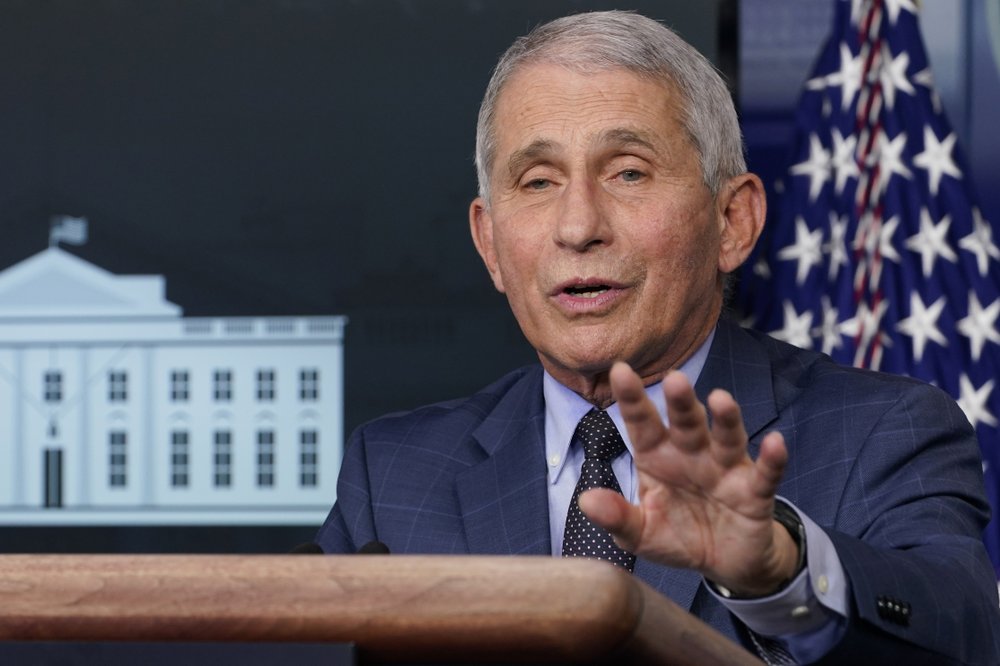
Dr. Anthony Fauci, arguably America’s most well-recognized health official in the battle against COVID-19, assumed a central role in political controversy following a newly released slough of last year’s emails, giving rise to concerns about COVID-19’s origin and the controversial scientific research U.S taxpayers have funded. Yesterday, Congressman Mo Brooks (AL-05) joined several of his colleagues in a news conference to discuss auditing the correspondence and financial statements of Dr. Fauci. Fauci is no stranger to the spotlight, as the immunologist was one of the world’s most frequently-cited scientists across all scientific journals from 1983 to 2002, in addition to the world’s 10th most-cited HIV/AIDS researcher from 1996-2006. He has advised seven Presidents and was awarded a Presidential Medal of Freedom by President George H.W. Bush in 2008 for his efforts on an AIDS relief program. Serving as director of the National Institute of Allergy and Infectious Diseases (NIAID) since 1984, Fauci is perhaps more widely recognized for leading the nation’s COVID-19 response as a White House coronavirus advisor during the Trump Administration. He continues to lead the nation’s pandemic response during his current role as chief medical advisor in the Biden Administration. However, Fauci’s consistently shifting narratives throughout the pandemic, in addition to frequent opposition towards President Donald Trump’s leadership, resulted in a sizable number of public critics, many of which included Trump White House officials. Peter Navarro, a Harvard-trained economist and China hawk who served as a top trade and economic policy advisor to President Trump, publicly criticized Dr. Fauci in a USA Today op-ed, outlining the many instances Fauci was mistaken during the pandemic. USA Today promptly attached a remorseful precursor to the article; an apologetic note addressed to readers for publishing any criticism of Fauci. One of the most notable examples Navarro specifies is the predictive memos he sent in January and February 2020, which grimly anticipated COVID-19 to be a deadly and impactful global pandemic. Senior officials shrugged off these warnings, including Fauci, due to Navarro’s hawkish views on China. “The lack of immune protection or an existing cure or vaccine would leave Americans defenseless in the case of a full-blown coronavirus outbreak on US soil,” Navarro’s January 29 memo to the National Security Council states. “The lack of protection elevates the risk of the coronavirus evolving into a full-blown pandemic, imperiling the lives of millions of Americans.” Weeks after Navarro’s warning was sent out, Fauci assured the media just how worried the American people should be about the pandemic when he expressed, “The danger of getting coronavirus now is just minusculely low,” Fauci stated. “As of today, on the 17th of February, the risk is really relatively low.” Since then, public criticism of Fauci continues to escalate as 3,000 pages of his emails from March and April 2020 were obtained under the Freedom of Information Act (FOIA) following a lawsuit filed by taxpayer watchdog group, the White Coast Waste Project. “Taxpayers have a right to know what the NIH knew about how its money was being spent at the Wuhan animal lab, and what NIH knew about a potential lab leak in late 2019 and early 2020,” stated Justin Goodman, vice president of advocacy and public policy at the White Coat Waste Project. “Transparency and accountability at home and abroad are critical in the quest to identify the origin of the COVID-19 pandemic in order to prevent another outbreak.” Fauci’s obtained emails point to the fact that he was indeed warned of the possibility that COVID-19 was engineered, a theory he remained adamantly opposed to throughout the pandemic. Kristian Andersen, the head of a viral genomics lab at Scripps Research in La Jolla, CA, emailed Fauci in February 2020 entertaining the possibility of COVID-19’s lab-based origin, “The unusual features of the virus make up a really small part of the genome (<0.1%) so one has to look really closely at all the sequences to see that some of the features (potentially) look engineered.” This week, Anderson addressed his involvement in these recently released emails, assuring that his newfound research discourages any lab-based scenarios while also claiming it is scientifically impossible to determine the origins of the pandemic, “As we stated in our article last March, it is currently impossible to prove or disprove specific hypotheses of SARS-CoV-2 origin.” Additionally, these emails raise questions surrounding the type of research U.S. taxpayers are funding. Under Fauci’s four-decade-long leadership, the NAIAD resides within the National Institute of Health (NIH), which allocates 80% of its federal funds to scientific research, including grants to foreign organizations. Fauci swore under oath that no taxpayer funds were used to fund research in Wuhan. However, in a later congressional hearing, he stated that the NIH earmarked $600,000 to study coronaviruses in Wuhan. NIH Director Dr. Francis Collins confirmed that $3.7 million in federal funds were sent to EcoHealth Alliance, a global nonprofit, of which $600,000 went to the Wuhan Institute of Virology (WIV). Fauci’s emails show a message received from the President of EcoHealth Alliance, Peter Daszak, thanking him for rejecting any lab-leak theories in April 2020. Daszak wrote to Fauci, “I just wanted to say a personal thank you on behalf of our staff and collaborators, for publicly standing up and stating that the scientific evidence supports a natural origin for COVID-19 from a bat-to-human spillover, not a lab release from the Wuhan Institute of Virology.” Daszak adds, “Your comments are brave, and coming from your trusted voice, will help dispel the myths being spun around the virus’ origins.” These concerns have led Congressional Republicans, including House Minority Leader Kevin McCarthy (R-CA), to call for Fauci’s dismissal from his role as NIAID director. Yesterday, Congressman Mo Brooks joined GOP lawmakers in a press conference to announce his support of the Fire Fauci Act. The bill would bring Dr. Fauci’s taxpayer salary to $0 and will require the Senate to confirm another individual to fill his position. “Dr. Fauci is consistent in just one thing and that is inconsistency,” Brooks said. “Why
Mitch McConnell blames Donald Trump, ‘provoked’ Capitol siege, mob was fed lies
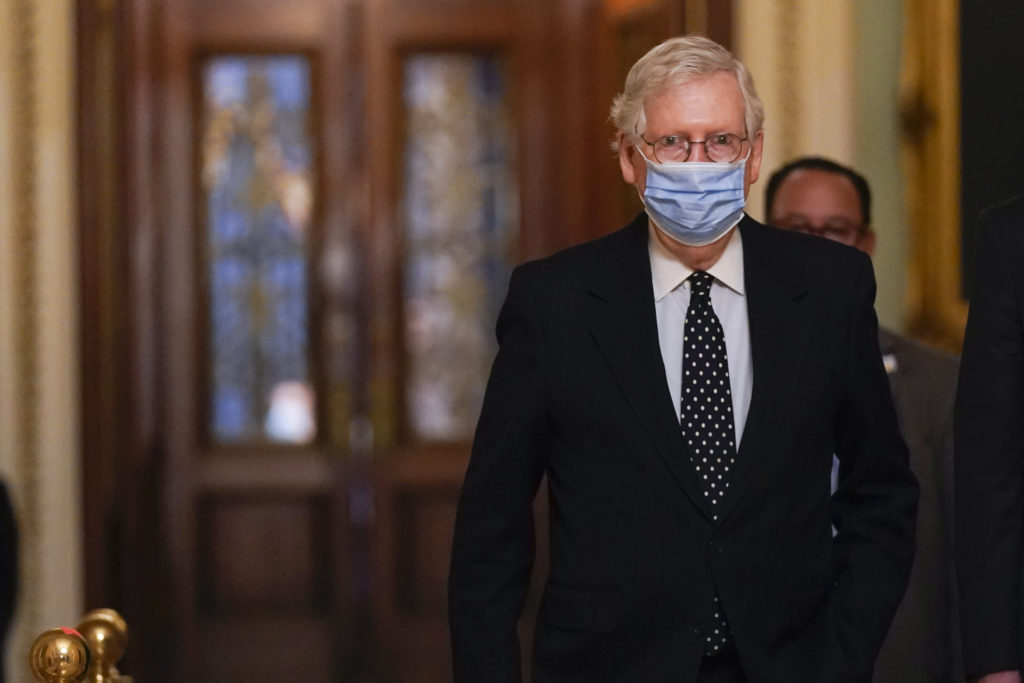
Senate Republican leader Mitch McConnell on Tuesday explicitly blamed President Donald Trump for the deadly riot at the Capitol, saying the mob was “fed lies” and that the president and others “provoked” those intent on overturning Democrat Joe Biden’s election. Ahead of Trump’s historic second impeachment trial, McConnell’s remarks were his most severe and public rebuke of the outgoing president. The GOP leader is setting a tone as Republicans weigh whether to convict Trump on the impeachment charge that will soon be sent over from the House: “incitement of insurrection.” “The mob was fed lies,” McConnell said. “They were provoked by the president and other powerful people, and they tried to use fear and violence to stop a specific proceeding of the first branch of the federal government which they did not like.” The Republican leader vowed a “safe and successful” inauguration of Biden on Wednesday at the Capitol, where final preparations were underway amid heavy security. Trump’s last full day in office Tuesday was also senators’ first day back since the deadly Capitol siege and since the House voted to impeach him for his role in the riots — an unparalleled time of transition as the Senate prepares for the second impeachment trial in two years and presses ahead with the confirmation of Biden’s Cabinet. Three new Democratic senators-elect are set to be sworn into office Wednesday shortly after Biden’s inauguration, giving the Democrats the barest majority, a 50-50 Senate chamber. The new vice president, Kamala Harris, will swear them in and serve as an eventual tie-breaking vote. The Democrats, led by Senate Democratic leader Chuck Schumer, will take charge of the Senate as they launch a trial to hold the defeated president responsible for the siege, while also quickly confirming Biden’s Cabinet and being asked to consider passage of a sweeping new $1.9 trillion COVID-19 relief bill. “The inauguration of a new president and the start of a new administration always brings a flurry of activity to our nation’s government,” Schumer said in remarks on the Senate floor Tuesday morning. “But rarely has so much piled up for the Senate as during this particular transition.” Making the case for Trump’s conviction, Schumer said the Senate needs to set a precedent that the “severest offense ever committed by a president would be met by the severest remedy provided by the Constitution — impeachment,” and disbarment from future office. McConnell and Schumer conferred later Tuesday about how to balance the trial with other business and how to organize the evenly divided chamber, a process that could slow all of the Senate’s business and delay the impeachment proceedings. There were signs of an early impasse. McConnell expressed to Schumer “his long-held view that the crucial, longstanding, and bipartisan Senate rules concerning the legislative filibuster remain intact, specifically during the power share for the next two years,” according to spokesman Doug Andres. Eliminating the Senate filibuster, a procedural move that requires a higher bar for legislation to pass, has been a priority for Democrats who will now control the House, Senate, and White House. But a spokesman for Schumer, Justin Goodman, said the Democratic leader “expressed that the fairest, most reasonable and easiest path forward” was to adopt an agreement similar to a 2001 consensus between the parties, the last time the Senate was evenly divided, without “extraneous changes from either side.” Five of Biden’s nominees had committee hearings Tuesday as the Senate prepared for swift confirmation of some as soon as the president-elect takes office, as is often done particularly for the White House’s national security team. Many noted the harrowing events at the Capitol on Jan. 6. The nominee for Director of National Intelligence, Avril Haines, testified of her own “eerie” feeling coming to the Capitol complex after “how truly disturbing it was” to see the attack on the building unfold. Biden’s nominee for secretary of the Department of Homeland Security, Alejandro Mayorkas, vowed to get to the bottom of the “horrifying” siege. The start of the new session of Congress was also forcing lawmakers to come to terms with the post-Trump era, a transfer of power that Trump’s mob of supporters tried to prevent after he urged them to storm the Capitol as Congress was tallying the Electoral College vote confirming Biden’s election. Seven Republican senators led by Sen. Ted Cruz, R-Texas, and Sen. Josh Hawley, R-Mo., tried to overturn Biden’s election during the Electoral College tally. Cruz was presiding over the Senate Tuesday while McConnell delivered his blistering remarks. Hawley continued to embrace his role in the opposition, saying on Tuesday that he will block a quick confirmation of Mayorkas, the Homeland Security nominee, to protest Biden’s immigration plan to provide a path to citizenship for 11 million people. Hawley said Mayorkas “has not adequately explained how he will enforce federal law and secure the southern border.” As they begin the year newly in the minority, Republican senators face a daunting choice of whether to convict Trump of inciting the insurrection, the first impeachment trial of a president no longer in office — but one who continues to hold great sway over the party’s voters. Some Republicans want to halt the impeachment trial. Texas GOP Sen. John Cornyn was among those Republicans casting doubt on the legal ability of the Senate to convict a president no longer in office, though legal scholars differ on the issue. “It’s never happened before and maybe that’s for a good reason,” he said. The House impeached Trump last week on the sole charge, incitement of insurrection, making him the only president to be twice impeached. A protester died during the riot and a police officer died later of injuries; three other people involved died of medical emergencies. He was first impeached in 2019 over relations with Ukraine and was acquitted in 2020 by the Senate. The three new Democratic senators, Raphael Warnock and Jon Ossoff of Georgia, and Alex Padilla of California, are to be sworn into office Wednesday, according to a person granted anonymity to discuss planning.
Congress in standoff on virus aid, but first checks coming
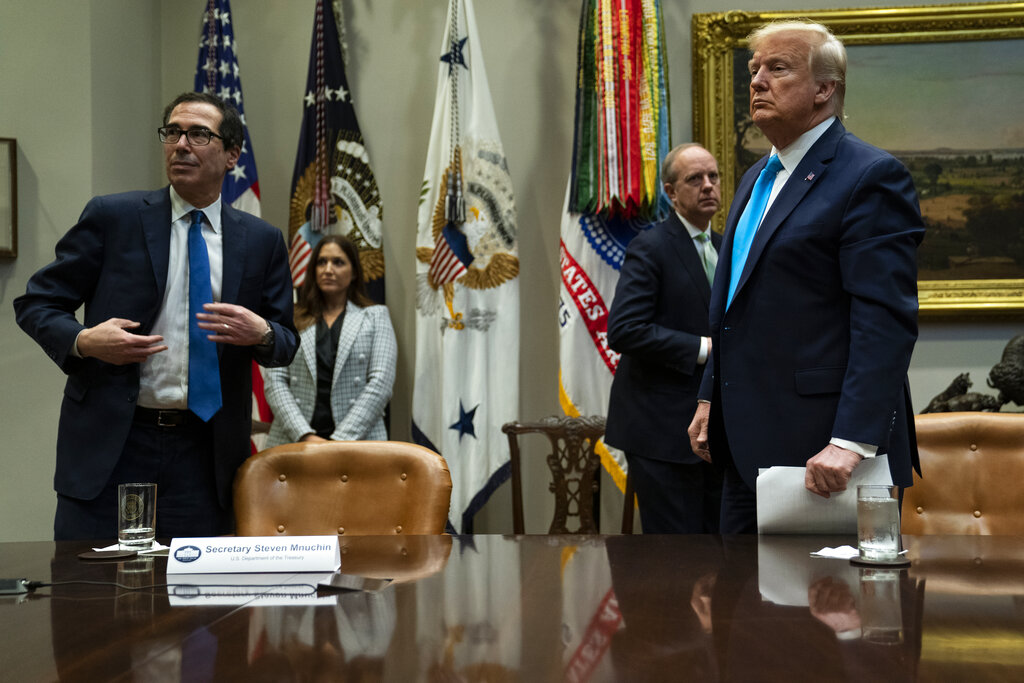
Despite the urgency to act, it’s a sudden breakdown over what all sides agree is the need for federal help.
