
Record early vote leads to tranquil Election Day at polls
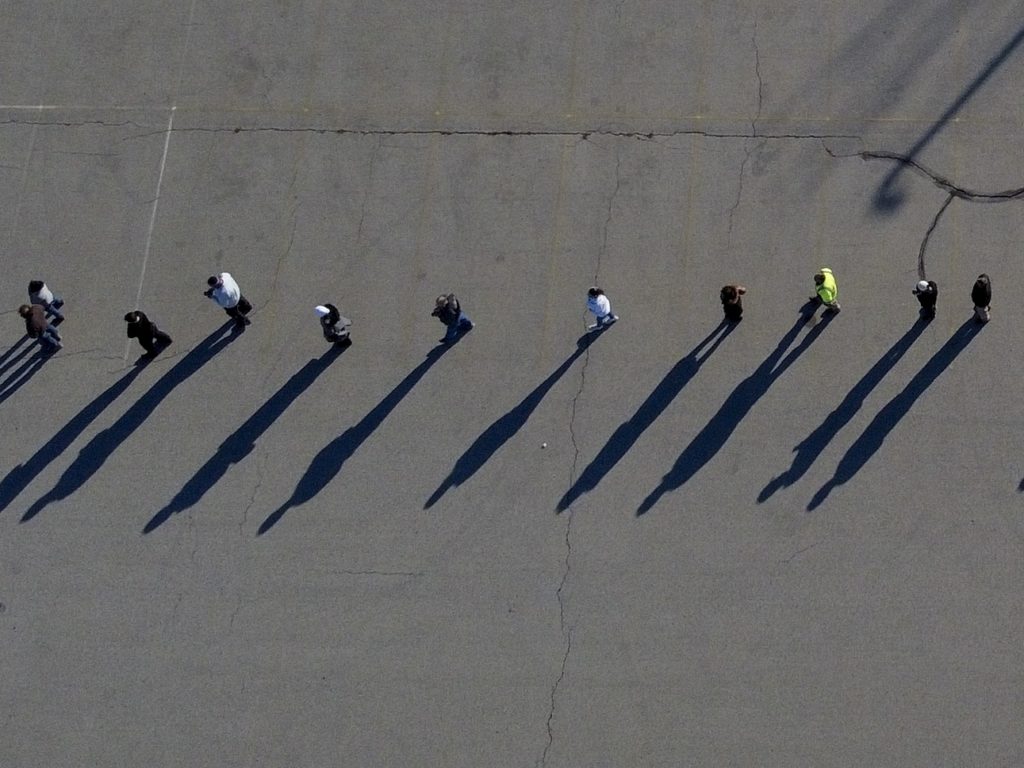
Despite fears of clashes at polling places, chaos sparked by the coronavirus pandemic and confusion due to disinformation and swiftly-changing voting rules, millions across the U.S. cast ballots in a historically contentious election with few problems. About 103 million votes were cast before Election Day, an early voting push prompted by the pandemic. That took some of the pressure off polling places on Tuesday, which generally saw short or no lines as coronavirus cases were on the rise. Daily confirmed cases were up 43 percent over the past two weeks in the U.S., according to data compiled by Johns Hopkins University. Every Election Day comes with problems as millions of people try to cast ballots simultaneously in 50 states. But experts were relieved they were relatively rare at a time when partisan battles over voting reached a fever pitch. “We were bracing for the worst, and we’ve been pleasantly surprised,” said Kristen Clarke of the Lawyers Committee for Civil Rights. Though the casting of ballots was relatively tranquil, legal storm clouds hang over the counting of those votes. Both parties had fought a massive battle in the courts trying to shape the contours of the election, and that seemed likely to continue beyond Tuesday. President Donald Trump early Wednesday said he would take the election to the Supreme Court, although it was unclear what legal action he might pursue. The GOP has laid the groundwork for an effort to exclude ballots that arrived after polls closed in Pennsylvania on Tuesday, something several other states permit. Trump has railed over several days about the high court’s pre-election refusal to rule out those ballots and said he’d go in “with lawyers.” Trump has spent much of the campaign groundlessly trying to sow doubt about the accuracy of the vote count and casting doubt on mail balloting. It led to great voter stress — but fears didn’t materialize at the polls. “A lot of people were fearful to come out and vote today, and for me I didn’t want fear to stop me from voting on Election Day,” said Sadiyyah Porter-Lowdry, 39, who cast her ballot at a church in Charlotte, North Carolina. In Iowa, hand sanitizer on voters’ hands caused ballot counting machines to jam briefly in Des Moines, but the problem was fixed and voting went smoothly. Officials reported a calm day. “No armed people, no protesters, no pickups with Trump flags like they’ve seen elsewhere. Our voters have been ‘Iowa Nice’ through-and-through, and they have been patient,” said Joel Miller, the commissioner of elections in Linn County, the state’s second largest, which includes Cedar Rapids. In Pennsylvania, a judge in Democrat Joe Biden’s hometown of Scranton extended voting at two precincts inside an elementary school for 45 minutes beyond the normal 8 p.m. close of voting because machines had been down earlier in the day, said Lackawanna County spokesman Joe D’Arienzo. The last Las Vegas-area voters cast their ballots shortly after 9 p.m. Tuesday after a court order kept 30 polling places open later in Nevada’s largest county, where some polling places had been slow to open. There also were a few other issues with voting technology. Electronic pollbooks from voting equipment vendor KnowInk failed in Ohio’s second-largest county and in a small Texas county, forcing voting delays as officials replaced them with paper pollbooks. Those who did vote on Election Day included some who wanted to vote by mail but waited too long to request a ballot or didn’t receive their ballots in time. Election offices had to scramble to rejigger procedures to allow for a huge surge in mail voting as voters sought a way to avoid exposure to the coronavirus at the polls. Kaal Ferguson, 26, planned to vote by mail but was concerned he hadn’t left enough time to send his ballot back. So he voted in person in Atlanta, despite worries he could be exposed to COVID-19 by fellow voters. “Obviously everybody has their right to vote,” he said. “But it’s kind of scary knowing that there’s not a place just for them to vote if they’d had it, so you could easily be exposed.” Despite warnings of clashes between Trump and Biden supporters, there were no wide-scale instances of voter intimidation. Indeed, in battleground Michigan, demonstrators from the opposing camps initially shouted at each other through bullhorns outside a suburban Detroit polling place, but ended up joining together to sing “God Bless America.” Law enforcement officials breathed an audible sigh of relief. “I would say it is blissfully uneventful,” Michigan Attorney General Dana Nessel told reporters. “We’ve had virtually no disturbances of any kind.” There were reports, as there are every election, of efforts to discourage people from voting that surfaced in robocalls in a few states. The FBI was investigating. But there were no large-scale cyber attacks that upended voting. Gen. Paul Nakasone, the commander of U.S. Cyber Command and director of the National Security Agency, said in a statement that he was “confident the actions we’ve taken against adversaries over the past several weeks and months have ensured they’re not going to interfere in our elections.” Instead, voters were often pleasantly surprised. Anthony Medina, of Phoenix, who turned 18 four months ago, accompanied his cousin, who turned 18 on Election Day, to the polls Tuesday. “I wanted to see how it was to vote in person because I’ve never voted,” Medina said. “It was kind of nerve-wracking because I didn’t know if they were gonna ask for more stuff than they did. But it went pretty good overall.” Amber McReynolds, a former Denver clerk whose group Vote from Home has helped local election offices step up their mail voting options during the pandemic, said the ability for more than half of all voters to cast ballots before Tuesday was clearly a significant factor in the quieter day. She noted that the fairly smooth election operations came even as Congress wouldn’t give local officials an estimated $3.6 billion they needed to help
Long lines, enthusiasm but no major problems as US votes
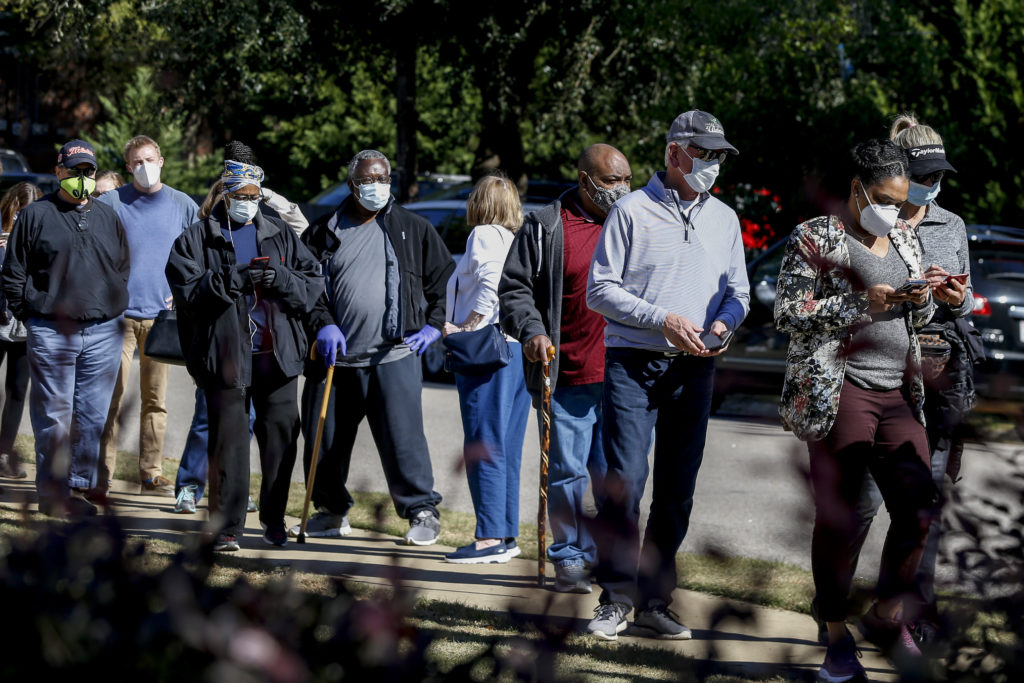
Voters marked the end of a fraught U.S. election season at the polls Tuesday, casting the last of what will likely be a record number of ballots in the midst of a global pandemic that upended long-established election procedures, prompted an unprecedented surge in mail ballots and triggered hundreds of lawsuits. No major problems were reported, and fears of large-scale voter intimidation or harassment had not materialized by midday. Officials have already warned that counting ballots could take days due to an avalanche of mail votes that take more time to process and could result in another round of court battles. President Donald Trump has already threatened legal action to prevent the counting of ballots that arrive after Election Day, which some states allow. Meanwhile, a federal judge ordered postal workers in some major cities to sweep processing facilities for any remaining ballots before the end of the day. Minor problems occur every election, and Tuesday was no different. There were long lines and sporadic reports of polling places opening late, along with equipment issues in counties in Ohio, Texas and Georgia. This was all expected given voter enthusiasm, the decentralized nature of U.S. elections and last-minute voting changes brought on by the pandemic. There were also reports, as there are every election, of efforts to discourage people from voting that surfaced in robocalls in Michigan and Iowa. The FBI was investigating. “We have not seen anything significant where it comes to voter intimidation or harassment. We are seeing enthusiastic partisan supporters in some places, but we are not seeing the kind of concerns that we may have had in the run-up to today,” said Suzanne Almeida, interim executive director of Common Cause Pennsylvania. At least 101.9 million people had already voted before Election Day, about 73 percent of the nearly 139 million who cast ballots in 2016, according to data collected by The Associated Press. Given that a few states, including Texas, had already exceeded their total 2016 vote count, experts were predicting record turnout this year. Those yet to vote headed to polling places despite another spike in COVID-19 cases that has hit much of the country. Among them were voters who may have wanted to vote by mail but waited too long to request a ballot or those who didn’t receive their ballots in time. Kaal Ferguson, 26, planned to vote by mail but was concerned he hadn’t left enough time to send his ballot back. So he voted in person in Atlanta, despite worries he could be exposed to COVID-19 by fellow voters. “Obviously everybody has their right to vote,” he said. “But it’s kind of scary knowing that there’s not a place just for them to vote if they’d had it, so you could easily be exposed.” Others were likely persuaded by the president’s rhetoric attacking mail voting or simply preferred to vote in person after reports surfaced over the summer of mail delivery delays following a series of policy changes implemented by the U.S. Postal Service’s new leader, Postmaster General Louis DeJoy, a major GOP donor. “I don’t want to see no mailman. I like to stand here, see my own people, wait in the line and do my civil duty,” said James “Sekou” Jenkins, a 68 year-old retired carpenter and mechanic who waited about 15 minutes before polls opened in West Philadelphia and voted for Democrat Joe Biden about an hour later. On Tuesday afternoon, a federal judge in Washington D.C. ordered U.S. Postal Service inspectors to sweep 27 mail processing facilities for lingering mail-in ballots and send out those votes immediately. The order, which includes centers in central Pennsylvania, Philadelphia, Detroit, Atlanta, south Florida and parts of Wisconsin, followed concerns the agency wouldn’t be able to deliver ballots on time. Postal data has shown service in some battleground areas severely lagging. “The slowdown and compromising of the U.S. Postal Service was a concern,” said Rebecca Kraft, a 41-year-old Milwaukee resident who voted in person. “So I said ‘All right, if I’m feeling healthy, I am going to go do it at the polls just to make sure.’” Federal authorities were monitoring voting and any threats to the election from an operations center just outside Washington D.C. Officials there said no major problems had been detected. “We’re not out of the woods yet,” said Christopher Krebs, the director of the U.S. Cybersecurity and Infrastructure Security Agency. “Today, in some sense, is half-time. There may be other events or activities or efforts to interfere and undermine confidence in the election. So I’d ask all Americans to be patient, to treat all sensational and unverified claims with skepticism, and remember technology sometimes fails and breaks.” In the months leading up to Election Day, election officials had to deal with a pandemic that has infected more than 9 million Americans and killed more than 230,000, forcing them to make systemic changes largely on the fly and mostly without federal money. Meanwhile, Trump repeatedly sought to undermine the election with unsubstantiated claims of widespread voter fraud. He has particularly targeted the crucial battleground state of Pennsylvania, after the U.S. Supreme Court allowed — at least for now — a three-day extension for receiving and counting absentee ballots. Over the weekend, Trump said that as soon as the polls close there on Tuesday, “We’re going in with our lawyers.” Misinformation about election procedures, concerns about confrontations at the polls and reports of mail slowdowns also clouded the run-up to Election Day. States hammered out plans for protecting against foreign and domestic cyberattacks, countering misinformation and strengthening an election infrastructure tested by massive early voting and pandemic precautions. Election officials across some 10,000 voting jurisdictions scrambled to purchase personal-protective equipment, find larger polling places, replace veteran poll workers who opted to sit out this year’s election due to health concerns and add temporary workers to deal with the avalanche of mail ballots. Most states, even ones with broad mask mandates, stopped short of forcing voters to wear them at the
