
Ted Cruz super PAC prepares for millions of dollars in TV ads
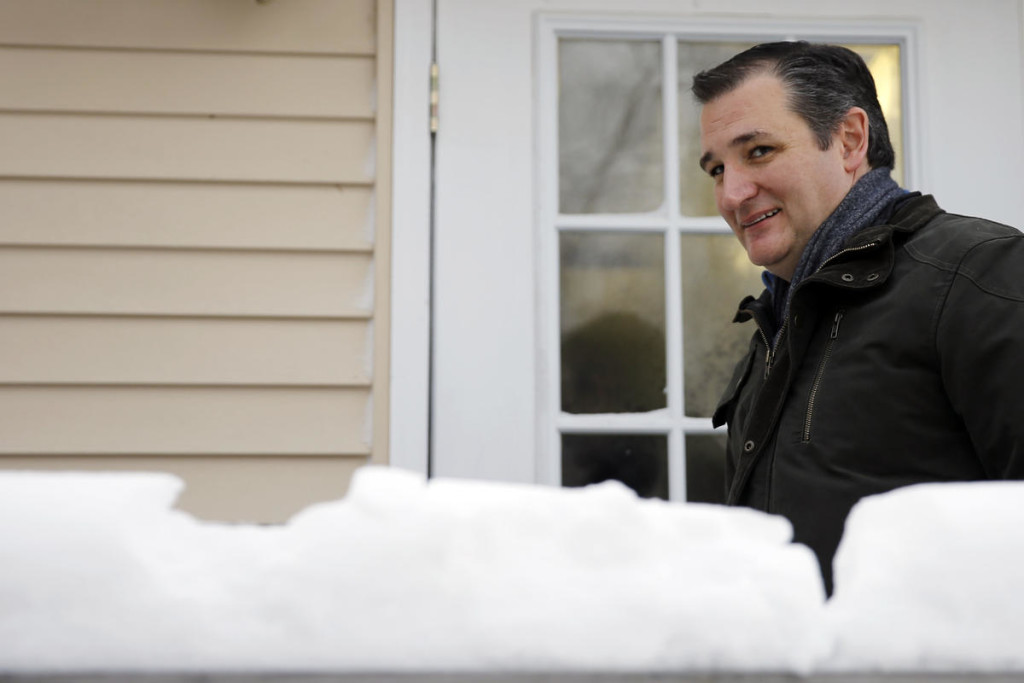
A well-funded outside group helping Texas Sen. Ted Cruz fight for the Republican presidential nomination has purchased $2.5 million of television advertising time — an investment that catapults it to the top tier of spenders in the 2016 race. Keep the Promise I, one of more than a half dozen Cruz-themed super political action committees, placed new TV ads to begin airing Tuesday in Iowa, the first state up in the primary contest, spokeswoman Kristina Hernandez said Monday. The ad buy expands to third-to-vote South Carolina in a week, she said. The ads come as Cruz appears to be picking up steam in the still-crowded Republican primary. He is at or near the top of recent polls in Iowa without having spent much campaign money to advertise there. Likewise, his super PACs have been slow to start spending major money on commercials. That changes with this ad buy. The new investment more than doubles what Keep the Promise I had previously booked on ads and puts it well ahead of Cruz’s official campaign spending on TV, according to advertising tracker Kantar Media’s Campaign Media Analysis Group. The commercials supplement the on-the-ground efforts, mailings, and digital and radio advertising of four coordinated super PACs that all use a variation of the name “Keep the Promise.” The message of the new 30-second ad echoes Cruz’s campaign theme that he has stood up to Democrats and Republicans alike. It includes clips of Cruz at a debate and at some of his own campaign appearances, and features people asserting that he can be trusted. “He actually went to Washington, D.C., and did what he told the voters he was going to do,” one woman says. “When I tell you I’m going to do something, I’m going to do exactly what I said I’d do,” Cruz is shown saying at the end of the ad. By law, super PACs cannot take directions from the candidate they’re helping, but they can significantly influence the race because — unlike the candidates’ official campaigns — they face no limits on fundraising and can tap trusted former aides of the candidate to shape their messages. The Keep the Promise super PAC quartet raised more than $37 million in the first six months of the year, making it one of the best-funded outside efforts supporting any presidential candidate. Fundraising reports documenting what these kinds of outside groups raised between July and December are due to federal regulators at the end of this month. Keep the Promise I, which so far is the most active of any of the four, is funded almost exclusively by Robert Mercer, a New York hedge-fund billionaire. There’s a bit of irony that Mercer’s group is spending big on an ad portraying Cruz as a truth-teller: Just last week Cruz criticized fellow presidential contender Donald Trump for his “New York values.” Explaining what he meant by that at the GOP debate Thursday night, Cruz said, “Everyone understands that the values in New York City are socially liberal or pro-abortion or pro-gay-marriage, focus around money and the media.” Republished with permission of the Associated Press.
Jeb Bush spends millions on TV but has yet to rise in GOP race
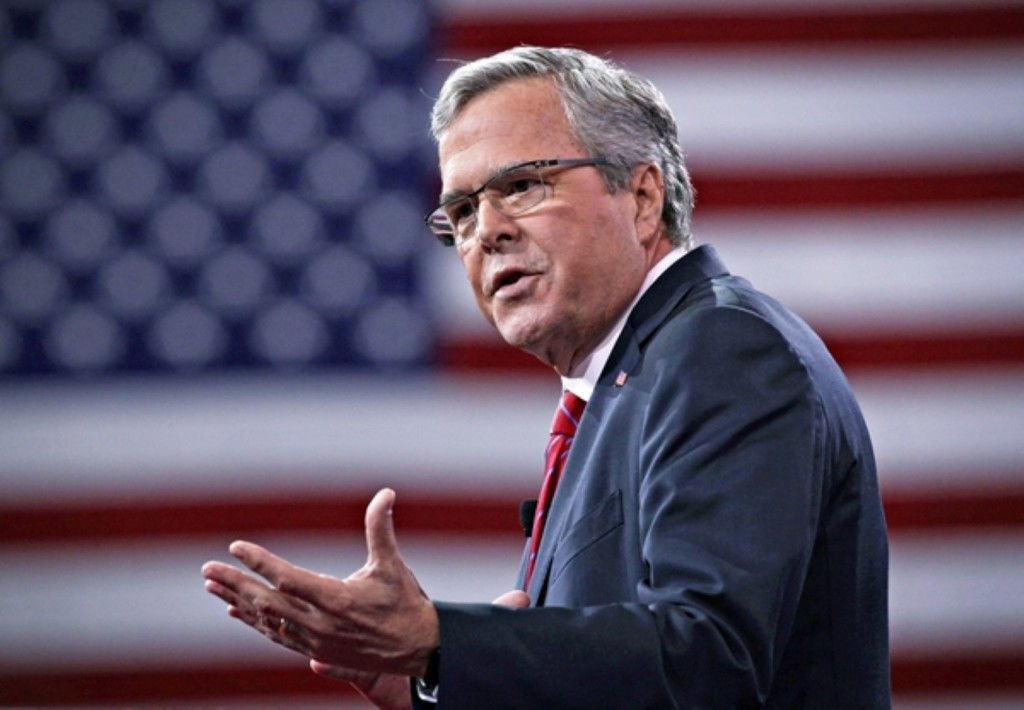
Jeb Bush and his allies are spending circles around his rivals for the Republican presidential nomination. Yet for all the money they’ve invested — $26 million on television ads alone — they’ve yet to see a substantial return. Having fallen from summer front-runner to autumn afterthought, the former Florida governor made deep spending cuts to his campaign operation in October. But he and his backers plowed ahead with a television blitz three times the size of anyone else’s, while putting a new strategic focus on New Hampshire. Some Bush allies suggested those efforts had to pay off with improved numbers in preference polls in November. Yet as December begins, Bush remains mired in single digits — including in New Hampshire — in a race that continues to be dominated by political novices, most notably billionaire real estate mogul Donald Trump. Bush’s most loyal supporters argue the advertising, mostly financed by an outside group known as a super PAC, has paid off by helping stabilize a campaign that was losing ground. The brother and son of former presidents is showcasing new endorsements, and his team continues to raise a steady stream of money. In November, Bush’s campaign collected at least $1 million, a tally by The Associated Press found. Top donors will head to Miami on Saturday for a campaign update, and ahead of that gathering Bush strategists are circulating a list of 300 contributors as a show of his staying power. But those same backers are also starting to acknowledge that time is growing short, with the leadoff Iowa caucuses now just two months away. “We’ve got to do better than expected in those first three states” of Iowa, New Hampshire and South Carolina, said Barry Wynn, one of Bush’s biggest South Carolina supporters and a member of his national finance team. Said Craig Duchossois, a devoted financial backer from Chicago, “I continue to be concerned.” The pro-Bush super PAC, called Right to Rise, has spent about $26 million on TV and radio commercials in the past 11 weeks, according to Kantar Media‘s CMAG advertising tracker. That’s about a quarter of the record-setting $103 million it raised in the first six months of the year. When Bush gathered his top donors in Houston in October at an event that featured former Presidents George H.W. Bush and George W. Bush, many suggested that the candidate’s poll numbers would improve by the end of November — once those ads had time to penetrate. That hasn’t happened. At the start of the ad campaign in mid-September, an ABC News/Washington Post poll found that about 8 percent of Republican and Republican-leaning registered voters nationally said they supported Bush. Two months later, and despite thousands of biographical ads that touted Bush as a proven leader, his numbers in that same poll were about the same: 6 percent. It’s the same story in New Hampshire, a state Bush has visited nearly weekly since November. He was the first choice of 9 percent of likely Republican primary voters in a poll conducted for WBUR in mid-September, and was at about 7 percent by the middle of November. Explanations vary depending on who is asked. Duchossois said the Bush team was too ambitious in thinking his poll numbers would be moving this soon. But he said Tuesday, “The next month is absolutely critical.” Bush spokesman Tim Miller said no one from the campaign predicted a big change by the end of November. Instead, he suggested this week, the turnaround will come in the new year. “I just think a lot of things are going to change in the race next year,” Miller said. “It’s a volatile field.” Officials at Right to Rise, the Bush super PAC, are taking an even longer view. The group has already reserved an additional $38 million in television advertising across the country over the next 15 weeks — as much as the next three biggest spenders combined. “Our investments are long-term and focused on helping Jeb achieve a general election victory in November 2016,” said Right to Rise spokesman Paul Lindsay. “We measure ourselves by that goal alone.” Bush and his supporters are making the case that, in the wake of the Nov. 13 attacks in Paris, voters will take another look his message of experience — which they hope will eventually overtake interest in outsider candidates such as Trump and retired neurosurgeon Ben Carson. “The good news is the numbers aren’t slipping, and to me, there’s been a vast improvement in the campaign,” said Fred Zeidman, a Houston-based donor. “He is truly showing his expertise in the issues that affect us all. Some of the folks who are ahead of him won’t stay there as voters get serious.” Perhaps the biggest question for Bush, regardless of how much money he and his allies spend on TV ads, is whether Zeidman’s prediction proves correct. Former House Majority Leader Eric Cantor, a key supporter, told Chicago donor Bill Kunkler and others on a recent national finance call that voters were angry and some even irrational. “Not that they are going to stay irrational. They are going to gravitate toward the most accomplished choice,” Kunkler recalls Cantor saying. “And we’ll see if he’s right.” Republished with permission of The Associated Press.
Donald Trump says ads are coming to early-voting states
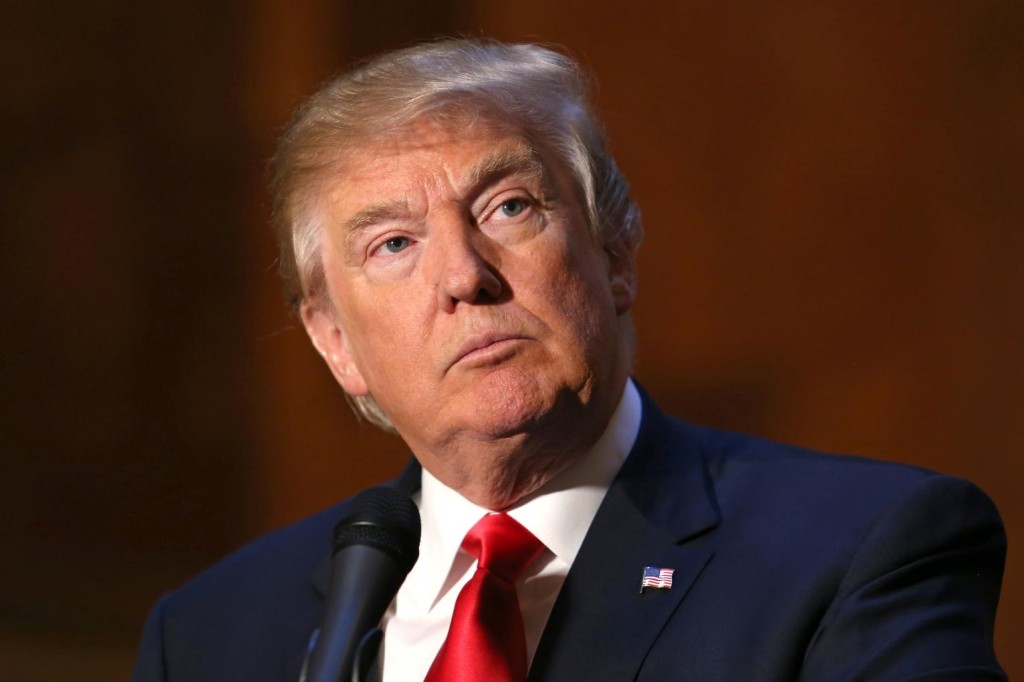
Republican presidential candidate Donald Trump says he’s finally planning to put some money on the line as several of his rivals receive new attention and support. The billionaire businessman, who has so far relied on the news media to promote his unorthodox campaign, said in an interview Tuesday night on Fox News that his campaign will begin paid advertising soon in the first states to vote in the GOP nomination race. “We’re going to start some ads, I think, over the next two days,” he said in the interview with Fox’s Sean Hannity. “Certainly in Iowa, we’re going to start ads, and in New Hampshire and, I think, in South Carolina, too. So, we’re going to start advertising a little bit.” Trump’s campaign did not immediately respond to a request for more details about the timing or how much Trump planned to spend. His campaign had not reserved any television advertising time as of Tuesday, according to Kantar Media’s CMAG advertising tracker. Trump said in early October that he had ads in the works, but in the weeks since has said he didn’t think they were necessary given how much attention he’s already given and the potential for Trump overload. Despite Trump’s boasting that he self-funds his campaign, the vast majority of the cash he has spent so far has come from donor contributions. Still, he has spent far less than many of his rivals — thanks, he’s said, to the fact that he hasn’t had to spend millions on paid ads. “I was going to have spent $25 million by this time. I’ve spent nothing. I feel guilty because I’ve spent nothing ’cause, we haven’t needed it,” he said Tuesday. “But we’re going to start spending a little bit of money over the next three or four weeks.” Trump dominated opinion surveys throughout the summer, but several of his rivals have been garnering new attention from voters and donors this fall. To those who may be thinking about going after him with negative ads, he added a warning. “Look, anybody that hits me, we’re going to hit them 10 times harder,” he said. “We’re going to just dollar-for-dollar, we’re going to go after them. We have more money than anybody else by a factor of about 1,000.” Republished with permission of the Associated Press.
Anonymous donors send millions to pro-Marco Rubio group
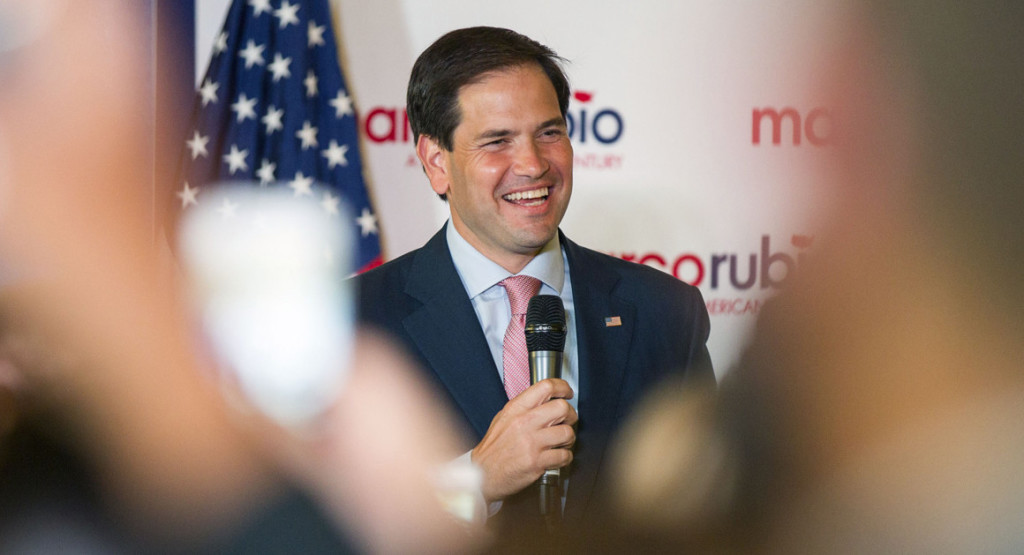
Voters are beginning to learn about Republican presidential hopeful Marco Rubio. What they’re not learning, however, is who is paying to promote his candidacy. The Florida senator is benefiting in unprecedented ways from a nonprofit group funded by anonymous donors. While other presidential candidates also have ties to secret-money groups, the Rubio arrangement is the boldest. Every pro-Rubio television commercial so far in the early primary states of Iowa, New Hampshire and South Carolina has been paid for not by his campaign or even by a super PAC that identifies its donors, but instead by a nonprofit called Conservative Solutions Project. It’s also sending Rubio-boosting mail to voters in those same states. Rubio is legally prohibited from directing the group’s spending, and he has said he has nothing to do with it. But there’s little doubt that Conservative Solutions Project is picking up the tab for critical expenses that the campaign itself might struggle to afford. Although Rubio is rising in national polls, his fundraising has so far been dwarfed by that of former Florida Gov. Jeb Bush, Texas Sen. Ted Cruz and retired neurosurgeon Ben Carson. By the end of June, Bush and his super PAC had amassed $114 million – more than quadruple what Rubio and his super PAC collected. Ahead of what is expected to be a new and disappointing fundraising report next week, Rubio’s aides have stressed that their thriftiness gives them a competitive advantage over campaigns with more money. Left unsaid was that a secret-money group is giving him at least an $8 million assist, according to information provided by advertising tracker Kantar Media’s CMAG. The candidate has presented himself as being opposed to such unaccountable money. “I believe that – as long as it’s being disclosed – that people have a right to participate in our political process,” Rubio said in June at a voter forum in New Hampshire when asked about “the corrupting influence” of money in politics. Conservative Solutions Project does not disclose its donors. Its latest commercial shows Rubio, 44, speaking at the Iowa State Fair. “New ideas for a new age,” a narrator says before ticking through a list of Rubio priorities: “throw out the tax code, overhaul higher education, repeal and replace Obamacare.” Conservative Solutions Project has put $2.3 million into the 30-second ad over the past three weeks and is on deck to spend close to another $1 million keeping it on the air next week, according to CMAG information about advertising placements on broadcast, cable and satellite television. That follows a $3 million summertime ad campaign by the same group that promoted Rubio’s strong opposition to a deal the White House and other countries struck with Iran on nuclear weapons. Conservative Solutions Project also has reserved nearly $2 million in additional satellite TV advertising space through Feb. 16, according to the advertising tracker. Although numerous candidates may ultimately benefit from allied nonprofits, so far it appears that only the entities helping Rubio and Louisiana Gov. Bobby Jindal are advertising in the presidential race. America Next has spent about $380,000 boosting Jindal on TV, CMAG said. Bush also has a secret-money group in his corner, but it hasn’t yet directly communicated with voters. Nonprofits are the edgier cousins of super PACs. Both can accept unlimited amounts of money from wealthy donors, corporations and unions, but only nonprofits can keep those names a secret. In exchange for that privilege, nonprofits are barred from making political activity their primary purpose. But gray area abounds. The two regulating agencies, the Federal Election Commission and the Internal Revenue Service, have been less than aggressive in pursuing potential violators. The Campaign Legal Center in Washington is suing the FEC for failing to require a nonprofit that was active during the 2012 presidential election to file finance reports. “Congress, the Supreme Court and the public have all recognized that voters have a right to know who is spending money to try to influence them on Election Day,” said Paul S. Ryan, the center’s senior counsel. “Transparency is how we hold politicians accountable and make sure they’re not in the pocket of their benefactors.” That’s in line with public opinion: Seventy-five percent of voters, an equal share of Democrats and Republicans, said contributors to unaffiliated groups should be disclosed, according to a CBS News/New York Times poll in June. The Conservative Solutions Project declined to say who gave it the $16 million it claims to have. Although it shares a name and key personnel with the Rubio-focused super PAC, Conservative Solutions PAC, its mutual spokesman, Jeff Sadosky, said the two are “very separate and distinct groups.” He said the nonprofit’s work goes well beyond Rubio’s presidential ambitions, pointing to a detailed study it did last year of voter behavior, which was made available on its website. Additionally, Sadosky said, Conservative Solutions Project highlights on its website the work of other conservative leaders, including Illinois Sen. Mark Kirk and Arkansas Sen. Tom Cotton. But its bent toward Rubio is apparent even there: Visitors to the site are immediately routed to a video of the Florida senator speaking, the same footage on television in early primary states. Republished with permission of the Associated Press.
