
House GOP votes to oust Democrat Ilhan Omar from major committee

The Republican-led House voted after raucous debate Thursday to oust Democratic Rep. Ilhan Omar from the chamber’s Foreign Affairs Committee, citing her anti-Israel comments, in a dramatic response to Democrats last session booting far-right GOP lawmakers over incendiary remarks. House Speaker Kevin McCarthy was able to solidify Republicans to take action against the Somali-born Muslim in the new Congress, although some GOP lawmakers had expressed reservations. Removal of lawmakers from House committees was essentially unprecedented until the Democratic ousters two years ago of hard-right Republican Reps. Marjorie Taylor Greene of Georgia and Paul Gosar of Arizona. The 218-211 vote, along party lines, came after a heated, voices-raised debate in which Democrats accused the GOP of going after Omar based on her race. Omar, who has apologized for 2019 remarks widely seen as antisemitic, defended herself on the House floor, asking if anyone was surprised she was being targeted. Democratic colleagues hugged her during the vote. “My voice will get louder and stronger, and my leadership will be celebrated around the world, as it has been,” Omar said in a closing speech. House Republicans focused on six statements she has made that “under the totality of the circumstances, disqualify her from serving on the Committee of Foreign Affairs,” said Rep. Michael Guest of Mississippi, the incoming chairman of the House Ethics Committee. “All members, both Republicans and Democrats alike who seek to serve on Foreign Affairs, should be held to the highest standard of conduct due to the international sensitivity and national security concerns under the jurisdiction of this committee,” Guest said. Republicans have clashed with Omar since she arrived in Congress, and former President Donald Trump frequently taunted her at his rallies in ways that appealed to his supporters. The resolution proposed by Rep. Max Miller, R-Ohio, a former official in the Trump administration, declared, “Omar’s comments have brought dishonor to the House of Representatives.” Democratic leader Hakeem Jeffries of New York said Omar has at times “made mistakes” and used antisemitic tropes that were condemned by House Democrats four years ago. But that’s not what Thursday’s vote was about, he said. “It’s about political revenge,” Jeffries said. Rep. Alexandria Ocasio-Cortez, D-N.Y., went further, referring to the Sept. 11, 2001, attack as she called the GOP’s action part of one of the “disgusting legacies after 9/11, the targeting and racism against Muslim-Americans throughout the United States of America. And this is an extension of that legacy.” She added, “This is about targeting women of color.” McCarthy denied the Republican decision to oust Omar was a tit-for-tat after the Greene and Gosar removals under Democrats, though he had warned in late 2021 that such a response might be expected if Republicans won back the House majority. “This is nothing like the last Congress,” he said Thursday. He noted that Omar can remain on other panels, just not Foreign Affairs, after her anti-Israel comments. Omar is one of the first two Muslim women elected to Congress. She is also the first to wear a hijab in the House chamber after floor rules were changed to allow members to wear head coverings for religious reasons. She quickly generated controversy after joining Congress in 2019 with a pair of tweets that suggested lawmakers who supported Israel were motivated by money. In the first, she criticized the American Israel Public Affairs Committee or AIPAC. “It’s all about the Benjamins, baby,” she wrote, invoking slang about $100 bills. Asked on Twitter who she thought was paying members of Congress to support Israel, Omar responded, “AIPAC!” Omar’s remarks sparked a public rebuke from then-House Speaker Nancy Pelosi and other Democrats who made clear that she had overstepped. She soon apologized. “We have to always be willing to step back and think through criticism, just as I expect people to hear me when others attack me about my identity,” Omar tweeted. “This is why I unequivocally apologize.” Also, in a May 2021 tweet, she made reference to Israel as “an apartheid state” over its treatment of Palestinians. Democrats rallied Thursday in a fiery defense of Omar and the experiences she brings to Congress. “This clearly isn’t about what Ilhan Omar said as much as who she is — being a smart, outspoken Black woman of the Muslim faith is apparently the issue,” said Rep. Mark Pocan, D-Wis. Black, Latino, and progressive lawmakers, in particular, spoke of her unique voice in the House and criticized Republicans for what they called a racist attack. “Racist gaslighting,” said Rep. Cori Bush, D-Mo. A “revenge resolution,” said Rep. Pramila Jayapal of Washington, the chair of the progressive caucus. “It’s so painful to watch,” said Rep. Rashida Tlaib, D-Mich., who joined Congress with Omar as the first two female Muslims elected to the House. “To Congresswoman Omar, I am so sorry that our country is failing you today through this chamber,” Tlaib said through tears. “You belong on that committee.” In the weeks leading up to the vote, the chairman of the committee, Rep. Michael McCaul of Texas, argued for excluding Omar from the panel during a recent closed-door meeting with fellow Republicans. “It’s just that her worldview of Israel is so diametrically opposed to the committee’s,” McCaul told reporters in describing his stance. “I don’t mind having differences of opinion, but this goes beyond that.” At the White House, press secretary Karine Jean-Pierre said of the ouster, “It’s a political stunt.” McCarthy has already blocked Reps. Adam Schiff and Eric Swalwell, both California Democrats, from rejoining the House Intelligence Committee once the GOP took control of the chamber in January. While appointments to the intelligence panel are the prerogative of the speaker, the action on Omar required a House vote. Several Republicans skeptical of removing Omar wanted “due process” for lawmakers who face removal. McCarthy said he told them he would work with Democrats on creating a due process system, but acknowledged it’s still a work in progress. One Republican, Rep. David Joyce of Ohio, voted present. In the last Congress, several Republicans had joined Democrats in removing Greene and Gosar from
Merrick Garland appoints special counsel to investigate Joe Biden docs
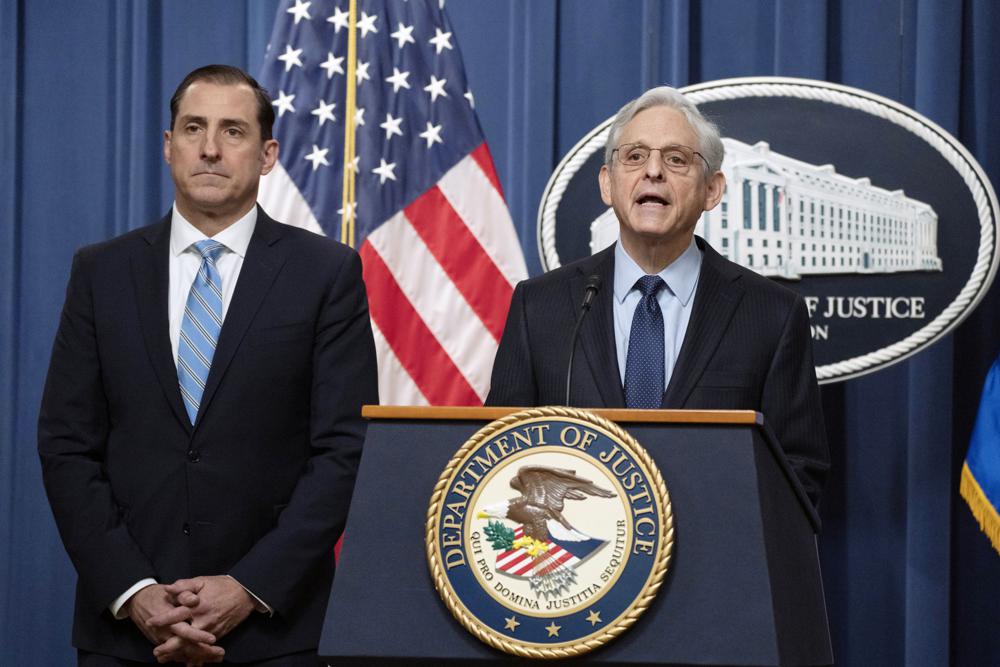
Attorney General Merrick Garland on Thursday appointed a special counsel to investigate the presence of classified documents found at President Joe Biden’s home in Wilmington, Delaware, and at an unsecured office in Washington dating from his time as vice president. Robert Hur, a one-time U.S. attorney appointed by former President Donald Trump, will lead the investigation and plans to begin his work soon. His appointment marks the second time in a few months that Garland has appointed a special counsel, an extraordinary fact that reflects the Justice Department’s efforts to independently conduct high-profile probes in an exceedingly heated political environment. Two of those investigations, including one involving Trump, relate to the handling of classified information, though there are notable differences between those cases. Garland’s decision caps a tumultuous week at the White House, where Biden and his team opened the year hoping to celebrate stronger economic news ahead of launching an expected reelection campaign. But the administration faced new challenges Monday when it acknowledged that sensitive documents were found at the office of Biden’s former institute in Washington. The situation intensified by Thursday morning when Biden’s attorney acknowledged that an additional classified document was found at a room in his Wilmington home — later revealed by Biden to be his personal library — along with other documents found in his garage. The attorney general revealed that Biden’s lawyers informed the Justice Department of the latest discovery at the president’s home on Thursday morning after FBI agents first retrieved documents from the garage in December. Biden told reporters at the White House that he was “cooperating fully and completely” with the Justice Department’s investigation into how classified information and government records were stored. “We have cooperated closely with the Justice Department throughout its review, and we will continue that cooperation with the special counsel,” said Richard Sauber, himself a special counsel to the president. “We are confident that a thorough review will show that these documents were inadvertently misplaced, and the president and his lawyers acted promptly upon discovery of this mistake.” Garland said the “extraordinary circumstances” of the matter required Hur’s appointment, adding that the special counsel is authorized to investigate whether any person or entity violated the law. Federal law requires strict handling procedures for classified information, and official records from Biden’s time as vice president are considered government property under the Presidential Records Act. “This appointment underscores for the public the department’s commitment to both independence and accountability in particularly sensitive matters, and to making decisions indisputably guided only by the facts and the law,” Garland said. Hur, in a statement, said: “I will conduct the assigned investigation with fair, impartial, and dispassionate judgment. I intend to follow the facts swiftly and thoroughly, without fear or favor, and will honor the trust placed in me to perform this service.” While Garland said the Justice Department received timely notifications from Biden’s personal attorneys after each set of classified documents identified, the White House provided delayed and incomplete notification to the American public about the discoveries. Biden’s personal attorneys found the first set of classified and official documents on November 2 in a locked closet as they cleared out his office at the Penn Biden Center in Washington, where he worked after he left the vice presidency in 2017 until he launched his presidential campaign in 2019. The attorneys notified the National Archives, which retrieved the documents the next day and referred the matter to the Justice Department. Sauber said Biden’s attorneys then underwent a search of other locations where documents could have been transferred after Biden left the vice presidency, including his homes in Wilmington and Rehoboth Beach, Delaware. Garland said that on December 20, the Justice Department was informed that classified documents and official records were located in Biden’s Wilmington garage, near his Corvette, and that Federal Bureau of Investigation agents took custody of them shortly thereafter. A search on Wednesday evening turned up the final classified document in Biden’s personal library at his home, and the Justice Department was notified Thursday, Garland revealed. The White House only confirmed the discovery of the Penn Biden Center documents in response to news inquiries Monday and remained silent on the subsequent search of Biden’s homes and the discovery of the garage tranche until Thursday morning, shortly before Garland announced Hur’s appointment. Biden, when he first addressed the matter Tuesday while in Mexico City, also didn’t let on about the subsequent document discoveries. Press secretary Karine Jean-Pierre insisted that despite the public omissions, Biden’s administration was handling the matter correctly. “There was transparency in doing what you’re supposed to do,” she said, declining to answer repeated questions about when Biden was briefed on the discovery of the documents and whether he would submit to an interview with investigators. Pressed on whether Biden could guarantee that additional mishandled classified documents would not turn up, Jean-Pierre said, “You should assume that it’s been completed, yes.” The appointment of yet another special counsel to investigate the handling of classified documents is a remarkable turn of events, legally and politically, for a Justice Department that has spent months looking into the retention by Donald Trump of more than 300 documents with classification markings found at the former president’s Florida estate. Though the situations are factually and legally different, the discovery of classified documents at two separate locations tied to Biden — as well as the appointment of a new special counsel — would almost certainly complicate any prosecution that the department might bring against Trump. New House Speaker Kevin McCarthy, a California Republican, said of the latest news, “I think Congress has to investigate this.” “Here’s an individual that sat on ‘60 Minutes’ that was so concerned about President Trump’s documents … and now we find that this is a vice president keeping it for years out in the open in different locations.” Contradicting several fellow Republicans, he said, “We don’t think there needs to be a special prosecutor.” The top Republican on the House Intelligence Committee has requested that intelligence
Supreme Court keeps immigration limits in place indefinitely
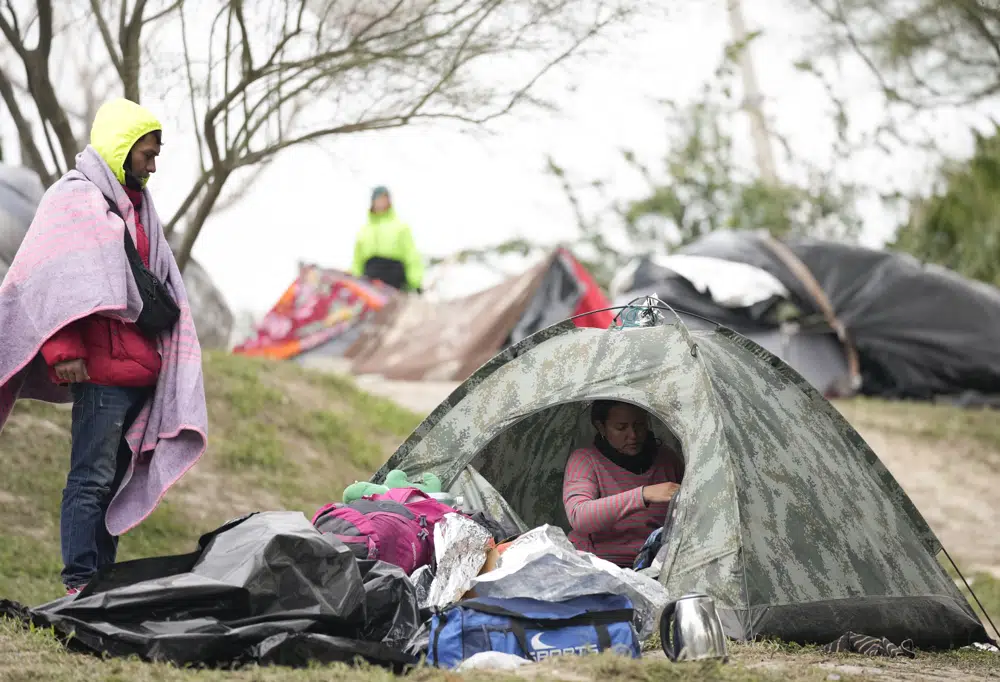
The Supreme Court is keeping pandemic-era limits on immigration in place indefinitely, dashing hopes of immigration advocates who had been anticipating their end this week. In a ruling Tuesday, the Supreme Court extended a temporary stay that Chief Justice John Roberts issued last week. Under the court’s order, the case will be argued in February, and the stay will be maintained until the justices decide the case. The limits, often referred to as Title 42 in reference to a 1944 public health law, were put in place under then-President Donald Trump at the beginning of the pandemic. Under the restrictions, officials have expelled asylum-seekers inside the United States 2.5 million times and turned away most people who requested asylum at the border on grounds of preventing the spread of COVID-19. Immigration advocates sued to end the policy, saying it goes against American and international obligations to people fleeing to the U.S. to escape persecution. They’ve also argued that the policy is outdated as coronavirus treatments improve. The Supreme Court’s decision comes as thousands of migrants have gathered on the Mexican side of the border, filling shelters and worrying advocates who are scrambling to figure out how to care for them. “We are deeply disappointed for all the desperate asylum seekers who will continue to suffer because of Title 42, but we will continue fighting to eventually end the policy,” said Lee Gelernt, a lawyer with the American Civil Liberties Union, which had been arguing to end Title 42′s use. The ruling Tuesday said specifically that the Supreme Court will review the issue of whether the states have the right to intervene in the legal fight over Title 42. Both the federal government and the immigration advocates have argued that the states waited too long to intervene and even if they hadn’t waited so long, that they don’t have sufficient standing to intervene. In a dissent, Justices Neil Gorsuch and Ketanji Brown Jackson said that even if the court were to find the states have the right to intervene and Title 42 was lawfully adopted “…. the emergency on which those orders were premised has long since lapsed.” The judges said the “current border crisis is not a COVID crisis.” “And courts should not be in the business of perpetuating administrative edicts designed for one emergency only because elected officials have failed to address a different emergency. We are a court of law, not policymakers of last resort,” the justices wrote. White House press secretary Karine Jean-Pierre said Tuesday that the Biden administration “will, of course, comply with the order and prepare for the Court’s review.” “At the same time, we are advancing our preparations to manage the border in a secure, orderly, and humane way when Title 42 eventually lifts and will continue expanding legal pathways for immigration,” Jean-Pierre added. “Title 42 is a public health measure, not an immigration enforcement measure, and it should not be extended indefinitely.” In November, a federal judge sided with advocates and set a December 21 deadline to end the policy. Conservative-leaning states appealed to the Supreme Court, warning that an increase in migration would take a toll on public services and cause an “unprecedented calamity” that they said the federal government had no plan to deal with. Roberts, who handles emergency matters that come from federal courts in the nation’s capital, issued a stay to give the court time to more fully consider both sides’ arguments. The federal government asked the Supreme Court to reject the states’ effort while also acknowledging that ending the restrictions abruptly would likely lead to “disruption and a temporary increase in unlawful border crossings.” The precise issue before the court is a complicated, largely procedural question of whether the states should be allowed to intervene in the lawsuit. A similar group of states won a lower court order in a different court district preventing the end of the restrictions after the Centers for Disease Control and Prevention announced in April that it was ending use of the policy. Until the judge’s November order in the advocates’ lawsuit, the states had not sought to take part in that case. But they say that the administration has essentially abandoned its defense of the Title 42 policy and they should be able to step in. The administration has appealed the ruling, though it has not tried to keep Title 42 in place while the legal case plays out. Republished with the permission of The Associated Press.
White House says that repealing the COVID-19 vaccine mandate was a “mistake”
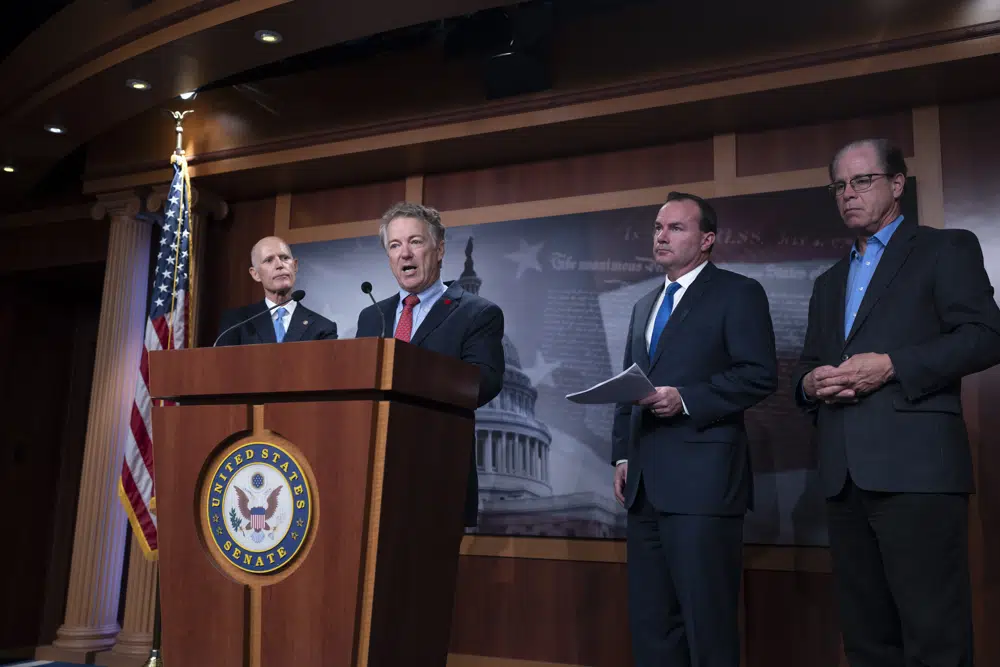
Earlier this week, conservative Senators, including Tommy Tuberville, amended the National Defense Authorization Act (NDAA) to overturn President Joe Biden’s controversial COVID-19 vaccine mandate for members of America’s armed forces. On Wednesday, White House Press Secretary Karine Jean-Pierre told reporters that Tuberville and the other Senators had made a “mistake.” “I will note — just to be very, very clear here — what we saw, what we think happened here is Republicans in Congress have decided that they’d rather fight against the health and wellbeing of our troops than protecting them,” Sec. Jean-Pierre said. “And we believe that it is a mistake what we saw — what we saw happen on the NDAA, as it relates to the vaccine mandate. Making sure our troops are prepared and ready for service is a priority for President Biden. The vaccination requirement for COVID does just that.” “I’ll add one more thing,” Sec. Jean-Pierre said. “Before the COVID vaccine existed, nearly 700 Department of Defense personnel and service members died of COVID. Almost 100 of them were active duty. And so, since this past spring, there has been one death due to COVID. So vaccinations work and save the lives of our service members. So we believe that it was a mistake.” The COVID-19 vaccine remains highly controversial even within the medical community. Last week the Alabama Department of Public Health (ADPH) released a statement urging Alabamians to get the newest bivalent version of the COVID-19 vaccine. “COVID-19 vaccines are safe and effective at protecting you from serious illness, hospitalization, and death,” ADPH informed the public. “Since every COVID-19 infection gives the virus a chance to mutate, being vaccinated helps prevent the spread of COVID-19 and its variants in our state and world.” Dr. Stewart Tankersley has served three tours overseas in the armed services in the Global War on Terror. Alabama Governor Kay Ivey appointed him to the state’s task force on COVID-19. Tankersley is one of a group of Alabama doctors who fundamentally disagree with the prevalent view on COVID-19 as articulated by ADPH and the Centers for Disease Control and Prevention. Alabama Concerned Doctors was formed to share information on alternative treatments for COVID-19. When the vaccine began being given in mass, they claim they have documented a growing number of adverse vaccine side effects, including some life-threatening. “That is a lie,” Tankersley told Alabama Today in a phone interview in response to the ADPH claim that the vaccine is safe and effective. “They are not going by the data. The evidence is overwhelming that this vaccine is dangerous. That is an absurd statement.” “The panic is what led to this,” Tankersley claimed. “There is no safety data on this. When you get the vaccine out of the package, it does not come with a safety insert.” “All of them should be outlawed, much less be given to our troops,” Tankersley said. “They (vaccines) cause our bodies to have a massive immune response. The mRNA is surrounded by a very nasty lipid particle.” Tankersley said that ADPH and the medical establishment are reluctant to debate the physicians who are skeptical of the safety and effectiveness of the vaccine. “They will not debate us on this,” Tankersley said. “The British Medical Journal said that it was unethical to give this to medical students. It does more harm than good.” “The sooner you are vaccinated, the sooner you have protection,” the ADPH said in their release. “To find COVID-19 vaccination locations near you, search vaccines.gov, text your zip code to 438829, or call 1-800-232-0233. Helpful information about recommended COVID-19 vaccines and boosters for individuals is available at the following website: cdc.gov/coronavirus/2019-ncov/vaccines/stay-up-to-date.html.” “The public has decided,” Tankersley said. “They are not taking this. Only ten percent of the public has gotten the new bivalent vaccine, and it has been out for three months.” Tuberville has suggested that the vaccine mandates are keeping the armed services from reaching their recruitment goals. “In the United States, the number of new servicemembers joining the military is reaching a near record low,” Tuberville and other conservative Senators wrote in a joint statement. “The United States needs a strong military to protect our country against the growing threats facing our nation. We are pleased that the final conferenced bill includes language mirroring our amendments’ efforts to protect troops from being fired due to Biden’s COVID vaccine mandate without fair appeal and to the harm of service readiness.” “The reasons why our military is not able to attain its recruitment goals is multifaceted, but not the least of these is forcing these young people to take this vaccine they do not need that causes injury,” Tankersley said. To connect with the author of this story, or to comment, email brandonmreporter@gmail.com.
House passes defense bill scrapping COVID vaccine mandate
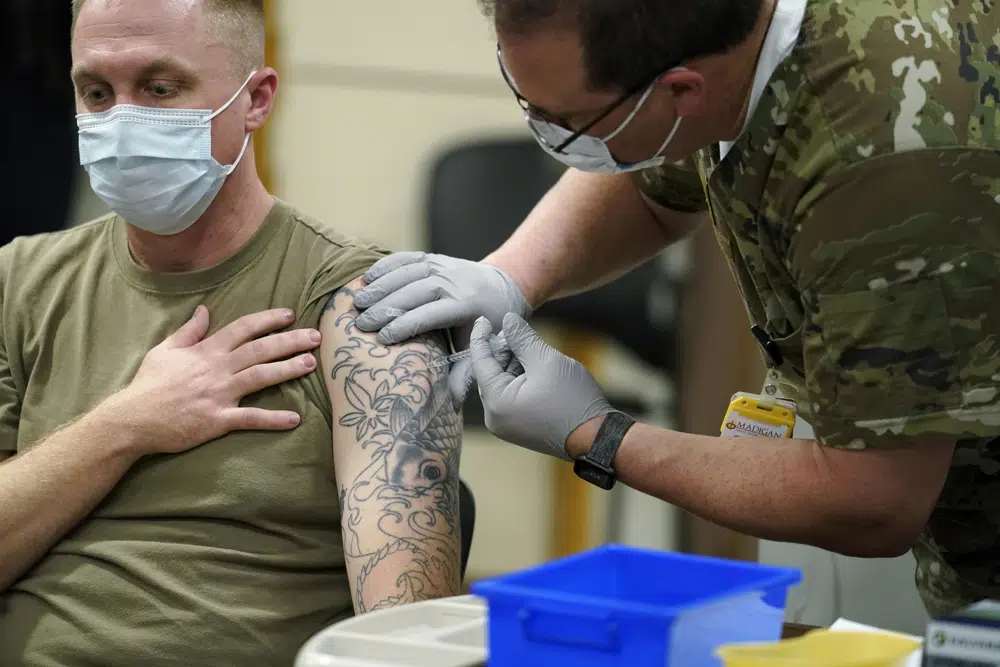
A bill to rescind the COVID-19 vaccine mandate for members of the U.S. military and provide nearly $858 billion for national defense passed the House on Thursday as lawmakers scratch off one of the final items on their yearly to-do list. The bill provides for about $45 billion more for defense programs than President Joe Biden requested, the second consecutive year Congress significantly exceeded his request, as lawmakers seek to boost the nation’s military competitiveness with China and Russia. The House passed the bill by a vote of 350-80. It now goes to the Senate, where it is expected to pass easily, then to the president to be signed into law. To win bipartisan support for the bill, Democrats agreed to Republican demands to scrap the requirement for service members to get a COVID-19 vaccination. The bill directs Defense Secretary Lloyd Austin to rescind his August 2021 memorandum imposing the mandate. Only days earlier, he voiced support for keeping the mandate in effect. Rep. Adam Smith, Democratic chairman of the House Armed Services Committee, told colleagues that the decision to impose the vaccine mandate was the right call at the time. “It saved lives, and it made sure that our force was as ready as it could possibly be in the face of the pandemic,” Smith said. But, he said the directive only required the initial vaccination, and by now, that protection has worn off. “It’s time to update the policy,” Smith said. Republicans said the mandate hurt recruiting and retention efforts. Rep. Mike Rogers, top Republican on the House Armed Services Committee, said he intends in the next Congress to examine who was adversely affected by the mandate, “so we can try to revisit that and make them whole to the extent desirable.” More than 8,000 active-duty service members were discharged for failure to obey a lawful order when they refused the vaccine. “Some of the folks who have moved on are not going to want to come back,” said Rogers, who will become chairman of the Armed Services Committee in the next Congress. Smith said he opposed efforts to reward those service members who disobeyed a military order. “Orders are not optional in the United States military,” Smith said. “And if Congress expresses the opinion that they are, I cannot imagine anything that would more significantly undermine the good order and discipline within our military.” Military leaders have argued that troops for decades have been required to get as many as 17 vaccines in order to maintain the health of the force, particularly those deploying overseas. Recruits arriving at the military academies or at basic training get a regimen of shots on their first day — such as measles, mumps, and rubella — if they aren’t already vaccinated. And they routinely get flu shots in the fall. Service leaders have said that the number of troops who requested religious or other exemptions to any of those required vaccines — prior to the COVID pandemic — was negligible. The politicization of the COVID-19 vaccine, however, triggered an onslaught of exemption requests from troops. As many as 16,000 religious exemptions have been or are still pending, and only about 190 have been approved. Small numbers of temporary and permanent medical exemptions have also been granted. While the rescission of the COVID-19 vaccine mandate has generated much attention, it takes up one paragraph of what is a 4,408-page bill. The defense policy legislation is critical in shaping the military’s future. It sets the maximum number of service members authorized to be in the various branches of the military. It authorizes money for specific major weapons programs, and it establishes pay and benefits. This year’s bill authorizes money to support a $4.6% pay raise for military members and the Defense Department’s civilian workers. The bill also authorizes $800 million in additional security assistance for Ukraine and calls for a report on whether any gaps exist in the oversight of aid to that country. That addresses the concerns of some Republicans who have been calling for a more detailed accounting of how the money has been spent. The legislation received broad support from House members of both political parties. Opposition came from 45 Democrats and 35 Republicans. Some Democrats said the bill authorized too much defense spending. “While working families are being crushed by inflation, we shouldn’t be spending $45 billion MORE than the President requested,” tweeted Rep. Mondaire Jones, D-N.Y. Rep. Troy Nehls, R-Texas, said stripping the vaccine mandate did not go far enough. “We must rehire these heroes with mandatory backpay,” he said of those who were kicked out for refusing the vaccine order. White House press secretary Karine Jean-Pierre defended the Pentagon’s COVID vaccination policy but said Biden would judge the bill “on its entirety.” “What we think happened here is Republicans in Congress have decided that they’d rather fight against the health and well-being of our troops than protecting them,” Jean-Pierre said. “And we believe that it is a mistake.” The defense policy bill also has a variety of environmental measures, such as legislation to boost healthy choral reefs, enhance marine mammal research and eliminate shark fin sales. Lawmakers failed in some instances to attach their priorities to the bill, such as an effort to prevent federal banking regulators from imposing penalties on banks that offer services to cannabis-related businesses. Also left out was legislation from Sen. Joe Manchin, D-W.V.., to speed permits for natural gas pipelines and other energy projects, including a pipeline project in his home state and Virginia. Republished with the permission of The Associated Press.
House votes to block a national rail shutdown

On Wednesday, the U.S. House of Representatives passed H.J. Res 100, legislation to adopt the tentative agreement between railroads and railroad workers reached in September and avert a national rail shutdown that likely would have plunged the economy into recession and worsened inflation and supply chain issues. The bipartisan measure passed the House by a vote of 290 to 137. Rep.Terri Sewell voted for the bill to block the union from striking. She also voted in favor of a separate measure, H. Con. Res. 119, which would add seven days of paid sick leave for railroad workers to the tentative agreement. This measure was a key priority for labor and a value that Sewell shares. Res. 119 passed by a more narrow vote of 221 to 207. “A national rail shutdown would completely devastate our economy, leave shelves empty, and worsen the railroad blockages that we are working hard to fix,” said Rep. Sewell in a press release. “I am thrilled that Congress has acted quickly and decisively to avert this catastrophic outcome, all while securing key advances for rail workers. This agreement will provide peace of mind for families and businesses ahead of the holiday season.” Congressman Jerry Carl voted against H.J. Res. 100, Enforcing the Railway Labor Tentative Agreements. “Today, I voted against enforcing the railway tentative agreement because it is not the job of Congress to bail out President Biden after he failed to negotiate with railroad unions,” Carl said. “The last thing our country needs is Congress getting involved in private businesses by picking winners and losers.” The tentative agreement includes: · A 24 percent pay raise and a $5,000 bonus · No changes in copays, deductibles or coinsurance costs · Time off for routine, preventative and emergency medical care · Requirements protecting the two-man crew Sewell’s office justified the vote to prevent the strike claiming: that as many as 765,000 workers, including many union members, would lose their jobs in just the first two weeks of a strike; millions of families wouldn’t be able to get groceries, medications and other goods; many communities wouldn’t be able to acquire chlorine to keep their water supply clean; businesses wouldn’t be able to get their products to market, and that perishable goods would spoil before reaching consumers. Supporters justified the decision to intervene in the economy by citing the Commerce Clause of the Constitution, which they claim gives Congress both the authority and the responsibility to act. The legislation now goes to the Senate, where it is expected to get the 60 votes necessary to pass the Senate. White House Press Secretary Karine Jean-Pierre told reporters Wednesday, “The President believes that a bill averting a rail strike needs to reach his desk by this weekend. He is very clear about that because we need to protect the American families from potentially devastating effects of a real shutdown. And we have talked about that numerous times, and the President was really clear about that when he — when he put out his statement earlier this week.” “Again, he’s a President for all Americans, and he believes that we need to avert a potential — this potential shutdown that would have a devastating effect on our economy, a devastating effect on jobs, a devastating effect in our communities across the country, and our — and our farms, as well,” Jean-Pierre said. “Look, the President, as you know, has been — has been called by union — unions and labor leaders as a pro-union President,” Jean-Pierre continued. “And he takes that very seriously. He is the most pro-union President in history. And he’s worked tirelessly to secure victories for unions and for workers since he was first elected to Sen- — to the Senate.” Jerry Carl was just re-elected to his second term representing Alabama’s First Congressional District. Terri Sewell was just re-elected to her seventh term representing Alabama’s Seventh Congressional District. Six of the seven House incumbents in Alabama were re-elected in November’s midterms. The seventh, Rep. Mo Brooks, opted not to run for re-election but instead lost in the Republican primary for the open U.S. Senate seat. To connect with the author of this story, or to comment, email brandonmreporter@gmail.com.
Joe Biden turning to Donald Trump-era rule to expel Venezuelan migrants

Two years ago, candidate Joe Biden loudly denounced President Donald Trump for immigration policies that inflicted “cruelty and exclusion at every turn,” including toward those fleeing the “brutal” government of socialist Nicolas Maduro in Venezuela. Now, with increasing numbers of Venezuelans arriving at the U.S.-Mexico border as the November 8 election nears, Biden has turned to an unlikely source for a solution: his predecessor’s playbook. Biden last week invoked a Trump-era rule known as Title 42 — which Biden’s own Justice Department is fighting in court — to deny Venezuelans fleeing their crisis-torn country the chance to request asylum at the border. The rule, first invoked by Trump in 2020, uses emergency public health authority to allow the United States to keep migrants from seeking asylum at the border, based on the need to help prevent the spread of COVID-19. Under the new Biden administration policy, Venezuelans who walk or swim across America’s southern border will be expelled, and any Venezuelan who illegally enters Mexico or Panama will be ineligible to come to the United States. But as many as 24,000 Venezuelans will be accepted at U.S. airports, similar to how Ukrainians have been admitted since Russia’s invasion in February. Mexico has insisted that the U.S. admit one Venezuelan on humanitarian parole for each Venezuelan it expels to Mexico, according to a Mexican official who was not authorized to discuss the matter publicly and spoke condition of anonymity. So if the Biden administration paroles 24,000 Venezuelans to the U.S., Mexico would take no more than 24,000 Venezuelans expelled from the U.S. The Biden policy marks an abrupt turn for the White House, which just weeks ago was lambasting Florida Gov. Ron DeSantis and Texas Gov. Greg Abbott, both Republicans, for putting Venezuelan migrants “fleeing political persecution” on buses and planes to Democratic strongholds. “These were children, they were moms, they were fleeing communism,” White House press secretary Karine Jean-Pierre said at the time. Biden’s new policy has drawn swift criticism from immigrant advocates, many of them quick to point out the Trump parallels. “Rather than restore the right to asylum decimated by the Trump administration … the Biden administration has dangerously embraced the failures of the past and expanded upon them by explicitly enabling expulsions of Venezuelan migrants,” said Jennifer Nagda, policy director of the Young Center for Immigrant Children’s Rights. The administration says the policy is aimed at ensuring a “lawful and orderly” way for Venezuelans to enter the U.S. Why the turnaround? For more than a year after taking office in January 2021, Biden deferred to the Centers for Disease Control and Prevention, which used its authority to keep in place the Trump-era declaration that a public health risk existed that warranted expedited expulsion of asylum-seekers. Members of Biden’s own party and activist groups had expressed skepticism about the public health underpinnings for allowing Title 42 to remain in effect, especially when COVID-19 was spreading more widely within the U.S. than elsewhere. After months of internal deliberations and preparations, the CDC on April 1 said it would end the public health order and return to normal border processing of migrants, giving them a chance to request asylum in the U.S. Homeland Security officials braced for a resulting increase in border crossings. But officials inside and outside the White House were conflicted over ending the authority, believing it effectively kept down the number of people crossing the border illegally, according to senior administration officials. A court order in May that kept Title 42 in place due to a challenge from Republican state officials was greeted with quiet relief by some in the administration, according to officials who spoke to The Associated Press on condition of anonymity to discuss internal discussions. The recent increase in migration from Venezuela, sparked by political, social, and economic instability in the country, dashed officials’ hopes that they were finally seeing a lull in the chaos that had defined the border region for the past year. By August, Venezuelans were the second-largest nationality arriving at the U.S. border after Mexicans. Given that U.S. tensions with Venezuela meant migrants from the country could not be sent back easily, the situation became increasingly difficult to manage. So an administration that had rejected many Trump-era policies aimed at keeping out migrants, that had worked to make the asylum process easier, and that had increased the number of refugees allowed into the U.S. now turned to Title 42. It brokered a deal to send the Venezuelans to Mexico, which already had agreed to accept migrants expelled under Title 42 if they are from Guatemala, Honduras, or El Salvador. All the while, Justice Department lawyers continue to appeal a court decision that has kept Title 42 in place. They are opposing Republican attorneys general from more than 20 states who have argued that Title 42 is “the only safety valve preventing this Administration’s already disastrous border control policies from descending into an unmitigated catastrophe.” Under Title 42, migrants have been expelled more than 2.3 million times from the U.S. after crossing the country’s land borders illegally from Canada or Mexico, though most try to come through Mexico. The administration had announced it would stop expelling migrants under Title 42 starting May 23 and go back to detaining and deporting migrants who did not qualify to enter and remain in the U.S. — a longer process that allows migrants to request asylum in the U.S. “We are extremely disturbed by the apparent acceptance, codification, and expansion of the use of Title 42, an irrelevant health order, as a cornerstone of border policy,” said Thomas Cartwright of Witness at the Border. “One that expunges the legal right to asylum.” A separate lawsuit from the American Civil Liberties Union also is trying to end Title 42, an effort that could render the administration’s proposal useless. “People have a right to seek asylum – regardless of where they came from, how they arrive in the United States, and whether or not they have family here,” said ACLU lawyer Lee Gelernt. Republished with the permission of The Associated Press.
Lindsey Graham unveils nationwide abortion ban after 15 weeks
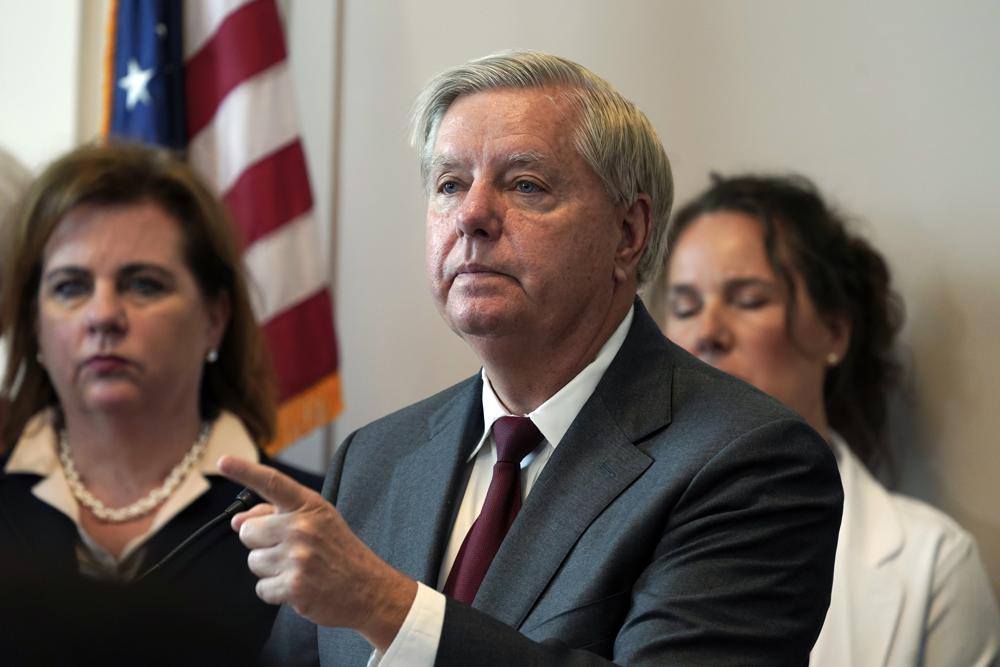
Upending the political debate, Republican Sen. Lindsey Graham introduced a nationwide abortion ban Tuesday, sending shockwaves through both parties and igniting fresh debate on a fraught issue weeks before the midterm elections that will determine control of Congress. Graham’s own Republican Party leaders did not immediately embrace his abortion ban bill, which would prohibit the procedure after 15 weeks of pregnancy with rare exceptions, and has almost no chance of becoming law in the Democratic-held Congress. Democrats torched it as an alarming signal of where “MAGA” Republicans are headed if they win control of the House and Senate in November. “America’s got to make some decisions,” Graham said at a news conference at the Capitol. The South Carolina Republican said that rather than shying away from the Supreme Court’s ruling this summer overturning Roe v. Wade’s nearly 50-year right to abortion access, Republicans are preparing to fight to make a nationwide abortion ban federal law. “Oh, no, no, no, no, no, no, we’re going nowhere,” the senator said while flanked by female advocates from the anti-abortion movement. “We welcome the debate. We welcome the vote in the United States Senate as to what America should look like in 2022.” Reaction was swift, fierce, and unwavering from Democrats who viewed Graham’s legislation as an extreme example of the far-right’s hold on the GOP and as a political gift of self-inflicted pain for Republican candidates now having to answer questions about an abortion ban heading toward the midterm elections. “A nationwide abortion ban — that’s the contrast between the two parties, plain and simple,” Senate Majority Leader Chuck Schumer said. Sen. Patty Murray, a Democrat from Washington who is in her own fight for reelection, said Republicans “want to force” women to stay pregnant and deliver babies. “To anyone who thought they were safe, here is the painful reality,” she said. “Republicans are coming for your rights.” The sudden turn of events comes in a razor-tight election season as Republicans hoping to win control of Congress are struggling to recapture momentum, particularly after the Supreme Court’s landmark decision sparked deep concerns among some voters, with signs of female voters peeling away from the GOP. In a midterm election where the party out of the White House traditionally holds an advantage, even more so this year with President Joe Biden’s lackluster approval ratings, the Democrats have regained their own momentum pushing back the GOP candidates in House and Senate races. Tuesday’s announcement set up an immediate split screen with Biden and Democrats poised to celebrate their accomplishments in a ceremony at the White House after passage of the Inflation Reduction Act and Republicans forced to answer for Graham’s proposed abortion ban. “This bill is wildly out of step with what Americans believe,” White House press secretary Karine Jean-Pierre said in a statement. “While President Biden and Vice President [Kamala] Harris are focused on the historic passage of the Inflation Reduction Act to reduce the cost of prescription drugs, health care, and energy – and to take unprecedented action to address climate change — Republicans in Congress are focused on taking rights away from millions of women,” Jean-Pierre said. Graham’s legislation has almost zero chance of becoming law, but it elevates the abortion issue at a time when other Republicans would prefer to focus on inflation, border security, and Biden’s leadership. The Republican bill would ban abortions nationwide after 15 weeks of pregnancy, except in cases of rape, incest, or risk to the physical health of the mother. Graham said it would put the U.S. on par with many countries in Europe and around the world. In particular, Graham’s bill would leave in place state laws that are more restrictive. That provision is notable because many Republicans have argued that the Supreme Court’s ruling leaves the abortion issue for the states to decide. But the legislation from the Republicans makes it clear states are only allowed to decide the issue if their abortion bans are more stringent. Senate Republican leader Mitch McConnell, who is one seat away from majority control, declined to embrace Graham’s legislation. “I think every Republican senator running this year in these contested races has an answer as to how they feel about the issue,” McConnell said. He said most GOP senators prefer having the issue dealt with by the states rather than at the federal level. “So I leave it up to our candidates who are quite capable of handling this issue to determine for them what their response is.” The Democratic senators most at risk this fall and other Democratic candidates running for Congress appeared eager to fight against Graham’s proposed nationwide abortion ban. Sen. Catherine Cortez Masto, a Nevada Democrat, tweeted that Graham “and every other anti-choice extremist can take a hike.” Her Republican opponent, Adam Laxalt, has during his campaign insisted that abortion is protected in the state constitution, which it may no longer be under this bill. In Colorado, another Democrat up for reelection, Sen. Michael Bennet, tweeted: “A nationwide abortion ban is outrageous. ” Bennet pledged “to defend a woman’s right to make her own health care decisions, no matter what ZIP code she lives in. We cannot afford to let the Republicans take back the Senate.” His opponent in Colorado, Republican Joe O’Dea, who supports putting abortion access that had been guaranteed under Roe v. Wade into law, agreed, in part: “A Republican ban is as reckless and tone deaf as is Joe Biden and Chuck Schumer’s hostility to considering any compromise on late-term abortion, parental notification or conscience protections for religious hospitals.” The races for control of Congress are tight in the split 50-50 Senate, where one seat determines majority control, and in the House, where Speaker Nancy Pelosi can afford to lose only a few seats. Pelosi called Graham’s bill the “clearest signal of extreme MAGA Republicans’ intent to criminalize women’s health freedom in all 50 states and arrest doctors for providing basic care. Make no mistake: if Republicans get the chance, they will work to pass laws even more
FBI’s search of Donald Trump’s Florida estate: Why now?

The FBI’s unprecedented search of former President Donald Trump’s Florida residence ricocheted around government, politics, and a polarized country Tuesday, along with questions as to why the Justice Department — notably cautious under Attorney General Merrick Garland — decided to take such a drastic step. Answers weren’t quickly forthcoming. Agents on Monday searched Trump’s Mar-a-Lago estate, which is also a private club, as part of a federal investigation into whether the former president took classified records from the White House to his Florida residence, people familiar with the matter said. It marked a dramatic escalation of law enforcement scrutiny of Trump, who faces an array of inquiries tied to his conduct in the waning days of his administration. From echoes of Watergate to the more immediate House probe of the January 6 Capitol insurrection, Washington, a city used to sleepy Augusts, reeled from one speculative or accusatory headline to the next. Was the Justice Department politicized? What prompted it to seek authorization to search the estate for classified documents now, months after it was revealed that Trump had taken boxes of materials with him when he left the White House after losing the 2020 election? Garland has not tipped his hand despite an outcry from some Democrats impatient over whether the department was even pursuing evidence that has surfaced in the January 6 probe and other investigations— and from Republicans who were swift to echo Trump’s claims that he was the victim of political prosecution. All Garland has said publicly is that “no one is above the law.” A federal judge had to sign off on the warrant after establishing that FBI agents had shown probable cause before they could descend on Trump’s shuttered-for-the-season home — he was in New York, a thousand or so miles away, at the time of the search. Monday’s search intensified the months-long probe into how classified documents ended up in boxes of White House records located at Mar-a-Lago earlier this year. A separate grand jury is investigating efforts to overturn the results of the 2020 presidential election, and it all adds to potential legal peril for Trump as he lays the groundwork for a potential repeat run for the White House. Trump and his allies quickly sought to cast the search as a weaponization of the criminal justice system and a Democratic-driven effort to keep him from winning another term in 2024 — though the Biden White House said it had no prior knowledge and current FBI Director Christopher Wray was appointed by Trump five years ago. Trump, disclosing the search in a lengthy statement late Monday, asserted that agents had opened a safe at his home, and he described their work as an “unannounced raid” that he likened to “prosecutorial misconduct.” Justice Department spokesperson Dena Iverson declined to comment on the search, including whether Garland had personally authorized it. White House press secretary Karine Jean-Pierre said the West Wing first learned of the search from public media reports, and the White House had not been briefed in the run-up or aftermath. Jean-Pierre refused to say whether Biden wanted the attorney general to explain publicly the rationale for the search amid the concerns about politicization of the probe. “The Justice Department conducts investigations independently, and we leave any law enforcement matters to them,” she said. “We are not involved.” About two dozen Trump supporters stood in protest at midmorning Tuesday in the Florida summer heat and sporadic light rain on a bridge near the former president’s residence. One held a sign reading “Democrats are Fascists,” while others carried flags saying “2020 Was Rigged,” “Trump 2024,” and Biden’s name with an obscenity. Some cars honked in support as they passed. Trump’s Vice President Mike Pence, a potential 2024 rival, tweeted Tuesday, “Yesterday’s action undermines public confidence in our system of justice, and Attorney General Garland must give a full accounting to the American people as to why this action was taken, and he must do so immediately.” Trump was planning to meet Tuesday at his Bedminster, New Jersey, a club with members of the Republican Study Committee, a group headed by Rep. Jim Banks of Indiana that says it is committed to putting forth his priorities in Congress. The FBI reached out to the Secret Service shortly before serving a warrant, a third person familiar with the matter told The Associated Press. Secret Service agents contacted the Justice Department and were able to validate the warrant before facilitating access to the estate, the person said. The Justice Department has been investigating the potential mishandling of classified information since the National Archives and Records Administration said it had received from Mar-a-Lago 15 boxes of White House records, including documents containing classified information, earlier this year. The National Archives said Trump should have turned over that material upon leaving office, and it asked the Justice Department to investigate. There are multiple federal laws governing the handling of classified records and sensitive government documents, including statutes that make it a crime to remove such material and retain it at an unauthorized location. Though a search warrant does not necessarily mean criminal charges are near or even expected, federal officials looking to obtain one must first demonstrate to a judge that they have probable cause that a crime occurred. Two people familiar with the matter, speaking on condition of anonymity to discuss an ongoing investigation, said the search Monday was related to the records probe. Agents were also looking to see if Trump had additional presidential records or any classified documents at the estate. Trump has previously maintained that presidential records were turned over “in an ordinary and routine process.” His son Eric Trump said on Fox News on Monday night that he had spent the day with his father and that the search happened because “the National Archives wanted to corroborate whether or not Donald Trump had any documents in his possession.” Trump himself, in a social media post on Monday night, called the search a “weaponization of the Justice System,
Joe Biden tests positive for COVID-19, has ‘very mild symptoms’
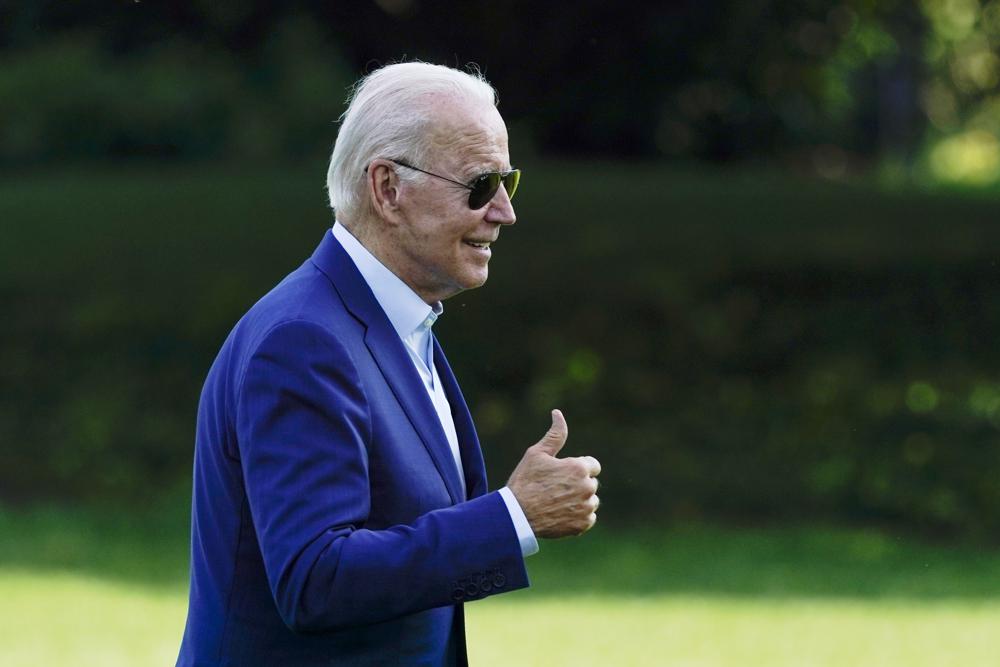
President Joe Biden tested positive for COVID-19 on Thursday and is experiencing “very mild symptoms,” the White House said, as new variants of the highly contagious virus are challenging the nation’s efforts to resume normalcy after two and a half years of pandemic disruptions. White House Press Secretary Karine Jean-Pierre said Biden has begun taking Paxlovid, an antiviral drug designed to reduce the severity of the disease. She said Biden has “very mild symptoms” and “will isolate at the White House while continuing to carry out all of his duties fully.” She said Biden has been in contact with members of the White House staff by phone and will participate in his planned meetings at the White House “via phone and Zoom from the residence.” The White House released a letter from Biden’s physician, Dr. Kevin O’Connor, that said the president has a runny nose and “fatigue, with an occasional dry cough, which started yesterday evening.” Biden, 79, is fully vaccinated, after getting two doses of the Pfizer coronavirus vaccine shortly before taking office, a first booster shot in September and an additional dose March 30. O’Connor wrote in his letter about the president’s treatment plan: “I anticipate that he will respond favorably” to Paxlovid “as most maximally protected patients do.” Jean-Pierre said Biden had last tested negative on Tuesday, and he will stay isolated until he tests negative again. Biden had planned to visit Pennsylvania on Thursday to talk about his crime prevention plans and attend a Democratic fundraiser, and then spend a long weekend in Delaware. His appearances and travel are canceled. First lady Jill Biden spoke to reporters as she arrived at a school in Detroit on Thursday, telling them she had just gotten off the phone with her husband. “He’s doing fine,” she said. “He’s feeling good.” The first lady, who was wearing a mask, said she tested negative earlier in the day. She will keep her full schedule in Michigan and Georgia on Thursday, though she will be following guidance from the Centers for Disease Control and Prevention on masking and distancing, said Michael LaRosa, her spokesperson. The president spent much of last week in Israel and Saudi Arabia. White House officials told reporters that Biden planned to minimize contact during the trip, yet as soon as he exited Air Force One on Wednesday, July 13, the president was fist-bumping, handshaking, and even seen in the occasional hug. Biden had a minimal public schedule after returning from Saudi Arabia late on Saturday night, attending church the next day, and appearing at a White House visit by Ukraine’s first lady Olena Zelenska on Tuesday. The president traveled to Massachusetts on Wednesday to promote efforts to combat climate change. Up to this point, Biden’s ability to avoid the virus seemed to defy the odds, even with the testing procedures in place for those expected to be in close contact with him. Prior waves of the virus swept through Washington’s political class, infecting Vice President Kamala Harris, Cabinet members, White House staffers, and lawmakers. Biden has increasingly stepped up his travel schedule and resumed holding large indoor events where not everyone is tested. A White House official said Harris tested negative for COVID-19. She was last with the president on Tuesday and spoke with him on the phone Thursday morning. Harris plans to remain masked on the guidance of the White House medical team. House Speaker Nancy Pelosi said she hoped that Biden’s positive test for the virus would cause more Americans to get vaccinated and boosted because “none of us is immune from it, including the president of the United States, and we really have to be careful.” Senate Republican Leader Mitch McConnell on Twitter wished the president “a speedy recovery.” Top White House officials in recent months have been matter-of-fact about the likelihood of the president getting COVID, a measure of how engrained the virus has become in society — and of its diminished threat for those who are up to date on their vaccinations and with access to treatments. When administered within five days of symptoms appearing, Paxlovid, produced by drugmaker Pfizer, has been proven to bring about a 90% reduction in hospitalizations and deaths among patients most likely to get severe disease. In an April 30 speech to more than 2,600 attendees at the White House Correspondents’ Association dinner, Biden acknowledged the risks of attending large events, but said it was worthwhile to attend. “I know there are questions about whether we should gather here tonight because of COVID,” he said. “Well, we’re here to show the country that we’re getting through this pandemic.” Biden is far from the first world leader — and not the first U.S. president — to get the coronavirus, which has infected British Prime Minister Boris Johnson, French President Emmanuel Macron, and more than a dozen other leaders and high-ranking officials globally. When Biden’s predecessor, President Donald Trump, contracted the disease in October 2020, it was a far different time. Vaccines were not available, and treatment options were limited and less advanced. After being diagnosed with COVID-19 at the White House, Trump was given an experimental antibody treatment and steroids after his blood oxygen levels fell dangerously low. He was hospitalized at Walter Reed National Military Medical Center for three days. After more than two years and over a million deaths in the U.S., the virus is still killing an average of 353 people a day in the U.S., according to the Centers for Disease Control and Prevention. The unvaccinated are at far greater risk, more than two times more likely to test positive and nine times more likely to die from the virus than those who have received at least a primary dose of the vaccines, according to the public health agency. The highly transmissible omicron variant is the dominant strain in the U.S., but scientists say it poses a lower risk for severe illness to those who are up to date on their vaccinations. Omicron’s BA.5 sub-strain, believed to be even more contagious, now
Pledge of more oil heightens odds of Saudi trip for Joe Biden

The Biden administration praised Saudi Arabia on Thursday for its role in a promised boost in oil production and a cease-fire in Yemen, in warm tones that appeared to further raise prospects for a Joe Biden trip to Saudi Arabia and a meeting with the kingdom’s once-shunned crown prince. Biden has been leaning toward making his first trip as president to the Saudi kingdom later this month, a person familiar with the planning told The Associated Press. Such a visit would be politically fraught because it would likely bring the U.S. leader together with Crown Prince Mohammed bin Salman. Biden as a presidential candidate in 2019 pledged to make the crown prince a “pariah” for his in the killing of a U.S.-based journalist. In a statement Thursday, Biden took a far different tone, praising the kingdom’s “courageous leadership” for its role in extending a U.N. cease-fire in a Saudi-led war in Yemen. Biden administration officials have been working behind the scenes to repair relations, discussing shared strategic interests in security and oil with their Saudi counterparts, as a Saudi-Russia-brokered deal has kept global oil supply tight and prices at the pump painfully high. Appeals from the U.S. and its allies for OPEC nations to ease up on production limits in the Russia deal appeared to bear results Thursday. OPEC nations announced they would raise production by 648,000 barrels per day in July and August, offering modest relief for the struggling global economy. Rising crude prices have pushed gasoline to a record high in the U.S., raising fears that elevated energy prices could slow the global economy as it emerges from the coronavirus pandemic. Biden and Democrats face rising voter anger over the high prices, making the tight oil supply a top political liability. In a statement, White House Press Secretary Karine Jean-Pierre acknowledged what she said was Saudi Arabia’s role “in achieving consensus” among the oil producers’ bloc. She thanked the United Arab Emirates, Kuwait, and Iraq as well. “The United States will continue to use all tools at our disposal to address energy prices pressures,” Jean-Pierre added. The White House is weighing a Biden visit that would also include a meeting of the leaders of the Gulf Cooperation Council countries — Bahrain, Kuwait, Oman, Qatar, Saudi Arabia, and the United Arab Emirates — as well as Egypt, Iraq and Jordan, according to a person familiar with White House planning, who spoke on the condition of anonymity to discuss the yet-to-be finalized plans. Biden would be expected to meet with Prince Mohammed if the Saudi visit happens, according to the person. Such a meeting could also ease a tense and uncertain period in the partnership between Saudi Arabia, the world’s top oil exporter, and the United States, the world’s top economic and military power, that has stood for more than three-quarters of a century. But it also risks a public humbling for the U.S. leader, who in 2019 pledged to make a “pariah” of the Saudi royal family over the 2018 killing and dismemberment of U.S.-based journalist Jamal Khashoggi, a critic of Prince Mohammed’s brutal ways. Jean-Pierre has declined to comment on whether Biden will travel to Saudi Arabia. He is expected to travel to Europe at the end of June and could tack on a stop in Saudi Arabia to meet with Prince Mohammed, Saudi King Salman, and other leaders. If he does, Biden would also likely visit Israel. Israeli officials in their engagement with the Biden administration have pressed their point of view that U.S. relations with Arab capitals, including Riyadh, are critical to Israel’s security and overall stability in the region. The visit could also provide an opportunity to kick off talks for what the administration sees as longer-term project of normalizing Israel-Saudi relations. And while the Biden administration continues to be concerned about Saudi Arabia’s human rights record, the president’s advisers credit the Saudis for showing greater restraint in its conflict with Yemen since Biden takes office. White House officials expect criticism from Democratic allies and human rights advocates charging Biden is backtracking on human rights, but suggest that in the long-term a credible long-term Middle East strategy without key leaders in the kingdom is not tenable. Biden, through the early going of his presidency, has repeatedly said that the world is at a key moment in history where democracies must demonstrate they can out-deliver autocracies. The administration doesn’t want to see countries such as Egypt and Saudi Arabia with troubling human rights records to fall into the camp of Moscow and Beijing. Any Biden meeting with Prince Mohammed includes the potential for an embarrassing last-minute public rebuff from a still-offended crown prince known for imperious, harsh actions. Since Prince Mohammed became crown prince in 2017, that has included detaining his own royal uncles and cousins as well as Saudi rights advocates, and, according to the U.S. intelligence community, directing Khashoggi’s killing. Saudi Arabia denies his involvement. Moreover, any Biden climbdown from his passionate human-rights pledge during his campaign — that Saudi rulers would “pay the price” for Khashoggi’s killing — risks more disillusionment for Democratic voters. They have watched Biden struggle to accomplish his domestic agenda in the face of a strong GOP minority in the Senate. U.S. officials were recently in the region for talks with Saudi officials about energy supplies, Biden administration efforts to revive the Iran nuclear deal, and Saudi’s bogged-down war to oust Houthi rebels in Yemen. Fighting there was recently calmed by a cease-fire, which was extended further Thursday. Frequent, warm visits among Saudi, Russian and Chinese officials during the freeze between Biden and the Saudi crown prince have heightened Western concern that Saudi Arabia is breaking from Western strategic interests. Besides helping to keep gas prices high for consumers globally, the tight oil supply helps Russia get better prices for the oil and gas it is selling to fund its invasion of Ukraine. Russian Foreign Minister Sergey Lavrov visited the Saudi kingdom Tuesday. Officials in Saudi Arabia and the United Arab Emirates, for their part,
Joe Biden talks gun control, extremism with New Zealand’s PM Jacinda Ardern

President Joe Biden praised New Zealand Prime Minister Jacinda Ardern on Tuesday for her success in curbing domestic extremism and guns as he tries to persuade a reluctant Congress to tighten gun laws in the aftermath of horrific mass shootings in Uvalde, Texas, and Buffalo, New York. The long-planned talks between Biden and Ardern centered on trade, climate, and security in the Indo-Pacific, but the two leaders’ starkly different experiences in pushing for gun control loomed large in the conversation. Ardern successfully won passage of gun control measures in her country after a white supremacist gunman killed 51 Muslim worshippers at two Christchurch mosques in 2019. Less than a month later, all but one of the country’s 120 lawmakers voted in favor of banning military-style semiautomatic weapons. Biden told reporters at the start of his meeting with Ardern that he “will meet with the Congress on guns, I promise you,” but the White House has acknowledged that winning new gun legislation will be an uphill climb in an evenly divided Congress. The U.S. president praised Ardern for her “galvanizing leadership” on New Zealand’s efforts to curb the spread of extremism online and said he wanted to hear more about the conversations in her country about the issue. White House press secretary Karine Jean-Pierre said the two leaders spent part of the meeting discussing “what has been done on gun reform” under Ardern’s watch. Ardern and French President Emmanuel Macron in 2019 launched an effort to work with tech companies on eliminating terrorist and violent extremist content online. Then-President Donald Trump declined to join the effort, but the Biden administration has since joined the Christchurch Call to Action. Biden over the weekend traveled to Uvalde, Texas, to grieve with a community that he said made clear to him they want to see Washington tighten gun laws in the aftermath of the shooting rampage that killed 19 children and two teachers. Biden heard similar calls for an overhaul of the nation’s gun laws earlier this month when he met with families of 10 Black people who were killed in a racist attack at a Buffalo supermarket. Biden and Ardern also discussed a May 15 shooting at a lunch banquet at a Taiwanese church in Laguna Woods, California that killed one person and wounded five others. “The pain is palpable,” said Biden, recalling his anguished conversations Sunday with families of victims of the Texas elementary school shooting. Ardern offered condolences and said she stood ready to share “anything that we can share that would be of any value” from New Zealand’s experience. “Our experience demonstrated our need for gun reform, but it also demonstrated what I think is an international issue around violent extremism and terrorism online,” Ardern told reporters following her more than hour-long meeting with Biden. “That is an area where we see absolutely partnership that we can continue to work on those issues.” It’s unclear what, if anything, from New Zealand could be applicable to the United States, which hasn’t passed a major federal gun control measure since soon after the 2012 Sandy Hook Elementary School shooting in Connecticut that left 26 dead. A bipartisan group of senators held a private virtual meeting Tuesday to try to strike a compromise over gun safety legislation, but expectations remain low. Senators aren’t expected to even broach ideas for an assault weapon ban or other restrictions that could be popular with the public as ways to curb the most lethal mass shootings. Republican Sen. John Cornyn of Texas, who led the session alongside Sens. Chris Murphy, D-Conn., Kyrsten Sinema, D-Ariz., and Thom Tillis, R-N.C., called Tuesday’s talks a “very constructive conversation.” Meanwhile, House Judiciary Committee Jerrold Nadler plans to hold a hearing Thursday on the “Protecting our Kids Act” — a package of eight bills that has almost no hopes of passing the Senate but would serve as a marker in the debate. It includes calls to raise the age limits on semi-automatic rifle purchases from 18 to 21 years old; create a grant program to buy back large-capacity magazines; establish voluntary safe practices for firearms storage, and build on executive measures to ban bump stock devices and so-called ghost guns made from 3-D printing. Ardern, in comments to reporters, said the two countries’ political systems are “very different.” Speaking of the Christchurch shooting, she said that “in the aftermath of that, the New Zealand public had an expectation that if we knew what the problem was, that we do something about it. We had the ability with actually the near-unanimous support of parliamentarians to place a ban on semiautomatic military-style weapons and assault rifles and so we did that. But the New Zealand public set the expectations first and foremost.” The New Zealand prime minister did not urge any particular course of action to Biden during their talks but expressed a broad understanding of what the United States is going through, according to a senior Biden administration official who spoke on the condition of anonymity to discuss the private conversation. Ardern last week, during a speech at Harvard University’s commencement, spoke to the scourge of disinformation that is spread and amplified on social media. She said it represents a threat to fragile democracies. The Christchurch gunman was radicalized online. The attack, like the Buffalo supermarket rampage, was live-streamed on social media, she noted. “The time has come for social media companies and other online providers to recognize their power and act on it,” she said at Harvard. Biden’s talks with Ardern came after he made his first visit to Asia last week, a trip to Japan and South Korea meant to highlight his administration’s efforts to put greater focus on the Indo-Pacific. In Japan, Biden launched the Indo-Pacific Economic Framework, a new trade pact forged with 14 Pacific allies, including New Zealand. The U.S. sees the pact as an alternative to the Trans-Pacific Partnership, which moved forward without the U.S. after Trump pulled out. Ardern said she reiterated her commitment to TPP even as New Zealand has joined the new U.S.-launched Indo-Pacific
