
Rep. Barry Moore urges USDA to help restore Chinese poultry market access
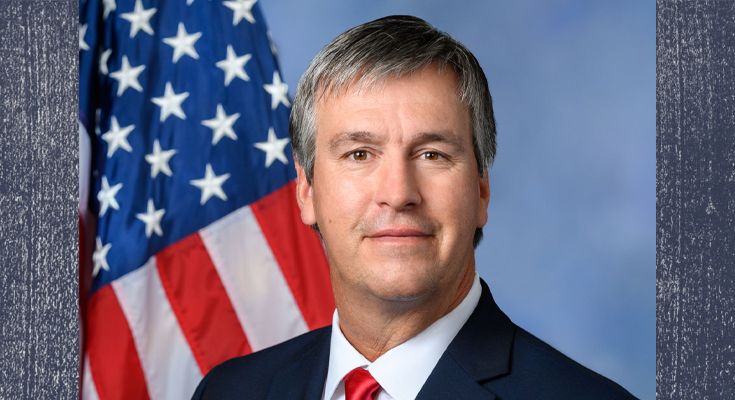
Last week, Rep. Barry Moore, Rep. Abigail Spanberger (R-Virginia), and 41 Members of Congress, including House Agriculture Committee Chairman Glen Thompson, led a letter to Agriculture Secretary Tom Vilsack and U.S. Trade Ambassador Katherine Tai urging the General Administration of Customs China (GACC) to engage with the United States Department of Agriculture (USDA) Animal Plant and Health Inspection Service (APHIS) and to honor their 2020 trade agreement by restoring market access to states who followed agreed upon Highly Pathogenic Avian Influenza protocols. These affected states include 158 poultry processing and cold storage facilities and represent 43 percent of boiler production in the United States. “Poultry producers are under pressure not only to protect animal health but market health, too. American producers bet on reliable trading partners, and China is not holding up their end of the deal,” said Rep. Moore. “I urge Secretary Vilsack and Ambassador Tai to engage with their Chinese counterparts and encourage them to honor the 2020 agreement and restore American market access.” Congressman Glenn Thompson is the Chairman of the House Committee on Agriculture. “Trade is one of our most valuable tools to stimulate the economy, and China’s disregard for existing regionalization protocols is negatively impacting our poultry industry,” said Rep. Thompson. “Our nation’s growers follow long-standing guidelines to ensure the health and safety of poultry products. The Biden Administration must engage with the GACC to uphold our trade agreements and reopen this critical export market for U.S. poultry.” Commercial Poultry in Alabama generates more than $15 billion in revenue annually. It accounts for 65.6% of annual farming revenue in the state and employs more than 86,000 Alabama workers on farms, processing plants, and allied industries. The U.S. shipped about $732 million worth of broilers to Chinese buyers in 2020. That’s about 21% of total U.S. exports worldwide. Many of those chickens were raised in Alabama. In 2021, China imported $3.1B in Poultry Meat, becoming the world’s largest importer. China imports Poultry Meat primarily from Brazil ($1.27B), the United States ($908M), Thailand ($327M), Russia ($250M), and Argentina ($137M). Cutting off that market, especially with high input prices for feedstuffs and energy, could negatively impact Alabama poultry farmers. Barry Moore is in his second term representing Alabama’s Second Congressional District. To connect with the author of this story or to comment, email brandonmreporter@gmail.com.
Katie Britt and Tom Cotton lead bipartisan letter to Biden Administration about surge of Mexican steel

U.S. Senators Katie Britt and Tom Cotton, along with a bipartisan group of 11 of their Senate colleagues, sent a letter to Secretary of Commerce Gina Raimondo and U.S. Trade Representative Katherine Tai urging them to take action against the surge of Mexican steel imports, which they claim is unsustainable. The Sens. claim that the rising steel imports from Mexico raise grave concerns in America’s steel industry and steel communities such as those in Alabama. They also claim that this surge violates a 2019 agreement between the United States and Mexico negotiated by the Trump Administration. The letter contends that the United States deserves and should demand fair treatment from all trading partners, including its friends. “We urge the Biden administration to immediately begin consultations under the 2019 agreement to address this surge of Mexican steel and return imports to ‘historic volumes of trade,’ with quotas, if necessary,” the Senators wrote. “However, if the Mexican government refuses to remedy this breach, we regretfully urge the administration to consider other mechanisms to ensure compliance and protect American jobs, including the reapplication of Section 232 tariffs.” “The Administration has a responsibility to strongly enforce trade agreements to ensure fairness for hardworking Americans,” said Sen. Britt. “This unprecedented, unacceptable surge in Mexican steel imports is endangering good-paying Alabama jobs and negatively impacting communities across our nation. Additionally, our domestic iron and steel industry is critical for our national security. I will continue to fight to grow opportunities for families in every corner of Alabama and America, while keeping our homeland safe and strong.” Alabama still has a significant iron and steel industry. The iron and steel industry is an original economic engine for the state and supports approximately 15,000 jobs and indirectly supports more than 76,000 jobs, including subcontractors and suppliers. The average annual Alabama wage in the industry is nearly $100,000. Every two Alabama iron and steel industry jobs also supports ten additional jobs throughout the supply chain. Co-signing the letter are Senators Sherrod Brown (D-Ohio), John Boozman (R-Arkansas), Bob Casey (D-Pennsylvania), Thom Tillis (R-North Carolina), Tammy Baldwin (D-Wisconsin), Ted Budd (R-North Carolina), Elizabeth Warren (D-Massachusetts), Tina Smith (D-Minnesota), Rick Scott (R-Florida), Marco Rubio (R-Florida), and J.D. Vance (R-Ohio). The American Iron and Steel Institute (AISI) says that imports of finished steel increased by more than 18 percent in January compared with December. Mexico was the second-largest supplier (behind Canada) of finished and semi-finished steel to the U.S. in January. Mexico shipped 456,000 tons of steel to the U.S. in January – an increase of 10 percent from December. Britt is also a member of the National Security and International Trade and Finance Subcommittee of the Senate Committee on Banking, Housing, and Urban Affairs. To connect with the author of this story or to comment, email brandonmreporter@gmail.com.
Joe Guzzardi: White House shrugs at Chinese espionage
A federal jury in Chicago recently found Chinese national Ji Chaoqun, 31, a member of the U.S. Army reserves, guilty of conspiracy to act as an agent of a foreign government. The jury also found Chaoqun guilty of one count of making false statements to the U.S. Army during his application process. Ji enlisted in 2016 via the controversial Military Accessions Vital to the National Interest program (MAVNI) – an initiative allowing U.S. military offices to hire legal aliens deemed sufficiently useful for service. In light of Ji’s conviction, the MAVNI program should be re-evaluated. In a statement, the Department of Justice said that Chaoqun worked for intelligence agents that operated within the Chinese government. In that capacity, he attempted to recruit engineers and scientists on behalf of the Chinese Intelligence Ministry. Ji arrived in the U.S. on an F-1 student visa to study electrical engineering at the Illinois Institute of Technology, which had forged ties with Chinese universities and colleges. During the academic year 2020/2021, 317,299 Chinese students were enrolled in U.S. academic institutions. China is the major sender of international students to U.S. college campuses. Among all international graduates, more than a million have remained in the U.S. and work as part of the Optional Practical Training Program. They have displaced American information technology employees or aspiring college degree holders looking for jobs. Chaoqun’s conviction is the latest in a growing list of Chinese nationals who have infiltrated, with little difficulty, the federal government, academia, and U.S. corporations. Because of the victims’ high profiles, the two most well-known Chinese spy cases are Fang Fang, California U.S. Rep. Eric Swalwell’s mistress, and California Sen. Dianne Feinstein’s chauffer and aide for two decades. At the time, Feinstein was the Senate Intelligence Committee chair. When the FBI investigations heated up, the two Chinese operatives fled the country and returned home. No further information about them has been gleaned. The conclusion is, however, that if two low-level Chinese spies can access the U.S. Congress, then infiltration must be a snap. If China represents the biggest threat to the U.S., as FBI Director Christopher Wray and others insist, then tighter oversight on arriving Chinese nationals is paramount. Wray said that the Chinese Communist Party (CCP) has implemented a multi-layered, generational campaign with the goal to become the world’s economic and technological leader. Wray listed economic espionage, data hacking, intellectual property theft, bribery, blackmail, and other coercive attempts “to sway our government’s policies, distort our country’s public discourse, and undermine confidence in our democratic processes and values.” The FBI director could have pointed to Swalwell and Feinstein as examples to drive his point home. In June 2015, Chinese hackers stole the personal data of 145 million Americans when they accessed the Office of Personnel Management’s servers. With a warning from Wray, a top-ranking law enforcement officer, and documented case history to support his concerns, the federal government should, at a minimum, be on high alert to China’s efforts to undermine the government. Instead, the Biden administration proceeds blasély on its existing course and may accelerate Chinese nationals’ admissions and their path to citizenship. In February, the President’s Advisory Commission of Asian Americans, Native Hawaiians, and Pacific Islanders (AANHPI) held its first-ever meeting. Joe Biden established the commission through a 2021 executive order and appointed Health and Human Services Secretary and U.S. Trade Representative Ambassador Katherine Tai to co-chair. The 25 individual commissioners have extensive involvement in diversity and equity issues. Six subcommittees were formed to advance equity, justice, and opportunity, including a subcommittee to address immigration and citizenship. Whenever the Biden administration talks about immigration in the same breath with equity, justice, and opportunity, the takeaway is more immigration which in turn means more employment permits granted to immigrants and fewer jobs for Americans. AANHPI is toiling in obscurity and will be disbanded when a new Congress takes over in January 2023. But the commission reflects Biden’s mindset; equity for all except working Americans, and specifically border city residents whose communities migrants have overrun, and whose lifestyles have been altered, possibly forever, by the president’s unshakeable commitment to open borders. Joe Guzzardi is a nationally syndicated newspaper columnist who writes about immigration and related social issues. Joe joined Progressives for Immigration Reform in 2018 as an analyst after a ten-year career directing media relations for Californians for Population Stabilization, where he also was a Senior Writing Fellow. A native Californian, Joe now lives in Pennsylvania. Contact him at jguzzardi@pfirdc.org.
Barry Moore signs letter urging Joe Biden to hold China accountable
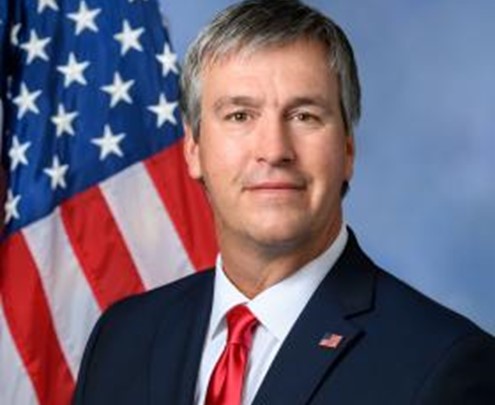
Rep. Barry Moore joined 57 other members of Congress in signing a letter to President Joe Biden urging him to hold the Chinese Communist Party accountable for neglecting their commitments made during the Trump administration to make the U.S. – China agricultural trade relationship more balanced and reciprocal. Two years ago, the United States and China signed a two-year trade deal that required China to make reforms to its trade regime and import $73.9 billion of U.S. agricultural products in 2020 and 2021 combined. China failed to live up to that commitment by $16 billion. The members urged President Biden, U.S. Secretary Thomas J. Vilsack, and U.S. Trade Representative Katherine Tai to rectify the situation and stand for U.S. agricultural producers. “President Biden’s weakness on the global stage in Afghanistan, Ukraine and beyond has sent the message that other nations can walk all over us, so this administration must take immediate actions to stand up for America and ensure nations like China honor their commitments,” said Moore in a press release. “American farmers and ranchers produce the highest quality crops, livestock, poultry, and dairy products in the world, and we cannot continue to allow China to target them without consequences. The ability of U.S. agriculture to participate in a worldwide marketplace is essential to our markets at home and the ability to make a profit, and I am proud to join my colleagues to demand immediate action from the President.” “President Biden either needs to force China to comply with their end of the agreement or punish them for failing to do so. That’s how deals work,” said Rep. Tracey Mann. “This administration must address the full suite of issues in a comprehensive and holistic manner and hold the Chinese Communist Party accountable for treating America and its farmers, ranchers, and agricultural producers like a doormat. My colleagues and I are calling for immediate action.” “America must enforce our agreements,” said Rep. August Pfluger. “I am proud to join my colleagues in calling on President Biden to hold China accountable for their Phase One commitments. This administration must take immediate action and stand up for the agricultural producers that feed and clothe our nation. It’s time to put the United States first and stand up to our adversaries.”
Tommy Tuberville joins Raphael Warnock and other leaders in bipartisan support for peanut farmers
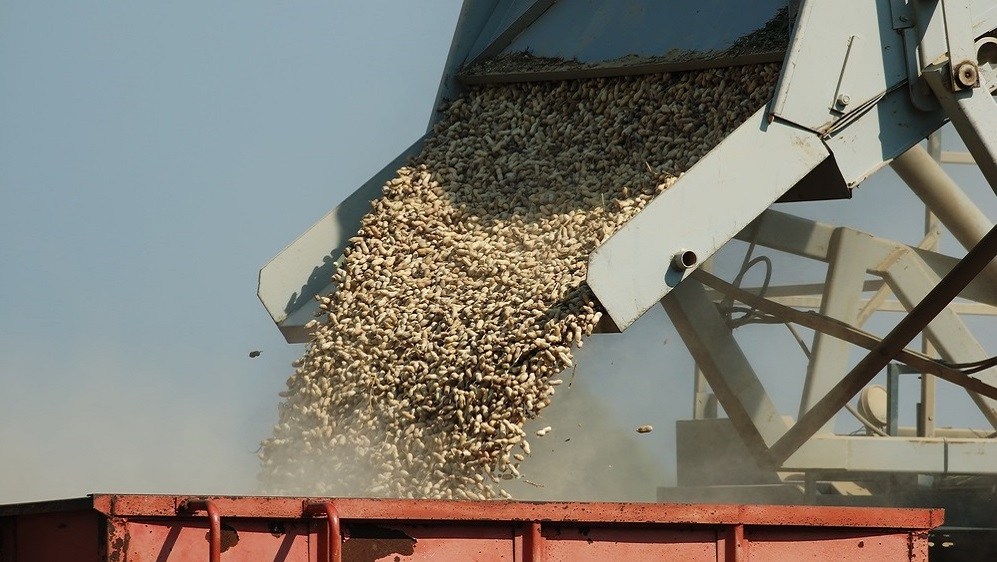
Senators Tommy Tuberville and Raphael Warnock led 17 colleagues in a bipartisan push to reduce restrictive trade barriers and expand export market access for domestic peanut farmers and processors. The letter was sent to U.S. Department of Agriculture (USDA) Secretary Tom Vilsack and U.S. Trade Representative (USTR) Ambassador Katherine Tai. According to Tuberville’s press release, removing trade barriers for peanut farmers and processors would give a financial boost to the domestic peanut sector, increase international market access, and create job opportunities across the country. The letter states, “As U.S. Senators who proudly represent peanut farmers in our states, we strongly support joint efforts by USDA and USTR to engage with your E.U. counterparts with the goal of reducing existing non-tariff trade barriers on peanut exports. Increased market access will ultimately benefit the peanut farmers in our states, and we stand ready to support your efforts on their behalf.” Sen. Warnock stated on Twitter, “With GA leading the nation in peanut production, I was proud to lead a bipartisan group of Senators in pushing @USTradeRep & @USDA to expand export market access for our hardworking domestic farmers & processors. When we champion our farmers, we champion GA & our nation.” With GA leading the nation in peanut production 🥜, I was proud to lead a bipartisan group of Senators in pushing @USTradeRep & @USDA to expand export market access for our hardworking domestic farmers & processors. When we champion our farmers, we champion GA & our nation. — Senator Reverend Raphael Warnock (@SenatorWarnock) June 23, 2021 The senators who signed the letter include Senators John Boozman (R-AR), Richard Burr (R-NC), Bill Cassidy (R-LA), Tom Cotton (R-AR), John Cornyn (R-TX), Ted Cruz (R-TX), Lindsey Graham (R-SC), Cindy Hyde-Smith (R-MS), Tim Kaine (D-VA), Jon Ossoff (D-GA), Marco Rubio (R-FL), Rick Scott (R-FL), Tim Scott (R-SC), Richard Shelby (R-AL), Thom Tillis (R-NC), Mark Warner (D-VA), and Roger Wicker (R-MS). A copy of the letter can be found here and below: Dear Secretary Vilsack and Ambassador Tai, We write to bring your attention to ongoing nontariff trade barriers from the European Union (E.U.) affecting the domestic peanut sector. We encourage the U.S. Department of Agriculture (USDA) and the Office of the U.S. Trade Representative (USTR) to prioritize interagency collaboration and industry engagement in order to negotiate an effective solution with your E.U. counterparts that will ultimately allow increased market access for U.S. peanuts. According to data published by USDA, domestic peanut farmers produced over 1.6 million acres of peanuts in 2020 with a farm gate value over $1.2 billion. Due to their susceptibility to naturally-occurring aflatoxin, domestic peanut growers are subject to USDA testing to ensure all peanuts harvested for human consumption are safe to enter the food supply. U.S. growers have a long history of partnering with USDA to ensure their harvest is safe, with USDA also working on research initiatives to address the underlying causes of aflatoxin contamination and to improve post-harvest handling. Collectively, these efforts demonstrate that U.S. farmers and government officials are actively working to ensure that peanuts produced domestically are safe. In 2020, an estimated 668,000 metric tons of U.S. produced peanuts were exported to international markets. Unfortunately, stringent E.U. testing requirements for aflatoxin are preventing increased U.S. exports into this high-value market. In recent years, the U.S. industry estimates they have lost approximately $170 million in sales into the E.U. due to difficulties presented by these burdensome testing requirements. A review of data from the first quarter 2021 indicates an additional $130 million in anticipated lost sales. Without efforts to negotiate a workable solution that will increase opportunities for domestic peanut operations, our farmers and businesses will continue to struggle with prohibitive requirements set by international partners. As U.S. Senators who proudly represent peanut farmers in our states, we strongly support joint efforts by USDA and USTR to engage with your E.U. counterparts with the goal of reducing existing non-tariff trade barriers on peanut exports. Increased market access will ultimately benefit the peanut farmers in our states, and we stand ready to support your efforts on their behalf. Thank you for consideration of this request.
