
Florida’s Ron DeSantis, legislative leaders push for reforms against frivolous lawsuits
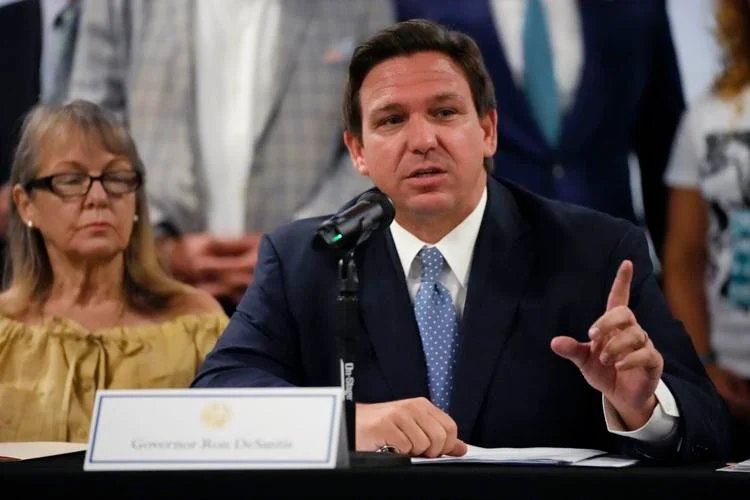
Florida Gov. Ron DeSantis and legislative leaders want reforms to take on frivolous lawsuits and put a stop to what the governor calls “predatory” practices by trial lawyers. DeSantis held a news conference in Jacksonville Tuesday with House Speaker Paul Renner, R-Palm Coast, and Senate President Kathleen Passidomo, R-Naples, about the proposals which would eliminate one-way attorney fees and fee multipliers for all lines of insurance, modernize Florida’s “bad faith” law, and put caps on damage claims to protect small businesses. “There are things in the law that are trying to create opportunities to bring cases,” DeSantis said. “One of the reasons our auto insurance rates are higher here is because there’s a lot of cost of litigation embedded in these auto insurance premiums.” DeSantis noted the stark difference between what the client receives, and what their lawyer receives. “So, there was one case where the client was awarded $216.67, and the lawyer got over $100,000 in fees,” DeSantis said. “There was one case with $2,114.55 awarded to the client, and the attorney was able to recover almost eight times the amount that the client did.” House Speaker Renner supported the changes and said the new proposals will level the playing field for legitimate claimants. “This is really about bringing things into balance,” Renner said. “We want people with legitimate claims to bring those claims, but you should never have a situation where a client gets 200 bucks, and the lawyer gets a hundred thousand bucks.” Senate President Kathleen Passidomo spoke about rising property insurance costs and the legislation passed in December’s special session to combat it. She says a large part of the reason why costs are becoming unmanageable is the cost of litigation and lawyers using the system for their own gain. Passidomo noted that most lawyers in Florida perform their jobs well, but a small number of them chase fees through suing insurance companies. She also pointed out that those types of lawyers do not mention their clients’ needs once, nor do they properly represent them. “We have to stop that practice,” Passidomo said. “The Florida Bar regulates them and has done nothing to stop the practices that they have employed. If the Florida Bar doesn’t do it, then we’ll have to.” Passidomo further stated that the changes put in place will be to protect Floridians and their interests. “We are going to work through these issues, and we’re going to come up with some legislation to protect you, to protect your businesses, and to protect those people that actually have cases…from the lawyers that are just doing it to raise fees,” Passidomo said. Republished with the permission of The Center Square.
Florida could lower abortion ban from 15 weeks to 12 weeks
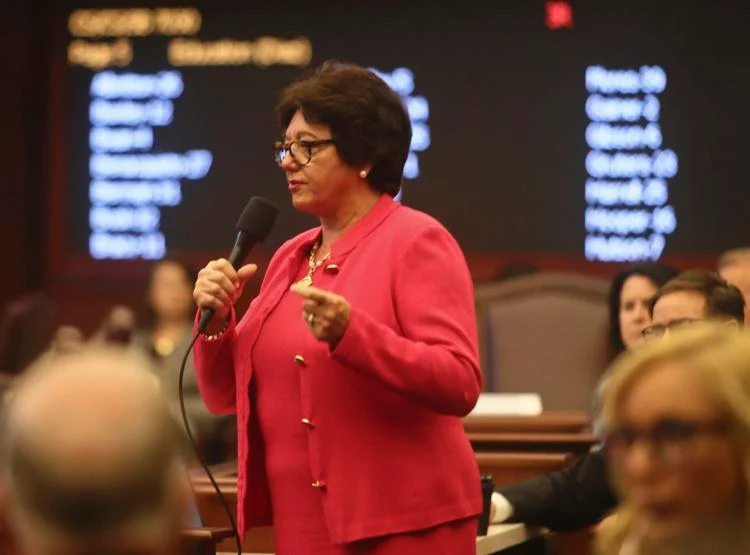
Changes could be coming to Florida’s abortion laws after the incoming senate president, Sen. Kathleen Passidomo, said she would like to see Florida’s abortion ban go from 15 weeks’ gestation to 12 weeks’ gestation. The state of Florida banned abortion in 1900, but that ban was overturned in 1973 by the U.S. Supreme Court in the Roe v. Wade case. That ruling itself was overturned by the Supreme Court in June. Anticipating that decision, Florida Gov. Ron DeSantis moved to ban abortions from 15 weeks’ gestation, with the law making no exceptions for cases pertaining to rape and incest. At the signing of the bill, DeSantis said, “House Bill 5 protects babies in the womb who have beating hearts, who can move, who can taste, who can see, and who can feel pain. Life is a sacred gift worthy of our protection, and I am proud to sign this great piece of legislation, which represents the most significant protections for life in the state’s modern history.” Abortion changes had already happened in June 2020 when DeSantis signed a law that states minors must provide written permission from a parent or guardian to have an abortion. Founder and executive director of Florida Voice for the Unborn, Andrew Shirvell, told The Center Square that lowering the ban from 15 weeks to 12 will not change abortion rates in Florida, as most abortions are sought before then. “The vast majority of abortions in Florida take place prior to 12 weeks gestation. Accordingly, a new Florida law banning abortions after 12 weeks gestation – as opposed to 15 weeks gestation – would do almost nothing to curb Florida’s horrendous abortion rate,” Shirvell said. “Moreover, permitting an unborn child to be killed via abortion after 12 weeks gestation, if the child was conceived as a result of rape or incest – as Senator Passidomo apparently wants to do – is a step backwards, since the 15-week abortion ban does not allow for those so-called ‘exceptions.’” Shirvell added there should be no reason why Florida couldn’t completely ban abortion since Roe is now overturned. “Prior to the U.S. Supreme Court’s reversal of Roe v. Wade earlier this year, enacting a 12-week abortion ban might have made sense. Such incremental measures, including ‘Heartbeat’ laws prohibiting abortions after six weeks gestation, were designed, in part, to challenge Roe. Now that Roe has been overturned, Florida and her sister states have been given the green light to completely protect all unborn children from conception,” Shirvell added. Nearly a dozen Republican-controlled states have done that already. he noted. The new speaker of the Florida House, Palm Coast Republican Paul Renner, said that the Republican supermajority in Florida will likely lead to more pro-life legislation in the future. “I want to see us move in a pro-life direction, but I’m also sensitive to the fact that 50 years of Roe v. Wade has developed a culture and an expectation around this issue that is not going to change overnight, and I say that as some who believes that life begins at conception,” Renner said during his first on-camera appearance since becoming speaker. “We have 85 members, we have supermajorities in the House and Senate, and I can tell you they are pro-life majorities, I’m pro-life, I’d like to see us move in a pro-life direction,” Renner said. “I think we need to look at how we can balance some of those interests, and so we will take a look at where everybody is in the caucus.” Republished with the permission of The Center Square.
