Democratic governors to Joe Biden: Migrant crisis is ‘untenable,’ border ‘too open’
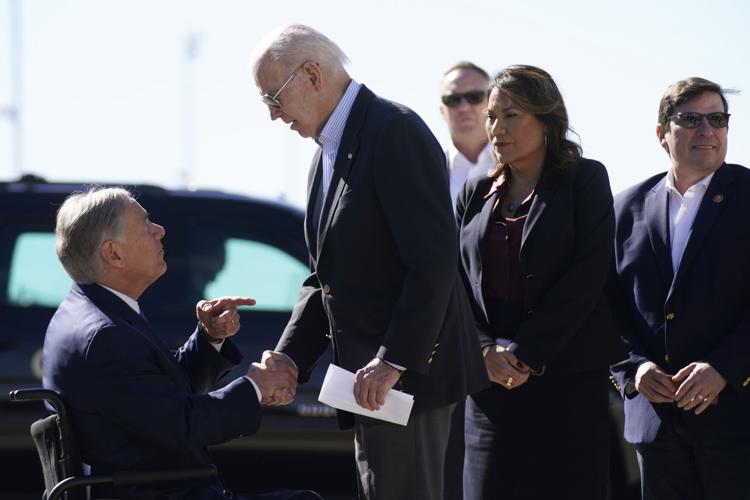
By Greg Bishop | The Center Square Illinois Gov. J.B. Pritzker is telling President Joe Biden the number of migrants arriving to Chicago from the southern U.S. border is accelerating. The situation is overwhelming, untenable and uncoordinated, he added. In a letter Pritzker sent the White House Monday, the governor said “the humanitarian crisis is overwhelming our ability to provide aid to the refugee population.” More than 15,000 migrants have arrived in Chicago in the past 13 months. With the letter, Pritzker joined a growing list of Democrats calling on the White House to do more. “Unfortunately, the welcome and aid Illinois has been providing to these asylum seekers has not been matched with support by the federal government,” the letter first reported by Capitol Fax said. “Most critically, the federal government’s lack of intervention and coordination at the border has created an untenable situation for Illinois.” Illinois taxpayers have covered more than $330 million on services for the migrants, a number Pritzker said is growing each day. “That’s a massive amount of money for a state still overcoming the health and economic effects of COVID-19,” Pritzker said. “Add to that the over $100 million the city of Chicago contributed.” Pritzker told Biden the situation is “untenable” and “requires your immediate help beyond the coming work authorizations for some of the asylum seekers.” The Biden administration should have one person provide oversight of the nation’s efforts at the border, Pritzker said, noting there are too many different federal department contacts who are not coordinated with each other. “A single office with an identified leader must be assigned to work for the cities and states across the silos of government to manage the challenges we all face,” Pritzker said. “It is time for the federal government to take a much more active role in managing the transport and destination of the transport of asylum seekers.” Pritzker said it is untenable to allow “just one state to lay the burden upon a certain few states run by Democrats …” While Texas Gov. Greg Abbott, a Republican, has been critical of Biden’s handling of the border by overseeing transportation of migrants crossing the southern U.S. border to Chicago, New York City, Washington D.C., and elsewhere, Democratic Mayor of El Paso Oscar Leeser has also been involved. In Arizona Monday, Gov. Katie Hobbs also expressed frustration with the flood of illegal border crossers and told The Center Square that the busing policy of some migrants from Arizona to other areas of the country is still in effect. “Yeah. As we’re seeing increases in folks coming in the NGO network at their capacity, we’re continuing to provide support, and that includes busing,” she said. In New York, a senior advisor to New York City Mayor Eric Adams urged Biden to “close the border.” “The federal government needs to do its job,” Adams’ advisor Ingrid Lewis-Martin told PIX 11. “We need the federal government, the Congress members, the Senate, and the president to do its job: Close the borders.” New York Gov. Kathy Hochul told CBS Sunday that the border “is too open right now.” “People coming from all over the world are finding their way through, simply saying they need asylum, and the majority of them seem to be ending up in the streets of New York, and that is a real problem for New York City,” she said. White House press secretary Karine Jean-Pierre addressed border security concerns. “You have a president that has delivered record funding, record funding to make sure that we have additional … border patrol federal employees at the border,” Jean-Pierre said. “We’ve made clear that attempting to cross the border unlawfully will result in prompt removal, a five-year ban on reentry, and potential criminal prosecution.” Among other recommendations Pritzker offered Biden include waiving fees for temporary protected status applications, increasing the logistical coordination and data collection, provide financial support to state, local government and non-government organizations for housing, food and social services, and approve Illinois’ requests for Medicaid waivers, housing vouchers, and federal coordination and support. “Today, Illinois stands mostly unsupported against this enormous strain on our state resources,” Pritzker said. “Mr. President, I urge you … and the rest of your administration to take swift action.” Republished with the permission of The Center Square.
Investment standards debate moves into state legislatures

Environmental, social, and governance investment standards are a hot topic among Republican lawmakers across the U.S., who see it as a political move to force a progressive agenda. Democrats, on the other hand, see it as a smart investing strategy. Oklahoma is the latest state to attract national attention to ESG investing, even though the Legislature passed a bill regarding it last year. State Treasurer Todd Russ published a list of 13 financial institutions banned from doing business with the state of Oklahoma earlier this month because of their ESG policies regarding fossil fuels. Those 13 companies have 90 days to tell the state it has stopped boycotting energy companies. And if they haven’t stopped their boycott, the law grants the state six months to divest itself of 50% of investments with the financial company and a full year to divest 100%. In Tennessee, Gov. Bill Lee signed a bill that prevents the state’s treasurer from investing state funds based on ESG. The bill’s fiscal note states it will not significantly impact state or local revenues. Some Republican states are raising concerns and sometimes rejecting bills banning ESG-related policies. The North Dakota House of Representatives rejected a bill that would have required the North Dakota Department of Financial Institutions to monitor banks for ESG policies. The bill would have cost the state about $1.7 million, with most of that going to salaries for additional bank examiners. The Arkansas Legislature also discussed possible fiscal implications when discussing a bill similar to Oklahoma’s, requiring the state to divest from financial institutions with ESG standards. The treasurer would also have to maintain a list of those financial institutions. Gov. Sarah Huckabee Sanders signed the legislation. Fiscal concerns have not deterred every state from opposing ESG standards. Indiana Gov. Eric Holcomb signed House Bill 1008, which prohibits the board of trustees of the Indiana public retirement system “from making an investment decision with the purpose of influencing any social or environmental policy or attempting to influence the governance of any corporation for nonfinancial purposes.” It also requires the pension board to make investment decisions “solely in the financial interest of the participants and beneficiaries of the system for the exclusive purposes of providing financial benefits to participants and beneficiaries and defraying reasonable expenses of administering the system.” This despite concerns the state could lose $6.7 billion in investments. Utah Attorney General Sean Reyes, Alabama Attorney General Steve Marshall, and Illinois State Treasurer Michael Frerichs testified before the U.S. House Oversight Committee earlier this month. Frerichs told the panel that ESG was simply data used to make investment decisions. Treasurers and comptrollers from Colorado, Connecticut, Delaware, Massachusetts, New York City, Oregon, Vermont, and Washington state issued a statement backing Frerichs’ testimony. “The truth is simple. More data on risk leads to stronger returns for retirement accounts over the long term,” they said. “Ignoring risks to focus on short-term gains is not aligned with the needs of millions of Americans saving for retirement or their families’ education. But it is aligned with a short-term outlook to boost corporate profits. That’s why we’re hearing such loud and manufactured outrage against responsible investing.” While Republicans are banning financial institutions with ESG investment standards, Democratic-controlled states are embracing policies. New York lawmakers are considering a bill establishing a Green New Deal task force. The task force would develop a “detailed statewide, industrial, economic mobilization plan for the transition of the New York economy to become greenhouse neutral by 2030.” One of the bill’s goals is to promote “economic and environmental justice and equality.” Washington state lawmakers are considering a bill that would require “the state investment board publicly report on the climate-related financial risk, social responsibility, and proxy voting and corporate governance policies within its private and public market portfolios, including the alignment of the fund with the Paris climate agreement and Washington’s climate policy goals.” The legislation has yet to be heard in committee. In Arizona, the Republican-majority Legislature passed a bill banning banks from using a “social credit score” when making lending decisions. Democratic Gov. Katie Hobbs vetoed the bill, calling it ambiguous as it doesn’t define a “social credit score.” And in Illinois, Democratic lawmakers passed a bill that requires investment managers of Illinois public funds, including pension systems, to disclose how they integrate environmental, social, and governance policies into their investment strategies. The bill is set to be sent to Democratic Gov. J.B. Pritzker. Republished with the permission of The Center Square.
Several U.S. Senate and House races remain too close to call as vote counts trickle in
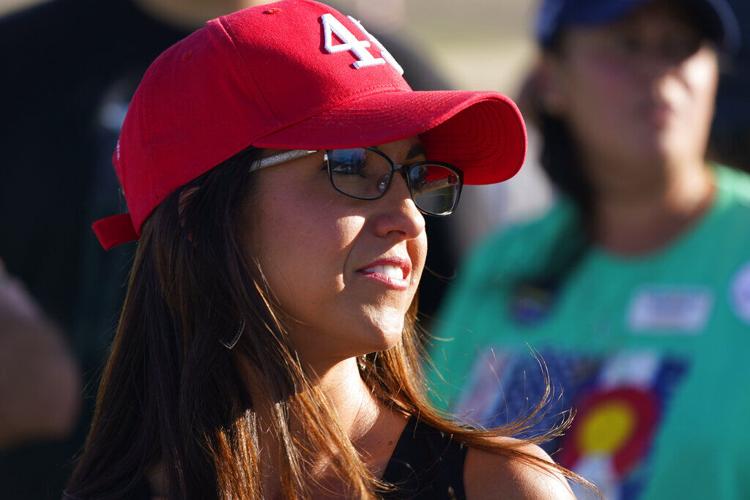
Two days after Election Day, several races are still too close to call, leaving the fate of the U.S. House and Senate hanging in the balance. FiveThirtyEight currently has 210 Republican House seats compared to 200 for Democrats, leaving both short of the 218 needed to control that chamber. The House is still leaning toward Republicans, though, with expected House Speaker Rep. Kevin McCarthy, R-Calif., declaring Republican control. Nancy Pelosi has not publicly weighed in, even as many wait to see if she will retire from leadership. In fact, some races are separated by only a handful of votes. Outspoken supporter of former President Donald Trump, Rep. Lauren Boebert, R-Colo., is leading her opponent by fewer than 400 votes at time of publication. Arizona, California, Nevada, and other states also have close House races. Control of the Senate is still undecided and may come down to a Dec. 6 Georgia runoff between Republican Herschel Walker and Democrat Raphael Warnock. Arizona’s Senate race is not called, though Democrat Mark Kelly leads Republican Blake Masters roughly 51.4% to 46.4%. The Arizona Secretary of State’s website indicates 100% of precincts reporting, but Maricopa County is still reportedly working through hundreds of thousands of mail-in ballots turned in on Tuesday. In Nevada’s uncalled Senate race, Republican Adam Laxalt leads Democrat Catherine Cortez Masto 49.4% to 47.6%, with 83% reporting. Gubernatorial races are tight as well. The closely watched governor’s race in Arizona has Republican Kari Lake behind Democrat Katie Hobbs by about 13,000 votes as counts continue Thursday. Overall, election night disappointed many Republicans who hoped for the “red wave.” “So after all the analysis, it is clear the most likely case is both houses of Congress will go Red and the mega states of TX and FL go redder,” Matt Schlapp, chair of the Conservative Political Action Committee, wrote on Twitter. “We lost too many close races, but all in all, I go back to VA very pleased.” Former President Donald Trump has taken criticism after many of the candidates he backed did not fare well, but he pushed back against those critiques in a string of posts on Truth Social Wednesday and Thursday. “Incredible how dishonest the Fake News Media is,” he wrote. “The Failing New York Times has gone crazy. So many of the people I Endorsed went on to victory on Tuesday Night, nobody was even close, and they literally make up a story refusing to write the facts, and only quoting enemies and losers. Almost all of the people I endorsed WON, yet if you read the story from two Trump hating writers (who only do as they are told!), you would not even recognize the truth.” Speaking at a press conference Wednesday, President Joe Biden said he always expected Democrats to do “fine” and wants to work with Republicans going forward. “While we don’t know all of the results yet – at least, I don’t know them all yet – here’s what we do know,” he said. “While the press and the pundits are predicting a giant red wave, it didn’t happen. And I know you were somewhat miffed by my – my [sic] optimism, but I felt good during the whole process. I thought we were going to do fine. “The American people have made clear, I think, that they expect Republicans to be prepared to work with me as well,” he added. Republished with the permission of The Center Square.
Presidential primaries in 4 states will go on as planned
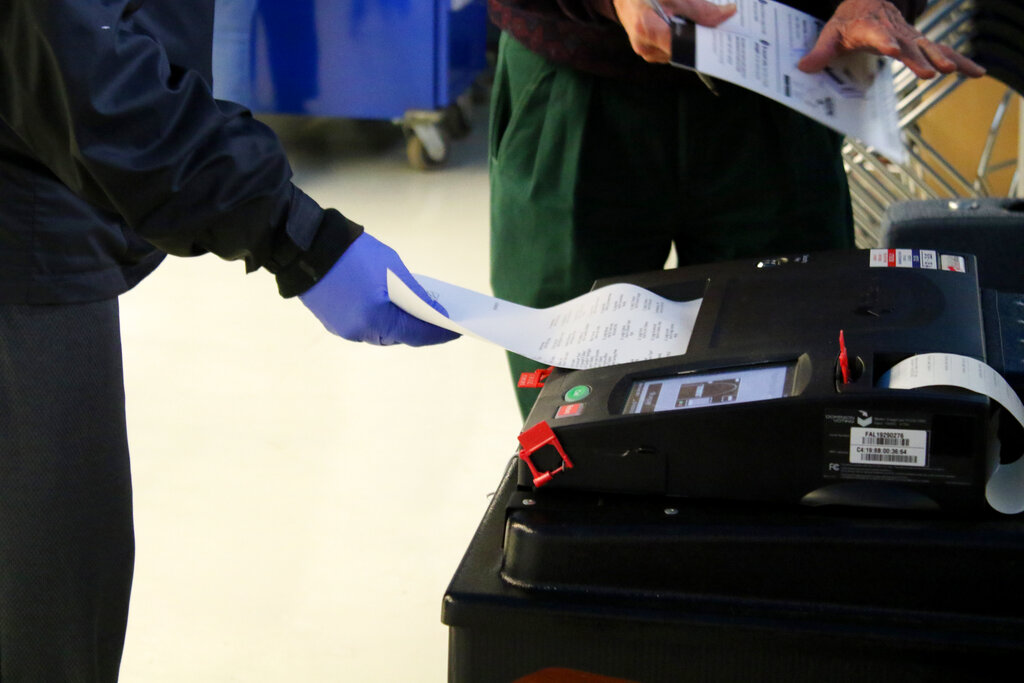
Some states have postponed their primaries.