
Kay Ivey announces $231 million rail infrastructure project
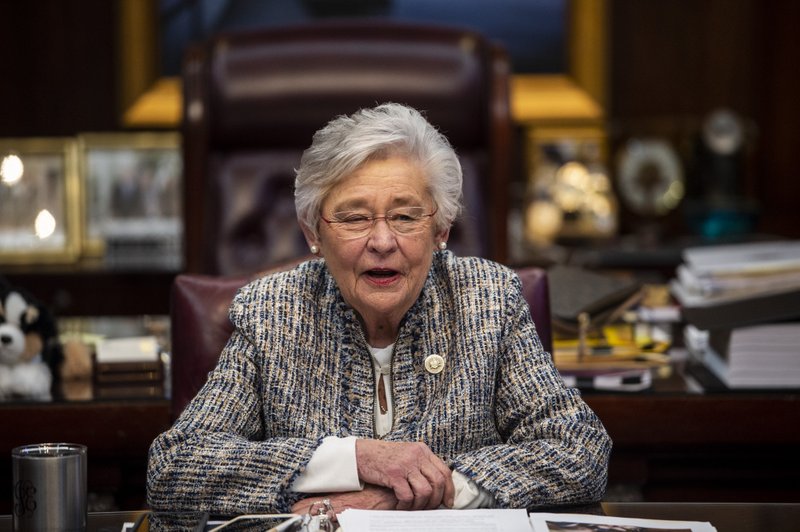
Gov. Kay Ivey announced a proposed $231.6 million program of rail projects called the A-USA Corridor. The project aims to upgrade rail infrastructure in central and southern Alabama. Phase One of the A-USA Corridor project involves 12 specific track, signal, and yard improvements on Norfolk Southern rail lines between Mobile, Selma, and Birmingham. The first phase of the A-USA Corridor initiative involves a $71.6 million initiative to link the Port of Mobile with the McCalla Intermodal Facility near Birmingham with a 280-mile rail corridor. It will also link mega economic development sites in Etowah, Shelby, and Washington/Mobile counties, each totaling more than 1,000 acres. A fourth site in Jefferson County will see the development of a 104-acre site with up to a million square feet of warehousing. “Working together with the Port in Mobile to build out our infrastructure to move the commerce for Alabama and the greater southeastern region of the country must be one of our top priorities,” stated Governor Ivey. “Creating good port access to central Alabama is a key part of this initiative, and it can provide options for freight containers to reach new destinations inland, which our country has struggled with during the supply chain crisis. I am proud our state is looking ahead and investing in the Alabama-USA Corridor and the future jobs and economic opportunity it will bring.” The port’s rapid growth requires an upgrade to more modern and efficient freight and intermodal rail infrastructure. “The Alabama Port Authority welcomes this vital project as we address rapid growth in the port’s container intermodal and freight business lines,” stated John Driscoll, director and chief executive officer. “The Norfolk Southern rail improvements will bolster capacity, reliability, and market access through the Port of Mobile for regional supply chains.” The construction phases of the project will create an economic benefit for Alabama of $497.2 million in gross business activity, including $184.8 million in earnings to 4,247 direct and indirect Alabama workers. During construction $13.1 million in state and local taxes will be generated. The A-USA Corridor project will be a public-private partnership. Norfolk Southern will fund more than 50 percent of the project. Alabama is investing $5 million into the project, with the remainder coming from present and future federal Consolidated Rail Infrastructure and Safety Improvements Program (CRISI) grants through the Alabama Department of Transportation, in partnership with Norfolk Southern. “The A-USA Corridor is an innovative public-private partnership that will strengthen the nation’s supply chain at a critical time and boost the regional economy,” said Alan Shaw, president of Norfolk Southern. “We look forward to working with Governor Ivey and the Port of Mobile to make the A-USA Corridor an engine for job creation in Alabama for years to come.”
Lawmakers face decisions on $1.5 billion in relief funds

Alabama lawmakers face decisions in the coming months on how to spend more than $1.5 billion in pandemic relief funds, and legislative leaders say infrastructure projects — such as broadband and sewer projects — are expected to be a spending priority. Congress allocated $2.12 billion for Alabama through the American Rescue Plan. The state received the first half in June and has $580 million remaining after steering $80 million to hospitals and nursing homes and $400 million on a controversial prison construction plan. The state will receive a second $1.060 billion in May or June of this coming year. The state also has $191 million allocated through the America Rescue Plan’s Capital Projects Fund. Senate President Pro Tempore Greg Reed, R-Jasper, said how to use the money will be one of the major issues before lawmakers in the session that begins January 11. He said proposals are still being developed, but he expects money to be steered toward a combination of local and regional projects as well as reimbursements to hospitals and other health care providers that have been hard hit during the pandemic. “You’re going to be looking at projects that are going be for individual communities,” Reed said adding that would likely be done by establishing a grant or application process. He said they are also considering line-item expenditures for “major projects that are going to be regional projects” as well as tasking the Department of Finance with managing additional reimbursement to health care providers. “There would be potentially additional dollars in healthcare that would need to go over and above the resources that we’ve already given that would go for reimbursement with hospitals, nursing homes, others.” Senate Finance and Taxation General Fund Chairmen Greg Albritton, R-Atmore, said legislative leaders plan to meet with Gov. Kay Ivey next week. He said every lawmaker has their own idea of how the remaining $580 million should be utilized. “I want this money to be invested in the future, not paying for the past. I want this money to go into matters that will make a difference for the next generation,” Albritton said. House Ways and Means General Fund Chairman Steve Clouse, R-Ozark, said he expects lawmakers will allocate the $580 million this session and leave decisions on the $1 billion — which the state won’t receive until after the session is concluded — until a later time. He anticipates a large amount of money will be put toward rural broadband and water and sewer projects. Clouse said the pandemic highlighted the lack of internet access with many children not having internet access as they tried to learn from home. “I don’t think we need to get into operating expenses and stuff that is going to require recurring revenue streams. This should be one-time capital type projects,” Clouse said. Alabama took criticism for using $400 million of pandemic relief funds for prison construction. Legislative Republicans said it was an allowed use, but critics argued it was not a proper use of the money. “Maybe our priorities will finally catch up after our $400 million we spent on prisons,” Rep. Chris England, D-Tuscaloosa, said. England said hospitals and nursing homes will be seeking additional resources, which he said is “especially relevant now that it looks like we are in the middle of another surge.” Hospitals have seen labor costs surge as they turn to contract travel staff to fill staff shortages as well as expenses for setting up clinics for monoclonal antibodies. “We’ve missed several opportunities to spend a lot of that money on education. While we were running CRT (critical race theory) out of the classroom, we ignored COVID sitting right there. We probably need to focus a little bit more resources on making sure our kids are safe from a real problem, versus an imaginary one,” England said. Republished with the permission of the Associated Press.
Issues to watch in the 2022 legislative session
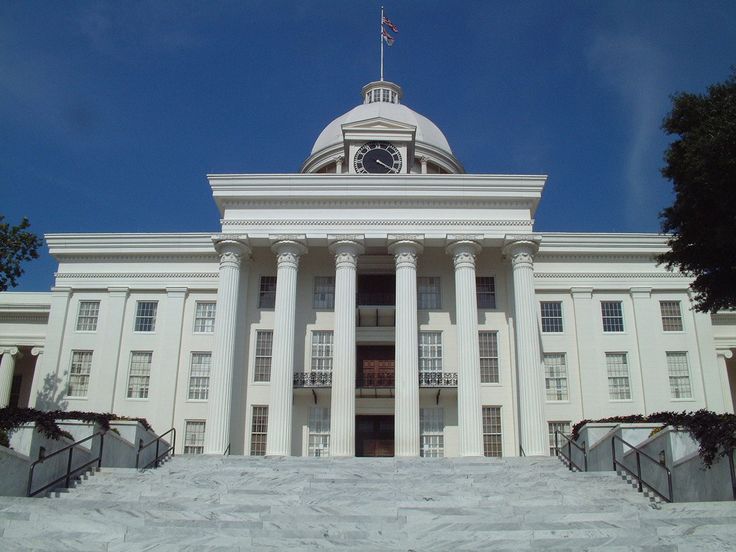
Alabama lawmakers return to Montgomery on January 11 for the 2022 legislative session. Here are some issues to watch as the session begins. PANDEMIC RELIEF FUNDS Lawmakers face decisions on how to spend over $1.5 billion in state relief funds from the American Rescue Plan. Congress allocated $2.12 billion for Alabama through the American Rescue Plan. The state has so far received $1 billion and has $580 million remaining after using $400 million for prison construction and $80 million to reimburse hospitals and nursing homes. Key lawmakers say they expect infrastructure projects to be among the proposed uses. GUN PERMITS Lawmakers are expected to again debate legislation that would do away with the need to get a permit to carry a concealed handgun. The legislation, known as “constitutional carry” to proponents, has been introduced for several years but never passed as it faced opposition from law enforcement. “I think, based on the feedback that I’m getting from members of the Senate, there’s going be a lot of interest in the constitutional carry legislation. I’ve heard that from both House and Senate members. So I think it will definitely be an issue that will be debated and will be something that we will deal with in session, for sure,” Senate President Pro Tempore Greg Reed said. ABORTION Nearly two dozen House Republicans are backing legislation similar to a Texas law that would ban most abortions and allow anyone to file civil lawsuits against violators and collect damages. The bill titled the “Alabama Heartbeat Act” would prohibit medical providers from performing an abortion once cardiac activity is detected, usually around six weeks and before some women know they are even pregnant. The measure would allow private citizens to file civil lawsuits against anyone who “aids or abets” an abortion and to collect at least $10,000 in damages for each performed abortion. GAMBLING Lottery and casino legislation will again be introduced in Alabama’s upcoming legislative session — with the goal of getting the measure before voters in November — but the outlook for the proposal is unclear. Some leaders in the House of Representatives have expressed skepticism that the bill will get a vote this year. Republican Sen. Greg Albritton of Atmore said he plans to propose a constitutional amendment that would include a state lottery, a compact with the Poarch Band of Creek Indians, and a yet-to-be-determined number of other gambling sites. Gambling legislation has failed in past sessions under a mix of conservative opposition and disputes over the number of casinos and who would have casino licenses. EDUCATION BILLS Republican Sen. Arthur Orr of Decatur is proposing an overhaul in math instruction that would include more math coaches in schools, summer programs, and interventions. Eventually, in 2028 fifth grade students would need to show they were meeting certain math benchmarks to move to the sixth grade under the proposal. Lawmakers previously approved a similar promotion requirement for third-graders with reading. However, Alabama Gov. Kay Ivey has said she will ask lawmakers for a one-year delay of the reading promotion requirement after the pandemic interrupted classrooms. The high-stakes promotion requirement for third-graders is currently set to take effect this spring. REMOVING RACIST LANGUAGE The Committee on the Recompilation of the Constitution has proposed a plan to strip racist language, such as provisions about segregated schools, from the state’s governing document. The sections were invalidated by court rulings but remain in the document. It also reorganizes the massive, sprawling document that has nearly 1,000 constitutional amendments to try to make it more user-friendly. If approved by lawmakers, it would go before voters in November 2022. TRANSGENDER TREATMENT BAN Lawmakers could again debate an attempt to forbid doctors from providing gender-confirming hormone treatment, puberty blockers, or sex reassignment surgery to treat transgender minors. The Alabama Senate approved the bill in 2021, but it did not get a vote in the House of Representatives. Arkansas became the first state to enact such a measure, but a federal judge in June blocked it from taking effect. ELECTION YEAR INFLUENCE Alabama legislators are up for reelection this year. For lawmakers seeking another term, the session brings the last opportunity to shore up their records before voters make their decisions. That traditionally brings a flurry of legislation and resolutions that legislators believe will appeal to their voters. The primary is May 24. However, lawmakers will also feel the need to finish up the session quickly in order to hit the campaign trail. Republished with the permission of the Associated Press.
Kay Ivey announces $300K in grants for law enforcement training and former inmate job opportunities
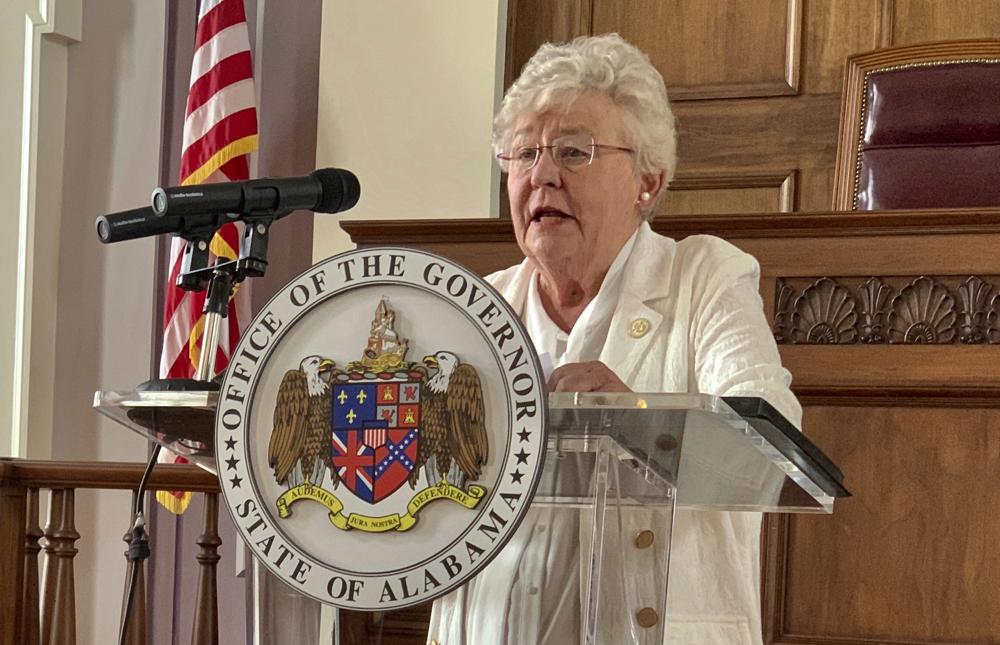
The Alabama Department of Economic and Community Affairs (ADECA) announced that Gov. Kay Ivey has awarded grants totaling $300,000 for law enforcement agents. Two grants totaling $200,000 will help law enforcement agents improve their skills in reducing crime and capturing criminals while another grant for $100,000 will be used to provide jobs to former inmates to reduce their chances of returning to prison after their release. ADECA will administer the grants from funds made available by the U.S. Department of Justice. ADECA offers programs supporting law enforcement and traffic safety, economic development, energy conservation, water resource management, and recreation development. Ivey stated, “Education means more opportunities, and that is true with both the training of our law enforcement, as well as and with current inmates to make sure they can be productive citizens. I am pleased to award these grants for all three of these programs.” “ADECA is pleased to join with Gov. Ivey in these three programs to continue training law enforcement officers and to teach job skills to inmates who can become law-abiding, tax-paying citizens when released from prison,” ADECA Director Kenneth Boswell said. Auburn University Montgomery received a $100,000 grant to conduct a statewide crime prevention training program for local, county, and state law enforcement officers and related workers. Jacksonville State University, also the recipient of a $100,000 grant, will continue to train law enforcement officers, particularly on the local level, in the basics of forensic sciences and evidence gathering. J.F. Ingram State Technical College in Elmore County will use funds to continue a program that links Ingram graduates who are inmates at nearby prisons with employers throughout Alabama needing their skills upon release.
Kay Ivey appoints Casey Rogers to external affairs director
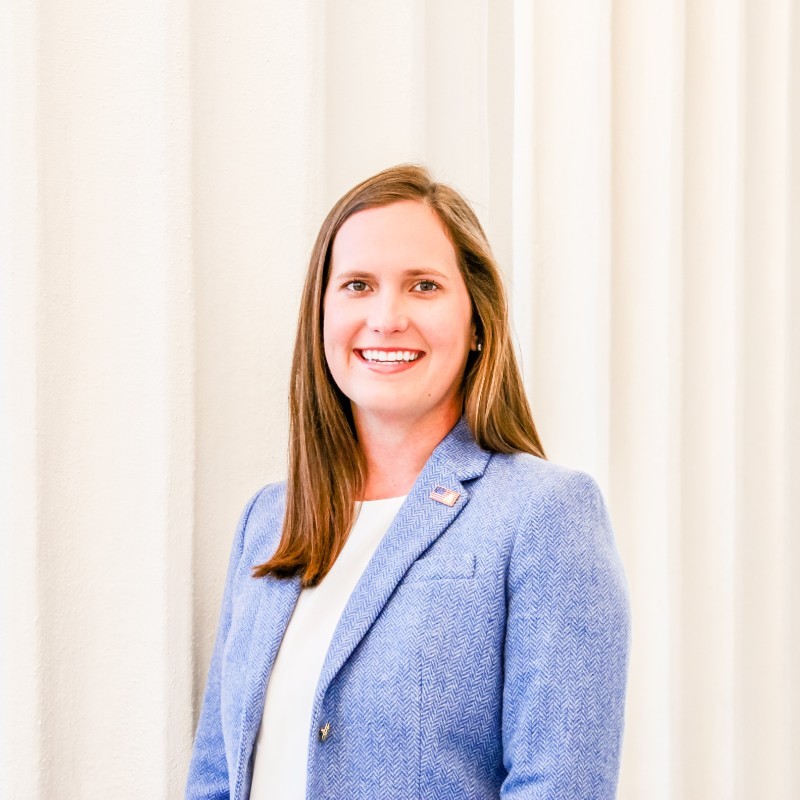
Gov. Kay Ivey announced she has appointed Casey Rogers to serve as her external affairs director. Rogers has been the director of state legislative programs for the Alabama Farmers Federation. As external affairs director, Rogers will serve as a staff contact for federal government offices and Alabama constitutional offices, cities, counties, and other organizations. “The Ivey Administration will always be committed to being the most open governor’s administration, and I am glad to have Casey on board to help further that mission,” said Governor Ivey. “Every member of my cabinet and staff are here to be resources for the people of Alabama, and I am confident in them as we work every day to make Alabama a great place to live, work and raise a family.” Prior to her time at the Alabama Farmers Federation, Rogers served as a field representative in the U.S. House of Representatives for Martha Roby. The Greenville native graduated from the University of Alabama in 2013 and worked as a communications specialist for Pioneer Electric Cooperative for four years. She was communications director for Public Service Commissioner Jeremy Oden’s 2014 campaign.
Groups seek probe of Alabama use of virus funds for prisons
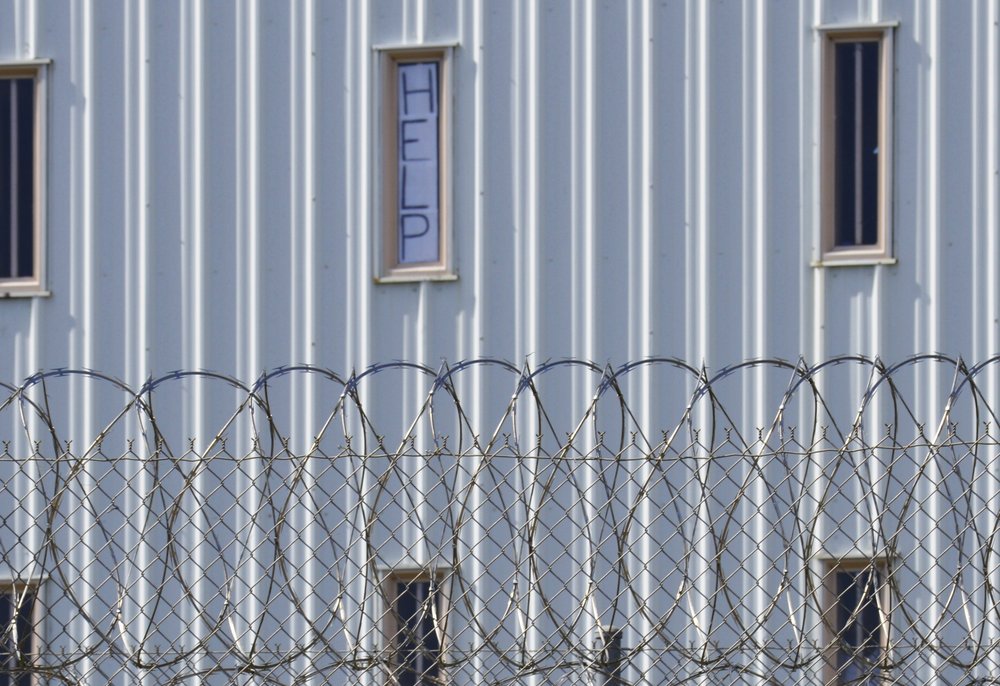
Nearly two dozen organizations have sent a letter asking the U.S. House Financial Services Committee to investigate Alabama’s plan to use $400 million in coronavirus pandemic relief funds to build two super-size prisons. The American Civil Liberties Union of Alabama, The Sentencing Project, and others signed on to a letter arguing that prison construction is an improper use of COVID-19 relief dollars from the American Rescue Plan. It asks Chairwoman Rep. Maxine Waters to hold hearings on the matter. “Directing COVID relief funds to a massive prison construction plan that long predates the pandemic is an absurd and inappropriate use of (American Rescue Plan) funds,” the organizations wrote. Alabama Gov. Kay Ivey signed legislation in October to tap $400 million of the state’s money from the federal plan to help build two super-size prisons. The Republican governor at the time called the construction plan “a major step forward” for the prison system, which faces various federal court orders and a lawsuit from the U.S. Department of Justice. The Alabama prison construction proposal calls for three new prisons — one north of Montgomery in Elmore County with at least 4,000 beds and enhanced space for medical and mental health care needs; another prison with at least 4,000 beds in south Alabama’s Escambia County and to replace the current women’s prison in Elmore — as well as renovations to existing facilities. Many existing facilities would close. Republican legislative leaders and Ivey have said they are confident that they can use the pandemic money for prison construction because the American Rescue Plan, in addition to authorizing the dollars for economic and health care programs, says states can use the money to replace revenue lost during the pandemic to strengthen support for vital public services and help retain jobs. But the opposed organizations argued that was not the intent of the money. “Building more prisons is a gross misuse of funds that were sent to help the people of Alabama, not punish them,” said JaTaune Bosby, executive director of ACLU of Alabama, in a statement. Bosby added that, “There seems to be no urgency from elected officials to provide relief to the people incarcerated in their facilities.” The U.S. Department of Justice has sued Alabama over a prison system “riddled with prisoner-on-prisoner and guard-on-prisoner violence.” The Justice Department noted in an earlier report that dilapidated facilities were a contributing factor to the unconstitutional conditions but wrote “new facilities alone will not resolve” the matter because of culture, management deficiencies, corruption and violence. The department updated its complaint this year, saying conditions in Alabama prisons have not improved since the federal government warned of unconstitutional conditions earlier and that male inmates continue to live in deadly and dangerous conditions. Ivey’s office did not immediately respond to an email seeking comment.
25 grants totaling $9.5 million awarded to help crime victims
Gov. Kay Ivey has awarded 25 grants totaling more than $9.5 million to help victims of crime across Alabama. These organizations offer services that support victims of domestic violence, sexual assault, child abuse, elder abuse, and other crimes. Services can include counseling, safe shelter, court advocacy, legal services, and more. Governor Ivey stated, “I am very thankful for these organizations across our state that provide help to residents of their communities in times of need. These organizations work to ensure that assistance is available for victims of crime 24 hours a day, seven days a week.” The Alabama Department of Economic and Community Affairs (ADECA) will administer the grants from funds made available by the U.S. Department of Justice. ADECA administers a wide range of programs that support law enforcement, victim services, economic development, water resource management, energy conservation, broadband expansion, and recreation. “ADECA stands with Gov. Ivey in support of these organizations and the important work they do across Alabama,” ADECA Director Kenneth Boswell stated. “These funds will help each organization continue their services to the people of Alabama.” .@GovernorKayIvey awards more than $9.5 million to assist victims of crime in Alabama https://t.co/C9lFide3dJ — ADECA (@ADECA) December 16, 2021 The following grants were awarded: $89,000 to the Family Services Center Inc. which serves Colbert, Cullman, Franklin, Jackson, Lauderdale, Lawrence, Limestone, Madison, Marion, Marshall, Morgan and Winston counties. $49,500 to Legal Services Alabama Inc. This grant provides assistance for Madison County, but the organization serves statewide. $77,583 to Thrive Alabama (AIDS Action Coalition of Huntsville Inc.) which serves Colbert, Cullman, Franklin, Jackson, Lauderdale, Lawrence, Limestone, Madison, Marion, Marshall, Morgan and Winston counties. $523,000 to AshaKiran Inc. This grant provides assistance for Jackson, Limestone, Madison and Montgomery counties, but the organization offers some services statewide. $313,166 to Victim Services of Cullman, Inc. which serves Cullman County. $107,651 to 2nd Chance Inc. which serves Calhoun, Cleburne, Etowah and Talladega counties. $47,000 to Family Services Center of Calhoun County Inc. which serves Calhoun County. $178,640 to Family Resource Center of Northwest Alabama Inc. which serves Walker County. $47,250 to Humane Society of Shelby County Inc. which serves Blount, Clay, Coosa, Jefferson, St. Clair, Shelby and Walker counties. $719,840 to YWCA Central Alabama which serves Blount, Jefferson and St. Clair counties. $150,720 to Bessemer Cut Off Advocacy Center Inc. which serves Jefferson County. $335,000 to Hispanic Interest Coalition of Alabama which serves Blount, Chilton, Jefferson and Shelby counties. $231,440 to Turning Point (SAN Inc.) which serves Bibb, Fayette, Hale, Lamar, Pickens and Tuscaloosa counties. $207,680 to the Domestic Violence Intervention Center which serves Chambers, Lee, Macon, Randolph, Russell and Tallapoosa counties. $148,800 to Tri-County Children’s Advocacy Center which serves Chambers, Randolph and Tallapoosa counties. $80,080 to Hope Harbour (Columbus Alliance for Battered Women Inc.) which serves Russell County. $424,170 to One Place Family Justice Center which serves domestic violence victims in Autauga, Butler, Chilton, Crenshaw, Elmore, Lowndes and Montgomery counties. $266,000 to One Place Family Justice Center which serves sexual assault victims in Autauga, Butler, Crenshaw, Dallas, Elmore, Lowndes, Montgomery, Perry and Wilcox counties. $989,114 to the Family Sunshine Center (Montgomery Area Family Violence Program Inc.) which serves domestic violence victims in Autauga, Butler, Chilton, Crenshaw, Elmore, Lowndes and Montgomery counties. $266,343 to the Family Sunshine Center (Montgomery Area Family Violence Program Inc.) which serves sexual assault victims in Autauga, Butler, Chilton, Crenshaw, Elmore, Lowndes and Montgomery counties. $361,613 to the Family Sunshine Center (Montgomery Area Family Violence Program Inc.) for services they provide statewide. $280,424 to The Lighthouse (Baldwin Family Violence Shelter) which serves Baldwin, Conecuh, Escambia and Monroe counties. $90,000 to Mothers Against Drunk Driving which serves the families of victims injured or killed by drunken drivers statewide. $1.6 million to Alabama CASA Network Inc. which provides court-appointed advocates for abuse victims statewide. $1.9 million to the Alabama Department of Human Resources which serves victims of elder abuse statewide.
Kay Ivey awards two grants to ALEA to update sex offender tracking system
Gov. Kay Ivey has awarded two grants, totaling $143,192, to enhance public safety in Alabama. The Alabama Law Enforcement Agency received the grants that will help keep track of sex offenders and ensure that the state is up to date on a new federal crime reporting method. The Alabama Sex Offender Registration and Community Notification Act assists law enforcement agencies in keeping track of sex offenders. The National Incident-Based Reporting Summary (NIBRS) is a new national crime reporting system that is more comprehensive and all-encompassing than the current system it is replacing. According to the FBI website, the NIBRS was implemented to improve the overall quality of crime data collected by law enforcement. The system captures details on each single crime incident—as well as on separate offenses within the same incident—including information on victims, known offenders, relationships between victims and offenders, arrestees, and property involved in crimes. “ALEA and our local law enforcement agencies throughout Alabama do a superb, yet often unappreciated job of maintaining law and order in our state,” Gov. Ivey stated. “This funding will help provide the needed financial resources to maintain and update registries as required by federal and state laws.” The Alabama Department of Economic and Community Affairs (ADECA) is administering the grants from funds made available by the U.S. Department of Justice. “ADECA is pleased to partner with Gov. Ivey and the Alabama Law Enforcement Agency in these measures to improve public safety,” ADECA Director Kenneth Boswell stated. ADECA administers an array of programs supporting law enforcement and traffic safety, economic development, energy conservation, water resource management, and recreation development.
Kay Ivey awards $4.8 million grant to help child victims of abuse
Gov. Kay Ivey has awarded grants totaling $4.8 million to help provide services to child victims of abuse, neglect, and sexual assault. The grants will provide training and resources to local law enforcement and nonprofit agencies and help many nonprofit organizations provide services including forensic interviews, mental health services, medical services referrals, advocacy, community education, and prevention services. “Young victims deserve to have the same professional services and help given to them as adult victims,” Gov. Ivey said. “I commend these agencies that work daily to help those who have been harmed and work to prevent further abuse.” The Alabama Department of Economic and Community Affairs (ADECA) will administer the grants from funds made available by the U.S. Department of Justice. ADECA administers a wide range of programs that support law enforcement, economic development, infrastructure upgrades, recreation, energy conservation, and water resources management. “ADECA shares Gov. Ivey’s dedication to protecting the most vulnerable among us by making sure child victims have the resources they need and that those helping the children are trained to provide the best assistance possible,” ADECA Director Kenneth Boswell stated. The following grants were awarded to various local and state agencies that provide direct services to victims and providers: Russell County Child Advocacy Center (Russell County): $66,240. Pike Regional Child Advocacy Center (Barbour, Bullock, Coffee, Pike): $109,440. Morgan County Child Advocacy Center (Morgan County): $229,440. The Children’s Advocacy Center of Cherokee County (Cherokee County): $140,160. Walker County Children’s Advocacy Center (Walker, Marion): $217,920. Escambia County Regional Child Advocacy Center, Inc. (Conecuh, Escambia, Monroe): $67,200. Family Counseling Center of Mobile, Inc. (Mobile County): $347,650. West Alabama Children’s Advocacy Center (Fayette, Lamar, Pickens): $83,520. Covington County Child Advocacy Center, Inc. (Covington County): $91,200. The Child Advocacy Center of Marshall County (Marshall County): $144,000. Talladega County Child Advocacy Center, Inc. (Clay, Coosa, Talladega): $82,560. DeKalb County Children’s Advocacy Center, Inc. (DeKalb County): $270,487. Cramer Children’s Center (Colbert, Franklin, Lauderdale, Lawrence, Winston): $583,680. James M. Barrie Center for Children, Inc. (Etowah County): $260,160. St. Clair Children’s Advocacy Center (St. Clair County): $65,280. Butterfly Bridge Children’s Advocacy Center, Inc. (Autauga, Chilton, Elmore): $270,720. CARE House, Inc. (Baldwin County): $116,160. Prescott House Child Advocacy Center (Jefferson County): $242,880. Calhoun/Cleburne Children’s Center, Inc. (Calhoun, Cleburne): $130,560. National Children’s Advocacy Center (DeKalb, Jackson, Madison, Marshall, Morgan): $597,983. Central Alabama Regional Child Advocacy Center (Bibb, Dallas, Hale, Perry, Wilcox): $105,600. Child Protect Inc. (Montgomery County): $131,520. The Child Advocacy Center of Cullman, Inc. (Cullman County): $234,477. Shelby County Children’s Advocacy Center, Inc. (Shelby County): $281,280.
Kay Ivey and Condoleezza Rice release Alabama Innovation Commission recommendations to boost innovation, entrepreneurship
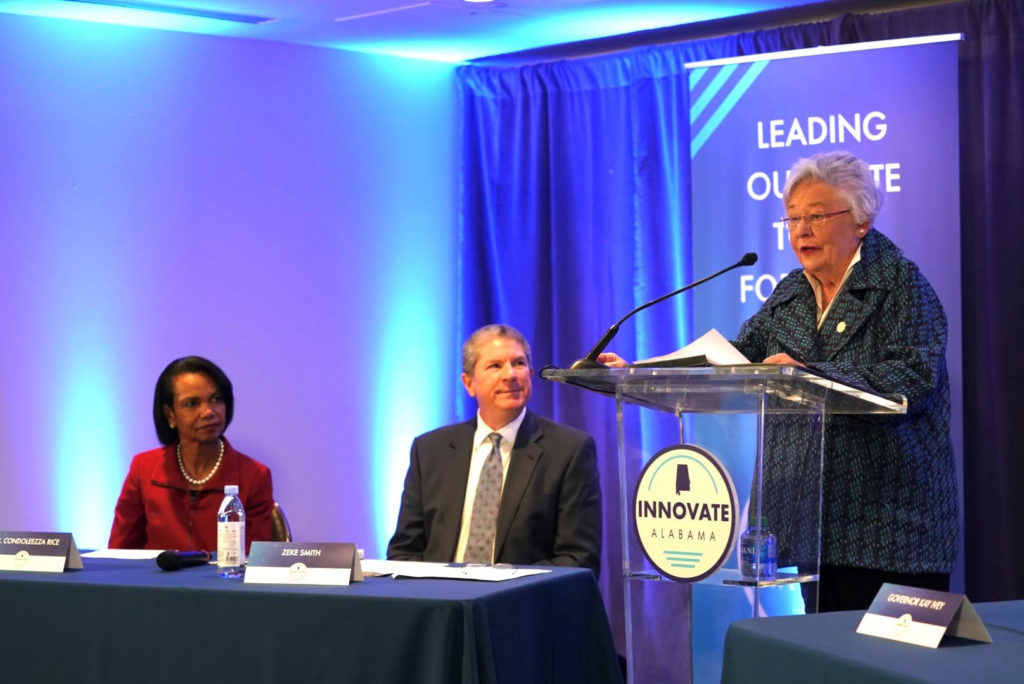
Governor Kay Ivey and Condoleezza Rice, 66th U.S. secretary of state and director of the Hoover Institution, joined state leaders on Tuesday to share the Alabama Innovation Commission’s policy recommendations and announce the Alabama Innovation Corporation board of directors. Governor Ivey established the commission and its advisory council in July 2020. “The Alabama Innovation Commission has done incredible work, and I’m excited to see how we as a state can implement smart policies that will foster innovation and develop a talented workforce for the future,” stated Governor Ivey. “I’m inspired by the promising growth for Alabama’s economy, and I look forward to working with the Alabama Legislature and the Alabama Innovation Corporation to help Alabama reach new heights.” Alabama Innovation Commission (Innovate Alabama) is the state’s first commission focused on entrepreneurship, technology, and innovation. The commission brings together private-sector experts and policymakers to develop forward-thinking policies that work to create a strong economy to help Alabama remain competitive in the 21st century. Ivey commented on Twitter, “Alabama. Where you can dream big, play hard, and live comfortably. We’re building a better state – a place where equitable opportunity exists. Now, we have a playbook to take us there.” The commission, led by Alabama Finance Director Bill Poole and state Sen. Greg Reed, includes a six-member advisory council of innovation leaders in Alabama and those outside the state who have strong ties to Alabama. The advisory council, led by Alabama Power Executive Vice President Zeke Smith, included innovation leaders from across the nation, and a partnership with Hoover Institution research scholars led by Director Rice, to support the commission’s work. “I’m proud to be a daughter of Alabama and believe that Alabama’s education, job training, and workforce development can be second to none. This state is poised for an even greater future here, and we are excited to be a part of that,” said Dr. Rice. “The Hoover Institution will continue to partner with the state and the Alabama Innovation Corporation to support this initiative as Alabama continues to push for strengthening its economy so life can be good for all Alabamians.” State Finance Director and Innovation Commission Chair Bill Poole added, “I’m proud of the commission’s work and know that its efforts will have a tremendous impact on our state. The ideas, recommendations, and strategies in this report give us a path forward for how Alabama can be a leader in the fields of innovation, technology, and research. I look forward to seeing partners from private, and public sectors continue working together through the Innovation Corporation to grow our economy.” Members of the Innovation Corporation board of directors are: Governor Kay Ivey (ex-officio) Alabama Speaker of the House Mac McCutcheon (ex-officio) Senate President Pro Tempore Greg Reed (ex-officio) House Minority Leader Anthony Daniels (ex-officio) Senator Minority Leader Bobby Singleton (ex-officio) Rich Bielen – President and CEO, Protective Life Corporation (at-large director) Dr. Michael Chambers – Assistant Vice President for Research Innovation, University of South Alabama (at-large director) Abe Harper – President, Harper Technologies (at-large director) David King – President, Dynetics (at-large director) Bill Poole – Director, Alabama Department of Finance (chairman) Britney Summerville – Founder, Birmingham Bound (at-large director) The policy recommendations and findings detailed five areas that address current challenges. Entrepreneurship and Access to Capital: Identifying and supporting opportunities to fuel entrepreneurial development at every stage of business growth. Talent Attraction and Retention: Recruiting and retaining a workforce with the skills, knowledge and credentials necessary to create innovation ecosystems throughout the state. Increasing Commercialization: Fostering an environment that increases commercialization activities, research and development efforts and supports the state’s economy as a whole. Bridging Digital and Economic Divides: Leveraging initiatives and resources that support growth throughout Alabama. Knowledge Economy: Developing a skilled workforce ready to meet the demands of the future. “These policy recommendations are a culmination of 18 months of hard work, time, and effort from a variety of different highly qualified individuals and organizations working together to chart a strong path forward for our state’s economy, and I couldn’t be any happier with the product that the commission was able to produce,” said Sen. Reed. “This report outlines a road map to spurring entrepreneurship, startup businesses, and innovation in our state, and I look forward to seeing the impact it will have on the future of Alabama.”
Governor Kay Ivey touts $7 million in National Highway Traffic Safety Administration grants

Governor Kay Ivey announced nearly $7 million in grants, in order to make Alabama roads safer. The state’s four regional traffic safety offices and the Alabama Law Enforcement Agency will use the funds to cover overtime for local police officers, sheriff’s deputies, and state troopers conducting extra patrols. It will also help provide more checkpoints during peak travel times, like major holidays, targeting speeding, seat belt violations, and impaired driving. Funding will cover major enforcement details like “Click It or Ticket” and “Drive Sober or Get Pulled Over.” According to Drive Safe Alabama, in 2019, there were 930 people killed in 851 fatal crashes. In Alabama, a traffic crash is reported every 3 minutes and 18 seconds. Ivey stated in a press release, “In Alabama, we are funding our law enforcement community to ensure their efforts to protect our communities are supported. These grants will go a long way in reinforcing highway safety across our state. As we head into another peak travel time, that will be even more important. Ensuring public safety is one of the primary responsibilities of government and is a top priority for the Ivey Administration.” ADECA Director Kenneth Boswell applauded the funding and efforts to make Alabama roads safer. “ADECA stands with Governor Ivey, the four highway safety offices, and local law enforcement agencies who are helping make Alabama’s roads safer for everyone traveling in our state,” Boswell stated. Governor Ivey awarded the following grants: $1.39 million to the Franklin County Commission for the North Central Alabama Highway Safety Office. The office serves Colbert, Cullman, DeKalb, Fayette, Franklin, Lamar, Lauderdale, Lawrence, Limestone, Jackson, Madison, Marshall, Marion, Morgan, Pickens, Walker and Winston counties. $1.66 million to the city of Opelika for the East Central Alabama Highway Safety Office which serves Blount, Calhoun, Chambers, Cherokee, Chilton, Clay, Cleburne, Coosa, Elmore, Etowah, Jefferson, Lee, Macon, Randolph, St. Clair, Shelby, Talladega and Tallapoosa counties. $1.21 million for the Southeast Alabama Regional Highway Safety Office at Enterprise State Community College. The office serves Autauga, Barbour, Bibb, Bullock, Butler, Coffee, Covington, Crenshaw, Dale, Geneva, Henry, Houston, Lowndes, Montgomery, Pike, Russell and Tuscaloosa counties. $957,369 to the Mobile County Commission for the Southwest Regional Highway Safety Office which serves Baldwin, Choctaw, Clarke, Conecuh, Dallas, Escambia, Greene, Hale, Marengo, Mobile, Monroe, Perry, Sumter, Washington and Wilcox counties. $1.54 million to ALEA cover overtime for state troopers who are working extra shifts during periods and in locations that have high numbers of speeding and impaired driving violations. $183,106 to the Office of Prosecution Services to provide local prosecutors and local law enforcement with a veteran statewide prosecutor that will provide training, education, legal research and technical assistance on traffic safety related issues.
Kay Ivey cuts ribbon at new FirstNet Infrastructure at Redstone Arsenal
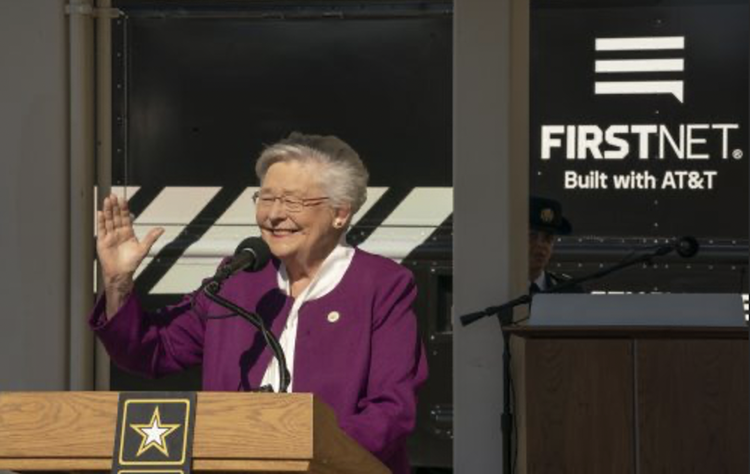
Emergency responders at Redstone Arsenal are getting a communications boost, Gov. Kay Ivey said. In a news release, the governor said first responders and security personnel at the military site near Huntsville will see improved wireless communications via FirstNet network expansions being completed by AT&T. Ivey was joined at an event announcing the expansions by Deputy Commanding General U.S. Army Materiel Command Lieutenant General Donnie Walker, Vice-Chair of the First Responder Network Authority Board of Directors Chief Richard Carrizzo, and Wayne Hutchens, president of AT&T Alabama. “The collaboration of the U.S. Army and FirstNet will provide U.S. Army public safety personnel – firefighters, law enforcement and security – at 72 Army installations including Redstone Arsenal with increased capabilities to communicate as effectively and efficiently as possible, to best protect themselves and those they serve,” Ivey said in the release. “We are honored to have the U.S. Army Materiel Command headquartered in Alabama and proud to celebrate the FirstNet build at Redstone Arsenal.” According to Military.com, Redstone Arsenal originally was designed to make conventional ammunition and toxic chemicals during World War II and later was designated as the home of Army missiles in 1948. FirstNet, according to the release, provides cell sites that enhance voice and mobile broadband coverage for the Army base. Ivey entered the state into the FirstNet network in 2017 to allow the state’s first responders and emergency personnel more capability to communicate effectively and efficiently. “Without communication, agencies cannot achieve the interoperability needed to bring vital resources to bear, especially when lives are at stake and time is of the essence,” Lt. Gen. Donnie Walker said in the release. “FirstNet gives us this capability. Security and safety of everyone who lives and works on this installation is job one. FirstNet is absolutely essential in that priority and pivotal in our efforts to improve the resilience of our installations. It is, in a word, a game changer.” By Brent Addleman | The Center Square Republished with the permission of The Center Square.
