
Donald Trump pardons 15, commutes 5 sentences, including GOP allies
President Donald Trump on Tuesday pardoned 15 people, including a pair of congressional Republicans who were strong and early supporters, a 2016 campaign official ensnared in the Russia probe and former government contractors convicted in a 2007 massacre in Baghdad. Trump’s actions in his final weeks in office show a president who is wielding his executive power to reward loyalists and others who he believes have been wronged by a legal system he sees as biased against him and his allies. Trump issued the pardons — not an unusual act for an outgoing president — even as he refused to publicly acknowledge his election loss to Democrat Joe Biden, who will be sworn in on Jan. 20. Trump is likely to issue more pardons before then. He and his allies have discussed a range of other possibilities, including members of Trump’s family and his personal attorney Rudy Giuliani. Those pardoned on Tuesday included former Republican Reps. Duncan Hunter of California and Chris Collins of New York, two of the earliest GOP lawmakers to back Trump’s 2016 presidential campaign. Trump also commuted the sentences of five other people, including former Rep. Steve Stockman of Texas. Collins, the first member of Congress to endorse Trump to be president, was sentenced to two years and two months in federal prison after admitting he helped his son and others dodge $800,000 in stock market losses when he learned that a drug trial by a small pharmaceutical company had failed. Hunter was sentenced to 11 months in prison after pleading guilty to stealing campaign funds and spending the money on everything from outings with friends to his daughter’s birthday party. White House press secretary Kayleigh McEnany said the pardons for Hunter and Collins were granted after “the request of many members of Congress.” She noted that Hunter served the nation in the U.S. Marines and saw combat in both Iraq and Afghanistan. In the group announced Tuesday night were four former government contractors convicted in a 2007 massacre in Baghdad that left more than a dozen Iraqi civilians dead and caused an international uproar over the use of private security guards in a war zone. Supporters of Nicholas Slatten, Paul Slough, Evan Liberty, and Dustin Heard, the former contractors at Blackwater Worldwide, had lobbied for pardons, arguing that the men had been excessively punished in an investigation and prosecution they said was tainted by problems and withheld exculpatory evidence. All four were serving lengthy prison sentences. The pardons reflected Trump’s apparent willingness to give the benefit of doubt to American service members and contractors when it comes to acts of violence in war zones against civilians. Last November, for instance, he pardoned a former U.S. Army commando who was set to stand trial next year in the killing of a suspected Afghan bomb-maker and a former Army lieutenant convicted of murder for ordering his men to fire upon three Afghans. Trump also announced pardons for two people entangled in special counsel Robert Mueller’s Russia investigation. One was for 2016 campaign adviser George Papadopoulos, who pleaded guilty to lying to the FBI about a conversation in which he learned that Russia had dirt on Trump’s Democratic opponent, Hillary Clinton. The president also pardoned Alex van der Zwaan, a Dutch lawyer who was sentenced to 30 days in prison for lying to investigators during the Mueller probe. Van der Zwaan and Papadopoulos are the third and fourth Russia investigation defendants granted clemency. By pardoning them, Trump once again took aim at Mueller’s inquiry and advanced a broader effort to undo the results of the investigation that yielded criminal charges against a half-dozen associates. The pardons drew criticism from top Democrats. Rep. Adam Schiff, D-Calif., the chairman of the House Permanent Select Committee on Intelligence, said the president was abusing his power. “Trump is doling out pardons, not on the basis of repentance, restitution or the interests of justice, but to reward his friends and political allies, to protect those who lie to cover up him, to shelter those guilty of killing civilians, and to undermine an investigation that uncovered massive wrongdoing,” Schiff said. Last month, Trump pardoned former national security adviser Michael Flynn, who had twice pleaded guilty to lying to the FBI, and months earlier commuted the sentence of another associate, Roger Stone, days before he was to report to prison. Trump has granted about 2% of requested pardons in his single term in office — just 27 before Tuesday’s announcement. By comparison, Barack Obama granted 212 or 6%, and George W. Bush granted about 7%, or 189. George H.W. Bush, another one-term president, granted 10% of requests. Also among those pardoned by Trump was Phil Lyman, a Utah state representative who led an ATV protest through restricted federal lands. Lyman was serving as a Utah county commissioner in 2014 when he led about 50 ATV riders in a canyon home to Native American cliff dwellings that officials closed to motorized traffic. The ride occurred amid a sputtering movement in the West pushing back against federal control of large swaths of land and came in the wake of an armed confrontation Nevada rancher Cliven Bundy had with Bureau of Land Management over grazing fees. Lyman spent 10 days in prison and was ordered to pay nearly $96,000 in restitution. The Trump administration in 2017 lifted a ban on motorized vehicles in parts of the canyon but left restrictions in place through other areas where Lyman led his ride. Two former U.S. Border Patrol agents were also pardoned, Ignacio Ramos and Jose Compean, convicted of shooting and wounding a Mexican drug smuggler near El Paso, Texas, in 2005. Others on the list included a Pittsburgh dentist who pleaded guilty to health care fraud, two women convicted of drug crimes, and Alfred Lee Crum, now 89, who pleaded guilty in 1952 when he was 19 to helping his wife’s uncle illegally distill moonshine. Crum served three years of probation and paid a $250 fine. The White House
Donald Trump, still infectious, back at White House — without mask
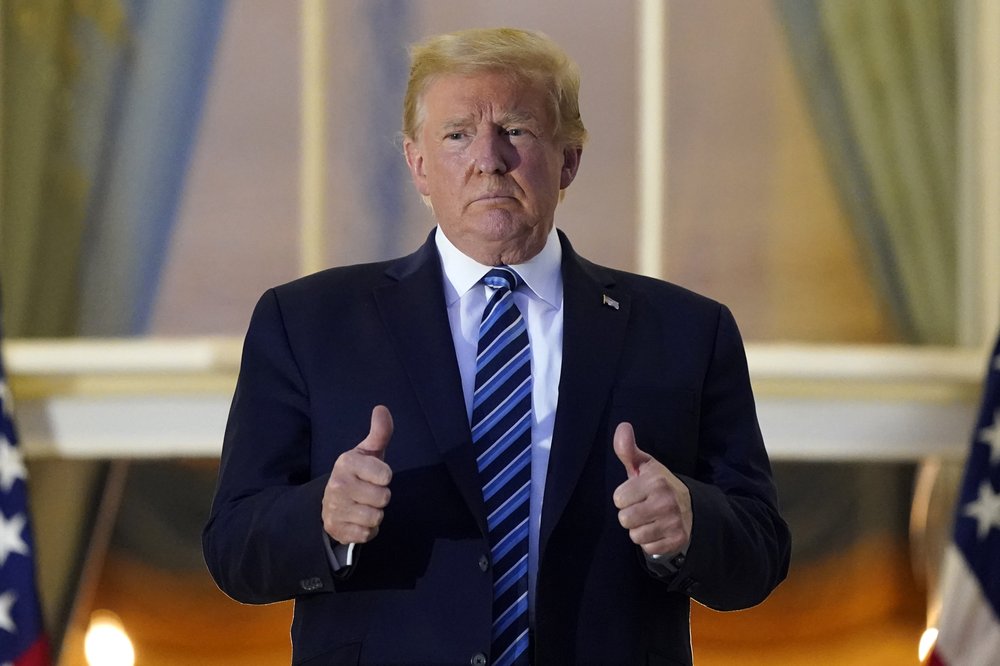
Trump’s message alarmed infectious disease experts and suggested the president’s own illness had not caused him to rethink his often-cavalier attitude toward the disease.
Donald Trump, first lady positive for virus; he has ‘mild symptoms’
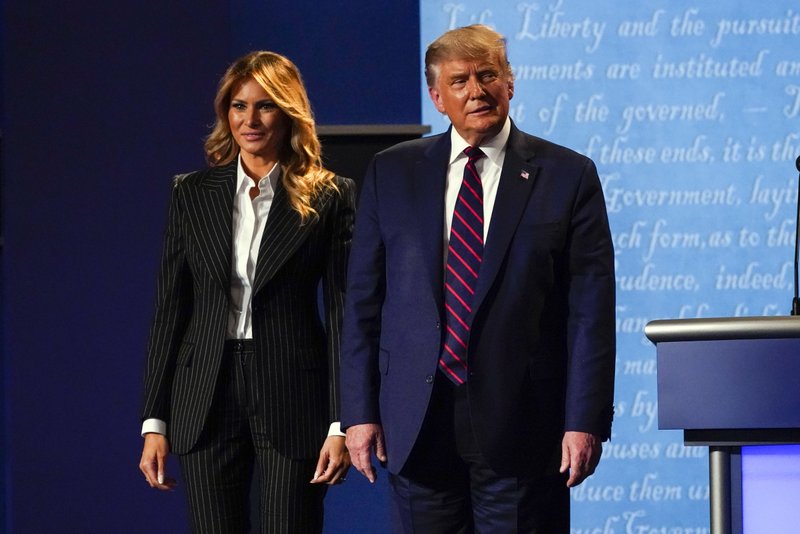
The White House physician said the president was expected to continue carrying out his duties “without disruption” while recovering.
House Democrats pass partisan COVID bill; relief talks drag

The move puts lawmakers no closer to actually delivering aid.
Despite Donald Trump attacks, both parties vow orderly election
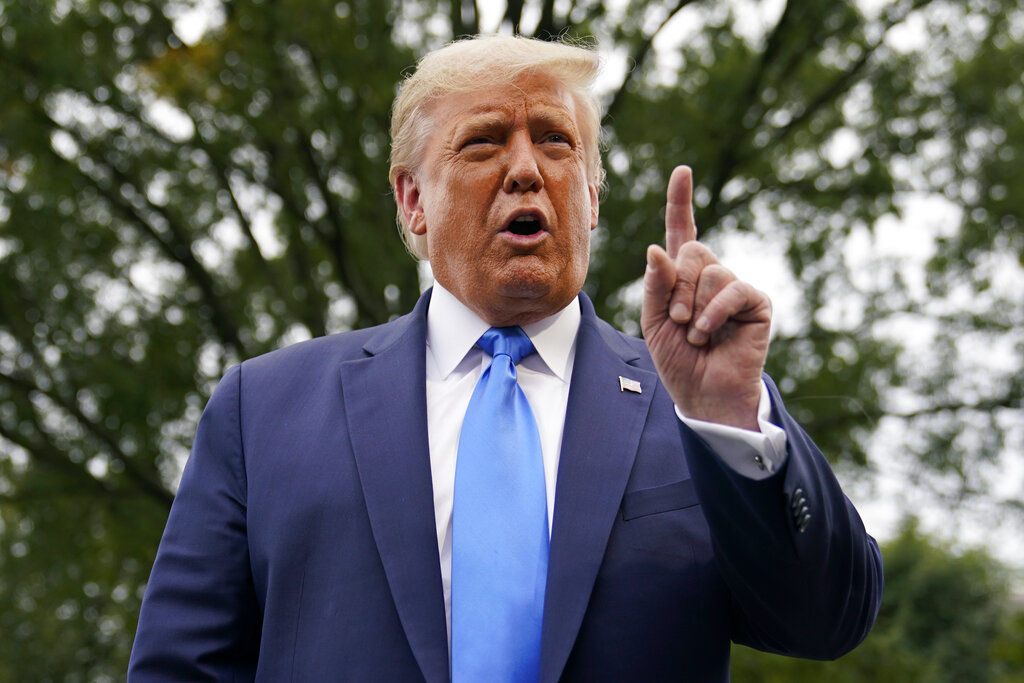
Many lawmakers, including from Trump’s own Republican Party, vowed to make sure voters’ wishes are followed ahead of Inauguration Day in January.
Donald Trump campaigns in battleground Michigan amid book fallout
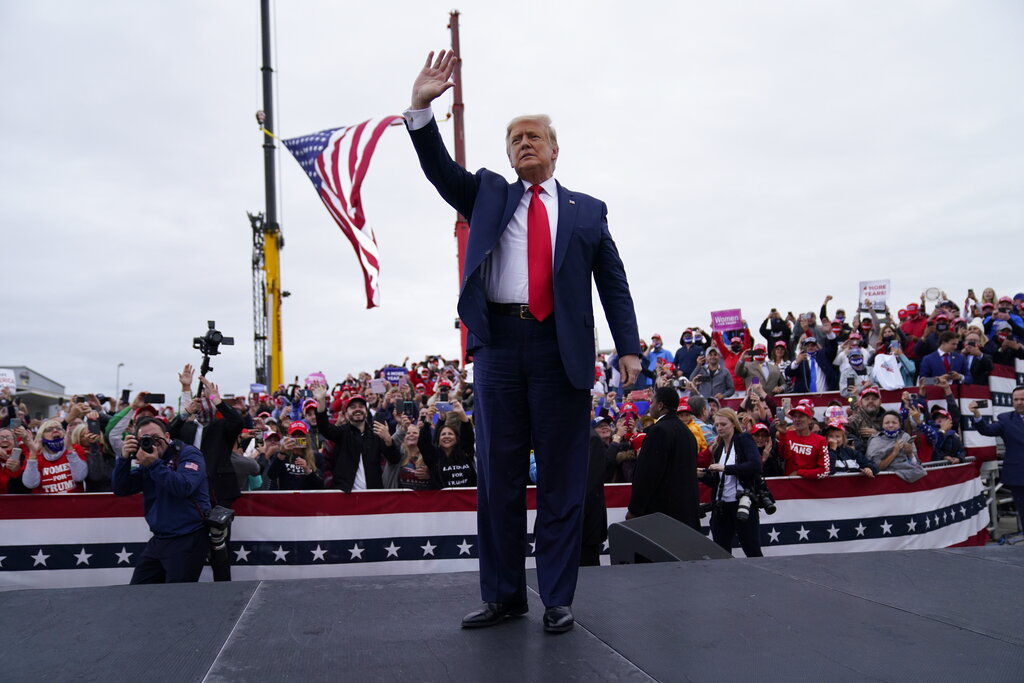
Trump reveled in the crowd of several thousand, packed shoulder-to-shoulder in a cavernous airport hangar, mostly without masks.
Mike Pence defends police at convention amid rising race tension
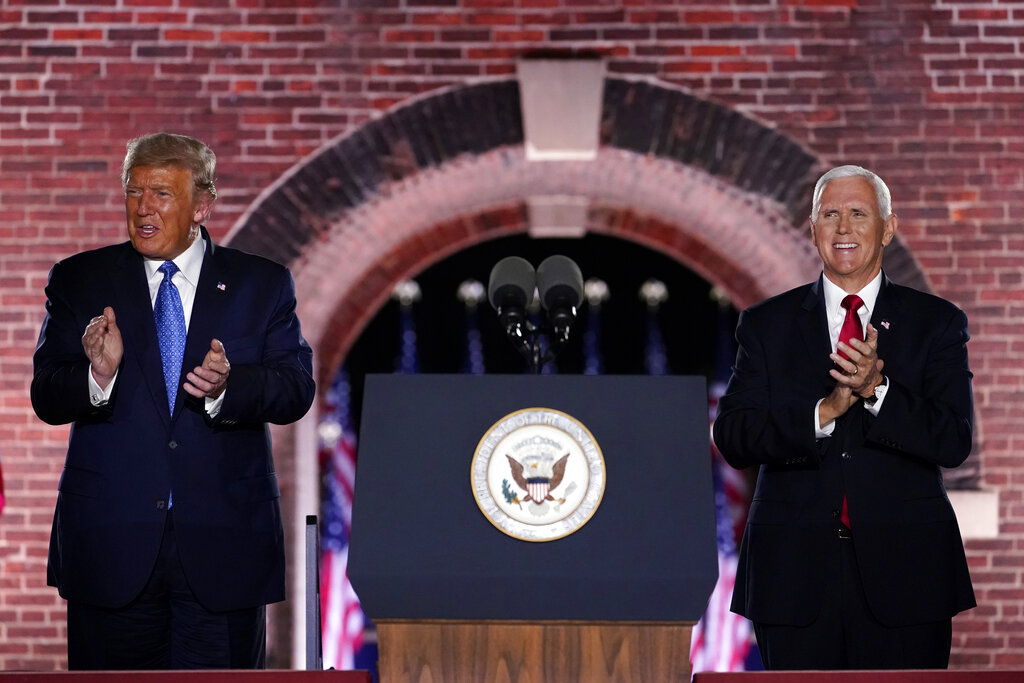
Vice President Mike Pence, the evening’s featured speaker, seized on the national reckoning over racial injustice to argue that Democratic leaders are allowing lawlessness to prevail in cities from coast to coast.
GOP splits as virus aid package could swell past $1 trillion

The price tag for the next COVID-19 aid package could quickly swell above $1 trillion as White House officials negotiate with Congress over money to reopen schools, prop up small businesses, boost virus testing and keep cash flowing to Americans while the virus crisis deepens in the U.S. Senate Majority Leader Mitch McConnell on Tuesday promised a new round of direct payments to earners below a certain income level, similar to the $1,200 checks sent in the spring. President Donald Trump insists on a payroll tax holiday for workers. And Democrats want billions to outfit schools and shore up local governments. “Regretfully, this is not over,” McConnell said after a raucous private GOP lunch, urging Americans to learn to live with the new virus by wearing masks and practicing social distancing until a vaccine can be found. Treasury Secretary Mnuchin and acting chief of staff Mark Meadows spent the day on Capitol Hill, meeting separately with McConnell, House Speaker Nancy Pelosi and others trying to broker a compromise between the GOP’s emerging $1 trillion proposal with the House’s more sweeping $3 trillion bill. The lunch session grew heated as key Republican senators complained about big spending, vowing to stall the relief bill’s passage. Supporters of the package “should be ashamed of themselves” Sen. Rand Paul of Kentucky said as he emerged. Paul compared GOP backers of the spending to “Bernie bros” — referring to the young supporters of Sen. Bernie Sanders of Vermont. “This is insane. … There’s no difference now between the two parties.” As a long line of senators rose to speak about aspects of the bill, Texas Sen. Ted Cruz asked his colleagues, “What in the hell are we doing?” Cruz warned if the economy is still shut down come November, Joe Biden will win the White House, Democrats will control the Senate and “we’ll be meeting in a much smaller lunch room,” according to a person granted anonymity to discuss the closed-door session. Sen. Rick Scott, of Florida left saying it’s wrong to “bail out” cash-strapped states. “Florida taxpayers are not going to pay for New York’s expenses,” he said. With the pandemic showing no signs of easing, officials acknowledge the daunting challenge of trying to contain the coronavirus and prevent further economic distress. The U.S. has rising infections and a death toll of 140,800, more than anywhere else in the world. The health crisis is worsening just as emergency aid is about to expire. Meadows told reporters the president wants to ensure the funding package “meets the legitimate needs that are before the American people.” The Republicans are poised to roll out a $1 trillion package, what McConnell called a “starting point” in talks. It’s a counter-offer to Pelosi’s $3 trillion House-passed plan as they race to strike a deal by the end of the month. That’s when a $600 weekly unemployment benefits boost and other aid, including a federal rental moratorium on millions of apartment units, expires. McConnell’s package would send a fresh round of direct cash payments to Americans below a certain income level, likely $75,000 for singles, extend small business loans under the Paycheck Protection Program and create a five-year liability shield against what he warns is a potential “epidemic” of coronavirus lawsuits. It’s also expected to include at least $105 billion for education, with $70 billion to help K-12 schools reopen, $30 billion for colleges, and $5 billion for governors to allocate. The Trump administration wanted school money linked to reopenings, but in McConnell’s package the money for K-12 would be split 50-50 between those that have in-person learning and those that do not. Republicans want to replace the $600 weekly federal jobless benefit with a lower amount, to prevent the unemployed from receiving more aid than they would through a normal paycheck, Republicans said. Over lunch, Mnuchin explained the unemployment boost could be phased down to a percentage of a worker’s previous income, according to a Republican granted anonymity to discuss the private meeting. Some Republicans prefer simply eliminating the $600 benefit. But the president’s priorities are splitting his GOP allies and giving momentum to Democrats. Trump wants a full repeal of the 15.3% payroll tax, which is shared among employers and employees, and funds Social Security and Medicare. Experts say that alone would cost $600 billion. At a White House meeting on Monday, GOP leaders told Trump they preferred to include only a partial payroll tax cut. Easing the payroll tax is dividing Trump’s party because it does little to help out-of-work Americans and adds to the debt load. The tax is already being deferred for employers under the previous virus relief package. Supporters say cutting it now for employees would put money in people’s pockets and stimulate the economy. The administration also panned McConnell’s proposed $25 billion for more virus testing, saying earlier allotments remain unspent. White House press secretary Kayleigh McEnany said Tuesday the administration wants “targeted” funds for the next round of aid, rather than adding more to the existing pot. She said no one is holding it up. Senate Democrats began investigating why the Trump administration has left almost half the testing money unspent. After meeting with Mnuchin, Pelosi and Senate Democratic leader Chuck Schumer said the Republicans must quit stalling. They broadly dismissed the emerging GOP effort as inadequate. “The president has been a disaster in the whole health care area,” Schumer said. “He’s holding them back.” The political stakes are high for both parties before the November election, and even more so for the nation, as the virus crisis and economic fallout hits cities large and small. Biden, the Democrats’ presumed presidential nominee, stated his own priorities, urging “a lifeline to those who need it most: working families and small businesses.” Trump’s renewed focus on therapeutics and a vaccine is falling flat among lawmakers who understand that any COVID-19 cures remain months, if not a year, from widespread distribution in the U.S. The federal government is still struggling to provide basic medical supplies and personal protective equipment to health care providers. Mnuchin vowed to stay on
Republicans, with exception of Donald Trump, now push mask-wearing
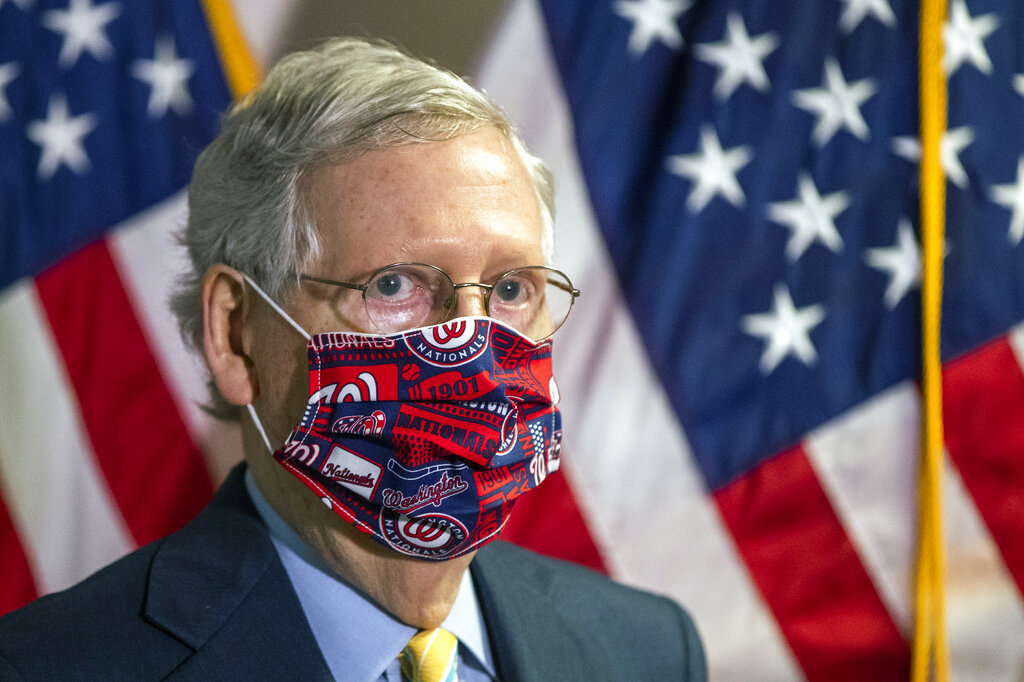
GOP officials are pushing back against the notion that masks are about politics, as President Donald Trump suggests, and telling Americans they can help save lives.
Donald Trump faces pressure over Russia bounties to kill US troops

Trump won’t say publicly that he is working to get to the bottom of the issue.
GOP lawmakers urge action after Russia-Afghanistan briefing

Members of Congress in both parties called for additional information and consequences for Russia and its president, Vladimir Putin.
Mail voting: Mike Pence, aides embrace practice panned by Donald Trump
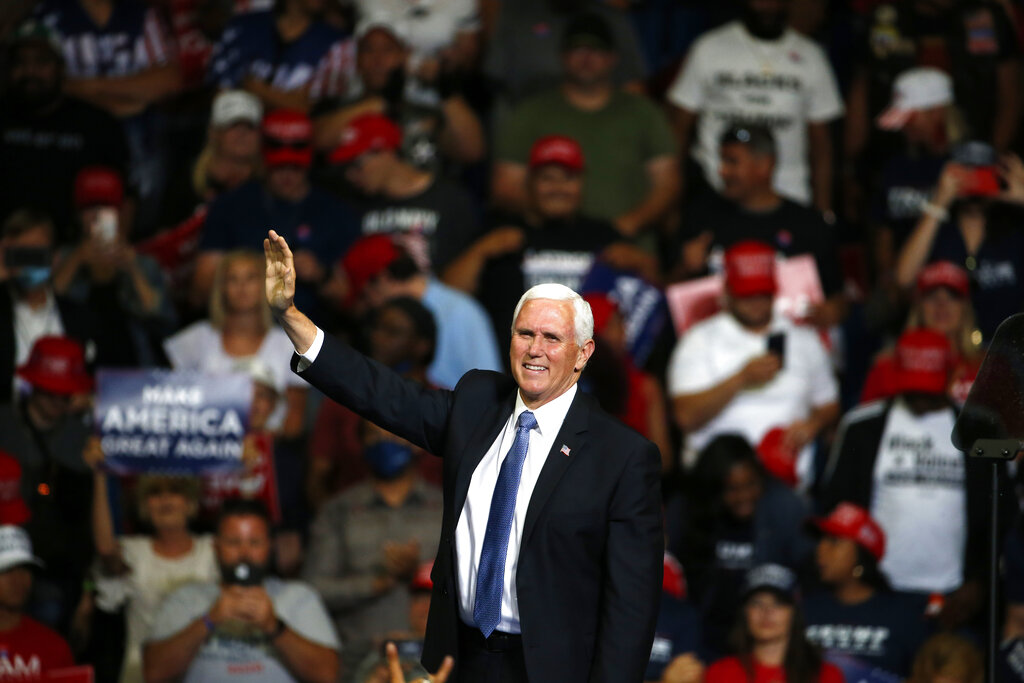
More than three years after leaving the Indiana governor’s residence, Mike Pence still lists that as his official residence and votes absentee accordingly.
