
Bill signing ceremony celebrates new guardianship law to assist those with disabilities
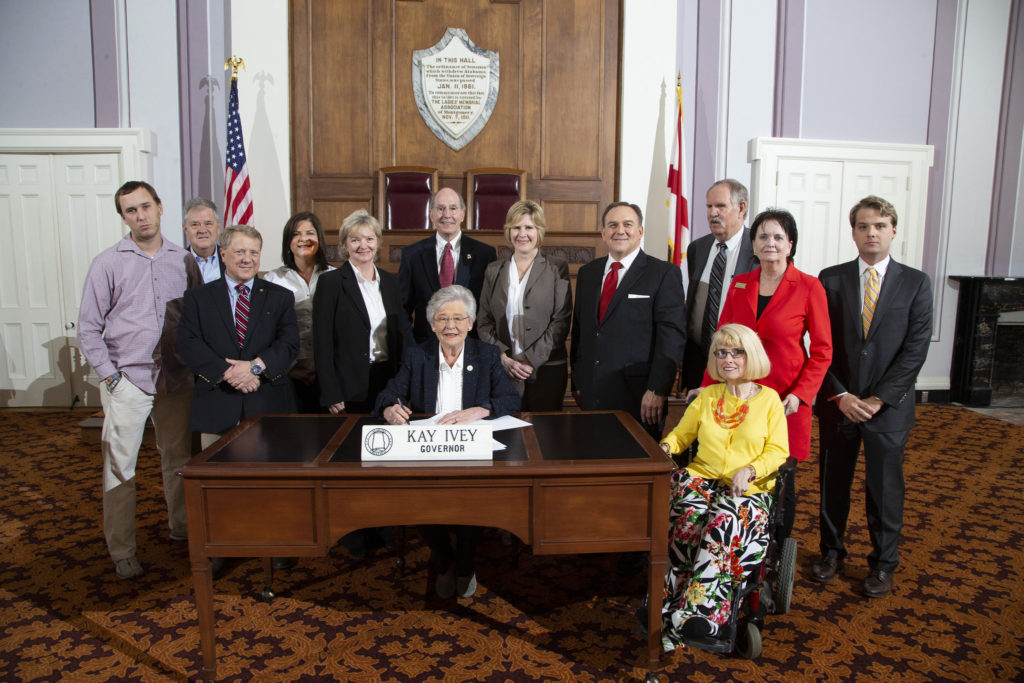
In February, the State of Alabama launched Achieving a Better Life Experience (ABLE) accounts, a new financial savings tool for individuals with disabilities. The Enable Savings Plan is a financial program that allows individuals with disabilities to open tax-exempt savings accounts to save for disability-related expenses without impacting resource-based benefits. The program permits individuals with disabilities to save more than a total of $2,000 in assets (cash, savings, etc.) in their name in an Enable account without jeopardizing their public benefits like Medicaid and Supplemental Security Income (SSI). In March, Moulton-Republican State Rep. Ken Johnson and Montgomery-Republican State Sen. Dick Brewbaker, introduced legislation to assist those eligible for an account by granting their guardians full financial capabilities when opening and managing an ABLE account. The bill ultimately passed both chambers and moved to Gov. Kay Ivey‘s desk for a signature. On Thursday, the State celebrated the new guardianship assistance law with a ceremonial bill signing at the state capitol in Montgomery, Ala. “Alabama’s recent guardianship decision will serve to benefit many individuals and their families throughout the state, providing greater access to an important resource, the Enable Program. Giving guardians this power simplifies matters for individuals with disabilities by allowing guardians to open, invest in, and manage an Enable account,” said Alabama Treasurer Young Boozer, who attended the ceremonial bill signing.
Ethics Commission director says bill weakens ethics law

The director of the state Ethics Commission said a bill before Alabama lawmakers could open up a potentially wide loophole in state ethics law by carving out an exemption for people doing economic development work. “I think it’s a bad bill that weakens the ethics law considerably,” Alabama Ethics Commission Executive Director Tom Albritton said. The House of Representatives on Tuesday approved a bill to exempt economic developers from the definition of lobbyist under the state ethics law. Supporters argued it is needed to help Alabama compete with other states for projects and factories by keeping developers’ activity confidential, but critics said it opens up an exemption in the ethics law that governs interactions with government officials. The bill says that an economic development professional — defined as a person who does full-time economic development work or works part-time and is “precertified” by the Ethics Commission — shall not be considered a lobbyist. “It exempts people from the definition of lobbying when I think most people would agree that what they are doing is in fact lobbying,” Albritton said. “You are also declaring that the other portions of the ethics act related to a lobbyist’s transaction with public officials no longer apply to them. That’s where the problem lies in my view.” He said another danger is that “economic development is “often used as kind of catch all designation for activity that people want to conduct with executive branch agencies, or executive offices or the legislature itself.” “At the end of the day, there’s a good bit of activity that could be argued is economic development,” Albritton said. Alabama Commerce Secretary Greg Canfield, who oversees the state’s industry recruitment efforts, said his department and professional economic developers asked for the legislation because of confusion that began arising in 2015 on whether developers should register as lobbyists. “If we don’t clarify this under the law, professional site consultants are going to draw a big red line around Alabama,” Canfield said. “That red line is going to say avoid bringing projects to the state of Alabama because there are too many states that will, for one, protect the confidentiality of your project and two, not require you go through training and registration on a regular basis. It will be easier to conduct professional economic development activities in these other states,” Canfield said. Rep. Ken Johnson, the bill’s sponsor, said the state should not put a “hurdle” on professional site developers by requiring them to register as lobbyists. Johnson said the five-member Alabama Ethics Commission previously tabled an advisory opinion on the matter so lawmakers could attempt to address the issue. Johnson said he believes lawmakers have prevented it from becoming a wide loophole by specifying that the exemption couldn’t be claimed by legislators, other public officials and people who are otherwise lobbyists. The Alabama Attorney General Steve Marshall said he opposed the bill at first but was pleased with changes to the bill, before its House passage, that he said creates a “narrowly-drawn exemption for full-time economic development professionals.” Albritton said a better way, in his view, would be to keep the developers under the state ethics law, but allow the reports on their activity to remain confidential for a period of time so deals in the making are not publicly disclosed. The bill now moves to the Alabama Senate. Senate President Pro Tem Del Marsh said he wanted to speak with both Marshall’s office and the state ethics commission. “I’m not going to move anything unless the attorney general and the ethics commission are on board with it,” Marsh said. Republished with the permission of the Associated Press.
House approves change in ethics law for economic developer
Alabama lawmakers passed a proposed ethics law change that would exempt economic development activity from the rules governing lobbyists. The House of Representatives approved the bill 78-7 after three hours of heated debate on Tuesday. Proponents of the bill said it was necessary for development while its critics argued it rolled back the current ethics law to mitigate corruption. Republican State Rep. Ken Johnson, who sponsored the bill, said companies are getting scared away from Alabama at the prospect of having representatives register as lobbyists when seeking economic incentive packages. He said none have had to register yet, but it is a concern. The bill defines an economic developer as a professional employed part or full time in economic development or trade promotion who would be certified by the state’s ethics commission. Public officials could not get paid as lobbyists or be certified as developers. It also allows information about economic deals to remain confidential for five years. Lobbyists are required to register with the Alabama Ethics Commission and report their activities. Johnson said there were concerns about the gray area between economic development work and lobbying. Democrats who opposed the bill criticized Johnson’s bill as a rollback of the ethics law and potentially a “get out of jail free card” for lawmakers. “Is this just a backdoor way of reinstating the good old boy system?” asked Rep. A.J. Campbell, a Democrat. “If we said all people needed to register because this is the way it needs to be cleaned up, then why is it changed?” In 2016, former House Speaker Mike Hubbard was convicted of ethics violations including using his public office to obtain business and promote clients. In 2017, Rep. Oliver Robinson, a Democrat, pleaded guilty to taking a bribe for using his legislative position to oppose the Environmental Protection Agency’s prioritization and expansion of a north Birmingham Superfund site. “You know we’ve had a history through the years, we’ve had people convicted of selling their vote,” said Rep. Mary Moore, a Democrat from Birmingham. “They’ve been doing a lot of economic development and getting wealthy too. People are getting extremely wealthy off of packages in this house.” Johnson countered that there was an amendment specifying that lawmakers would not be exempt from the ethics law. A comprehensive ethics law reform proposed in the Senate was pushed to next session to be potentially handled by an ethics law task force. Some House members suggested considered all the changes together next year, but Johnson said it couldn’t wait. “Do we want to lose jobs this year?” he said. The bill now moves for consideration in the Senate. Republished with permission of The Associated Press.
State Rep. Ken Johnson announces he will not seek re-election, quits race
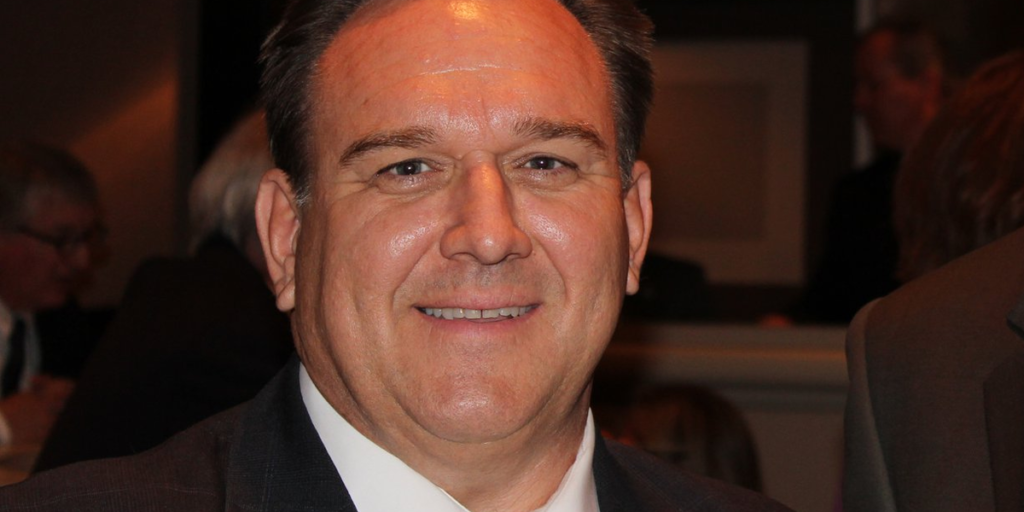
Moulton-Republican, State Rep. Ken Johnson — chairman of the House Financial Services Committee, as vice chairman of the House Ways and Means General Fund Committee, which annually allocates almost $2 billion to non-education state agencies, and also holds a seat on the House Insurance Committee — on Friday announced he will not seek re-election to the House District 7, a seat that he has held since 2010. Johnson cited family responsibilities and business obligations for his decision not to run again. “I am the father of a quadriplegic son, and during the long absences from home that service in Montgomery demands, my wife and family have taken on an inordinate amount of responsibility for his substantial care,” Johnson said in a news release. “In addition, focusing on my duties as state representative has taken needed time away from my business commitments over the past few years.” “Serving the citizens of House District 7 has been among the greatest honors of my life, and I will leave office with the firm knowledge that the legislation I helped pass has made Alabama a better and more prosperous place to live,” he said Johnson noted he had filed qualifying papers to seek re-election in order to ensure the GOP had a strong standard bearer for the seat, but he has determined Proncey Robertson‘s recent entrance in the race has given him the comfort level necessary to step aside. “Proncey Robertson is a good, honest, and deeply conservative man, and he will be a great candidate,” Johnson said. “He has my full support and endorsement.” Johnson’s withdrawal leaves Robertson as the only Republican candidate running for the seat making a primary election unnecessary. Robertson will face Democrat Kenneth Brackins in the Nov. 6 general election.
Lawmakers to vote on bill to decriminalize midwifery, allow more home births

Having a home birth in Alabama may soon be a lot easier if lawmakers give the green-light to a bill in the state House next week. HB315, which was introduced by Moulton-Republican state Rep. Ken Johnson in February, would decriminalize Certified Professional midwives and has been scheduled on Tuesday’s special order agenda. Currently, state law says it’s a misdemeanor offense to practice midwifery without a license issued by the state Board of Nursing and the Board of Medical Examiners. Meanwhile, midwifery is legal and regulated in 31 states, including neighboring states Florida and Tennessee. For women hoping to have a natural, home birth or for those without easy access to hospital with obstetric care, this reverse is policy welcome news. “To see is to believe! Yes! It’s true! For the first time EVER a midwifery bill will get a vote on the floor of the House!” wrote the Alabama Birth Coalition on their Facebook page. “Don’t delay, call your representative today! Call every state representative you can before Tuesday and ask for their commitment to vote YES on HB315!” Opponents of the bill, claim passing it and having births outside of the hospital is a safety issue. But Kaycee Cavender, President of the Alabama Birth Coalition says supporting families during pregnancy and childbirth, disagrees. She says legalizing midwifery makes home births safer for both the mother and child. “It’s important the bill passes because Alabama families are giving birth outside the hospital already. Whether it’s by personal choice or by accident,” Cavender told Alabama Today. “It’s our duty to make sure these families have safe access to the care they need to make these births safe.” According to the Alabama Birth Coalition, only 29 out of the 67 counties have a hospital with obstetric care. Of those 29 counties, only 17 are rural. “It’s not society’s place to decide what’s right for each family. In order to make home births as safe as possible, we must legalize certified professional midwives — they’re specialists and experts in out of hospital delivery and care,” Cavender added. While Haley Pilgrim, a doula and mother of five from Leeds, has not had a home birth herself she believes having the option to have a safe home birth is all about personal freedom. “I have not had a homebirth, though I have long desired one, due to the laws in our state criminalizing midwives,” Pilgrim told Alabama Today. “I have precipitous labors and would never be able to make it across state lines to give birth like many other women do to have the birth they desire. My husband was deployed to Afghanistan at the time so I had to wait on childcare and transportation to arrive. The irony was not lost on me that my husband was serving and fighting for our freedoms while I was back at home without the freedom to choose who could attend my birth. I am not against hospital deliveries for those that choose that.” “Obviously this is about having a choice. All Alabama mothers deserve one, and I can guarantee you that we do not take it lightly! For low risk pregnancies like mine that don’t want or require intervention, it is more of a hassle to have to make that very painful and sometimes long ride to a hospital.” While Pilgrim doesn’t plan on having any more children herself, HB315 is still personal — she wants to see the Legislature approve it not only women across the state, but also her own daughters. “I don’t plan on having any more children, but I want this bill to pass for future Alabama mothers- for my doula clients and my two young daughters who may one day give birth here,” Pilgrim added. At least one state lawmaker is already listening to voices like Cavender and Pilgrim’s and has taken to social media ahead of Tuesday’s vote to voice his support. Vestavia Hills-Republican state Rep Jack Williams said he’ll be voting yes on Tuesday Friday afternoon. #HB315 common sense decriminalization of midwifery is on the special order calendar Tuesday in the Alabama House . I’m voting yes. — Jack Williams (@repjack) April 21, 2017
Childbirth Freedom Act to decriminalize midwives, pave way for home births

Alabama lawmakers will consider a pair of bills that would allow midwives to work in the state and would pave the way for births outside of a hospital. One bill, HB 316 by Republican Rep. Ken Johnson, would establish a seven-member state board to oversee and regulate midwives and also allow them to practice independently. Current law doesn’t allow midwives to legally deliver babies in most circumstances, and home births are only legal in the state if a midwife is not present. While Johnson’s bill, the “Childbirth Freedom Act,” would allow midwifery in the state for those with the Certified Professional Midwife accreditation, the proposal would carve out more complicated births, such as breach births or twins, to be performed by other medical professionals. Johnson has also filed a separate bill, HB 315, that would decriminalize midwifery for certified individuals, though practicing without the proper credentials would be a misdemeanor. Midwifery is legal and regulated in 31 states, including neighboring states Florida and Tennessee, and Alabama is one of a dozen states with a currently active bill legalizing the profession. Births overseen by a midwife are typically less expensive than in-hospital births The Alabama bills are championed by Alabama Birth Coalition, and are part of a broader campaign, “The Big Push for Midwives,” spearheaded by members of the trade. Proponents pushed for a similar bill in 2016, though that bill didn’t contain the same provisions on more complicated births. Alabama issued licenses to midwives before 1975, and allowed midwives to have independent practices so long as they held a valid permit from the Department of Health, though over the next few years the state stopped renewing licenses and informed midwives they would have to shut their doors.
Alabama legislative preview: May 3 — May 4, 2016
Two days. That’s all Alabama’s state lawmakers have to complete their legislative priorities for the year. Some bills will end up languishing in the annals of Alabama history, while others will get their day on the governor’s desk. The entire session has been covered in the grey cloud of scandal, between accusations of Gov. Robert Bentley‘s infidelity, and the impending ethics trial of Speaker Mike Hubbard, but legislators stayed on track … mostly. Some much-debated bills like the gas tax are dead for good this year, while others, like payday lending reform and industrial hemp legalization, are walking a blade-thin line to final passage. Here is what legislators have on their plate for the final two days of the 2016 Regular Session. Here is what legislators have on their plate for the final two days of the 2016 Regular Session. House — Convenes Tuesday at 1 p.m. SB372 creates a new provision in Alabama’s controversial “chemical endangerment of a child” law, allowing the consumption of controlled substances under the “good faith” supervision of a physician. The chemical endangerment law came under fire last fall after a searing investigation by AL.com and ProPublica. Sponsored by Sen. Clyde Chambliss (R-Montgomery) in the Senate and Rep. April Weaver (R-Alabaster) in the House. SB91 regulates Payday Lenders, restricting the interest rates and fees they may charge. The bill being considered in the House Tuesday is a watered-down version of one passed by the Senate in early April. Should it pass the House it would have to be reconsidered by the Senate in the waning hours of the Session on Wednesday. Sponsored by Sen. Arthur Orr (R-Decatur) in the Senate and Rep. Danny Garrett (R-Trussville) in the House. SB268 Currently, an inmate’s eligibility for Medicaid is terminated once they are incarcerated. SB268, already passed by the Senate, would change that termination to a suspension. The bill’s sponsors argue this will help reformed convicts land back on their feet when their sentences are complete. Sponsored by Sen. Cam Ward (R-Alabaster) in the Senate and Rep. Chris England (D-Tuscaloosa) in the House. SB347 which would give the Department of Agriculture and Industries the authority to study, regulate, and tax industrial hemp, and reclassify the plant as separate from marijuana. Similar bills have been passed previously in both the House and Senate, but because they weren’t identical they must be considered again. Sponsored by Sen. Paul Bussman (R-Cullman) in the Senate, and Rep. Ken Johnson (R-Moulton) in the House. Senate — Convenes Tuesday at 1 p.m. HB204 reorders the names appearing on primary ballots in presidential election years to present elected official positions first, and delegates to the national convention last. Currently, the delegates come directly after the presidential candidates themselves, an arrangement found to be confusing for many primary voters, as they had to sift through a litany of names they didn’t recognize to find the candidates for federal and state offices. Sponsored by Rep. Randy Wood (R-Saks) HB393 is the House version of the industrial hemp bill described above. HB433 prohibits a sexually exploited child from being “adjudicated, delinquent or convicted of a crime of prostitution.” Essentially, the bill protects children who are victims of sexual crimes or trafficking from being convicted of prostitution. The bill’s sponsor is a longtime advocate for harsher penalties for sex traffickers, and has fought to protect the victims of the deplorable practice. Sponsored by Rep. Jack Williams (R-Vestavia Hills) HB98 allows qualifying retirees from the U.S. Military to obtain concealed weapons permits from their county’s sheriff at no cost to them. The Sheriff may revoke the permit if cause is found. Sponsored by Rep. David Standridge (R-Hayden)
Alabama Legislature approves bills legalizing industrial hemp

The Alabama Senate overwhelmingly passed SB347 Tuesday evening, a bill legalizing the research and regulation of industrial hemp—the non-intoxicating version of the cannabis plant. A similar, but not identical, bill passed the Alabama House earlier in the day. “There is enormous economic potential for the use of industrial hemp, which can be used in the production of insulation materials, yarns, textiles, and auto parts,” said the bill’s sponsor, Sen. Paul Bussman, a Cullman Republican. “This proposal will allow our colleges and universities to investigate industrial hemp’s full potential. I believe industrial hemp could be a huge benefit to our Alabama’s agriculture, but I’m glad we’re taking this initial step approving research before we consider legalization for economic production,” Should either house adopt the other’s version of the bill, and it is signed by Gov. Robert Bentley, Alabama will become the 29th state to legalize the cash crop. The bills would allow the state’s colleges and universities to research the plant and its properties, and allow the Department of Agriculture and Industries to license growers in the state. Any revenues from the licensing and taxing of industrial hemp would be earmarked for the Department of Agriculture. The Department’s commissioner, John McMillan, celebrated the bill’s passage in a press release. “I want to commend Senator Bussman for his leadership on this issue and for his willingness to seek alternative cash crops for Alabama farmers,” said McMillan. “We look forward to the potential research opportunities this legislation provides our state institutions of higher education.” In their support of the bill, Sen. Bussman and the House version’s sponsor, Rep. Ken Johnson, cited a white paper written by Auburn University detailing the plant’s uses in the creation of food, fuel, in textiles, and other raw materials. The white paper also found the crop grows well in all of the Yellowhammer State’s soils in climates, and requires the use of few pesticides or fertilizers, making it an attractive and inexpensive commodity for Alabama’s many farmers.
Alabama legislative preview: April 11 – April 15, 2016
Alabama legislators will return to Montgomery this week to continue the 2016 regular session. The House will convene at 1pm on Tuesday, April 12th, while the Senate will convene at 4pm. This week the House will consider: HB393, which would give the Department of Agriculture and Industries the authority to study, regulate, and tax industrial hemp, and reclassify the plant as separate from marijuana. Sponsored by Ken Johnson (R-Moulton) The Senate version, SB347, is sponsored by Sen. Paul Bussman (R-Cullman) HB218, an effort to require cursive handwriting skills to be taught by the end of the third grade year to “to prepare him or her to enter the world of work and/or to complete course work at the postsecondary level.” Sponsored by Dickie Drake (R-Leeds) HB2, or the “Kelsey Smith Act”, which would require wireless communications service providers to give location information to law enforcement agencies upon request in an emergency situation involving a risk of death or serious bodily harm. Sponsored by Tommy Hanes (R-Scottsboro) The Healthcare Costs sub-committee will meet Tuesday at 10am in room 418 to consider HB158, the Child Care Provider Inclusion Act, which would prohibit the state from discriminating against a child care service provider on the basis that the provider declines to provide a child care service that conflicts with the religious beliefs of the provider. HB158 is sponsored by Rep. Richie Wingo (R-Tuscaloosa) The Senate has yet to publish its special order calendar, but this story will be updated when it becomes available.
Proposed bill would legalize midwives to assist in home births

The House Health Committee considered the Childbirth Safety Act of 2016 Wednesday, which proposes the creation of a State Board of Midwifery allowing certified midwives to attend at-home births in Alabama. That proposed board would approve, suspend or revoke licenses; investigate and conduct disciplinary hearings; establish reasonable license fees; and determine the minimum initial and continuing education requirements for midwife licensing. Under current laws, most midwives are not able to legally practice in the state of Alabama, and home birth is only legal if a midwife is not present. Fled in early March as HB284, the bill is sponsored by Rep. Ken Johnson (R-Moulton), and co-sponsored by Representatives Mike Ball (R-Madison), Phillip Pettus (R-Killen) and Mac McCutcheon (R-Capshaw). “What we’re talking about is not criminalizing people who want midwives,” Johnson said at Wednesday’s hearing explaining women shouldn’t be forced to drive to Tennessee or Mississippi to have their births assisted by midwives. “They ought to have that right here in Alabama,” Johnson said. According to the State Department of Public Health, only 29 out of 67 counties in Alabama have a hospital with delivery units. Johnson said midwives would be a great solution for those rural counties. “Our rural healthcare has totally diminished,” he said. The committee did not vote on the bill during the hearing.
State House to consider creating education savings accounts

HB84, the Education Savings Account act, a school choice bill sponsored by Rep. Ken Johnson (R-Moulton) will be considered by the full Alabama House of Representatives when the legislature returns from spring break Tuesday. While the public charter schools approved in recent years won’t open until fall of 2017, education savings accounts (ESAs) would be able to be used almost immediately by parents of children with learning disabilities, autism, or illnesses preventing them from leaving home who have been issued individual education plans (IEPs). There are currently about 80,000 students with IEPs in the state, but the program institutes a cap of 1,000 students, and will be available for parents beginning in the 2016-2017 school year if it successfully passes through the legislature and is approved by the governor. The bill would allow those parents to use 90 percent of the money that would have otherwise been allocated to their child’s district for programs including tutoring and specialized education. In order to use the savings account, parents must agree to make sure their children receive education in reading, mathematics, grammar, social studies, and science. Further, the child may not enroll in a charter school or in the Alabama Tax Credit Scholarship Program while participating in the ESA. Using the most recent publicly available figures, the plan would allow participating families to put about $4,700 into the savings accounts for their students’ use. If money is left over at the end of the year, up to $2,000 can be transferred from the education savings accounts to a Section 529 or “Coverdell” account for higher education or other approved expenditures. If the legislation is passed, Alabama will be the seventh state to institute an Educational Savings Account program, following in the footsteps of Arizona, Florida, Mississippi, Nevada, Tennessee, and Virginia, whose governor has yet to sign theirs into law. Legislatures in 10 states, including Alabama, are considering ESAs this year. According to the American Federation for Children, a proponent of the legislation, there are several schools, both public and private, who are ready and willing to accept the eligible students in either a fully-enrolled or a-la-carte capacity. The bill is likely to be opposed by many Democrats and the Alabama Education Association.
Alabama legislative preview: March 21 – March 25, 2016
The Alabama House of Representatives will convene at 1 p.m. Tuesday, and the Senate an hour later, as state lawmakers gather for the 17th day of the regular session. This week, the Senate will take up SB89 from Sen. Arthur Orr (R-Decatur), which would require Alabama public school students to pass a civics test as a requirement for graduation. Orr’s legislation has been on the agenda for a while, but has likely been stalled due to a focus on more contentious issues. The body is also slated to take up SB148 from Sen. Jim McClendon (R-Springville), which would require all vehicle passengers to wear a safety belt, and SB114 from Sen. Paul Sanford (R-Huntsville), which would regulate fantasy contests and “exempt fantasy contests from certain criminal penalties associated with gambling activity.” The bill would increase spending by the Attorney General’s office, which would be responsible for overseeing such activities, by $1 million in the first year. Also on the Senate’s agenda this week are SB14 from Sen. Gerald Allen (R-Tuscaloosa), which would allow citizens to carry a firearm in their vehicle without a permit, and SB205 from Sanford, which would bar the Alabama Department of Human Resources from renewing health center licenses for an “abortion clinic or reproductive health center” within 2,000 feet of a school. In the House, lawmakers will take up HB46 from Rep. Alan Boothe (R-Troy), which would allow Alabama spirit makers to sell fifths for off-premise consumption. The body is also slated to debate HB13 from Rep. Alan Harper (R-Northport), which would allow citizens to vote on whether or not to allow a lottery in the state – the legislation provides no details on how proceeds from such an operation would be used, which is likely why it hasn’t been discussed thus far. HB218 from Rep. Dickie Drake (R-Leeds) is also on the agenda and would require that all elementary school students be instructed in cursive writing before the end of their third grade year. HB244 from Rep. Connie Rowe (R-Jasper) will also be taken up this week – the bill prohibits law enforcement from requiring victims of a sexual offense to take a polygraph examination. Committee hearings get underway Tuesday, though the vast majority take place on Wednesday, beginning with the Senate Judiciary Committee, which will take up SB237 from Sen. Quinton Ross (D-Montgomery). Ross’s legislation would make it unlawful for employers to request information regarding arrests and convictions on employment applications. The committee will also take up Sanford’s SB115, the Senate version of “Leni’s Law” from Rep. Mike Ball (R-Madison), which would decriminalize possession of the marijuana-based medicine cannibidiol. The Senate Committee on Constitution, Ethics and Elections will debate SB360 from Sen. Tom Whatley (R-Auburn), which would require voters to register as a Democrat or Republican before voting in a primary. Voters who do not will not be allowed to vote on party candidates, only on ballot measures and nonpartisan issues. The House Committee on Agriculture and Forestry will take up HB393 from Rep. Ken Johnson (R-Moulton), which would allow for the growing of industrial hemp in the state for use in a variety of products. The House Committee on Mobile County Legislation will mull over HB248 from Rep. Napoleon Bracy (D-Mobile), which would establish a $10.10 minimum wage in Mobile County. At the close of business this week, legislators will adjourn for spring break.
