Many Bible Belt preachers silent on shots as COVID-19 surges
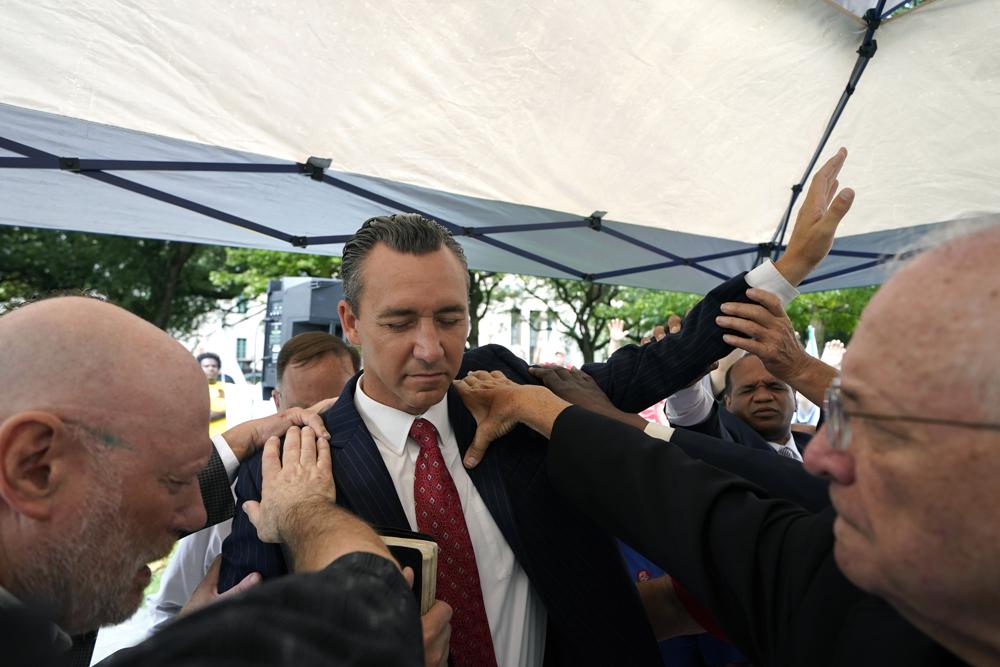
Dr. Danny Avula, the head of Virginia’s COVID-19 vaccination effort, suspected he might have a problem getting pastors to publicly advocate for the shots when some members of his own church referred to them as “the mark of the beast,” a biblical reference to allegiance to the devil, and the minister wasn’t sure how to respond. “A lot of pastors, based on where their congregations are at, are pretty hesitant to do so because this is so charged, and it immediately invites criticism and furor by the segment of your community that’s not on board with that,” Avula said. Across the nation’s deeply religious Bible Belt, a region beset by soaring infection rates from the fast-spreading delta variant of the virus, churches and pastors are both helping and hurting in the campaign to get people vaccinated against COVID-19. Some are hosting vaccination clinics and praying for more inoculations, while others are issuing fiery anti-vaccine sermons from their pulpits. Most are staying mum on the issue, something experts see as a missed opportunity in a swath of the country where church is the biggest spiritual and social influence for many communities. That was on display recently in metro Birmingham, where First Baptist Church of Trussville had an outbreak following a 200th-anniversary celebration that included a video greeting by Alabama Gov. Kay Ivey. The pastor promised more cleaning and face mask availability without uttering two words that health officials say could make a difference among people long on religion but short on faith in government: Get vaccinated. A few outspoken religious leaders have garnered crowds or media attention for their opposition to the vaccines, such as Tony Spell, who repeatedly defied COVID-19 restrictions to hold in-person services at the Baton Rouge, Louisiana church where he is pastor. He has preached that vaccinations are “demonic” and vowed that the government will not “force us to comply with your evil orders.” But they appear to be outliers, according to theologian Curtis Chang, with the majority of ministers avoiding the vaccine issue so as not to inflame tensions in congregations already struggling with the pandemic and political division. “I would say that the vast majority are paralyzed or silent because of how polarized it has been,” said Chang, who has pastored churches and is on the faculty at Duke Divinity School. A survey by the National Association of Evangelicals found that 95% of evangelical leaders planned to get inoculated, but that number hasn’t translated into widespread advocacy from the pulpit, he said. The disparity matters because vaccination rates are generally low across the Bible Belt, where Southern and Midwestern churchgoers are a formidable bloc that has proven resistant to vaccination appeals from government leaders and health officials. While many Black and Latino people haven’t been vaccinated, the large number of white evangelical resisters is particularly troubling for health officials. A poll by The Associated Press-NORC Center for Public Affairs Research in March showed that 40% of white evangelical Protestants said they likely would not get vaccinated, compared with 25% of all Americans, 28% of white mainline Protestants, and 27% of nonwhite Protestants. Some national voices, including Black megachurch minister T.D. Jakes, evangelist Franklin Graham, and former Southern Baptist Convention President J.D. Greear have taken public stances in favor of vaccinations. But there hasn’t been a sustained, unified push that could give local pastors “cover” to speak out themselves, Chang said. First Baptist Trussville has taken multiple steps to guard against spreading the virus, including following public health guidelines and limiting in-person events, according to spokesman and business manager Alan Taylor. Yet when it comes to the vaccines, church leaders consider them “a personal choice,” he said. “When I am asked personally, I say it was the right choice for me and my wife,” said Taylor, who contracted a relatively rare breakthrough case of COVID-19 despite having been vaccinated. “I firmly believe it helped when I became infected.” The story is much the same in Mississippi and Georgia, where some churches are returning to online services, and some pastors are quietly talking about the need for vaccination. More than 200 pastors, priests, and other church leaders from Missouri went further as cases exploded last month, signing a statement urging Christians to get vaccinated because of the biblical commandment to “love your neighbor as yourself.” Springfield Mayor Ken McClure said the region saw a big jump in vaccinations after the pastor of a large church used his sermon to tell parishioners it was the right thing to do. Dr. Ellen Eaton, an infectious disease specialist at the University of Alabama at Birmingham, said churches could be effective at promoting vaccination as a way “to love your neighbors during this pandemic.” “Many Southerners are very close to their pastors and church communities. Next to their personal physician, many here in Alabama routinely turn to their church leaders with health issues,” she said. One pastor at a liberal United Methodist church in Birmingham issued a plea on social media for members to get vaccinated, while the minister at a moderate Baptist church nearby prayed during worship for divine intervention for more vaccinations. “We pray, Lord, that there will be good judgment used and that people would see the need for the vaccine and that it would be available not only here in our own country but around the world and that that might stem the tide of this terrible, terrible virus,” said the Rev. Timothy L. Kelley of Southside Baptist Church. Evangelical pastor Keven Blankenship was among those trying to walk that tightrope after COVID-19 invaded his independent church in suburban Birmingham, sickening three of his family members, among others. Initially, he didn’t preach about the vaccines, considering it a personal choice. But on a recent Sunday, during the first in-person services in a month, Blankenship revealed he had gotten his first shot and was due for a second. “If you feel comfortable receiving it, I want you to receive it. If you don’t feel comfortable, I want you to
U.S. coronavirus cases nearly triple in 2 weeks
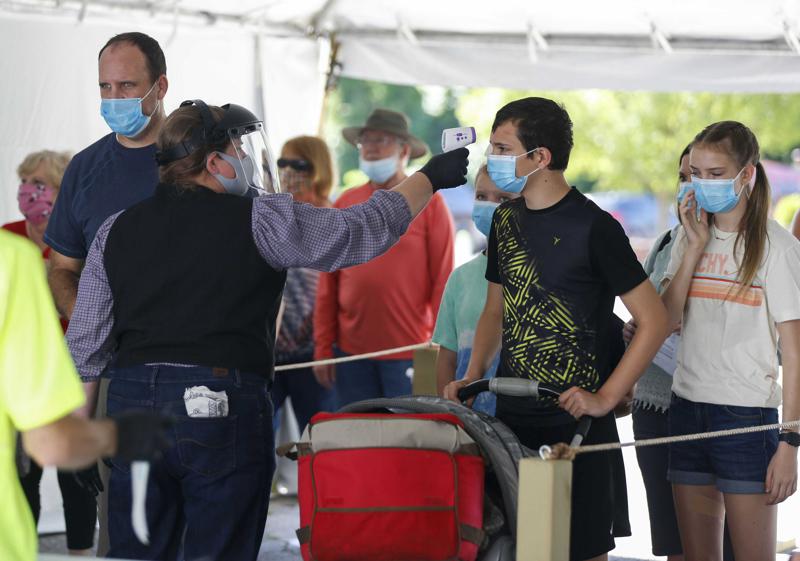
COVID-19 cases nearly tripled in the U.S. over two weeks amid an onslaught of vaccine misinformation that is straining hospitals, exhausting doctors, and pushing clergy into the fray. “Our staff, they are frustrated,” said Chad Neilsen, director of infection prevention at UF Health Jacksonville, a Florida hospital that is canceling elective surgeries and procedures after the number of mostly unvaccinated COVID-19 inpatients at its two campuses jumped to 134, up from a low of 16 in mid-May. “They are tired. They are thinking this is déjà vu all over again, and there is some anger because we know that this is a largely preventable situation, and people are not taking advantage of the vaccine.” Across the U.S., the seven-day rolling average for daily new cases rose over the past two weeks to more than 37,000 on Tuesday, up from less than 13,700 on July 6, according to data from Johns Hopkins University. Health officials blame the delta variant and slowing vaccination rates. Just 56.2% of Americans have gotten at least one dose of the vaccine, according to the Centers for Disease Control and Prevention. In Louisiana, health officials reported 5,388 new COVID-19 cases Wednesday — the third-highest daily count since the beginning of the pandemic in early 2020. Hospitalizations for the disease rose to 844 statewide, up more than 600 since mid-June. New Orleans leaders urged people to resume wearing masks indoors. Utah reported having 295 people hospitalized due to the virus, the highest number since February. The state has averaged about 622 confirmed cases per day over the last week, about triple the infection rate at its lowest point in early June. Health data shows the surge is almost entirely connected to unvaccinated people. “It is like seeing the car wreck before it happens,” said Dr. James Williams, a clinical associate professor of emergency medicine at Texas Tech, who has recently started treating more COVID-19 patients. “None of us want to go through this again.” He said the patients are younger — many in their 20s, 30s, and 40s — and overwhelmingly unvaccinated. As lead pastor of one of Missouri’s largest churches, Jeremy Johnson has heard the reasons congregants don’t want the COVID-19 vaccine. He wants them to know it’s not only OK to get vaccinated; it’s what the Bible urges. “I think there is a big influence of fear,” said Johnson, whose Springfield-based church also has a campus in Nixa and another about to open in Republic. “A fear of trusting something apart from scripture, a fear of trusting something apart from a political party they’re more comfortable following. A fear of trusting in science. We hear that: ‘I trust in God, not science.’ But the truth is science and God are not something you have to choose between.” Now many churches in southwestern Missouri, like Johnson’s Assembly of God-affiliated North Point Church, are hosting vaccination clinics. Meanwhile, about 200 church leaders have signed a statement urging Christians to get vaccinated, and on Wednesday, announced a follow-up public service campaign. Opposition to vaccination is especially strong among white evangelical Protestants, who make up more than one-third of Missouri’s residents, according to a 2019 report by the Pew Research Center. “We found that the faith community is very influential, very trusted, and to me, that is one of the answers as to how you get your vaccination rates up,” said Ken McClure, mayor of Springfield. The two hospitals in his city are teeming with patients, reaching record and near-record pandemic highs. Steve Edwards, who is the CEO of CoxHealth in Springfield, tweeted that the hospital has brought in 175 traveling nurses and has 46 more scheduled to arrive by Monday. “Grateful for the help,” wrote Edwards, who previously tweeted that anyone spreading misinformation about the vaccine should “shut up.” Jacob Burmood, a 40-year-old Kansas City, Missouri, artist, said his mother has been promoting vaccine conspiracy theories even though her husband — Burmood’s stepfather — is hospitalized on a ventilator in Springfield. “It is really, really sad, and it is really frustrating,” he said. Burmood recalled how his mother had recently fallen ill and “was trying to tell me that vaccinated people got her sick, and it wasn’t even COVID. I just shut her down. I said, ‘Mom, I can’t talk to you about conspiracy theories right now.’ … You need to go to a hospital. You are going to die.” His mother, who is in her 70s, has since recovered. In New York City, workers in city-run hospitals and health clinics will be required to get vaccinated or get tested weekly as officials battle a rise in COVID-19 cases, Mayor Bill de Blasio said Wednesday. De Blasio’s order will not apply to teachers, police officers, and other city employees, but it’s part of the city’s intense focus on vaccinations amid an increase in delta variant infections. The number of vaccine doses being given out daily in the city has dropped to less than 18,000, down from a peak of more than 100,000 in early April. About 65% of all adults are fully vaccinated, compared with about 60% of public hospital system staffers, said system leader Dr. Mitchell Katz. Meanwhile, caseloads have been rising in the city for weeks, and health officials say the variant makes up about 7 in 10 cases they sequence. “We have got to deal with it aggressively. And in the end, there is also a thing called personal responsibility,” de Blasio said, urging inoculated people to raise the issue with unvaccinated relatives and “get up in their face.” Back in Louisiana, New Orleans officials issued the new guidance on indoor masks, hoping to avoid the kind of virus-related shutdowns that devastated the city’s tourism economy in 2020. Mayor LaToya Cantrell stopped short of requiring masks. She said the advisory “puts the responsibility on individuals themselves.” The announcement came as the city’s seven-day average of new cases rose to 117, the highest level since early February. It had fallen as low as eight in mid-June. Republished
With pandemic worsening in U.S., surgeon general worried
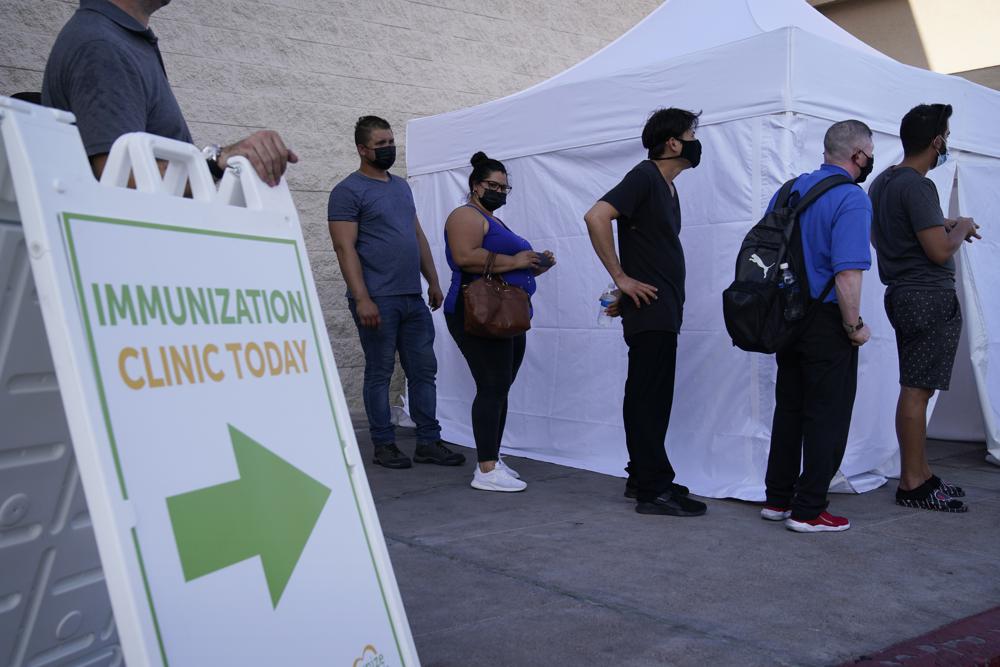
The U.S. surgeon general said Sunday that he’s concerned about what lies ahead with cases of COVID-19 increasing in every state, millions still unvaccinated, and a highly contagious virus variant spreading rapidly. Noting that nearly all coronavirus deaths now are among the tens of millions of people who haven’t received shots, despite widespread vaccine availability, Dr. Vivek Murthy painted an unsettling picture of what the future could hold. “I am worried about what is to come because we are seeing increasing cases among the unvaccinated in particular. And while, if you are vaccinated, you are very well protected against hospitalization and death, unfortunately, that is not true if you are not vaccinated,” Murthy said on CNN’s “State of the Union.” U.S. cases of COVID-19 last week increased by 17,000 nationwide over a 14-day period for the first time since late fall, and an increase in death historically follows a spike in illness. Much of the worsening problem is being driven by the delta variant first identified in India, that has since hit the United Kingdom and other countries, said Murthy. While U.S. case numbers and hospitalizations are still far below levels from the worst of the pandemic early this year, Murthy said the worsening situation shows the need to convince more people to get inoculations. “It is our fastest, most effective way out of this pandemic,” he said. About 186 million Americans have received at least one shot, but another 90 million eligible Americans haven’t. Officials are trying to overcome a refusal among some — particularly conservative, rural white people — to get vaccinated, but it’s unclear how to do that. So, in the meantime, at least, some places have reverted to health precautions that had been cast aside. In Las Vegas, some resorts and casinos are again requiring employees to wear masks in response to a recommendation issued by health officials amid rising COVID-19 case rates in Nevada; it ranks fifth among U.S. states for the most new cases per capita over the last two weeks. Los Angeles County late Saturday reinstated rules requiring everyone to wear masks inside public buildings. Around San Francisco’s Bay Area, which has some of the highest vaccination rates in California, health officials have recommended that everyone again wear masks inside public buildings, regardless of their vaccination status. But in conservative Alabama, where COVID-19 hospitalizations have more than doubled in a month and only about a third of the population is fully vaccinated, officials have refused to reinstitute statewide health rules or use gimmicks such as lotteries to boost immunizations. “I think the best thing for us to do is just encourage everyone to use their common sense and practice personal responsibility and make themselves and their families safe,” Gov. Kay Ivey told reporters last week. Cases also are on the rise in Springfield, Missouri, where Mayor Ken McClure told CBS-TV’s “Face the Nation” that false information about the pandemic was hampering the fight to get people vaccinated. “I think we are seeing a lot spread through social media as people are talking about fears which they have, health-related fears, what it might do to them later on in their lives, what might be contained in the vaccinations,” he said. Murthy, the surgeon general, said “not nearly enough” progress was being made in the fight against misinformation spread through social media about COVID-19 and vaccines. Individuals, not just platforms such as Facebook, need to combat the problem, he said. “Each of us has a decision that we make every time we post something on social media, and I’m asking people to pause and to see, is a source accurate? Is it coming from a scientifically credible authority? And if it’s not, or if you’re not sure, don’t share,” he said. Republished with the permission of the Associated Press.