
John Bolton says Donald Trump asked China to help him get reelected
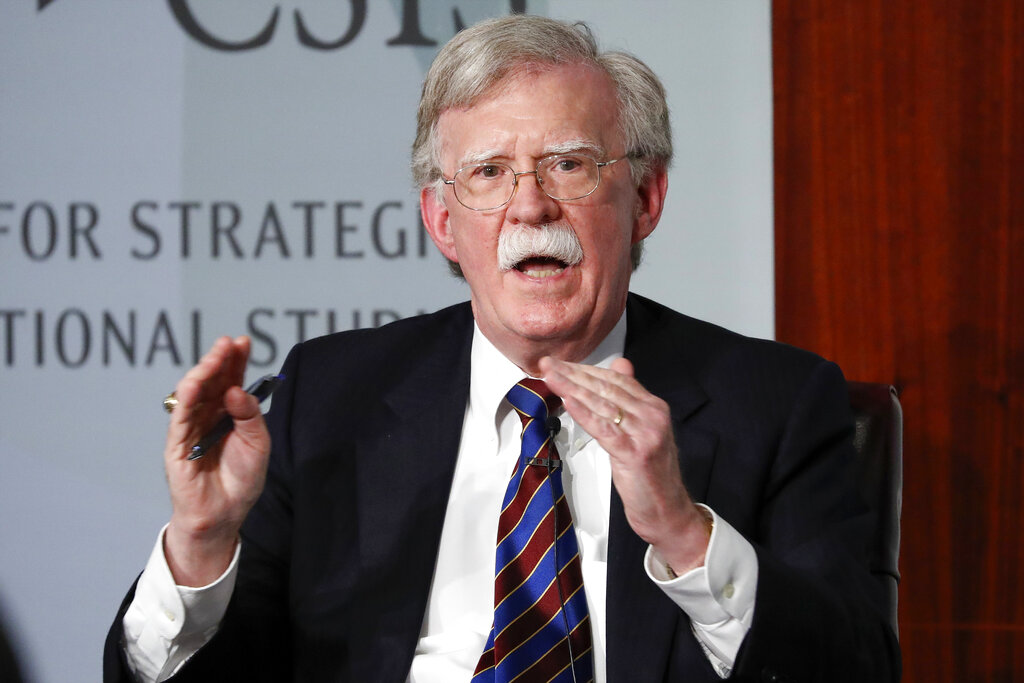
The White House worked furiously to block the book, asking a federal court for an emergency temporary restraining order Wednesday against its release.
GOP squirms as John Bolton prepares to dish on Donald Trump White House
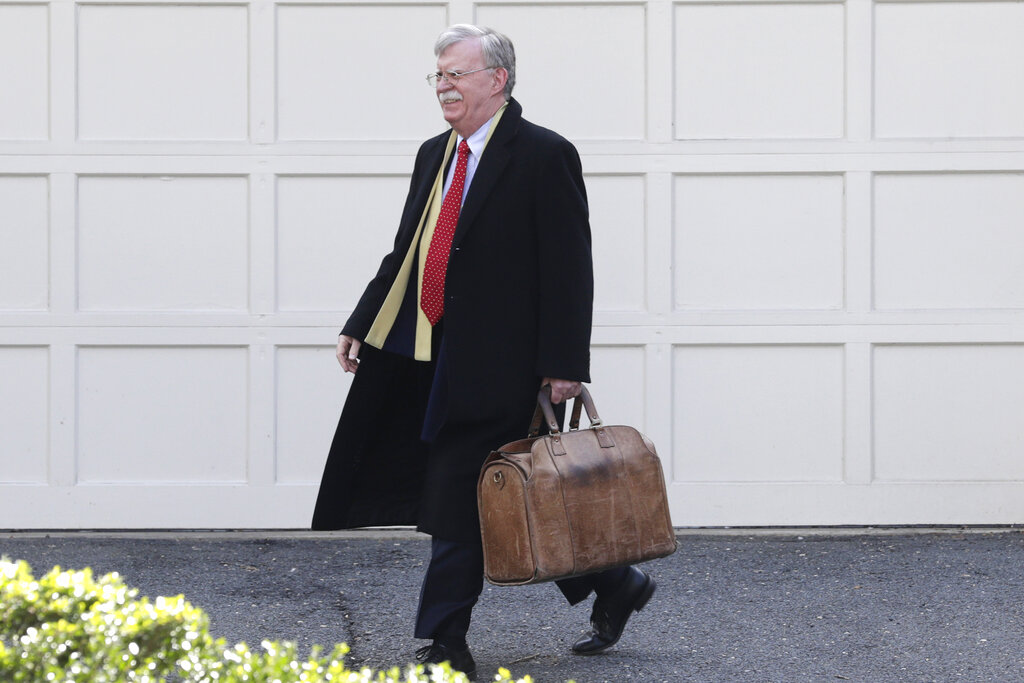
After this week’s early leaks about the book, White House aides and allies are privately expressing concern about what more Bolton might reveal.
Supreme Court rules against immigrants in detention case
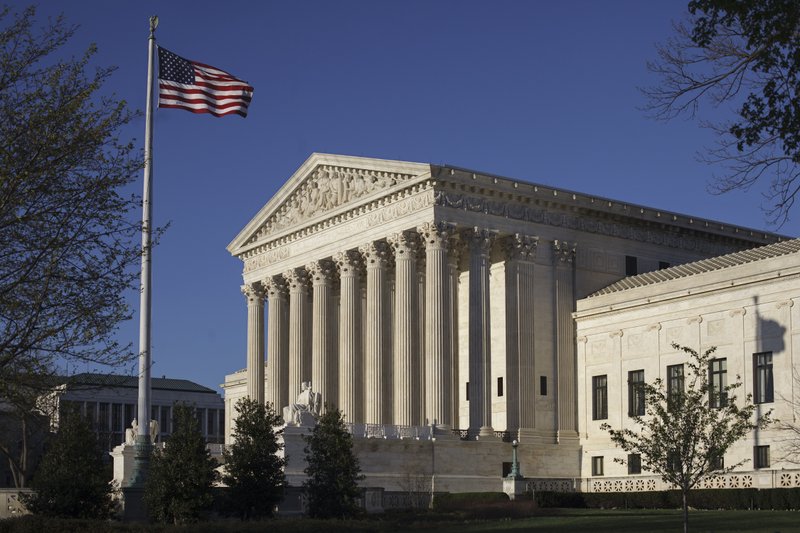
A divided Supreme Court ruled Tuesday against a group of immigrants in a case about the government’s power to detain them after they’ve committed crimes but finished their sentences. The issue in the case before the justices had to do with the detention of noncitizens who have committed a broad range of crimes that make them deportable. Immigration law tells the government it must arrest those people when they are released from custody and then hold them while an immigration court decides whether they should be deported. But those affected by the law aren’t always picked up immediately and are sometimes not detained until years later. In the case before the Supreme Court, a group of mostly green card holders argued that unless they’re picked up essentially within a day of being released, they should be entitled to a hearing where they can argue that they aren’t a danger to the community and are not likely to flee. If a judge were to agree, they would not have to remain in custody while their deportation case goes forward. That’s the same hearing rule that applies to other noncitizens the government is trying to deport. But the Supreme Court disagreed with the immigrants’ interpretation of federal law in a 5-4 ruling that divided the court along ideological lines. Looking at a statutory provision enacted by Congress in 1996, Justice Samuel Alito wrote that “neither the statute’s text nor its structure” supported the immigrants’ argument. The court’s conservative justices sided with the Trump administration. The administration argued, as the Obama administration did, that those affected by the law aren’t entitled to a hearing where they can argue for their release, regardless of whether they are arrested immediately after being released from custody or not. Department of Justice spokeswoman Kerri Kupec said the administration was “pleased with the decision.” Justice Stephen Breyer, in a dissent he read aloud in court, said that the larger importance of the case has to do with the power his colleagues’ ruling gives the government. “It is a power to detain persons who have committed a minor crime many years before. And it is a power to hold those persons, perhaps for many months, without any opportunity to obtain bail,” Breyer said. He wrote that in his view the law requires immigrants who have committed crimes to be detained “within a reasonable time after their release” from custody, “presumptively no more than six months.” If the person is not detained within that time, they should get a hearing where they can argue for their release, Breyer wrote. The American Civil Liberties Union represented the immigrants in the case before the Supreme Court. ACLU attorney Cecillia Wang, who argued the case, said after the decision that the ACLU will call on Congress to clarify the law and will continue to pursue options in court. Tuesday’s ruling was based on the text of the statute, and Wang said the ACLU will argue that the statute, as interpreted by the justices, is unconstitutional. Wang also called the decision an “extreme waste of taxpayer money,” saying it locks up individuals who are not a danger to the community. The case before the justices involved a class-action lawsuit brought by noncitizens in California and a similar class-action lawsuit brought in the state of Washington. In those cases, the U.S. Court of Appeals for the 9th Circuit sided with the immigrants, but other appeals courts had sided with the government in similar cases. One of the lead plaintiffs involved in the California case, Mony Preap, has been a lawful permanent resident of the United States since 1981 and has two convictions for possession of marijuana. He was released from prison in 2006 but was not taken into immigration custody until 2013. Preap has since won his deportation case, allowing him to remain in the country. The case is 16-1363 Nielsen v. Preap. Republished with permission of the Associated Press
Brett Kavanaugh takes hard line on federal regulations
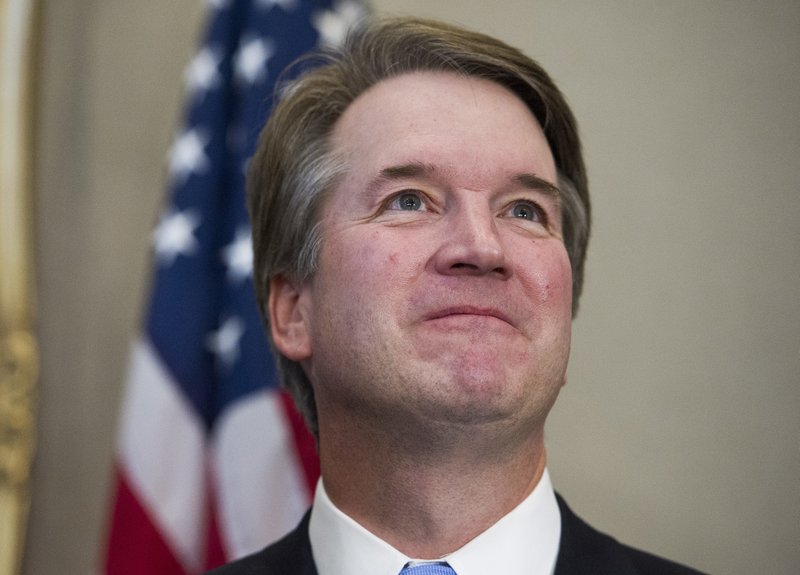
Supreme Court nominee Brett Kavanaugh worries about federal agencies running amok. He has argued that judges have given federal agencies leeway to push policies that go well beyond what Congress allowed. That view has endeared him to conservatives, who believe unelected bureaucrats are foisting radical regulations on Americans with little accountability. Liberals fear Kavanaugh would block business restrictions that are needed to tackle climate change, improve workplace safety and protect consumers. In a dissent last year as a judge on the U.S. Court of Appeals for the District of Columbia Circuit, Kavanaugh cited Supreme Court decisions in claiming that agencies can regulate “major social or economic activities” only if Congress clearly allows them to do so. Placing controls on cigarettes, banning physician-assisted suicide and imposing rules on greenhouse gas emitters are examples of such major action, he said. Kavanaugh’s approach to what conservatives call the “administrative state” hasn’t received the kind of attention given to marquee issues such as abortion and presidential powers since he was nominated by President Donald Trump to replace Justice Anthony Kennedy. But it’s an area where, if he’s confirmed, his presence on the court could mark a significant shift. If Kavanaugh aligns with other conservative justices in cases dealing with regulatory agencies, their opinions could ultimately affect a wide swath of American life. Under a widely followed judicial philosophy, courts generally step aside and give agencies broad leeway when a law is unclear. Kavanaugh, though, advised judges in a 2016 Harvard Law Review article to instead “seek the best reading of the statute” to see whether the regulation fits with it. He said this would “help prevent a runaway executive branch that exploits ambiguities in governing statutes to pursue its broad policy aims, even in situations where Congress has not enacted legislation embodying those policies.” Kavanaugh’s concern is that agencies are assuming powers that belong to Congress and the judiciary, said Ashley Baker, director of public policy for the Committee for Justice, a conservative legal and policy advocacy organization. She said Kavanaugh’s nomination was a “big step in the right direction” of establishing the authority of courts to interpret federal laws instead of giving agencies a blank check when laws are ambiguous. Kavanaugh — often in dissent — has rejected a wide variety of federal regulations and sought to rein in agencies, according to an Associated Press review of his 12 years on the D.C. appeals court, along with other writings and speeches. He also has displayed skepticism of independent federal agencies that are not answerable to the president. He wrote in dissent in January that he would have found that the structure of the Consumer Financial Protection Bureau — the agency charged with protecting consumers against debt collectors and banks — was unconstitutional because it was headed by one person, not a board or commission, and the president did not have the authority to fire its head. The full D.C. Circuit upheld the structure of the bureau that Congress created in the wake of the 2008 financial crisis, reasoning that a degree of independence would prevent problems that handicapped past regulators. Kavanaugh has objected to Environmental Protection Agency regulations on greenhouse gases; the Federal Communications Commission’s net neutrality rule requiring an equal playing field on the internet; and IRS requirements for paid tax preparers. All went beyond what Congress allowed by law, he said. In 2014, Kavanaugh dissented from the majority opinion upholding a safety citation by the Labor Department against SeaWorld following the drowning of a trainer by a killer whale during a 2010 show in Orlando, Florida. Kavanaugh said many sports and entertainment shows are dangerous, but the Labor Department has not “traditionally been thought of as the proper body to decide whether to ban fighting in hockey, to prohibit the punt return in football, to regulate the distance between the mound and home plate in baseball, to separate the lions from the tamers at the circus, or the like.” The ruling reflects Kavanaugh’s “deep and visceral opposition to the notion that the institutions created by Congress should be able to protect workers, clean air, clean water, consumers — everyday Americans,” said Daniel Goldberg, legal director of the Alliance For Justice, a liberal judicial advocacy group that opposes Kavanaugh’s confirmation. Kavanaugh is critical of a standard known as the Chevron doctrine, established by a 1984 Supreme Court ruling. Under Chevron, courts mostly defer to experts at the federal agencies when deciding whether regulations are consistent with law. The idea is that Congress often writes ambiguous laws, so agencies have to craft regulations to fill in the details. Kavanaugh said his time working for the administration of George W. Bush showed him the perils of the doctrine. “From my more than five years of experience at the White House, I can confidently say that Chevron encourages the Executive Branch (whichever party controls it) to be extremely aggressive in seeking to squeeze its policy goals into ill-fitting statutory authorizations and restraints,” he wrote in the Harvard Law Review article. Bernadette Meyler, a Stanford University law professor who has studied Kavanaugh’s regulatory decisions, said his view devalues agencies’ expertise and demands a level of clarity and specificity that lawmakers can’t provide. “Trying to cut back on regulatory agencies reduces the extent to which expertise is really relevant in decision-making,” she said. To be sure, Kavanaugh has also upheld regulations and forced agencies to implement rules required by Congress. He joined the majority in a ruling that upheld a ban on e-cigarette use on planes and wrote a unanimous opinion that rejected a challenge to stricter controls on a type of pollutant produced mostly by cars and power plants. In a July 2013 ruling, Kavanaugh in a 2-1 decision sided with environmental groups who objected to the EPA’s decision to defer regulation of carbon dioxide from sources other than fossil fuels. Kavanaugh said the Clean Air Act did not allow the EPA to put off those regulations. “Judge Kavanaugh is a fair and impartial jurist whose evenhanded
