
Mike Johnson elected speaker of the House after three weeks of infighting
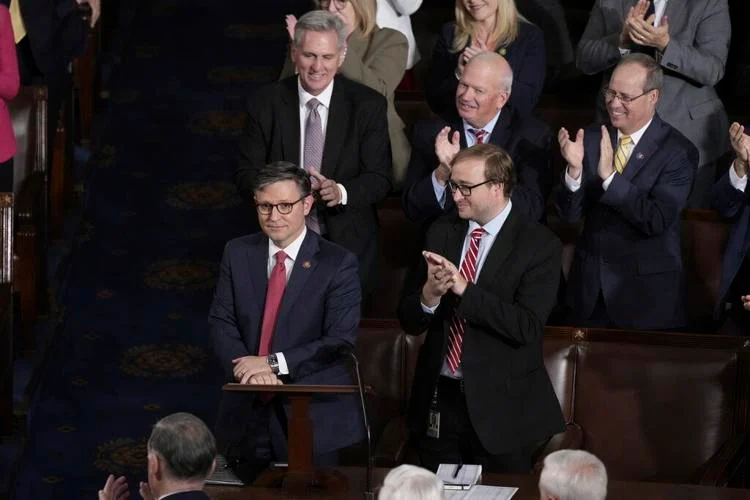
By Casey Harper | The Center Square The U.S. House of Representatives voted Wednesday to elect Rep. Mike Johnson, R-La., as speaker of the House, ending more than three weeks without a speaker and a string of chaotic meetings and votes on Capitol Hill. Johnson received multiple standing ovations from his colleagues Wednesday before securing the speakership. The final vote was 220-209, with Democrats supporting Minority Leader Hakeem Jeffries. “Today is the day that House Republicans will humbly look in our hearts and elect Mike Johnson as speaker of the people’s House,” Conference Chair Rep. Elise Stefanik, R-N.Y., said in a speech from the House floor ahead of the vote, calling Johnson “a man of deep faith,” and “a deeply respected Constitutional lawyer.” “Mike is strong, tough, and fair, and above all, Mike is kind,” Stefanik added. Stefanik announced on Sunday nine candidates that were making a bid to be speaker, but that number was slowly whittled down as lawmakers dropped out. “Today is the day we get this done,” Stefanik said in her Wednesday speech. U.S. Rep. Pete Aguilar, D-Calif., gave a speech from the floor to nominate Jeffries for speaker and attack Republicans. Jeffries blasted Republicans for “all of the infighting, all of the disarray just to end up where we were three weeks ago.” Johnson pitched Republicans on an aggressive legislative agenda over the next few weeks. Under his leadership, the House will face a looming partial government shutdown deadline in the middle of November as well as ongoing calls to fund Ukraine and Israel in their respective wars. “We must govern well and expand our majority next year,” Johnson said in a letter to his fellow Republicans over the weekend, asking for support in the speakership race. President Joe Biden called on Congress last week for more than $100 billion to that end, as well as funding for Taiwan, the immigration issue, and other priorities. That proposal was met with immediate pushback from Republicans in the House and Senate. Some funding for Israel, though, is likely to pass. More funding for Ukraine has become a divisive issue for Republicans, and it remains unclear how many more billions lawmakers will be willing to send to Ukraine. Notably, U.S. Rep. Kevin Hern, chairman of the Republican Study Committee, was running for speaker but later dropped out and told reporters he was supporting Johnson. The chaotic three-week battle for a speaker began when U.S. Rep. Matt Gaetz, R-Fla., filed a motion to vacate former House Speaker Kevin McCarthy, R-Calif. At that point, Majority Leader Steve Scalise won the nomination but quickly backed out after being unable to secure the needed votes. After that, House Judiciary Chair Rep. Jim Jordan, R-Ohio, won the nomination but lost it days later after three failed votes on the House floor, with 25 Republicans ultimately voting against him. Majority Whip Tom Emmer, R-Minn., was next to secure the nomination but almost immediately withdrew after failing to gain support. Notably, former President Donald Trump campaigned against Emmer. Before the vote Wednesday, Johnson posted on X, formerly known as Twitter, a picture of the American flag in the House Chamber, which has inscribed above it, “In God We Trust.” Republished with the permission of The Center Square.
Tom Emmer drops bid to be Speaker: House Republicans back to square one
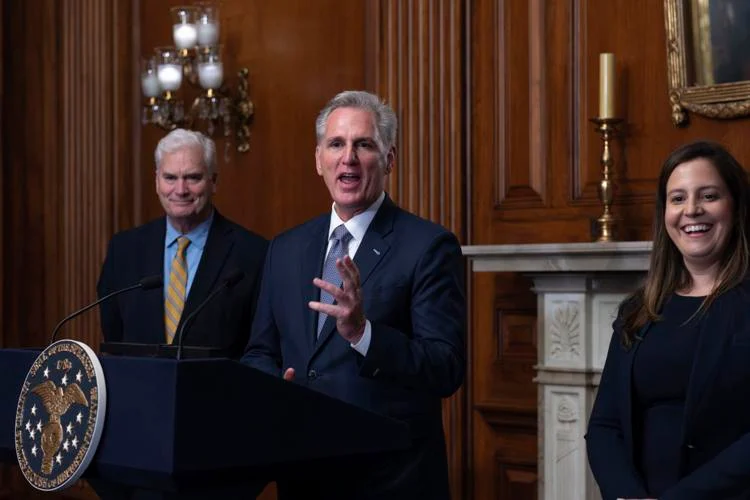
On Tuesday, the House Republican Conference met to decide who would be their next nominee to be the Speaker of the House. They chose House Majority Whip Tom Emmer (R-Minnesota). Emmer had the endorsement of ousted Speaker of the House Kevin McCarthy (R-California). It was the safe choice. Emmer had waited his turn behind McCarthy and House Majority Leader Steve Scalise (R-Louisiana), and he was respected on Capitol Hill. It was also a doomed choice. Emmer won a narrow victory and excited no one in the conservative base that appears to want unprecedented influence on how the GOP actually governs and who it elects to the Speakership. Former President Donald Trump (R) criticized the selection, as did a number of conservative influences. Within a few hours of being elected as the nominee, Emmer admitted his cause was hopeless and withdrew from the race. Emmer was criticized by conservatives for voting for the Respect for Marriage Act, voting to certify the 2020 election results, and for being the number three person on the leadership team that some conservatives felt had not represented them. Alabama Congressman Gary Palmer (R-AL06) withdrew from the Speaker’s race the morning before the Conference even voted. “If withdrawing my name can help expedite that process even a little, then I will gladly step aside,” Palmer said in a statement. “The candidate forum and individual conversations have given me great hope for the future of the 118th Congress.” In the vote of the Conference, Emmer narrowly beat Rep. Kevin Hern (R-Oklahoma) for the nomination. Hearn is back in the running for the spot to be the fourth nominee, as well as Rep. Mike Johnson (R-Louisiana). Scalise had been the Conference’s first choice, but he could not get the support of the ultra-right Freedom Caucus members, so he withdrew without a floor vote. House Judiciary Committee Chairman Jim Jordan (R-Ohio) was the next nominee. Jordan had the support of Trump, but it was not enough. Despite bringing his case to the floor three separate times, Jordan could not win over GOP moderates who were angry at conservatives for having failed to support Scalise. Conservatives have now rejected Emmer as being too much of a moderate. The Republicans control the chamber by a 221 to 212 margin. Democrats continue to vote for their candidate, House Minority Leader Hakeem Jeffries (D-New York). The House Republican Conference is expected to meet on Wednesday to seek a new nominee. Election as Speaker requires a minimum of 217, so only a small faction of 5 or more Republicans is sufficient to sabotage any Republican nominee for the post. Long gone are the days when Republican Congressmen would carry out the will of the majority of their Conference and show no public divisions. This Caucus appears to be bitterly divided and is unashamed to make those divisions all too public. To connect with the author of this story or to comment, email brandonmreporter@gmail.com.
Republicans announce nine new speaker candidates
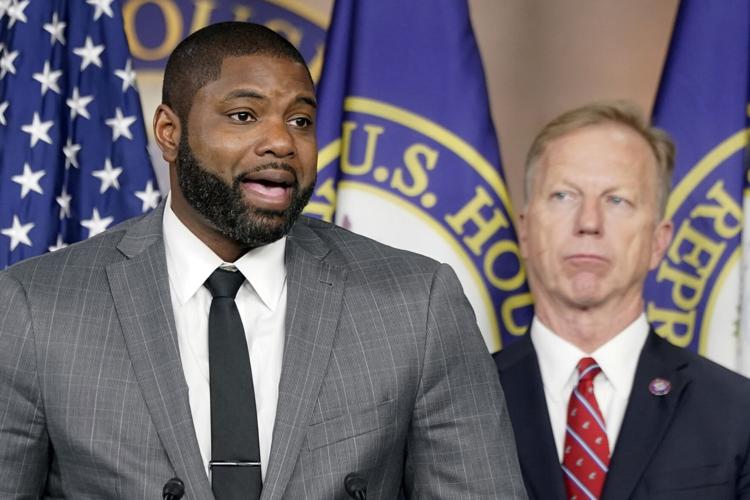
By Casey Harper | The Center Square Nine new Republican lawmakers have thrown their hat in the ring to become the next speaker of the U.S. House. Republican Conference Chair Rep. Elise Stefanik released the list of candidates, who had until noon Sunday to announce their candidacy. The list, which Stefanik posted on X, formerly known as Twitter, is as follows: The new list of candidates comes after former House Speaker Kevin McCarthy, R-Calif., was ousted from the role when Rep. Matt Gaetz, R-Fla., filed a motion to vacate. Then, Majority Leader Steve Scalise, R-La., was the party’s choice to become speaker, but he withdrew when he was unable to get the support he needed. House Judiciary Chair Rep. Jim Jordan, R-Ohio, was next in line and worked for several days to get the needed 217 votes to become speaker. However, at least 20 Republicans voted against him across his three floor-vote attempts, and on Friday, his nomination was revoked. Some of the candidates have more support than others. Donalds’ announcement drew more attention than some others. Emmer has been a rumored pick for speaker as well. However, conservative Republicans have expressed frustration with moderate Republicans for rejecting Jordan, who had significant support with the Republican base but was seen as a hardline conservative who questioned the results of the 2020 presidential election. “The most popular Republican in Congress was just knifed in an anonymous vote in a secret closed-door meeting in the basement of the Capitol,” Gaetz wrote on X Friday. “This is the Swamp at work.” Meanwhile, some more moderate Republicans have expressed frustration with Gaetz and do not want to reward his ousting of McCarthy with an aggressive conservative pick. As The Center Square previously reported, Jordan sparked pushback from his own party on Thursday after reports surfaced that he said behind closed doors he would back the speaker pro Tempore, U.S. Rep. Patrick McHenry, R-N.C., for a limited temporary speakership role so the government could be funded and other key legislative goals hit. The federal government faces a partial shutdown in November, and there is increasing pressure to send more funds for the Ukraine and Israel wars. President Joe Biden called on Congress to pass a spending package of $105 billion for those wars as well as some border funding and money for Taiwan, which national security experts say China could invade at any time. Jordan later addressed reporters, announcing he would drop that plan and instead hold another vote. That plan still has potential to take effect. While many Republicans have expressed opposition to the idea, Democrat Minority Leader Hakeem Jeffries has seemed open to the idea when talking with reporters. Republished with the permission of The Center Square.
U.S. Speaker candidates agree to joint interview
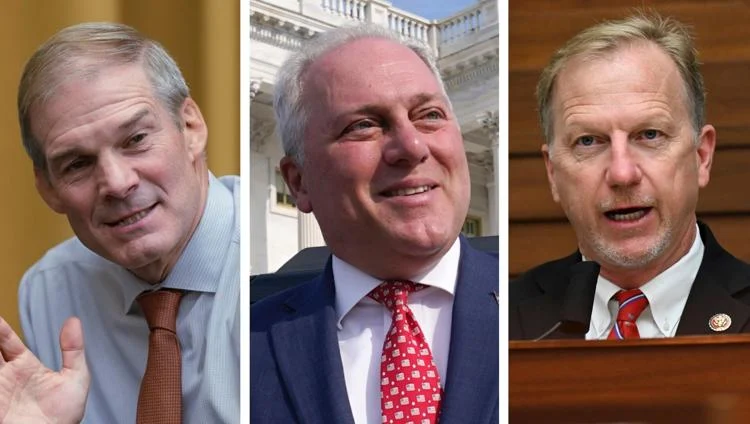
By Brett Rowland | The Center Square Three contenders for the Speaker of the U.S. House have agreed to a joint TV interview. U.S. House Judiciary Chairman Jim Jordan, R-Ohio, Majority Leader Steve Scalise, R-La., and Rep. Kevin Hern, R-Okla., who is chairman of the Republican Study Committee, will join Fox News Channel’s chief political anchor Bret Baier at 6 p.m. ET on Monday. A conference-wide vote to select who Republicans put up for speaker is expected Wednesday. Eight House Republicans voted with House Democrats to oust former Speaker of the House Kevin McCarthy, R-Calif., after he struck a deal with Democrats to keep the federal government from partially shutting down. On Friday, former President Donald Trump endorsed Jordan to be the next speaker. Just hours after being voted out of his leadership position, McCarthy said he would not run for the position again. Republished with the permission of The Center Square.
Steve Scalise, Jim Jordan announce bids to replace Kevin McCarthy as Speaker of the House
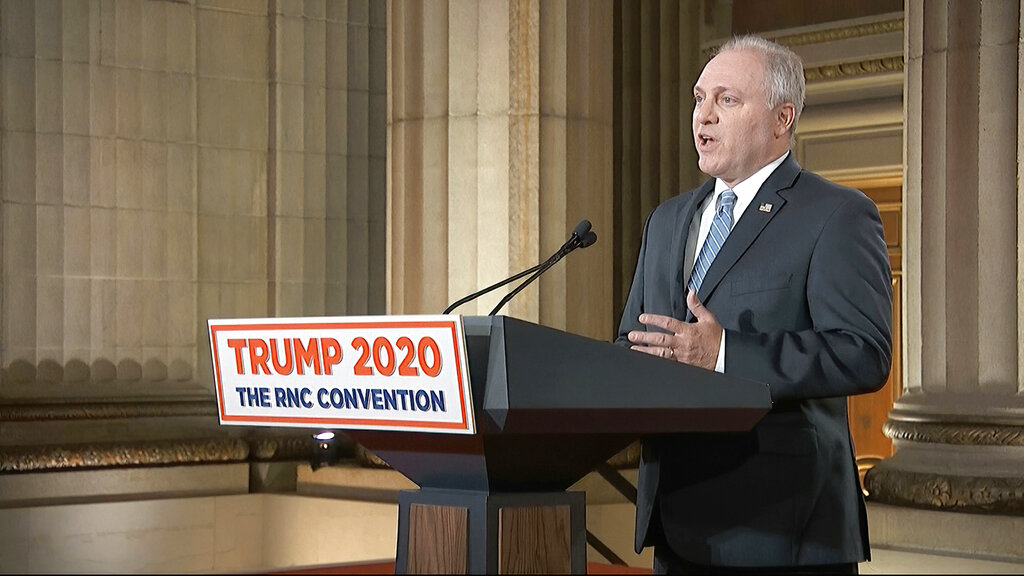
By Casey Harper | The Center Square House Judiciary Chair Rep. Jim Jordan, R-Ohio, and Majority Leader Steve Scalise, R-La, both announced Wednesday their bid to replace Kevin McCarthy, R-Calif., as Speaker of the House. A vote for a new Speaker is reportedly not expected until Oct. 11, giving lawmakers about a week to plan their next move. McCarthy, who was pushed out after striking a deal with Democrats to keep the government open, said he does not plan to run again for the position. “I think Matt has planned this all along,” McCarthy told reporters. “It didn’t matter what transpired. He would’ve done it if we were in shutdown or not.” Scalise’s and Jordan’s announcement comes after a handful of House Republicans joined Democrats to oust Kevin McCarthy, R-Calif., from his role as Speaker of the House, the first time Congress has ever done so. Now, the House has until mid-November to elect a new Speaker and pass some kind of spending measure or face a government shutdown. Scalise sent a letter to House Republicans asking for their support. “Our strength as a Conference comes from our unity, and we have seen when we unite as a Conference, we can deliver wins for the American people,” the letter said. “Now we need to take those unified positions and work to extract conservative wins from the Democrat Senate and White House by leveraging upcoming deadlines. While we need to be realistic about what can be achieved, if we stay united, we can preserve leverage for the House to secure tangible wins in our impending policy fights.” Jordan sent a similar letter to his fellow Republicans asking for their support. “We must address rising crime in major cities and reject soft-on-crime, pro-criminal policies,” the letter said. “We must get our fiscal house in order and reduce spending so that we can leave more to the next generation than a crushing deficit. We must do our constitutional oversight of the federal bureaucracy to ensure they work for the American people not the other way around. And we must continue working to secure the border and protect our national security. “I respectfully ask for your support for Speaker of the House of Representatives,” the letter added. Jordan’s move was welcomed by some Republicans like Rep. Matt Gaetz, R-Fla., who filed the motion to oust McCarthy. “We should get to electing a new, more conservative and more trustworthy Speaker immediately,” Gaetz wrote on X, formerly known as Twitter. “I’m calling on [Patrick McHenry] who is currently the Speaker Pro Tem, to reconsider the decision that he just made to send everyone in Congress home for a week. This is not the time to go home for a week. We should stay and elect a new Speaker.” Other potential frontrunners to replace McCarthy include Majority Whip Tom Emmer, R-Minn., and Rep. Kevin Hern, R-Okla, who suggested he might run. Some lawmakers spoke out to make clear they are not running. “While I appreciate the confidence of some colleagues and their request that I step into the Speaker race, my team and I have been doing important work on the Homeland Security Committee – and we still have much more to do to hold President [Joe] Biden and Secretary [Alejandro] Mayorkas for one of the worst national security failures in the history of the country,” Rep. Mark Green, chair of the Homeland Security Committee, wrote on X. “Therefore, I am not throwing my name into the race,” he added. With the existing divide in the party, it may be impossible for any Speaker to be successful. “The most important issue facing the next House speaker is soaring federal debt pushing the nation to the brink of fiscal disaster,” Chris Edwards, an expert at the Cato Institute, told The Center Square. “Interest rates on 10-year government bonds have shot up far above projections to 4.8 percent and rising, which will raise the burden of accumulated debt to crushing levels. “America needs a new House speaker – and presidential candidates – who put spending restraint and debt reduction as top national priorities,” he added. Republished with the permission of The Center Square.
Kevin McCarthy preps House GOP debt deal to draw Joe Biden into talks
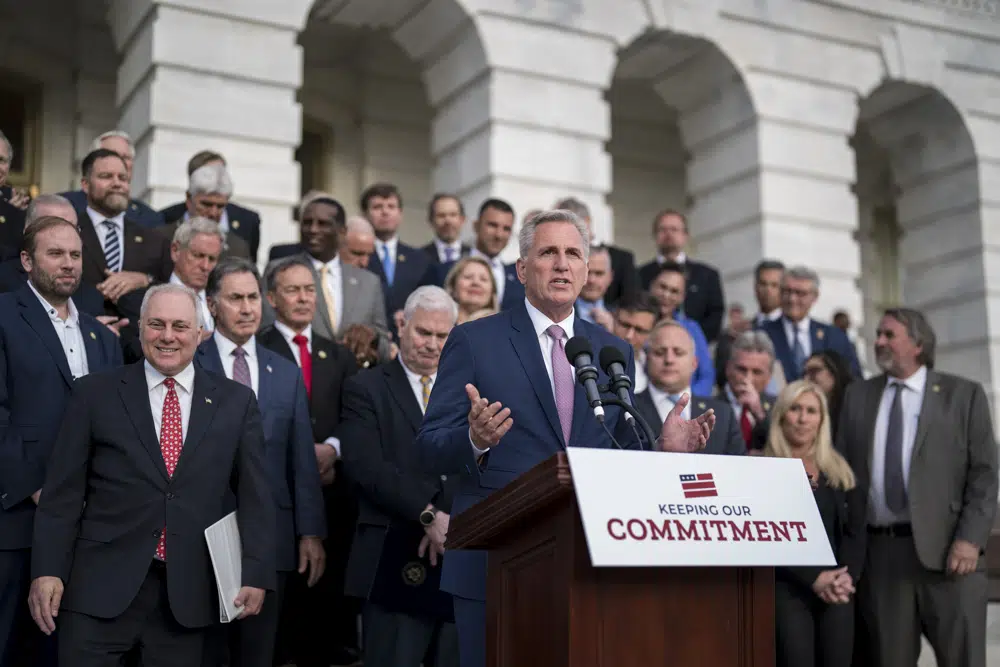
Speaker Kevin McCarthy convened House Republicans behind closed doors Tuesday to build support for his plan to allow the nation’s debt limit to rise in return for strictly limiting future federal spending increases to 1% a year. It’s a bid, including other major policy changes, to draw President Joe Biden into negotiations. The typically fractured House Republican majority has appeared surprisingly open to the plan, which McCarthy outlined in a high-profile speech Monday on Wall Street, but it remains a work in progress. While the proposal has almost no chance of passage in the Democratic Senate, McCarthy wants to pass it in the Republican House to kickstart White House talks. “I’m confident we’ll have it and comfortable we’ll pass it,” said Rep. Tom Cole, R-Okla., the chairman of the Rules Committee, who said a bill could come up for a vote as soon as next week. Even some of McCarthy’s skeptics from the House Freedom Caucus — including those who initially refused to back him to be speaker — seemed ready to give his debt ceiling proposal a look. But others remained deeply skeptical, showing the limits of the embattled speaker’s grip on his majority. Rep. Matt Gaetz, R-Fla., a McCarthy holdout for speaker, said Tuesday he was unsold on the plan and suggested changes. And Rep. Clay Higgins, R-La., said as he exited the session, “There is no ‘this.’ We’re discussing what the ‘this’ will be.” The nation’s legal debt limit must be raised soon to keep the U.S. from defaulting on its fiscal obligations. That high-stakes fight will play out in the weeks ahead as Biden confronts the new era of divided government with Republicans in charge of the House and eager to flex their majority power. If McCarthy succeeds in having the House pass his proposal, he would be able to enter into talks with the White House, showing that he has the backing of his fellow GOP lawmakers. Biden administration officials have privately expressed doubts about the benefits of negotiating with McCarthy out of skepticism that he can rally conservative Republican votes. Democratic Minority Leader Hakeem Jeffries quipped on CNBC that the House Republicans’ budget plan is “in the witness protection program.” The proposal the Republican speaker outlined is far-reaching and expected to be rejected by the White House. It would raise the debt limit into next year — putting it squarely into the 2024 presidential election in exchange for rolling back spending to fiscal 2022 levels, recouping tens of billions of dollars of unspent COVID-19 relief funds, and imposing a 1% cap on future non-defense spending each year for the decade. The 1 percent spending cap would not include mandated Social Security and Medicare money. Additionally, McCarthy’s plan would impose new work requirements on recipients of government aid, cutting billions from the federal safety net. And it would tack on H.R. 1, a sweeping energy package of oil and gas drilling and permit changes that would undo much of Biden’s climate change agenda. The Treasury Department has said the government probably will need to raise the debt ceiling, now at $31 trillion, by summer. For now, Treasury is taking “extraordinary measures” to allow continued borrowing to pay off already accrued bills, but that will eventually run out. Unable to pass an actual Republican budget through the House, as Biden challenges him to do, McCarthy instead has been working furiously behind the scenes with his leadership team to unite the “five families” — the often warring factions of Republican caucuses, including the House Freedom Caucus — to join together on his new plan. He and the leadership team discussed the ideas Tuesday at the House Republicans’ private session in hopes of turning the slides of ideas into a firm legislative package. “I find all indications to be we’re going to put a very serious proposal on the floor and pass it with 218 or more votes,” said Freedom Caucus member Rep. Dan Bishop, R-N.C., as lawmakers arrived at the Capitol late Monday evening, referring to the majority needed for passage. But by Tuesday, no vote was set, according to a person familiar with the private meeting and granted anonymity to discuss it. “I still have more questions than answers at this point,” said Rep. Nancy Mace, R-S.C., complaining there were only a few slides of information. In many ways, this is the easy part for McCarthy: A vote as soon as next week would hardly be binding since the proposal would be dead on arrival in the Senate. That political dynamic may make it easier for McCarthy to rally his ranks behind the plan if Republicans see it as merely a starting point in negotiations designed to push Biden to the table. House Freedom Caucus Chairman Rep. Scott Perry, R-Pa., said late Monday the plan was a step in the right direction, but he still needed details. “Kevin McCarthy is going to get 218 votes on this deal,” said Rep. Dusty Johnson, R-S.D., a chairman of the conservative Main Street Caucus, referring to the majority needed for passage. Said Rep. Kevin Hern of Oklahoma, the chairman of the powerful Republican Study Committee: “There’s still hard work ahead of us, but I believe we can get 218 votes by the end of next week.” Senate Majority Leader Chuck Schumer said if McCarthy continues down this path of negotiating over the need to raise the debt limit, the U.S. would be headed for a default. “No one should confuse this wish list as anything more than a recycling of the same bad ideas we’ve heard about for weeks, and it’s still not clear that Speaker McCarthy has the votes to even pass this,” Schumer said. Republished with the permission of The Associated Press.
Kevin McCarthy makes big gains for speaker, but still falls short
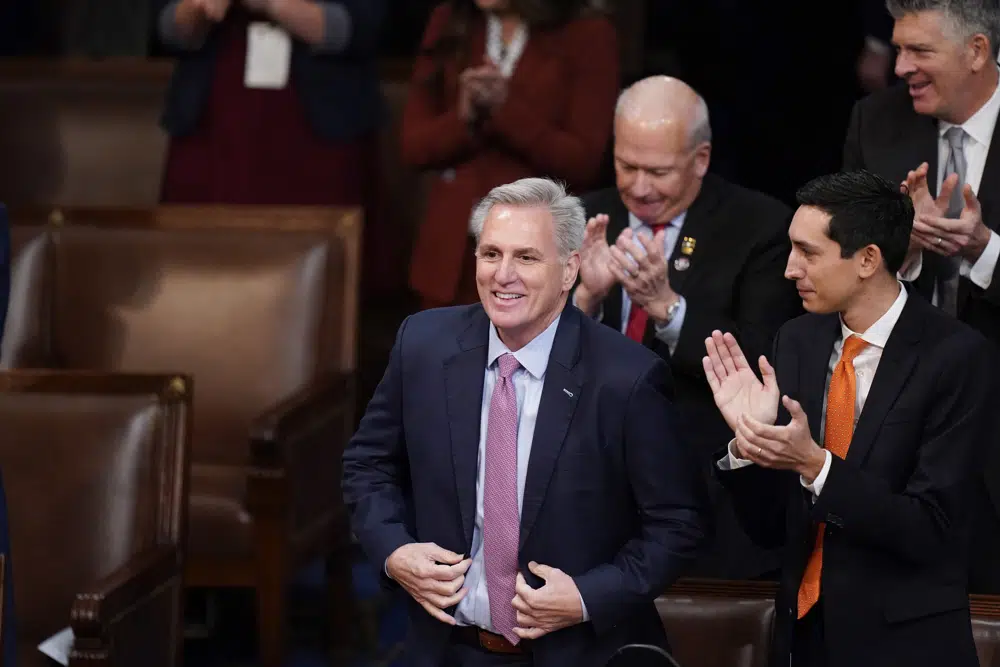
Republican leader Kevin McCarthy flipped 15 colleagues to support him in dramatic votes for House speaker on Friday, making extraordinary gains on the fourth day and the 12th and 13th ballots of a grueling standoff that was testing American democracy and the Republicans’ ability to govern. The changed votes from conservative holdouts, including the chairman of the chamber’s Freedom Caucus, put McCarthy closer to seizing the gavel for the new Congress — but not yet able. The stunning turnaround came after McCarthy agreed to many of the detractors’ demands — including the reinstatement of a longstanding House rule that would allow any single member to call a vote to oust him from office. That change and others mean the job he has fought so hard to gain will be weakened. After McCarthy won the most votes for the first time on the 12th ballot, a 13th was swiftly launched, this time just between McCarthy and the Democratic leader, with no nominated Republican challenger to siphon GOP votes away. But six GOP holdouts still cast their ballots for unnominated others, denying him the majority needed. The showdown that has stymied the new Congress came against the backdrop of the second anniversary of the January 6, 2021, attack on the Capitol, which shook the country when a mob of then-President Donald Trump’s supporters tried to stop Congress from certifying the Republican’s 2020 election defeat to Democrat Joe Biden. A few minutes before voting began in the House chamber, Republicans tiring of the spectacle walked out when one of McCarthy’s most ardent challengers railed against the GOP leader. “We do not trust Mr. McCarthy with power,” said Republican Matt Gaetz of Florida as colleagues streamed out of the chamber in protest of his remarks. Contours of a deal with conservative holdouts who have been blocking McCarthy’s rise emerged, but an agreement had seemed still out of reach after three dismal days and 11 failed votes in a political spectacle unseen in a century. But an upbeat McCarthy told reporters as he arrived at the Capitol Friday morning, “We’re going to make progress. We’re going to shock you.” One significant former holdout, Republican Scott Perry, chairman of the conservative Freedom Caucus, tweeted after his switched vote for McCarthy: “We’re at a turning point.” But several holdouts remained. The final 12th vote tally: McCarthy, 213 votes; Democrat Hakeem Jeffries 211. Other Republicans Jim Jordan and Kevin Hern picked up protest votes. With 431 members voting, McCarthy was still a few votes short of a majority. When Rep. Mike Garcia nominated McCarthy for a 12th time, he also thanked the U.S. Capitol Police who were given a standing ovation for protecting lawmakers and the legislative seat of democracy on January 6. The agreement McCarthy presented to the holdouts from the Freedom Caucus and others centers around rules changes they have been seeking for months. Those changes would shrink the power of the speaker’s office and give rank-and-file lawmakers more influence in drafting and passing legislation. Even if McCarthy is able to secure the votes he needs, he will emerge as a weakened speaker, having given away some powers, leaving him constantly under threat of being voted out by his detractors. But he would also be potentially emboldened as a survivor of one of the more brutal fights for the gavel in U.S. history. At the core of the emerging deal is the reinstatement of a House rule that would allow a single lawmaker to make a motion to “vacate the chair,” essentially calling a vote to oust the speaker. McCarthy had resisted allowing a return to the longstanding rule that former Speaker Nancy Pelosi had done away with, because it had been held over the head of past Republican Speaker John Boehner, chasing him to early retirement. But it appears he had no other choice. The chairman of the chamber’s Freedom Caucus, Scott Perry of Pennsylvania, who had been a leader in Trump’s efforts to challenge his presidential election loss to Democrat Joe Biden, appeared receptive to the proposed package, tweeting an adage from Ronald Reagan, “Trust but verify.” Other wins for the holdouts include provisions in the proposed deal to expand the number of seats available on the House Rules Committee, to mandate 72 hours for bills to be posted before votes, and to promise to try for a constitutional amendment that would impose federal limits on the number of terms a person could serve in the House and Senate. Lest hopes get ahead of reality, conservative holdout Ralph Norman of South Carolina said: “This is round one.” It could be the makings of a deal to end a standoff that has left the House unable to fully function. Members have not been sworn in, and almost no other business can happen. A memo sent out by the House’s chief administrative officer Thursday evening said that committees “shall only carry out core Constitutional responsibilities.” Payroll cannot be processed if the House isn’t functioning by January 13. After a long week of failed votes, Thursday’s tally was dismal: McCarthy lost seventh, eighth, and then historic ninth, 10th, and 11th rounds of voting, surpassing the number from 100 years ago in the last drawn-out fight to choose a speaker. The California Republican exited the chamber and quipped about the moment: “Apparently, I like to make history.” Feelings of boredom, desperation, and annoyance seemed increasingly evident. Democrats said it was time to get serious. “This sacred House of Representatives needs a leader,” said Democrat Joe Neguse of Colorado, nominating his own party’s leader, Hakeem Jeffries, as speaker. What started as a political novelty, the first time since 1923 a nominee had not won the gavel on the first vote, has devolved into a bitter Republican Party feud and deepening potential crisis. Democratic leader Jeffries of New York won the most votes on every ballot but also remained short of a majority. McCarthy ran second, gaining no ground. Pressure has grown with each passing day for McCarthy to somehow find the votes he needs or
Reps. Barry Moore and Mo Brooks demand DOD halt involuntary discharges for vaccine refusal immediately
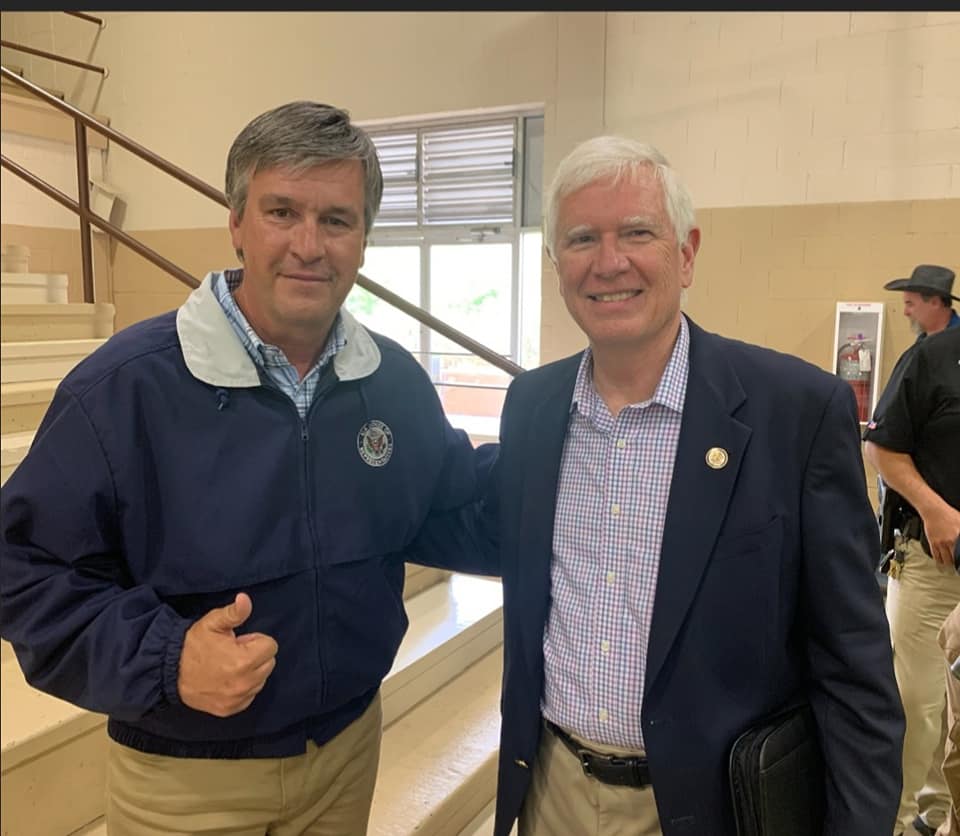
Reps. Barry Moore and Mo Brooks joined 40 of their colleagues in sending a letter to the Department of Defense (DOD) to demand that they halt efforts to involuntarily discharge members of the military who have refused COVID-19 vaccination. The letter requests that they stop until an in-depth review of natural immunity is complete, and the Department has issued uniform procedures for vaccine exemptions. According to Moore’s press release, Section 720 of the National Defense Authorization Act for Fiscal Year 2022 requires the DOD to establish uniform procedures for issuing exemptions and fully consider natural immunity. This includes eligibility timelines for consideration of exemptions for service members nearing separation and retirement in the development of uniform procedures relating to administrative exemptions. According to an NPR report, as of January 26, 96% of active troops had been completely vaccinated, while 3,350 soldiers had refused to get the vaccine. Nearly 5,900 have received temporary exemptions. “The DOD must immediately halt efforts to discharge our active-duty military members who refuse to get the vaccine just because overreaching politicians want to continue intervening in the private lives of the American people,” said Moore. “We must ensure that the DOD completes an in-depth review of natural immunity. I will continue to fight against the tyrannical vaccine mandate on our service members.” The letter states, “We are gravely concerned that the military services are proceeding with involuntary discharges when it is unclear to us whether uniform procedures have been issued by the Department of Defense. If the Department of Defense has not issued uniform procedures or reviewed the inclusion of natural immunity and the military services are moving forward with involuntary discharges, then we believe the Department is ignoring and violating Section 720. Congress included this language to protect our service members, and we expect the Department of Defense to abide by the law.” Additional members of Congress to sign the letter include Vicky Hartzler, Doug Lamborn, Elise Stefanik, Brian Mast, David McKinley, Darrell Issa, Kevin Hern, Rodney Davis, Bill Huizenga, Yvette Herrell, Michael Waltz, Bill Posey, Michael Guest, David Valadao, Thomas Tiffany, Pete Stauber, Mike Kelly, Andy Biggs, Neal Dunn, Gus Bilirakis, Dan Crenshaw, Randy Weber, Sr., Louie Gohmert, Lauren Boebert, Glenn Grothman, Alex Mooney, Joe Wilson, Scott DesJarlais, Jack Bergman, David Schweikert, Jeff Duncan, Ralph Norman, Bruce Westerman, Jim Banks, Rick Crawford, Jodey Arrington, Christopher H. Smith, Victoria Spartz, Ted Budd, and Gregory Steube.
