
House Approves Measure to Restrain Trump’s Actions on Iran
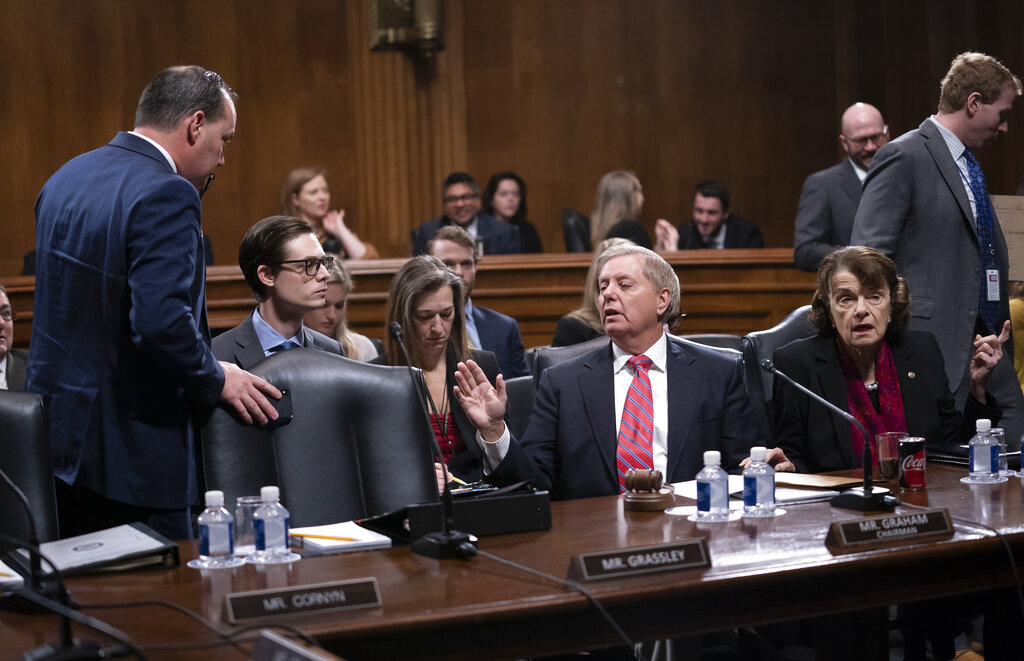
This resolution is not binding and is largely symbolic.
House leaders racing the clock on government spending bill

The Senate’s top Republican issued a downbeat assessment of talks on a government spending bill Wednesday, warning that it will require a “laser focus from both parties and both chambers” to meet next week’s deadline and avert a federal shutdown. Across the Capitol, House Speaker Nancy Pelosi met with Hispanic lawmakers about the upcoming appropriations measure, which is likely to largely maintain President Donald Trump’s tactical ability to fund his much-sought border wall. It’s part of an effort to solidify support for the emerging catchall funding bill, which promises to deliver plenty of small-bore victories for lawmakers in both parties and is seen as preferable to the alternative of simply keeping the government on autopilot. Trump cares mostly about border fence funding. “To be frank, only a laser focus from both parties and both chambers on getting results will create a path to pass appropriations bills this year,” Senate Majority Leader Mitch McConnell said. “There simply is not time left for my Democratic friends to continue haggling over … poison pills, partisan policy riders and presidential transfer authorities.” As is often the case, California rivals Pelosi and Kevin McCarthy are feuding, this time about a long-shot McCarthy bid for additional funding for a controversial dam project that would provide more water for Central Valley farmers. Nobody wants a government shutdown when a stopgap spending bill expires at the end of next week, but time is running out and it’s not at all certain that negotiations can close in time for the Senate to process a year-end spending package. Another temporary funding bill, called a continuing resolution, or CR, could be needed to avert a repeat of last year’s 35-day partial federal shutdown. At issue is the almost one-third of the federal budget passed by Congress each year for day-to-day operations of federal agencies. This year’s annual appropriations cycle was supposed to be relatively easy after this summer’s budget and debt deal reversed a sharp set of spending cuts that would have otherwise struck both the Pentagon and domestic agencies. But a Senate GOP move to more than triple a key border wall account to meet Trump’s demands sparked a two-month stalemate. Negotiations are back on track, with most of Trump’s $5 billion wall demand being returned to other domestic accounts. It’s complicated, but Trump has a significant tactical advantage that allows him to obtain several billion dollars for his border project. That’s because he will refuse to sign any bill that denies his wall request outright or curtails his powers to transfer money from Pentagon accounts to border construction. Another option is to keep the Homeland Security Department budget largely frozen under a continuing resolution while maintaining those same transfer authorities that Trump has used to shift almost $7 billion to wall accounts even as Congress directly appropriates far less — $1.4 billion for the 2019 budget year. Nobody wants the third option: a government shutdown battle. The no-win spot that anti-wall forces find themselves in promises to generate unrest among some progressives, though they may be reluctant to give leaders much blowback during the height of impeachment. For their part, conservatives usually just oppose the annual spending bills, which are then reluctantly signed by Trump after last-minute drama. Congressional Hispanic Caucus Chairman Joaquin Castro, Democrat-Texas, said the group “is concerned, as always, about increased funding for the wall or for more (Immigration and Customs Enforcement) detention beds.” House Democrats sought to block Trump’s power to transfer Pentagon funding to Trump’s project, but his veto threats are likely to succeed in getting Democrats to drop the language in the closed-door talks. Negotiators on a separate $738 billion Pentagon policy bill dumped companion language in their House-Senate talks. But funding through transferring money from other accounts is subject to legal challenges. A federal judge in Texas on Tuesday issued a nationwide injunction to block Trump from using $3.6 billion in military base construction funds to pay for border fencing and other barriers. Democrats griped that Republicans were slow to make concessions on more than 100 items that were in dispute, citing as an example House GOP leader McCarthy’s effort to win additional money for a long-stalled dam project that’s opposed by environmentalists. Republicans countered that Democrats were slow to give up their pet priorities as well and that some of their demands should be deemed poison pills and dropped automatically. The delays have pushed back deadlines. House action on the spending package won’t occur until next week, when impeachment and a major trade bill are also on the agenda. Leaders hope the Senate could follow and complete action by the end of next week, but any individual senator could mess up the plan under the Senate’s rules. By Andrew Taylor Associated Press. Republished with the Permission of the Associated Press.
House will draft Donald Trump impeachment articles, Nancy Pelosi says
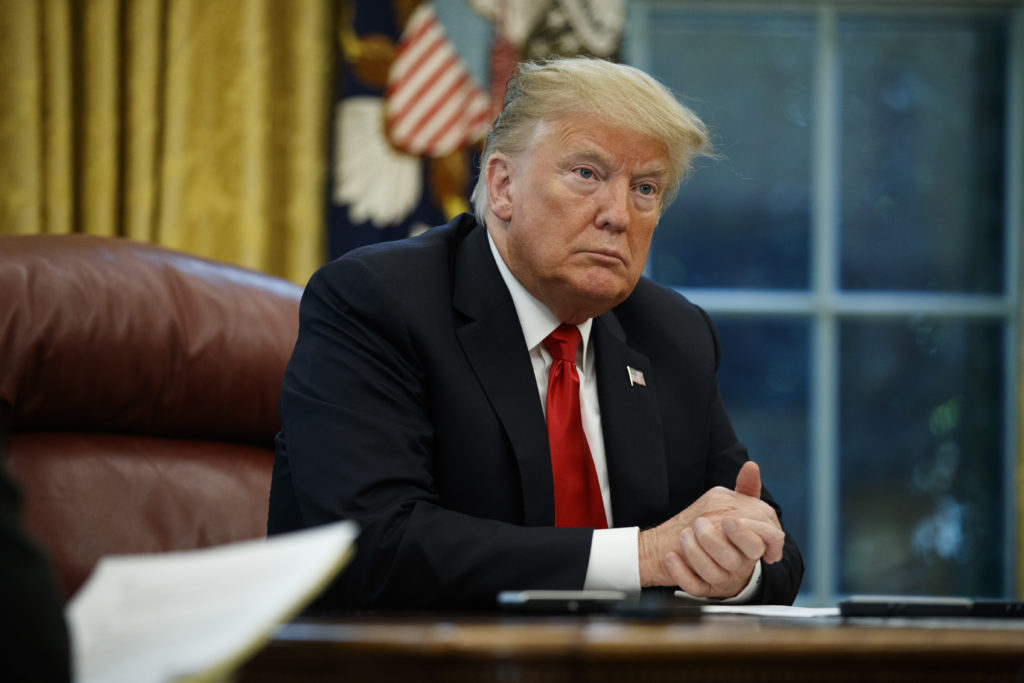
The U.S. House is pressing forward to draft articles of impeachment against President Donald Trump, Speaker Nancy Pelosi announced Thursday. ‘’Our democracy is what is at stake,” Pelosi said somberly. “The president leaves us no choice but to act.” Pelosi delivered the historic announcement in solemn tones, drawing on the Constitution and the Founding Fathers, as Democrats push toward a vote, possibly before Christmas. “The president’s actions have seriously violated the Constitution,” she said from the speaker’s office at the Capitol. “He is trying to corrupt, once again, the election for his own benefit. The president has engaged in abuse of power, undermining our national security and jeopardizing the integrity of our elections .” “Sadly, but with confidence and humility, with allegiance to our founders and a heart full of love for America, today I am asking our chairmen to proceed with articles of impeachment,” Pelosi said. At the core of the impeachment probe is a July call with the president of Ukraine, in which Trump pressed the leader to investigate Democrats and political rival Joe Biden as the White House was withholding military aid to the country bordering an aggressive Russia. Pelosi emphasized the Russia angle at a news conference later, saying that it’s Russia and President Vladimir Putin who benefited most from Trump’s actions toward Ukraine “All roads lead to Putin. Understand that,” she declared. “That was the a-ha moment.” Asked as she was leaving if she hates Trump, Pelosi stiffened, returned to the podium and responded sharply that the president’s views and politics are for the voters at elections to judge, but “this is about the Constitution.” She said that as a Catholic, she does not hate the president but rather is praying for him daily. Eager to fight, Trump quickly tweeted back that he didn’t believe her. Earlier, Trump tweeted that if Democrats “are going to impeach me, do it now, fast.” He said he wanted to get on to a “fair trial” in the Senate. The president also said that Democrats have “gone crazy.” At the White House, press secretary Stephanie Grisham tweeted that Pelosi and the Democrats “should be ashamed,”” then she, too, looked past the likely impeachment in the Democratic-majority House to trial in the Republican-controlled Senate. The GOP Leader of the House, Kevin McCarthy, said Pelosi is more concerned about tearing the president down than buílding the country up.”Senate Majority Leader Mitch McConnell, Republican-Kentucky, criticized Democrats for focusing on impeachment over other issues, though many House-passed bills are waiting for action in his chamber. “It’s all impeachment, all the time,” he said. Drafting articles of impeachment is a milestone moment, only the fourth time in U.S. history Congress has tried to remove a president, and it intensifies the deeply partisan undertaking that is consuming Washington and dividing the nation. Once reluctant to pursue impeachment, warning it was too divisive for the country and needed to be a bipartisan endeavor, Pelosi is now leading Congress into politically riskier waters for all sides ahead of an election year. Republican are standing lock-step with Trump, unwilling to be swayed that his actions amount to wrongdoing, let alone impeachable offenses, leaving Democrats to go it alone in a campaign to consider removing the 45th president from office. Trump’s allies argue that voters, not lawmakers, should decide the president’s future. But Democrats say the nation cannot wait for the 2020 election, alleging Trump’s past efforts to have foreign countries intervene in the presidential campaign is forcing them to act to prevent him from doing it again. Pelosi said the still-anonymous whistleblower’s complaint about Trump’s Ukraine call changed the dynamic, creating the urgency to act. The chairmen were meeting privately to swiftly begin the work of drafting the articles of impeachment The number of articles and the allegations they will include will be both a legal and political exercise as lawmakers balance political dynamics while striving to hit the Constitution’s bar of “treason, bribery or other high crimes and misdemeanors.” Pulling from the House’s investigation, Democrats are focusing on at least three areas that could result in two to five articles, they say. They argue that Trump abused the power of his office by putting personal political gain over national security interests, engaging in bribery by holding out $400 million in military aid that Congress had approved for Ukraine; and then obstructing Congress by stonewalling the investigation. Some liberal Democrats want to reach further into Trump’s actions, particularly regarding the findings from special counsel Robert Mueller’s report on Russian interference in the 2016 election. That could produce an additional article of obstruction not only of Congress, but also of justice. But more centrist and moderate Democrats, those lawmakers who are most at risk of political fallout from the impeachment proceedings, prefer to stick with the Ukraine matter as a simpler narrative that Americans can more easily understand. The chairmen of the House committees conducting the impeachment inquiry will begin drafting the articles, and some lawmakers are expecting to remain in Washington over the weekend. Members are preparing to vote on the articles of impeachment in the Judiciary Committee, possibly as soon as next week. The committee set a Monday hearing to receive the Intelligence Committee’s 300-page report outlining the findings against the president. The House is expecting a full vote by Christmas. The would send the issue to the Senate for a trial in the new year. By Lisa Mascaro and Mary Clare Jalonick Associated Press Associated Press writers Matthew Daly, Zeke Miller, Alan Fram, Andrew Taylor, Colleen Long, Eric Tucker and Padmananda Rama contributed to this report. Republished with the Permission of the Associated Press.
Fiery disagreements as Donald Trump impeachment hearing opens
The House Judiciary Committee’s first impeachment hearing quickly burst into partisan infighting Wednesday as Democrats charged that President Donald Trump must be removed from office for enlisting foreign interference in U.S. elections and Republicans angrily retorted there were no grounds for such drastic action. The panel responsible for drafting articles of impeachment convened as Trump’s team was fanning out across Capitol Hill. Vice President Mike Pence met behind closed doors with House Republicans, and Senate Republicans were to huddle with the White House counsel as GOP lawmakers stand with the president and Democrats charge headlong into what has become a one-party drive to impeach him. Chairman Jerrold Nadler, Democrat-New York, gaveled open the hearing saying, “’The facts before us are undisputed.” Nadler said Trump’s phone call with Ukraine’s president last July wasn’t the first time Trump sought a foreign power to influence American elections, after Russian interference in 2016, and if left unchecked he could do again in next year’s campaign. “We cannot wait for the election to address the present crisis,” Nadler said. “The president has shown us his pattern of conduct. If we do not act to hold him in check, now, President Trump will almost certainly try again to solicit interference in the election for his personal political gain.” Republicans protested the proceedings as unfair to the president, the dredging up of unfounded allegations as part of an effort to undo the 2016 election and remove Trump from office. “You just don’t like the guy,” said Rep. Doug Collins of Georgia, the top Republican on the panel. He called the proceedings a “disgrace” and a “sham.” Several Republicans immediately objected to the process, interjecting procedural questions, and they planned to spend much of the session interrupting, delaying and questioning the rules. House Speaker Nancy Pelosi said Democrats “haven’t made a decision” yet on whether there will be a vote on impeachment. She also meeting privately with the Democratic caucus. But a vote by Christmas appears increasingly likely with the release of a 300-page report by Democrats on the House Intelligence Committee that found “serious misconduct” by the president. Intelligence Committee Chairman Adam Schiff, Democrat-California, told The Associated Press. “Americans need to understand that this president is putting his personal political interests above theirs. And that it’s endangering the country.” The Judiciary Committee heard Wednesday from legal experts, delving particularly into the issue of whether Trump’s actions stemming from the July 25 phone call with Ukraine’s president rose to the constitutional level of “bribery” or “high crimes and misdemeanors” warranting impeachment. The report laid out evidence that the Democrats say shows Trump’s efforts to seek foreign intervention in the U.S. election and then obstruct the House’s investigation. Trump told reporters in London, where he was attending a NATO meeting, that he doubted many people would watch the live hearing “because it’s going to be boring.” Trump did phone in to the House GOP’s morning meeting with Pence to talk with House Minority Leader Kevin McCarthy. The California Republican said impeachment didn’t come up. “The unity has been very positive,” he said. New telephone call records released with the report deepen Trump lawyer Rudy Giuliani’s known involvement in what House investigators called the “scheme” to use the president’s office for personal political gain by enlisting a foreign power, Ukraine, to investigate Democrats including Joe Biden, and intervene in the American election process. Trump told reporters he really doesn’t know why Giuliani was calling the White House’s Office of Management and Budget, which was withholding $400 million in military aid to the ally confronting an aggressive Russia at its border. “’You have to ask him,” Trump said. “Sounds like something that’s not so complicated. … No big deal.” At the hearing, the three legal experts called by Democrats backed impeachment. Noah Feldman, a Harvard Law School professor, said he considered it clear that the president’s conduct met the definition of “high crimes and misdemeanors/” Pamela Karlan, a Stanford Law School professor and former Obama administration Justice Department official, said the president’s action constituted an especially serious abuse of power “because it undermines democracy itself.” Republican witness Jonathan Turley, a law professor at George Washington University, said that the Democrats were bringing a “slipshod impeachment” case against the president, but he didn’t excuse the president’s behavior. “It is not wrong because President Trump is right,” according to Turley. “A case for impeachment could be made, but it cannot be made on this record,” he said. The political risks are high for all parties as the House presses only the fourth presidential impeachment inquiry in U.S. history. Based on two months of investigation sparked by a still-anonymous government whistleblower’s complaint, the Intelligence Committee’s Trump-Ukraine Impeachment Inquiry Report relies heavily on testimony from current and former U.S. officials who defied White House orders not to appear. The inquiry found that Trump “solicited the interference of a foreign government, Ukraine, to benefit his reelection,” Schiff wrote in the report’s preface. In doing so, the president “sought to undermine the integrity of the U.S. presidential election process, and endangered U.S. national security,” the report said. When Congress began investigating, it added, Trump obstructed the investigation like no other president in history. Along with revelations from earlier testimony, the new phone records raised fresh questions about Giuliani’s interactions with the top Republican on the intelligence panel, Rep. Devin Nunes of California. Nunes declined to comment. Schiff said his panel would continue its probe. Republicans defended the president in a 123-page rebuttal claiming Trump never intended to pressure Ukraine when he asked for a “favor” — investigations of Democrats and Biden and his son. They say the military aid the White House was withholding was not being used as leverage, as Democrats claim — and besides, the $400 million was ultimately released, although only after a congressional outcry. For Republicans falling in line behind Trump, the inquiry is simply a “hoax.” Trump criticized the House for pushing forward with the proceedings while he was overseas, a breach of political decorum that traditionally leaves partisan
The Latest: House passes rules package for impeachment probe
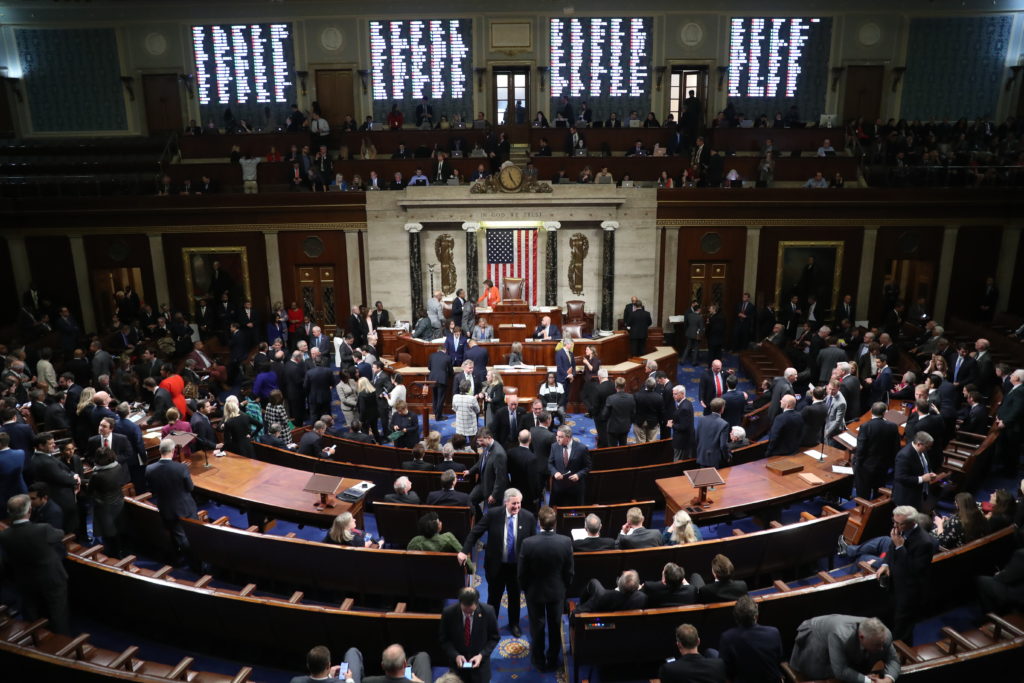
The Latest on President Donald Trump and the House impeachment resolution (all times local): 9:25 p.m. Democrats have swept a rules package for their impeachment probe of President Donald Trump through a divided House, as the chamber’s first vote on the investigation highlighted the partisan breach the issue has only deepened. By 232-196, lawmakers have approved the procedures they’ll follow as weeks of closed-door interviews with witnesses evolve into public committee hearings and — almost certainly — votes on whether the House should recommend Trump’s removal. All voting Republicans opposed the package. Every voting Democrat but two supported it.Trump tweeted, “Now is the time for Republicans to stand together and defend the leader of their party against these smears.” 12:10 p.m. House Minority Leader Kevin McCarthy says Democrats are abusing their power and discrediting democracy by “trying to impeach the president because they are scared they can’t defeat him at the ballot box.” The California Republican is speaking out against a package of impeachment rules approved Thursday. McCarthy says that ever since Donald Trump’s election, Democrats have waged a “permanent campaign to undermine his legitimacy. They have predetermined the president’s guilt. They have never accepted the voters’ choice to make him president. So, for 37 days and counting, they have run an unprecedented, undemocratic and unfair investigation. This resolution only makes it worse.” McCarthy says Democrats are “using secret interviews and selective leaks” to portray Trump’s legitimate actions as an impeachable offense. He is referring to the closed-door hearings in the House as Democrats gather evidence in the impeachment inquiry. 12:05 p.m. Ivanka Trump is quoting a letter from Thomas Jefferson to his daughter following the House near party-line vote approving rules for its impeachment inquiry into her father. Ivanka Trump tweets “Some things never change, dad!” after quoting a portion of the Jefferson letter that talks about being surrounded by enemies and spies “catching and perverting every word that falls from my lips or flows from my pen, and inventing where facts fail them.” Ivanka Trump has generally avoided weighing in on the impeachment probe. The probe is focused on the president’s effort to have Ukraine investigate Democrats and a potential 2020 rival, Joe Biden, while the administration was withholding military aid to the Eastern European ally. It’s illegal to seek or receive foreign help in U.S. elections. Trump says he did nothing wrong. 11:40 a.m. The White House says the House vote approving rules for its impeachment inquiry has enshrined “unacceptable violations of due process into House rules.” Press secretary Stephanie Grisham says in a statement moments after the House vote that the process “is unfair, unconstitutional, and fundamentally un-American.” Thursday’s near party-line 232-196 vote was a victory for Democrats, who will control the investigation in the House. It gives them the ability to curb the ability of Republicans to subpoena witnesses and of White House lawyers to present witnesses. Grisham says President Donald Trump “has done nothing wrong” and that Democrats have an “unhinged obsession” with impeachment. Her statement was echoed by Trump’s reelection campaign which accused Democrats of trying to legitimize their process after the fact. Campaign manager Brad Parscale says: “Voters will punish Democrats who support this farce and President Trump will be easily re-elected.” 11:30 a.m. A sharply divided House has approved the rules for its impeachment inquiry of President Donald Trump. Thursday’s near party-line 232-196 roll call was the chamber’s first formal vote on a process that’s likely to take months, possibly stretching into the early weeks of the 2020 election year. Underscoring the gravity of the vote, House Speaker Nancy Pelosi presided over the chamber as it voted on the rules package. The vote was a victory for majority Democrats, who will control the investigation in the House. It gives them the ability to curb the ability of Republicans to subpoena witnesses and of White House lawyers to present witnesses. Republicans said the process was skewed against them and the White House. The vote showed how neither side has budged in their fight over whether Trump’s effort to squeeze Ukraine for dirt on his Democratic political foes merits forcing him from office. 10:25 a.m. House Speaker Nancy Pelosi says a vote to approve ground rules for their impeachment inquiry of President Donald Trump is a solemn but necessary duty for lawmakers. In a floor speech before Thursday’s vote, Pelosi said, “This is not any cause for any glee or comfort.” Standing next to a large U.S. flag in the well of the House, Pelosi said the impeachment inquiry was necessary to defend the Constitution and prevent an abuse of power by Trump.“The times have found each and every one of us in this room,” Pelosi said. She urged lawmakers to vote in favor of the impeachment rules “to protect the Constitution of the United States. What is at stake in all of this is nothing less than our democracy.”The investigation is focused on Trump’s efforts to push Ukraine to investigate his Democratic political opponents by withholding military aid and an Oval Office meeting craved by the country’s new president. 9:37 a.m. Speaker Nancy Pelosi is asking all Democratic lawmakers to come to the House floor as a show of solidarity for the impeachment inquiry resolution. The House is set to take its first vote Thursday on the resolution that affirms the investigation into President Donald Trump and outlines the process for public hearings and possibly drafting articles of impeachment. Pelosi sent out word for lawmakers to join the floor debate as proceedings were getting underway, according to a person familiar with the situation and granted anonymity to discuss it. Few Democrats are expected to oppose the plan in a vote that is expected to fall largely along party lines. 12:08 a.m. House Democrats and Republicans alike are rounding up votes on the ground rules for considering the impeachment of President Donald Trump. A near party-line vote is expected Thursday on the eight pages of procedures, which are certain to be passed
Donald Trump confronts limits of his impeachment defense strategy
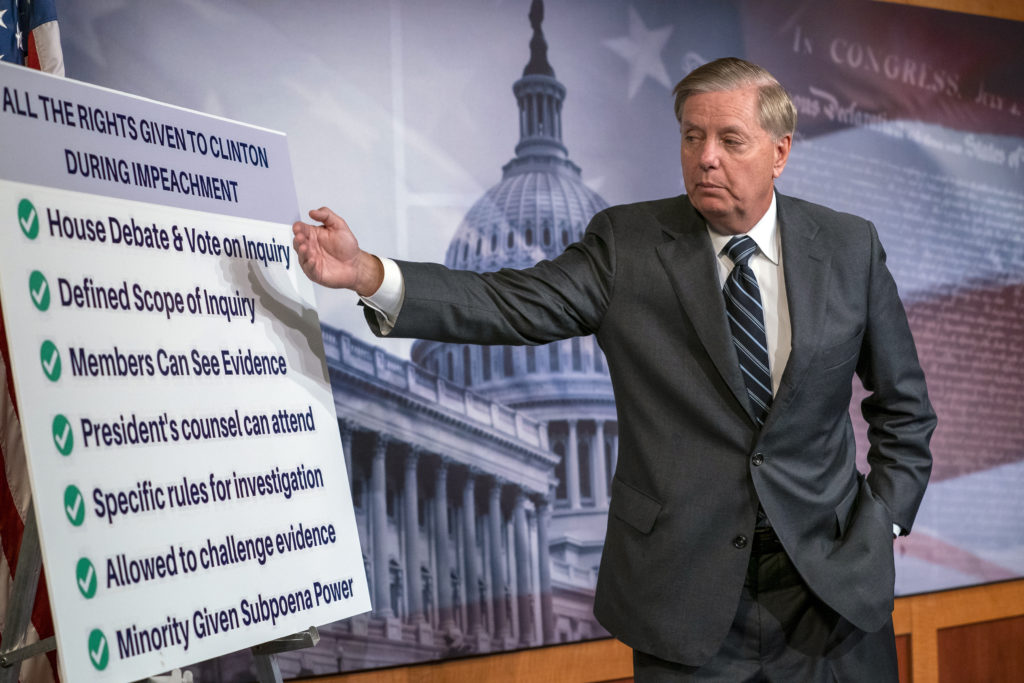
President Donald Trump is confronting the limits of his main impeachment defense. As the probe hits the one-month mark, Trump and his aides have largely ignored the details of the Ukraine allegations against him. Instead, they’re loudly objecting to the House Democrats’ investigation process, using that as justification for ordering administration officials not to cooperate and complaining about what they deem prejudicial, even unconstitutional, secrecy. But as a near-daily drip of derogatory evidence emerges from closed-door testimony on Capitol Hill, the White House assertion that the proceedings are unfair is proving to be a less-than-compelling counter to the mounting threat to Trump’s presidency. Some senior officials have complied with congressional subpoenas to assist House Democratic investigators, defying White House orders. Asked about criticism that the White House lacks a coordinated pushback effort and could do a better job delivering its message, spokeswoman Stephanie Grisham said, “It’s hard to message anything that’s going on behind closed doors and in secret.” “It’s like you’re fighting a ghost, you’re fighting against the air. So we’re doing the best we can,” she said on Fox News Channel. It was a rare public admission from the White House that despite the Republican president’s bravado, real risks remain. White House officials, who have been treating unified Republican support for Trump as a given, have grown increasingly fearful of GOP defections in a House impeachment vote and a potential Senate trial. While they do not believe there will be enough votes to remove the president, as Democrats hope, the West Wing believes more must be done to shore up Republican support to avoid embarrassment and genuine political peril. Trump has been upset with his own top aides — including Grisham and acting chief of staff Mick Mulvaney — for not sufficiently changing the story line. Instead he relies on his Twitter account and Q&A sessions with reporters to launch daily attacks on the probe. And while Trump’s personal lawyer Rudy Giuliani has added to the smoke screen, much as he did during the Russia probe, the former New York City mayor has dramatically scaled back his media appearances since several of his associates were arrested in connection with Ukraine. Complaining privately and publicly that Democrats “stick together” better than the GOP, Trump has leaned on Republican congressional allies to do more, according to White House officials and Republicans close to the West Wing. They spoke on the condition of anonymity because they were not authorized to publicly discuss private conversations. At first, Trump was angry that his surrogates failed to defend him effectively. Those included House Minority Leader Kevin McCarthy, who stumbled through a “60 Minutes” interview. Trump urged the GOP earlier this week to fight back, a lesson that was taken to heart by a group of conservative Republicans, including members of the Freedom Caucus, who stormed a Capitol Hill hearing room on Wednesday to disrupt testimony in the probe.Trump allies cheered that maneuver, believing it showed that Republicans throughout Washington were coming to grips with the severity of the situation. But the GOP complaints still are largely about process and may have limited potency: Trump’s defenders are complaining that the interviews are being conducted in secret, which may soon change, and that Republicans are not involved, though GOP members can ask questions right alongside the Democrats. The contradictions are telling. On Thursday, GOP Sen. Lindsey Graham of South Carolina, a top ally of Trump, introduced a resolution condemning the Democratic-controlled House for pursuing a “closed door, illegitimate impeachment inquiry.” Senate Majority Leader Mitch McConnell is a co-sponsor of that measure. But Graham also said he’s talked to Mulvaney about what seems to be a lackluster White House pushback. During President Bill Clinton’s impeachment, Graham said, “he had a team that was organized, had legal minds that could understand what was being said versus the legal proceedings in question. And they were on message every day.” Republicans have been complaining for weeks that the Trump White House has no such defense system in place — partly a result of the inability to identify qualified talent but also Trump’s own qualms about projecting concern in the face of the investigation. “I think they’re working on getting a messaging team together,” Graham said. Democrats reject Trump arguments that the House interview process is unfair, and White House officials privately acknowledge their legal objections may not win the day. But they believe it’s a political argument that will hold sway with the American people. However, the White House strategy comes with an expiration date: In coming weeks, the closed-door testimony will give way to public hearings. Democrats are expected to call a narrow group of witnesses to testify that Trump encouraged Ukraine to conduct investigations that could benefit him politically in 2020 and to address whether those requests were tied to conditions for giving Ukraine military aid and a White House meeting. Some Trump allies believe the White House can’t afford not to directly address what’s already been revealed. They note that as more Trump appointees offer disparaging information to Congress, and as it is corroborated by official sources, the president will have increasing difficulty simply complaining he is the target of a new “witch hunt.” The president continues to insist he has done nothing wrong, a contention that can be difficult to square with the testimony coming on a nearly daily basis from the other end of Pennsylvania Avenue. Tuesday’s testimony by the top U.S. envoy to Ukraine, William Taylor, only raised the stakes as he gave House impeachment investigators a detailed roadmap of Trump’s efforts to squeeze that country’s leaders for damaging information about his Democratic political rivals. Taylor, who read a lengthy opening statement, is expected to be a star witness at the Democrats’ planned public hearings. Though the White House derided Taylor’s testimony as third-hand information, he vividly described, with the help of contemporaneous notes, his concerns about a parallel foreign policy apparatus run by Giuliani that involved American military aid being withheld unless
Shifting explanations for withholding aid draw GOP alarm
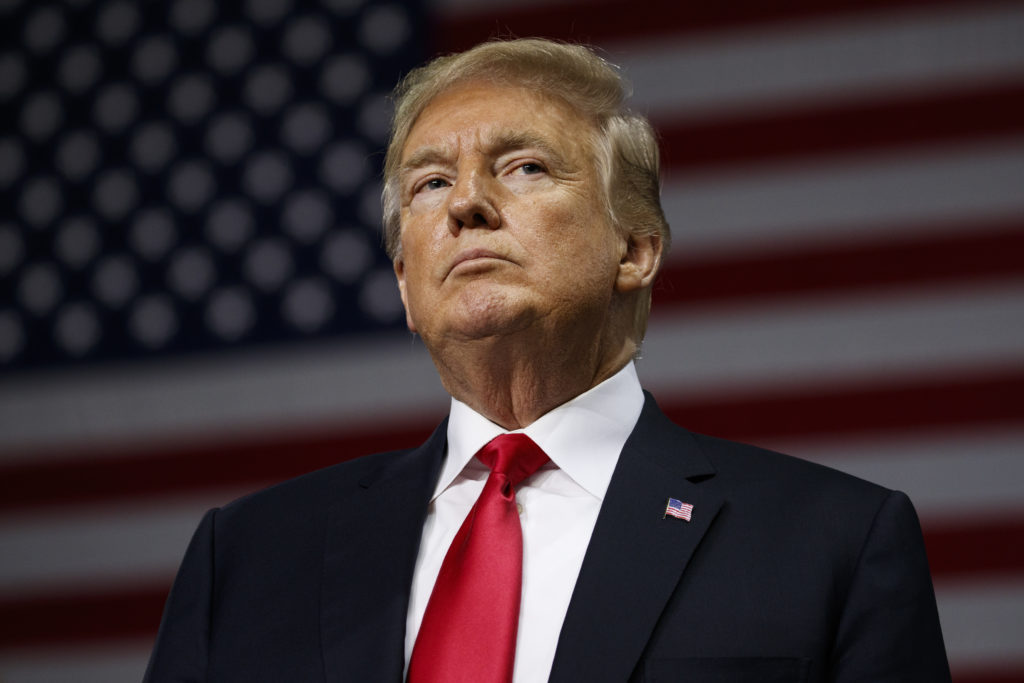
The shifting White House explanation for President Donald Trump’s decision to withhold military aid from Ukraine drew alarm Friday from Republicans as the impeachment inquiry brought a new test of their alliance. Trump, in remarks at the White House, stood by his acting chief of staff, Mick Mulvaney, whose earlier comments undermined the administration’s defense in the impeachment probe. Speaking Thursday at a news conference, Mulvaney essentially acknowledged a quid pro quo with Ukraine that Trump has long denied, saying U.S. aid was withheld from Kyiv to push for an investigation of the Democratic National Committee and the 2016 election. He later clarified his remarks. Trump appeared satisfied with Mulvaney’s clarification and the president dismissed the entire House inquiry as “a terrible witch hunt. This is so bad for our country.” But former Ohio Gov. John Kasich, who ran against Trump in the 2016 Republican primary, said he now supports impeaching the president. Mulvaney’s admission, he said, was the “final straw.” ”The last 24 hours has really forced me to review all of this,” Kasich said on CNN. In Congress, at least one Republican, Rep. Francis Rooney of Florida, spoke out publicly, telling reporters that he and others were concerned by Mulvaney’s remarks. Rooney said he’s open to considering all sides in the impeachment inquiry. He also said Mulvaney’s comments cannot simply be undone by a follow-up statement. “It’s not an Etch-A-Sketch,” said Rooney, a former ambassador to the Holy See under President George W. Bush. “The only thing I can assume is, he meant what he had to say — that there was a quid pro quo on this stuff,” he said. The tumult over Mulvaney’s remarks capped a momentous week in the impeachment investigation as the admission, from highest levels of the administration, undercut the White House defense and pushed more evidence into the inquiry. GOP leaders tried to contain the fallout. But four weeks into the inquiry, the events around Trump’s interaction with the Ukraine president, which are are at the heart of impeachment, have upended Washington. The Energy Secretary, Rick Perry, who has been caught up in the probe, announced his resignation. A beloved House chairman, Rep. Elijah Cummings, Democrat-Maryland, a leading figure in the investigation, died amid ongoing health challenges. The march toward an impeachment vote now seems all but inevitable, so much so that the highest-ranking Republican, Senate Majority Leader Mitch McConnell, privately told his GOP colleagues this week to expect action in the House by Thanksgiving with a Senate trial by Christmas. Speaker Nancy Pelosi has given no timeline for conclusion but wants the inquiry completed “expeditiously.” She said Thursday that facts of the investigation will determine next steps. “The timeline will depend on the truth line,” she told reporters. This week’s hours of back-to-back closed-door hearings from diplomats and former top aides appeared to be providing investigators with a remarkably consistent account of the run-up and aftermath of Trump’s call with Ukraine President Volodymy Zelenskiy. In that July call, Trump asked the newly elected Zelenskiy for a “favor” in investigating the Democratic National Committee’s email situation, which was central to the 2016 election, as well as a Ukraine gas company, Burisma, linked to the family of Trump’s 2020 Democratic rival, Joe Biden, according to a rough transcript of the phone conversation released by the White House. Republican leaders tried to align with Trump Friday, amid their own mixed messages as House Democrats, who already issued a subpoena to Mulvaney for documents, now want to hear directly from him. Rep. Kevin McCarthy, the House GOP leader, cited Mulvaney’s clarification as evidence that there was no quid pro quo. He said witnesses have also testified similarly behind closed doors in the impeachment inquiry. “We’ve been very clear,” McCarthy said. “There was no quid pro quo.” Lawmakers involved in the three House committees conducting the investigation want to hear more next week, which promises another packed schedule of witnesses appearing behind closed doors. Republicans want the interviews made open to the public, including releasing transcripts. Democrats in the probe being led by Rep. Adam Schiff, chairman of the Intelligence Committee, are keeping the proceedings closed for now, partly to prevent witnesses from comparing notes. Three House committees investigating impeachment have tentatively scheduled several closed-door interviews next week, including one with Bill Taylor, the current top official at the U.S. Embassy in Ukraine. Taylor’s interview, scheduled for Tuesday, is significant because he was among the diplomats on a text message string during the time around the July phone call. He raised a red flag and said it was “crazy” to withhold the military aid for a political investigation. It’s unclear whether all the witnesses will appear, given that the White House is opposing the inquiry and trying to block officials from testifying. The schedule includes a mix of State Department officials and White House aides. By Lisa Mascaro, Andrew Taylor, Mary Clare Jalonick Associated Press Republished with the permission of the Associated Press
GOP’s Justin Amash, impeachment supporter, quits conservative group
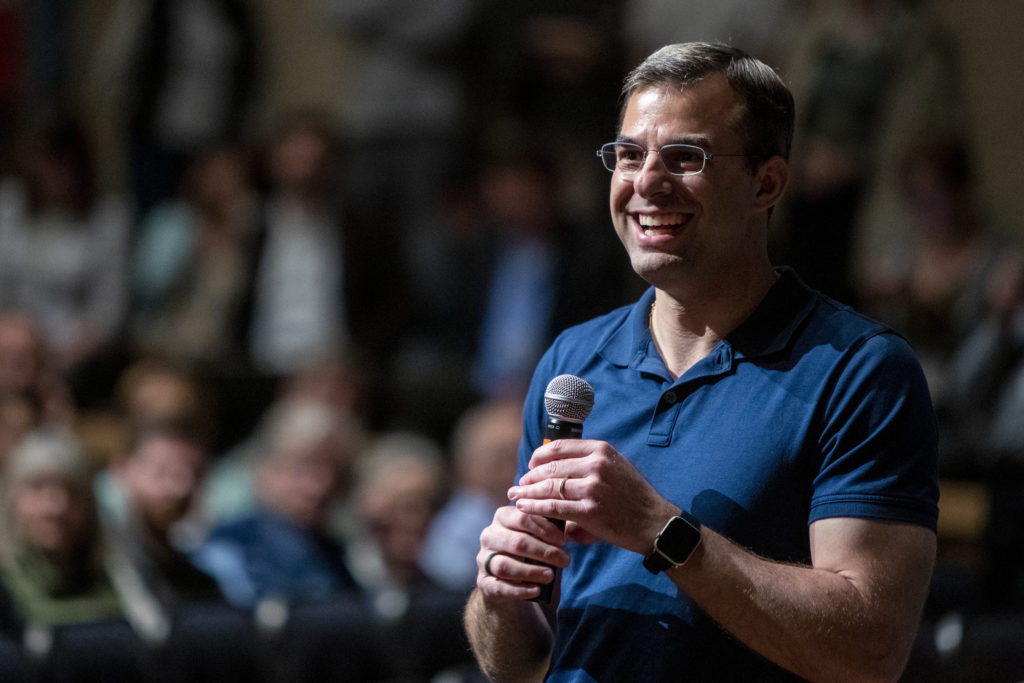
Rep. Justin Amash, the lone Republican calling for President Donald Trump’s impeachment, has quit the Freedom Caucus of House conservatives, his spokeswoman confirmed Tuesday. The split comes a few weeks after Amash called for the House to impeach Trump based on the details of special counsel Robert Mueller’s report. Several members of the Freedom Caucus said they were blindsided by Amash’s move, but he has stood by it, repeating his argument in detail on Twitter. Trump and many of his allies on Capitol Hill say the report and the Democrats’ investigations of Trump are drummed-up partisan exercises. Amash’s departure from the caucus — he was one of the group’s founders — is a reflection of how closely the group is now tied to the president. While Amash’s views on small government have not changed, his break on impeachment has strained ties with his GOP colleagues. Asked about Amash on Tuesday, House Minority Leader Kevin McCarthy, Republican-California, criticized his voting record and said Amash “can determine his own future.” Philosophically, he said, Amash is “probably in a different place than the majority of all of us.” Trump also has said he’s not impressed by Amash. But the Grand Rapids-area Republican hails from a state that Trump swiped from Democrats in 2016 and is driving to win again in 2020. For his part, Amash has not said whether he will run for re-election to his House seat. He has left open the prospect of running for president in 2020 as a Libertarian, which could take away support from Trump. At a town hall in his district May 28, he received standing ovations from many who saluted his “courage.” Amash also sparred with some former supporters who faulted him for embracing a Democratic “smear attack” against Trump. Citing Mueller’s report, Amash said Trump had asked former White House counsel Don McGahn to create a “false record” denying that he had asked for Mueller’s removal as special counsel. “Things like that to me reflect incredible dishonesty and really harm the office of the presidency. I don’t think that you can just let that stuff go,” Amash told his constituents. “I think you have to have proceedings to deter this kind of conduct even if ultimately the person is not convicted.” Amash’s resignation from the Freedom Caucus was confirmed by spokeswoman Poppy Nelson and was first reported by CNN. Republished with the permission of the Associated Press.
Election fallout: Blame abounds in House GOP leadership race
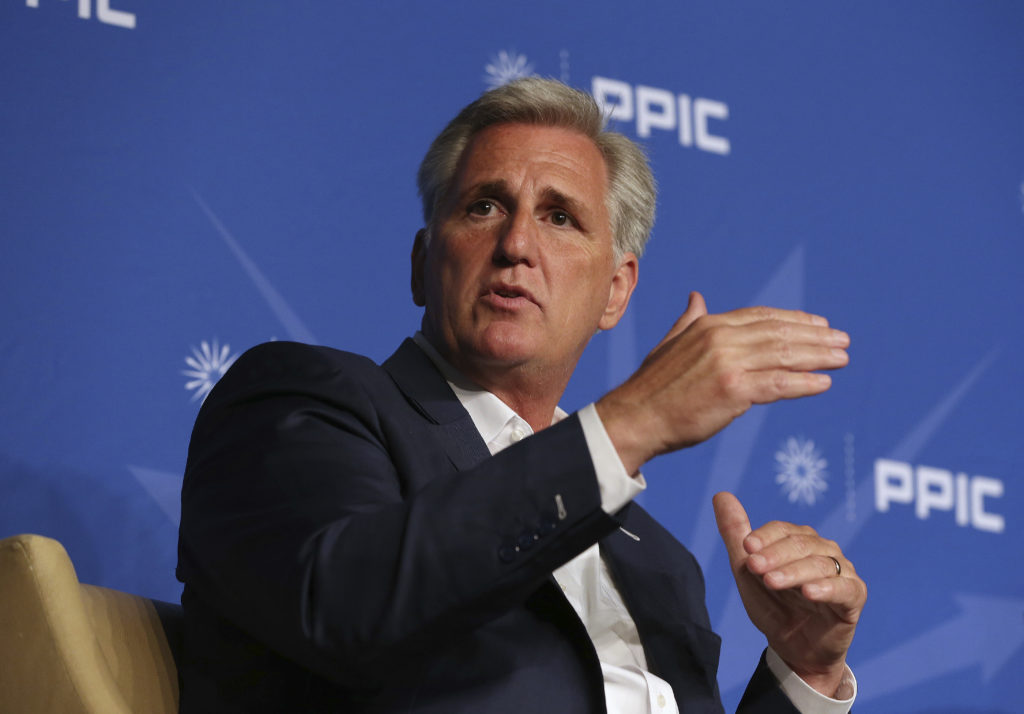
The speaker’s gavel now out of reach, Republican Kevin McCarthy is poised to take over the shrunken House GOP caucus in closed-door elections that will determine party leadership and set the tone for the new Congress. The race for minority leader is McCarthy’s to lose Wednesday, but the Californian, who is an ally of President Donald Trump, must fend off a challenge from conservative Rep. Jim Jordan, who has support from the right flank and outside groups as a co-founder of the House Freedom Caucus. “We’ve got a plan,” McCarthy told reporters as he ducked into a closed-door meeting of House Republicans late Tuesday. Trump has stayed largely on the sidelines ahead of elections that will determine party leadership not only for House Republicans, but also for Senate Democrats and Republicans. Voting for the biggest race, Rep. Nancy Pelosi‘s bid to return as the Democrats’ nominee for speaker, is later this month. On Wednesday, Jordan told “Fox & Friends” the GOP lost its House majority because it didn’t deliver on promises to Americans to secure the U.S.-Mexico border, fund Trump’s wall and replace the Obama health care law. “Some key things we told them we were going to do, we didn’t,” Jordan said. At Tuesday’s meeting, McCarthy and Jordan encountered frustration, finger-pointing and questions as lawmakers sorted through an election defeat and began considering new leadership for the next congressional session. Republicans complained about the unpopularity of the GOP tax law they blamed for losses in New York and other key states, some attendees told reporters after the meeting. Some in the meeting said Republicans should have tried harder to fulfill Trump’s priorities, like funding for the wall with Mexico. They also warned that they need a new fundraising mechanism to compete with the small-dollar online donors that powered Democrats to victory. “There’s a little rawness still,” Rep. Mark Walker, R-N.C., who is running unopposed for a down-ballot position as vice chair of the GOP conference, told reporters outside the meeting room. “But there’s an opportunity for us to come together and get single-focused on the message.” Jordan told reporters that he made a pitch to his colleagues at a sometimes-tense session in the Capitol basement focused on three questions: “Why’d we lose, how do we get it back and what we’re up against.” The former college wrestling champ said he told Republicans they need a fighter to confront Pelosi and her new majority. “I think we’re entering a world we haven’t really seen,” Jordan said, rattling off the names of the Democratic chairmen who are poised to investigate Trump. “It’s going to take an attitude and an intensity about standing up for the truth and fighting.” Most GOP lawmakers, though, prefer McCarthy’s more affable approach, and he remained favored to win Wednesday. GOP Whip Steve Scalise, the Louisiana Republican who was gravely wounded in last year’s congressional baseball practice shooting and is running unopposed for another term in leadership, said McCarthy “knows what he needs to do” to win over his colleagues — and win back the majority — and is well-positioned to do both. “You always look in the mirror and see what you can do better,” Scalise said as he entered the room. Republicans, he said, “need to do a better job of letting people know what we stand for.” Rounding out the GOP leadership team will be Rep. Liz Cheney of Wyoming, a daughter of former Vice President Dick Cheney, who wants to bring a more aggressive stance to the GOP’s communications and messaging strategy in the No. 3 spot. The biggest leadership race is among House Democrats, where Rep. Nancy Pelosi of California is seeking another term as speaker, but that contest will not be held until after Thanksgiving. A group of Democrats seeking to stop Pelosi’s rise claim they have the votes to block her. But Pelosi says she’s confident she’ll have enough support to win and challenged her opponents Wednesday to put forward an alternative candidate. “Come on in, the water’s warm,” Pelosi said. In the Senate, Majority Leader Mitch McConnell is expected to win another term, but the most interesting race is down-ballot, where Republicans are poised to elect their first woman to leadership in almost a decade, as they try to smooth the optics of a GOP side that’s dominated by men. Nebraska Sen. Deb Fischer has made a bid for vice chair of the conference “to help bring our party’s big tent together.” She faces GOP Sen. Joni Ernst of Iowa. The rest of the GOP line-up is expected to shuffle slightly. Sen. John Cornyn of Texas, the GOP whip, is being forced out by term limits. That allows Sen. John Thune of South Dakota to move up to the No. 2 spot. Sen. John Barrasso of Wyoming and Sen. Roy Blunt of Missouri take over the third- and fourth-ranking spots. Senate Democrats are keeping their team headed by Minority Leader Chuck Schumer of New York, even though one of the two new Democratic senators-elect, Kyrsten Sinema of Arizona, has said she wouldn’t vote for him. Newly elected lawmakers in the House and Senate will cast their first votes during closed-door meetings Wednesday even before they’re sworn into office as part of the new Congress in January. Dan Meuser, a new Republican from Pennsylvania, said he’s talked with both McCarthy and Jordan in recent days about their plans for the new minority and has been giving his vote “a lot of thought.” “I would say I have not made a decision yet,” said Meuser at freshman orientation. He said he’s “gotten close with Kevin McCarthy. I think very highly of him. I think he’s a very good conservative, he’s showed a lot of leadership. He’s certainly earned the position. On the same note, I think Jim Jordan’s a smart, tough, focused individual. So I respect him as well. So, yeah, we’ll see.” McCarthy has been here before, and he’s making the case that he’s best suited to lead his
Immigration fight, tension on tariffs await Congress’ return
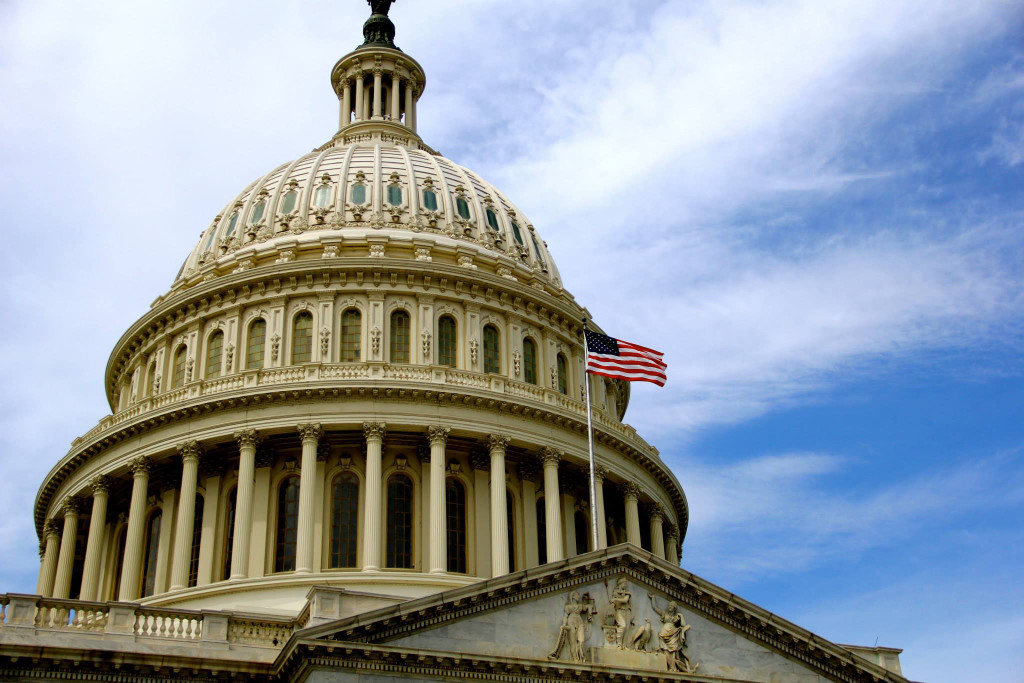
This was supposed to be the quiet time on Capitol Hill, but Congress returns to work Monday facing a showdown in the House over immigration while Senate Republicans are trying to stop an all-out trade war after President Donald Trump’s decision to impose import tariffs on close U.S. allies. Tensions are running particularly high as Senate Majority Leader Mitch McConnell is threatening to cancel the traditional August recess as he fights Democratic opposition to GOP priorities in a show of busy-work before the midterm election. It’s shaping up to be far from the typical summer slowdown when legislating usually makes way for campaigning. “Another summer, another heavy work load,” tweeted Sen. Chuck Grassley, R-Iowa, as he pushed to confirm nominations. “NOW is the time to vote on Fridays (even wknds!).” The Senate often is not in session on Fridays. Congress faces a few should-do items in the weeks ahead. Topping the agenda is passage of the annual defense bill, which includes pay raises for the troops. It has already cleared the House. The Senate could begin consideration of its defense bill this week. But the Senate version carries a warning to Trump with a trade provision to block any White House plan to lift penalties on the China-based telecommunications company ZTE, which faces trade law violations over selling sensitive technologies to U.S. adversaries. Trump’s moves on trade are expected to consume conversations among Senate Republicans this week. They’re worried about a wider trade war spiking prices for home-state businesses and consumers if Trump imposes steel and aluminum tariffs, as planned, on imports from Canada, Mexico and the European Union. Republicans will be making the case to the administration that the tariffs could dampen the economic gains from the GOP tax cuts and sour the mood among voters as lawmakers are campaigning to protect the Republican majority in Congress. Some Republicans are also hoping Trump simply changes his mind and doesn’t follow through with it. But aides said others may be signing on to a bill from Sen. Mike Lee, R-Utah, that would subject all trade actions by the executive branch, including tariffs, to congressional approval. Rep. Will Hurd, R-Texas, said he would support a similar move in the House. “Congress has shared our responsibility when it comes to trade with the executive branch over the last couple of decades, and I think that’s something that we need to re-evaluate,” he told CBS’ “Face the Nation.” Meanwhile, House Republicans face a self-imposed deadline Thursday for resolving an immigration standoff between GOP centrists who are forcing a vote on legislation to protect young immigrants who were brought to the country illegally as children and conservatives who want stricter immigration enforcement with money for Trump’s border wall. The centrists want to provide a way for the young immigrants to become permanent residents, which can lead to citizenship. Conservatives are opposed to creating a new pathway to staying in the U.S. permanently, equating it with granting amnesty to lawbreakers. Speaker Paul Ryan, R-Wis., and Majority Leader Kevin McCarthy, R-Calif., are trying to craft a Republican-led bill as a compromise between the factions, but it’s difficult. House leaders plan a two-hour private meeting of GOP lawmakers Thursday morning to hash out whether talks among the party’s factions have produced an immigration compromise that can win broad support. Underscoring the sensitivity of the session, staff is to be excluded. They’re trying to prevent the moderates from joining with Democrats to pass the “Dreamer” protections, which polls suggest are popular, but which would be a setback for GOP leaders and expose the majority to complaints from the conservative base. Without a deal, the moderates say they’ll push ahead with enough signatures on a so-called discharge petition to force the vote over the leadership’s objections. Hurd said moderates have the votes already, but are “engaged in conversations to figure out … is there another path. I don’t believe that there is.” Rep. Carlos Curbelo, R-Fla., said in an interview last week that he saw a 50-50 chance of those talks succeeding. He warned that if they didn’t bear fruit, he and his supporters “fully expect” to continue pushing their petition. Curbelo said the young immigrants must “be guaranteed a future in our country, meaning they cannot be exposed to deportation.” He said, “They must have permanent status immediately and they must have the option of a bridge into the legal immigration system,” meaning a pathway to citizenship. The moderates’ effort has won the backing of GOP Sen. John McCain, fighting brain cancer back home in Arizona, who tweeted on Saturday: “Congress can’t ignore this critical issue — and the many lives it impacts — any longer.” Starting Monday in the Senate, McConnell has teed up votes on three nominees to serve as federal district court judges, including the first Hispanic lawyer whom Trump nominated for the bench, Fernando Rodriguez Jr. of Texas. The selections are expected to receive bipartisan support, though more contentious votes are expected in coming weeks. Republicans have made it a top priority to get Trump’s nominees on the bench, to the alarm of Democrats, who say Republicans are working to stack the federal judiciary with young ideologues who will shape it for decades to come. Republished with the permission of the Associated Press.
Paul Ryan vents frustration over GOP infighting over immigration
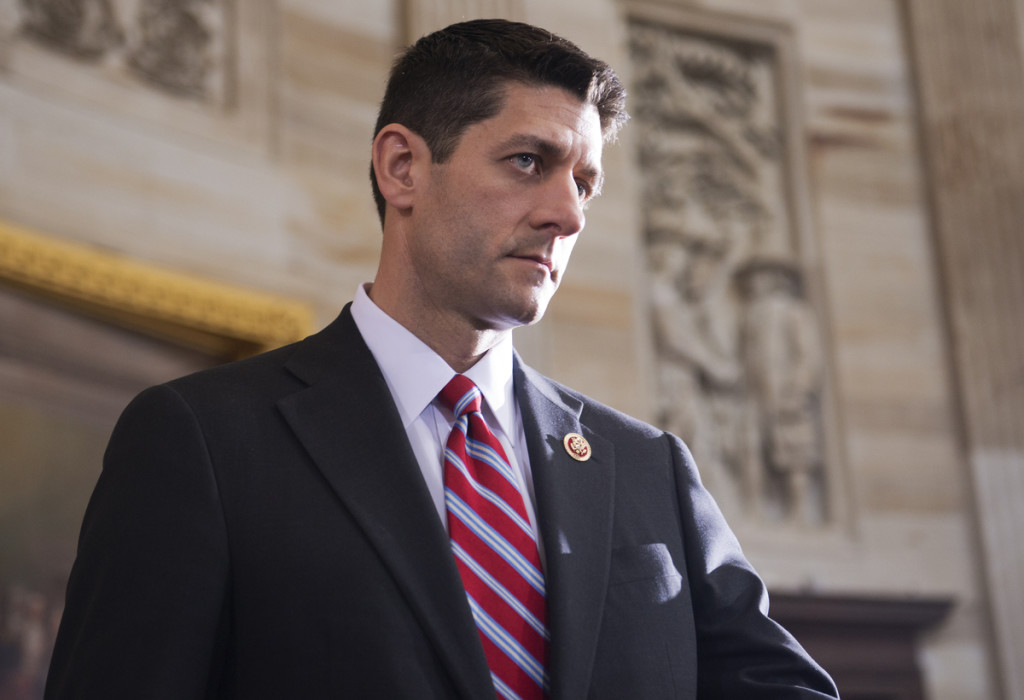
A frustrated Speaker Paul Ryan chided House Republicans for election-season infighting over immigration that sank the party’s farm bill last week, participants in a closed-door meeting said Tuesday. Leaders said they will schedule a late- June showdown over immigration, an issue that has divided the GOP for years. “I think he said ‘gee whiz’ and ‘gosh’ and used the word ‘crap’ once,” Rep. Mark Amodei, R-Nev., said of Ryan’s remarks to his colleagues. “For Paul Ryan, ‘crap’ is pretty blue language.” At a news conference minutes later, the Wisconsin Republican criticized anew an effort by GOP moderates to force votes on immigration by collecting signatures from a majority of House members on a little-used procedure called a discharge petition. The centrists need just five more GOP signatures to prevail. “I can guarantee you a discharge petition will not make law,” Ryan said. That was a reference to the expectation that the votes moderates want to have would produce a bill that President Donald Trump would consider too weak and veto. Ryan also defended himself against calls from conservatives that he step down as speaker in the wake of the party’s anarchy over the farm bill and continuing disarray on immigration. Ryan will retire from the House after this year but has said he will remain as speaker until he leaves office. “Members drafted me into this job because of who I am and what I stand for,” he said. He was elected speaker in 2015 after conservatives pressured his predecessor, John Boehner, R-Ohio, to step aside. Asked if he would remain as speaker all year, he said, “Obviously I serve at the pleasure of the members.” He said Republicans should concentrate on the party’s legislative agenda and not have “a divisive leadership election.” Lawmakers exiting the GOP meeting said leaders told them the House would vote on immigration during the third week of June. They said it was unclear exactly what they would vote on. The centrist push for immigration votes is considered likely to result in passage of a middle-ground measure backed by a handful of Republicans and all Democrats. Ryan has said he will avert that outcome, though it’s unclear how, and many conservatives consider it intolerable. Conservative and moderate GOP leaders negotiated privately Monday over ways to win centrist support for a conservative-backed measure that for months has floundered short of the 218 Republican votes it would need for House passage. They discussed changes that would help young “Dreamer” immigrants brought to the U.S. illegally as children and immigrant farm workers stay longer in the U.S., said one lawmaker who described the private discussions on condition of anonymity. The conservative bill would currently reduce legal immigration, clear the way for construction of President Donald Trump’s border wall with Mexico and let Dreamers stay in the U.S. for renewable three-year periods. All Democrats oppose the measure and it would have no chance of clearing the more moderate Senate. The farm bill crashed last Friday, partly because of opposition by members of the hard-right House Freedom Caucus. They had refused a leadership offer for a vote on the conservative immigration bill in June, which they said was too late. Some members of the Freedom Caucus suggested it would be time for Ryan to step down should moderates prevail. “If we run an amnesty bill out of a Republican House, I think all options are on the table,” said Rep. Scott Perry, R-Pa., a member of the group, when asked if Ryan should remain as speaker if the moderates’ effort succeeds. Many conservatives say legislation protecting immigrants in the U.S. illegally from deportation is amnesty. Other Republicans said it seemed unlikely Ryan would abandon his post. They said potential successors including Majority Leader Kevin McCarthy, R-Calif., so far lack the GOP votes they’d need to win the job. The moderates need 218 signatures — a House majority — on a petition to force votes on immigration bills. With all 193 Democrats expected to sign, the moderates need five more than the 20 signatures they already have. If they succeed, a vote could occur no earlier than late June. Republished with the permission of the Associated Press.
Donald Trump draws rebuke for ‘animal’ remark at immigration talk
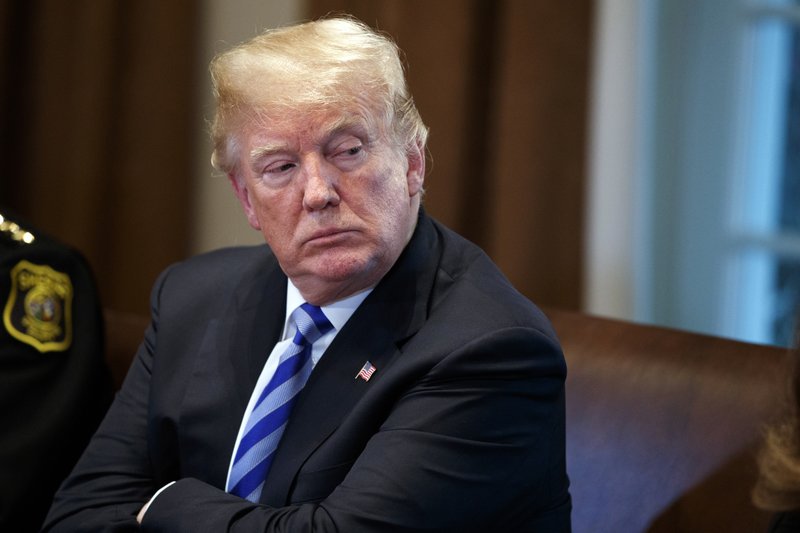
While railing against California for its so-called sanctuary immigration policies, President Donald Trump referred to some people who cross the border illegally as “animals” — drawing a sharp rebuke from Democratic leaders for the harsh rhetoric. Trump’s remark at a meeting with local leaders was in response to a comment about MS-13 gang members. “We have people coming into the country, or trying to come in — and we’re stopping a lot of them,” Trump said during the immigration roundtable after Fresno County Sheriff Margaret Mims complained about state restrictions that limit cooperation with federal immigration authorities. “You wouldn’t believe how bad these people are. These aren’t people. These are animals.” Trump has repeatedly referred to members of the violent street gang as “animals” in speeches, rallies and at White House events. He has also used the term to describe terrorists and school shooters. Senate Minority Leader Chuck Schumer, D-N.Y., responded on Twitter to the president, saying, “When all of our great-great-grandparents came to America they weren’t ‘animals,’ and these people aren’t either.” And House Minority leader Nancy Pelosi said, “Every day that you think you’ve seen it all, along comes another manifestation of why their policies are so inhumane.” Trump was joined at the Wednesday White House meeting by mayors, sheriffs and other local leaders from California who oppose the state’s immigration policies and who applauded his administration’s hard-line efforts. “This is your Republican resistance right here against what they’re doing in California,” said Assemblywoman Melissa Melendez, coopting a term used by Democrats opposed to Trump’s presidency. She, like others, said the president and his policies were far more popular in the state than people realize. They were criticizing legislation Gov. Jerry Brown signed into law last year that bars police from asking people about their immigration status or helping federal agents with immigration enforcement. Jail officials can transfer inmates to federal immigration authorities if they have been convicted of one of about 800 crimes, mostly felonies, but not for minor offenses. Brown insists the legislation, which took effect Jan. 1, doesn’t prevent federal immigration officials from doing their jobs. But the Trump administration has sued to reverse it, calling the policies unconstitutional and dangerous. Some counties, including San Diego and Orange, have voted to support the lawsuit or have passed their own anti-sanctuary resolutions. Republicans see backlash to the law as a potentially galvanizing issue during the midterm elections, especially with Trump’s anti-immigrant base. And Trump has held numerous events in recent months during which he’s drawn attention to California’s policies. During the session, Trump thanked the officials, saying they had “bravely resisted California’s deadly and unconstitutional sanctuary state laws.” He claimed those laws are forcing “the release of illegal immigrant criminals, drug dealers, gang members and violent predators into your communities” and providing “safe harbor to some of the most vicious and violent offenders on earth.” Brown responded on Twitter, writing that Trump “is lying on immigration, lying about crime and lying about the laws of CA.” The Democratic governor added: “Flying in a dozen Republican politicians to flatter him and praise his reckless policies changes nothing. We, the citizens of the fifth largest economy in the world, are not impressed.” The discussion comes as the Trump administration is under fire for a new policy that is expected to increase the number of children separated from their parents when families cross the border illegally. Trump, in his remarks, wrongly blamed Democrats for forcing his administration’s hand. “I know what you’re going through right now with families is very tough,” he told Homeland Security Secretary Kirstjen Nielsen, “but those are the bad laws that the Democrats gave us. We have to break up families … because of the Democrats. It’s terrible.” But no law “the Democrats gave us” mandates the separation of children from their parents at the border. The administration is using protocols described in a 2008 law designed to combat child trafficking that gave special protections to Central American children at the border. While the bill was authored by Democratic Sen. Dianne Feinstein, it unanimously passed both houses of Congress and was signed by Republican President George W. Bush as one of his last acts in office. Nielsen on Tuesday defended the practice, telling a Senate committee that removing children from parents facing criminal charges happens “in the United States every day.” The event also came as top House Republicans worked to head off an attempt by party moderates to force roll calls on four immigration bills. Republican leaders privately warned GOP lawmakers Wednesday that such a drive could damage the party’s prospects in the fall’s congressional elections by dispiriting conservative voters, according to people at the closed-door meeting. The House leaders fear the winning legislation would be a compromise bill backed solidly by Democrats but opposed by most Republicans, an outcome that could anger conservatives, according to Rep. Jeff Denham, R-Calif., a leader of the effort to force the immigration votes. House Majority Leader Kevin McCarthy, R-Calif., issued the warning, said a second person who was in the room and spoke on condition of anonymity to describe the private conversation. Asked about his remarks, McCarthy said his objection to the procedure was that it would in effect “turn the floor over” to Democrats. House Speaker Paul Ryan said the petition would be “a big mistake” that would “disunify our majority.” He said the leaders were “working with the administration.” The moderates said later Wednesday that House leaders were trying to end the immigration standoff and that they could soon see a specific proposal on how to do that. “We’re willing to see what this looks like,” said Rep. Carlos Curbelo, R-Fla., a leader of the lawmakers trying to force the House to address the issue. Conservatives had their own session with party leaders and also suggested there had been movement, but offered no specifics. Many of the legislators demanding action face potentially competitive re-election races in congressional districts with large numbers of Hispanic, suburban
