
Kim Adams: ADEM permit for Plant Barry closure a victory for facts over sensationalism

Last week, state regulators with the Alabama Department of Environmental Management (ADEM) finalized a permit allowing Alabama Power Company to move ahead with its plan to permanently close its coal ash site at Plant Barry near Mobile. That’s good news for a number of reasons, and state regulators should be applauded for looking past the sensationalism surrounding the proposed plan and focusing instead on the facts and science at hand. Although many independent experts concluded that the coal ash site at Plant Barry could be safely closed in place, a handful of activists nonetheless called on ADEM to require Alabama Power Company to excavate the material to some other, unnamed community. Doing so would have been foolhardy and dangerous, especially considering that the material would take three decades to relocate. Moreover, history has shown clearly that half a century of hurricanes and major storm events have never remotely threatened Plant Barry’s coal ash site, even without the robust site improvements that will now be made under the approved permit. There’s also the issue of where Plant Barry’s coal ash would be moved anyway. Groups like Mobile Baykeeper never bothered to suggest a new home. At least one community, the MOWA Band of Choctaw Indians, raised serious concern that Plant Barry’s coal ash could be transported through tribal land north of Mobile, disrupting traffic, schools, and community life for decades, not to mention the danger of thousands of trucks traveling local roads. In the end, attempts by Mobile Baykeeper and others to label the closure in place method as unsafe simply couldn’t compete with the facts. Other utilities have also elected to close large coal ash sites in place rather than move them, and, in fact, a majority of the volume of coal ash in the Southeast is being handled that way. That’s because the method was approved by both the Obama and Trump administrations and has been deemed safe by experts who understand that every coal ash site is different. By sticking to the facts, ADEM’s regulators made the right decision. The plan they considered was well-conceived and supported by independent experts in geology and hydrology. It was also supported by many local leaders who understood that closing the coal ash site in place was a more sensible option than disrupting the southwest Alabama community for decades with truckloads of coal ash competing with local traffic daily. It’s always worthy of applause when truth overcomes hype. Kudos to ADEM for tuning out the noise and making the right call. Kim Adams is the Executive Director of Jobkeeper Alliance. She is a native of Hurtsboro, Alabama. Adams is helping lead the fight to support American workers and combat efforts that threaten jobs.
Kimberly Adams: Energy stance, secrecy show; why Energy Alabama can’t be taken seriously
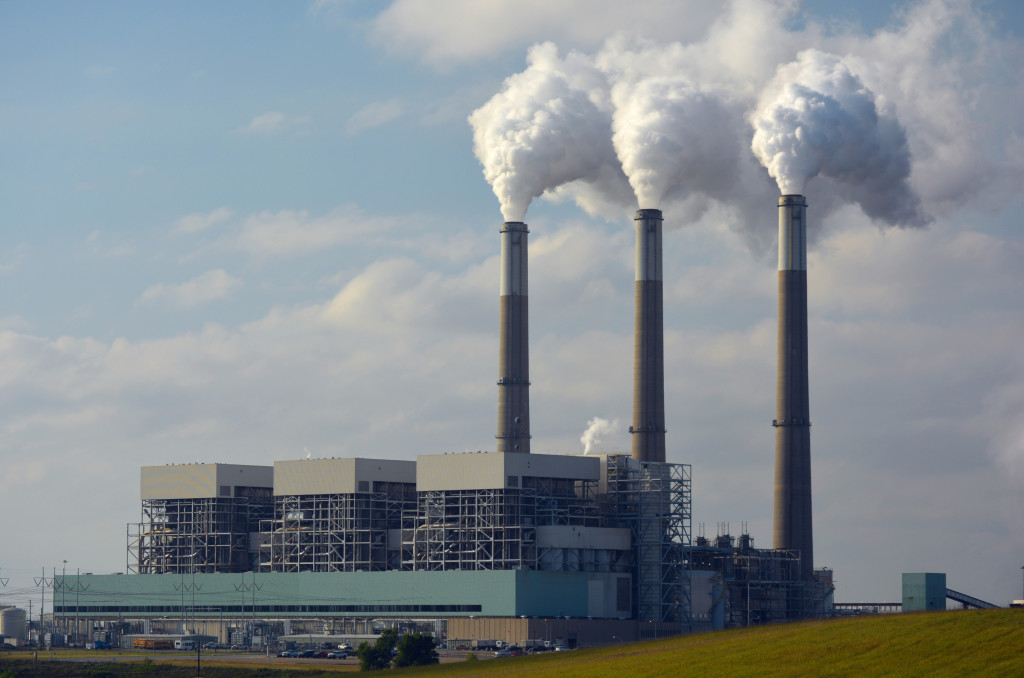
Facts are stubborn things. The fact, for example, that electric utilities nationwide have begun to rely more on natural gas as a fuel source. Why? Because the U.S. has the world’s largest reserves of natural gas and because federal regulations and the marketplace have caused many coal-fired power plants to close in recent years. Alabama is no exception. Alabama Power Company shuttered one of its oldest coal-fired facilities, Plant Gorgas, in 2019. PowerSouth closed a major coal-fired operation, Lowman, the same year. TVA, which serves much of north Alabama, closed its Widows Creek Fossil Plant in Stevenson in 2015 and its Colbert Fossil Plant in Tuscumbia the year after. With coal use down, the three utilities that produce power in Alabama have all relied more heavily on natural gas. But one group, the Huntsville-based Energy Alabama, doesn’t like that. On Twitter recently, Energy Alabama criticized Alabama Power for having “no plans to shutter any of its coal plants.” In a tweet, we reminded Energy Alabama that not only has the state’s largest utility recently closed a coal-fired plant but that Energy Alabama actually intervened at the Alabama Public Service Commission to try to block Alabama Power from using more natural gas. You can’t have it both ways. After all, something has to power Alabama homes and businesses. Energy Alabama’s reply should shock Alabama lawmakers. “All coal in Alabama is uneconomic. Yes, we want to shut it down,” Energy Alabama tweeted back. “We like energy that is cost-effective. Coal and gas ain’t it.” The group’s founder, Daniel Tait, has made it no secret he favors more solar power. But what is a secret is who pays Tait for his unrelenting criticism of electric utilities in Alabama and across the Southeast. In an article from this past September, Alabama Today speculated that Tait might be paid by the solar industry. The truth is no one knows who pays Daniel Tait to lobby against natural gas and coal. Alabama’s Secretary of State, John Merrill, asked him directly in April 2020, but Tait has refused to answer. Records show that Energy Alabama does not currently pay Tait. The other entity with which Tait is associated, the Energy & Policy Institute, does not appear to be incorporated with the federal government or any state, raising a very serious question about who puts money in Daniel Tait’s pocket. It also raises the question of why any lawmaker, whether in Alabama or elsewhere, should take him or his positions seriously. Fortunately, light could soon be shed on the matter. Daniel Tait’s counterpart in Florida, Alissa Schafer, is currently the subject of an investigation by the Florida Ethics Commission over the source of her income. As a public official, Schafer listed the Energy & Policy Institute as a source of income even though the group doesn’t legally exist. Ethics officials found that worthy of scrutiny, with Schafer’s initial hearing set for March 5th in Tallahassee. Lawmakers should have serious suspicions about any group that wants to completely abandon two fuel sources, natural gas and coal, that today produce 62% of the electricity America uses. Officials also have a right to know who is paying the people advocating for such a position, one that would no doubt make electricity less affordable and reliable. Hopefully, the developing ethics investigation will shed light on whether for-profit solar companies are behind the work of Daniel Tait and give lawmakers proof positive that Tait and his affiliates have never been about sticking up for Alabamians, but about pushing a hidden agenda that hurts jobs and customers. Kim Adams is Executive Director of Jobkeeper Alliance, which is devoted to protecting existing quality jobs, working to create valuable new jobs, and combating misinformation that affects public policy.
