
Kay Ivey wants Joe Biden to prioritize getting states 2020 Census data
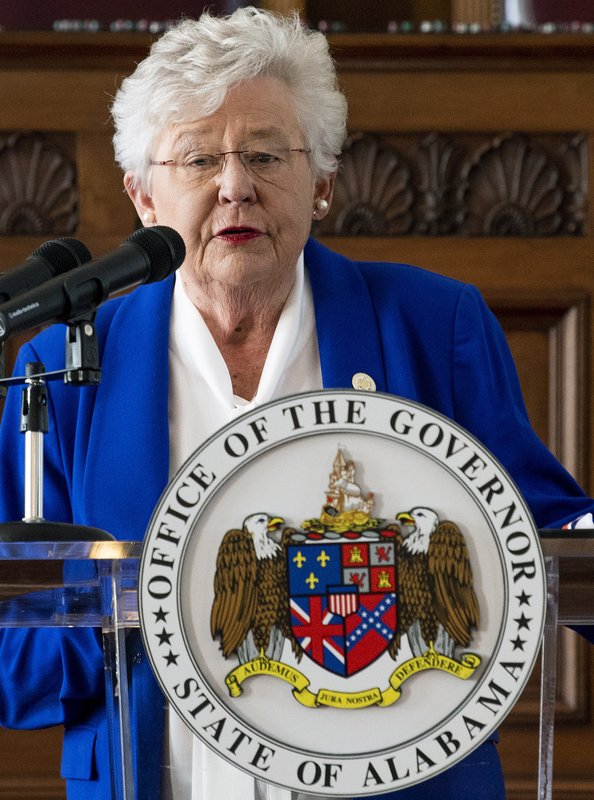
Gov. Kay Ivey and fourteen other governors wrote a joint letter to Secretary of Commerce Gina Raimondo urging a swift release of the census redistricting information. The letter addresses the main issue: the delay in releasing the data has made state legislatures unable to redraw district lines before the 2022 election cycle. The letter stated, “While we recognize the difficulties associated with completing a decennial census amid a pandemic, the ongoing delay in the release of 2020 Census redistricting data places our states in a nearly impossible situation to redraw lines prior to the 2022 election cycle. Consequently, we urge you to release redistricting data this month or as soon as possible prior to the delayed release date of September 30, 2021, and the release of the “legacy format” data on August 16, 2021.” The 2020 Census became a challenge to complete during the pandemic. In July 2020, Ivey warned the state’s current participation rate was 59.8%, or two percentage points behind the national average. At the time, Alabama was in danger of losing House seats because of a lack of participation. On Twitter, Ivey commented, “The stakes were high for Alabama in the #2020Census, and because of our efforts on the local and state levels, we succeeded. I’m proud to join fellow governors in urging the Biden Administration to not further delay the release of the redistricting data.” The stakes were high for Alabama in the #2020Census, and because of our efforts on the local and state levels, we succeeded. I’m proud to join fellow governors in urging the Biden Administration to not further delay the release of the redistricting data. #alpolitics @SecRaimondo pic.twitter.com/oMxsIodsoK — Governor Kay Ivey (@GovernorKayIvey) June 22, 2021 The letter continued, “Districts for the U.S. House of Representatives cannot be drawn until the data has been released. Districts for state legislatures also cannot be drawn until this data has been released. Districts for county, parish, township and municipal governing bodies cannot be drawn until states have had the opportunity to draw congressional and state legislative districts. Lastly, districts for school district seats cannot be drawn until county, parish, township, and municipal governing bodies have had the opportunity to draw their own respective districts. As a result of such negative impacts to our constitutional responsibilities, we seek the release of redistricting data as soon as possible—and in line with traditional timelines—so that states may begin to perform important redistricting tasks on behalf of our constituents.” Other governors signing the letter were Asa Hutchinson (AR), Brian Kemp (GA), Ron DeSantis (FL), Doug Ducey (AZ), Kim Reynolds (IA), Mike Parson (MO), Pete Ricketts (NE), Greg Gianforte (MT), Mike DeWine (OH), Henry McMaster (SC), Bill Lee (TN), Greg Abbott (TX), and Mark Gordon (WY), Doug Burgum (ND).
Kay Ivey joins 19 other governors urging action at the U.S. border
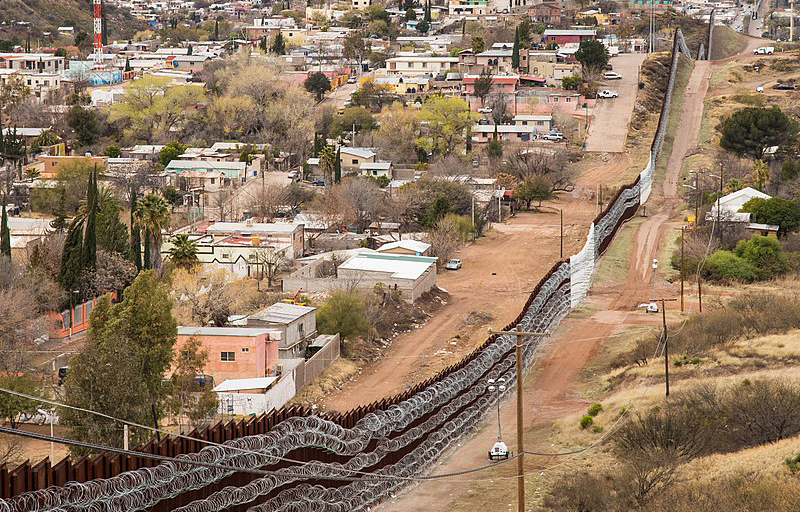
Today Gov. Kay Ivey joined 19 other governors in a call for Joe Biden to take action and reverse their policies regarding the U.S. border. The group wrote a letter to President Biden and Vice-President Kamala Harris describing worsening conditions at the border. In April, Arizona’s governor Doug Ducey declared a state of emergency at the southern border and deployed the Arizona National Guard to support law enforcement agencies in border regions. In May, the Associated Press reported that the State Emergency Council voted to allocate approximately $2.5 million to help pay for the deployment of 250 National Guard personnel to free up law enforcement officers in border towns along the Arizona-Mexico border. Part of the letter states, “This Administration has enticed a rush of migrants to our border and incentivized an influx of illegalcrossings by using irresponsible rhetoric and reversing a slew of policies—from halting border wall construction to eliminating asylum agreements to refusing to enforce immigration laws.” The letter concluded, stating, “At a time when our country is trying to recover from a once-in-a-generation pandemic, the last thing weneed is a self-created crisis that exploits families, undermines public safety, and threatens our national security. We urge you to take action to end the humanitarian crisis and secure our southern border immediately.” Gov. Ivey stated on Twitter, “I’m proud to sign on to this letter with fellow governors urging @POTUS & @VP to take immediate action on the crisis happening at America’s southern border. The crisis is too big to ignore & is now spilling over the border of all of our states.” I’m proud to sign on to this letter with fellow governors urging @POTUS & @VP to take immediate action on the crisis happening at America’s southern border. The crisis is too big to ignore & is now spilling over the border of all of our states. #alpolitics @WhiteHouse pic.twitter.com/lyX6AQsyaE — Governor Kay Ivey (@GovernorKayIvey) May 11, 2021 Other governors who signed the letter are Governors Bill Lee, Tennessee; Doug Ducey, Arizona; Asa Hutchinson, Arkansas; Brian Kemp, Georgia; Brad Little, Idaho; Eric Holcomb, Indiana; Kim Reynolds, Iowa; Tate Reeves, Mississippi; Mike Parson, Missouri; Greg Gianforte, Montana; Pete Ricketts, Nebraska; Chris Sununu, New Hampshire; Doug Burgum, North Dakota; Kevin Stitt, Oklahoma; Henry McMaster, South Carolina; Kristi Noem, South Dakota; Greg Abbott, Texas; Spencer Cox, Utah; and Mark Gordon, Wyoming.
Many still hesitate to get vaccine, but reluctance is easing
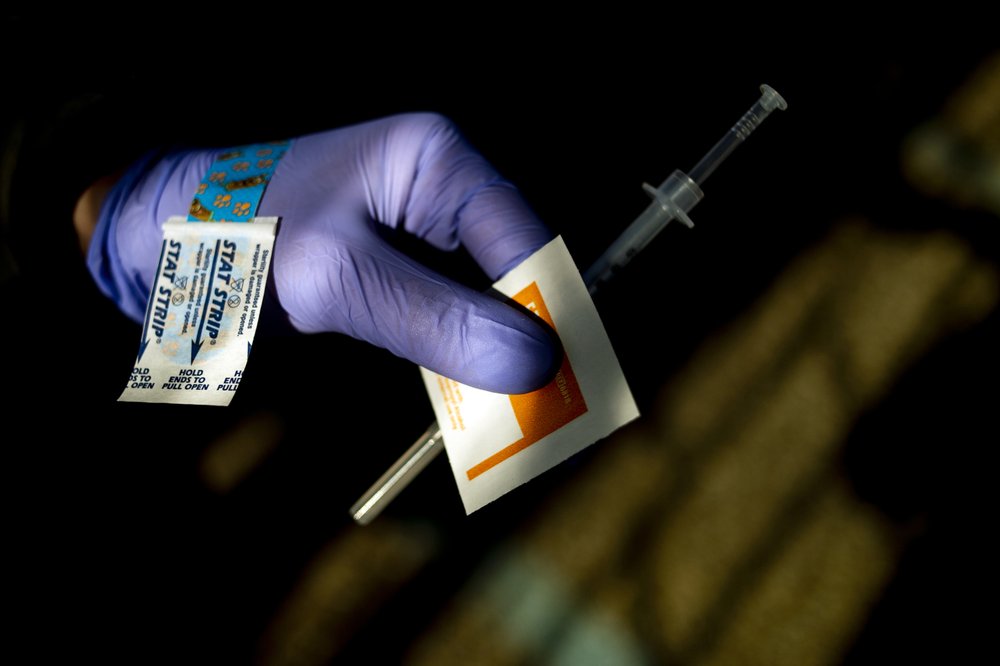
So few people came for COVID-19 vaccinations in one county in North Carolina that hospitals there now allow anyone 16 or older to get a shot, regardless of where they live. Get a shot, get a free doughnut, the governor said. Alabama, which has the nation’s lowest vaccination rate and a county where only 7% of residents are fully vaccinated, launched a campaign to convince people the shots are safe. Doctors and pastors joined the effort. On the national level, the Joe Biden administration this week launched a “We Can Do This” campaign to encourage holdouts to get vaccinated against the virus that has claimed over 550,000 lives in the U.S. The race is on to vaccinate as many people as possible, but a significant number of Americans are so far reluctant to get the shots, even in places where they are plentiful. Twenty-five percent of Americans say they probably or definitely will not get vaccinated, according to a new poll from The Associated Press-NORC Center for Public Affairs Research. They are leery about possible side effects. They tend to be Republican, and they are usually younger and less susceptible to becoming critically ill or dying if they catch COVID-19. There’s been a slight shift, though, since the first weeks of the nation’s largest-ever vaccination campaign, which began in mid-December. An AP-NORC poll conducted in late January showed that 67% of adult Americans were willing to get vaccinated or had already received at least one shot. Now that figure has climbed to 75%. That, experts say, moves the nation closer to herd immunity, which occurs when enough people have immunity, either from vaccination or past infection, to stop uncontrolled spread of a disease. Anywhere from 75% to 85% of the total population — including children, who are not currently getting the shots — should be vaccinated to reach herd immunity, said Ali Mokdad, professor of health metrics sciences at the University of Washington School of Public Health. A little over three months after the first doses were given, 100 million Americans, or about 30% of the population, have received at least one dose. Andrea Richmond, a 26-year-old freelance web coder in Atlanta, is among those whose reluctance is easing. A few weeks ago, Richmond was leaning toward not getting the shot. Possible long-term effects worried her. She knew that an H1N1 vaccine used years ago in Europe increased risk of narcolepsy. Then her sister got vaccinated with no ill effects. Richmond’s friends’ opinions also changed. “They went from, ‘I’m not trusting this’ to ‘I’m all vaxxed up, let’s go out!’” Her mother, a cancer survivor, whom Richmond lives with, is so keen for her daughter to get vaccinated that she signed her up online for a jab. “I’ll probably end up taking it,” Richmond said. “I guess it’s my civic duty.” But some remain steadfastly opposed. “I think I only had the flu once,” said Lori Mansour, 67, who lives near Rockford, Illinois. “So I think I’ll take my chances.” In the latest poll, Republicans remained more likely than Democrats to say they will probably or definitely not get vaccinated, 36% compared with 12%. But somewhat fewer Republicans today are reluctant. Back in January, 44% said they would shy away from a vaccine. The hesitance can be seen in Alabama’s rural Winston County, which is 96% white and where more than 90% of voters backed then-President Donald Trump last year. Only 6.9% of the county’s roughly 24,000 residents are fully vaccinated, the lowest level in Alabama. Elsewhere in Alabama, health officials tried to counter problems that include reluctance in heavily Black areas where distrust of government medical initiatives runs deep. They targeted a few counties with a pro-vaccine message, especially in the old plantation region where a large percentage of the population is Black and many are poor. The campaign enlisted doctors and pastors and used virtual meetings and the radio to spread the word. Dr. Karen Landers, assistant state health officer, said the effort had positive results. For example, in Perry County, where 68% of the population of about 9,300 is Black, more than 16% of the population is fully vaccinated, among the highest levels. Officials likely will make similar efforts for other parts of the state, she said. Nationwide, 24% of Black Americans and 22% of Hispanic Americans say they will probably or definitely not get vaccinated, down from 41% and 34% in January, respectively. Among white Americans, 26% now say they will not get vaccinated. In January, that number was 31%. The Biden administration’s campaign features TV and social media ads. Celebrities and community and religious figures are joining the effort. Iowa Gov. Kim Reynolds, a Republican, is trying win over the one-third of adult Iowans who will not commit to getting a vaccine by emphasizing that the shots will help return life to normal. In North Carolina’s Cumberland County, fewer than 1 in 6 residents have gotten at least one shot. Amid worries there would be an unused surplus of vaccines, Cape Fear Valley Health hospital systems opened up the shots last week to everyone 16 or older. “Rather than have doses go unused, we want to give more people the chance to get their vaccine,” said Chris Tart, a Cape Fear Valley Health vice president. “We hope this will encourage more people to roll up their sleeve.” On Wednesday, Gov. Roy Cooper, a Democrat, tweeted a video of him getting a free doughnut from the Krispy Kreme chain. Customers who show their vaccine card can get a free doughnut every day for the rest of the year. “Do it today, guys!” Cooper encouraged viewers. Nearly 36% of North Carolina adults have been at least partially vaccinated, state data show. Younger people are more likely to forgo a shot. Of those under 45, 31% say they will probably or definitely forgo a shot. Only 12% of those aged 60 and older say they will not get vaccinated. Ronni Peck, a 40-year-old mother of three from
State legislatures around the nation turn to election reform after contentious 2020 cycle
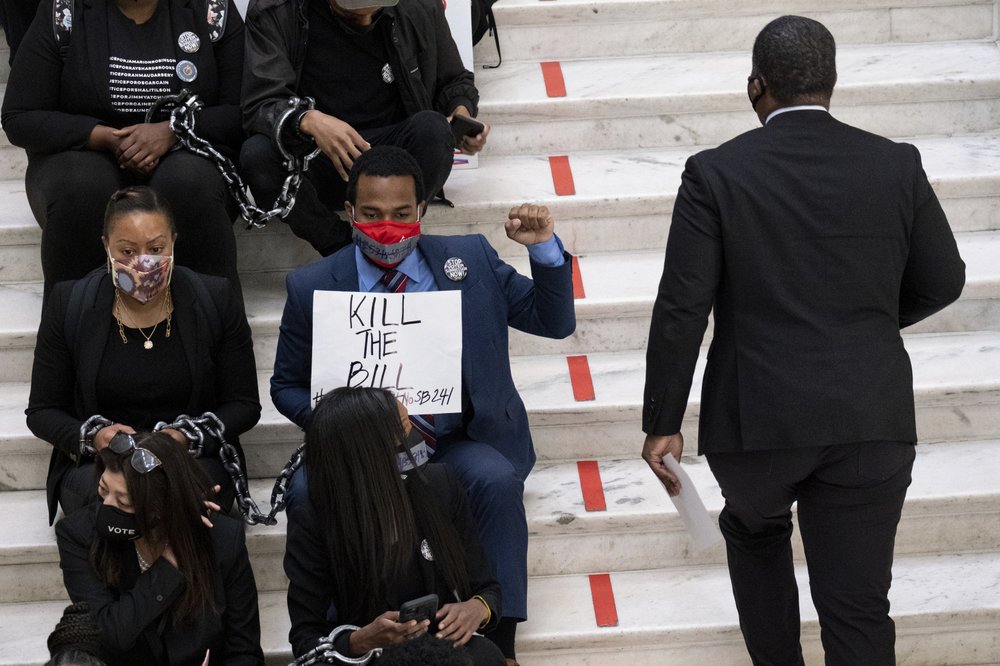
In Arizona, a Republican state senator worried aloud that his party’s proposed voter identification requirements might be too “cumbersome.” But he voted for the bill anyway. In Iowa, the state’s Republican elections chief put out a carefully worded statement that didn’t say whether he backs his own party’s legislation making it more difficult to vote early. And in Georgia, Republican Lt. Gov. Geoff Duncan left the room as Senate Republicans approved a bill to block early voting for all but the GOP’s most reliable voting bloc. Duncan instead watched Monday’s proceedings from a television in his office to protest. This is what amounts to dissent as Republican lawmakers push a wave of legislation through statehouses across the nation to make voting more difficult. The bills are fueled by former President Donald Trump’s false claims of widespread voter fraud and many are sponsored by his most loyal allies. But support for the effort is much broader than just Trump’s hard-right base, and objections from GOP policymakers are so quiet they can be easy to miss. “It’s appalling what’s happening,” said former Republican National Committee chairman Michael Steele, who condemned the silence of the GOP’s elected officials. “There have been no provable, obvious, systemwide failures or fraud that would require the kind of ‘legislative remedies’ that Republican legislatures are embarking on. What the hell are you so afraid of? Black people voting?” Experts note that most changes up for debate would disproportionately affect voters of color, younger people, and the poor — all groups that historically vote for Democrats. But Republicans are also pushing restrictions with the potential to place new burdens on GOP-leaning groups. It’s a startling shift for a party whose voters in some states, such as Florida and Arizona, had embraced absentee and mail voting. Several Republican strategists note the party may be passing laws that only box out their own voters. “There are multiple states and in multiple demographics where Republicans consistently outperform Democrats in early voting and absentee voting, and they need to be very careful because they could be shooting themselves in the foot to restrict that and make it more difficult,,” said Terry Sullivan, a Republican strategist. If elected Republicans share these concerns, they have done little so far to slow the momentum of major legislation in competitive states like Georgia, Arizona, Florida, and Texas, where Republicans control the state legislature and the governor’s office. Democratic officials, civil rights leaders, and voting advocates are horrified. Martin Luther King III said he spent last weekend in Selma, Alabama, celebrating the 56th anniversary of his father’s bloody march across the Edmund Pettus Bridge. Instead of being a day of celebration, he said, there was a sense that the civil rights movement was sliding backward because of the Republican voting proposals. “There’s no question about this being a higher level of Jim Crow,” King said in an interview. He said he’s worried that little can be done to stop the Republican effort in the short-term. “I’m not sure what would make Republicans change other than they lose (in upcoming elections,” King added. “There has to be a maximum effort so that does happen. They’re going to get very few votes from community of color.” Republicans championing the changes insist they’re simply trying to help restore public confidence in the U.S. election system. There was no evidence of widespread voter fraud in 2020, but polls suggest that many Republicans doubted the outcome of the election after Trump repeatedly declared, falsely, that he was the victim of illegal voting. In an interview, Trump ally Ken Cuccinelli used an expletive to describe King’s suggestion that the new laws are designed to disenfranchise African Americans. “I take great offense to the idea that I’m trying to keep anybody from voting,” Cuccinelli said. “There’s no reason anybody, no matter what color they are, can’t access this system if they’re a legal and appropriate voter.” In Georgia, the state Senate has voted to limit access to absentee mail ballots to people 65 and over, those with a physical disability, and people out of town on Election Day. Legislation passed by the state House would also dramatically reduce early voting hours, limit the use of early-voting drop boxes, and make it a crime to give food or water to voters standing in line. During Monday’s Senate vote, several Republicans who represent competitive metro Atlanta districts didn’t vote, including Sen. Brian Strickland. He had tried to amend the bill in committee to remove provisions scrapping no-excuse absentee voting but was unable to muster enough support. If ultimately approved by both chambers of the legislature, the change would end broad no-excuse absentee voting put in place in 2005 by a Republican-led legislature, after more than 1.3 million people voted absentee by mail in November. In Iowa, Gov. Kim Reynolds, a Republican, Monday signed a GOP-backed bill that requires voting sites to close an hour earlier and shortens the early-voting period to 20 days from the current 29. Voters will be also removed from active voting lists if they miss a single general election and don’t report a change in address or re-register. Republican Secretary of State Paul Pate, who contradicted Trump’s references to widespread voter fraud last fall and expanded mail-in voting during the pandemic, did not oppose the new law, but he offered no ringing endorsement either after a Latino advocacy group sued Tuesday to stop it from taking effect. “My office will continue providing resources to help every eligible Iowan be a voter and understand any changes in election law,” Pate said. “Our goal has always been to make it easy to vote, but hard to cheat.” And in Arizona, Republicans introduced dozens of bills to impose new restrictions on voting, many of them targeting the vote-by-mail system that accounts for about 80 percent of Arizona’s ballots. Some of the most aggressive proposals have died unceremoniously. House Speaker Rusty Bowers, a Republican, quietly buried a bill that would have allowed the Legislature to overturn presidential election
John Merrill joins Hunt-Kean Leadership Fellows
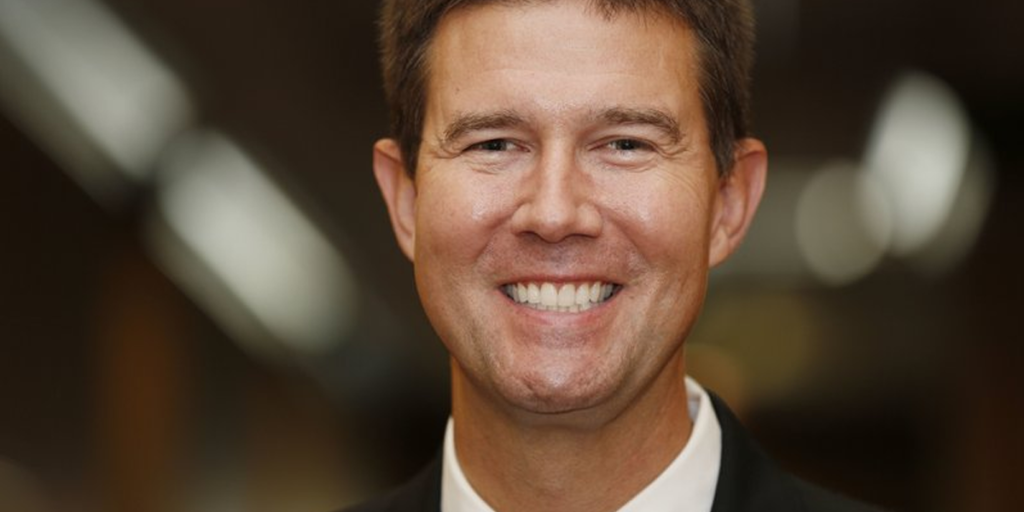
Alabama Secretary of State John H. Merrill has been selected to participate in the Hunt-Kean Leadership Fellows program. The leaders chosen for this program have been recognized for having the knowledge, skill, and will to be effective education policymakers at the state level. The program is an initiative of The Hunt Institute, an education policy non-profit founded in 2001 by former North Carolina Governor Jim Hunt. The Fellows program is named for Governors Jim Hunt and Tom Kean. They saw education as an essential investment that strengthens our nation’s economy and society. Secretary Merrill will join 29 other elected officials from across the country. The total number of Hunt-Kean Leadership Fellows totals 141 and includes Alabama Senate Pro Tem Greg Reed. The program also includes six sitting governors: Oregon Governor Kate Brown, Iowa Governor Kim Reynolds, Idaho Governor Brad Little, Michigan Governor Gretchen Whitmer, Mississippi Governor Tate Reeves, and Utah Governor Spencer Cox. Merrill stated, “Every student in this state deserves access to a high-quality education from a well-resourced school. I am honored to join this cohort of Hunt-Kean Leadership Fellows aimed at strengthening education in our state. I am incredibly grateful to The Hunt Institute for this opportunity to assist our local communities.” Dr. Javaid Siddiqi, President & CEO of The Hunt Institute, stated, “Our vision is to provide policymakers with the core knowledge they need to promote effective education agendas. By investing in America’s policymakers, the Hunt-Kean Leadership Fellows is building a cadre of informed and motivated educational change agents with the necessary influence to transform state education systems and improve outcomes.”
State leaders facing 2nd wave resist steps to curb virus
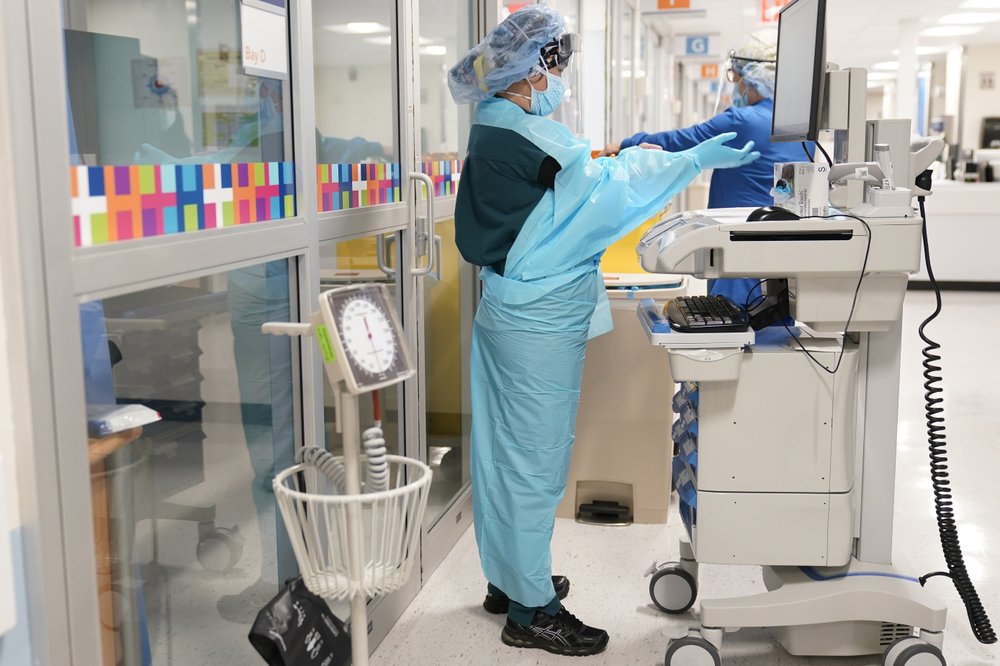
Even as a new surge of coronavirus infections sweeps the U.S., officials in many hard-hit states are resisting taking stronger action to slow the spread, with pleas from health experts running up against political calculation and public fatigue. Days before a presidential election that has spotlighted President Donald Trump’s scattershot response to the pandemic, the virus continued its resurgence Friday, with total confirmed cases in the U.S. surpassing 9 million. The number of new infections reported daily is on the rise in 47 states. They include Nebraska and South Dakota, where the number of new cases topped previous highs for each state. The record increases in new cases have eclipsed the spikes that set off national alarms last spring and summer. During those outbreaks, first in the Northeast and then in Sun Belt states, many governors closed schools and businesses and restricted public gatherings. But this fall’s resurgence of the virus, despite being far more widespread, has brought a decidedly more limited response in many states. Most are led by Republican governors backing a president who insists, falsely, that the country is getting the virus under control. Over the past two weeks, more than 76,000 new virus cases have been reported daily in the U.S. on average, up from about 54,000 in mid-October, according to Johns Hopkins University. Deaths, which usually lag case numbers and hospitalizations, are also rising, from about 700 to more than 800 a day. The virus has now killed more than 229,000 Americans. Nevertheless, many officials have resisted calls to enact measures like statewide mask mandates or stricter curbs on the size of gatherings, casting the response to the virus as a matter of individual decision-making. “At the end of the day, personal responsibility is the only way. People will either choose or not choose to social distance, or choose to wear a mask or not,” said Tennessee Gov. Bill Lee, a Republican. “What we can do is to remind them is that personal responsibility can protect them.” Lee’s state is among those without a blanket mask mandate despite a study released this week showing that areas of Tennessee where people are not required to wear them are seeing the most hospitalizations. In Iowa, where a record 606 coronavirus patients were hospitalized Friday, one health expert said officials there had been too quick to reopen, along with several neighboring states. “If we follow the course that the other Midwestern states like Wisconsin, North Dakota and South Dakota have, we’re going to have trouble keeping up,” said Dr. Ravi Vemuri, an infectious disease specialist at MercyOne hospitals. Republican Gov. Kim Reynolds, who has rejected mask requirements and said Iowans must learn to live with the virus, continued this week to downplay efforts to contain it. On Wednesday, Reynolds, who has made frequent campaign appearances for Trump and other candidates surrounded by crowds of often maskless supporters, poked fun at Theresa Greenfield, a Democrat running in a tight Senate race, for suspending a campaign tour after a staff member was exposed to someone who tested positive. “Theresa didn’t get very far on her RV tour, did she?” Reynolds said. She went on to accuse Greenfield and other Democrats of “hiding in their basements.” The pandemic has put similar pressures on states with Democratic governors, but the politics have played out differently. Kansas Gov. Laura Kelly, a Democrat, has repeatedly tried to impose restrictions but been stymied by the Republican-controlled legislature. She is considering calling lawmakers into a special session to impose a statewide mask mandate. In Wisconsin, where the virus has raged since September, Democratic Gov. Tony Evers pleaded with residents this week to shelter in place to slow the spread. Evers issued a formal stay-at-home order in March, but the state’s conservative Supreme Court struck it down in May. He was subsequently sued over a mask mandate and limits on gatherings in bars and restaurants. The parrying by governors and legislators reflect the way that politics and the personal beliefs of a significant sector of the population have become entangled with supposedly nonpartisan matters of public health. Michelle Riipinen, a 38-year-old resident of Boise, Idaho, said state-mandated school closings, business shutdowns and mask requirements are “draconian measures” that do more harm than good. She said she chooses not to wear a mask. “I believe in personal responsibility and that it is our responsibility as American citizens to choose if we want to wear it or not,” she said. “Our government shouldn’t be making that choice for us.” In Utah, Republican Gov. Gary Herbert has ordered mask mandates and limited social gatherings to 10 people or fewer only in counties with the highest transmission rates, not the entire state. The latter measure includes exceptions for religious services and school events. Full Coverage: Virus Outbreak “This is not an easy thing to enforce. As you drive down the road, you talk about people getting tickets for speeding, but how many are actually speeding?” Herbert said when asked about his resistance to broader mandates. Herbert said Friday he was “disgusted” after someone shot at a state health department office. The incident came a day after anti-mask protesters gathered outside the home of Utah state epidemiologist Dr. Angela Dunn, who recommended that the state reinstate restrictions to avoid overwhelming hospitals. “It’s taken a really big toll on my family and myself,” Dunn said. “I think it’s really unfortunate we live in a state where people feel that it is OK to harass civil servants.” Herbert, who has not heeded Dunn’s recommendation, said protesters were within their rights to criticize him or other elected officials, but that they should leave state employees alone. “I know we’re asking a lot of the people of Utah to be patient,” the governor said. “We know that their time is valuable. I would hope that they would put that in a constructive effort.” Republished with the permission of the Associated Press.
‘A little bit concerned’: Donald Trump looks to boost Iowa support
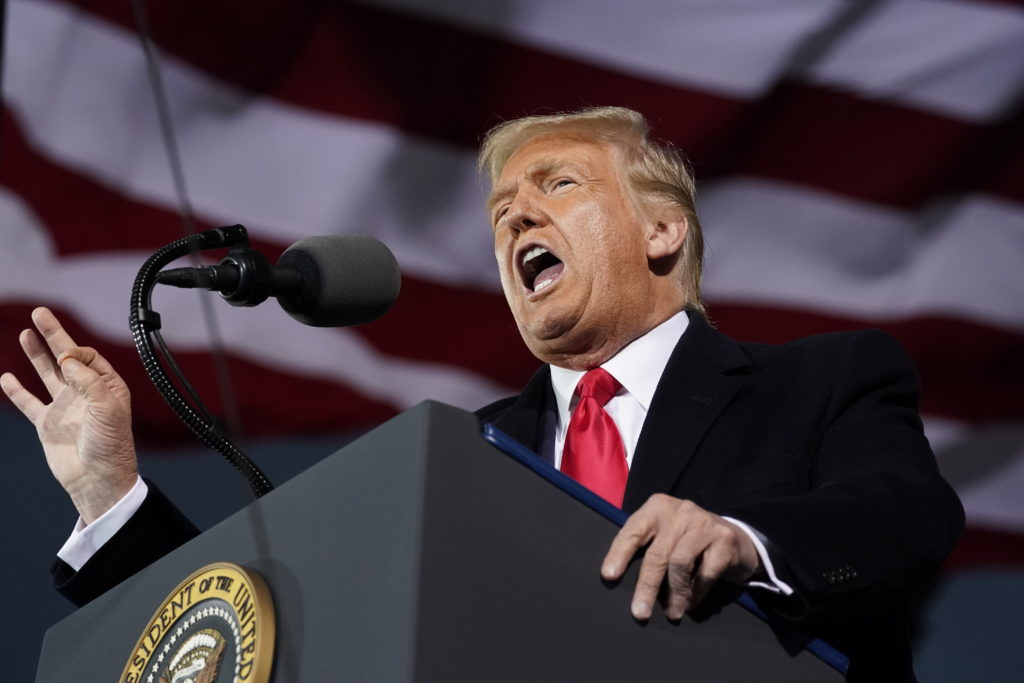
President Donald Trump on Wednesday sought to shore up support from constituencies that not so long ago he thought he had in the bag: big business and voters in the red state of Iowa. In a morning address to business leaders, he expressed puzzlement that they would even consider supporting his Democratic challenger, Joe Biden, arguing that his own leadership was a better bet for a strong economy. Later, the president held his third campaign rally in three nights, this time in Iowa, a state he won handily in 2016 but where Biden is making a late push. Trump claimed to be leading in the most recent poll he saw. “For me to only be up six, I’m a little bit concerned,” he asserted. Multiple polls have shown a much closer race. Biden, for his part, held a virtual fundraiser from Wilmington, Delaware, and delivered pretaped remarks to American Muslims. He did not have any public campaign events, unusual for just 20 days out from Election Day. The Democratic nominee used his appearance at the fundraiser to say that Trump was trying to rush through Amy Coney Barrett, his nominee for the Supreme Court, to help his efforts to repeal the Obama health care law, calling that “an abuse of power.” Biden was expected to spend much of the day preparing for a town-hall-style TV appearance in battleground Pennsylvania on Thursday, which was to have been the night of the second presidential debate. Instead, the candidates will have dueling town halls on network television — Trump’s in Miami and sponsored by NBC News, Biden’s in Philadelphia and on ABC. Trump backed out of plans for the originally scheduled presidential faceoff after debate organizers shifted the format to a virtual event following Trump’s coronavirus diagnosis. Trump used his economic address Wednesday to play up his administration’s commitment to lowering taxes and deregulation of industry, and he didn’t hide his frustration with signs that some in the business community are tilting to Biden. “I know I’m speaking to some Democrats, and some of you are friends of mine,” Trump said in a virtual address to the Economic Clubs of New York, Florida, Washington, D.C., Chicago, Pittsburgh and Sheboygan, Wisconsin. Should Biden be elected, he continued, “You will see things happen that will not make you happy. I don’t understand your thinking.” The former vice president has collected more than $50 million in campaign contributions from donors in the securities and investment sectors, according to the private nonpartisan Center for Responsive Politics. During his decades in the Senate representing Delaware, a center for the credit card and banking industries, Biden built relationships and a voting record in the business sector that has raised suspicion on the left but provides Wall Street with a measure of ease at the prospect of a Biden administration. After being sidelined by the coronavirus, Trump resumed a breakneck schedule this week, with aides saying he is expected to travel and host campaign rallies every day through Nov. 3. Trump has appeared hale in his public appearances since reemerging from quarantine, though at moments during his economic address on Wednesday his voice was raspy. His trip to Iowa comes as the state this week surpassed 100,000 coronavirus cases and has seen a recent surge in hospitalizations. The number of people being treated in Iowa hospitals for COVID-19 reached a new high Wednesday of 473 people. Biden has tried to make Trump’s handling of the pandemic, which has killed more than 215,000 Americans, the central issue of the election. “President Trump isn’t coming to the Hawkeye State to offer words of comfort to those suffering, or a helping hand to the Iowans who are out of a job, or an actual plan to get the virus under control,” Biden said in a statement. “Instead, he’s here to spread more lies about the pandemic and distract from his record of failure.” Officials at the Des Moines airport were told to plan for up to 10,000 people, and such Trump campaign events typically feature little to no social distancing and only spot mask wearing. A public health emergency declared by Republican Gov. Kim Reynolds in March remains in place and requires that organizers of mass gatherings “must ensure at least 6 feet (1.8 meters) of physical distance between each group or individual attending alone.” Trump acknowledged Reynolds’ presence at the rally. “Thank you, honey,” he said. Trump had an extra treat in mind for Iowa voters, drawing on one of the perquisites of his office: Ahead of his visit, Trump said he would be awarding the Presidential Medal of Freedom to Iowa wrestling legend Dan Gable. The former University of Iowa coach won 15 NCAA team championships from 1976 to 1997. Donning a red hat and tossing away his tie to fight off the stiff breeze on the airport tarmac, Trump made a direct appeal to the state’s farmers, saying that he was responsible for $28 billion in aid designed to help offset damage stemming from his trade war with China. “I hope you remember that on Nov. 3,” Trump said. But after years of farmers supporting him despite the trade war, some Republicans say Trump’s renewable fuel policy has sown some doubt. Trump’s Environmental Protection Agency granted dozens of waivers to petroleum companies seeking to bypass congressional rules requiring the level of the corn-based fuel additive ethanol that gasoline must contain. He has recently denied more waiver requests, but the EPA’s previous action removed about 4 billion gallons of ethanol demand, resulting in the closure — at least temporarily — of more than a dozen ethanol plants in Iowa. While mostly laying low on Wednesday, Biden has stepped up campaign travel in the past week, with visits to Arizona, Nevada, Florida, and Pennsylvania. The former vice president isn’t introducing new themes in his pitch that he’s a steady alternative to Trump. Biden and his aides believe the president’s scattershot campaign messaging since his COVID-19 diagnosis proves the core of Biden’s
Judges slow abortion bans in Texas, Ohio, Alabama amid virus
The ruling was a victory for Planned Parenthood.
Donald Trump returning to Iowa, where he may find remorseful independent voters

Iowa independents who helped Donald Trump win the presidency see last year’s tough-talking candidate as a thin-skinned chief executive and wish he’d show more grace. Unaffiliated voters make up the largest percentage of the electorate in the Midwest state that backed Trump in 2016, after lifting Democrat Barack Obama to the White House in party caucuses and two straight elections. Ahead of Trump’s visit to Iowa Wednesday, several independents who voted for Trump expressed frustration with the president. It’s not just his famous tweetstorms. It’s what they represent: a president distracted by investigations into Russian meddling in the 2016 election and a court battle over his executive order barring refugees from majority-Muslim countries at the expense of tangible health care legislation and new tax policy. “He’s so sidetracked,” said Chris Hungerford, a 47-year-old home-business owner from Marshalltown. “He gets off track on things he should just let go.” And when he does spout off, he appears to lack constraint, said Scott Scherer, a 48-year-old chiropractor from Guttenberg, in northeast Iowa. “Engage your brain before you engage your mouth,” Scherer advised, especially on matters pertaining to investigations. “Shut up. Just shut up, and let the investigation run its course.” Scherer said he would vote again for Trump, but pauses a long time before declining to answer when asked if he approves of the job the president is doing. Cody Marsh isn’t sure about voting for Trump a second time. The 32-year-old power-line technician from Tabor, in western Iowa, says, “It’s 50-50.” “People don’t take him seriously,” he said. Unaffiliated, or “no party” voters as they are known in Iowa, make up 36 percent of the electorate, compared with 33 percent who register Republican and 31 percent registered Democrat. Self-identified independents in Iowa voted for Trump over Democrat Hillary Clinton by a 13-percentage-point margin last year, according to exit polls conducted for The Associated Press and television networks They helped him capture 51.8 percent of the overall vote against Clinton. Nationally, exit polls showed independents tilted toward Trump over Clinton by about a 4-percentage-point margin in November, but an AP-NORC poll conducted in June found that about two-thirds of them disapprove of how he’s handling his job as president. In North Carolina, Republican pollster Paul Shumaker says he has seen internal polling that has warning signs for his state, where Trump prevailed last year. Independent voters are becoming frustrated with Trump, especially for failing so far to deliver on long-promised household economic issues such as health care, said Shumaker, an adviser to Republican Sen. Richard Burr. Inaction on health care and any notable decline in the economy will hurt Trump’s ability to improve his numbers with independents, with broad implications for the midterm elections next year, Shumaker said. At stake in 2018 will be majority control of the House. A favorable map and more Democrats up for re-election make the GOP more likely to add to its numbers in the Senate. “How the president and members of Congress move forward and address the kitchen-table issues facing the American voters will determine the outcome of the 2018 elections,” he said. In Iowa Wednesday, Trump will be rallying his Republican base in Cedar Rapids. Earlier this month, Vice President Mike Pence attended Republican Sen. Joni Ernst‘s annual fundraiser, where he talked about job growth and low unemployment since the start of the year, although economists see much of it as a continuation of Obama policies. Trump has only been in office five months. It’s a message the Republican establishment is clinging to, especially those looking ahead to 2018. Gov. Kim Reynolds, installed last month to succeed new U.S. Ambassador to China Terry Branstad, said last week of Iowa voters: “I think they are confident that President Trump and this administration are doing the job that they said that they would do, going out there and making America great again.” But Trump has to worry about people like Richard Sternberg, a 68-year-old retired high school guidance counselor from Roland, in central Iowa, who voted for Trump. But is Sternberg satisfied? “Not completely.” He is bothered by Trump’s proposed cut to vocational education, an economic lift for some in rural areas. “We, especially in Iowa, need those two-year technically trained people,” Sternberg said. More broadly, Trump needs to act more “presidential,” he said. “Trump speaks before he thinks,” Sternberg said. “He doesn’t seem to realize what the president says in the form of direct communication or Twitter carries great weight and can be misconstrued if not carefully crafted.” Republished with permission of The Associated Press.
