
Trump administration moves to detain migrant families longer
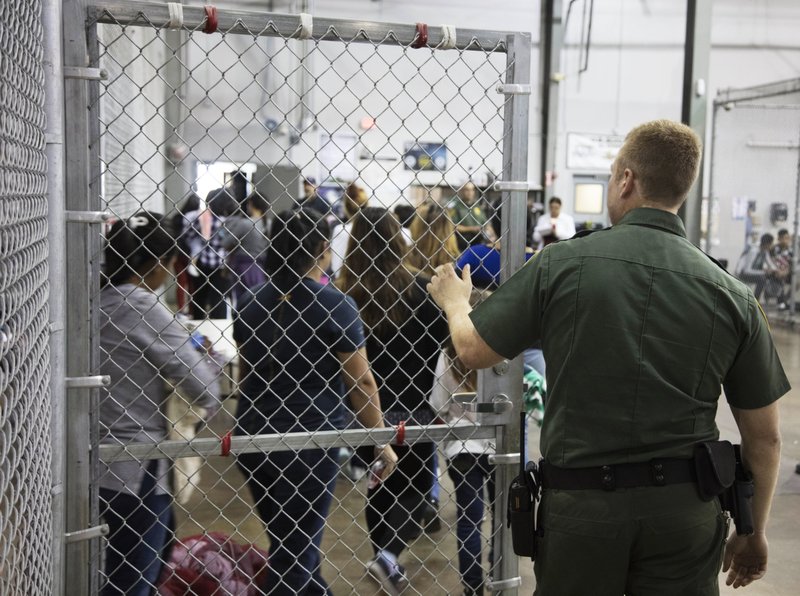
The Trump administration on Thursday moved to abandon a longstanding court settlement that limits how long immigrant children can be kept locked up, proposing new regulations that would allow the government to detain families until their immigration cases are decided. Homeland Security officials said that ending the so-called Flores agreement of 1997 will speed up the handling of asylum requests while also deterring people from illegally crossing the Mexican border. The move angered immigrant rights advocates and is all but certain to trigger a court battle. “It is sickening to see the United States government looking for ways to jail more children for longer,” said Omar Jadwat, director of the ACLU’s Immigrants’ Rights Project. “And it’s yet another example of the Trump administration’s hostility toward immigrants resulting in a policy incompatible with the most basic human values.” Vehicles leave the Port Isabel Detention Center, June 26, 2018, which holds detainees of the U.S. Immigration and Customs Enforcement in Los Fresnos, Texas. [Photo Credit: AP Photo/David J. Phillip, file] The Flores agreement requires the government to keep children in the least restrictive setting possible and to release them generally after 20 days in detention. For decades, because of those restrictions, many parents and children caught trying to slip into the country have been released into the U.S. while their asylum requests wind their way through the courts — a practice President Donald Trump has decried as “catch-and-release.” Such cases can drag on for years, and some immigrants stop showing up to court when it becomes clear their asylum requests are going to be denied. The newly proposed rules would allow the government to hold families in detention until their cases are completed. Homeland Security did not say how long it expects families to be kept locked up. But immigration officials say asylum cases involving detained families move much more quickly, taking months instead of years to resolve, in part because there are none of the delays that result when immigrants set free in the U.S. fail to show up for a hearing. “Today, legal loopholes significantly hinder the department’s ability to appropriately detain and promptly remove family units that have no legal basis to remain in the country,” said Homeland Security Secretary Kirstjen Nielsen. “This rule addresses one of the primary pull factors for illegal immigration and allows the federal government to enforce immigration laws as passed by Congress.” Earlier this summer, a federal judge in California rejected a request by the administration to modify Flores to allow for longer family detention. Administration officials say they have the authority to terminate the agreement, but that is likely to be tested in court. “They’re essentially trying to accomplish through regulation what the court has not permitted,” said Peter Schey, an attorney representing immigrant children under the settlement and president of the Center for Human Rights and Constitutional Law. Schey said he will oppose any effort to end Flores unless the government proposes acceptable regulations for the safe and humane treatment of youngsters. “Refugee children should not be made to suffer inhumane treatment and prolonged and unnecessary detention just to satisfy President Trump’s zero-tolerance approach to refugees seeking safety in the United States from the violence and lawlessness spreading throughout Central America,” Schey said. The Flores agreement became an issue last spring when the Trump administration adopted a policy of prosecuting anyone caught crossing illegally. More than 2,900 children were separated from their parents, prompting international outrage. Trump eventually backed down and stopped the separation of families. A federal judge ordered parents and children reunited; the government has said it has done so in as many cases as it could. But hundreds of parents were deported without their children, while others had criminal records or were not parents as they claimed to be, officials said. Because under Flores children cannot be kept in criminal custody with their parents or held for an extended period in immigration detention, the administration has limited options when dealing with families. The government operates three family detention centers that can hold a total of about 3,000 people, and they are at or near capacity. Homeland Security and the Pentagon have been working to line up as many as 12,000 beds for family members at Fort Bliss in El Paso, Texas. Another request for up to 20,000 beds for youngsters who arrive without parents is also pending. The ACLU’s Jadwat accused the administration of “trying to expand the trauma it is inflicting on these children in order to deter other people from coming to the country.” Rachel Prandini, staff attorney at the Immigrant Legal Resource Center, said the erosion of Flores’ protections would subject children to worsening conditions. “The Trump administration’s decision to exacerbate the suffering of kids, by imposing the cruel policy of family separation earlier this summer and now with this rule change to vastly expand detention of children, is horrifying,” she said. The regulations will be published in the Federal Register and will be subject to a 60-day public comment period starting Friday. Republished with the permission of the Associated Press.
U.S. officials raise alarm about 2018, 2020 election security
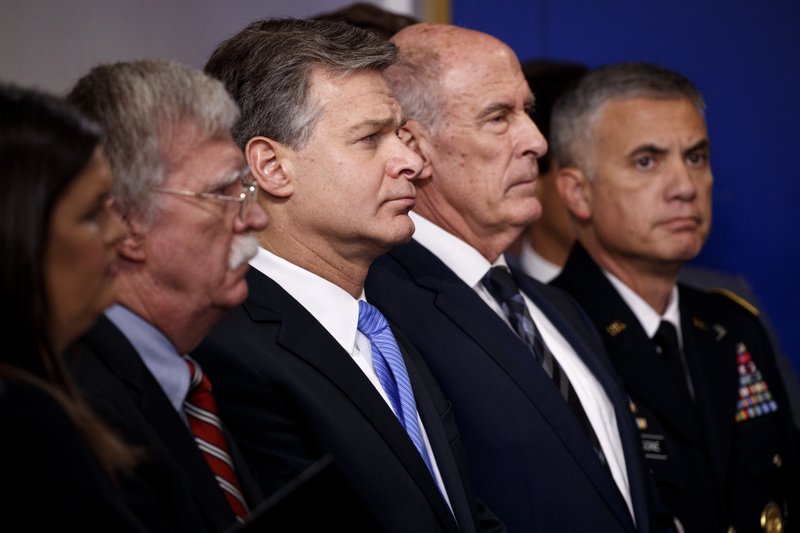
President Donald Trump has directed a “vast, government-wide effort” to protect American elections after Russian attempts to interfere in 2016, the White House said Thursday. Responding to bipartisan criticism that it has no clear national strategy to protect the country during the upcoming midterms and beyond, John Bolton, the national security adviser, wrote in a letter to Senate Democrats that “President Trump has not and will not tolerate interference in America’s system of representative government.” The warning to American adversaries came as top U.S. intelligence and homeland security officials raised alarms about potential efforts to influence the 2018 and 2020 elections. Homeland security chief Kirstjen Nielsen said: “Our democracy is in the crosshairs.” “We continue to see a pervasive messaging campaign by Russia to try to weaken and divide the United States,” Director of National Intelligence Dan Coats said. Their comments during a White House briefing followed weeks after Trump publicly undermined the conclusions of American intelligence agencies regarding Russian interference. After suffering a bipartisan outcry, Trump later said he accepted those conclusions. They, along with National Security Agency director Gen. Paul Nakasone and FBI Director Christopher Wray, appeared at the White House Thursday to try to reassure the American people they are doing everything in their power to address the threat. “We’re throwing everything at it,” Coats said. Nielsen, Wray and Nakasone had all gathered earlier this week in New York City with leaders of top finance, energy and telecommunications companies for a cybersecurity summit, where they spoke of the urgent need for a collective, collaborative approach to security. At the event, Nielsen said the cyberthreat that now exceeds the danger of a physical attack against the U.S. by a hostile foreign group. Wray told reporters that compared to 2016, in 2018, “We are not yet seeing the same kind of efforts to specifically target election infrastructure,” but that other efforts to influence public opinion continue. He added that the FBI has active investigations on foreign influence across all 56 of its field office. “Make no mistake, the scope of this foreign influence threat is both broad and deep,” he said. But Nielsen said that U.S. agencies have “seen a willingness and a capability on the part of the Russians” to attack U.S. election infrastructure. On Capitol Hill, lawmakers in both parties have pushed election security toward the top of the coming fall agenda amid heightened concerns about interference by Russians and others ahead of the midterm elections. Asked this week how confident he was in the integrity of election systems ahead of the fall midterms, the No. 2 Republican, Sen. John Cornyn of Texas, said, “I’m confident we’re doing the best we can.” Beyond Russian interference with social media campaigns to influence voters, lawmakers are increasingly looking at how to bolster election infrastructure in the states — even though Congress shot down a recent effort to boost federal funding for local and state systems. Both Republicans and Democrats have criticized the administration’s response as fragmented, without enough coordination across federal agencies. And with the midterms only three months away, critics are calling on Trump to take a stronger stand on an issue critical to American democracy. Sen. Mark Warner of Virginia, the ranking Democrat on the Senate intelligence committee who has criticized Trump for not taking a stronger leadership role on election security, said he was heartened by the White House news conference. “Glad to see the White House finally do something about election security — even if it’s only a press conference,” Warner tweeted. “Now, if only it was actually backed up by anything the president has said or done on Russia.” The Senate is working on a bipartisan package backed by GOP leaders that would boost federal assistance to state and local election officials with cybersecurity guidelines, data sharing and security clearances. It’s expected in September. GOP lawmakers are wary of being seen as imposing any new regulations on states that have resisted federal control. Bolton said Trump is “leading unprecedented action to punish Russia” for its efforts to disrupt American elections. Republished with the permission of the Associated Press.
Jim Zeigler asks DHS to cancel plan to house illegal detainees in Baldwin County
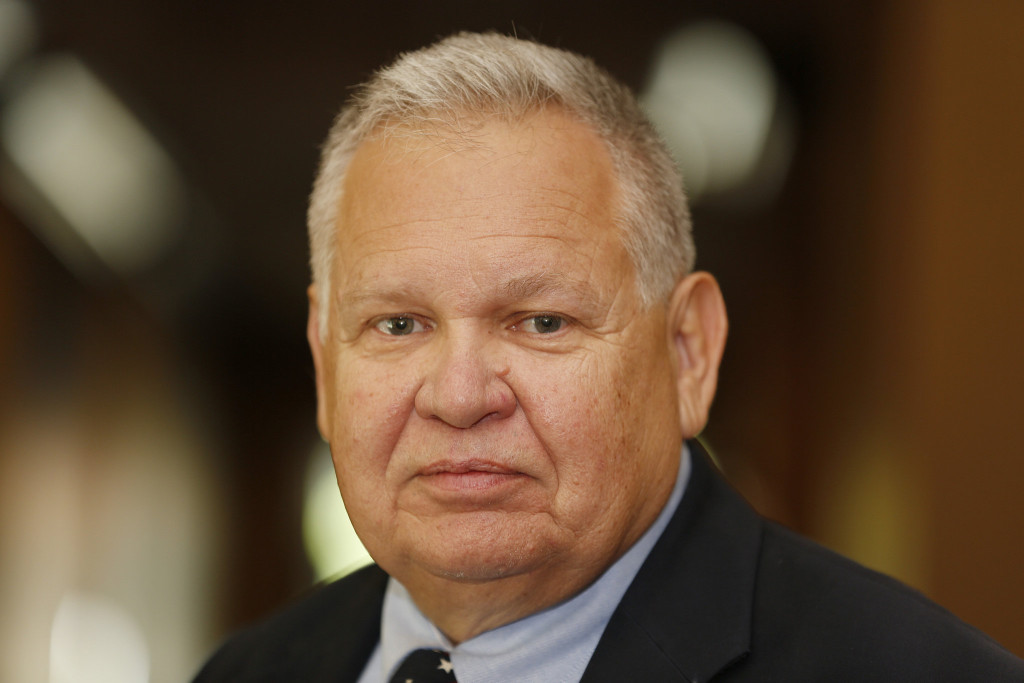
Time reported on Friday it had obtained an internal document that details the U.S. Navy’s plans to construct “temporary and austere” tent cities to house 25,000 illegal immigrants in the Yellowhammer State at two abandoned airfields — Navy Outlying Field Wolf in Orange Beach and Navy Outlying Field Silverhill — and Alabama State Auditor Jim Zeigler is trying to stop them. Zeigler, a resident of nearby Mobile County, sent a formal request to the U.S. Department of Homeland Security (DHS)Secretary Kirstjen Nielsen asking her to cancel the plans to construct two tent cities in Baldwin County. Zeigler says the plan is “terribly flawed.” He cited four problems with the plan: The area is a hurricane zone. “This area is a hurricane zone,” said Zeigler. “A tent city in a hurricane zone is dangerous for the detainees and the staff. It would be difficult and costly to quickly evacuate the detainees when a hurricane heads our way, which happens frequently. This site is totally inappropriate for the intended purpose.” High temps and humidity. Zeigler continued, “The area has high temperatures and humidity. There will be no air conditioning in a tent city. Other geographical areas are available without the heat and humidity. The site selection authority needs to be fired.” It’s near the state’s booming tourist industry. “The area is in or near Alabama’s booming tourist industry and highest revenue-generating area,” Zeigler explained. “Tourism and revenues would be adversely affected by these sites. Optional areas are available that are isolated and are not vital to tourism and revenue generation.” Security. “Security is a continuous problem with a sprawling tent city in a residential area,” Zeigler added. “Escapees can commit crimes in the nearby neighborhoods. Isolated areas are available that would not have this problem.”
Next steps for caravan will unfold mostly out of public view
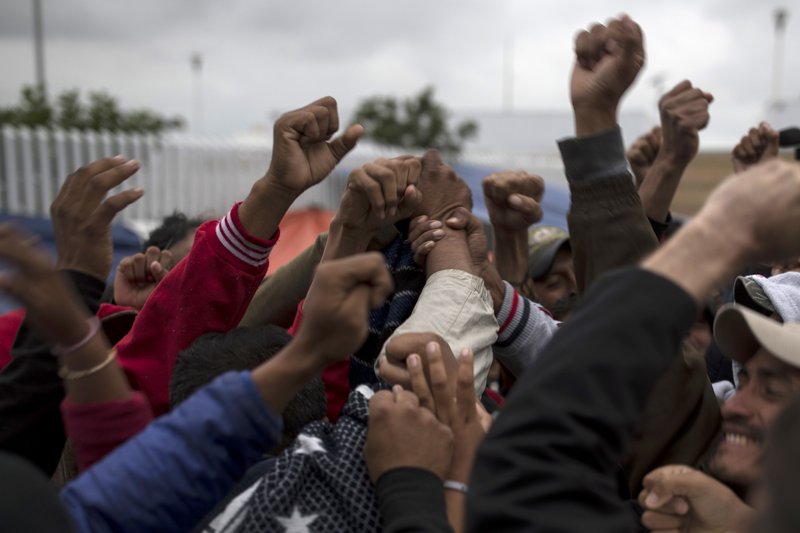
The caravan of Central Americans seeking asylum in the United States sought the world’s attention as scores of migrants traveled through Mexico on a journey to escape their violent homelands. Now that the group has arrived at the border, the next steps in their journey will unfold mostly out of public view. The caravan first drew attention in the U.S. when President Donald Trump promised that his administration would seek to turn the families away. The rest of the asylum-seeking process will happen slowly and secretively in immigration courts. Dan Kowalski, editor of Bender’s Immigration Bulletin, said the public will “probably see very little (of the caravan cases) unless the applicant is represented and the attorney makes an effort to bring the client into the limelight.” A total of 28 caravan members were accepted for processing Monday and Tuesday by U.S. border inspectors at San Diego’s San Ysidro crossing, an official with U.S. Customs and Border Protection said. The crossing, the nation’s busiest, processed about 50 asylum seekers a day from October through February, suggesting the wait will be short. Under U.S. asylum practices, people spend up to three days at the border inspection facility before being transferred to a long-term detention center. An asylum officer interviews them for an initial screening, usually within a week or so, to determine if their cases should advance to immigration court, which can take several years. The courts often conduct business behind closed doors. Files are not public, and, unlike criminal or civil courts, access for journalists and others is limited. The caravan’s numbers, while tiny compared to previous surges of Central Americans to South Texas and Haitians to San Diego, will be a test of Trump’s tough words. Administration officials have railed against what they call legal loopholes and “catch-and-release” policies that allow people seeking asylum to be freed while their cases are adjudicated, but any significant changes must be addressed by Congress or in the courts. Attorney General Jeff Sessions has pledged to send more immigration judges to the border if needed and threatened criminal prosecution. On Monday, the Justice Department said it filed illegal-entry charges against 11 people identified as caravan members. Homeland Security Secretary Kirstjen Nielsen said asylum claims will be resolved “efficiently and expeditiously.” She also warned that anyone making false claims could be prosecuted and said asylum seekers should seek protection in the first safe country they reach, including Mexico. U.S. attorneys who counseled asylum seekers in Tijuana warned that they could be separated from family and spend many months in detention, a shift from the Obama administration. Separating asylum-seeking families has become more common, as has detaining them while their cases wind through the courts, said Leon Rodriguez, director of U.S. Citizenship and Immigration Service from 2014 to 2017, which oversees asylum petitions. The U.S. Immigration and Customs Enforcement agency has limited beds in family detention centers and may also choose to release adults and their children while their cases wind through the system, often with orders that some of them wear ankle monitors. Children traveling alone are placed with family, other sponsors or in group homes overseen by the Health and Human Services Department. Nearly 80 percent of asylum-seekers passed the initial screening from October through December, but few are likely to win asylum, which requires the petitioner to show well-founded fear of persecution on grounds of race, religion, nationality, political beliefs or membership in a social group. The denial rate for El Salvadorans seeking asylum was 79 percent from 2012 to 2017, according to Syracuse University’s Transactional Records Action Clearinghouse. Hondurans were close behind with a 78 percent denial rate, followed Guatemalans at 75 percent. Republished with the permission of the Associated Press.
Buses carrying Central American migrants roll to U.S. border
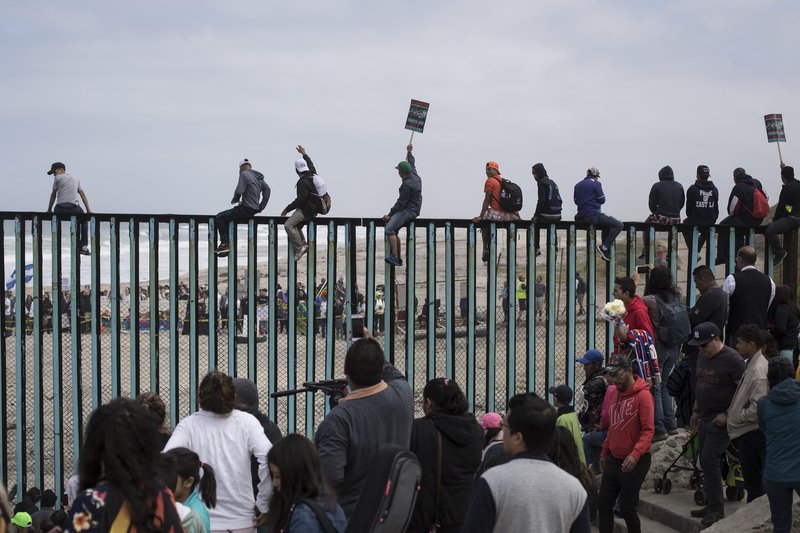
Packed into five old school buses, hundreds of Central American migrants arrived at the U.S. border Sunday for a rally, to be followed by a planned mass attempt to apply for asylum, in a direct challenge to the Trump administration. The migrants, many traveling with children, left a downtown Tijuana shelter where they had been staying. Police with flashing lights escorted the buses to a cross-border rally at a Pacific Ocean beach, with supporters gathering on both sides of security fencing. Asked how he felt as he boarded the bus, Nefi Hernandez of Honduras replied, “Nervous.” He said he intended to seek asylum with his wife and infant daughter, who was born on the journey through Mexico. President Donald Trump and members of his Cabinet have been tracking the caravan of migrants, calling it a threat to the U.S. since it started March 25 in the Mexican city of Tapachula, near the Guatemala border. Attorney General Jeff Sessions called the caravan “a deliberate attempt to undermine our laws and overwhelm our system,” pledging to send more immigration judges to the border to resolve cases if needed. Trump administration officials have railed against what they call “catch-and-release” policies that allow people requesting asylum to be released from custody into the U.S. while their claims make their way through the courts in a process that can last a year. The arrival at San Diego’s San Ysidro border crossing, the nation’s busiest, marked the end of a monthlong journey by foot, freight train and bus for the migrants, many of whom said they feared for their safety in their homes. Hernandez, 24, said a gang in his hometown of San Pedro Sula, Honduras, threatened to kill him and his family if he did not sell drugs. Jose Cazares, 31, said he faced death threats in the Honduran city of Yoro because a gang member suspected of killing the mother of his children learned one of his Cazares’ sons reported the crime to police. But the travelers faced an uncertain future as they prepared to turn themselves in and face asylum. U.S. immigration lawyers conducted free legal workshops for the group, warning them they face possible separation from their children and detention for many months. Homeland Security Secretary Kirstjen Nielsen said that asylum claims will be resolved “efficiently and expeditiously” but that the asylum-seekers should seek it in the first safe country they reach, including Mexico. She warned that any asylum seekers making false claims to U.S. authorities could be prosecuted, as could anyone who assists or coaches immigrants on making false claims. Administration officials and their allies claim that asylum fraud is growing and that many who seek it are coached on how to do so. Asylum-seekers are typically held up to three days at the border and then turned over to U.S. Immigration and Customs Enforcement. If they pass an asylum officer’s initial screening, they may be detained or released into the U.S. with ankle monitors. The San Ysidro crossing may be unable to take asylum-seekers if it faces too many at once, forcing people to wait in Mexico until it has more room, according to Pete Flores, U.S. Customs and Border Protection’s San Diego field office director. Flores said earlier this month that the port can hold about 300 people temporarily. Maria de Los Angeles, 17, said she felt confident after speaking with an attorney that U.S. authorities would release while her case wends its way through court because she was traveling alone with her 1-year-old son. She hoped to move in with a sister in San Francisco. She said she fled her home in Jutiapa, Honduras, because the father of her son threatened to kill her and their child. “I’m fired up to go because I believe in God and I believe everything will work out,” she said. Republished with the permission of the Associated Press.
Donald Trump signs proclamation directing troops to secure border
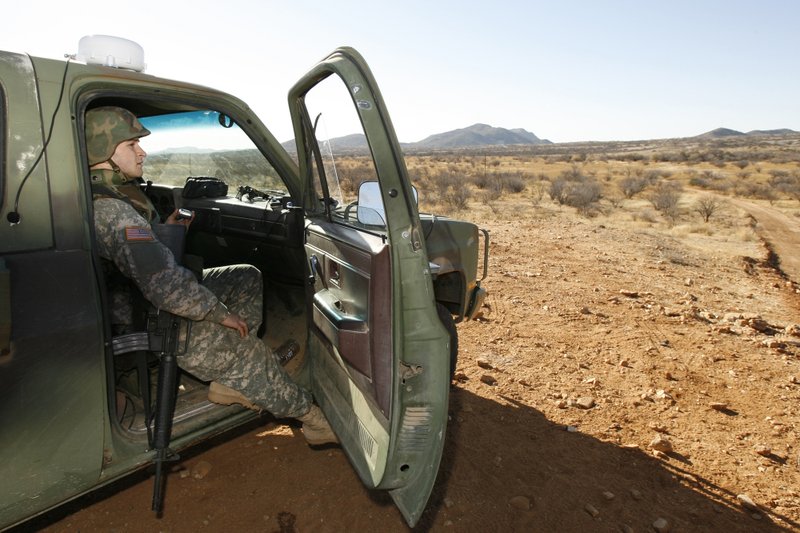
Asserting the situation had reached “a point of crisis,” to fight illegal immigration. “The lawlessness that continues at our southern border is fundamentally incompatible with the safety, security, and sovereignty of the American people,” Trump wrote in a memo authorizing the move, adding that his administration had “no choice but to act.” The announcement came hours after Trump pledged “strong action today” on immigration and a day after he said he announced he wanted to use the military to secure the southern border until his long-promised, stalled border wall is erected. Homeland Security Secretary Kirstjen Nielsen said she had been working with governors of the southwest border states to develop agreements on where and how many Guardsmen will be deployed. She suggested some troops could begin arriving as soon as Wednesday night, though other administration officials cautioned that details on troop levels, locations and timing were still being worked out. Trump has been frustrated by slow action on building his “big, beautiful wall” along the Mexican border — the signature promise of his campaign — as well as a recent uptick in illegal border crossings, which had plunged during the early months of his presidency, giving Trump an accomplishment to point to when he had few. Federal law prohibits the use of active-duty service members for law enforcement inside the U.S., unless specifically authorized by Congress. But over the past 12 years, presidents have twice sent National Guard troops to the border to bolster security and assist with surveillance and other support. Nielsen said the effort would be similar to a 2006 operation in which President George W. Bush deployed troops to help U.S. Customs and Border Protection personnel with non-law enforcement duties while additional border agents were hired and trained. President Barack Obama also sent about 1,200 troops in 2010 to beef up efforts against drug smuggling and illegal immigration. Nielsen said her department had developed a list of locations where it would like assistance on things like aerial surveillance and other support, and was discussing with the governors how to facilitate the plans. She declined to say how many personnel would be needed or how much the operation would cost, but she insisted, “It will be as many as is needed to fill the gaps that we have today.” One congressional aide said that lawmakers anticipate 300 to 1,200 troops will be deployed and that the cost was expected to be at least $60 million to $120 million a year. The Pentagon would probably need authorization from Congress for any funding beyond a few months, said the aide, who wasn’t authorized to speak publicly and spoke on condition of anonymity. Under the mechanism the administration is looking to use, the Guard would not be mobilized as a federal force. Instead, governors would control the Guard within their states. Governors of the four U.S. states bordering Mexico were largely supportive of the move. The office of California Gov. Jerry Brown, a Democrat who has sparred with Trump on immigration issues, said any federal request would be promptly reviewed to determine how the state could best offer its assistance. The Mexican foreign ministry said Nielsen told Mexico’s top diplomat that troops deployed to the border “will not carry arms or carry out migration or customs control activities.” Senators in Mexico urged President Enrique Pena Nieto to temporarily suspend cooperation with the U.S. on immigration and security issues. In a nonbinding statement approved unanimously Wednesday, the senators asked Mexico’s government to freeze joint efforts “in the fight against transnational organized crime” until Trump starts acting “with the civility and respect that the people of Mexico deserve.” Trump first revealed Tuesday that he’d been discussing the idea of using the military at the border with Defense Secretary Jim Mattis. “We’re going to be doing things militarily. Until we can have a wall and proper security, we’re going to be guarding our border with the military,” Trump said. He spent the first months of his presidency bragging about a dramatic drop in illegal border crossings, which some DHS officials had even dubbed the “Trump effect.” Indeed, arrests at the border last April were at the lowest level since DHS was created in 2003, and the 2017 fiscal year saw a 45-year low for Border Patrol arrests. But the numbers have been slowly ticking up since last April and are now on par with many months of the Obama administration. New statistics released Wednesday show about 50,000 arrests of people trying to cross the southwest border last month, a 37 percent increase from the previous month, and a 203 percent increase compared to March 2017. The monthly increase follows typical seasonal fluctuations. Trump’s new focus on hard-line immigration policies appears aimed, at least in part, in drawing a political contrast with Democrats heading into the midterm elections. He has also been under growing pressure from conservative backers who have accused him of betraying his base for not delivering on the wall, and he was set off by images played on his favorite network, Fox News, of a “caravan” of migrants making their way through Mexico. In Texas, which already has about 100 National Guard members stationed on the border, Republican Gov. Greg Abbott, said the president’s decision “reinforces Texas’ longstanding commitment to secure our southern border and uphold the Rule of Law.” New Mexico Gov. Susana Martinez, a Republican, said she appreciated the Trump administration’s efforts to involve states in the effort to better secure the border. Arizona Gov. Doug Ducey, also a Republican, tweeted that his state “welcomes the deployment of National Guard to the border. Washington has ignored this issue for too long and help is needed.” Republished with the permission of the Associated Press.
Senators press Trump officials on safeguarding 2018 ballots
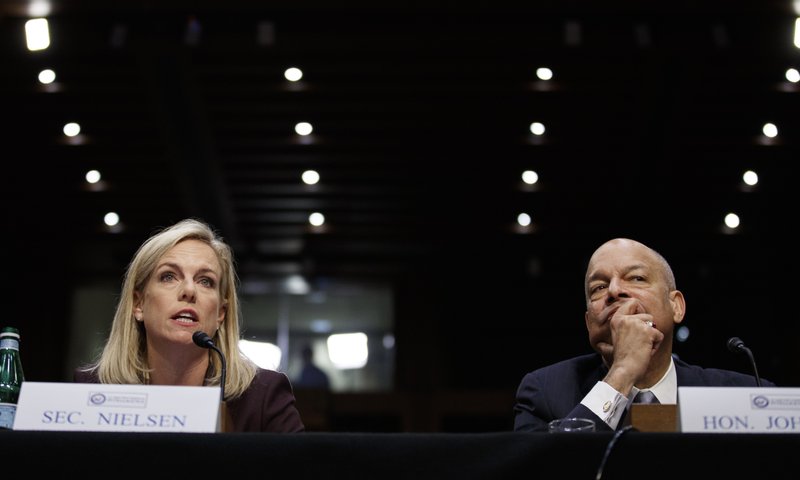
With the 2018 elections already underway, senators chided the current and former secretaries of Homeland Security on Wednesday for not more strongly warning the American public about past Russian intrusions in state election systems and for a lack of urgency to protect balloting this year. Kirstjen Nielsen, President Donald Trump’s secretary of Homeland Security, testified alongside Jeh Johnson, secretary under former President Barack Obama, as the Senate intelligence committee launched an effort to protect the country’s election security after Russian agents targeted election systems in 21 states ahead of the 2016 general election. There’s no evidence that any hack in the November 2016 election affected election results, but the attempts rattled state election officials and prompted the federal government and states to examine the way votes are counted. Senators on the panel have criticized both administrations for not moving quickly enough to stem the Russian threat, and continued to do so at the hearing. Maine Sen. Susan Collins, a Republican, critiqued Nielsen’s opening statement, which described a series of efforts the department had already announced. “I hear no sense of urgency to really get on top of this issue,” Collins said, noting that 2018 elections are already underway. Collins noted that many state election officials have remained without security clearances, making it harder for the department to share information with them. To speed up communications and intelligence sharing, the department has been working to grant security clearances to up to three election officials in each state. Nielsen said Wednesday that just 20 of those officials have been granted full clearances. “We are doing our best to speed up the process,” Nielsen said, adding that the department has a policy in place to provide information on immediate threats to state and local election officials even if clearances have yet to be granted. Communication and intelligence sharing by the federal government has been a key concern among state and local election officials. Those officials complained that it took the federal government nearly a year to inform them whether their states had been targeted by Russian hackers. Collins, who has introduced legislation with other members of the committee to improve election cybersecurity, also pressed Johnson, asking if he should have issued stronger warnings in 2016 as it became clear that Russians were trying to intrude into the systems. Johnson defended the way he alerted state and local election officials, noting that in the late summer and fall of 2016 he was repeatedly issuing public warnings for those officials to get cybersecurity assistance from the department. “We were beating the drum pretty hard,” Johnson said. California Sen. Dianne Feinstein, a Democrat, also lambasted the Obama administration’s response, saying it was not sufficient to warn the public “in any way, shape or form.” Before leaving office, the Obama administration designated the nation’s election systems as “critical infrastructure,” on par with the electrical grid and water supply. That decision prompted alarm among state election officials, who expressed concern the federal government was trying to take over elections that have long been the jurisdiction of state and local governments. Johnson said he had considered the move earlier, but had backed off because of resistance to states. Johnson also testified that during the 2016 election he contacted The Associated Press because he was worried about the possibility the news cooperative’s election results could be hacked. He said he called AP’s CEO Gary Pruitt about his concerns and came away satisfied that the company was taking appropriate precautions as it counted votes and analyzed results. The hearing follows a Tuesday news conference in which committee members from both parties said government efforts to protect state and local elections from Russian cyberattacks haven’t gone far enough. Top U.S. intelligence officials have said they’ve seen indications Russian agents are preparing a new round of election interference this year. Senators warned that it could be worse the next time around. “What it looks like is a test,” said Maine Sen. Angus King of the 2016 hacking attempts. The committee is recommending that states make sure voting machines have paper audit trails and aren’t capable of being connected to the internet. Senators also are pushing for better communication among the various U.S. intelligence agencies and federal, state and local governments. Senators are also urging state and local election officials to take advantage Homeland Security Department resources, such as comprehensive risk assessments and remote cyberscanning of their networks to spot vulnerabilities. As of last month, just 14 states had requested risk assessments and 30 had asked for remote cyberscans of their networks, according to Homeland Security officials. But even that was straining resources, since many of those risk assessments have not been completed. The committee’s recommendations preview an election security report expected to be released in full in the coming weeks. It is the first of four reports planned as part of the panel’s wide-ranging investigation into Russian meddling in the 2016 election. The recommendations come as Congress is eyeing $380 million in state grants for election security in a wide-ranging spending bill expected to be unveiled as soon as Wednesday. The bill also contains $307 million for the FBI to go after Russian cyberattacks. The top Democrat on the intelligence panel, Virginia Sen. Mark Warner, has said he thinks the nation’s election security needs to be more robust, especially since Trump has not addressed the matter as an urgent problem. “It’s pretty amazing to me we’ve had the director of the FBI, the director of national intelligence and the head of the NSA say in public testimony within the last month that they’ve received no direction from the White House to make election security a priority,” Warner said. Nielsen defended Trump at the hearing, saying, “the line he is drawing is that no votes were changed. That doesn’t mean there’s not a threat.” She added: “We think the threat remains high.” Republished with the permission of the Associated Press.
