
Multiple lawsuits filed against Alabama officials over systemic discrimination of children with disabilities
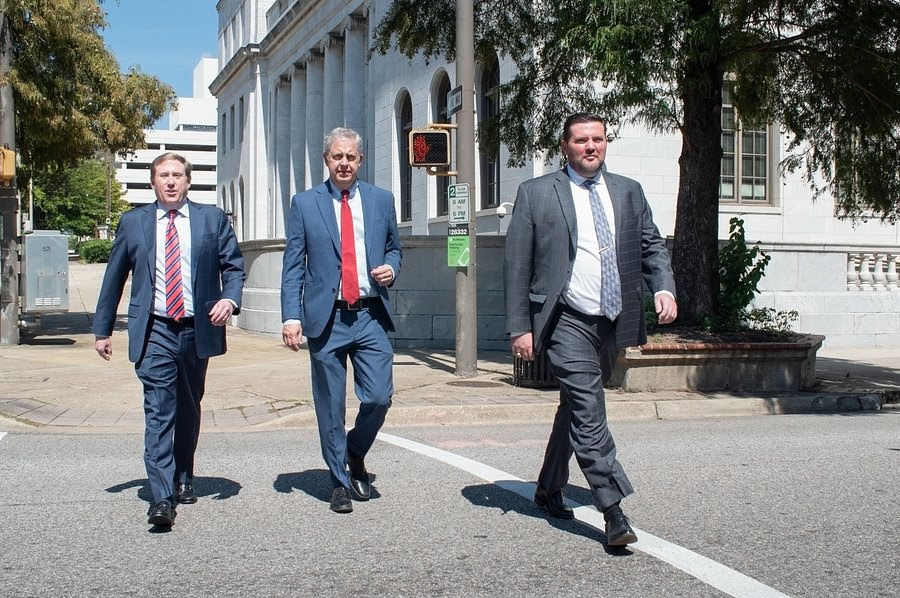
Multiple lawsuits were filed yesterday in the United States District Court for the Middle District of Alabama against Nancy Buckner, Commissioner of the Alabama Department of Human Resources, and Eric Mackey, State Superintendent of the Alabama Department of Education, claiming flagrant violations of the Americans with Disabilities Act (ADA). Six federal lawsuits were filed yesterday on behalf of children placed in residential treatment facilities in Alabama. The lawsuits allege children with disabilities in these facilities are discriminated against by segregating them in on-site “schools,” denying them educational opportunities equal to their non-disabled peers in regular education settings. A recent probe by the Department of Justice (DOJ) uncovered evidence of the State of Alabama’s systemic discriminatory practices, revealing blatant violations of the ADA. The allegations in these lawsuits are consistent with the DOJ’s findings, highlighting the fact that these children are deprived of meaningful interaction with their non-disabled peers, and they also receive inferior instruction, limited resources, and inadequate support. Birmingham Attorneys Tommy James of Tommy James Law and Jeremy Knowles of Morris Haynes, and Pensacola Attorney Caleb Cunningham of Levin Papantonio Rafferty (pictured above, left to right) represent the plaintiffs. They also represent numerous victims from across Alabama who have suffered physical and sexual abuse in these facilities. “The Department of Justice’s findings are deeply troubling and underscore the need for immediate action to ensure our most vulnerable have equal access to education,” James said. “It is inexcusable state officials have ignored and been complicit in such systemic segregation and discrimination. The DOJ’s revelations are not only concerning—they are damning. Every child, irrespective of disability, is entitled to equal educational opportunities.” “We have filed these lawsuits not only for our clients but for every child in the state who has been robbed of the education they deserve,” Cunningham said. “Our goal is to shine a spotlight on this blatant discrimination and to ensure it does not continue. We are committed to fighting for the rights of children with disabilities and ensuring they have the same opportunities as their non-disabled peers.” “These cases are about the fundamental rights of children with disabilities in our state,” said Jeremy Knowles. “We filed these lawsuits to force the state to stop discriminating against these children. They deserve equal opportunity, especially in education.” The lawsuits seek, among other things, compensatory damages, attorneys’ fees, and costs, emphasizing the severe educational, financial, and social damages suffered by the plaintiffs and countless other children due to these discriminatory practices. “With this legal action, we hope to bring attention to the dire need for reform and establish a precedent ensuring equal education rights for children with disabilities across Alabama and the nation,” James said. “We are confident we will prevail in these lawsuits, and the State of Alabama will be forced to change its discriminatory practices.” James says he and his co-counsel filed these lawsuits and plan to file dozens more to hold the State of Alabama accountable for its discriminatory practices and to ensure no child is denied an equal education because of their disability. In an October 2022 press release, Assistant AG Kristen Clarke stated, “Students with disabilities in Alabama’s foster care system are among the most vulnerable in the state’s care, and they deserve better than placement in segregated and inferior schools. The Civil Rights Division will defend every child’s right to equal educational opportunities in schools where they can be supported and challenged.”
Thousands converge on National Mall to mark the March on Washington’s 60th anniversary

Thousands converged Saturday on the National Mall for the 60th anniversary of Rev. Martin Luther King Jr.’s March on Washington, saying a country that remains riven by racial inequality has yet to fulfill his dream. “We have made progress, over the last 60 years, since Dr. King led the March on Washington,” said Alphonso David, president and CEO of the Global Black Economic Forum. “Have we reached the mountaintop? Not by a long shot.” The event was convened by the Kings’ Drum Major Institute and the Rev. Al Sharpton‘s National Action Network. A host of Black civil rights leaders and a multiracial, interfaith coalition of allies rallied attendees on the same spot where as many as 250,000 gathered in 1963 for what is still considered one of the greatest and most consequential racial justice and equality demonstrations in U.S. history. Inevitably, Saturday’s event was shot through with contrasts to the initial, historic demonstration. Speakers and banners talked about the importance of LGBTQ and Asian American rights. Many who addressed the crowd were women, after only one was given the microphone in 1963. Pamela Mays McDonald of Philadelphia attended the initial march as a child. “I was 8 years old at the original March, and only one woman was allowed to speak — she was from Arkansas where I’m from — now look at how many women are on the podium today,” she said. For some, the contrasts between the size of the original demonstration and the more modest turnout Saturday were bittersweet. “I often look back and look over to the reflection pool and the Washington Monument, and I see a quarter of a million people 60 years ago and just a trickling now,” said Marsha Dean Phelts of Amelia Island, Florida. “It was more fired up then. But the things we were asking for and needing, we still need them today.” As speakers delivered messages, they were overshadowed by the sounds of passenger planes taking off from Ronald Reagan National Airport. Rugby games were underway along the Mall in close proximity to the Lincoln Memorial while joggers and bikers went about their routines. Yolanda King, the 15-year-old granddaughter of the Rev. Martin Luther King, Jr., roused marchers with remarks delivered from the same spot her grandfather gave the “I Have A Dream” speech sixty years ago. “If I could speak to my grandfather today, I would say I’m sorry we still have to be here to rededicate ourselves to finishing your work and ultimately realizing your dream,” she said. “Today, racism is still with us. Poverty is still with us. And now, gun violence has come for places of worship, our schools, and our shopping centers.” From the podium, Sharpton promised more demonstrations to push back against injustices, new and old. “Sixty years ago, Martin Luther King talked about a dream. Sixty years later, we’re the dreamers. The problem is we’re facing the schemers,” Sharpton said. “The dreamers are fighting for voting rights. The schemers are changing voter regulations in states. The dreamers are standing up for women’s right to choose. The schemers are arguing whether they are going to make you stop at six weeks or 15 weeks.” After the speeches, the crowd marched to the Martin Luther King Jr. Memorial. Several leaders from groups organizing the march met Friday with Attorney General Merrick Garland and Assistant Attorney General Kristen Clarke of the civil rights division, to discuss a range of issues, including voting rights, policing and redlining. Saturday’s gathering was a precursor to the actual anniversary of the Aug. 28, 1963 March on Washington. President Joe Biden and Vice President Kamala Harris will observe the march anniversary on Monday by meeting with organizers of the 1963 gathering. All of King’s children have been invited to meet with Biden, White House officials said. Martin Luther King Jr.’s Washington remarks have resounded through decades of push and pull toward progress in civil and human rights. But dark moments followed his speech, too. Two weeks later, in 1963, four Black girls were killed in the 16th Street Baptist Church bombing in Birmingham, Alabama, followed by the kidnapping and murder of three civil rights workers in Neshoba County, Mississippi, the following year. The tragedies spurred passage of the Civil Rights Act of 1964. The voting rights marches from Montgomery to Selma, Alabama, in which marchers were brutally beaten while crossing the Edmund Pettus Bridge in what became known as “Bloody Sunday,” forced Congress to adopt the Voting Rights Act of 1965. Speakers warned that King’s unfinished dream was in danger of being further whittled away. “I’m very concerned about the direction our country is going in,” Martin Luther King III said. “And it is because instead of moving forward, it feels as if we’re moving back. The question is, what are we going to do?” Rosetta Manns-Baugh knew the answer: Keep fighting. “I think we have accomplished a lot, but I also think we lost.” said Manns-Baugh, who was a Trailways bus counter worker in 1963 when she left her seven children and husband at home in Virginia to come to D.C. Now she’s so disillusioned she’s stopped singing “We Shall Overcome,” the anthem of the civil rights movement. But even at age 92, she returned to Washington for the 60th anniversary, bringing three generations of her family, all the way down to her 18-month-old grandchild. “I think that’s why we all are here because we do expect the world to get better,” Manns-Baugh said. “We can’t stop working at it that’s for sure.” Republished with the permission of The Associated Press.
Alabama corrections supervisor convicted of federal charges
A former Alabama prison supervisor was convicted of federal civil rights charges for the 2020 beating of three prisoners and writing a false report to cover up the beatings, federal prosecutors said. Court records show that a federal jury on Tuesday convicted Lorenzo Mills of three counts of violating the prisoners rights and one count of falsifying an official report, the Department of Justice said Wednesday in a news release. The DOJ said trial evidence and testimony showed one man suffered a broken arm, and the two others suffered injuries such as pain and bruising after being beaten with a baton. Mills then wrote a report where he denied using any force against the victims, the department said. Mills was a sergeant at Draper Correctional Facility in Elmore, Alabama. “This verdict shows that our community members agree that no person is above the law,” said Assistant Attorney General Kristen Clarke of the Justice Department’s Civil Rights Division. “The Constitution protects the rights of all people, including those in our jails and prisons.” The Department of Justice said that Mills faces a maximum sentence of 10 years in prison for the civil rights charges and 20 years in prison for the obstruction of justice offense. Republished with the permission of The Associated Press.
Ashland Housing Authority settles discrimination lawsuit
The U.S. Justice Department announced Thursday that it has settled a discrimination lawsuit accusing an Alabama housing authority of steering residents to different low-income communities based on race. A federal judge this week approved the consent decree resolving the discrimination claims against the Housing Authority of Ashland and the private owners and agents of two of its low-income communities. The defendants disputed the accusations of discrimination but agreed to make changes to settle the case, according to the consent decree. The Justice Department in 2020 filed a lawsuit accusing the defendants of steering Black applicants away from four overwhelmingly white communities in predominately white neighborhoods and instead directing them to two predominantly Black communities in predominately Black neighborhoods. The lawsuit said that Black residents accounted for 30% of all the Housing Authority’s tenants but accounted for 65% and 73% of residents at two communities. “Racial steering is a patently unlawful practice that destabilizes communities, fuels racial tensions, and perpetuates modern-day racial segregation in communities across the country,” Assistant Attorney General Kristen Clarke for the Civil Rights Division said in a news release. Ashland is about 55 miles (90 kilometers) southeast of Birmingham. Republished with the permission of The Associated Press.
Alabama Medicaid to end sobriety mandate on hepatitis treatment

The U.S. Department of Justice said Monday that it has entered into a settlement agreement with Alabama’s Medicaid program to end a sobriety requirement for the treatment of people with Hepatitis C. Federal officials said Alabama agreed to end a “blanket sobriety restriction” that refused to pay for antiviral treatment for Hepatitis C if the Medicaid patient had used drugs or alcohol six months before or during treatment “Alabama Medicaid’s reversal of its longstanding sobriety restriction will finally allow Medicaid recipients with substance use disorders to have the same access as others to a cure for Hepatitis C,” Assistant Attorney General Kristen Clarke of the Justice Department’s Civil Rights Division said in a news release. The Justice Department had argued the sobriety policy was a violation of the Americans with Disabilities Act by discriminating against people with substance disorders. Alabama denied the Justice Department’s accusations, according to the settlement, but agreed it was best to resolve the dispute. Hepatitis C is a liver infection caused by a virus. Chronic infections can cause life-threatening health problems. It is spread by contact with blood from an infected person. Republished with the permission of The Associated Press.
DOJ finds Alabama’s foster care system violates law
The federal government on Wednesday said the state of Alabama illegally discriminates against children in foster care with behavioral and emotional disabilities. The U.S. Department of Justice, in a news release, said the state’s foster care program has illegally placed hundreds of students with disabilities into “segregated and inferior educational programs,” a direct violation of Title II of the Americans with Disabilities Act. “Students with disabilities in Alabama’s foster care system are among the most vulnerable in the state’s care, and they deserve better than placement in segregated and inferior schools,” Assistant Attorney General Kristen Clarke, of the department’s Civil Rights Division, said in a statement. “The Civil Rights Division will defend every child’s right to equal educational opportunities in schools where they can be supported and challenged.” The department’s findings follow an investigation into allegations that the state denies children in foster care equal opportunity to basic educational services on the basis of disability. Gina Maiola, communications director for Gov. Kay Ivey, said in a statement that the Alabama State Department of Education and the Department of Human Resources have been “working proactively since 2018 to address the needs of our specialized treatment centers.” “These two agencies have been in communication with the Department of Justice to inform them on the steps being taken in that regard. I know the ALSDE and DHR will address any specific concerns given by the USDOJ. Bottom line, a top priority of the Ivey Administration is to ensure every Alabama student has the ability to receive a quality education,” Maiola said. The state is required to provide educational services for children in the foster care system, including when children are placed in psychiatric residential treatment facilities. According to the DOJ, students who are placed in such treatment facilities are automatically enrolled in segregated on-site schools without an appropriate educational assessment. In these segregated placements, the DOJ said students lack access to age-appropriate study materials, adequate instruction, and facilities such as libraries, science labs, and gyms. “These unnecessary placements, which can extend for long periods of time, sever children’s ties to their home schools, teachers, social activities, and peers,” Clarke’s office said. “The department concluded that, in most cases, these children could be appropriately served in general education settings where they would receive the many documented academic and social benefits of inclusion.” Republished with the permission of The Associated Press.
School system enters settlement in desegregation case

A federal judge has approved an agreement to settle a long-running desegregation case with a north Alabama school system, prosecutors said Wednesday. The school system agreed to take steps to ensure equal educational opportunities for Black students, including participation in gifted programs and college prep classes, officials said in a U.S. Department of Justice statement announcing the settlement with the Madison County School Board. “It is long past time to deliver on the promises of Brown v. Board of Education for our nation’s students,” Assistant Attorney General Kristen Clarke said in the statement. The majority-white school system agreed to take steps to: ensure a uniform process for identifying students for gifted services and make all parents aware of the program; identify students who could succeed in Advanced Placement classes and other college prep programs and encourage them to enroll; ensure non-discrimination in student discipline, and recruit more Black faculty members and school administrators. Rachel Ballard, the director of equity and innovation for Madison County schools, told reporters Wednesday the school system has already implemented several of the requirements. U.S. District Judge Madeleine Hughes Haikala approved the consent decree on Tuesday. The school system’s progress will be monitored for three years. Republished with the permission of The Associated Press.
Deal could end desegregation case in Alabama school system
A federal judge will consider an agreement between the Justice Department, civil rights attorneys, and school officials in an east Alabama county that could end more than 50 years of federal desegregation oversight of the system. A consent decree between school officials in Chambers County, located on the Georgia line, the government, and attorneys with the Legal Defense Fund includes construction of a new school and more opportunities for black students in the county of roughly 35,000 people, officials said. The agreement was announced Friday to end a desegregation order that’s been in place since 1970. It followed a previous, interim agreement reached in 1993. “We are pleased to arrive at a consent decree that addresses the many concerns our clients raised as key to ensuring the effectiveness of the desegregation process in Chambers County,” said GeDá Jones Herbert, an attorney with the Legal Defense Fund. “It was particularly important that Black students in the district are afforded equal and high-quality educational opportunities in safe and modern facilities.” The agreement said the sides negotiated for years to reach the proposed settlement, announced nearly 70 years after the U.S. Supreme Court ordered the end of racial segregation of public schools. “This proposed consent order reinforces the Civil Rights Division’s unwavering commitment to ensuring that all students receive the equal educational opportunities to which they are entitled regardless of their race or color,” Assistant Attorney General Kristen Clarke said in a statement. Under the agreement, the school district will form an advisory committee on desegregation that will have input on issues including the consolidation of high school students and improved opportunities for students in science, technology, engineering, arts, and math. Before the end of the next school year, the district must pick a site to build a new, consolidated high school to replace LaFayette High School, which is heavily Black, and Valley High School, which has a large population of white students. The agreement said the new location “must not impose an unequal burden on students on the basis of race, to the extent practicable.” Students from LaFayette, a mostly black city, temporarily will be transferred to the school in Valley, which is majority white, but not before the start of the school year after construction begins, according to the agreement. The school system did not admit any purposeful segregation. Republished with the permission of The Associated Press.
Federal prosecutors announce environmental justice probe in Lowndes County
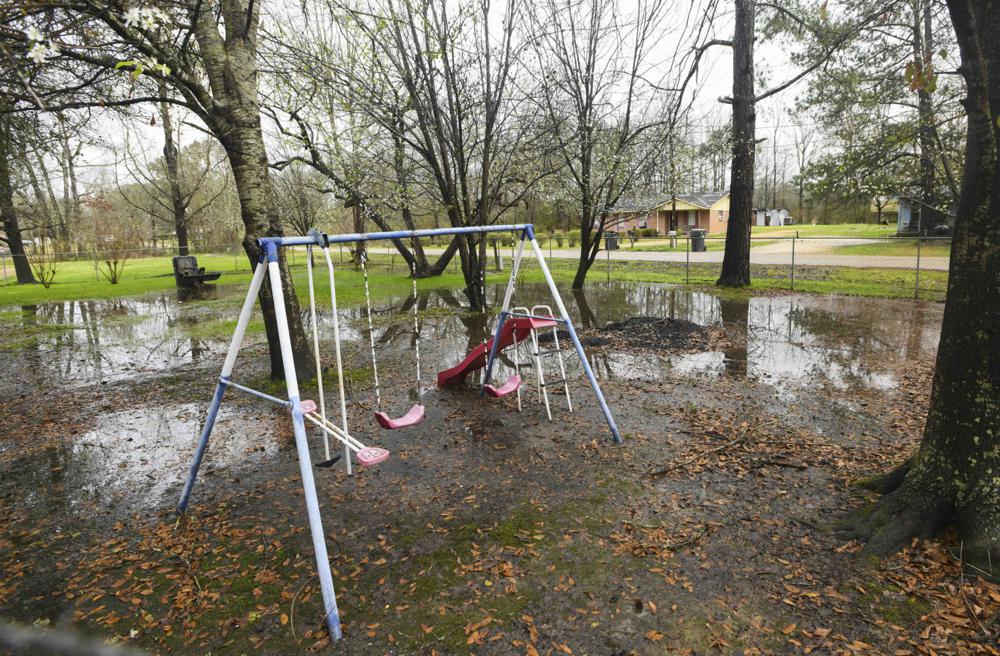
The U.S. Department of Justice said Tuesday that it has embarked on a historic environmental justice investigation into an impoverished Alabama county’s longstanding wastewater problems, which have left some residents with sewage in their yards. Federal prosecutors in the department’s civil rights division will examine whether state and local health departments have discriminated against Black residents of Lowndes County and have caused them to unjustifiably bear the risk of hookworm infections and other adverse health effects associated with inadequate wastewater treatment, officials said. “Sanitation is a basic human need, and no one in the United States should be exposed to risk of illness and other serious harm because of inadequate access to safe and effective sewage management,” Assistant Attorney General Kristen Clarke said. The Alabama Department of Public Health and the Lowndes County Health Department must operate their onsite wastewater disposal and infectious diseases and outbreaks programs in a safe and equitable manner, officials said. “State and local health officials are obligated, under federal civil rights laws, to protect the health and safety of all their residents,” Clarke said. Justice Department officials said officials in Alabama are cooperating, and they emphasized no conclusions have been reached regarding whether there’s evidence of racial bias in the state and county’s federally funded health departments. A spokesman for the Alabama Department of Public Health said they couldn’t comment on the pending probe. “ADPH is committed to cooperating with the investigating agencies to have this matter resolved as quickly as possible,” Ryan Easterling wrote in an email. This is the Justice Department’s first Title VI environmental justice investigation for one of the department’s funding recipients, and federal officials suggested there will be more to come since addressing discriminatory environmental and health impacts through enforcement of the nation’s civil rights laws is a top priority of the Civil Rights Division. Wastewater problems are well documented in Lowndes County, where at least 26% of the people live in poverty. Alabama’s Black Belt region gets its name for the dark rich soil that once gave rise to cotton plantations, but the type of soil also makes it difficult for traditional septic tanks, in which wastewater filters through the ground, to function properly. The region’s intense poverty and inadequate municipal infrastructure contribute to the problem. Maintaining septic tanks has typically been the responsibility of a homeowner, while local governments maintain sewage systems. Some homes in the rural county still have “straight pipe” systems, letting sewage run untreated from home to yard. Charlie Mae Holcombe of Hayneville described to The Associated Press in 2019 how the sanitation system in her small city will back up and overflow at times, sending raw sewage into her house and swamping the child’s swing set in her yard. “They have had to come and pump it out of my yard with the pump truck,” Holcombe said. “It’s backing up, even in my bathtub. The sewage has run over all in the house.” A study by Baylor University in 2018 estimated that about one-third of the county’s residents tested positive for low levels of hookworm, an intestinal parasite that typically spreads through human feces. It is most commonly found in non-industrial nations in the Southern Hemisphere. State health officials disputed the findings because of the small sample size and the methodology used. Republished with the permission of the Associated Press.
Joe Biden to name judge Merrick Garland as attorney general

President-elect Joe Biden has selected Merrick Garland, a federal appeals court judge who in 2016 was snubbed by Republicans for a seat on the Supreme Court, as his attorney general, two people familiar with the selection process said Wednesday. In picking Garland, Biden is turning to an experienced judge who held senior positions at the Justice Department decades ago, including as a supervisor of the prosecution of the 1995 Oklahoma City bombing. The pick will force Senate Republicans to contend with the nomination of someone they spurned in 2016 — refusing even to hold hearings when a Supreme Court vacancy arose — but Biden may be banking on Garland’s credentials and reputation for moderation to ensure confirmation. Biden is expected to announce Garland’s appointment on Thursday, along with other senior leaders of the department, including former homeland security adviser Lisa Monaco as deputy attorney general and former Justice Department civil rights chief Vanita Gupta as associate attorney general. He will also name an assistant attorney general for civil rights, Kristen Clarke, the president of Lawyers’ Committee for Civil Rights Under Law, an advocacy group. Garland was selected over other finalists including Alabama Sen. Doug Jones and former Deputy Attorney General Sally Yates. The people familiar with the process spoke on condition of anonymity. One said Biden regards Garland as an attorney general who can restore integrity to the Justice Department and as someone who, having served in the Justice Department under presidents of both political parties, will be respected by nonpartisan career staff. If confirmed, Garland would confront immediate challenges, including an ongoing criminal tax investigation into Biden’s son, Hunter Biden, as well as calls from many Democrats to pursue inquiries into Donald Trump after he leaves office. A special counsel investigation into the origins of the Russia probe also remains open, forcing a new attorney general to decide how to handle it and what to make public. Garland would also inherit a Justice Department that has endured a tumultuous four years and would likely need to focus on not only civil rights issues and an overhaul of national policing policies after months of mass protests over the deaths of Black Americans at the hand of law enforcement. It was unclear how Garland’s selection would be received by Black and Latino advocates who had advocated for a Black attorney general or for someone with a background in civil rights causes and criminal justice reform. But the selection of Gupta and Clarke, two women with significant experience in civil rights, appeared designed to blunt those concerns and offered as a signal that progressive causes will be prioritized in the new administration. Garland would also return to a Justice Department radically different than the one he left. The Sept. 11 attacks were years away, the department’s national security division had not yet been created and a proliferation of aggressive cyber and counterintelligence threats from foreign adversaries have made counties like China, Russia, and North Korea top priorities for federal law enforcement. Monaco brings to the department significant national security experience, including in cybersecurity — an especially urgent issue as the U.S. government confronts a devastating hack of federal agencies that officials have linked to Russia. But some of the issues from Garland’s first stint at the department persist. Tensions between police and minorities, an issue that flared following the 1992 beating of Rodney King in Los Angeles, remain an urgent concern particularly following a summer of racial unrest that roiled American cities after the May killing of George Floyd in Minneapolis. And the FBI has confronted a surge in violence from anti-government and racially motivated extremists. That is a familiar threat to Garland, who as a senior Justice Department official in 1995 helped manage the federal government’s response to the bombing of a government building in Oklahoma City that killed 168 people. The bomber, Timothy McVeigh, was later executed. Garland has called the work the “most important thing I have done” and was known for keeping a framed photo of Oklahoma City’s Alfred P. Murrah Federal Building in his courthouse office in Washington. At the time of the bombing, Garland was 42 and principal associate deputy attorney general, a top lieutenant to Attorney General Janet Reno. He was chosen to go to Oklahoma City, the highest-ranking Justice Department official there, and led the prosecution for a month until a permanent lead prosecutor was named. Garland was selected over other contenders for the job including former Alabama senator Doug Jones, who lost his Senate seat last month, and former Deputy Attorney General Sally Yates. It is rare but not unprecedented for attorneys general to have previously served as judges. It happened in 2007 when President George W. Bush picked Michael Mukasey, a former federal judge in Manhattan, for the job. Eric Holder, President Barack Obama’s first attorney general, had also previously been a Superior Court judge. Garland was put forward by former President Barack Obama for a seat on the Supreme Court in 2016 following the death of Justice Antonin Scalia, but Republicans refused to hold hearings in the final year of Obama’s term. The vacancy was later filled by Justice Neil Gorsuch during the Trump administration. Republican Senate Majority Leader Mitch McConnell refused to let the nomination move forward in the Senate in the final months of Obama’s tenure. He was criticized by Democrats this fall when he took the opposite approach toward confirming President Donald Trump’s Supreme Court pick, Amy Coney Barrett. He said the difference this time around was that the White House and Senate were controlled by the same political parties. One year later, after the firing of FBI Director James Comey, McConnell actually floated Garland’s name as a replacement for that position, though Garland was said to be not interested. Garland has been on the federal appeals court in Washington since 1997. Before that, he had worked in private practice, as well as a federal prosecutor, a senior official in the Justice Department’s criminal division, and as
Record early vote leads to tranquil Election Day at polls
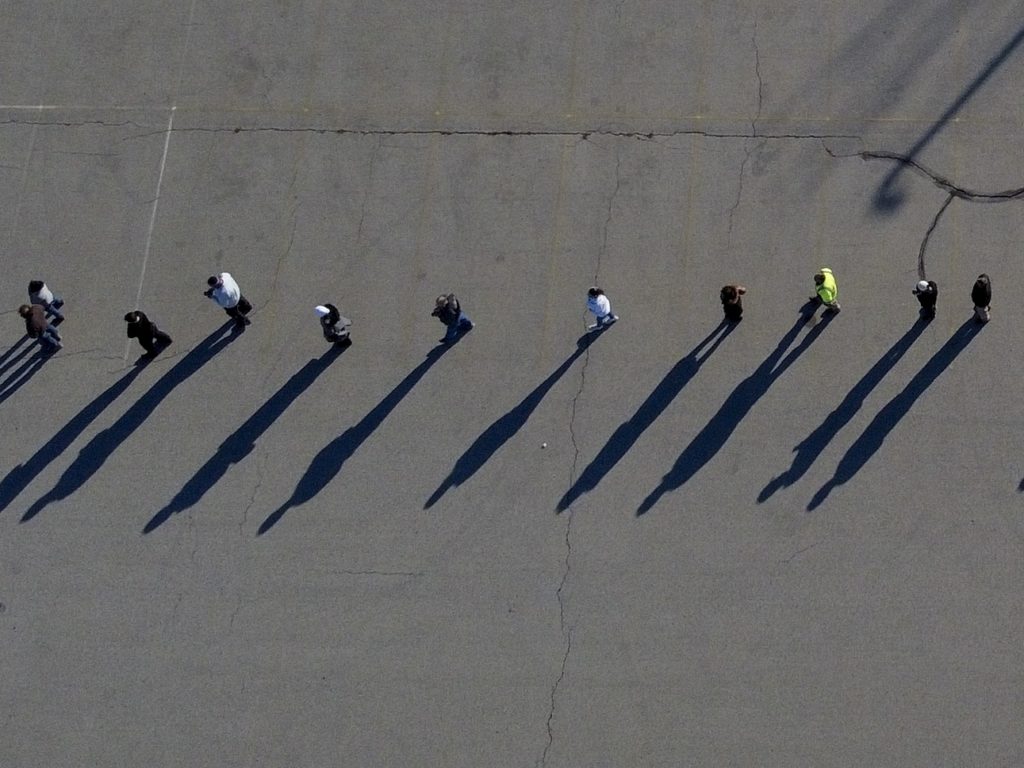
Despite fears of clashes at polling places, chaos sparked by the coronavirus pandemic and confusion due to disinformation and swiftly-changing voting rules, millions across the U.S. cast ballots in a historically contentious election with few problems. About 103 million votes were cast before Election Day, an early voting push prompted by the pandemic. That took some of the pressure off polling places on Tuesday, which generally saw short or no lines as coronavirus cases were on the rise. Daily confirmed cases were up 43 percent over the past two weeks in the U.S., according to data compiled by Johns Hopkins University. Every Election Day comes with problems as millions of people try to cast ballots simultaneously in 50 states. But experts were relieved they were relatively rare at a time when partisan battles over voting reached a fever pitch. “We were bracing for the worst, and we’ve been pleasantly surprised,” said Kristen Clarke of the Lawyers Committee for Civil Rights. Though the casting of ballots was relatively tranquil, legal storm clouds hang over the counting of those votes. Both parties had fought a massive battle in the courts trying to shape the contours of the election, and that seemed likely to continue beyond Tuesday. President Donald Trump early Wednesday said he would take the election to the Supreme Court, although it was unclear what legal action he might pursue. The GOP has laid the groundwork for an effort to exclude ballots that arrived after polls closed in Pennsylvania on Tuesday, something several other states permit. Trump has railed over several days about the high court’s pre-election refusal to rule out those ballots and said he’d go in “with lawyers.” Trump has spent much of the campaign groundlessly trying to sow doubt about the accuracy of the vote count and casting doubt on mail balloting. It led to great voter stress — but fears didn’t materialize at the polls. “A lot of people were fearful to come out and vote today, and for me I didn’t want fear to stop me from voting on Election Day,” said Sadiyyah Porter-Lowdry, 39, who cast her ballot at a church in Charlotte, North Carolina. In Iowa, hand sanitizer on voters’ hands caused ballot counting machines to jam briefly in Des Moines, but the problem was fixed and voting went smoothly. Officials reported a calm day. “No armed people, no protesters, no pickups with Trump flags like they’ve seen elsewhere. Our voters have been ‘Iowa Nice’ through-and-through, and they have been patient,” said Joel Miller, the commissioner of elections in Linn County, the state’s second largest, which includes Cedar Rapids. In Pennsylvania, a judge in Democrat Joe Biden’s hometown of Scranton extended voting at two precincts inside an elementary school for 45 minutes beyond the normal 8 p.m. close of voting because machines had been down earlier in the day, said Lackawanna County spokesman Joe D’Arienzo. The last Las Vegas-area voters cast their ballots shortly after 9 p.m. Tuesday after a court order kept 30 polling places open later in Nevada’s largest county, where some polling places had been slow to open. There also were a few other issues with voting technology. Electronic pollbooks from voting equipment vendor KnowInk failed in Ohio’s second-largest county and in a small Texas county, forcing voting delays as officials replaced them with paper pollbooks. Those who did vote on Election Day included some who wanted to vote by mail but waited too long to request a ballot or didn’t receive their ballots in time. Election offices had to scramble to rejigger procedures to allow for a huge surge in mail voting as voters sought a way to avoid exposure to the coronavirus at the polls. Kaal Ferguson, 26, planned to vote by mail but was concerned he hadn’t left enough time to send his ballot back. So he voted in person in Atlanta, despite worries he could be exposed to COVID-19 by fellow voters. “Obviously everybody has their right to vote,” he said. “But it’s kind of scary knowing that there’s not a place just for them to vote if they’d had it, so you could easily be exposed.” Despite warnings of clashes between Trump and Biden supporters, there were no wide-scale instances of voter intimidation. Indeed, in battleground Michigan, demonstrators from the opposing camps initially shouted at each other through bullhorns outside a suburban Detroit polling place, but ended up joining together to sing “God Bless America.” Law enforcement officials breathed an audible sigh of relief. “I would say it is blissfully uneventful,” Michigan Attorney General Dana Nessel told reporters. “We’ve had virtually no disturbances of any kind.” There were reports, as there are every election, of efforts to discourage people from voting that surfaced in robocalls in a few states. The FBI was investigating. But there were no large-scale cyber attacks that upended voting. Gen. Paul Nakasone, the commander of U.S. Cyber Command and director of the National Security Agency, said in a statement that he was “confident the actions we’ve taken against adversaries over the past several weeks and months have ensured they’re not going to interfere in our elections.” Instead, voters were often pleasantly surprised. Anthony Medina, of Phoenix, who turned 18 four months ago, accompanied his cousin, who turned 18 on Election Day, to the polls Tuesday. “I wanted to see how it was to vote in person because I’ve never voted,” Medina said. “It was kind of nerve-wracking because I didn’t know if they were gonna ask for more stuff than they did. But it went pretty good overall.” Amber McReynolds, a former Denver clerk whose group Vote from Home has helped local election offices step up their mail voting options during the pandemic, said the ability for more than half of all voters to cast ballots before Tuesday was clearly a significant factor in the quieter day. She noted that the fairly smooth election operations came even as Congress wouldn’t give local officials an estimated $3.6 billion they needed to help
‘It’s broken’: Fears grow about strength of US voting system

Fears are mounting that several battleground states are not prepared to administer problem-free elections during the pandemic.
