
Donald Trump’s labor nominee likely to be asked about Florida case
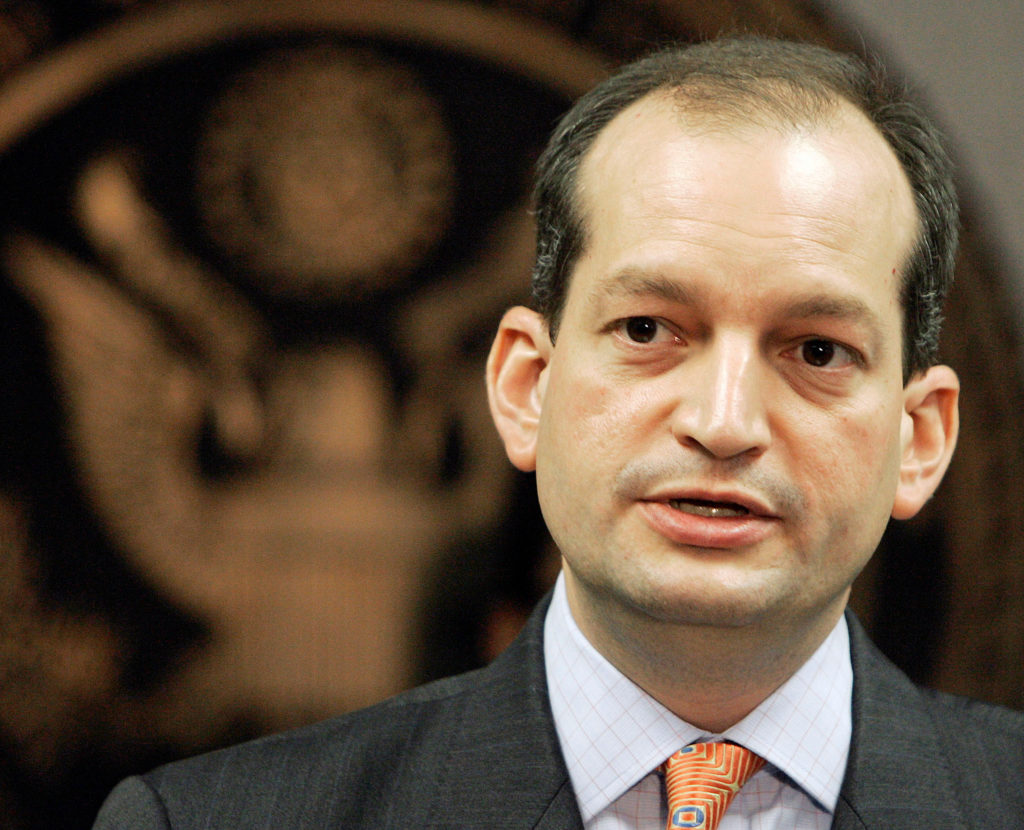
Labor secretary nominee Alexander Acosta is expected to face questions at his Senate confirmation hearing about an unusual plea deal he oversaw for a billionaire sex offender while U.S. attorney in Miami. Acosta has won confirmation for federal posts three times previously, but he has never faced scrutiny on Capitol Hill for his time as U.S. attorney. Critics, including attorneys for some underage victims of financier Jeffrey Epstein, say the plea agreement was a “sweetheart deal” made possible only by Epstein’s wealth, connections and high-powered lawyers. Acosta has defended his decisions as the best outcome given evidence available at the time. “Some may feel that the prosecution should have been tougher. Evidence that has come to light since 2007 may encourage that view,” Acosta wrote in a March 2011 letter to media outlets after leaving the U.S. attorney’s office. “Had these additional statements and evidence been known, the outcome may have been different. But they were not known to us at the time.” Senate aides from both parties expect Democrats to raise the case during Acosta’s confirmation hearing Wednesday as an example of him not speaking up for less-powerful people. The aides spoke on condition of anonymity because they weren’t authorized to speak publicly. Sen. Patty Murray, the leading Democrat on the committee, said in a statement she met with Acosta on Thursday and is concerned about whether he would “stand up to political pressure” and advocate for workers as labor secretary. Unlike Trump’s original choice for labor secretary, Andrew Puzder, Acosta is expected to win confirmation. The Florida International University law school dean was nominated after Puzder, a fast-food executive, withdrew over his hiring of an undocumented immigrant housekeeper and other issues. Acosta, 48, has previously won Senate confirmation as Miami U.S. attorney, head of the Justice Department’s civil rights division and the National Labor Relations Board. He declined comment when asked about the Epstein case this week. Epstein, now 64, pleaded guilty in 2008 to Florida charges of soliciting prostitution and was sentenced to 18 months in prison, of which he served 13 months. Epstein was also required to register as a sex offender and pay millions of dollars in restitution to as many as 40 victims who were between the ages of 13 and 17 when the crimes occurred. According to court documents, Epstein paid underage girls for sex, sexual massages and similar acts at a Palm Beach mansion he then owned as well as properties in New York, the U.S. Virgin Islands and New Mexico. Prosecutors say he had a team of employees to identify girls as potential targets. After an investigation by local police, Palm Beach prosecutors decided to charge Epstein with aggravated assault, which would have meant no jail time, no requirement that he register as a sex offender and no guaranteed restitution for victims. Unhappy local investigators went to Acosta’s office, which opened a federal probe and eventually drafted a proposed 53-page indictment that could have resulted in a sentence of 10 years to life in prison for Epstein, if convicted. With that as leverage, a deal was worked out for Epstein to plead guilty to state prostitution solicitation charges and the federal indictment was shelved. It didn’t stop there. Epstein’s lawyers worked out an unusual and secret “non-prosecution agreement” to guarantee neither Epstein nor his employees would ever face federal charges. Well-known Miami defense lawyer Joel DeFabio, who has represented numerous defendants in sex cases, said he had never heard of such an agreement before Epstein’s came to light. DeFabio said he has had clients with far less egregious sex charges — and far less wealth — who were sentenced to 10 or 15 years behind bars. DeFabio tried to use the Epstein case to argue for more lenient sentences. “There still has been no clear explanation as to why Epstein received such preferential treatment,” DeFabio said. “This thing just stinks. The elite take care of their own.” The non-prosecution agreement became public in a related civil case, leading two Epstein victims — identified only as Jane Does No. 1 and 2, to file a victims’ rights lawsuit claiming they were improperly left in the dark about the deal. The lawsuit, which is still pending, seeks to reopen the case to expose the details and possibly nullify the agreement. Other victims have come forward, including one woman who claimed as a teenager that Epstein flew her around the world for sexual escapades, including encounters with Britain’s Prince Andrew. Buckingham Palace has vehemently denied those claims. The Justice Department’s position in the victims’ rights lawsuit is that since no federal indictment was ever filed, the victims were not entitled to notification about the non-prosecution agreement. Settlement talks last fall went nowhere. “There will not be a settlement. That case will eventually get to trial,” said Bradley Edwards, attorney for the two Jane Doe victims. In his 2011 letter, Acosta defended his decisions as the best possible outcome. “Our judgment in this case, based on the evidence that was known at the time, was that it was better to have a billionaire serve time in jail, register as a sex offender and pay his victims restitution than risk a trial with a reduced likelihood of success,” Acosta wrote. “I supported that judgment then, and based on the state of the law as it then stood and the evidence known at the time, I would support that judgment again.” Republished with permission of The Associated Press.
Andrew Puzder withdrawal stark example of rough start for Trump WH
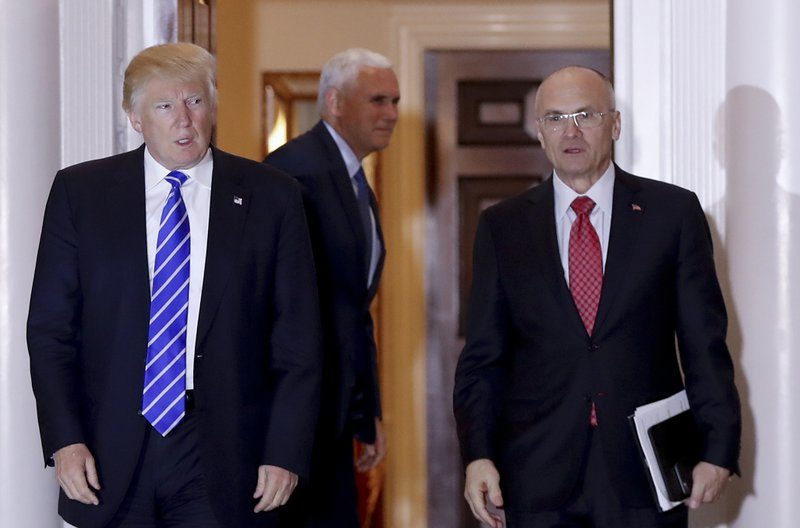
President Donald Trump plans to announce a new labor secretary nominee a day after his original pick, Andrew Puzder, abruptly withdrew from consideration. Trump scheduled a news conference Thursday afternoon to announce his new candidate for the labor job. “The man I’ll be announcing for labor is a star, great person,” Trump said as he opened a meeting with some of his staunchest supporters in the House. Puzder’s withdrawal was a stark example of the disorganized nature of the new administration not known for thorough vetting of its people or its plans. Contentious confirmation fights, a botched rollout of Trump’s refugee order and the ouster this week of National Security Adviser Michael Flynn have nearly paralyzed the administration. Republicans grumbled about the stream of “distractions,” including the torrent of criticism about Puzder’s personal life and his record as CEO of CKE Restaurants, Inc. What ultimately drained Puzder of enough Republican support for confirmation was his acknowledgment — well after Trump had become president — of employing a housekeeper not authorized to work in the U.S. Puzder said he had fired the employee about five years ago. But he did not pay the related taxes until after Trump nominated him as labor secretary on Dec. 9. Puzder said he paid the taxes as soon as he found out he owed them, but there was no explanation of why he didn’t know or pay for five years. Spokesman George Thompson said Wednesday that Puzder did not tell the White House about the housekeeper issue until after he had been nominated. It’s not clear that Trump’s aides asked the immigration question before the nomination even though such issues have sunk past presidential nominations and Trump has taken a hard line on people in the U.S. illegally. People who were interviewed during the transition period said they were not asked by Trump’s team to provide vetting information, raising questions about the level of scrutiny. Ultimately, Republicans made it clear that Puzder lacked the votes in a chamber narrowly split between Republicans and Democrats. There was scant, if any, praise for his vetting. Majority Leader Mitch McConnell and Sen. Lamar Alexander, who would have chaired Puzder’s confirmation hearing Thursday, issued statements praising Puzder’s qualifications but saying they “respect” his decision. Puzder fell to a relentless series of attacks from Democrats, labor and other groups who opposed him on ideological and personal grounds. They contended that his corporate background and opposition to such proposals as a big hike in the minimum wage made him an unfit advocate for American workers at the top of an agency charged with enforcing worker protections. They rolled out stories from workers who said they were treated badly at Puzder’s company. And they were ready to make his women and his workers part of the hearing on Thursday. Puzder was quoted in Entrepreneur magazine in 2015 as saying, “I like beautiful women eating burgers in bikinis.” He said the racy commercials for Carl’s Jr., one of his companies, were “very American.” Democrats also said Puzder had disparaged workers at his restaurants. He was quoted by Business Insider as saying he wanted to try robots at his restaurants, because “They’re always polite, they always upsell, they never take a vacation, they never show up late, there’s never a slip-and-fall, or an age, sex or race discrimination case.” A coalition led by the pro-labor National Employment Law Project and Jobs With Justice groups said Puzder’s withdrawal represents the “first victory of the resistance against President Trump.” “Workers and families across the country spoke up loud and clear that they want a true champion for all workers in the Labor Department,” said Sen. Patty Murray, the ranking Democrat on the panel that was to handle the hearing. Republished with permission of The Associated Press.
