
Daniel Sutter: The debt ceiling and the national debt
The United States faces potential default in June as we run up against the debt ceiling, currently at $31.4 trillion. Whether the debt ceiling is good policy depends largely on one’s attitude toward Federal spending. Is our national debt sustainable? I will defer to the judgment of financial markets. Interest rates compensate savers for being patient and for bearing default risk, the risk that borrowers may not repay the loan or interest payments. The “risk-free” interest rate is what investors would charge a borrower with no default risk. When default risk increases, investors will first demand a higher interest rate and then stop lending altogether. U.S. Treasury securities have long been viewed as the risk-free investment. The inflation-adjusted (or real) interest rate on 10-year U.S. Treasury securities, courtesy of the St. Louis Fed, stands at 1.3 percent, over two percentage points higher than at the start of 2022. But this interest rate hike is widely attributed to the Fed’s tightening of monetary policy to combat inflation. The debt to GDP ratio stands at historically high levels. But economists Jason Furman and Larry Summers argue that real interest payments as a percentage of GDP better measures indebtedness. This measure is not at record levels, suggesting that Washington has untapped credit. Nonetheless, our current budget situation is troubling. The Congressional Budget Office (CBO) estimates this year’s deficit at $1.5 trillion, the third largest ever and 7th largest since 1962 as a percentage of GDP. Yet the economy is not in recession. We are at peace, and the COVID-19 pandemic is over. This represents a structural and not cyclical deficit. Deficit projections depend on future policy choices, so let’s consider entitlement spending. The CBO projects that Social Security and Medicare spending will increase from $2.3 trillion this year to $4.2 trillion in 2033. The deficit will increase significantly unless we cut spending or increase taxes. Credit markets are voluntary; nobody must purchase Treasury bonds. At some point, credit markets will say no more Federal borrowing. We would be wise to keep some credit for emergencies. Imagine financing World War II without any borrowing! Now let’s turn to the debt ceiling, beginning with its history. Congress enacted the ceiling in 1917 to keep from having to approve each issuance of Treasury debt. The ceiling has been raised over 100 times since World War II and suspended on several occasions. Fiscal conservatives use the ceiling as leverage to push spending cuts, like the 1985 Gramm-Rudman-Hollings Debt Reduction Act and the 2011 budget deal. The ceiling creates policy uncertainty for our economy. Uncertainty is unavoidable in life and especially business but hurts investment. Government affects business in many ways, so uncertainty about government policy increases overall uncertainty. Failure to raise the debt ceiling will delay the repayment of bonds, drive up the Federal government’s interest rate, and potentially also other interest rates. A long-term budget agreement would be better than a fight over the ceiling every other year. Evaluation of the ceiling depends mostly on how one views current Federal spending, not creditworthiness. If avoiding default were paramount, a deal could be done easily. Republicans could agree to big tax hikes, or Democrats could agree to freeze discretionary spending. These are not solutions due to their impact on spending. The Biden Administration is considering challenging that the debt ceiling violates the 14th Amendment. I am not a constitutional lawyer, so I will not weigh in here. Fiscal conservatives have voiced opposition to this tactic, but we are a constitutional republic; the constitutionality of any law can be questioned. The inability to reach a compromise reflects our increasingly divided nation. Legitimate government reflects the consent of the governed, meaning all Americans, because we recognize the equal moral worth of all citizens. Today both sides want to force their preferred policy on the other by any means necessary. This is a tell that many now view their fellow Americans as subjects, not fellow citizens. Daniel Sutter is the Charles G. Koch Professor of Economics with the Manuel H. Johnson Center for Political Economy at Troy University and host of Econversations on TrojanVision. The opinions expressed in this column are the author’s and do not necessarily reflect the views of Troy University.
Former U.S. Treasury secretary says unemployment rate needs to rise to curb inflation
The unemployment rate needs to rise in order to ease the effects of inflation, former U.S. Treasury Secretary Larry Summers says. According to the Consumer Price Index, the annual inflation rate in the U.S. is 8.6%, the highest seen in 40 years. To ease the effects of such high inflation rates, Summers said the unemployment rate would have to rise above 5% for five years. “We need five years of unemployment above 5% to contain inflation – in other words, we need two years of 7.5% unemployment or five years of 6% unemployment or one year of 10% unemployment,” Summers said in a speech in London on Monday, Bloomberg reported. The current U.S. unemployment rate sits at 3.6% for May 2022. Summers’ comment comes as many discuss the potential for the U.S. to enter a recession. According to a report by the Conference Board, a non-profit research group, most CEOs believe a recession is imminent. “More than 60% of CEOs globally say they expect a recession in their primary region of operations before the end of 2023 or earlier,” the Conference Board said. Another 15% say their regions are already in the midst of a recession. However, the Biden administration’s opinions differ starkly from what most business leaders say. In response to a reporter stating that most economists say a recession is “even more likely than ever,” President Joe Biden said most economists aren’t saying that. “Not the majority of them aren’t saying that; come on, don’t make things up, OK, now you sound like a Republican politician,” Biden said. “I’m joking, that was a joke, but all kidding aside, no, I don’t think it is. I was talking to Larry Summers this morning. There’s nothing inevitable about a recession.” Biden’s comment contrasts with what Summers said in an interview with NBC’s Chuck Todd on Sunday. “I don’t think there are historical precedents for inflation at the rate we now have it coming down to the target the Fed has set of 2% without a recession,” Summers, an economist who served as the Treasury secretary from 1999 to 2001, said. “I think all the precedents point towards a recession.” Current U.S. Treasury Secretary Janet Yellen’s opinions also diverge from what most business leaders and economists are saying. “It’s natural now that we expect a transition to steady and stable growth, but I don’t think a recession is at all inevitable,” Yellen said in an interview with ABC News on Sunday. Retail sales fell in May by 0.4%, according to estimates released by the U.S. Census Bureau, indicating a decrease in consumer spending, which could contribute to the possibility of a recession, but again, Yellen said she disagrees. “I think consumer spending remains very strong, there’s month-to-month volatility, but overall spending is strong although patterns of spending are changing,” Yellen said. “Higher food and energy prices are certainly affecting consumers and making them change their patterns of spending, but bank balances are high.” Republished with the permission of The Center Square.
Dan Sutter: Greed and inflation
Inflation topped 7 percent in December, the highest level in forty years. The Biden administration has tried blaming rising prices on corporate greed with antitrust enforcement as a remedy. Does this make economic sense? We must first consider what inflation is. Measured by the rate of change in the Consumer Price Index (CPI), economists define inflation as increasing the general price level. Increases in the prices of some goods with others remaining unchanged raises the CPI but are changes in relative prices. Relative price changes result from changed economic conditions like with lumber in 2020. A “pure” inflation is an equal percentage increase in all prices, including wages and salaries. Inflation also involves an expectation of continued price increases. Pandemic-related production disruptions might cause price increases but not continued increases; prices should stabilize once production resumes and backorders are filled. Is the last year’s CPI increase due to relative price changes or true inflation? We clearly have had some relative price increases for things like lumber and new and used cars (37 percent price increase over the past 12 months). But many CPI components have increased by five or six percent. Most prices are rising. Interest rates provide the best gauge of future inflation. They are based on the decisions of thousands of persons, each investing their own money and superior to any expert’s forecast. Florida Atlantic University economist Will Luther calculates that the bond market currently forecasts 2.6 (2.2) percent annual inflation over the next five (ten) years. Markets expect inflation to moderate but not disappear. Now we can turn to greed and antitrust. I will not distinguish between greed and self-interest here. Economists assume everyone acts in their self-interest. For businesses, this means selling for the highest prices possible, but consumers must voluntarily purchase what businesses want to sell, and competition between sellers limits prices. Greed only explains rising prices if competition has been reduced. State business closure orders during COVID helped bankrupt thousands of small businesses. Yet the impact of these failures on the overall level of competition is likely modest. Furthermore, reduced competition would likely generate a one-time price increase; with less competitive pressure, a business might raise prices by five percent. Since greed is not causing inflation, more aggressive antitrust enforcement will not stop inflation. Economists across the political spectrum recognize this. Larry Summers, former Secretary of the Treasury under President Bill Clinton, said on Twitter: “The emerging claim that antitrust can combat inflation represents ‘science denial.’” Precedent exists for using inflation fears to justify unrelated policies. Until the 1970s, Washington regulated railroads, trucking, and airlines. This was not just safety regulation but control of the number of firms, routes of operation, and prices. Economic research documented the harms of this regulation: higher prices, reduced productivity, and poorer transportation options. The principle of concentrated benefits and dispersed costs from public choice economics explained the persistence of such regulations. The companies and their unions, including the powerful Teamsters, benefited from regulation. Consumers faced an enormous total cost but small individual costs. Regulation was crucial to the industry but a minor issue for consumers. Then something amazing happened. America faced high inflation, and Senator Edward Kennedy sought an issue to boost his presidential hopes. Future Supreme Court Justice Stephen Breyer was on the Senator’s staff and knew about the economic research. Senator Kennedy held widely publicized hearings touting deregulation to offset the pain of inflation. President Jimmy Carter got on board, and by 1980, all these industries were deregulated. Attributing causality is virtually impossible in public policy. But most histories of deregulation cite Senator Kennedy’s hearings as highly important in the process. Deregulation as a cure for inflation is economic silliness. Yet confusion over-inflation may have enabled beneficial policy change. Policymakers, I suspect, remember this lesson. Expect politicians to try selling their pet projects as fighting inflation. But as economist Milton Friedman famously said, “Inflation is everywhere and always a monetary phenomenon.” Alleged inflation remedies should be evaluated on their own merits. Daniel Sutter is the Charles G. Koch Professor of Economics with the Manuel H. Johnson Center for Political Economy at Troy University and host of Econversations on TrojanVision. The opinions expressed in this column are the author’s and do not necessarily reflect the views of Troy University.
Joe Biden’s ‘Jobs Cabinet’ to sell infrastructure
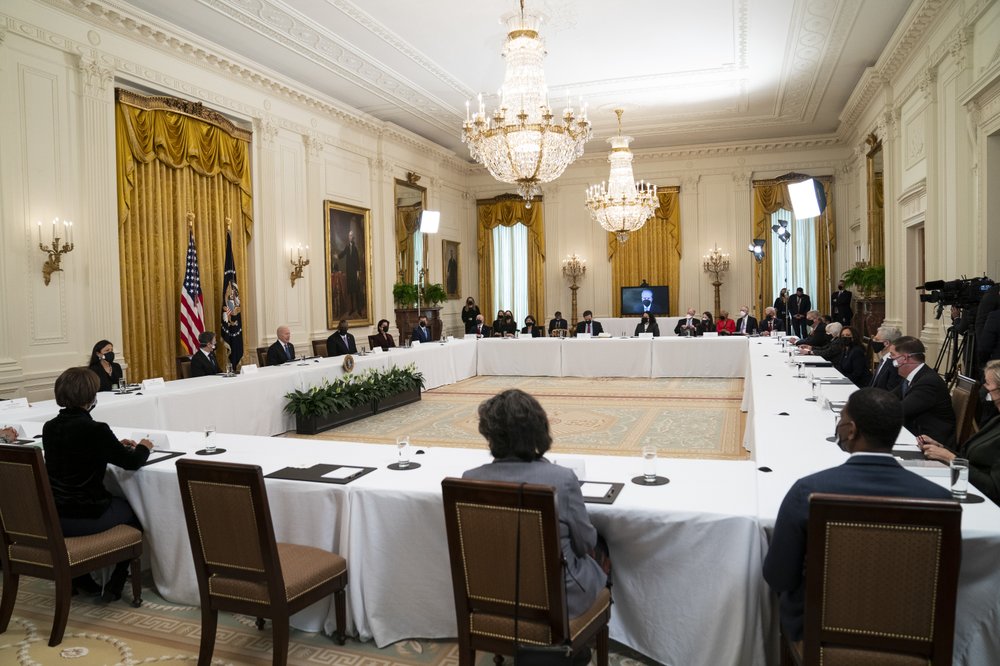
President Joe Biden set about convincing America it needs his $2.3 trillion infrastructure plan on Thursday, deputizing a five-member “jobs Cabinet” to help in the effort. But the enormity of his task was clear as Senate Minority Leader Mitch McConnell’s vowed to oppose the plan “every step of the way.” Speaking in Kentucky, McConnell said he personally likes Biden, and they’ve been friends a long time. But the president will get no cooperation from the GOP, which objects to the corporate tax increases in the plan and says they would hurt America’s ability to compete in a global economy. “We have some big philosophical differences, and that’s going to make it more and more difficult for us to reach bipartisan agreements,” the Republican leader said. White House chief of staff Ron Klain said the key to any outreach is that the proposal’s ideas are already popular. Americans want smooth roads, safe bridges, reliable public transit, electric vehicles, drinkable water, new schools, and investments in manufacturing, among the plan’s many components, he said. “We kind of think it’s just right,” Klain said in a televised interview with the news organization Politico. “But we’re happy to have a conversation with people, less about the price tag, more about what are the elements that should be in the plan that people think are missing.” Those conversations could be limited to Democrats as McConnell declared: “I’m going to fight them every step of the way.” Biden told his Cabinet at its first meeting that he is enlisting several of them to help with the push: Transportation Secretary Pete Buttigieg, Energy Secretary Jennifer Granholm, Housing and Urban Development Secretary Marcia Fudge, Labor Secretary Marty Walsh, and Commerce Secretary Gina Raimondo. “Working with my team here at the White House, each Cabinet member will represent me in dealings with Congress, engage the public in selling the plan and help organize the details as we refine it and move forward,” Biden said. The task will involve lots of salesmanship for a legacy-making piece of legislation that Biden announced in a Wednesday speech. His administration must sway Congress. It needs to rally voters. It’s also looking to outside economists to back the plan. It’s monitoring Wall Street for any celebrations or jitters. It’s forming alliances with advocates while dealing with critics of the plan’s corporate tax hikes and project details. And Biden’s administration also intends, per the plan, to cajole other nations to stop slashing their own tax rates in what has been a race-to-the-bottom to attract and retain multinational businesses. Biden’s vehicle for financing his infrastructure plans is a key dividing line. Republicans object to raising the corporate tax rate to 28% from 21%, one of the many changes so that business taxes would fund infrastructure. Republicans had cut the corporate rate from 35% in 2017, a hallmark policy achievement of Donald Trump’s presidency. Within Washington and corporate board rooms, the administration is attracting its share of accolades and rebukes on his proposal. In Biden’s own party, liberal Democrats in Congress want him to go bigger. And Democrats representing high-tax states want to remove a 2017 tax code change that limited deductions of state and local taxes for individuals. House Speaker Nancy Pelosi expressed no qualms about the proposal’s scope. “It was in the tradition of America — to think big,” Pelosi said at a press conference Thursday. “And now, in this century, President Biden is undertaking something in the tradition of thinking big, being transformational, and creating jobs for America.” While many leading business groups oppose the higher taxes, some major companies see reason for optimism because of the innovations that would be encouraged by the plan. Automakers Ford, General Motors, and Toyota endorsed the general concepts of Biden’s plan, which calls for the construction of 500,000 electric vehicle charging stations by 2030 in what would be a shift away from gasoline-powered cars. But some environmentalists said the plan’s shift away from fossil fuels that cause climate change was not substantial enough. “Biden has pledged to cut carbon emissions 50% and decarbonize our electricity sector, but this proposal won’t even come close,” said Brett Hartl, government affairs director at the Center for Biological Diversity. The White House was quick to address the climate change concerns. Climate adviser Gina McCarthy said the administration expects the infrastructure package to include Biden’s pledge to set a national standard requiring utilities to produce 100% carbon-free electricity by 2035. The proposed electricity standard “is going to be fairly robust, and it’s going to be inclusive,” McCarthy said. “I think we can get to the results that we’re looking for in a number of different ways. If a clean energy standard can be done, we think it should be done.’’ For every criticism of the plan’s details, there were also plaudits for its broader approach. Harvard University economist Larry Summers, a former treasury secretary, endorsed Biden’s plan after previously criticizing the $1.9 trillion coronavirus relief plan because of its size and debt-based financing. He downplayed any risks from corporate tax hikes since low-interest rates mean the costs of obtaining capital are already low for many companies. “I am excited,” Summers said on Twitter. “The economy’s capacity will go up.” The plan also carries a political dimension as organized labor is mobilizing to get the package passed, an important push given the steady recent Republican gains among working-class voters. Biden’s plan, with its focus on construction and manufacturing jobs, has the potential to reverse some of that slide — and the unions that backed him in 2020 are promising to help deliver votes on infrastructure. “Our members are an army a half-million strong, that will make calls, visit members of Congress and rally for good jobs building our nation’s infrastructure,” said Terry O’Sullivan, general president of Laborers International Union of North America, one of the largest construction trades unions. “We did it with boots on the ground to get President Biden elected.” Republished with the permission of the Associated Press.
As Democrats fret over ‘sharing economy,’ GOP moves in
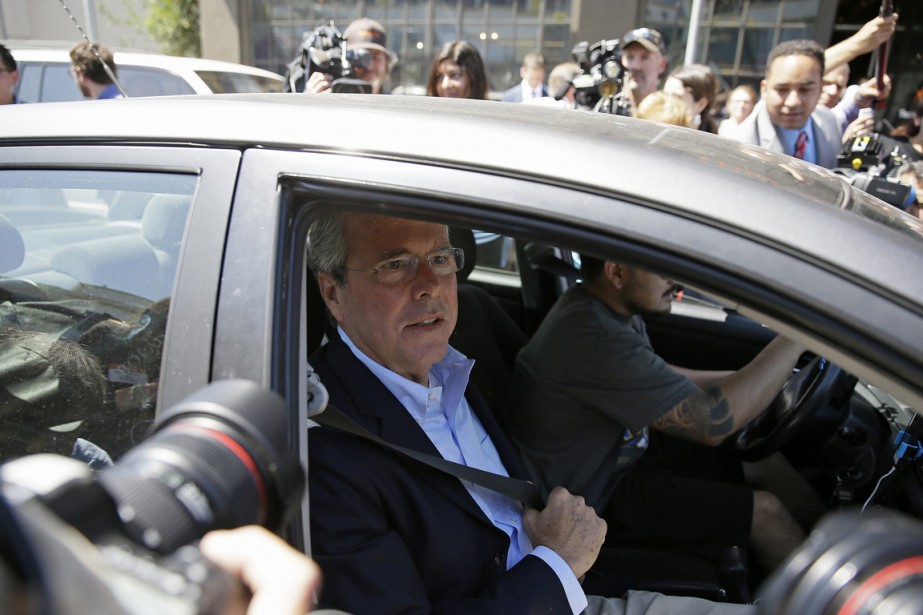
The debate over ride-hailing firm Uber is laying bare divides in the Democratic Party and on the left about how to handle the new “sharing” economy. Republicans are hungry to exploit that ambivalence and make inroads into a wealthy sector of the tech industry. In New York City this past week, liberal Mayor Bill de Blasio tried to limit the number of Uber drivers on the streets, only to be rebuked by the state’s more centrist governor, Andrew Cuomo. The mayor’s administration decided to allow Uber to expand in the city for another year. That followed a pledge by the party’s presidential front-runner, Hillary Rodham Clinton, to “crack down” on companies that classify workers as contractors rather than employees, as critics contend Uber and other companies often do. Clinton did not identify Uber, whose lobbying operation is run by former Obama campaign manager David Plouffe and stocked with Democratic operatives. But her allusion led Jeb Bush, a Republican technophile who says he prefers his Apple watch to apple pie, to ride in an Uber vehicle during a campaign stop in San Francisco days later. For years, Republicans have struggled to gain support in the technology industry, an effort hobbled by in part by their stance on social issues and net neutrality, which is the idea that Internet service providers should not manipulate, slow or block data moving across their networks. But the bright-blue precincts of Silicon Valley have become a regular stop on the GOP circuit. Kentucky Sen. Rand Paul opened a campaign office at a San Francisco tech incubator that hosted a 24-hour “hack-a-thon” last month. Florida Sen. Marco Rubio won the backing of Oracle founder Larry Ellison. He held a fundraiser for the senator, whose new book has a chapter with this title: “Making America Safe for Uber.” “There’s a lot of folks out here who naturally fall into a libertarian place and in the past they were not feeling the love from the GOP,” said Scott Banister, an investor who is raising money for Paul. “Obviously, if the Democratic Party is going to come down on the side of ‘let’s shut down these businesses,’ that’s going to force the issue.” Liberals have increasingly questioned the impact of the industry during a time of scarce jobs and wage stagnation. Former Treasury Secretary Larry Summers has noted that Apple employs a far smaller share of people than companies of its size did in the past. Silicon Valley and the surrounding Bay Area have become a symbol of the income inequality that Democrats bemoan. But it is the recent, explosive growth of Uber and other “sharing economy” companies that have attracted the most concern. HomeJoy recently announced it would shut down in the face of four lawsuits alleging it should treat the people who clean homes on its behalf as employees rather than as independent contractors not entitled to the same workplace protections. “If a technologist wants to disrupt an industry that has middle-class jobs and replace them with insecure, not-as-good jobs, there has to be a conversation about that,” said Heath McGee, president of the liberal think-tank Demos. “Just because there’s an app doesn’t mean it’s anything different. … It’s a question as old as the economy.” Lyft, Uber or the grocery delivery service Instacart and others rely on independent contractors to provide services for a fee: driving, house cleaning, grocery shopping and the like. Uber takes a commission from fees charged to its riders. The drivers, who can work as many or as few hours as they would like, get the rest. Many Uber drivers work part time to supplement their income, while others rely on it entirely. Founded in 2009, it was operating in more than 250 cities and 21 countries by the end of last year. Such innovations have hit core Democratic constituencies. Among them are taxi companies that give generously to urban politicians such as de Blasio, and professors worried about the proliferation of online higher educational courses. But they also benefit another core group: the young, urban people who supported President Barack Obama. Former Obama adviser Dan Pfeiffer warned in a recent that “progressive politicians are making a major error by positioning against the sharing economy.” Banister, the investor helping Paul, said Democrats seem torn on the sharing economy, “not quite sure where the electorate wants them to be.” Republicans, he added, are “able to come back and say, ‘We’re not wishy-washy about this,’” because business, jobs and the economy form “the core of the GOP.” Larry Gerston, political science professor emeritus at San Jose State, said the Uber skirmishes will have limited impact in Silicon Valley, which is far more concerned with federal policy on matters such as patent protection. But Julie Samuels, executive director of Engine, a nonprofit that tries to connect startups with policy debates, said the tone of the debate is worrisome. “When any policymaker starts to ostracize the tech community, they’re ostracizing people who can make things better,” she said. Republished with permission of the Associated Press.
