
FBI reviews handling of terrorism-related tips
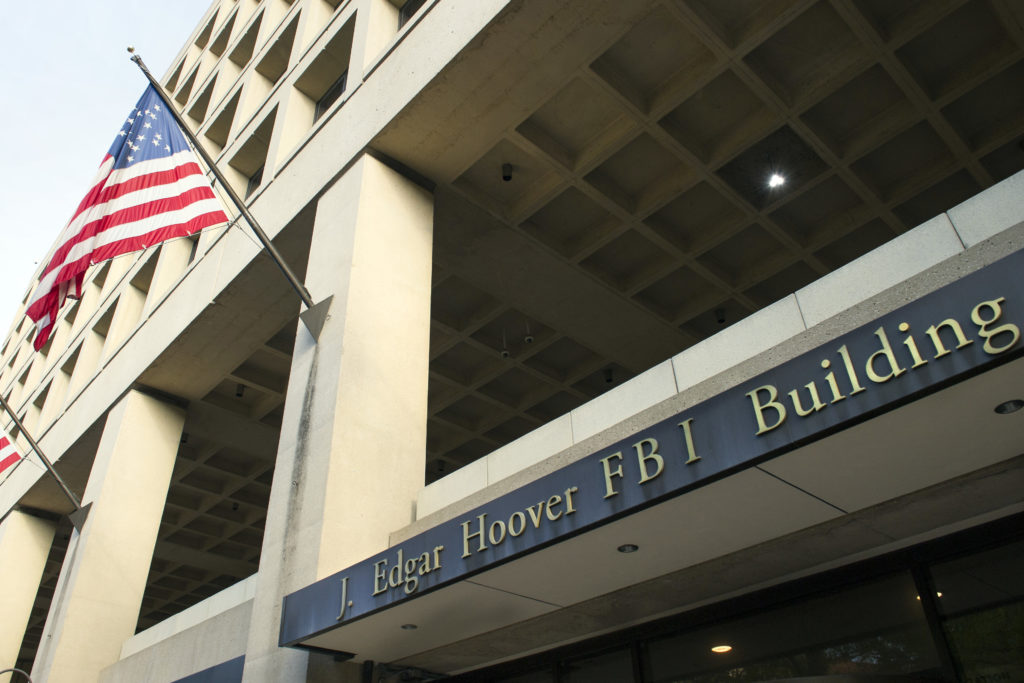
The FBI has been reviewing the handling of thousands of terrorism-related tips and leads from the past three years to make sure they were properly investigated and no obvious red flags were missed, The Associated Press has learned. The review follows attacks by people who were once on the FBI’s radar but who have been accused in the past 12 months of massacring innocents in an Orlando, Florida, nightclub, injuring people on the streets of New York City, and gunning down travelers in a Florida airport. In each case, the suspects had been determined not to warrant continued law enforcement scrutiny months and sometimes years before the attacks. The internal audit, which has not been previously reported, began this year and is being conducted in FBI field offices across the country. A senior federal law enforcement official described the review as an effort to “err on the side of caution.” The audit is essentially a review of records to ensure proper FBI procedures were followed. It’s an acknowledgment of the challenge the FBI has faced, particularly in recent years, in predicting which of the tens of thousands of tips the bureau receives annually might materialize one day into a viable threat. Investigations that go dormant because of a lack of evidence can resurface instantly when a subject once under scrutiny commits violence or displays fresh signs of radicalization. FBI Director James Comey has likened the difficulty to finding not only a needle in a haystack but determining which piece of hay may become a needle. Though there’s no indication of significant flaws in how terrorism inquiries are opened and closed, the review is a way for the FBI to “refine and adapt to the threat, and part of that is always making sure you cover your bases,” said the law enforcement official, who was not authorized to discuss the matter by name. The pace of the FBI’s counterterrorism work accelerated with the rise of the Islamic State group, which in 2014 declared the creation of its so-called caliphate in Syria and Iraq and has used sophisticated propaganda to lure disaffected Westerners to its cause. By the summer of 2015, Comey has said, the FBI was “strapped” in keeping tabs on the group’s American sympathizers and identifying those most inclined to commit violence. Social media outreach by IS has appealed to people not previously known to the FBI but also enticed some who once had been under scrutiny to get “back in the game,” said Seamus Hughes, deputy director of George Washington University’s Program on Extremism. “The fact that there was a physical location and a caliphate announced, it helped kind of drive folks back in when they might have drifted away,” Hughes said. The review covers inquiries the FBI internally classifies as “assessments” — the lowest level, least intrusive and most elementary stage of a terror-related inquiry — and is examining ones from the past three years to make sure all appropriate investigative avenues were followed, according to a former federal law enforcement official who spoke on condition of anonymity to discuss the process. Assessments are routinely opened upon a tip — whether from someone concerned about things such as activity in a neighbor’s garage, a co-worker’s comments or expressions of support for IS propaganda — and are catalogued by the FBI. The bureau receives tens of thousands of tips a year, and averages more than 10,000 assessments annually. FBI guidelines meant to balance national security with civil liberties protections impose restrictions on the steps agents may take during the assessment phase. Agents, for instance, may analyze information from government databases and open-source internet searches, and can conduct interviews. But they cannot turn to more intrusive techniques, such as requesting a wiretap or internet communications, without higher levels of approval and a more solid basis to suspect a crime or national security threat. The guidelines explicitly discourage open-ended inquiries and say assessments are designed to be “relatively short,” with a supervisor signing off on extension requests. Many assessments are closed within days or weeks when the FBI concludes there’s no criminal or national security threat, or basis for continued scrutiny. The system is meant to ensure that a person who has not broken the law does not remain under perpetual scrutiny on a mere hunch that a crime could eventually be committed. But on occasion, and within the past year, it’s also meant that people the FBI once looked at but did not find reason to arrest later went on to commit violence. In the case of Omar Mateen, that scrutiny was extensive, detailed and lengthy. Mateen, who shot and killed 49 people at an Orlando nightclub in June, was investigated for 10 months in 2013 and interviewed twice after a co-worker reported that Mateen had claimed connections to al-Qaida. As part of a preliminary investigation, agents recorded Mateen’s conversations and introduced him to confidential sources before closing the matter. That kind of investigation is more intensive than an assessment and permits a broader menu of tactics, but it also requires a stronger basis for suspicion. Mateen was questioned again in 2014 in a separate investigation into a suicide bomber acquaintance. Comey has said he has personally reviewed that inquiry’s handling and has concluded it was done well. The FBI in 2014 also opened an assessment on Ahmad Khan Rahimi, who last September was charged in bombings in Manhattan and New Jersey, based on concerns expressed by his father. The FBI said it closed the review after checking databases and travel and finding nothing that tied him to terrorism. Esteban Santiago, the man accused in the January shooting at the Fort Lauderdale, Florida, airport that killed five people, had also been looked at by the FBI. He had walked into the bureau’s office in Anchorage, Alaska, two months earlier and claimed his mind was being controlled by U.S. intelligence officials. In that case, too, the FBI closed its assessment after interviewing family members and checking databases. Each act of
Paul Manafort had plan to benefit Vladamir Putin government

President Donald Trump‘s former campaign chairman, Paul Manafort, secretly worked for a Russian billionaire to advance the interests of Russian President Vladimir Putin a decade ago and proposed an ambitious political strategy to undermine anti-Russian opposition across former Soviet republics, The Associated Press has learned. The work appears to contradict assertions by the Trump administration and Manafort himself that he never worked for Russian interests. Manafort proposed in a confidential strategy plan as early as June 2005 that he would influence politics, business dealings and news coverage inside the United States, Europe and the former Soviet republics to benefit the Putin government, even as U.S.-Russia relations under Republican President George W. Bush grew worse. Manafort pitched the plans to Russian aluminum magnate Oleg Deripaska, a close Putin ally with whom Manafort eventually signed a $10 million annual contract beginning in 2006, according to interviews with several people familiar with payments to Manafort and business records obtained by the AP. Manafort and Deripaska maintained a business relationship until at least 2009, according to one person familiar with the work. “We are now of the belief that this model can greatly benefit the Putin Government if employed at the correct levels with the appropriate commitment to success,” Manafort wrote in the 2005 memo to Deripaska. The effort, Manafort wrote, “will be offering a great service that can re-focus, both internally and externally, the policies of the Putin government.” Manafort’s plans were laid out in documents obtained by the AP that included strategy memoranda and records showing international wire transfers for millions of dollars. How much work Manafort performed under the contract was unclear. The disclosure comes as Trump campaign advisers are the subject of an FBI probe and two congressional investigations. Investigators are reviewing whether the Trump campaign and its associates coordinated with Moscow to meddle in the 2016 campaign. Manafort has dismissed the investigations as politically motivated and misguided, and said he never worked for Russian interests. The documents obtained by AP show Manafort’s ties to Russia were closer than previously revealed. In a statement to the AP, Manafort confirmed that he worked for Deripaska in various countries but said the work was being unfairly cast as “inappropriate or nefarious” as part of a “smear campaign.” “I worked with Oleg Deripaska almost a decade ago representing him on business and personal matters in countries where he had investments,” Manafort said. “My work for Mr. Deripaska did not involve representing Russia’s political interests.” Deripaska became one of Russia’s wealthiest men under Putin, buying assets abroad in ways widely perceived to benefit the Kremlin’s interests. U.S. diplomatic cables from 2006 described Deripaska as “among the 2-3 oligarchs Putin turns to on a regular basis” and “a more-or-less permanent fixture on Putin’s trips abroad.” In response to questions about Manafort’s consulting firm, a spokesman for Deripaska in 2008 — at least three years after they began working together — said Deripaska had never hired the firm. Another Deripaska spokesman in Moscow last week declined to answer AP’s questions. Manafort worked as Trump’s unpaid campaign chairman last year from March until August. Trump asked Manafort to resign after AP revealed that Manafort had orchestrated a covert Washington lobbying operation until 2014 on behalf of Ukraine’s ruling pro-Russian political party. The newly obtained business records link Manafort more directly to Putin’s interests in the region. According to those records and people with direct knowledge of Manafort’s work for Deripaska, Manafort made plans to open an office in Moscow, and at least some of Manafort’s work in Ukraine was directed by Deripaska, not local political interests there. The Moscow office never opened. Manafort has been a leading focus of the U.S. intelligence investigation of Trump’s associates and Russia, according to a U.S. official. The person spoke on condition of anonymity because details of the investigation were confidential. Meanwhile, federal criminal prosecutors became interested in Manafort’s activities years ago as part of a broad investigation to recover stolen Ukraine assets after the ouster of pro-Russian President Viktor Yanukovych there in early 2014. No U.S. criminal charges have ever been filed in the case. FBI Director James Comey, in confirming to Congress the federal intelligence investigation this week, declined to say whether Manafort was a target. Manafort’s name was mentioned 28 times during the hearing of the House Intelligence Committee, mostly about his work in Ukraine. No one mentioned Deripaska. White House spokesman Sean Spicer said Monday that Manafort “played a very limited role for a very limited amount of time” in the campaign, even though as Trump’s presidential campaign chairman he led it during the crucial run-up to the Republican National Convention. Manafort and his associates remain in Trump’s orbit. Manafort told a colleague this year that he continues to speak with Trump by telephone. Manafort’s former business partner in eastern Europe, Rick Gates, has been seen inside the White House on a number of occasions. Gates has since helped plan Trump’s inauguration and now runs a nonprofit organization, America First Policies, to back the White House agenda. Gates, whose name does not appear in the documents, told the AP that he joined Manafort’s firm in 2006 and was aware Manafort had a relationship with Deripaska, but he was not aware of the work described in the memos. Gates said his work was focused on domestic U.S. lobbying and political consulting in Ukraine at the time. He said he stopped working for Manafort’s firm in March 2016 when he joined Trump’s presidential campaign. Manafort told Deripaska in 2005 that he was pushing policies as part of his work in Ukraine “at the highest levels of the U.S. government — the White House, Capitol Hill and the State Department,” according to the documents. He also said he had hired a “leading international law firm with close ties to President Bush to support our client’s interests,” but he did not identify the firm. Manafort also said he was employing unidentified legal experts for the effort at leading universities and
New orders by Donald Trump make law and order a key priority
With Jeff Sessions sworn in as the nation’s attorney general, the Trump administration signaled some of its priorities for a revamped Justice Department in a series of executive orders aimed at reducing crime and drug trafficking and protecting police officers. One executive order announced Thursday directs the Justice Department to define new federal crimes, and increase penalties for existing ones, to further protect local and federal officers from acts of violence. Another order calls for the creation of a task force to reduce violent crime — even though the murder rate has declined sharply in recent decades — and a third is aimed at dismantling international drug cartels. Taken together, the directives, announced amid a national dialogue about racial bias in policing and appropriate police use of force, suggest that the White House wants to prioritize law and order and align itself closely with local law enforcement. “We must better protect those who protect us. Our men and women in blue need to know that we’re with them 100 percent as they patrol our streets. Unfortunately, this has not always been the case,” White House spokesman Sean Spicer said at a press briefing. That was perhaps a reference to criticism directed at one of Sessions’ predecessors, former Attorney General Eric Holder, by some local law enforcement officials who saw him as insensitive to the challenges of their jobs and as overly sympathetic to the concerns of black protesters. Holder denied those accusations, repeatedly noting his support for the police and that his brother was a retired officer. On Thursday, in response to the executive order, Holder posted on Twitter a Justice Department press release from 2011 announcing an initiative aimed at preventing police officer deaths. “It worked and continues to protect,” Holder wrote. Sessions, who represented Alabama in the Senate for the last 20 years, was sworn in Thursday after being confirmed the night before. The executive orders are in keeping with his commitment to represent law-and-order interests. He said at his confirmation hearing last month that he was concerned that a recent uptick in homicides in American cities could become a trend. “Protecting the people of this country from crime, and especially from violent crime, is the high calling of the men and women of the Department of Justice. Today, I am afraid, that has become more important than ever,” Sessions said in his prepared remarks. In a video statement Thursday to Justice Department employees, Sessions said the department plays a critical role in “maintaining and strengthening the rule of law which forms the foundation for our liberty, our safety, and our prosperity.” Aside from the executive orders, Sessions, a conservative Republican known in the Senate for his hard-line views on immigration, is likely to pursue a different agenda than his Democratic predecessors in areas of civil rights and the criminal justice system. In an interview Thursday, Pat O’Carroll, executive director of the Federal Law Enforcement Officers Association, said the executive order sent an important message of support at a time of increased attacks and ambushes against police officers. But others said the executive orders purported to address problems that don’t exist. Under existing law, federal prosecutors already have the ability to pursue the death penalty in some cases involving the murders of law enforcement officers. And murder rates, despite an increase in some American cities, are well below where they were overall in the 1970s and 1980s. “President Trump intends to build task forces to investigate and stop national trends that don’t exist,” Jeffrey Robinson, deputy legal director of the American Civil Liberties Union, said in a statement. “We have seen historic lows in the country’s crime rate and a downward trend in killings against police officers since the 1980s,” Robinson said. “The president not only doesn’t acknowledge these facts about our nation’s safety, he persists in ignoring the all-too-real deaths of black and brown people at the hands of law enforcement.” Republished with permission of The Associated Press.
Hillary Clinton campaign reports 34.2 percent tax rate
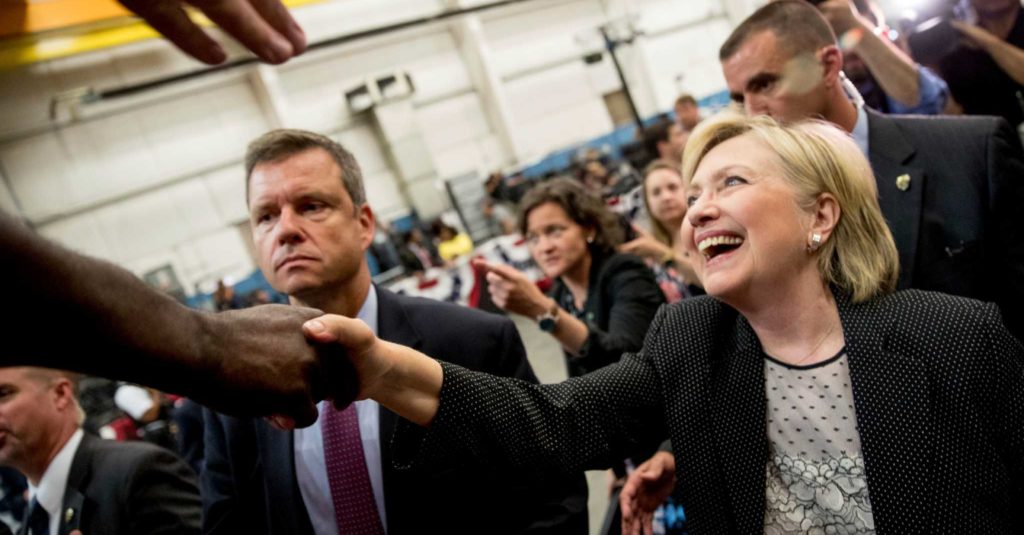
Hillary Clinton‘s campaign says the Democratic nominee and her husband paid a federal tax rate of 34.2 percent and donated 9.8 percent of their income to charity last year. The Clintons are releasing their 2015 filings on Friday. Her campaign is also releasing returns from running mate Tim Kaine and his wife. The campaign says the Kaines have donated 7.5 percent of their income to charity over the last decade. They paid an effective tax rate of 25.6 percent in 2015. Clinton is trying to undercut the trustworthiness of rival Donald Trump. He has refused to disclose any returns, breaking tradition with all recent presidential candidates. Trump says he won’t release them until Internal Revenue Service completes audits of his returns. The Clintons have disclosed returns for every year since 1977. Republished with permission of the Associated Press.
