
Under pressure to ease up, Joe Biden weighs new virus response

Facing growing pressure to ease up on pandemic restrictions, the White House insisted Wednesday it is making plans for a less-disruptive phase of the national virus response. But impatient states, including Democratic New York, made clear they aren’t waiting for Washington as public frustration grows. Gov. Kathy Hochul announced that New York will end its COVID-19 mandate requiring face coverings in most indoor public settings — but will keep it for schools. Illinois announced the same. Earlier this week, New Jersey, Connecticut, and Delaware all disclosed plans to join states that have lifted or never had mask requirements for their schools, and Massachusetts will follow suit at the end of the month. All but Massachusetts have governors who are Democrats, like President Joe Biden. Biden, who has long promised to follow to “follow the science” in confronting the pandemic, is hemmed in, waiting for fresh guidance from federal health officials, who so far still recommend that nearly all Americans wear masks in most indoor settings. Defending Biden, press secretary Jen Psaki acknowledged that while people are tired of masks and “we understand where the emotions of the country are,” the administration is following the advice of medical experts who rely on scientific evidence. “That doesn’t move at the speed of politics; it moves at the speed of data,” she said. Clearly feeling the pressure, the White House, for the first time, acknowledged movement in its planning, saying conversations have been underway privately to develop plans for guiding the country away from the emergency phase of the pandemic. Federal COVID-19 coordinator Jeff Zients said officials are consulting with state and local leaders and public health officials on potential next steps. But as governors and local officials press for clearer federal guidelines for easing or ending restrictions, states, cities, and school boards are adopting an awkward patchwork of policies that differ widely from one place to the next. “We are working on that guidance,” Centers for Disease Control and Prevention Director Dr. Rochelle Walensky said in a White House teleconference Wednesday. “As we’ve been encouraged by the current trends, we are not there yet.” The White House offered no timetable for the review or an indication of what it will recommend. And some critics say that’s not good enough. “The tragic thing is that these are governors that would probably have followed the White House’s guidance,” said Dr. Leana Wen, a former Baltimore health commissioner. “They wanted CDC input and asked for it, but without a clear timeline, at some point, they had to decide that they couldn’t wait any more. The fault is not theirs, but the CDC’s and by extension, President Biden’s, which, with each passing day, is making itself less and less relevant.” Asked whether Biden appears to be out of touch with the country, Psaki defended his caution. “As a federal government, we have the responsibility to rely on data on science, on the medical experts,” she said. Pressed on whether Americans should follow less-restrictive state or local rules or the stricter federal guidance, she repeated the White House’s daily counsel: “We would advise any American to follow the CDC guidelines.” New York’s Hochul and others aren’t waiting. They are ending or easing many broad mandates, though her state will keep masking rules in schools and health facilities. “Given the declining cases, given the declining hospitalizations, that is why we feel comfortable to lift this, in effect tomorrow,” Hochul said Wednesday. Even allies of the administration have argued that Biden should at least lay out a roadmap for moving back toward normalcy. He has been hesitant, aides say, in part because of the sting of his fleeting “declaration of independence” from the virus last summer, which proved premature in the face of the delta and then omicron strains. Now, though, cases and hospitalizations from COVID-19 have dropped markedly since they peaked earlier this year amid the spread of the highly transmissible omicron variant, and the vast majority of Americans are protected against the virus by effective vaccines and boosters. Still, more than 2,000 people infected with the virus die in the U.S. each day, and there is concern within the administration about letting up while deaths remain high. And Psaki noted that many Americans support continued mask-wearing. Some in the White House point to the consternation that was voiced in December after the CDC shortened the isolation time for Americans who test positive. While Biden and other administration officials emphasize that the threat from the virus is far diminished from a year ago, before the wide roll-out of vaccines and booster shots and the approval of rapid at-home tests and highly effective therapeutics, administration officials acknowledge that most federal guidelines have been slow to keep up. The CDC continues to recommend indoor mask-wearing in places of “substantial or high transmission” of the virus, which as of Wednesday was all of the U.S. but 14 rural counties. State and local leaders, nevertheless, have announced plans to ease virus restrictions in the coming weeks as omicron cases fall, citing the protections offered by vaccines as well as the increased availability of at-home testing kits and therapeutics for those who do catch the virus. Many of the restrictions eased last year, only to be reinstated as omicron swept the country. After more than a year of a top-down federally driven response, the emerging shift marks a return to the historical norm, where states have typically had the first say in how they handle public health emergencies. The CDC can advise them and issue general guidance for the nation, but in most situations, it cannot order them what to do. While the Biden administration has pushed back strongly against efforts by GOP governors to prohibit mask-wearing requirements, it is indicating that it will take a more flexible approach to jurisdictions that make their own choices. Policies lifting mask requirements “are going to have to be made at the local level” depending on case rates, Walensky said. Despite the encouraging reports in the Americas, Western Europe, and some
Fully vaccinated people can gather without masks, CDC says
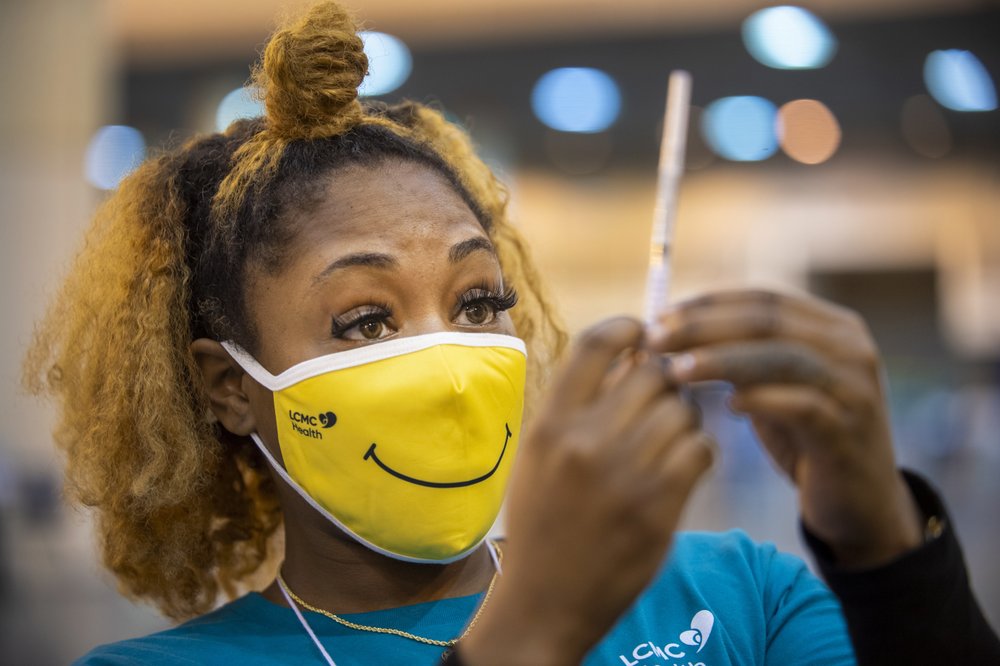
Fully vaccinated Americans can gather with other vaccinated people indoors without wearing a mask or social distancing, according to long-awaited guidance from federal health officials. The recommendations also say that vaccinated people can come together in the same way — in a single household — with people considered at low-risk for severe disease, such as in the case of vaccinated grandparents visiting healthy children and grandchildren. The Centers for Disease Control and Prevention announced the guidance Monday. The guidance is designed to address growing demand, as more adults have been getting vaccinated and wondering if it gives them greater freedom to visit family members, travel, or do other things like they did before the COVID-19 pandemic swept the world last year. “With more and more people vaccinated each day, we are starting to turn a corner,” said CDC Director Dr. Rochelle Walensky. During a press briefing Monday, she called the guidance a “first step” toward restoring normalcy in how people come together. She said more activities would be ok’d for vaccinated individuals once caseloads and deaths decline, more Americans are vaccinated, and as more science emerges on the ability of those who have been vaccinated to get and spread the virus. The CDC is continuing to recommend that fully vaccinated people still wear well-fitted masks, avoid large gatherings, and physically distance themselves from others when out in public. The CDC also advised vaccinated people to get tested if they develop symptoms that could be related to COVID-19. The CDC guidance did not speak to people who may have gained some level of immunity from being infected, and recovering from, the coronavirus. Officials say a person is considered fully vaccinated two weeks after receiving the last required dose of vaccine. About 31 million Americans — or only about 9% of the U.S. population — have been fully vaccinated with a federally authorized COVID-19 vaccine so far, according to the CDC. Authorized vaccine doses first became available in December, and they were products that required two doses spaced weeks apart. But since January, a small but growing number of Americans have been fully vaccinated, and have been asking questions like: Do I still have to wear a mask? Can I go to a bar now? Can I finally see my grandchildren? The guidance was “welcome news to a nation that is understandably tired of the pandemic and longs to safely resume normal activities,” said Dr. Richard Besser, president and CEO of the Robert Wood Johnson Foundation and a former acting director of the CDC. “I hope that this new guidance provides the momentum for everyone to get vaccinated when they can and gives states the patience to follow the public health roadmap needed to reopen their economies and communities safely,” said Besser, in a statement. But some said the guidance is too cautious. Dr. Ali Khan, dean of the University of Nebraska College of Public Health, said the guidance is reasonable in many respects — with the exception of travel. The CDC did not change its recommendations on travel, which discourages unnecessary travel and calls for getting tested within a few days of the trip. That could seem confusing to vaccinated people hoping to visit family across the country or abroad. “They need to relax travel for those vaccinated” and to immediately publish electronic standards for documents that show whether a person is fully vaccinated, said Khan, who formerly was a leading CDC disease detective. The new guidance also says nothing about going to restaurants or other places, even though governors are lifting restrictions on businesses, said Dr. Leana Wen, an emergency physician and public health professor at George Washington University who formerly was Baltimore’s health commissioner. Wen has said the CDC should have had some kind of post-vaccination guidance ready in January when some people first began to finish their second doses. And she called the guidance that came out Monday “far too cautious.” “The CDC is missing a major opportunity to tie vaccination status with reopening guidance. By coming out with such limited guidance, they are missing the window to influence state and national policy,” Wen said, in an email. But some people who are fully vaccinated were pleased by Monday’s news. Ruth Michienzi was among those receiving her second and final vaccine dose at a pharmacy inside a Stop and Shop supermarket in Woburn, Massachusetts on Monday morning. The 91-year-old resident of nearby Burlington said she’s fine with having to still wear a facemask in public and follow other safety guidelines even after being fully vaccinated. But Michienzi also said she’s excited to finally be able to take off her mask in front of her three great-grandchildren. She’s seen them in person since receiving her first shot about a month ago but has kept her mask on. “I hope they remember me,” she said. “I’ve been doing all of that for a year, and I don’t want that year to be wasted,” Michienzi said of the safety regulations. “I think it’s smart to wait.” A pair of customers, who weren’t in line to receive shots, though, openly groused about the continued restrictions and voiced fears that stricter mandates on travel and socializing would follow, even as more are vaccinated. Grace McShane, 61, of Melrose, also received her second dose Monday at the same supermarket. She says she qualified for the vaccine because she’s high risk, including suffering a heart attack last year. The in-home caregiver said she too was fine with the continued restrictions even after being vaccinated. “Even if you’re vaccinated, it’s better to be safe than sorry. This is the new normal. This is part of life and you just have to adapt to it,” McShane said. She said she’s looking forward to hugging her three grandchildren without having to wear a mask. Her grown children have also been vaccinated as essential workers, she said. “Just cuddle and give them hugs,” McShane said. “That’s all I want to do.” Republished with the permission of the Associated Press.
Beyond 100M: Joe Biden team aiming for bigger vaccine numbers

It sounded so ambitious at first blush: 100 million vaccination shots in 100 days. Now, one month into his presidency, Joe Biden is on a glide path to attain that goal and pitching well beyond it to the far more ambitious and daunting mission of vaccinating all eligible adults against the coronavirus by the end of the summer. Limited supply of the two approved COVID-19 vaccines has hampered the pace of vaccinations — and that was before extreme winter weather delayed the delivery of about 6 million doses this past week. But the United States is on the verge of a supply breakthrough as manufacturing ramps up and with the expectation of a third vaccine becoming available in the coming weeks. That means the act of delivering injections will soon be the dominant constraint, and it’s prompting the Biden administration to push to dramatically expand the universe of those who will deliver injections and where Americans will meet them to get their shots. “It’s one thing to have the vaccine, and it’s very different to get it in someone’s arms,” Biden said Friday as he toured Pfizer’s manufacturing plant in Portage, Michigan. The company is set to double its pace of vaccine deliveries in the coming weeks. Since their approval in December, more than 75 million doses of the two-shot-regimen Moderna and Pfizer vaccines have been distributed, of which 63 million have been injected, reaching 13% of Americans. Nearly 45 million of those doses have been administered since Biden’s inauguration on Jan. 20. The pace of deliveries of those vaccines is about to take off. About 145 million doses are set for delivery in the next 5 1/2 weeks, with an additional 200 million expected by the end of May and a further 200 million by the end of July. That’s before the anticipated approval by the Food and Drug Administration for emergency use of a third vaccine, from Johnson & Johnson. The single-dose J&J vaccine is expected to help speed the path to immunity and requires half the vaccination resources of the two-shot regimens. But there is no massive stockpile of J&J doses ready to roll out on Day One. “We’re going to be starting with only a few million in inventory,” White House COVID-19 coordinator Jeff Zients said this past week. Still, when combined with the anticipated increases in the other vaccines, the J&J doses could prove the pivotal advance in delivering enough shots for nearly all American adults by the end of June, at least a month earlier than currently anticipated. The daily inoculation average climbed to 1.7 million shots per day last week, but as many as double that number of doses are soon expected to be available on average each day. The focus of Biden’s team is now quickly shifting to ensuring those doses can get used, though the administration has resisted the calls of some health experts to publicly set a “moonshot” target for how many daily doses it hopes to deliver. Biden first set his target of 100 million doses in 100 days on Dec. 8, days before the first vaccines received emergency use authorization. By Inauguration Day, it was clear the U.S. was on course to attain that goal. Dr. Leana Wen, an emergency physician and public health professor at George Washington University, said she would like to see the administration commit to a more ambitious 3 million shot-per-day target. “I want to see them put that stake in the ground and ask everyone to help them achieve that goal,” she said. The current pace of vaccination dipped markedly in recent days as winter weather shuttered administration sites in Texas and across the South, and icy conditions stranded supplies at shipping hubs in Louisville, Kentucky and Memphis, Tennessee. One-third of the delayed doses have already been delivered, Dr. Anthony Fauci, the nation’s top infectious disease specialist, announced Sunday. The White House anticipates that remaining delayed doses will be injected by March 1 and that the daily pace of vaccinations will continue to climb. Much of the increase, according to data from the Centers for Disease Control and Prevention, comes from people receiving their second dose of the Moderna or Pfizer vaccine. The pace of first-dose vaccinations, meanwhile, has been largely steady over the past several weeks, hovering around an average of 900,000 shots per day. Increasing both the rate of first-dose administrations and the rate of overall vaccinations will be key to achieving herd immunity — estimated to require vaccination of about 80% of the population — in hopes of ending the pandemic and curtailing the emergence of potentially even more dangerous “mutant” strains of the coronavirus. That means keeping demand high. The administration has expressed concerns about public surveys showing that tens of millions of Americans are reluctant to get the vaccine and it is stepping up public outreach to overcome that hesitancy as the U.S. death toll nears 500,000 — “a terribly historic milestone in the history of this country,” as Fauci put it, and “we’re still not out of it.” Dr. Cyrus Shahpar, the White House COVID-19 data director, said in an interview that the administration is “focused on going out to communities and making sure people know these vaccines are safe and how they can get them, with a goal of vaccinating nearly all Americans,.” The administration has also turned its focus toward identifying new delivery paths for the vaccines beyond those already used by states, including federally-run mass vaccination sites, smaller community health centers and retail pharmacies. The White House’s goal is to stand up the sites now so that they will be ready to handle the influx of vaccine in the coming weeks. “They can push a lot more volume through those channels, through those big box stores, through the community health centers,” Scott Gottlieb, a former Trump administration FDA commissioner, told MSNBC on Friday. He praised the Biden administration for setting up those sites in advance. The Pentagon, at the request of the Federal Emergency Management Agency, has started deploying thousands of active-duty troops to open mass vaccination centers
Planned parenthood president forced out after only 8 months
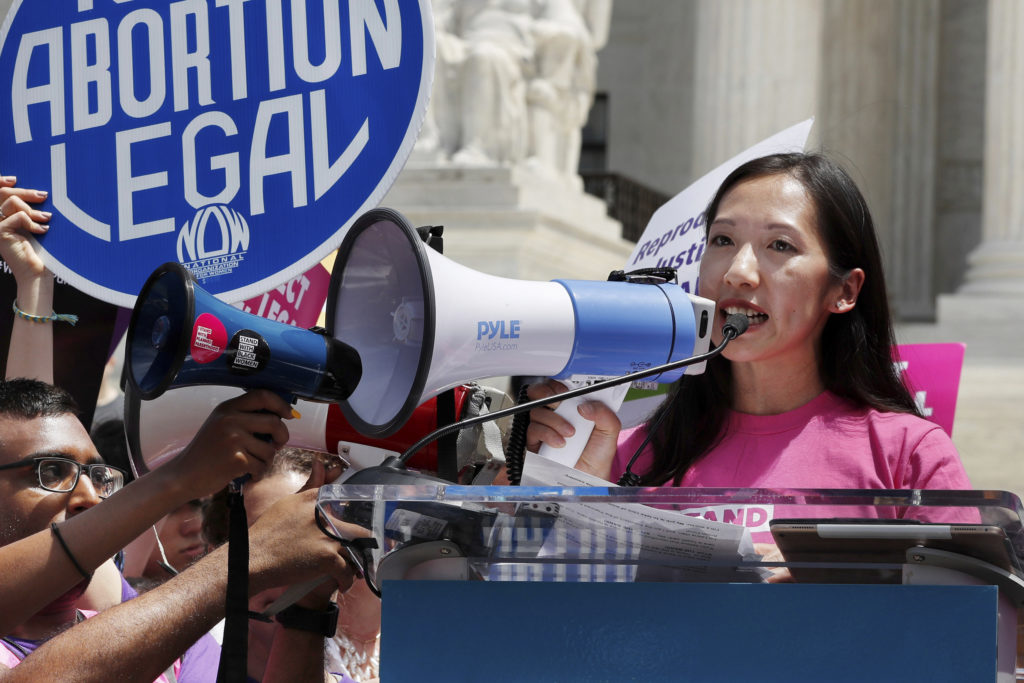
The president of Planned Parenthood, Dr. Leana Wen, was ousted Tuesday after just eight months on the job as the organization faced unprecedented challenges related to its role as the leading abortion provider in the U.S. Wen, in a Twitter post, said she learned that Planned Parenthood’s board “ended my employment at a secret meeting.” She indicated the board wanted more emphasis on political advocacy, while she sought to prioritize Planned Parenthood’s role as a provider of health care services ranging from birth control to cancer screenings. “We were engaged in good faith negotiations about my departure based on philosophical differences over the direction and future of Planned Parenthood,” Wen said. “I am stepping down sooner than I had hoped.” Her departure came as the Trump administration announced it would start enforcing new rules that ban taxpayer-funded family planning clinics referring women for abortions. Planned Parenthood, the largest recipient of those funds, says it will not abide by those rules. Without elaboration, Planned Parenthood announced Wen’s departure via a Twitter post, thanking her for her service and wishing her luck going forward. It also announced that Alexis McGill Johnson, co-director of a research consortium called the Perception Institute, will serve as acting president of Planned Parenthood and its political wing, the Planned Parenthood Action Fund, while a search for new permanent leader is conducted. Wen, a Chinese immigrant who fled her native country when she was a child, took over as Planned Parenthood’s leader in November, succeeding Cecile Richards, who had been president since 2006. Wen had been Baltimore’s health commissioner since 2015. Wen’s tenure coincided with major challenges for the U.S. abortion-rights movement, in which Planned Parenthood has long played a major role. Emboldened by a strengthened conservative presence on the U.S. Supreme Court, several Republican-controlled state legislatures have enacted laws this year aimed at banning most abortions. None of the laws have taken effect, but backers hope they might eventually lead the high court to overturn the 1973 Roe v. Wade ruling that establish a nationwide right to abortion. Meanwhile, the Trump administration has moved to withhold federal family planning funds from clinics, including Planned Parenthood’s, that refer women for abortions. With about 400 clinics, Planned Parenthood is the largest provider in the federal family planning program for low-income women, known as Title X. The program does not pay for abortions, but until now clinics had been able to refer women for the procedure. Planned Parenthood clinics have long been a target for religious and social conservatives because the clinics separately provide abortions. Jacqueline Ayers, Planned Parenthood’s top lobbyist, said its clinics will stop accepting federal money and tap emergency funding as they press Congress and the courts to reverse the administration’s ban. Title X serves about 4 million women annually through independent clinics. Taxpayers provide about $260 million a year in grants to clinics, but that money by law cannot be used to pay for abortions. In a letter to her colleagues at Planned Parenthood, Wen said she had believed its primary mission was to be a health care organization, more so than an advocacy organization. “With the landscape changing dramatically in the last several months and the right to safe, legal abortion care under attack like never before, I understand the shift in the Board’s prioritization,” Wen wrote. By David Crary AP National Writer. Republished with permission of the Associated Press.
