
Jury: Democratic PAC defamed Roy Moore, awards him $8.2M
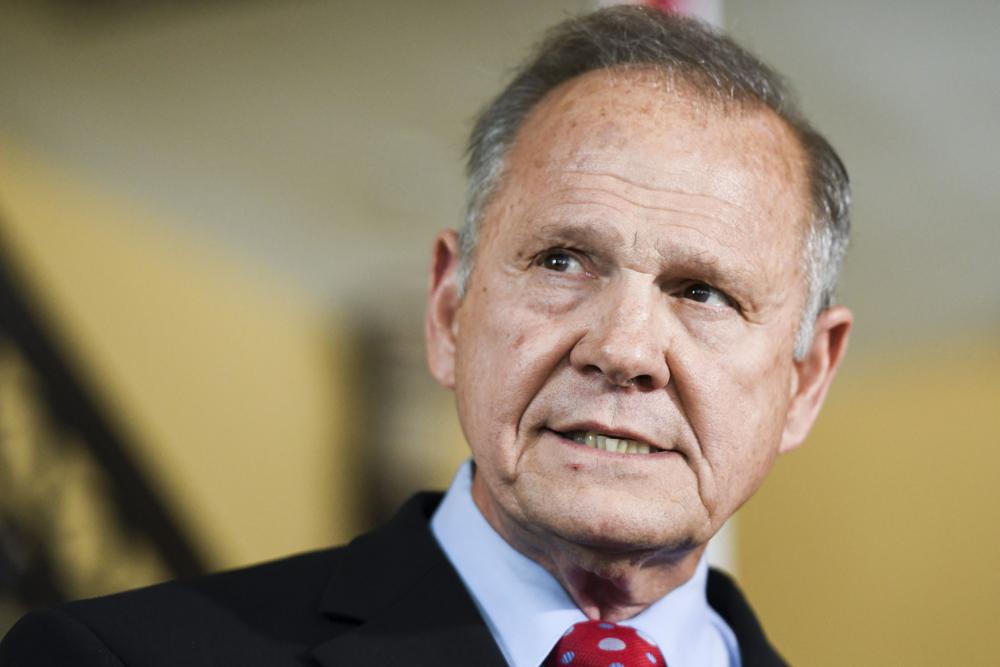
A federal jury awarded Republican Roy Moore $8.2 million in damages Friday after finding a Democratic-aligned super PAC defamed him in a TV ad recounting sexual misconduct accusations during his failed 2017 U.S. Senate bid in Alabama. Jurors found the Senate Majority PAC made false and defamatory statements against Moore in one ad that attempted to highlight the accusations against Moore. The verdict, returned by a jury after a brief trial in Anniston, Alabama, was a victory for Moore, who has lost other defamation lawsuits, including one against comedian Sacha Baron Cohen. “We’re very thankful to God for an opportunity to help restore my reputation, which was severely damaged by the 2017 election,” Moore said in a telephone interview. Ben Stafford, an attorney representing Senate Majority PAC, said in an emailed statement that they believe the ruling would be overturned on appeal. Moore, a former Republican judge known for his hardline stances opposing same-sex marriage and supporting the public display of Ten Commandments, lost the 2017 Senate race after his campaign was rocked by misconduct allegations against him. Leigh Corfman told The Washington Post and said Moore sexually touched her in 1979 when she was 14 and he was a 32-year-old assistant district attorney. Moore denied the accusation. Other women said Moore dated them or asked them out on dates when they were older teens. The accusations against Moore contributed to his loss to Democrat Doug Jones, the first Democrat to represent Alabama in the Senate in a quarter-century. The seat returned to Republican control with the 2020 election of Tommy Tuberville, a former college football coach. Senate Majority PAC funded a group called Highway 31 that ran a $4 million advertising blitz against Moore. The lawsuit centered on one TV commercial that recounted accusations against Moore. Moore’s attorneys argued the ad, through the juxtaposition of statements, falsely claimed he solicited sex from young girls at a shopping mall, including another 14-year-old who was working as a Santa’s helper, and that resulted in him being banned from the mall. The advertisement began with: “What do people who know Roy Moore say?” It followed with the statements “Moore was actually banned from the Gadsden mall … for soliciting sex from young girls” and “One he approached was 14 and working as Santa’s helper.” Wendy Miller had previously testified that she met Moore when she was 14 and working as a Santa’s helper at the local mall. She testified Moore told her she was pretty, asked her where she went to high school, and offered to buy her a soda. He asked her out two years later, but her mother told her she could not go. Moore’s attorneys argued the juxtaposition of statements in the ad painted Moore in a false light and falsely made it look like he was soliciting sex from girls at the mall. “In their ad, they strung quotes together to make a single statement. That’s what the jury found offensive. They got up and lied and said they didn’t intend that,” Jeffrey Scott Wittenbrink, an attorney for Moore, said. The Senate Majority PAC had argued the ad was substantially true and that there were widespread reports about Moore’s inappropriate behavior at the mall. An attorney said they planned to appeal. According to a Thursday court filing from Senate Majority, a Gadsden police officer who worked as security at the Gadsden Mall in the late 1970s — J.D. Thomas — testified that he told Moore not to return to the mall after receiving complaints from store managers that Moore was asking out teen employees or making them uncomfortable. Moore maintained he was never banned from the mall. “No amount of deflection or distraction from Roy Moore will change the fact that multiple individuals testified under oath to corroborate credible accusations against him. Many others have come forward to make their allegations public, at serious personal cost. We do not think this verdict is the right decision, but we believe the facts are clear, and this ruling will be overturned on appeal,” Stafford, an attorney representing Senate Majority PAC, said in an emailed statement. Republished with the permission of The Associated Press.
Jury: No defamation from Roy Moore or woman who accused him

A jury on Wednesday found that no defamation occurred between former U.S. Senate candidate Roy Moore and the woman who accused him of molesting her when she was 14. In allegations that roiled the 2017 Senate race in Alabama, Leigh Corfman said Moore sexually touched her in 1979 when she was a teen, and he was a 32-year-old assistant district attorney. Corfman filed suit alleging Moore defamed her by branding her a liar when he denied the accusations. Moore countersued, claiming Corfman injured his reputation with false allegations meant to hurt him politically. The jury deliberated for about three hours before ruling that neither party had prevailed in their claim against the other. Moore said afterward that the decision was vindication for him, and a “very heavy burden” had been lifted. “There is no other way to interpret this but a victory,” Moore said, with his wife, Kayla, standing beside him. “I’ve always said these allegations were false and malicious. I mean that today. I’ll say that today very clearly. There were meant to overturn a very successful election in 2017 to the United States Senate, and they did exactly that,” Moore said. Corfman’s attorneys rubbed her back, seemingly to comfort her after the verdict was read. Corfman attorney Neil Roman said the decision was not what they had hoped for but noted that jurors must have given credibility to her claim because they didn’t rule Corfman defamed Moore when she told The Washington Post he molested her. “This is not a victory for Roy Moore. It is not a vindication of him. Although we are disappointed that the jury did not find that Mr. Moore’s statements about Leigh rose to the level of defamation, we are gratified that the jury necessarily found Leigh was telling the truth about her experiences with Mr. Moore in 1979,” Roman said. Roman maintained the jury “believed Leigh.” “And that’s important,” Corfman interjected. Asked about her reaction to the verdict, Corfman said the trial was somewhat emotional for her. “I’ve lived with this for over 40 years. And to have it once again brought out in this manner is difficult for me,” Corfman said. After meeting for about an hour Tuesday, the jury asked to view videos when they returned Wednesday of statements Moore made at campaign events and in media interviews denying the accusations. Jurors also asked for a definition of defamation under state law. Circuit Judge John Rochester repeated instructions on the law, including that to find defamation, jurors must determine that Moore or Corfman made false public statements — either knowingly or with reckless disregard for the truth — that damaged the reputation of the other. Although Corfman was seeking only a declaration that she was defamed, Moore was asking for money. Corfman’s allegations, first reported by The Washington Post, upended Moore’s Republican campaign in 2017, and he lost to Doug Jones, a former federal prosecutor who became the first Alabama Democrat elected to the Senate in 25 years. Jones lost the next election to Republican Tommy Tuberville, who now holds the Senate seat. Moore, a conservative Christian known as the “Ten Commandment judge” for displaying the Old Testament laws in courthouses, was twice removed as chief justice of the Alabama Supreme Court for violating judicial ethics rules. Republished with the permission of the Associated Press.
Jury begins deliberations in Roy Moore defamation case

Jurors began deliberating Tuesday on dueling defamation claims filed by former U.S. Senate candidate Roy Moore and a woman who accused him of sexually molesting her decades ago when she was 14. An attorney for Leigh Corfman, whose account was first published by The Washington Post in 2017, told jurors in closing arguments that the case is ultimately about who they believe is telling the truth. “Who do you believe? Do you believe Leigh Corfman or do you believe Roy Moore?” attorney Jeff Doss asked. Corfman maintains that Moore sexually touched her in 1979 when she was a teen and he was a 32-year-old assistant district attorney. Corfman filed suit alleging Moore defamed her by branding her a liar when he denied the accusations. Moore countersued, claiming Corfman injured his reputation with false allegations meant to hurt him politically. Jurors will decide both claims at the trial. After meeting for about an hour, the jury asked to break for the day and view videos in evidence when they return Wednesday. The judge said they could. The panel did not indicate what videos they wanted to see. Moore attorney Julian McPhillips told jurors that the accusations, raised during the 2017 Senate race in Alabama, “put Mr. Moore and his family through holy hell.” “She couldn’t have hurt Roy Moore more if she had shot him with a gun, shot him through the heart,” McPhillips said of Corfman. Corfman said she met Moore at the Gadsden courthouse when he offered to sit with her while her parents were in a custody hearing. She said he asked for her telephone number and twice brought her to his home. On one occasion, she said, he took off her clothes and touched her over her bra and panties. Moore testified that the accusation was false and denied that he knew Corfman. Attorneys in closing arguments gave diverging views about the truth and who was damaged in the wake of the accusation that rocked the Senate race. “Your verdict will send a powerful message to Roy Moore that the truth still matters,” Doss said. Melody Eagan, another of Corfman’s attorneys, said Moore victimized Corfman twice: once in 1979 and again in 2017 when he “drug her good name through the mud.” Moore’s attorneys asked jurors to find that Corfman defamed the former Alabama judge with the accusation that seemingly brought an end to his political career and led to national scorn. McPhillips suggested the accusation was the product of either teenage imagination or politics. Moore is asking the jury to award him monetary damages. “If there was any truth to this or any motive that was good or decent, it would have come out long before — long before 32 days before an election,” McPhillips said. Corfman’s attorneys told jurors her account is corroborated by other testimony. Two childhood friends testified during the trial that Corfman as a young teen told them she was seeing an older, adult man, and one said she named Moore. Corfman’s mother and an attorney testified that Moore sat with Corfman outside a 1979 custody hearing, although attorney Charles Boyd conceded on cross-examination that he might be wrong about the year. Corfman’s attorneys presented the testimony of two women who said they dated Moore as teens and three others who said Moore asked them out when they were teens. Wendy Miller testified that Moore asked her out when she was 15 or 16, although she wasn’t sure if Moore knew her age. Another testified that Moore called her high school when she was in trigonometry class after meeting her at the mall. Moore’s attorneys noted in closing arguments that none of the women alleged wrongdoing by Moore. “I don’t know when it became a crime to date people,” McPhillips said during closing arguments. McPhillips appeared to downplay the accusation at one point, saying the alleged touching was “child’s play” to what two former presidents have been accused of doing. He did not elaborate. Eagan responded in her closing argument that she was horrified McPhillips used that phrase when discussing the touching of a 14-year-old girl “over her bra and over her panties.” Corfman’s allegations roiled Moore’s campaign and he ended up losing to Doug Jones, who became the first Alabama Democrat elected to the Senate in 25 years. Jones lost the next election to Republican Tommy Tuberville, who now holds the Senate seat. Republished with the permission of the Associated Press.
Roy Moore gives combative testimony in defamation case
A combative Roy Moore took the witness stand Thursday in a defamation case against him, insisting he did not know a woman who says he sexually molested her when she was 14. Moore was called to testify by attorneys for Leigh Corfman in a trial dealing with dueling defamation lawsuits they filed against each other in the wake of a sexual misconduct allegation that rocked the 2017 U.S. Senate race in Alabama. Corfman says the former Alabama judge and failed Senate candidate defamed her when he denied her accusations as false and malicious. Moore countersued. “I never met that woman,” Moore said loudly, pointing at Corfman as she sat with her attorneys. The outburst followed an emotional moment earlier in the trial when Corfman testified that Moore knows what he did to her. Corfman said she met Moore in 1979 when she was 14 and he was in his 30s. She described how he touched her over her underwear after bringing her to his home. At one point Corfman stared from the witness stand at Moore, who stared back at her. “It did happen, and he knows that it happened,” Corfman testified Tuesday. She said his denials damaged her reputation. The allegations overshadowed the conservative Republican during the 2017 campaign when Corfman shared her story with a reporter from The Washington Post. Moore ultimately fell in a stunning red state defeat to Doug Jones, the first Alabama Democrat elected to the Senate in 25 years. Republican Tommy Tuberville defeated Jones in the next election. The presiding judge had to gently chide Moore multiple times Thursday to answer questions as they were asked. Asked if he was afraid 2017 voters would view the conduct as inappropriate, Moore said: “The only thing inappropriate in this case is the testimony that I knew her and did anything to her.” Corfman’s attorneys earlier in the day presented the testimony of four women who said Moore asked them out or dated them when they were teens. None accused him of misconduct Republished with the permission of the Associated Press.
Dueling defamation suits: Woman testifies against Roy Moore
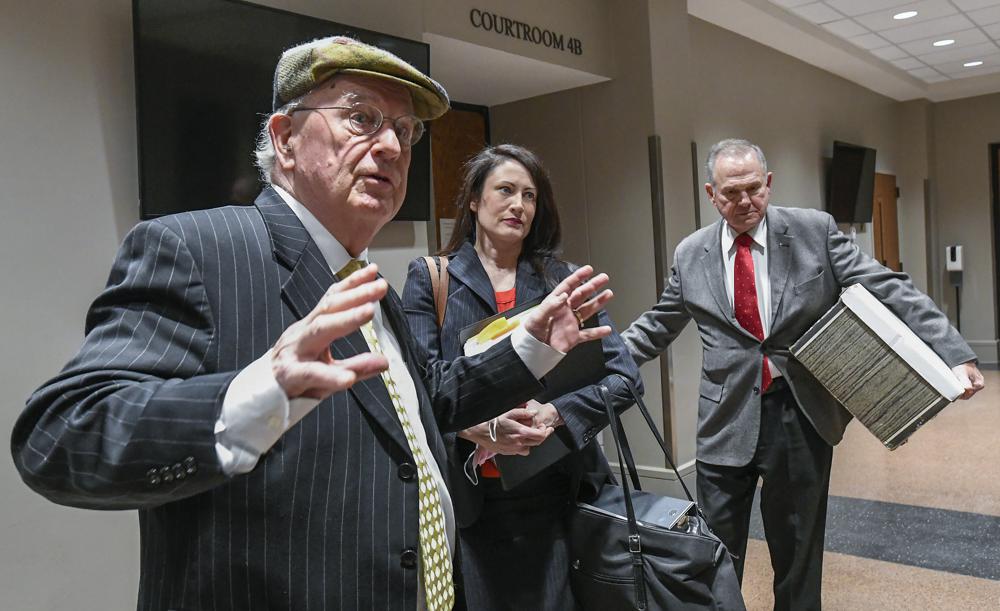
A woman who accused failed U.S. Senate candidate Roy Moore of molesting her decades ago when she was 14 testified Tuesday that Moore “knows that it happened” despite his public denials. Leigh Corfman took the witness stand in a trial dealing with dueling defamation lawsuits that she and Moore filed against each other in the wake of a sexual misconduct allegation that rocked the 2017 U.S. Senate race in Alabama. Corfman testified about meeting Moore in 1979 when she was 14 and how he touched her after bringing her to his home. At one point, Corfman stared from the witness stand at Moore, who stared back at her. “It did happen, and he knows that it happened,” Corfman said. She said his denials damaged her reputation. “He has done everything possible to damage my veracity, the truth of my words, the statements I have made about his sexual molestation of me at 14. He knows just as well as I do that he was there,” Corfman testified. The allegations overshadowed the conservative Republican during the 2017 campaign as Moore ultimately fell in a stunning red state defeat to Doug Jones, the first Alabama Democrat elected to the Senate in 25 years. Republican Tommy Tuberville defeated Jones in the next election. Corfman testified that she decided to tell her story in 2017 when approached by a reporter from The Washington Post. Attempting to link the accusation to political motivations, Moore’s attorney Melissa Isaak, questioned Corfman during cross-examination on whether she hoped Moore would lose the 2017 election. Isaak also asked Corfman if she objected to her photo being used on anti-Moore campaign materials. “Well, I didn’t want to see my predator sitting in the Senate,” Corfman responded. Corfman conceded that Moore didn’t use the word liar to describe her but said he used words to the same effect. During opening statements, lawyers gave divergent views of Corfman and Moore and what happened in 1979. Lawyers for Moore told jurors that he doesn’t know Corfman, whom they described as being motivated by politics and a desire to be in the limelight. Julian McPhillips, an attorney representing Moore, told jurors that Moore had never even seen Corfman until they were in the same room for jury selection. “Judge Moore dared to prove his innocence. He dared to deny he even knew her,” McPhillips said. He suggested Corfman’s accusations were brought to keep Moore from winning the 2017 Senate race. “The political motivation should be clear; why else would she do it?” McPhillips said. Melody Eagan, an attorney representing Corfman, told jurors earlier that you have to decide who you believe.” She said Moore victimized Corfman twice: once in 1979 when he sexually touched her in his home when she was 14 and decades later in 2017 when he “defamed her by dragging her name through the mud.” Eagan said Corfman met Moore in 1979 when she was 14 and sitting with her mother outside an Etowah County courtroom for a custody hearing, and Moore, an assistant district attorney at the time, offered to sit with her. After getting her telephone number, Moore brought her to his home on two occasions, kissing her and taking off her clothes, Eagan said. “He touched Leigh over her bra. And he touched Leigh over her panties …. She was terrified,” Eagan said. Moore’s attorneys tried to put Corfman’s character on trial, calling her vindictive, attempting to question her about drug and alcohol use as a teen and adult, and questioning a decision by her mother, Nancy Wells, to let her daughter read Harlequin romance novels as a young teen. Wells, the first witness, said she had no doubt that it was Moore who approached her and her daughter at the courthouse in 1979. She said it was years later, when Corfman was an adult, that Corfman told her about what Moore had done. One of Corfman’s attorneys asked Wells if she had any personal knowledge of misconduct by Moore, who rose to prominence in state politics after hanging a Ten Commandments plaque on a courtroom wall. Moore was twice elected and removed as chief justice of the Alabama Supreme Court. “I just have what my daughter told me,” Wells replied. It’s unclear how long the trial might last. While Corfman is seeking only a ruling that Moore defamed her, McPhillips said Moore is seeking monetary compensation. Republished with the permission of the Associated Press.
Trial begins in accuser’s defamation case against Roy Moore
A jury was selected Monday in the defamation lawsuit filed by a woman who had accused failed U.S. Senate candidate Roy Moore of molesting her when she was 14. Leigh Corfman said Moore defamed her and made false statements as he denied her accusations during the 2017 U.S. Senate race in Alabama. The sexual misconduct allegations helped derail Moore’s hopes of winning the election. Moore, a Republican, lost the 2017 race to Doug Jones, the first Alabama Democrat elected to the U.S. Senate in 25 years. Jones was defeated in the next election by Republican Tommy Tuberville. A jury of seven men and five women — plus four alternates -— was seated Monday. Opening arguments are expected Tuesday. Corfman said she was a teen when Moore, then a 32-year-old assistant district attorney, touched her sexually during a 1979 encounter. Corfman was one of several women who said Moore pursued them when they were teens, and he was an adult. Moore has denied the accusations and countersued Corfman and other accusers for defamation. Her attorney, Neil Roman, said Monday that Corfman “is excited that after four years of waiting, she finally gets to make her case to a jury of her peers.” “By this lawsuit, I seek to do what I could not do as a 14-year-old — hold Mr. Moore and those who enable him accountable,” Corfman said in a 2018 statement when the lawsuit was filed. Moore has denied Corfman’s accusations. His lawyers maintain that he only defended himself against the accusations. “We just want the truth to prevail,” Moore told reporters as he left the courtroom. His attorney, Julian McPhillips, called the case an extension of Corfman “hungering for the limelight.” Corfman and Moore sat with their attorneys as their respective lawyers questioned potential jurors about the case, including their views on Moore. Corfman’s attorney asked if any had donated to the legal group that Moore founded. Moore’s attorneys asked potential jurors about their views on gay marriage, the public display of the Ten Commandments. Moore was twice removed as Alabama’s chief justice for defying, or urging defiance, of court orders regarding same-sex marriage and the public display of the Ten Commandments in a state court building. Both lawyers for Corfman and Moore said they were pleased with the selected jury. McPhillips said Corfman’s attorneys used their strikes to remove white panelists, leaving an almost entirely Black jury to hear the case against Moore, who is white. Lawyers said Circuit Judge John E. Rochester on Monday denied Moore’s request to dismiss the lawsuit before it went to trial. Corfman had also sued Moore’s campaign, but a judge dismissed that defamation claim. Corfman and her mother have said that Moore first approached her as she waited outside a custody hearing at the Etowah County courthouse. Corfman said she later arranged to meet Moore, and he took her to his home, where he initiated the encounter. Corfman said he took off her shirt and pants and removed his clothes except for his underwear before touching her over her bra and underpants. Corfman’s accusation was first reported by The Washington Post. Moore’s campaign was roiled by the accusations as he sought the U.S. Senate seat previously held by former President Donald Trump’s one-time attorney general, Jeff Sessions. Republished with the permission of the Associated Press.
Roy Moore’s campaign dismissed from Leigh Corfman’s defamation suit
The 2018 lawsuit against Judge Roy Moore for U.S. Senate Committee brought on by Leigh Corfman was recently dismissed by Circuit Court Judge John E. Rochester in Montgomery, Alabama. The ruling specifies that the Senate campaign could not be sued, however, a trial with Moore as the sole defendant is scheduled for Nov. 1, Al.com reported. In 2018, Corfman accused former U.S. Senate candidate Roy Moore of sexually assaulting her when she was 14. Moore vehemently denied Corfman’s allegations of abuse, calling them “politically motivated” and “malicious.” Moore then countersued Corfman for slander and defamation. “The statements made by Leigh Corfman were slanderous, libelous, and were of such magnitude as to amount to defamation of Mr. Moore,” read the counterclaim. “No evidence other than the self-serving testimony of Leigh Corfman exists to support her contention that she was sexually abused or pursued romantically by Mr. Moore when she was fourteen years of age.” The ruling stated Corfman had been found to be a limited-purpose public figure as a matter of law, making it even more difficult for her to prove defamation in this case. Judge Moore stated, “The court has finally recognized what we knew all along. My campaign for US Senate has in no way defamed plaintiff Leigh Corfman. We look forward to proving in open court, before a jury, her political motivation for making false allegations in my Senate campaign.”
Judge weighs defamation claim against Roy Moore
Lawyers squared off in state court Monday on whether Roy Moore made defamatory statements during the 2017 U.S. Senate race against a woman who accused him of sexual misconduct. Judge John E. Rochester held a hearing on Moore’s request for summary judgment in the defamation lawsuit against him. Leigh Corfman said Moore molested her decades ago, when she was 14 and he was 32. Corfman last year filed a lawsuit against Moore and his Senate campaign committee saying they defamed her as a liar when they denied the accusation. “We have repeated, systematic attacks on Ms. Corfman,” argued Jeff Doss, an attorney representing Corfman. Moore attorney Melissa Isaak argued that the political firebrand was merely defending himself by calling the accusations untrue. “Judge Moore is being sued for simply denying the allegations. … There is nothing that attacks Leigh Corfman,” she said. Moore, a former Alabama chief justice who was twice removed from the bench for defying court orders regarding same-sex marriage and the Ten Commandments, is asking a judge to rule that the statements could not be considered defamatory and to rule in his favor instead of sending the case to trial. The lawsuit cites statements denying the allegations and accusing Corfman of not telling the truth. Moore on several occasions denied knowing Corfman. In a church speech, he dismissed the misconduct allegations against him as “dirty politics.” Isaak said Moore and campaign volunteers and staff were expressing their opinions when they called the accusations politically motivated. She asked Rochester to evaluate each statement by Moore. Rochester did not indicate when he would rule. The lawsuit, filed in Montgomery Circuit Court, asks Moore to publicly apologize. When she filed the lawsuit in 2018, Corfman said she was seeking, “to do what I could not do as a 14-year-old — hold Mr. Moore and those who enable him accountable.” Moore lost the 2017 race to U.S. Sen. Doug Jones amid the allegations and is running again in the 2020 GOP primary for the Senate seat. Corfman was the youngest of several women who said Moore pursued them romantically when they were teens. Moore denied the misconduct allegations. Moore countersued Corfman and other accusers, but that lawsuit was paused pending the outcome of the Montgomery case. Republished with the permission of the Associated Press.
Roy Moore defamation lawsuit against accusers is paused
A judge has paused a defamation suit filed by Roy Moore against women who accused him during his unsuccessful U.S. Senate bid of past misconduct. Circuit Judge Albert Johnson ruled last month case will be held on the administrative docket until a related defamation case against Moore by one of the women is resolved. During Alabama’s 2017 special Senate race, several women accused Moore of having pursued relationships with them decades ago when they were teens and he was in his 30s. Leigh Corfman said Moore sexually touched her in 1979 when she was 14 and he was a 32-year-old prosecutor. Moore denied the allegations. Moore said Friday he went to court to clear his name and the court’s decision is “very unfair.” “Nothing that’s happened to me has been fair in court. Nothing,” Moore said. Corfman filed a defamation lawsuit against Moore last year. Four months later, Moore later countersued her and other accusers. Johnson says Corfman’s case will proceed first. Moore is a former Alabama chief justice who has a strong following among some evangelical voters. He was twice removed from the bench for defying, or urging defiance, of court orders regarding same-sex marriage and the public display of the Ten Commandments in a state court building. Support from evangelical voters helped Moore secure the GOP nomination to replace Jeff Sessions in the U.S. Senate, but Moore lost the 2017 Senate race to U.S. Sen. Doug Jones amid the accusations against the ex-justice. Moore is running for the Senate again. He is part of a crowded Republican primary field competing for the GOP nomination and the right to challenge Jones in 2020. Republished with permission of the Associated Press.
Lawsuit against Roy Moore won’t move counties says Alabama Supreme Court
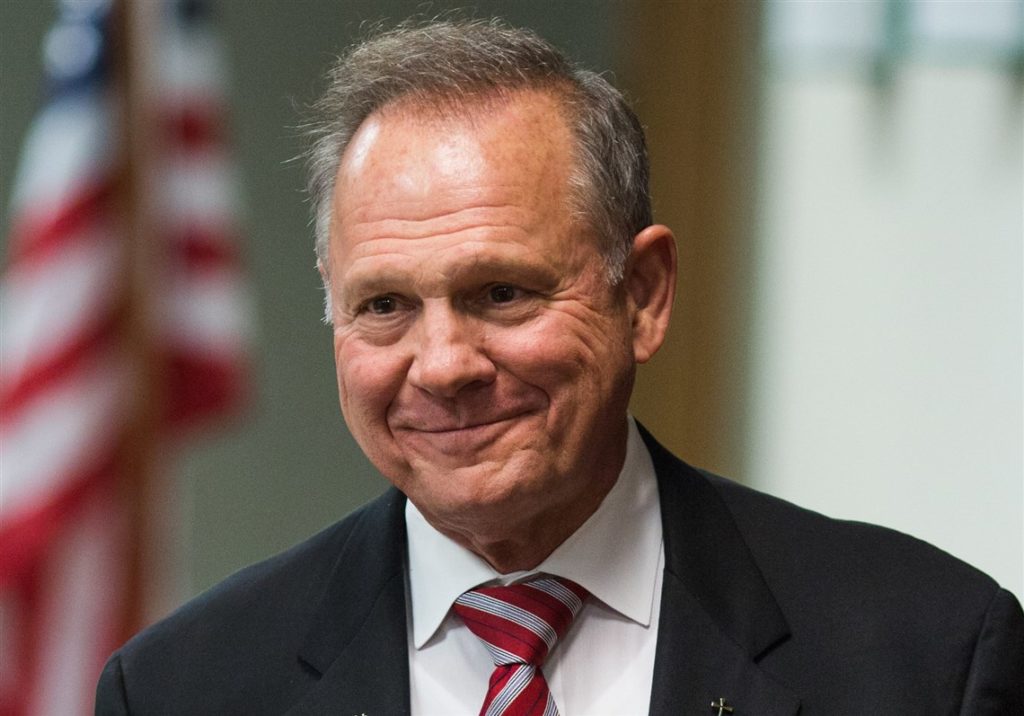
A defamation lawsuit filed against former Alabama Chief Justice and Republican Senate candidate Roy Moore by one of his accusers will remain in a Montgomery County court, the Alabama Supreme Court ruled Friday. Leigh Corfman, the woman who said Moore sexually assaulted her when she was 14, filed the suit in the Montgomery County Circuit Court back in January. Corfman specifically said she was only 14 years old when Moore, then 32, approached her outside a courtroom in Etowah County, Ala. According to the report, he ultimately drove her to his home in the woods,told her she was pretty and kissed her, and then undressed her. Moore has vehemently denied Corfman’s allegations of abuse, calling them “politically motivated,” “completely false” and “malicious.” She asserts those words are defamatory in the suit. On Friday, the Alabama Supreme Court denied Moore’s request to have the case heard in Etowah County, where both he and Corfman live, instead of Montgomery County where she filed the suit. “Because I have denied Leigh Corfman’s allegations of sexual misconduct, I will now be forced to try this case in a county where the supposed event did not occur, where she does not live, and where there exists no evidence or witnesses to prove anything. This is ridiculous!” Moore said Friday of the state high court’s decision. He continued, “The Court itself admits venue is proper in either county. Should not the case be tried in the county where we both live and where her reputation and character are well known? She herself has said: “There is no one here [Gadsden] that doesn’t know that I’m not an angel.” “Corfman based her defense of venue in Montgomery County on two statements. One was made by a nonparty and thus was irrelevant to the case, and the other was made in a court case where the statement was privileged. Yet the Supreme Court refused to consider these facts in making its decision,” Moore concluded.
Roy Moore countersues accuser Leigh Corfman for slander, defamation
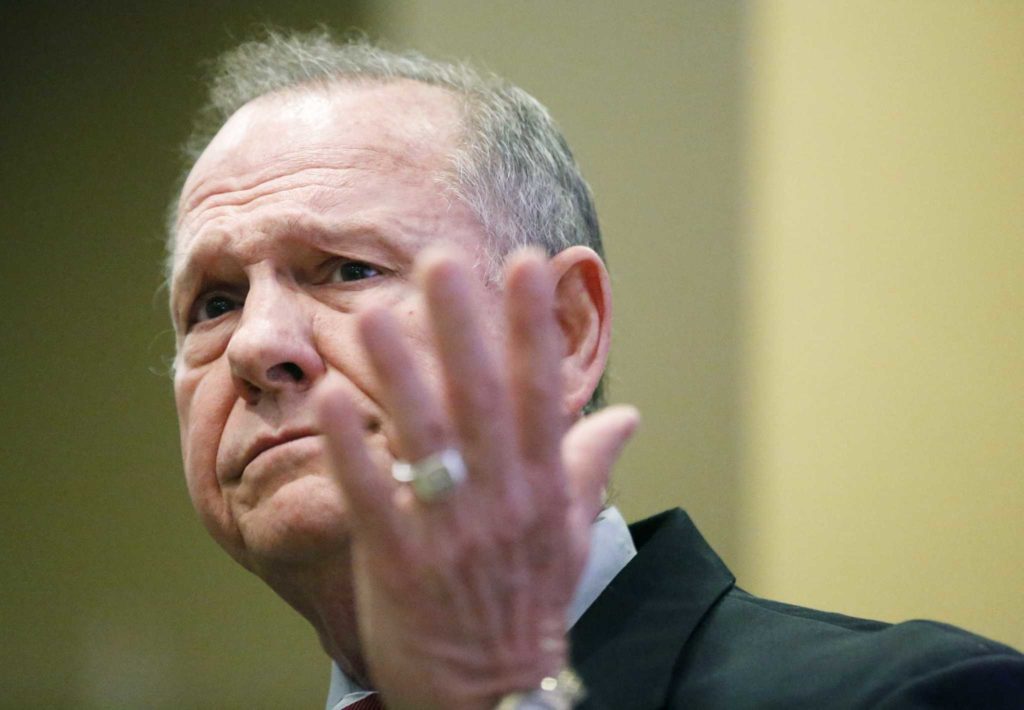
Former Alabama Chief Justice and U.S. Senate Republican nominee Roy Moore has filed a counterclaim for slander and defamation against Leigh Corfman, who has accused him of making unwanted sexual advances and filed a defamation lawsuit against him in January. In a 23-page filing made in Montgomery County Circuit Court, Moore accuses Corfman of making “slanderous” and “libelous” statements to the Washington Post. “The statements made by Leigh Corfman were slanderous, libelous and were of such magnitude as to amount to defamation of Mr. Moore,” reads the counterclaim. “No evidence other than the self-serving testimony of Leigh Corfman exists to support her contention that she was sexually abused or pursued romantically by Mr. Moore when she was fourteen years of age.” The claim continues, “Leigh Corfman knowingly, willingly and voluntarily made statements to the Washington Post regarding her alleged sexual abuse by Mr. Moore that she knew to be false. Leigh Corfman knowingly, willingly and maliciously made statements she knew to be false to the Washington Post with the intention and knowledge that such statements would damage the reputation of Mr. Moore.” Moore claims Corman’s allegations caused “irrevocable damage” to his reputation “that affected the outcome of the Senate election in December 2017.” “Mr. Moore avers that but for Leigh Corfman making false and malicious statements to members of national and local media, his reputation would not have suffered irrevocable damage that affected the outcome of the Senate election in December 2017,” the counterclaim added. In November, The Washington Post published a bombshell report with the accounts of Corfman and three other women who claimed Moore sexually pursued them when he was in his 30s and they were in their teens. Corfman specifically said she was only 14 years old when Moore, then 32, approached her outside a courtroom in Etowah County, Ala. According to the report, he ultimately drove her to his home in the woods,told her she was pretty and kissed her, and then undressed her. Moore has vehemently denied Corfman’s allegations of abuse, calling them “politically motivated,” “completely false” and “malicious.” She asserts those words are defamatory in the suit. Corfman is not seeking financial compensation, only legal fees, and is looking for Moore to publicly apologize for what he has said about her. She is also seeking a court-enforced ban on Moore or his campaign that would prohibit him from allegedly criticizing her in the future. One of Moore’s attorneys said this all has been a “political attempt” to smears Moore’s reputation. “This is and has been a political attempt to smear the good name and reputation of Judge Roy Moore and we will not let their injustice continue,” attorney Melissa Isaak said Tuesday. “Yesterday we filed claims for slander and defamation against Leigh Corfman, and claimed damages for attorneys fees under the Alabama Litigation Accountability Act. We also continue to argue that this case should be tried in Etowah County and wonder why Leigh Corfman has chosen to file this case in Montgomery and not Etowah County where both she and Judge Moore reside and where her own character and reputation are well known?”
Lawsuit again Roy Moore continues, judge refuses to dismiss
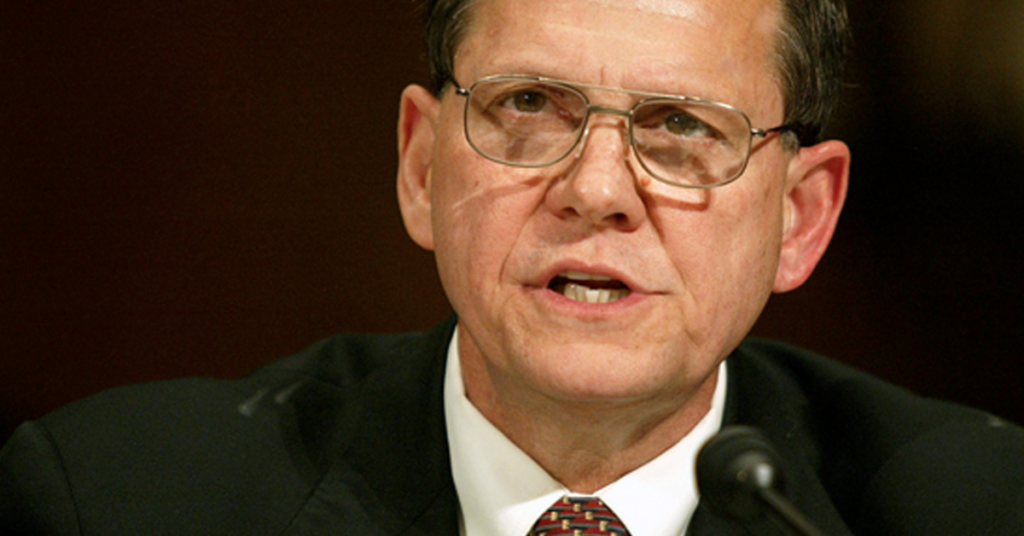
A Montgomery County judge has rejected former Alabama Chief Justice and U.S. Senate candidate Roy Moore’s request to have a defamation lawsuit against him thrown out. The judge also denied a request to move the suit to Etowah County. Montgomery County Circuit Judge Roman Shaul denied Moore’s request to dismiss the suit filed by Leigh Corfman. Corfman was one of the three women named in The Washington Post’s bombshell report back in November, during Alabama’s U.S. Senate special election, who all claimed Moore sexually pursued them when he was in his 30s and they were in their teens. Moore vehemently denied Corfman’s allegations of abuse, calling them “politically motivated,” “completely false” and “malicious.” Corfman asserted those words are defamatory in the suit she filed in January. Moore’s attorney contends Moore had a First Amendment right to defend himself. Corfman is not seeking financial compensation, only legal fees, and is looking for Moore to publicly apologize for what he has said about her. She is also seeking a court-enforced ban on Moore or his campaign that would prohibit him from allegedly criticizing her in the future. Judge Shaul also scheduled a formal court hearing in the case for Thursday, April 12.
