
Nikki Haley faces ‘high-wire act’ in 2024 bid against Donald Trump
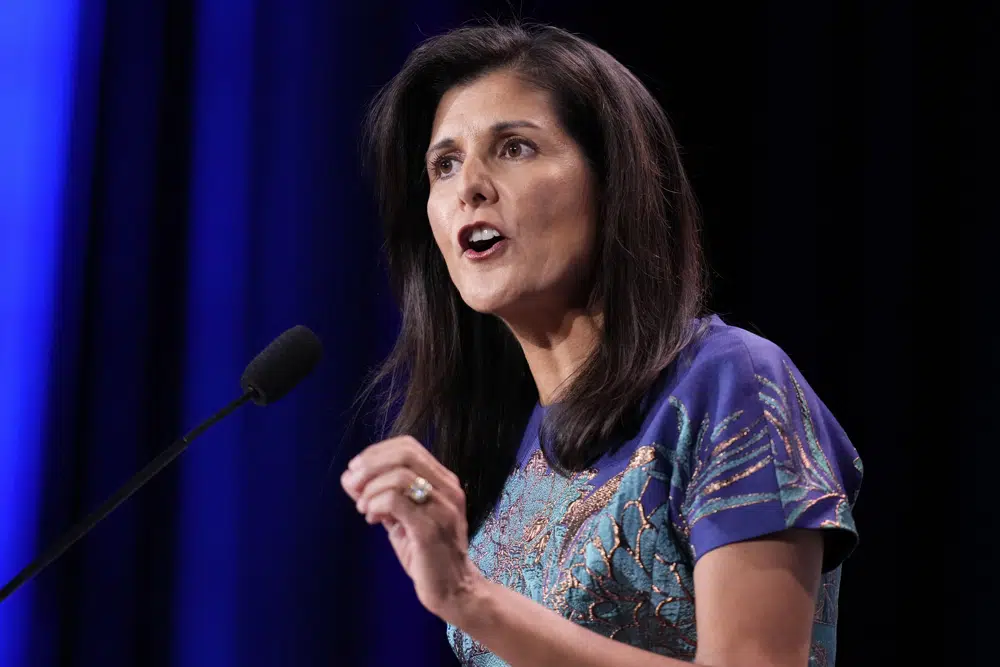
Few have navigated the turbulent politics of the Trump era like Nikki Haley. In early 2016, the then-South Carolina governor said she was “embarrassed” by candidate Donald Trump and decried his reluctance to condemn white supremacists. Nine months later, she agreed to join his Cabinet, serving as a key validator as Trump sought to win over skeptical world leaders and voters at home. And shortly after Trump left the White House, Haley, whose resume by then included an ambassadorship to the United Nations, vowed not to step in the way if he ran for the 2024 Republican presidential nomination. Yet on Wednesday, she is poised to become the first major Republican candidate to enter the race against him. “It’s going to be quite the high-wire act,” said veteran Republican strategist Terry Sullivan. “She says she’s always been an underdog. She will be again.” The 51-year-old Haley may be the first to take on Trump, but a half-dozen or more high-profile Republicans are expected to join the GOP’s 2024 presidential nomination contest over the coming months. Some would-be competitors may be more popular than Haley, even in South Carolina, where she lives and has established a campaign headquarters. Likely rivals include Sen. Tim Scott, a fellow South Carolinian and perhaps the most celebrated elected official in a state where Trump has already locked up endorsements from the governor and its senior senator, Lindsey Graham. Florida Gov. Ron DeSantis and former Vice President Mike Pence could also be formidable foes should they run, as widely expected. Indeed, on the eve of this week’s announcement, there is broad agreement that Haley — the only Republican woman of color expected in the 2024 contest, a politician who loves to remind people that she has never lost an election — is about to be tested as never before. Trump, for instance, has already stepped up his attacks on Haley. But allies describe the former governor, who is the daughter of Indian immigrants, as a savvy executive uniquely positioned to lead a new generation of Republicans. They understand that the fight ahead could get ugly. “She took the bull by the horns and said, ‘That doesn’t matter to me, I’m going to run,’” said longtime supporter Gavin J. Smith. “She did that when she ran for governor, and that’s what you’re going to see when she runs for president.” Perhaps more than anyone this young presidential primary season, Haley personifies the Republican Party’s shifting views on Trump. Her reversal on whether to challenge the former president was based less on concerns about his divisive leadership or policy disagreements than the growing belief within the GOP that Trump is losing political strength. New York-based Republican donor Eric Levine says he’s convinced that another Trump Republican nomination would lead to his party’s destruction. Haley, he said, is among the three favorite Trump alternatives. “I think as a woman of color and a daughter of legal immigrants from India, she’d give the Democratic Party no reason to exist. All their woke crap goes out the window,” Levine said. “I think she’s a spectacular candidate.” Haley’s announcement will take place Wednesday in Charleston, the historic coastal city where her campaign will be based. Almost immediately, she’ll travel to meet voters in New Hampshire and Iowa. She’s entrusted her campaign to a collection of senior staff led by longtime aides. Betsy Ankney, who heads up Haley’s PAC, will manage the campaign, with the PAC’s development director, Mary Kate Johnson, as finance director, Haley’s team told The Associated Press. Longtime Haley adviser Chaney Denton and Nachama Soloveichik, who was a spokeswoman for recently retired Pennsylvania Sen. Pat Toomey, will head up communications. Strategist Jon Lerner will serve as senior adviser, and Barney Keller of Jamestown Associates will be Haley’s media consultant. For Haley, this week’s launch marks a significant step on a long road that began in South Carolina’s “Good Old Boys Club,” she wrote in a Friday fundraising appeal. “People thought I was too brown … too female … too young … too conservative … too principled,” she wrote. Born in 1972 in rural South Carolina, Haley has long spoken of a Southern rural childhood in which she felt she didn’t fit. She was raised in the Sikh faith with a mother who wore traditional saris and a father clad in a turban. “Nikki has been regularly underestimated,” said Catherine Templeton, a Republican who served Haley in two roles, leading South Carolina’s labor and public health agencies. “But it makes her work harder.” In her first campaign in 2004, Haley, formerly an accountant, defeated the longest-serving member of South Carolina’s House. After six years in the Legislature, she was considered a longshot when she mounted her 2010 gubernatorial campaign. The GOP field was filled with more experienced politicians, and at times, she faced blatant racism. Then-state Sen. Jake Knotts appeared on a talk show and used a racial slur in reference to Haley. He apologized, saying it was meant as a joke. Still, Haley became the first woman and person of color elected South Carolina’s governor — and the nation’s youngest state executive. After winning reelection in 2014, her second term was marred by crisis. She spent weeks attending funerals of Black parishioners gunned down by a self-avowed white supremacist at a Charleston church in 2015. Later that year, she pushed for and signed legislation to remove the Confederate flag from the Statehouse grounds, where it had flown for more than 50 years. Haley’s political skills were tested in a different way in 2016, as Trump went from late-night television punchline to serious Republican presidential contender. She endorsed Florida Sen. Marco Rubio ahead of South Carolina’s high-stakes Republican primary, then backed Texas Sen. Ted Cruz once Rubio was knocked out. Then, Haley described Trump as “everything a governor doesn’t want in a president.” She also said she was “embarrassed” by his attacks against former President George W. Bush and condemned Trump’s reluctance to disavow the KKK. But shortly after Trump won the presidency, she agreed to serve as the new administration’s ambassador to the United Nations, a Cabinet-level position.
Environmental groups meet with Birmingham Water Works board on Cahaba Beach Road project
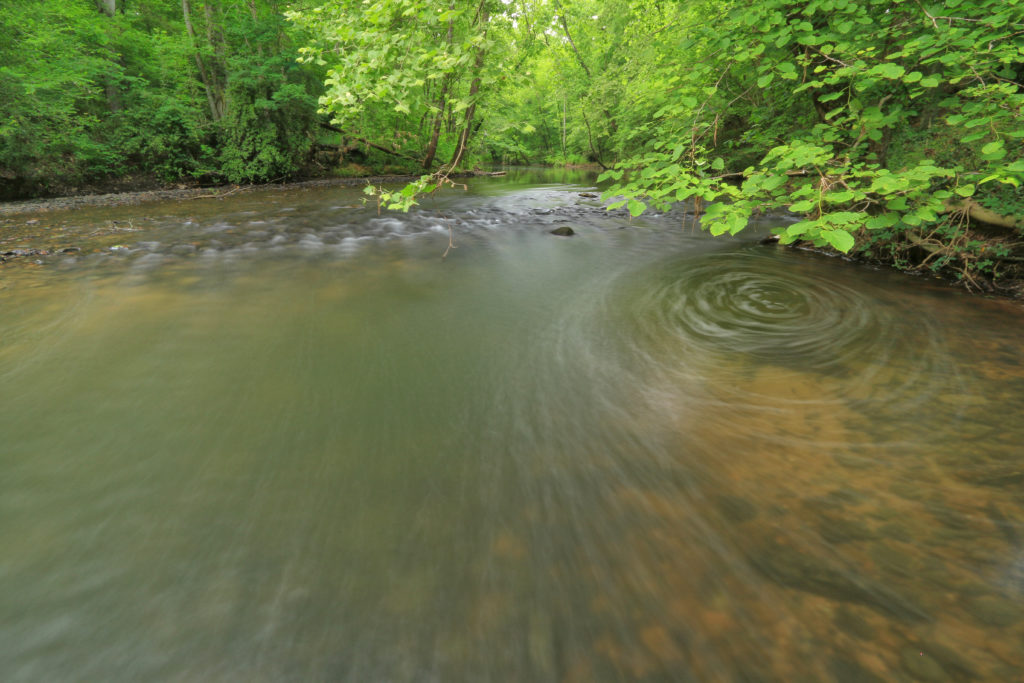
Environmental groups in the Birmingham area are teaming up to keep ALDOT‘s Cahaba Beach Road project from being built. On Thursday, the Cahaba River Society and Cahaba Riverkeeper attended the Birmingham Water Works Board of Directors meeting presenting their cases for why the road should not be built. The proposed road would stretch across the Little Cahaba River from U.S. 280, allowing over 8,000 cars a day to travel across an environmentally sensitive area, and cost anywhere from $10 million to $20 million WBHM reported According to Save the Cahaba, the river is vital for the areas drinking water as the Little Cahaba River is the connection between the Lake Purdy reservoir and the main Cahaba River. “Our biggest concern is how this will impact the forests that keep our drinking water clean,” Beth Stewart, Cahaba River Society executive director told the board, according to AL.com. “This road could cut a swath 100 to 200 feet wide, and ALDOT’s own estimates indicate if they had to grade and cut forest in that whole area, it could be the equivalent of about 40 football fields worth of forest loss and grading and disruption to the natural hydrology that’s keeping that water in the Little Cahaba clean,” she continued. Although their arguments were presented, the board made no motion to vote on the subject. Last month, the groups attended a public involvement meeting hosted by ALDOT. Over 250 people attended the meeting, including members from the The Cahaba River Society, Cahaba Riverkeeper, Alabama Rivers Alliance and Southern Environmental Law Center. But ALDOT and other civil engineers say the road will cut down on travel time, improve access to roads on both sides of the river, and improve connectivity between U.S. 280 and the Liberty Park area. According to ALDOT’s “next steps” listed on the project’s website; they will be conducting several different environmental analysis before proceeding with the project. ALDOT is considering several alternatives, including not building the road at all. One concerned Alabama resident has also started a Care2 petition to stop the project. So far, the petition has collected 1,320 signatures of its 2,000 signature goal. Once complete, it will be shared with the Alabama Department of Transportation; Federal Highway Administration; Shelby County Commissioners Lindsey Allison and Rick Shepard; Alabama Senator Jabo Waggoner; Alabama Senator Mark Blackwell.
