
U.S. Department of Justice has seized $1.4B in pandemic relief funds
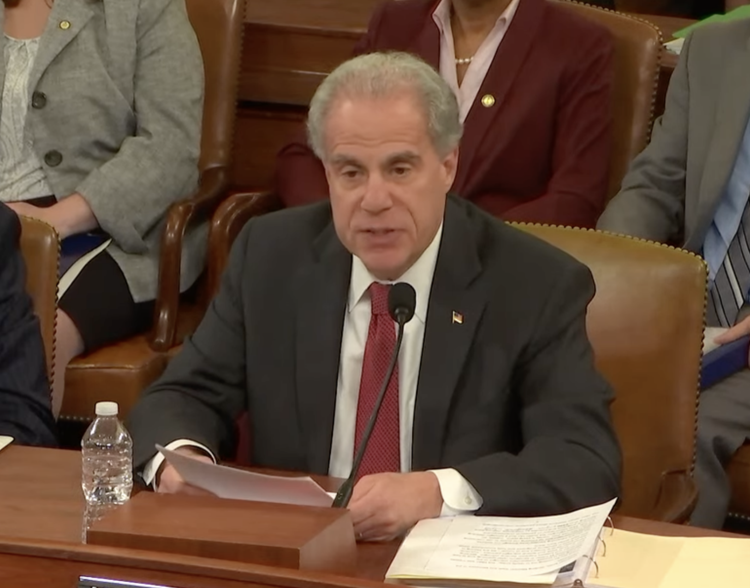
A federal campaign to combat COVID-19 fraud resulted in 718 enforcement actions, including criminal charges against 371 defendants, for crimes related to more than $836 million in alleged COVID-19 fraud. The U.S. Department of Justice announced the results of the campaign on Wednesday. “The Justice Department has now seized over $1.4 billion in COVID-19 relief funds that criminals had stolen and charged over 3,000 defendants with crimes in federal districts across the country,” Attorney General Merrick Garland said in a statement. Deputy Attorney General Lisa Monaco made the announcement at a roundtable meeting of senior Justice Department officials, law enforcement partners and Office of Inspector General executives. Monaco also announced the launch of two additional COVID-19 Fraud Enforcement Strike Forces: one at the U.S. Attorney’s Office for the District of Colorado, and one at the U.S. Attorney’s Office for the District of New Jersey. Those two strike forces are in addition to the three strike forces launched in September 2022 in the Eastern and Central Districts of California, the Southern District of Florida, and the District of Maryland. “The two new Strike Forces launched today will increase our reach as we continue to pursue fraudsters and recover taxpayer funds, no matter how long it takes,” Monaco said in a statement. The 718 law enforcement actions include criminal charges, civil charges, forfeitures, guilty pleas, and sentencings, with a combined total actual loss of more than $836 million, according to the Justice Department. Criminal charges were filed against 371 defendants, and 119 defendants have pleaded guilty or were convicted at trial during the sweep. More than $57 million in court-ordered restitution was imposed. Prosecutors worked with law enforcement to secure forfeiture of more than $231.4 million. Michael Horowitz, chairman of the Pandemic Response Accountability Committee, said early mistakes cost taxpayers. “Agency decisions in the early months of the pandemic that prioritized speed over accuracy in delivery of relief funds led to brazen fraud and outright theft of millions of dollars,” he said in a statement. Horowitz testified in February that federal agencies failed to use some of the tools at their disposal to prevent fraud, including the Do Not Pay list. The U.S. Department of the Treasury had set up the list of suspicious payees who should trigger additional screening. He said advance screening with the U.S. Department of the Treasury Do Not Pay list could have saved taxpayer money. Republished with the permission of The Center Square.
Joe Guzzardi: DOJ May Intervene in Florida, Texas Transport Plans

Hillary Clinton, Yale Law School ’73, said on MSNBC that sending 50 illegal immigrants to Martha’s Vineyard was “literally human trafficking” by Florida Gov. Ron DeSantis, Harvard Law School, ‘05. The MSNBC co-host, Joe Scarborough, University of Florida School of Law ‘90, accused DeSantis of using innocent people as political pawns. Texas Sen. Ted Cruz, Harvard Law School ‘95, suggested that DeSantis and fellow Texan Gov. Greg Abbott, Vanderbilt University Law School, ’84, should send more migrants to blue cities and states. Cruz, pointing to the millions of illegal immigrants that the administration has admitted, bussed, and flown around the nation, called President Joe Biden, Syracuse University School of Law ’68 and former Senate Judiciary Chair, “the biggest human trafficker on the face of the planet.” Biden demanded that the governors stop their “un-American” political stunts. Clinton, Scarborough, and Biden have support from like-minded lawyers. Professors from Notre Dame, Georgetown, and other universities, along with civil rights advocates, came down hard on DeSantis and Abbott. The harshest criticism came from Calif. Gov. Gavin Newsom, who requested that the Department of Justice open an investigation into the Martha’s Vineyard flights on charges that the migrants were “kidnapped.” Move along. Nothing to see here; just angry lawyers going after each other, hammer and tongs. The voting public, however, is grappling with a contradiction. If the Biden administration can order Customs and Border Patrol to put thousands of aliens on buses and planes to send them throughout the interior of the United States, then the same flexibility should apply to the governors, assuming, of course, that the migrants agree to be flown to Martha’s Vineyard or driven to Washington, D.C. or New York. Jonathan Turley, George Washington University law professor, provided his perspective. Turley wrote that to call transporting aliens kidnapping is “to take a flight from one’s legal senses.” On his blog, Turley stated that human trafficking, a legal term, is altogether different than moving humans in traffic. The governors’ actions aren’t an attempt to put humans, through fraud, coercion, or force, into peonage, involuntary servitude, or sex slavery. In conclusion, Turley wrote that many objections could be made to the governors’ transport programs, but not kidnapping and human trafficking. The tensions between the states and the cities are just beginning. DeSantis promised to fly more migrants to other sanctuary cities, but not necessarily Martha’s Vineyard. That way, DeSantis explained, the sanctuaries can “put their money where their mouth is.” A possible 2024 presidential candidate, DeSantis may sense that while some American voters support immigration, they object to Biden-style open borders. Political expediency is at play in Texas, too. Abbott is up for re-election in November, and he’s counting on removing illegal immigrants as integral to his victory. The border invasion is expensive. As part of its $4 billion Operation Lone Star program, Texas has installed more than 42 miles of concertina wire along its Southern border near Eagle Pass and Del Rio, two communities through which millions have passed. A potential roadblock – a boulder, really – may stand in the governors’ way. In a statement, the Boston nonprofit, Lawyers for Civil Rights, promised to investigate “the inhumane manner in which they [the Martha’s Vineyard migrants] were shipped across the country, to determine the responsible parties, whether state or federal criminal laws against human trafficking and kidnapping were violated, and what other legal remedies are available.” Even though no evidence exists that the migrants were treated inhumanely, and as Turley warned, trafficking and kidnapping are specious charges, LCR will press on. The legal advocates hope to gather pro bono attorneys, immigration experts, law enforcement, and social services providers. If that’s not enough, Deputy Attorney General Lisa Monaco confirmed that the DOJ is reviewing inquiries like Newsom’s calling for an investigation. The DOJ’s involvement, inevitable in the Biden administration, especially if the governors escalate, would be the end of the line for the governors’ strategy to give sanctuary cities a tiny taste of their own medicine. Not a single voice among the many urged border enforcement. Joe Guzzardi is a nationally syndicated newspaper columnist who writes about immigration and related social issues. Joe joined Progressives for Immigration Reform in 2018 as an analyst after a ten-year career directing media relations for Californians for Population Stabilization, where he also was a Senior Writing Fellow. A native Californian, Joe now lives in Pennsylvania. Contact him at jguzzardi@pfirdc.org.
U.S. recovers most of ransom paid after Colonial Pipeline hack
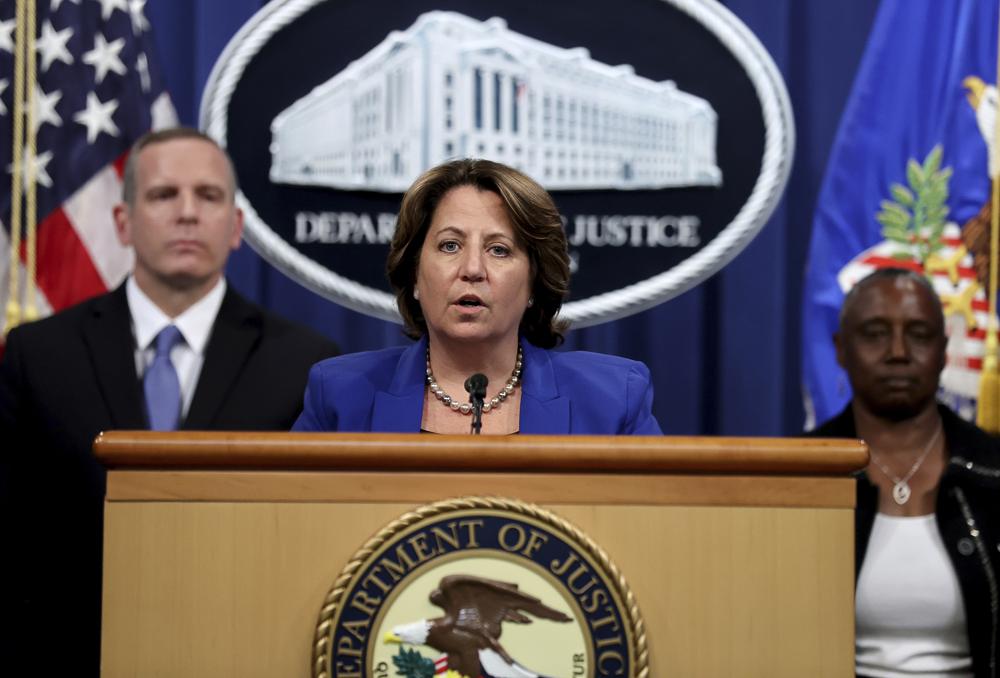
The Justice Department has recovered most of a multimillion-dollar ransom payment made to hackers after a cyberattack that caused the operator of the nation’s largest fuel pipeline to halt its operations last month, officials said Monday. The operation to seize cryptocurrency paid to the Russia-based hacker group is the first of its kind to be undertaken by a specialized ransomware task force created by the Joe Biden administration Justice Department. It reflects a rare victory in the fight against ransomware as U.S. officials scramble to confront a rapidly accelerating threat targeting critical industries around the world. “By going after the entire ecosystem that fuels ransomware and digital extortion attacks — including criminal proceeds in the form of digital currency — we will continue to use all of our resources to increase the cost and consequences of ransomware and other cyber-based attacks,” Deputy Attorney General Lisa Monaco said at a news conference announcing the operation. Georgia-based Colonial Pipeline, which supplies roughly half the fuel consumed on the East Coast, temporarily shut down its operations on May 7 after a gang of cybercriminals using the DarkSide ransomware variant broke into the company’s computer system. The ransomware variant used by DarkSide, which has been the subject of an FBI investigation since last year, is one of more than 100 that law enforcement officials are now scrutinizing, said FBI Deputy Director Paul Abbate. Colonial officials have said they took their pipeline system offline before the attack could spread to its operating system, and decided soon after to pay a ransom of 75 bitcoin — then valued at roughly $4.4 million — in hopes of bringing itself back online as soon as it could. The company’s president and chief executive, Joseph Blount, is set to testify before congressional panels this week. In a statement Monday, Blount said he was grateful for the FBI’s efforts and said holding hackers accountable and disrupting their activities “is the best way to deter and defend against future attacks of this nature. “The private sector also has an equally important role to play and we must continue to take cyber threats seriously and invest accordingly to harden our defenses,” he added. Cryptocurrency is favored by cybercriminals because it enables direct online payments regardless of geographical location, but in this case, the FBI was able to identify a virtual currency wallet used by the hackers and recovered the proceeds from there, said the FBI’s Abbate. The Justice Department did not provide details about how the FBI had obtained a “key” for the specific bitcoin address but said law enforcement had been able to track multiple transfers of the cryptocurrency. “For financially motivated cybercriminals, especially those presumably located overseas, cutting off access to revenue is one of the most impactful consequences we can impose,” Abbate said. Though the FBI generally discourages the payment of ransom, fearing it could encourage additional hacks, Monaco said one takeaway for the private sector is that if companies come quickly to law enforcement after ransomware incidents, officials may be able to again help recover funds — though that is not guaranteed. The Bitcoin amount seized — 63.7, currently valued at $2.3 million after the price of Bitcoin tumbled— amounted to 85% of the total ransom paid, which is the exact amount that the cryptocurrency-tracking firm Elliptic says it believes was the take of the affiliate who carried out the attack. The ransomware software provider, DarkSide, would have gotten the other 15%. “The extortionists will never see this money,” said Stephanie Hinds, the acting U.S. attorney for the Northern District of California, where a judge earlier Monday authorized the seizure warrant. Ransomware attacks — in which hackers encrypt a victim organization’s data and demand a hefty sum for returning the information — have flourished across the globe. Last year was the costliest on record for such attacks. Hackers have targeted vital industries, as well as hospitals and police departments. Weeks after the Colonial Pipeline attack, a ransomware attack attributed to REvil, a Russian-speaking gang that has made some of the largest ransomware demands on record in recent months, disrupted production at Brazil’s JBS SA, the world’s largest meat processing company. The ransomware business has evolved into a highly compartmentalized racket, with labor divided among the provider of the software that locks data, ransom negotiators, hackers who break into targeted networks, hackers skilled at moving undetected through those systems and exfiltrating sensitive data — and even call centers in India employed to threaten people whose data was stolen to pressure for extortion payments. Republished with the permission of the Associated Press.
Joe Biden to name judge Merrick Garland as attorney general

President-elect Joe Biden has selected Merrick Garland, a federal appeals court judge who in 2016 was snubbed by Republicans for a seat on the Supreme Court, as his attorney general, two people familiar with the selection process said Wednesday. In picking Garland, Biden is turning to an experienced judge who held senior positions at the Justice Department decades ago, including as a supervisor of the prosecution of the 1995 Oklahoma City bombing. The pick will force Senate Republicans to contend with the nomination of someone they spurned in 2016 — refusing even to hold hearings when a Supreme Court vacancy arose — but Biden may be banking on Garland’s credentials and reputation for moderation to ensure confirmation. Biden is expected to announce Garland’s appointment on Thursday, along with other senior leaders of the department, including former homeland security adviser Lisa Monaco as deputy attorney general and former Justice Department civil rights chief Vanita Gupta as associate attorney general. He will also name an assistant attorney general for civil rights, Kristen Clarke, the president of Lawyers’ Committee for Civil Rights Under Law, an advocacy group. Garland was selected over other finalists including Alabama Sen. Doug Jones and former Deputy Attorney General Sally Yates. The people familiar with the process spoke on condition of anonymity. One said Biden regards Garland as an attorney general who can restore integrity to the Justice Department and as someone who, having served in the Justice Department under presidents of both political parties, will be respected by nonpartisan career staff. If confirmed, Garland would confront immediate challenges, including an ongoing criminal tax investigation into Biden’s son, Hunter Biden, as well as calls from many Democrats to pursue inquiries into Donald Trump after he leaves office. A special counsel investigation into the origins of the Russia probe also remains open, forcing a new attorney general to decide how to handle it and what to make public. Garland would also inherit a Justice Department that has endured a tumultuous four years and would likely need to focus on not only civil rights issues and an overhaul of national policing policies after months of mass protests over the deaths of Black Americans at the hand of law enforcement. It was unclear how Garland’s selection would be received by Black and Latino advocates who had advocated for a Black attorney general or for someone with a background in civil rights causes and criminal justice reform. But the selection of Gupta and Clarke, two women with significant experience in civil rights, appeared designed to blunt those concerns and offered as a signal that progressive causes will be prioritized in the new administration. Garland would also return to a Justice Department radically different than the one he left. The Sept. 11 attacks were years away, the department’s national security division had not yet been created and a proliferation of aggressive cyber and counterintelligence threats from foreign adversaries have made counties like China, Russia, and North Korea top priorities for federal law enforcement. Monaco brings to the department significant national security experience, including in cybersecurity — an especially urgent issue as the U.S. government confronts a devastating hack of federal agencies that officials have linked to Russia. But some of the issues from Garland’s first stint at the department persist. Tensions between police and minorities, an issue that flared following the 1992 beating of Rodney King in Los Angeles, remain an urgent concern particularly following a summer of racial unrest that roiled American cities after the May killing of George Floyd in Minneapolis. And the FBI has confronted a surge in violence from anti-government and racially motivated extremists. That is a familiar threat to Garland, who as a senior Justice Department official in 1995 helped manage the federal government’s response to the bombing of a government building in Oklahoma City that killed 168 people. The bomber, Timothy McVeigh, was later executed. Garland has called the work the “most important thing I have done” and was known for keeping a framed photo of Oklahoma City’s Alfred P. Murrah Federal Building in his courthouse office in Washington. At the time of the bombing, Garland was 42 and principal associate deputy attorney general, a top lieutenant to Attorney General Janet Reno. He was chosen to go to Oklahoma City, the highest-ranking Justice Department official there, and led the prosecution for a month until a permanent lead prosecutor was named. Garland was selected over other contenders for the job including former Alabama senator Doug Jones, who lost his Senate seat last month, and former Deputy Attorney General Sally Yates. It is rare but not unprecedented for attorneys general to have previously served as judges. It happened in 2007 when President George W. Bush picked Michael Mukasey, a former federal judge in Manhattan, for the job. Eric Holder, President Barack Obama’s first attorney general, had also previously been a Superior Court judge. Garland was put forward by former President Barack Obama for a seat on the Supreme Court in 2016 following the death of Justice Antonin Scalia, but Republicans refused to hold hearings in the final year of Obama’s term. The vacancy was later filled by Justice Neil Gorsuch during the Trump administration. Republican Senate Majority Leader Mitch McConnell refused to let the nomination move forward in the Senate in the final months of Obama’s tenure. He was criticized by Democrats this fall when he took the opposite approach toward confirming President Donald Trump’s Supreme Court pick, Amy Coney Barrett. He said the difference this time around was that the White House and Senate were controlled by the same political parties. One year later, after the firing of FBI Director James Comey, McConnell actually floated Garland’s name as a replacement for that position, though Garland was said to be not interested. Garland has been on the federal appeals court in Washington since 1997. Before that, he had worked in private practice, as well as a federal prosecutor, a senior official in the Justice Department’s criminal division, and as
Joe Biden’s attorney general search is focused on Doug Jones, Merrick Garland

Alabama Sen. Doug Jones and federal appeals court judge Merrick Garland are emerging as the leading contenders to be nominated as President-elect Joe Biden’s attorney general, three people familiar with the matter told The Associated Press. A decision hasn’t been finalized and the dynamics could shift in the coming days as Biden builds out his Cabinet with an eye to ensuring diverse leadership in the top ranks of his administration. But Jones, who lost reelection last month, and Garland, whose Supreme Court nomination was snubbed by Republicans, appear increasingly well-positioned ahead of other rivals. Democrats are particularly concerned about the prospect of Biden nominating former Deputy Attorney General Sally Yates, fearing she could face a difficult confirmation in the Senate because of her role in issues related to the Russia investigation. Biden’s thinking was described by people with knowledge of the presidential transition’s internal thinking who were not authorized to speak publicly. Andrew Bates, a representative for the transition, did not comment for this story. The president-elect is facing pressure to ensure that Black and Latino leaders are prominently positioned in his administration. He selected retired Army Gen. Lloyd Austin this week to become the first Black secretary of defense. Jones, who is white, has had a long-standing personal relationship with Biden dating back to Biden’s first presidential campaign in 1988. The former U.S. attorney prosecuted members of the Ku Klux Klan who were responsible for a 1963 church bombing in Birmingham, Alabama, and later served as the U.S. attorney there from 1997 until 2001. Biden met with civil rights activists on Tuesday to discuss diversity in his Cabinet. The Rev. Al Sharpton, who attended the meeting, encouraged Biden to select a Black attorney general but gave him room to select someone of another race as long as they had a background in civil rights. “I said the least we could have is someone that has a proven civil rights background that’s someone that’s going to handle this heightened racist bigoted atmosphere,” Sharpton told reporters. It’s unclear whether Garland would fit that standard as easily. He is an experienced judge with a reputation for moderation who held senior positions at the Justice Department decades ago, including as a supervisor of the prosecution of the 1995 Oklahoma City bombing. Garland was put forward by President Barack Obama for a seat on the Supreme Court in 2016 following the death of Justice Antonin Scalia, but Republicans refused to hold hearings in the final year of Obama’s term. The vacancy was later filled by Justice Neil Gorsuch during the Trump administration. The incoming attorney general would inherit a Justice Department that has endured a tumultuous four years and would likely need to focus on not only civil rights issues and an overhaul of national policing policies after months of mass protests over the deaths of Black Americans at the hand of law enforcement, but also on concerns from Democrats about politicization of the department in the Trump administration. Biden has said he will not be involved in Justice Department investigative decisions even as some Democrats have openly wished for probes into President Donald Trump and his associates after he leaves office. Supporters of Yates view her nearly 30-year Justice Department career in both Democratic and Republican administrations, and experience ranging from civil rights cases to national security matters, as making her uniquely qualified to lead the department as it looks to move on from the Trump era. Still, Republican senators would be likely to focus a Yates confirmation hearing on her final year at the department, when the FBI closed out the Hillary Clinton email investigation and opened an investigation into whether the Trump campaign was coordinating with Russia, which later morphed into special counsel Robert Mueller’s investigation. Yates has repeatedly discussed both, including before the Senate committee that has oversight of the confirmation process. She has made clear that she disagreed with the way the FBI conducted some of the most heavily scrutinized actions of both investigations, including the decision to hold a press conference about the Clinton probe and then to alert Congress days before the election that it had been reopened. Even so, Republicans would nonetheless press Yates on problems with the Russia probe that were revealed by a Justice Department inspector general investigation, including errors and omissions in applications to surveil a former Trump campaign aide, and about how she would handle a special counsel inquiry focused on the FBI’s actions in that case. Yates has said that she would not have signed off on the surveillance had she known of the problems in the applications. But the appointment of John Durham as a special counsel to review the Russia probe suggests the inquiry is likely to endure into the Biden administration, creating a backward-looking focus for a new attorney general just as Yates would try to turn the page from the issue. Jones would not comment Tuesday on the possibility of a nomination as attorney general. “They have a process and we’ll let that process play,” he told reporters on Capitol Hill. The Biden team has also been considering a number of other potential candidates for the post, including former Justice Department official Lisa Monaco. Republished with the permission of the Associated Press.
