
Capitol riot participant from Alabama reaches plea deal
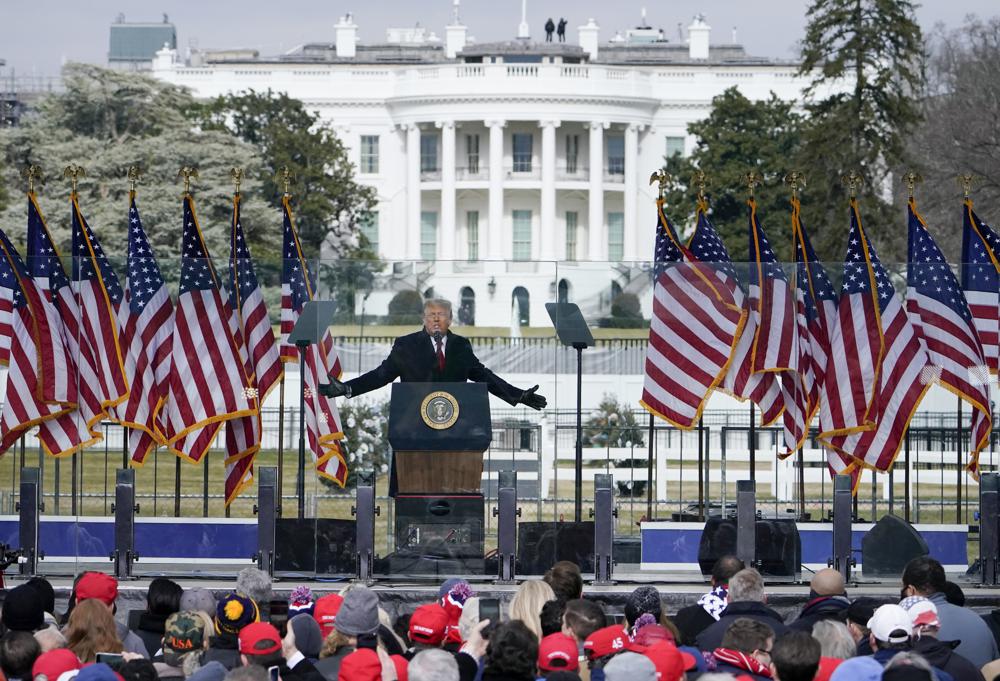
An Alabama man charged with bringing 11 Molotov cocktails and other weapons to Washington on the day of the U.S. Capitol riot has reached a plea agreement with prosecutors, according to a court filing. The Wednesday filing from federal prosecutors did not provide details of the agreement with Lonnie Coffman of Falkville, Alabama. Coffman, 71, was charged with multiple firearms charges, including possession of unregistered firearms and possession of a large-capacity ammunition feeding device. A hearing in the case is scheduled for Sept. 29. Manuel J. Retureta, an attorney for Coffman, declined to comment on the plea agreement. Coffman is one of hundreds of people arrested after rioters supporting then-President Donald Trump stormed the U.S. Capitol on Jan. 6 and disrupted the certification of President Joe Biden’s election win. Police that day found Coffman’s truck in Washington packed with 11 mason jars containing a flammable liquid; several loaded guns; a crossbow with bolts; several machetes; camouflage smoke devices, and a stun gun, according to prosecutors. Law enforcement officers discovered the weapons in his truck during a sweep of the area after pipe bombs were found near two buildings. Prosecutors said Coffman left his truck on the morning of the riot and was arrested when he returned to the vehicle in the evening. A judge in May denied Coffman bond, citing his participation in a militia training camp and a large stockpile of weapons. According to earlier court filings, the FBI in 2014 identified Coffman as a participant at Camp Lonestar, a reported gathering place for Texas militia groups, and said he had information about two other militia groups. Coffman is an Army veteran who served two tours during the Vietnam War. According to family members, he dealt with depression and “often spoke about the difficulty he had dealing with the experiences from the war,” the court document said. A family member said Coffman “became a hermit after he separated from his wife,” according to the court document. Republished with the permission of the Associated Press.
Alabama man dies and one arrested during Trump rally in D.C.

An Athens, Alabama man is one of four people who died during the chaos at the D.C. Capitol building on Wednesday, Al.com reported. The 55-year-old man, Kevin Greeson, died as a result of a medical emergency, according to D.C. Police Chief Robert Contee. Two other people died from medical emergencies that day, Benjamin Phillips, 50, from Greentown, Pennsylvania, and Rosanne Boyland, 34, from Kennesaw, Georgia. One Maryland woman, Ashli Babbitt, was shot and killed by a law enforcement officer. Police Chief Contee said an investigation is underway. According to the Tuscaloosa News, Babbitt was shot while trying to crawl through a broken window at the Capitol. Greeson’s Twitter page was rarely used, but his last post stated, “Hydroxychloroquine zinc and z-pac works to cure you from Covid-19…Trump 2020… Twitter sucks!” Social media commentary on a Goodyear Decatur Employees Facebook page states that Greeson died of a heart attack. However, that hasn’t been confirmed by any family members. Hydroxychloroquine zinc and z-pac works to cure you from Covid-19… Trump 2020 ….Twitter sucks! — kevin Greeson (@kevinGreeson5) July 28, 2020 Lonnie Coffman of Falkville, Alabama, was also arrested by federal authorities near the U.S. Capitol, according to Al.com. The 70-year-old man was in possession of a firearm and materials to make several Molotov cocktails. The Montgomery Advertiser reported that Capitol police initially identified the suspect as Lonnie Zoffman, but then corrected the name. U.S. Capitol Chief of Police Steven Sund stated Thursday, “The violent attack on the U.S. Capitol was unlike any I have ever experienced in my 30 years in law enforcement here in Washington, D.C. Maintaining public safety in an open environment — specifically for First Amendment activities — has long been a challenge. The USCP had a robust plan established to address anticipated First Amendment activities. But make no mistake — these mass riots were not First Amendment activities; they were criminal riotous behavior.” *There is a correction to the original article. Lonnie Coffman was incorrectly named Lonnie Zoffman.
