
AG Steve Marshall applauds Supreme Court ruling upholding Christian web designer’s right to deny service to a gay wedding

On Friday, Alabama Attorney General Steve Marshall welcomed a 6 to 3 U.S. Supreme Court ruling that protects a Denver area Christian web designer’ from having to build a website for a gay couple’s same-sex wedding in violation of her Christian principles and beliefs. 303 Creative and its owner, Lorie Smith, is a graphic artist and website designer in Colorado. Smith expanded her business into wedding website design. Smith’s deeply held Christian beliefs prohibit her from promoting same-sex weddings. Colorado’s anti-discrimination law forbids businesses from denying service to LGBTQ+ persons seeking service. Under that law, if Smith designed and promoted custom websites for opposite-sex weddings, she would have to design and promote custom websites for same-sex weddings too. Smith filed a suit claiming that the law violated her First Amendment rights to practice her religion and her free speech rights and that the Colorado law as such is a blatant violation of the Bill of Rights. The lower court ruled against her. Undeterred, Smith appealed to the Tenth Circuit Court of Appeals, which also ruled against Smith, and then appealed to the Supreme Court. The Supreme Court’s opinion in 303 Creative v. Elenis reaffirms that the First Amendment prohibits the government from forcing citizens, including business owners, from speaking messages with which they disagree. In the 6-3 opinion, the Supreme Court reversed the Tenth Circuit Court of Appeals decision against Smith. “The Constitution and our First Amendment prevail,” Marshall said in a statement. “All Americans enjoy the right to freedom of conscience, and that freedom means the government cannot coerce anyone to speak against their deeply held beliefs,” said Attorney General Marshall. “Today’s decision confirms that state and local government are not ‘immune to the demands of the Constitution.’” In June 2022, Attorney General Marshall signed on to a 20-state amicus brief urging the Supreme Court to protect the First Amendment rights of business owners. The brief argued in support of Smith. Liberty Counsel, a nonprofit legal advocacy group that defends religious liberty, also filed an amicus brief in favor of the web designer’s right to deny service. Liberty Counsel said in a statement that the Colorado state law censors and coerces the speech of creative professionals whose religious beliefs do not conform to state-accepted beliefs. Liberty Counsel Founder and Chairman Mat Staver said, “This is a great victory for the right of individual speech and expression. The state cannot force people to convey a government-approved message against their religious beliefs or individual choice. Film, theater, art, and other creative expression would not exist if the government could censor the message.” Justice Neil Gorsuch wrote the opinion, which was joined by Chief Justice John Roberts, and Justices Samuel Alito, Clarence Thomas, Brett Kavanaugh, and Amy Coney Barrett. The three liberal Justices, Sonia Sotomayor, Elena Kagan, and Kentanji Brown Jackson, dissented. “The First Amendment protects an individual’s right to speak his mind regardless of whether the government considers his speech sensible and well-intentioned or deeply ‘misguided,’ and likely to cause ‘anguish’ or ‘incalculable grief.’ Equally, the First Amendment protects acts of expressive association,” Justice Gorsuch wrote. “Generally, too, the government may not compel a person to speak its own preferred messages. Nor does it matter whether the government seeks to compel a person to speak its message when he would prefer to remain silent or to force an individual to include other ideas with his own speech that he would prefer not to include. All that offends the First Amendment just the same.” “Applying these principles to this case, we align ourselves with much of the Tenth Circuit’s analysis,” Gorsuch continued. “The Tenth Circuit held that the wedding websites Ms. Smith seeks to create qualify as ‘pure speech’ under this Court’s precedents. We agree. It is a conclusion that flows directly from the parties’ stipulations. They have stipulated that Ms. Smith’s websites promise to contain ‘images, words, symbols, and other modes of expression.’ They have stipulated that every website will be her ‘original, customized’ creation. And they have stipulated that Ms. Smith will create these websites to communicate ideas—namely, to ‘celebrate and promote the couple’s wedding and unique love story’ and to ‘celebrate and promote’ what Ms. Smith understands to be a true marriage. We part ways with the Tenth Circuit only when it comes to the legal conclusions that follow. While that court thought Colorado could compel speech from Ms. Smith consistent with the Constitution, our First Amendment precedents laid out above teach otherwise.” “Nor is it any answer, as the Tenth Circuit seemed to suppose, that Ms. Smith’s services are ‘unique,’” Gorsuch continued. “In some sense, of course, her voice is unique; so is everyone’s. But that hardly means a State may coopt an individual’s voice for its own purposes.” “The First Amendment extends to all persons engaged in expressive conduct, including those who seek profit (such as speechwriters, artists, and website designers),” Gorsuch wrote. If anything is truly dispiriting here, it is the dissent’s failure to take seriously this Court’s enduring commitment to protecting the speech rights of all comers, no matter how controversial—or even repugnant—many may find the message at hand.” Justice Sotomayor wrote the dissent. “Today, the Court, for the first time in its history, grants a business open to the public a constitutional right to refuse to serve members of a protected class,” Sotomayor wrote. “New forms of inclusion have been met with reactionary exclusion. This is heartbreaking. Sadly, it is also familiar. When the civil rights and women’s rights movements sought equality in public life, some public establishments refused. Some even claimed, based on sincere religious beliefs, constitutional rights to discriminate. The brave Justices who once sat on this Court decisively rejected those claims.” The last day of Pride Month perhaps ironically ends with a Supreme Court ruling affirming that LGBTQ+ rights do not mean that the state can deprive other citizens of their free speech and religious liberty rights. The Human Rights Campaign (HRC) released a statement denouncing the decision. “This decision by the Supreme Court is a dangerous step backward, giving some businesses the power to
The Supreme Court rules for a designer who doesn’t want to make wedding websites for gay couples
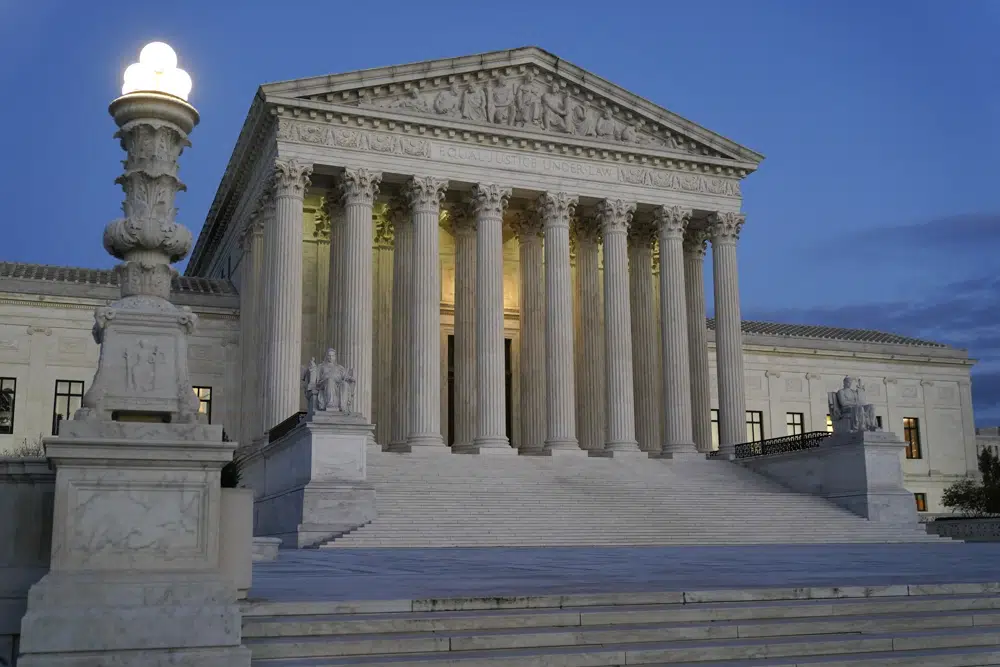
In a defeat for gay rights, the Supreme Court’s conservative majority ruled Friday that a Christian graphic artist who wants to design wedding websites can refuse to work with same-sex couples. The court ruled 6-3 for designer Lorie Smith despite a Colorado law that bars discrimination based on sexual orientation, race, gender, and other characteristics. Smith had argued that the law violates her free speech rights. Smith’s opponents warned that a win for her would allow a range of businesses to discriminate, refusing to serve Black, Jewish, or Muslim customers, interracial or interfaith couples, or immigrants. But Smith and her supporters had said that a ruling against her would force artists — from painters and photographers to writers and musicians — to do work that is against their beliefs. “The First Amendment envisions the United States as a rich and complex place where all persons are free to think and speak as they wish, not as the government demands,” Justice Neil Gorsuch wrote for the court’s six conservative justices. Justice Sonia Sotomayor wrote a dissent that was joined by the court’s other liberals. “Today, the Court, for the first time in its history, grants a business open to the public a constitutional right to refuse to serve members of a protected class,” Sotomayor wrote. The decision is a win for religious rights and one in a series of cases in recent years in which the justices have sided with religious plaintiffs. Last year, for example, the court ruled along ideological lines for a football coach who prayed on the field at his public high school after games. The decision is also a retreat on gay rights for the court. For two decades, the court has expanded the rights of LGBTQ people, most notably giving same-sex couples the right to marry in 2015 and announcing five years later that a landmark civil rights law also protects gay, lesbian, and transgender people from employment discrimination. That civil rights law decision was also written by Gorsuch. Even as it has expanded gay rights, however, the court has been careful to say those with differing religious views needed to be respected. The belief that marriage can only be between one man and one woman is an idea that “long has been held — and continues to be held — in good faith by reasonable and sincere people here and throughout the world,” Justice Anthony Kennedy wrote in the court’s gay marriage decision. The court returned to that idea five years ago when it was confronted with the case of a Christian baker who objected to designing a cake for a same-sex wedding. The court issued a limited ruling in favor of the baker, Jack Phillips, saying there had been impermissible hostility toward his religious views in the consideration of his case. Phillips’ lawyer, Kristen Waggoner, of the Alliance Defending Freedom, also brought the most recent case to the court. Smith, who owns a Colorado design business called 303 Creative, does not currently create wedding websites. She has said that she wants to but that her Christian faith would prevent her from creating websites celebrating same-sex marriages. And that’s where she runs into conflict with state law. Colorado, like most other states, has a law forbidding businesses open to the public from discriminating against customers. Colorado said that under its so-called public accommodations law, if Smith offers wedding websites to the public, she must provide them to all customers, regardless of sexual orientation. Businesses that violate the law can be fined, among other things. Smith argued that applying the law to her violates her First Amendment rights. The state disagreed. The case is 303 Creative LLC v. Elenis, 21-476. Republished with the permission of The Associated Press.
