
Steve Flowers: Incumbency reigns supreme in State Senate
Being an incumbent state senator in Alabama is like owning that seat. The level of re-electability odds is probably better than that of an incumbent congressman, which is about the same as being elected to a seat in the Russian Communist Politburo. Being a freshman state senator in Alabama is a more powerful position than being a freshman U.S. congressman, especially if you want to affect public policy. Many times, a 50-year old, successful person who is interested in seeking a representative role will approach me and seek my advice about running for either a state senate seat or an open congressional seat. I will quickly advise them that as a state senator, you are one of 35, and you immediately have an impact on your first year as a state senator. However, if you win a congressional seat, you are one of 435. Because of the seniority system, it will be 15 years before they know your name in Washington and 25 years before you are chairman of a committee, and then it is time to retire. In the 35-member Alabama Senate, there are 27 Republicans and 8 Democrats – a pretty supermajority for the GOP. Twenty-four of the twenty-seven senate Republicans are running for reelection. Republicans Jimmy Holley, Del Marsh, and Jim McClendon are retiring. These seats will be filled by another Republican. Therefore, when the Senate organizes next January, the 27 to 8 supermajority will remain the same. The lines are drawn to protect incumbents on both sides of the aisle. The Constitution provides the power of the pencil for legislators to draw their own legislative districts. Seventeen of the 24 Republican incumbents have no opposition in the Republican Primary. Of the seven Republican senators who drew a Republican opponent, they only got an opponent the last day of qualifying, and their opposition is token at best. All 24 Republican incumbents will be reelected. If my prognostication is correct, that is a 100% re-electability rate. There are only two GOP incumbents that were first thought to have viable opponents. Tom Whatley, at first blush, was rumored to have a race. However, polling and fundraising reveal he will win easily. The only interesting race may be in the Huntsville area, where incumbent Tom Butler is being challenged by Bill Holtzclaw, who previously served in that senate seat. The rule of incumbency also prevails on the Democratic side of the aisle. There is only one Democratic seat open. Priscilla Dunn holds the post in name only. She has never attended a senate day in Montgomery for this entire quadrennium. The Senate has, in essence, been operating with 34 senators. In actuality, the Democrats have only seven senate seats. There are 150,000 residents of Jefferson County who have had no voice or vote in the Alabama Senate for four years. There are two Democratic House members vying to fill this seat, Merrika Coleman and Louise Alexander. Ms. Coleman is favored to win this open Senate seat. The cadre of leadership on the Democratic side will return, including powers Bobby Singleton, Rodger Smitherman, and Vivian Figures. Hank Sanders will return to represent Selma and the Black Belt after a four-year sabbatical. His daughter was in the seat this last quadrennium. The entire leadership of the Republican-led Senate will return unopposed, including Greg Reed, Jabo Waggoner, Clay Scofield, Arthur Orr, Greg Albritton, Steve Livingston, Gerald Allen, and especially Clyde Chambliss. They will be joined by a superstar freshman class, who will become even more powerful. This class of leaders includes Will Barfoot, Garlan Gudger, April Weaver, Sam Givhan, Donnie Chesteen, and a trio contingency of Baldwin/Mobile senators Chris Elliott, Jack Williams, and David Sessions. Another member of this sterling class, Dan Roberts of Jefferson, has an opponent but will be reelected. The three open Republican seats and one Democratic open seat will give us some interesting senate races to follow. One of, if not the most important ingredients which creates the power of incumbency is the almighty campaign dollar. Money is the mother’s milk of politics. Most of this campaign money comes from Special Interest Political Action Committees. Ninety percent of those special interest dollars go to incumbents. Thus, over 90% of Alabama state senators are reelected. See you next week. Steve Flowers is Alabama’s leading political columnist. His weekly column appears in over 60 Alabama newspapers. He served 16 years in the state legislature. Steve may be reached at: www.steveflowers.us.
Steve Flowers: Incumbency prevails in 2022 State House races
Folks, believe it or not, we are closing in on six months before next year’s election year. The primary election is set for May 24, 2022. In Alabama, all our major constitutional officers are on the ballot next year. The governor’s office is the premier race in the state, and that coveted and powerful post is set for its four-year quadrennial run. Therefore, this big political year is referred to as the gubernatorial year. Those of us who follow Alabama politics have been salivating with anticipation for a cavalcade of great races. However, the power of incumbency has devasted the big year into a yawn. All the major state offices are held by popular incumbents, who are either running unopposed or have minimal opposition. The consolation prize was that there would be the legislative races. After all, this is where the real power in the state rests. You can simply look at where the special interest and PAC money is spent to verify that fact. However, the omnipotent power of incumbency has also encroached on those races. The Alabama House of Representatives has 105 members. There are 77 Republicans and 28 Democrats. The large majority of incumbents are running for reelection – both Republicans and Democrats. The overwhelming majority of these incumbents will have no opposition. However, in the House, there will be some major changes in leadership because of retirement or moving on to new posts. Speaker of the House Mac McCutcheon is not running for reelection. This has created an interesting and spirited race within the Republican Caucus ranks for Speaker. In addition, Victor Gaston of Mobile, who is Speaker Pro Tem, is also retiring. Bill Poole of Tuscaloosa, who chaired the powerful House Ways and Means Education Budget Committee, has left the House to be the State Finance Director. House Rules Committee Chairman Mike Jones of Andalusia is running for the open Senate seat of retiring Senator Jimmy Holley. Two of the freshman House members are running for statewide office. Wes Allen of Troy is running for Secretary of State, and Andrew Sorrell of Tuscumbia is running for State Auditor. In addition, Connie Rowe of Jasper is leaving the House to become an administrative assistant to Lt. Gov. Will Ainsworth. Some of the veteran House members who are choosing to hang up their legislative cleats include Howard Sanderford of Huntsville, Mike Ball of Huntsville, K.L. Brown of Jacksonville, Kerry Rich of Marshall, Allen Farley of Jefferson, Harry Shiver of Baldwin, Mike Holmes of Elmore, and Becky Nordgren of Etowah. The most noteworthy retiree may be Representative Steve McMillan of Baldwin County, who is retiring after serving close to 43 years in the House. Steve has been a quiet yet very effective voice for the people of Baldwin County. They all will be missed. Some of the high profile and powerful members of the House, who will return for another four years with no or token opposition, are Steve Clouse of Ozark, Nathaniel Ledbetter of Dekalb County, and Danny Garrett, Jim Carns, David Wheeler, and David Faulkner of Jefferson. Danny Garrett has ascended to Chairman of the House Ways and Means Education. Other leaders returning are Chris Pringle, Reed Ingram, Randall Shedd, Tracy Estes, Chris Sells, David Standridge, Ginny Shaver, Jim Hill, Alan Baker, Joe Lovvorn, Chris Blackshear, Kyle South, Paul Lee, Jeff Sorrells, Rhett Marques, Steve Hurst, Joe Faust, and Margie Wilcox. The Democratic leadership will remain intact. There is an illustrious array of House Democratic leaders, including Anthony Daniels, Chris England, Laura Hall, Peb Warren, Barbara Boyd, A.J. McCampbell, Berry Forte, Dexter Grimsley, Thomas Jackson, Kevin Lawrence, Mary Moore, Juandalynn Givan, and veteran John Rogers. Two of the Democratic House veterans from Jefferson County, Louise Alexander and Merika Coleman, are both running for an open Jefferson County Senate Seat, leaving both their House seats up for grabs. There may be an increase in the number of females in the House of Representatives. It has already begun with the election of Cynthia Almond of Tuscaloosa, who was elected without opposition to replace Bill Poole. In addition, Patrice Penni McClammy won the Montgomery District 76 seat of her late father, Thad McClammy. She won with no opposition. See you next week. Steve Flowers is Alabama’s leading political columnist. His weekly column appears in over 60 Alabama papers. He served 16 years in the state legislature. Steve may be reached at www.steveflowers.us.
Alabama State Rep. Louise Alexander’s son arrested on two counts of unlawful distribution
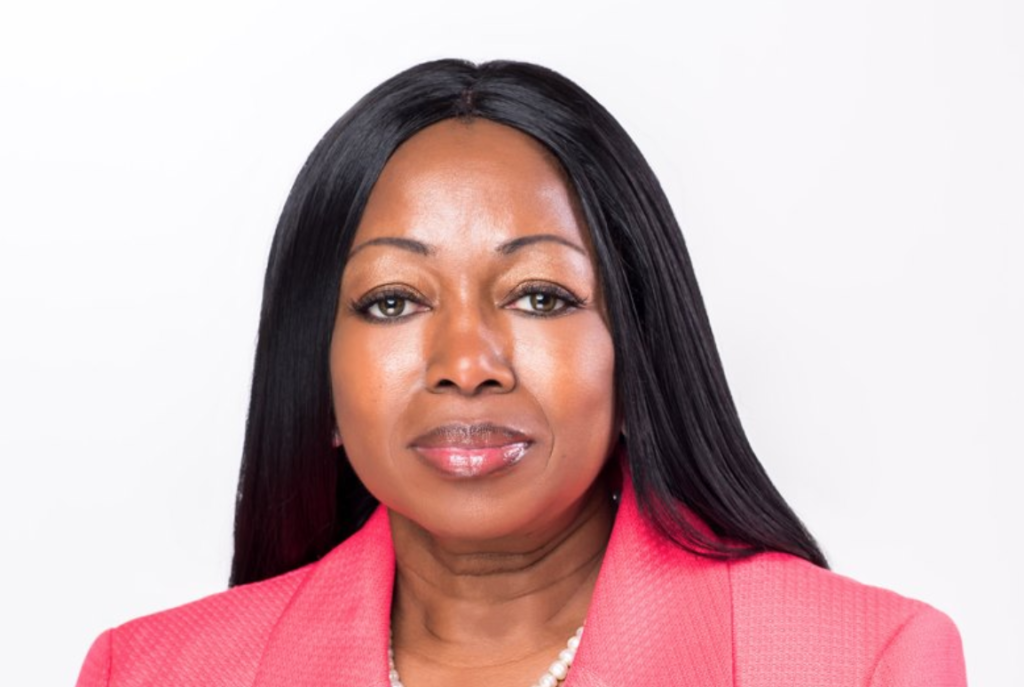
Bessemer-Democrat and Alabama State Rep. Louise Alexander‘s son was arrested in a drug raid in the early morning hours on Thursday. At 4:30 a.m., police carried out a search warrant on the family’s shared home in Bessemer. Her son, Anthony Terry Jr. was taken by the police, and charged with two counts of unlawful distribution of a controlled substance. Bessemer Police Chief Mike Roper told the Associated Press that “the raid followed a three-month investigation that is ongoing.” But Alexander tells a different story; claiming that the raid is part of a “political witch hunt.” “They’re trying to discredit me and my family,” she told AL.com. “It was a set up. This is political sabotage.” Last week, Alexander’s daughter who is running for a seat on the Bessemer City Council received threats through Alexander’s storefront, Unity Flowers & Gifts. According to WIAT, a disturbing note was left at the store telling Kimberly, Alexander’s daughter, to drop out of the race and cancel all of her appointments. “This is just a race. My daughter was running just in order to make things better, not only in the district but also in the city,” she told WIAT. “And when I ran my race, that’s the same thing I was running on.” Alexander herself has not been immune of controversy in the past. In 2010 she was indicted on charges of soliciting funds, and using her office for personal gain. She was later found not guilty of these charges. And in 2012, she sued the city of Bessemer and Bessemer Utilities accusing them of wrongfully turning off her power during a 2010 “political dispute” according to AL.com.
Will Lochamy: My Uber App won’t work. Can I get a Lyft, Alabama?

We have a transportation problem, right? I think we can all agree on that. Good news … there is a solution. In fact, Rep. Jack Williams has proposed House Bill 509 to solve it. I went to Montgomery to support it. Here are some thoughts; The Birmingham (metro) area is blossoming in ways that were unimaginable just a few years ago. It makes me proud. From what I’ve read, it makes you proud too. We should be proud. Regions Field, award-winning restaurants and breweries, The Civil Rights Museum, Railroad Park, Yellowhammer Creative, Birmingham Mountain Radio, and our newly found sense of community are just some of the very legitimate reasons for us all to be proud. We are not the only ones taking notice. National articles are popping up all the time that name us, formerly known as “Bombingham,” as one of the “best” in many different categories. There’s no denying that we are now a proud, progressive, educated, and scene-influencing town. So why do we continue to be the “last” in so many things? I might have found out when I went to our Statehouse this week. At one time (somewhat recently), I was the GM of the largest pub in Birmingham. It was my responsibility, along with every single employee, to make sure customers were not over served or ever behind the wheel intoxicated. It’s all spelled out in the Dram Shop Act (feel free to read about it here: Dram Shop Act). This was and always will be a nearly impossible task. Believe me, we tried hard. We took all of the obvious precautions, but in the end, it came down to making sure people didn’t drive. We placed Yellow Cab’s number all over the walls and called the number for them, time after time. Too many times, they wouldn’t wait or the cab just simply wouldn’t show. If we were lucky, we could persuade them to wait and take them home in our personal vehicles. It was a major inconvenience, but far better than the alternative. Now out of that industry, my new job has me traveling. While working in San Francisco a couple of years ago, a fellow employee advised me to download the Uber app. Out of the gate, I was blown away. This was Uber Black I was using. It’s the fancy Uber service that you often hear about as being top notch. It is. An SUV, town car, or limo generally shows up depending on your group size and/or preference. As I began working in Charlotte, I started using Uber X. This is the “boogie man under the bed” service they offer. The one where drivers use their own vehicle. That last sentence leads to misconceptions. A lot of them. People take this to mean any average Joe can open an app, jump in their car, and find people who need rides. This is far from the truth. Uber is the boss, the driver is the employee. They use their own vehicle, while insured by Uber and only after passing a background check. Every Uber ride I’ve been on has been prompt and courteous, the driver has had a clean vehicle, and I’ve felt safe each time. If any of these things fall short, I can give the driver a negative rating on the app. If I happen to be a jerk (which I’m not), the driver can give me a negative rating. Too many negative ratings for them, they’re no longer a driver. Too many for me, they won’t pick me up. I like that. I like accountability. So why don’t we have Uber? The public screams for it. Every other state in the South has it. There are more than a million Uber rides per day, but we can’t get one in our great state? M.A.D.D. has come out in support and the stats clearly show that DUI deaths drop in states that have ride sharing, but it’s not for us? Why in the world would we oppose what consumers rave about? The opposition (Yellow Cab and head of the Birmingham Transportation and Communications Committee, Kim Rafferty) cries fowl on multiple points. Let’s quickly break down a couple. Point 1. Safety. The word “rape” was thrown around more times than I can count while the state house debated HB 509. “Uber drivers are raping women,” was the narrative. The honorable state Rep. Louise Alexander (District 56) repeated that she “didn’t want to be raped by a Google driver.” Rebuttal 1. This argument is bunk. (So is the fact that someone that doesn’t know the difference in “Uber” and “Google” is running our state.) The stories of Uber Drivers being arrested for assault or rape are unacceptable. There is no excuse for this. At the same time, we need to look at the numbers. In 2014, as Uber was just blossoming, there were more than 140 million Uber rides. The reports of arrests are just a handful. With a quick Google search, you can find page after page of Yellow Cab drivers arrested for rape, assault, and even murder. This isn’t Yellow Cab’s or Uber’s fault. It’s a societal issue. You can just as easily find staggering numbers of arrests for teachers, Sunday school teachers, and government employees. This argument is flawed and can’t be held against Uber. Rebuttal 1b. This argument is really bunk. Think of the lives lost to drunken driving. Think of the lives that could be saved be people having multiple, reliable options for rides. This is the biggest point of this debate. Period. Point 2. This should be decided by municipalities. The one municipality in question is Birmingham. Its transportation regulations are proposed by Kim Rafferty. The issue here is that LW Associates LLC is the consulting firm for Kim Rafferty. The owner of LW Associates, Lou Willie IV, is the son of Lou Willie III who represents several cab companies. Look away folks … there’s nothing to see here.* Rebuttal 2. This is too big for
House panel debates Birmingham Water Works legislation
A House panel on commerce heard concerns late Wednesday afternoon about Senate Bill 89 to impose membership, term, and compensation limits on the Birmingham Water Works Board (BWWB). The BWWB serves Jefferson, Walker, Sinclair, Shelby, and Blount counties. However, the Birmingham City Council makes all appointments and is under no legal obligation to appoint anyone from the suburban counties. If approved, SB 89 would expand the Birmingham Water Works Board to include representatives from Jefferson, Blount, and Shelby counties. Each member would be limited to two 4-year terms. Further, the bill enacts a $1,000 per month cap on member pay. The provisions in SB 89, according to sponsor Sen. Jabo Waggoner, have been the subject of a long fight with Birmingham council members. During his opening statement, Waggoner said it was his third attempt at legislation to add transparency and balance to the board makeup. “We’re going to open it up to some accountability,” he said. “For the life of me I don’t understand why they’ve fought this legislation.” Waggonner argued that his bill would ensure fair representation from the customers in those counties, while maintaining a super-majority of members from Birmingham. Blount County Commissioner Chris Green said that fair representation was the major reason he would support the bill. “Marshall County and Cullman County (water boards) also serve customers in Blount County, and because they do, we have representation on those boards. We know that diversity brings strength. Bringing accountability and transparency brings strength.” Waggonner also expressed concern over the average salary paid to board members, as well as the $285 paid to members to attend meetings. Right now, board member pay is uneven: An AL.com analysis showed that some members received as much as $22,000 in 2014, while others went unpaid. “It’s been a good, sweetheart deal to serve on the Birmingham Water Works Board,” Waggonner said. The proposal has gotten plenty of pushback from legislators and BWWB members, who cited figures showing sound management from the board and a commitment to serving its customers as well as smaller water authorities in surrounding counties. Concern about board compensation were unfounded, BWWB General Commissioner Mac Underwood said. He testified that the board had actually decreased salary by 32 percent in recent years and travel expenses were down by at least 40 percent. “This board has been frugal and doing what it should,” Underwood said. “We are driving down costs for customers.” Rep. Louise Alexander questioned the need for statewide legislation, rather than a local bill for the affected counties. That language, argued BWWB member and environmental attorney Kevin McKie, means the proposal could could have much wider impact: “Any attorney can tell you that with a statewide bill, yes it does apply to you, if you grow big enough.” Lawmakers plan to resume discussion on SB 89 and offer a final recommendation on Thursday morning. The discussion will likely include new amendments to address board diversity.
