
Alabama Power prepared for Tropical Storm Gordon
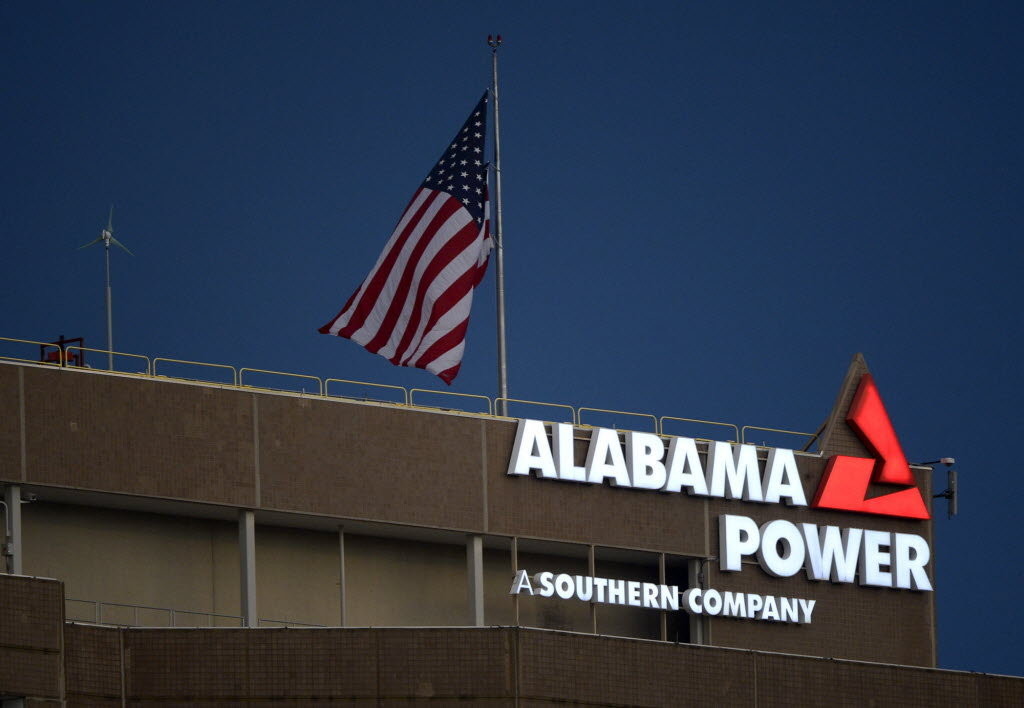
Alabama Power is preparing for Tropical Storm Gordon as it strengthens this afternoon and heads toward the Gulf Coast. Alabama Power crews and personnel are ready to respond, if needed. Current forecasts predict Gordon will make landfall on the central Gulf Coast overnight Tuesday. The forecasts suggest Gordon could intensify to hurricane-strength before arriving on shore in Alabama, Mississippi or Louisiana. The storm is expected to drop between 4 and 12 inches of rain in the western Florida panhandle, southwest Alabama, central Mississippi, eastern Louisiana and into southern Arkansas. Alabama Power crews are preparing for any damage or outages that may come when Tropical Storm Gordon makes landfall in the state later today. [Photo Credit: file/Alabama Newscenter] Forecasters say southwest Alabama, including the metro Mobile area, will be affected by high winds and heavy rainfall, with the possibility of flash flooding. Downtown Mobile also faces potential flooding. Gov. Kay Ivey issued a state of emergency at 7 a.m. Tuesday for Baldwin, Choctaw, Clarke, Conecuh, Escambia, Mobile, Monroe and Washington counties. “All coastal Alabama residents need to prepare now ahead of tonight’s potential landfall near Alabama,” Ivey said. “I have directed essential state agencies to be on the ready should they be needed over the next couple of days.” Localized flooding is possible across the southern portion of the state. Dangerous wind gusts of up to 45 mph will be an issue as the storm makes landfall. Tornadoes also are possible. Based on current forecasts, the Mobile area will see the greatest impact from this storm in Alabama before it moves north and west on its forecasted track through Mississippi, Louisiana and toward Arkansas. Heavy rain and gusting winds could cause trees to fall. As always, safety is a top priority for all Alabama Power. Individuals, families and businesses in the projected path of the storm should take precautionary measures and make sure they have a hurricane plan, including a fully stocked emergency supply kit. Click here for specific tips related to hurricane preparedness. Alabama Power customers who experience storm-related outages can report them online via mobile devices at www.alabamapower.com. Customers also can call the company’s automated outage reporting line at 1-800-888-APCO (2726). Republished with the permission of the Alabama Newscenter.
Lawsuits claim Congressional maps dilutes black voters in Alabama, Georgia, Louisiana
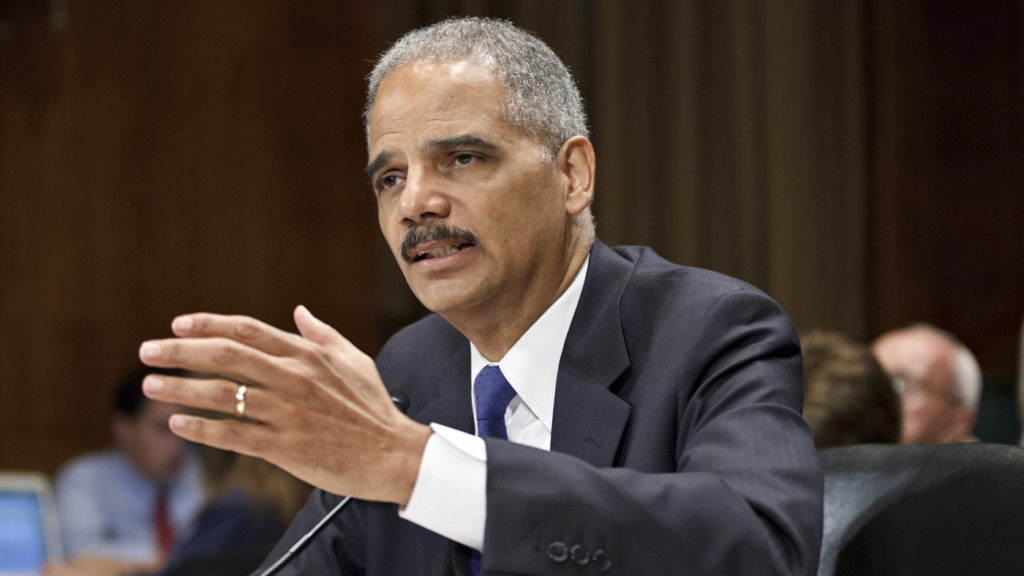
A group backed by Democratic former U.S. Attorney General Eric Holder launched a legal campaign Wednesday in an effort to create more black congressional districts in three Southern states: Alabama, Georgia and Louisiana. The group, the National Redistricting Foundation, claims the current congressional maps violate a section of the Voting Rights Act by discriminating against black voters by not allowing them an equal opportunity to elect candidates of their choice to the U.S. House of Representatives. They seek to block the three states from holding any further congressional elections under the current maps that were approved in 2011. Alabama 7th District U.S. Rep. Terri Sewell, who represents the state’s only majority-minority congressional district, applauded the lawsuits. “I applaud today’s effort by the National Redistricting Foundation to challenge the underrepresentation of African American voters in Alabama,” said Sewell. “Generations of Alabamians have fought tirelessly for equal voting rights, and I support all efforts to guarantee fair representation and access to the polls. More than fifty years after the enactment of the Voting Rights Act of 1965, our work to prevent voter discrimination and unfair electoral practices is not over. Our vote is our voice, and protecting the vote for all Americans must remain a top priority.”
Energy Dept. offers $2B loan to Louisiana carbon-storage project
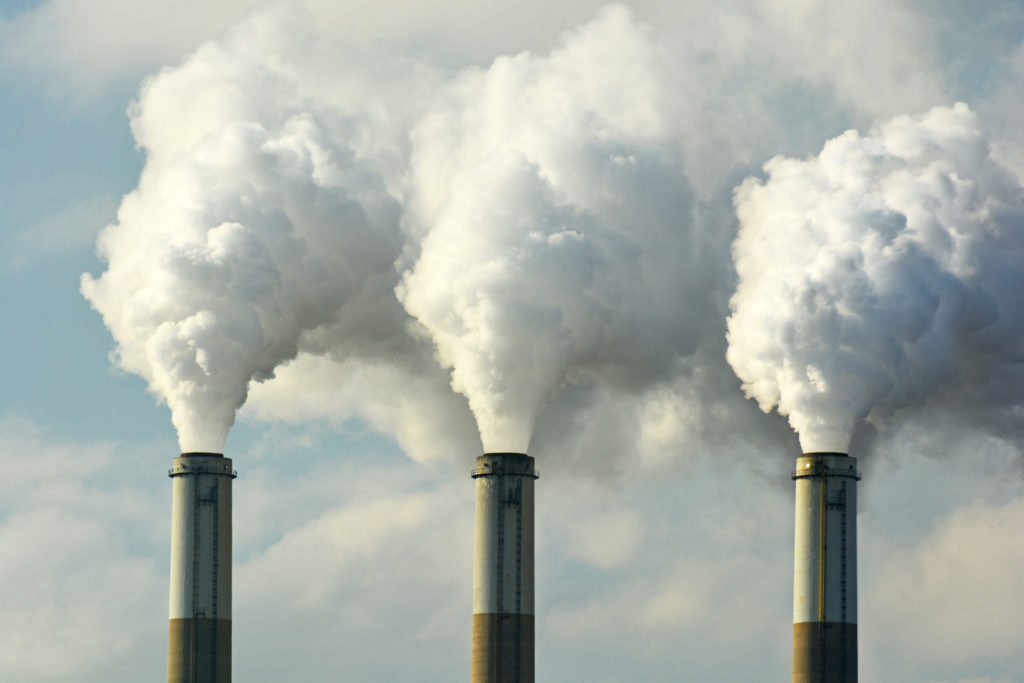
The Energy Department said Wednesday it is offering a conditional, $2 billion loan guarantee to capture and store carbon dioxide at a planned Louisiana methanol plant, the latest element of President Barack Obama‘s strategy to slow global warming. The Lake Charles Methanol plant will use petroleum coke, a byproduct of oil refining, to make methanol, a chemical used in products such as paint, glue, plastics and formaldehyde. The captured carbon dioxide will be piped to oil fields in Texas, where it will be used to speed up oil production. The loan guarantee is the first to be offered under an advanced energy program to help promising technologies that are unable to secure private investors. Energy Secretary Ernest Moniz called the loan commitment a milestone in federal efforts to capture and store carbon pollution, a key driver of global warming. Moniz called the Lake Charles project “a big step forward” for economic development and carbon capture, an emerging technology that has so far failed to live up to its promise. The loan guarantee is among a number of steps the administration has taken in recent weeks as Obama seeks to protect his environmental legacy before President-elect Donald Trump takes office next month. Obama on Tuesday designated the bulk of U.S.-owned waters in the Arctic Ocean and certain areas in the Atlantic Ocean as indefinitely off limits to future oil and gas leasing. The administration also has completed regulations clamping down on oil companies that burn off natural gas on public lands and preventing coal-mining debris from being dumped into nearby streams. Meanwhile, the Army has delayed a decision on an oil pipeline to cross under a reservoir in North Dakota, saying it wants more study and tribal input. The loan guarantee is likely to be more warmly received by Trump than previous actions by Obama. Carbon capture is a key component of so-called clean coal, a concept that has been embraced by Obama and Trump both. The practice entails catching the carbon emissions from a coal plant or other source and injecting the gas underground for permanent storage or use in speeding oil production. If successful, carbon storage could allow continued burning of coal and other fossil fuels while releasing little of the heat-trapping gas that scientists say is the main cause of global warming. Lake Charles Methanol expects to break ground next year on a $3.8 billion plant in Lake Charles, Louisiana, 140 miles east of Houston. Don Maley, the company’s president and CEO, said in a statement that the Energy Department’s expected loan guarantee “represents the commitment of the federal government to promote innovative, clean fossil-energy technologies” and allow the project to be completed. The project is expected to create about 1,000 construction jobs and 500 permanent jobs. The plant will produce methanol, hydrogen, carbon dioxide and other chemicals from petcoke, a waste product from the refining of heavy crude oil. Moniz said on a conference call Wednesday that he has had “cordial” conversations with former Texas Gov. Rick Perry, Trump’s nominee for energy secretary, but did not discuss the Lake Charles plant or other projects under consideration for Energy Department loans. Republished with permission of the Associated Press.
U.S. election voted top news story of 2016
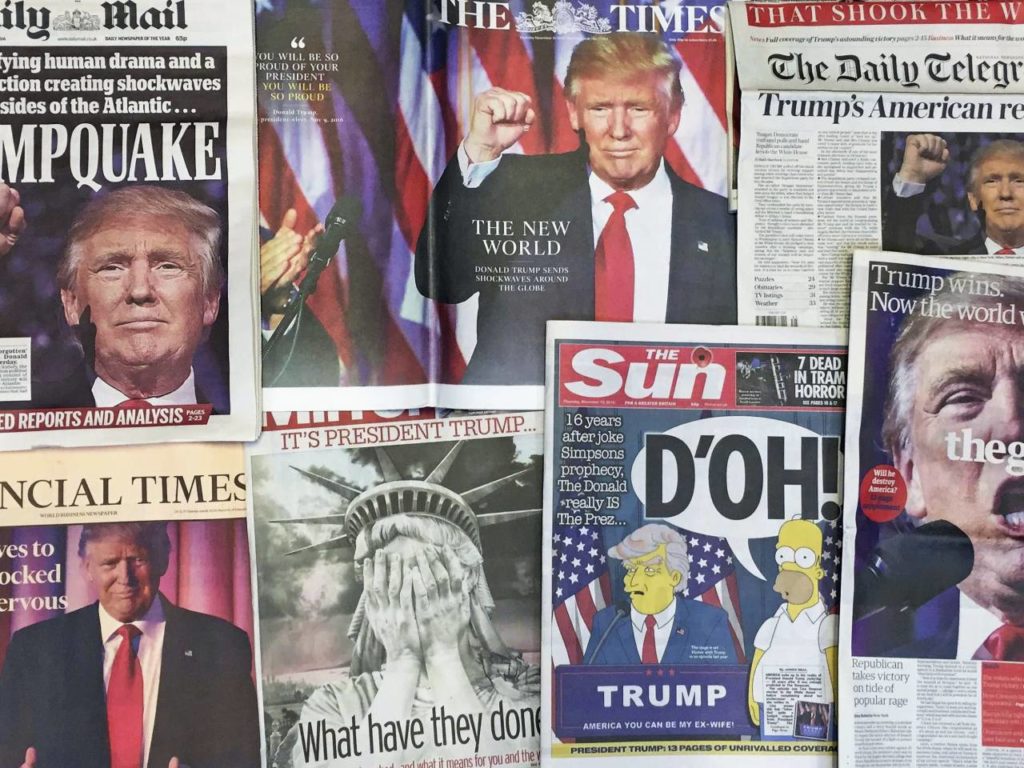
The turbulent U.S. election, featuring Donald Trump‘s unexpected victory over Hillary Clinton in the presidential race, was the overwhelming pick for the top news story of 2016, according to The Associated Press’ annual poll of U.S. editors and news directors. The No. 2 story also was a dramatic upset — Britons’ vote to leave the European Union. Most of the other stories among the Top 10 reflected a year marked by political upheaval, terror attacks and racial divisions. Last year, developments related to the Islamic State group were voted as the top story — the far-flung attacks claimed by the group, and the intensifying global effort to crush it. The first AP top-stories poll was conducted in 1936, when editors chose the abdication of Britain’s King Edward VIII. Here are 2016’s top 10 stories, in order: 1. US ELECTION: This year’s top story traces back to June 2015, when Donald Trump descended an escalator in Trump Tower, his bastion in New York City, to announce he would run for president. Widely viewed as a long shot, with an unconventional campaign featuring raucous rallies and pugnacious tweets, he outlasted 16 Republican rivals. Among the Democrats, Hillary Clinton beat back an unexpectedly strong challenge from Bernie Sanders, and won the popular vote over Trump. But he won key Rust Belt states to get the most electoral votes, and will enter the White House with Republicans maintaining control of both houses of Congress. 2. BREXIT: Confounding pollsters and oddsmakers, Britons voted in June to leave the European Union, triggering financial and political upheaval. David Cameron resigned as prime minister soon after the vote, leaving the task of negotiating an exit to a reshaped Conservative government led by Theresa May. Under a tentative timetable, final details of the withdrawal might not be known until the spring of 2019. 3. BLACKS KILLED BY POLICE: One day apart, police in Baton Rouge, Louisiana, fatally shot Alton Sterling after pinning him to the ground, and a white police officer shot and killed Philando Castile during a traffic stop in a suburb of Minneapolis. Coming after several similar cases in recent years, the killings rekindled debate over policing practices and the Black Lives Matter movement. 4. PULSE NIGHTCLUB MASSACRE: The worst mass shooting in modern U.S. history unfolded on Latin Night at the Pulse, a gay nightclub in Orlando. The gunman, Omar Mateen, killed 49 people over the course of three hours before dying in a shootout with SWAT team members. During the standoff, he pledged allegiance to the Islamic State. 5. WORLDWIDE TERROR ATTACKS: Across the globe, extremist attacks flared at a relentless pace throughout the year. Among the many high-profile attacks were those that targeted airports in Brussels and Istanbul, a park teeming with families and children in Pakistan, and the seafront boulevard in Nice, France, where 86 people were killed when a truck plowed through a Bastille Day celebration. In Iraq alone, many hundreds of civilians were killed in repeated bombings. 6. ATTACKS ON POLICE: Ambushes and targeted attacks on police officers in the U.S. claimed at least 20 lives. The victims included five officers in Dallas working to keep the peace at a protest over the fatal police shootings of black men in Minnesota and Louisiana. Ten days after that attack, a man killed three officers in Baton Rouge, Louisiana. In Iowa, two policemen were fatally shot in separate ambush-style attacks while sitting in their patrol cars. 7. DEMOCRATIC PARTY EMAIL LEAKS: Hacked emails, disclosed by WikiLeaks, revealed at-times embarrassing details from Democratic Party operatives in the run-up to Election Day, leading to the resignation of Democratic National Committee chair Debbie Wasserman Schultz and other DNC officials. The CIA later concluded that Russia was behind the DNC hacking in a bid to boost Donald Trump’s chances of beating Hillary Clinton. 8. SYRIA: Repeated cease-fire negotiations failed to halt relentless warfare among multiple factions. With Russia’s help, the government forces of President Bashar Assad finally seized rebel-held portions of the city of Aleppo, at a huge cost in terms of deaths and destruction. 9. SUPREME COURT: After Justice Antonin Scalia‘s death in February, President Obama nominated Merrick Garland, chief judge of the U.S. Court of Appeals, to fill the vacancy. However, majority Republicans in the Senate refused to consider the nomination, opting to leave the seat vacant so it could be filled by the winner of the presidential election. Donald Trump has promised to appoint a conservative in the mold of Scalia. 10. HILLARY CLINTON’S EMAILS: Amid the presidential campaign, the FBI conducted an investigation into Clinton’s use of a private computer server to handle emails she sent and received as secretary of state. FBI Director James Comey criticized Clinton for carelessness but said the bureau would not recommend criminal charges. Stories that did not make the top 10 included Europe’s migrant crisis, the death of longtime Cuban leader Fidel Castro, and the spread of the Zika virus across Latin America and the Caribbean. Republished with permission of The Associated Press.
Donald Trump to travel to flood-stricken Louisiana
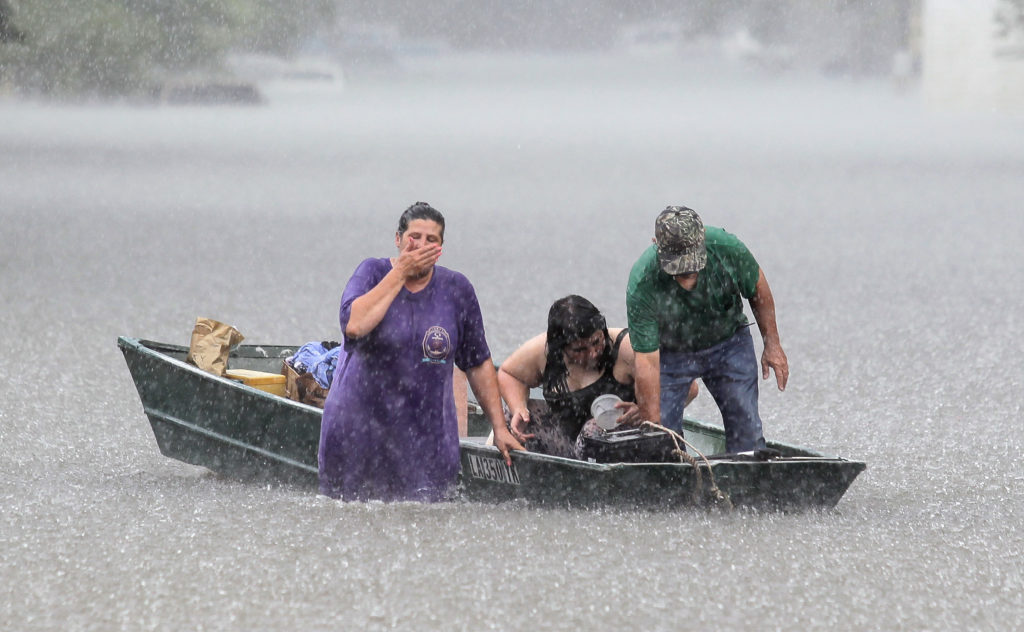
Donald Trump will tour the flood damage in ravaged Louisiana on Friday, but was quickly warned by a spokesman for the state’s Democratic governor not to come merely for a photo-op. A campaign official familiar with the plans says the GOP nominee and his running mate Mike Pence will travel to the state on Friday. The person spoke on the condition of anonymity to discuss the plans before they were officially announced. At least 13 people have died as a result of the flooding, and at one point 11,000 were in shelters. Trump said at a rally Thursday that his prayers are with the people affected. However, Louisiana’s governor’s office said later it had not been contacted by the Trump campaign concerning a possible tour of the state’s flood damage. Richard Carbo, spokesman for Gov. John Bel Edwards, says Trump “hasn’t called the governor to inform him of his visit.” The spokesman said Mr, Trump is welcome to Louisiana, “but not for a photo-op.” Republished with permission of the Associated Press.
Martin Dyckman: Winner-take-all winner could be Trump

Our next president may well owe the office to arrogant billionaires or be one himself. Meanwhile, The New York Times reports that fewer than 400 families account for nearly half the $388-million already invested in that election still more than a year away. Did America shed blood to be rid of monarchy only to have it come to this? And yet the vast moral and political corruption unleashed by the U.S. Supreme Court’s confusion of free spending with free speech is only one of four ways in which government of the people, for the people and by the people has gone off the track. Voting districts in nearly every state are drawn by the party in power to control the outcomes. The elections themselves are monopolized by two increasingly polarized political parties, excluding the increasing numbers of citizens who want nothing to do with either of them. The elections, whether primary or general, can be won with much less than majorities by unpopular candidates who would not be the second choices of most voters. Florida is powerless to control the money. That will take a constitutional amendment or the election of a president who would insist that his or her Supreme Court nominees agree that the Buckley and Citizens United cases were wrongly decided. Florida has made inroads on the gerrymandering through the adoption of the Fair Districts initiatives five years ago and the state Supreme Court’s willingness to enforce them. But that fortunate condition is imperiled by the next four court appointments, which will be controlled by Rick Scott‘s nominating commission. Time is running very short for people who believe in judicial independence to do something about that. The “All Voters Vote” initiative petitions now circulating would break the shared monopoly of the Republicans and Democrats by allowing everyone to vote in an open primary that could nominate two candidates of the same party — or of no party — for state offices and Congress. That’s good for the growing number of voters who claim no party — presently 27 percent — or who identify with the Greens and other minor parties. To that extent, it would be a significant improvement for everyone. Jim Smith, the former Florida secretary of state and a supporter of the initiative, acknowledges that it hasn’t done much to change the lineup of elected officials in Louisiana and California, the other two open-primary states. He is right, however, in saying that it has “changed the conversation — and it’s a conversation that a broader spectrum of voters want to hear candidates talk about.” Republican candidates in districts with sizable Democratic minorities would have to think twice about toeing the Tea Party line. Democratic candidates in safely blue districts would need to court Republican votes for the first time. But “Top Two” is still vulnerable to the winner-take-all weakness. In 1991, a 12-candidate field in Louisiana’s open primary left voters with a dismal runoff choice: former Gov. Edwin Edwards, whose corruption was flagrant, or David Duke, a former Ku Klux Klan grand wizard and an avowed Nazi. There were bumper stickers saying, “Elect the crook — it’s important,” and so the voters did. Edwards went to federal prison in 2002. That same year, 16 candidates sought the French presidency. Nearly everyone assumed there would be a runoff between a conservative, Jacques Chirac, whose ethics were as suspect as Edwards’, and the prime minister, Socialist Lionel Jospin. Chirac ran first, as expected, with 19.8 percent of the vote. But Jospin was edged out of the running by Jean Marie le Pen of the far right National Front, an ultranationalist party. Although nearly two-thirds of the voters had preferred other candidates, their final options were, as in Louisiana, between two obviously unappealing politicians: a suspected crook and a presumed fascist. (Chirac won.) There’s a way to avoid such dismal outcomes. It’s called ranked-choice voting, a task that computer science makes simple. To see how simple — and have some fun — go to this website: www.fairvote.org. There are links on the page to exercises where you can cast rank-ordered votes for political parties and for the Republican and Democratic presidential candidates. Here’s how the presidential game played out for me and for other participants on Monday. In the Republican poll, Donald Trump led the first round, but with only 18 percent. Bobby Jindal ran last and was eliminated. The second-choice votes of his supporters were distributed. There were 15 more rounds, all conducted instantly by computer. Marco Rubio fell out in the 12th and Jeb Bush in the 13th. In the 16th and last round, Trump finally gave way to Rand Paul, who won the nomination with 51.28 percent support. Bernie Sanders led the Democrats with 46 percent. Hillary Clinton ran third, trailing Joe Biden, who isn’t an announced candidate. Martin O’Malley ran last, with 6 percent, and the second choices of his supporters were counted. Clinton was gone in the fourth round. In the sixth and final, Sanders’s support increased to 51.9 percent and he became the nominee. These results are hardly scientific and not necessarily predictive. The samples were small and self-selected. Anyone could vote in either race, and the biases were obviously liberal. But they’re interesting nonetheless. The two “nominees,” Paul and Sanders, project more authenticity than nearly all the others. As for Trump, he piled up more second-choice votes than everyone except Paul. If the Republican Party of Florida still insists on a March 15 winner-take-all primary, which will be well after many of the trailing and financially poorer candidates have dropped out, Trump could easily win it all. Martin Dyckman is a retired associate editor of the St. Petersburg Times. He lives in Western North Carolina.
Alabama’s unemployment rate stable at 6.1 percent
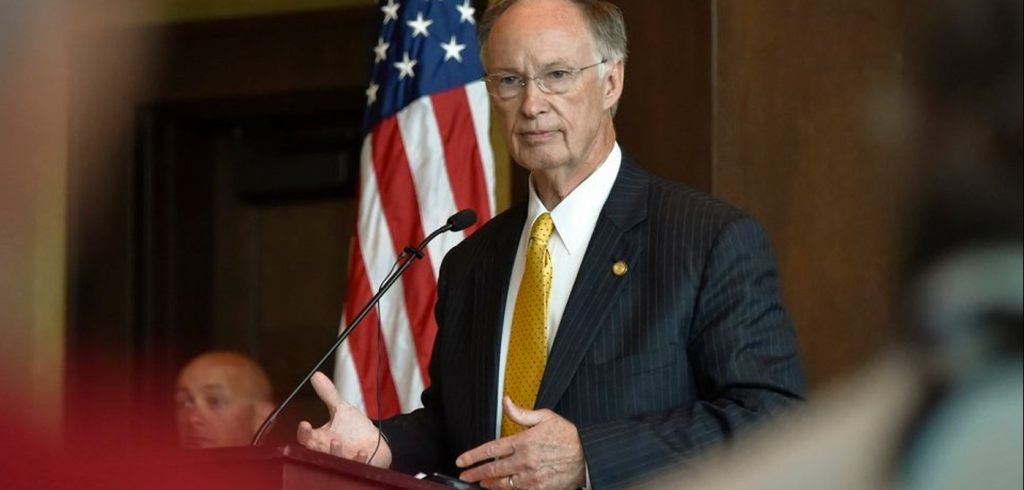
According to the office of Gov. Robert Bentley and state Labor Commissioner Fitzgerald Washington, Alabama is making gains in key economic indicators, despite a small increase in the gross unemployment rate. Unemployment in the Yellowhammer State is running at a seasonally adjusted rate of 6.1 percent. That’s a good thing, argued Washington in a news release issued Friday, “Although we experienced an increase in our unemployment rate this month, the news is not bad,” Washington said. “Both employment measures (wages and job growth) registered gains, which is clear evidence that Alabamians are going back to work. We haven’t seen wage and salary employment this high in May since 2008. Additionally, household employment also increased by more than 47,000 since last year.” According to the governor’s office, the gains were primarily located in the “professional and business services” sector and (things like tax preparation and legal counsel, which accounted for 2,700 new jobs), followed by hospitality and leisure (up 1,900 jobs) and commercial and utility concerns (up 1,700 positions). The 6.1 percent figure is compared to a 5.5 percent unemployment rate nationally and an April unemployment rate of 5.5 Jobless rates were slightly lower in neighboring Florida (5.7 percent) and slightly higher in Georgia, which also experienced a slight increase up to 6.3 percent. Under the Bentley administration, Alabama has more or less consistently bested both Georgia and neighboring Louisiana, which recorded a 6.6 percent unemployment rate for the third straight month as Gov. Bobby Jindal-driven initiatives seem to be falling flat. Bentley in his Friday statement portrayed the situation as solid, but with plenty of room to improve. It mirrors the nation as a whole in that regard. “We continue to see decreases in Alabama’s unemployment rate, and increases in both of our employment measures, which is a testament to the strong economic development efforts we have prioritized,” Bentley said. “We have gone 16 months with no increase in our unemployment rate. This steady progress is further evidence that, as far as employment indicators go, Alabama has regained its pre-recession standing. My priority as governor remains job creation, and I will continue my effort until every Alabamian who wants a job has the opportunity to have one.”
Bill would recognize 9-mile offshore limit for 3 Gulf states
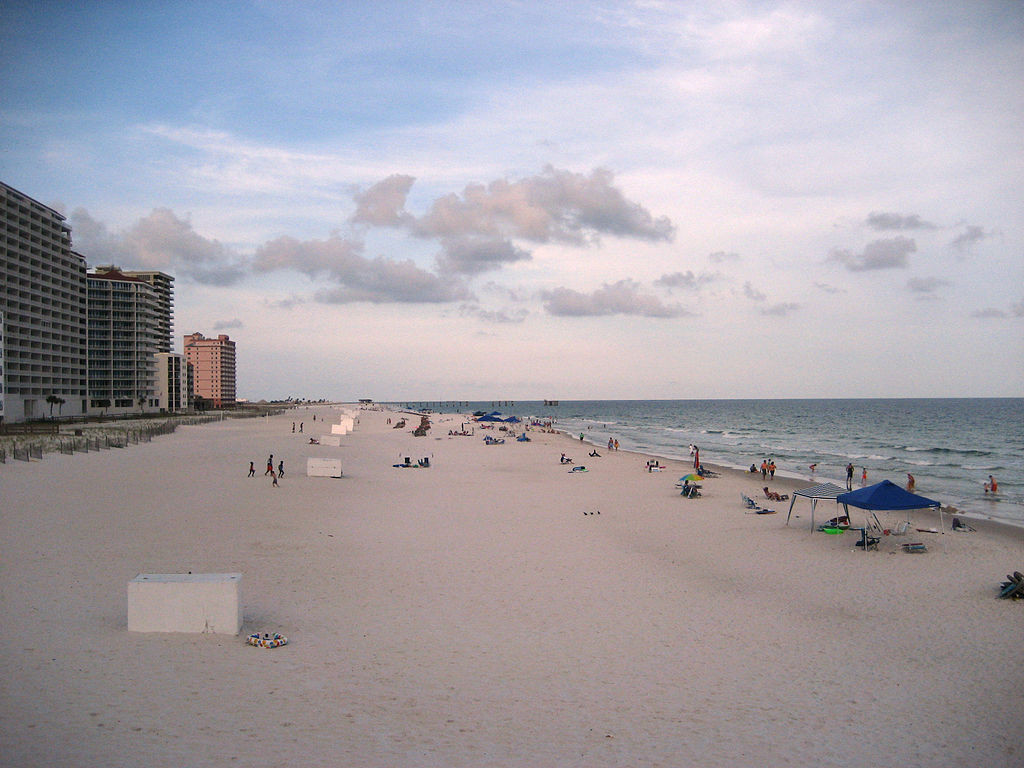
Since July 2013, Mississippi has claimed its state waters extend nine miles south into the Gulf of Mexico, but the federal government refuses to recognize the declaration. Mississippi’s senior U.S. senator is trying to change the government’s mind. The feds have been standing by a 1960 U.S. Supreme Court decision that determined the offshore boundary for Mississippi, Louisiana and Alabama was three miles out. The federal government also has not recognized Louisiana’s 2011 declaration of a nine-mile limit. On Thursday, the Senate Appropriations Committee, headed by Mississippi Republican U.S. Sen. Thad Cochran, wrote the nine-mile limit for all three states in a funding bill for the National Oceanic and Atmospheric Administration (NOAA) and other federal agencies. At stake is the Gulf states’ control of lucrative fishing rights and revenue from oil and gas production in near-offshore waters. “This would give these states greater influence in regulating Gulf state fisheries. Currently, only Texas and Florida enjoy nine-mile limits, and this provision would ensure parity among all Gulf Coast states,” Cochran said in a written statement. The bill now goes to the full Senate for consideration. “I am all for giving the state of Mississippi authority to oversee more of its own coast and allowing those with firsthand knowledge of the region’s needs, namely Mississippians, to have more influence its future,” Cochran said. The issue dates back to 1953, when Congress passed the Submerged Lands Act. The act established a coastal boundary for each state at three miles from the shore. The federal government retained control of water bottoms farther out. The act provided that Congress could vote to extend the boundaries up to 10 miles offshore if a state could prove the existence of a law or constitutional provision that established a boundary beyond three miles before that state joined the Union. In a 1960 lawsuit brought by the federal government, the five Gulf states argued that each qualified for an exception. The U.S. Supreme Court decided Texas and Florida had produced historical documents supporting a 10-mile boundary but it ruled Mississippi, Alabama and Louisiana had not. After 30 more years of litigation, the government, the Supreme Court and the states in 1992 set a legal definition of where each of the three states’ coastline began — and from there the three-mile limit would be determined. The decree did not extend the three-mile limit. Louisiana wildlife officials said the state Legislature gave authority to extend waters in 2011, but only after it was recognized by Congress or approved in litigation. The Mississippi law of 2013 mimics the Louisiana law, but without the reference to Congress. Cochran said the bill recommends funding for an independent assessment of reef fish stocks in the Gulf of Mexico, which will allow for an organization other than NOAA to conduct this research. He said NOAA is directed to count fish on artificial reefs and offshore energy infrastructure. The agency would also be required to incorporate this new, more accurate count into its stock assessments, which could potentially increase the allowable catch of red snapper for private anglers. “These provisions represent a straightforward effort to try to get past some of the contentious policies that have affected fishing in the Gulf,” Cochran said. Republished with permission of The Associated Press.
US says decade-old Gulf oil leak could last another century
For more than a decade, oil has been leaking into the Gulf of Mexico where a hurricane toppled a drilling company’s platform off the coast of Louisiana. Now the federal government is warning that the leak could last another century or more if left unchecked. Government estimates obtained by The Associated Press provide new details about the scope of a leak that has persisted since Hurricane Ivan in 2004. Taylor Energy Co., which owned the platform and a cluster of oil wells, has played down the extent and environmental impact of the leak. The company also maintains that nothing can be done to completely eliminate the chronic oil slicks that often stretch for miles off the Louisiana coast. Taylor has tried to broker a deal with the government to resolve its financial obligations for the leak, but authorities have rebuffed those overtures and have ordered additional work by the company, according to Justice Department officials who were not authorized to comment by name and spoke on condition of anonymity. “There is still more that can be done by Taylor to control and contain the oil that is discharging” from the site, says an Interior Department fact sheet obtained by the AP. Federal regulators suspect oil is still leaking from at least one of 25 wells that remain buried under mounds of sediment from an underwater mudslide triggered by waves whipped up by Hurricane Ivan. A Taylor contractor drilled new wells to intercept and plug nine wells deemed capable of leaking oil. But a company official has asserted that experts agree the “best course of action … is to not take any affirmative action” due to the risks of additional drilling. An AP investigation last month revealed evidence that the leak is far worse than Taylor, or the government, has publicly reported during a secretive response to the slow-motion spill. The AP’s review of more than 2,300 Coast Guard pollution reports since 2008 showed a dramatic spike in sheen sizes and oil volumes since Sept. 1, 2014. That reported increase came just after federal regulators held a workshop last August to improve the accuracy of Taylor’s slick estimates and started sending government observers on a Taylor contractor’s daily flights over the site. Presented with AP’s findings, the Coast Guard provided a new leak estimate that is about 20 times greater than one recently touted by the company. In a February 2015 court filing, Taylor cited a year-old estimate that oil was leaking at a rate of less than 4 gallons per day. A Coast Guard fact sheet says sheens as large as 1.5 miles wide and 14 miles long have been spotted since the workshop. Since last September, the estimated daily volume of oil discharged from the site has ranged from roughly 42 gallons to 2,329 gallons, with a daily average of more than 84 gallons. Some experts have given far greater estimates of the leak’s extent. Based on satellite imagery and pollution reports, the watchdog group SkyTruth estimates between 300,000 and 1.4 million gallons have spilled from the site since 2004, with an annual average daily leak rate between 37 and 900 gallons. Marylee Orr, executive director of the Louisiana Environmental Action Network, said Taylor must be held responsible for stopping the leak “even if it takes 100 years.” “Every American citizen deserves to feel 100 percent confident that the response to this incident was rapid, effective and protective of the environment — and I don’t think we see that at this point,” said Orr, whose group is a plaintiff in a lawsuit filed against Taylor by the New York City-based Waterkeeper Alliance. In 2008, Taylor set aside hundreds of millions of dollars to pay for leak-related work as part of a trust agreement with the Interior Department. The company says it has spent tens of millions of dollars on its efforts to contain and halt the leak, but it hasn’t publicly disclosed how much money is left in the trust. The company sold all its offshore leases and oil and gas interests in 2008, four years after founder Patrick Taylor died, and is down to only one full-time employee. Justice Department officials say the company approached the government concerning the trust fund, but they declined to discuss the terms of its proposal. Federal agencies responded that more work was needed, including installing a more effective containment dome system, the officials said. One official said the company’s proposed resolutions involved trying to recoup money that was still in the trust, but those overtures were rejected. Federal officials declined to comment on the status of any negotiations. A spokesman for the company declined to comment Friday. In response to AP’s investigation, U.S. Sen. Bill Nelson last month called on federal officials to disclose technical data and other information about the leak. A spokesman for the Florida Democrat said Nelson had confirmed with the Interior Department that Taylor “was formally asking to be excused from any further cleanup costs.” “This case illustrates how hurricanes and oil rigs don’t mix,” Nelson said in a statement. “And I’m going to keep doing everything I can to make sure the Interior Department holds this company accountable.” Republished with permission of the Associated Press.
