
Federal prosecutors announce environmental justice probe in Lowndes County
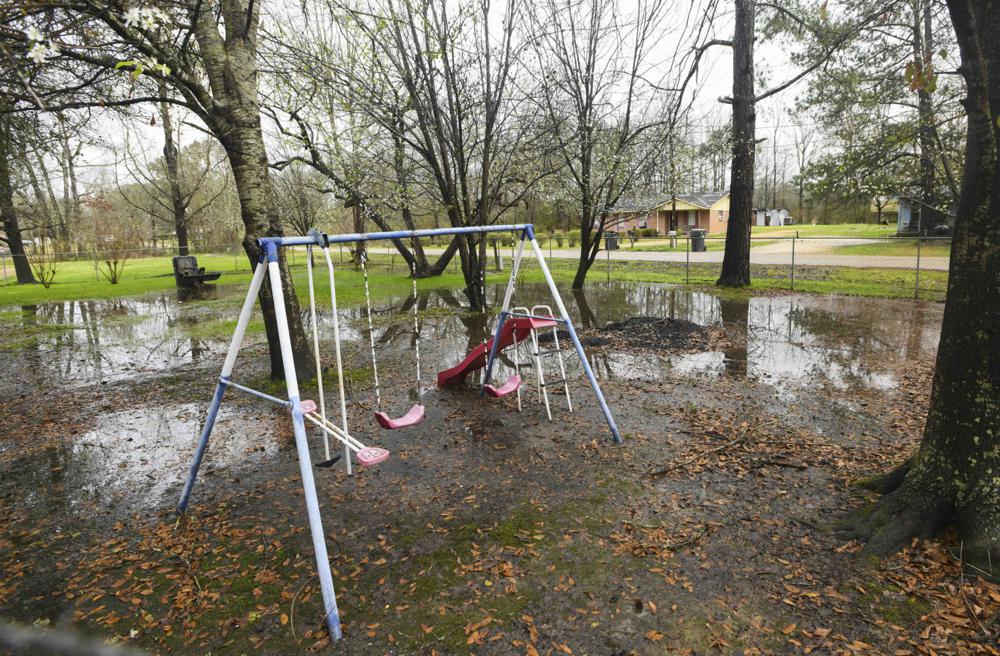
The U.S. Department of Justice said Tuesday that it has embarked on a historic environmental justice investigation into an impoverished Alabama county’s longstanding wastewater problems, which have left some residents with sewage in their yards. Federal prosecutors in the department’s civil rights division will examine whether state and local health departments have discriminated against Black residents of Lowndes County and have caused them to unjustifiably bear the risk of hookworm infections and other adverse health effects associated with inadequate wastewater treatment, officials said. “Sanitation is a basic human need, and no one in the United States should be exposed to risk of illness and other serious harm because of inadequate access to safe and effective sewage management,” Assistant Attorney General Kristen Clarke said. The Alabama Department of Public Health and the Lowndes County Health Department must operate their onsite wastewater disposal and infectious diseases and outbreaks programs in a safe and equitable manner, officials said. “State and local health officials are obligated, under federal civil rights laws, to protect the health and safety of all their residents,” Clarke said. Justice Department officials said officials in Alabama are cooperating, and they emphasized no conclusions have been reached regarding whether there’s evidence of racial bias in the state and county’s federally funded health departments. A spokesman for the Alabama Department of Public Health said they couldn’t comment on the pending probe. “ADPH is committed to cooperating with the investigating agencies to have this matter resolved as quickly as possible,” Ryan Easterling wrote in an email. This is the Justice Department’s first Title VI environmental justice investigation for one of the department’s funding recipients, and federal officials suggested there will be more to come since addressing discriminatory environmental and health impacts through enforcement of the nation’s civil rights laws is a top priority of the Civil Rights Division. Wastewater problems are well documented in Lowndes County, where at least 26% of the people live in poverty. Alabama’s Black Belt region gets its name for the dark rich soil that once gave rise to cotton plantations, but the type of soil also makes it difficult for traditional septic tanks, in which wastewater filters through the ground, to function properly. The region’s intense poverty and inadequate municipal infrastructure contribute to the problem. Maintaining septic tanks has typically been the responsibility of a homeowner, while local governments maintain sewage systems. Some homes in the rural county still have “straight pipe” systems, letting sewage run untreated from home to yard. Charlie Mae Holcombe of Hayneville described to The Associated Press in 2019 how the sanitation system in her small city will back up and overflow at times, sending raw sewage into her house and swamping the child’s swing set in her yard. “They have had to come and pump it out of my yard with the pump truck,” Holcombe said. “It’s backing up, even in my bathtub. The sewage has run over all in the house.” A study by Baylor University in 2018 estimated that about one-third of the county’s residents tested positive for low levels of hookworm, an intestinal parasite that typically spreads through human feces. It is most commonly found in non-industrial nations in the Southern Hemisphere. State health officials disputed the findings because of the small sample size and the methodology used. Republished with the permission of the Associated Press.
Sheriff John Williams remembered as dedicated peace officer

A slain Alabama sheriff was remembered Monday as a dedicated peace officer who loved serving the people of his county. More than 2,000 mourners filled an auditorium for funeral services for Lowndes County Sheriff John Williams. Williams was shot and killed Nov. 23 at a gas station in the county where he served as sheriff. William Chase Johnson, 18, is charged with murder in the sheriff’s death. Sometimes known as “Big John” for his towering frame, the 62-year-old sheriff was remembered as a selfless law enforcement officer who showed respect to everyone. “He didn’t care if you were rich or poor. He didn’t care if you were black, white, green, purple…. John was going to treat you like family. John was going to do everything in his power to help you,” said Russell County Sheriff Heath Taylor, who serves as head of the state sheriffs association. Taylor said Williams was example to follow, both as a man and a law enforcement officer. “When this call for assistance came in, he didn’t pass it to a deputy… he took it himself, just like he had done thousands of times,” Taylor said. Speakers at the services described Williams’ big laugh and bigger heart. They remembered him as a man who freely gave out his cellphone number to folks in his county so they could reach him if they needed, doted on his grandchild and patrolled his county in his truck with a distinctive air raid siren-sounding horn that always let people know he was coming. Williams was elected as sheriff in 2010 after decades working in law enforcement in his home county. Williams’ flag-draped coffin sat at the front of the coliseum that was selected for the funeral because of the expected large crowd. A black wreath was placed on the hood of a sheriff’s truck at the back of the coliseum. Montgomery County Sheriff Derrick Cunningham said his friend was a “true peace maker.” “He would give you the shirt off his back. He’s a true law enforcement officer,” Cunningham said. “He loved y’all. He loved Lowndes County and he loved being sheriff.” U.S. Sen. Doug Jones said Williams was keeping the peace in Lowndes County “until his last breath.” Republished with the Permission of the Associated Press.
Terri Sewell leads effort to address wastewater systems in rural Alabama
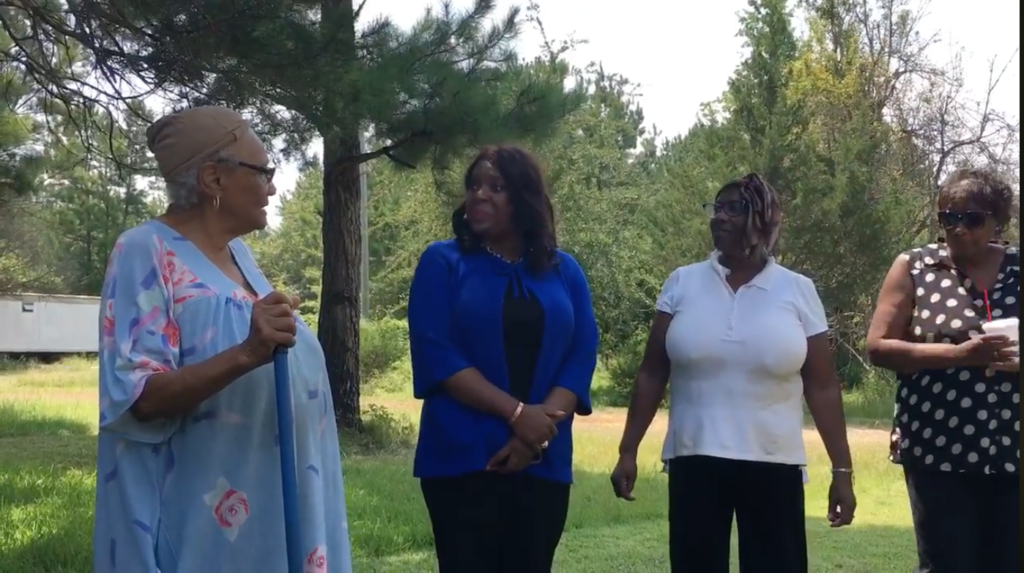
Alabama 7th District U.S. Rep. Terri Sewell joined local officials and experts in Lowndes County on Monday to address what she referred to as a “public health crisis” in rural Alabama Black Belt and surrounding counties. For decades, homes in rural communities in the state have not been connected to their local wastewater and sewage systems, causing a myriad of problems for the residents. For some, brackish wastewater fills their yard and the smell of sewage, only increased by the heat, wafts through the air. In poverty-stricken Lowndes County the situation has led to a surge of tropical diseases mostly found in developing countries; hookworm, toxocara, and the perfect breeding grounds for mosquito-borne illnesses, including Zika and West Nile. Experts suggest 60 percent of homes in some parts of rural Alabama drain wastewater without treatment from a septic system.1 Researchers from the University of Alabama estimate that more than 500,000 gallons of raw sewage enter rivers and streams in Alabama’s Black Belt each day. “In most countries in the Western world, it’s assumed governments will one way or another make sure basic facilities like clean running water, sewage, and sanitation are available,” Philip Alston, the United Nations Special Rapporteur on extreme poverty and human rights, told the Montgomery Advertiser. “What was striking to me in Alabama was the extent to which there’s no sense that a government should be working towards providing basic infrastructure,” Alston continued. “If you happen to live in one of the big cities, you will get access, but if you don’t — and particularly if you live in one of the poor counties like Lowndes — there isn’t any obligation and there are no plans in place.” But Sewell is hoping to change that. On Monday, she called on state departments to stop fining those residents who are living with insufficient and failing water systems; instead asking that they relax the citation practice for a year to give residents time to be identified, and ask for help. “They [the health department] have been been lenient,” Sewell told the Montgomery Advertiser. “But in order to really have people self-identify, you’re going to have to incentivize that.” “These are remote areas; they are 40 miles from nowhere,” Sewell continued. “And it’s not just Lowndes County. It’s rural America. Even in Alabama, the problems are not just in the Black Belt. We can’t fine people. We need to help them.” Sewell met with experts from several fields and local residents to discuss the problem posting a video of her interactions on Facebook, saying that solving the issue “is going to take all of us working together!!” Sewell’s visit come just a few days after The United States Department of Agriculture announced over $4 billion in national agriculture loan funds assigned to fund rural wastewater infrastructure projects. The experts she met with said that one-size-fits-all solutions will not work in Lowndes County, saying a mixture of solutions will be necessary for any real change to occur.
Don’t ignore Jeff Sessions’ good work for black communities, Salon article warns

Alabama Republican Sen. Jeff Sessions may have taken some questionable stances on race in the past, but boiling down his career to those instances is selling him short according to an article published in Salon. Back in 2001, Sessions helped an impoverished, predominantly black Lowndes County, Alabama, by directing Environmental Protection Agency funds to the area to install new septic tanks. The area was home to 37 families facing arrest or eviction due to health regulation violations, and the $12,000 cost of installing a new septic system was well beyond the reach of the residents, whose average income is around $20,000 a year. Lowndes County holds 43 miles of the 54-mile 1965 voting rights march from Selma to Montgomery, and despite dozens of black leaders marching through the area annually, the area had to turn to Sessions for help. Sessions also moved to bring jobs to the area by approving $4 million in grants for secondary auto suppliers to set up shop after Hyundai Corp. opened a $1 billion manufacturing plant just 6 miles from the Lowndes County border. The longtime Senator also hosted a Capitol Hill meeting with corporate and policy representatives that resulted in Microsoft donating more than $65,000 worth of software to install on PCs in computer centers built for the county’s low-income residents.
Alabama unemployment near flat at 6% in November

Alabama’s unemployment rate was 6 percent for the month of November, down from 6.2 and 6.1 percent in recent months but slightly up from a seasonally adjusted 5.9 percent in October, according to new figures from the federal Bureau of Labor Statistics. The office of Gov. Robert Bentley celebrated the news in a release Friday, saying recent employment growth has reached just 25,000 jobs short of prerecession levels. “We are coming closer and closer to hitting that golden wage and salary employment number of 2 million jobs,” Bentley said. “We are less than 25,000 jobs shy of attaining pre-recession employment levels in Alabama. We haven’t seen wage and salary employment at 2 million since June 2008, prior to the recession’s effects in our state. Our economy is strong, and my goal is that every Alabamian who wants a job can obtain one.” The Bentley administration also put a positive spin on the marginal increase over October’s jobless numbers. “The very slight uptick in November’s unemployment rate is due to the fact that more people entered the workforce, perhaps looking for seasonal employment,” said Alabama Labor Department Commissioner Fitzgerald Washington. “Additionally, more people are employed both over the month and over the year, so this small increase is not necessarily bad news.” According to the governor’s office, the Civilian Labor Force (CLF) increased in November to 2,146,294 from 2,141,221 in October and from 2,130,131 in November 2014 (seasonally adjusted). CLF employment also increased to 2,018,189 from 2,014,056 in October and from 1,999,222 in November 2014. Wage and salary employment increased in November by 12,800 to 1,975,700. Monthly gains were seen in the trade, transportation, and utilities sector (+9,100), the education and health services sector (+2,800), and the government sector (+1,800), among others, according to a release. These numbers correspond to the statewide jobs market, though some rural counties continue to lag behind state and national averages. The hardest-hit counties in Alabama? Wilcox County at 13.5 percent, Lowndes County at 10.6 percent, Clarke at 10.5 percent, and Greene at 10.1 percent. Those are the only counties with double-digit jobless rates. Counties with the lowest unemployment rates are Shelby County at 4.0 percent, Lee County at 4.7 percent, and Elmore, Cullman, and St. Clair counties at 4.8 percent.
