
Steve Flowers: Annual legislative session successful
The recently completed Regular Session of the Alabama legislature was a success. It began on a high note and ended positively. Why? There was plenty of money to spend. Both the General Fund Budget and the Education Budget had historic amounts of money. Most of the focus of the Session was on budgeting, as it should be, because that is the only constitutional mandate that the legislature is tasked with in the 105-day Regular Session. Gov. Kay Ivey laid out her agenda in her State of the State address, then sent her proposed budget requests over to the legislature. The governor’s speech outlining her legislative agenda was about doing good things for education. However, her desires were vague, and her ask list was long and wishful, like a kid’s Christmas wish list. It called for the state to give away the store. It was as though she was running for reelection, which everyone knows she cannot do. Therefore, the veteran Senate treats her politely but has relegated her to a lame-duck status. The legislature has taken total control of the budgeting process, as they should do under the Constitution. The governor proposes, and the legislature disposes. The days of a strong-armed, powerful, omnipotent governor that controls both the Executive and Legislative Branches are over. The King George Wallace era is gone, probably forever. The surplus in the Education Budget was enormous. How to spend this surplus became the focus of the entire session. There is a very accurate political assessment that it is much more difficult to deal with a surplus budget than a lean or deficit budget. George Wallace told me about this same thing during his last term as governor when I was a freshman legislator. Accolades go out to Senator Arthur Orr (R-Decatur), Chairman of the Senate Education Finance and Taxation Committee, and Representative Danny Garrett (R-Trussville), Chairman of the House Education Ways and Means Committee. These two gentlemen essentially singlehandedly wrote the Education Budget and did a masterful job. They were cognizant that what goes up has to come down. Therefore, they created several savings accounts and rainy day funds for the rainy days ahead because they will come. The Education Budget was an historic $11.5 billion. It gave increases for pre-kindergarten programs, school supplies, school nurses, and a significant 2% cost of living salary increase to teachers and support personnel. All colleges and universities in the state received increased funding. Non-education entities were given money. There was $100 million for prison education. The high-profile aspects of the Education Budget windfall were a one-time rebate going back to taxpayers in November. Governor Ivey had wished for a $400 per person and $800 per couple rebate. However, the final result is $150 per person and $300 per married couple. Most legislators preferred eliminating the grocery tax or long-term tax cuts to this one-time check back in November. The surprise in the Christmas stocking from the Education Budget surplus is the reduction on the state sales tax on groceries. Eliminating or reducing the state tax on groceries has been championed by Democrats for years, as the tax is regressive and hurts the state’s lowest income earners the hardest. However, the measure garnered Republican bipartisan support this year after 20 years and passed with an overwhelming vote in both Chambers. It is, however, a gradual reduction. The grocery tax would decrease 2% in two steps, with the tax being reduced 1% this year and another 1% percent new year, if the funds are available. The State General Fund had a good year as well. The $3 billion General Fund was record-shattering—the largest in history. The Chairmen, Senator Greg Albritton (R-Escambia) and Representative Rex Reynolds (R-Huntsville) oversaw a $159 million increase over the current year. The largest increases in the budget were in Medicaid by $69 million and Corrections by $59 million more. State employees will see a 2% increase in pay, which will go into effect as the new fiscal year begins October 1. The legendary head of the Alabama State Employees Association, Mac McArthur, has quietly garnered state employees a cost of living raise five out of the last six years. See you next week. Steve Flowers is Alabama’s leading political commentator. His weekly column appears in over 60 Alabama newspapers. He served 16 years in the state legislature. Steve may be reached at www.steveflowers.us.
Steve Flowers: New fiscal year begins, teachers and state employees looking good
The new state fiscal year begins October 1, and the two state budgets are flush. Both the General Fund and the State Special Education Budgets will be the largest in state history. The General Fund Budget is a record-breaking $2.7 billion. It increases the revenue for mental health and prisons. Medicaid continues to be a money-eating monster. State employees are getting a 4% cost of living raise. This is the third time in recent history that state workers have gotten a back-to-back pay raise. In addition, retired state employees will get a bonus. State Senator Greg Albritton (R-Escambia) and Representative Steve Clouse (R-Ozark), the budget chairmen, deserve accolades. Veteran Alabama State Employees Association executive director Mac McArthur deserves a lot of credit for state employees getting a 4% pay increase this year and 2% last year. Ole Mac has put together four raises in five years for his folks. Alabama Education Association (“AEA”) head Amy Marlowe and her chief lobbyist ally, Ashley McLain, deserve kudos for garnering a 4% teacher pay raise. Once again, the AEA has become a power to be reckoned with on Goat Hill. The legislature passed a record-breaking $8.17 billion Education Budget. The historic spending plan increases education funding by about $502 million over the current year. It drew praise from all corners of education for its increases, which includes teachers’ salaries and workforce development. There will be more money for classroom materials, the hiring of technology coordinators and reading coaches, and $20 million to implement the K-5 math instruction bill. The budget includes a 4% raise for teachers and lump-sum bonuses for retirees. There is also a $33 million bonus to increase teacher longevity. Other states have been giving similar salary adjustments. One of the budget allotments that has gotten the most accolades is the increase from $700 to $900 per classroom in supply money. The story that has been building over the past several years is the resurgence of the AEA as a power player on Goat Hill. The fruits of their labor emerged immensely during the regular session. It is apparent that AEA was instrumental in crafting the Education Budget with the 4% pay increase for teachers and the money that is going into the classroom. You would have thought Dr. Paul Hubbert was still sitting in the gallery directing legislators’ votes with a thumbs up or a thumbs down. They have built AEA into a power to be reckoned with at the Statehouse. The new leadership of Marlowe/McLain have reorganized by acknowledging that Alabama, and especially the Alabama Legislature, is very Republican. They understand the rule that “money is the mother’s milk of politics” and “you win more bees with honey.” The AEA has generously donated to House Republicans like nobody’s business and no other Special Interest entity. It is no longer taboo or heresy for a Republican legislator or State Senator to accept teacher union money. They have made $10,000 to $15,000 contributions to House members on both sides of the aisle. In reviewing campaign disclosure statements, AEA is the only entity writing checks that large. Checks to senator’s coffers are $25,000 or more. AEA lobbyists, especially Ashley McLain, have earned the friendship and respect of the Republican House members and Senators. She and her team have gone out to their districts all over the state and gotten to know them and their families. They have connected the legislator with key educators in their hometowns who are respected centers of influence and can orchestrate a field or army of teachers to work the districts for their legislative friends. This footwork and shoe leather, coupled with large campaign checks, hits home with legislators of both parties. The telling blow that resonated and echoed off the walls of the Statehouse was the defeat of the so-called School Choice Bill. Senator Del Marsh made it his final mission to place state education dollars into private, parochial, and charter schools. His school choice was given a stinging defeat by none other than the AEA. Folks, make no doubt about it; the AEA is back in Alabama politics. See you next week. Steve Flowers is Alabama’s leading political columnist. His weekly column appears in over 60 Alabama newspapers. He served 16 years in the state legislature. Steve may be reached at www.steveflowers.us.
House budget panel weighs testimony on 2 plans to avert budget shortfall
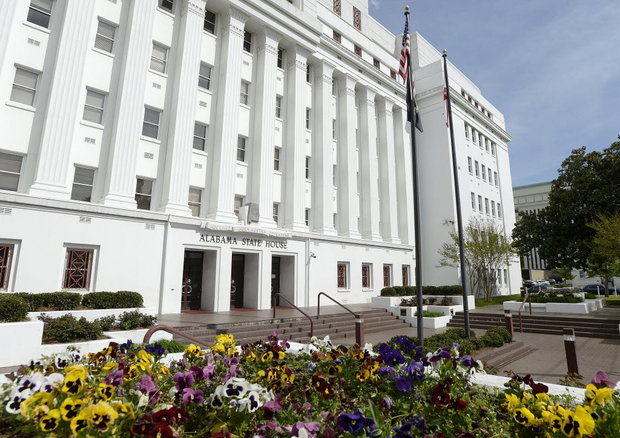
Tuesday, the House’s General Fund budget committee weighed testimony on two proposals to save money as an overall plan to avert a state budget shortfall. Rep. Lynn Greer presented House Bill 588 a plan to convert two state holidays into furlough days while House Bill 590 from Rep. Arnold Mooney cuts longevity pay, a yearly payment made to state employees each December based on how long they have worked for the state, for the coming fiscal year. During the public hearing, Mac McArthur, executive director of the Alabama State Employees’ Association, urged the committee to delay voting on both bills until a decision had been made on Sen. Del Marsh’s gambling proposal. “Don’t balance the budget on the backs of state employees,” he said. “Are you going to look at those people who have served you over and over and tell them ‘We’re gonna cut your pay?’” The pressure is on for lawmakers to agree on a plan to avoid across-the-board budget cuts because of a budget shortfall. Gov. Robert Bentley has urged lawmakers to pass a set of tax increases in order to boost revenue to the General Fund. On Monday, the governor threatened to call a Special Session of the Legislature if lawmakers fail to approve his plan to increase revenue to the General Fund. The committee chairman indicated that the panel will reconvene on Wednesday for a formal vote.
