
House censures Rep. Adam Schiff over Trump-Russia investigations

The House voted Wednesday to censure California Rep. Adam Schiff for comments he made several years ago about investigations into Donald Trump’s ties to Russia, rebuking the Democrat and frequent critic of the former president along party lines. Schiff, who will stand in front of the House while the resolution is read, becomes the 25th House lawmaker to be censured. He was defiant ahead of the vote, saying he will wear the formal disapproval as a “badge of honor” and charged his GOP colleagues of doing the former president’s bidding. “I will not yield,” Schiff, who is running for the Senate in his home state, said during debate over the measure. “Not one inch.” More than 20 Republicans voted with Democrats last week to block the censure resolution, but they changed their votes this week after the measure’s sponsor, Republican Rep. Anna Paulina Luna of Florida, removed a provision that could have fined Schiff $16 million if the House Ethics Committee determined he lied. Several of the Republicans who opposed the resolution last week said they opposed fining a member of Congress in that manner. The final vote was 213-209. The revised resolution says Schiff held positions of power during Trump’s presidency and “abused this trust by saying there was evidence of collusion between Trump’s campaign and Russia.” Schiff was one of the most outspoken critics of the former president as both the Justice Department and the Republican-led House launched investigations into Trump’s ties to Russia in 2017. Both investigations concluded that Russia intervened in the 2016 presidential election but neither found evidence of a criminal conspiracy. “Representative Schiff purposely deceived his Committee, Congress, and the American people,” the resolution said. Schiff, the former Democratic chairman of the House Intelligence Committee and the lead prosecutor in Trump’s first impeachment trial, has long been a top Republican political target. Soon after taking back the majority this year, Republicans blocked him from sitting on the intelligence panel. The House has only censured two other lawmakers in the last 20 years. Republican Rep. Paul Gosar of Arizona was censured in 2021 for tweeting an animated video that depicted him striking Rep. Alexandria Ocasio-Cortez, D-N.Y., with a sword. Former Democratic Rep. Charlie Rangel of New York was censured in 2010 for serious financial and campaign misconduct. The censure itself carries no practical effect, except to provide a historic footnote that marks a lawmaker’s career. But the GOP resolution would also launch an ethics investigation into Schiff’s conduct. While Schiff did not initiate the 2017 congressional investigation into Trump’s Russia ties — then-House Intelligence Committee Chairman Devin Nunes, a Republican who later became one of Trump’s most ardent defenders, started it — Republicans arguing in favor of his censure Wednesday blamed him for what they said was the fallout of that probe, and of the separate investigation started that same year by Trump’s own Justice Department. Luna said that Schiff’s comments that there was evidence against Trump “ripped apart American families across the country” and that he was “permanently destroying family relationships.” Several blamed him for the more than $30 million spent by then-special counsel Robert Mueller, who led the Justice Department probe. Schiff said the censure resolution “would accuse me of omnipotence, the leader of some a vast Deep State conspiracy, and of course, it is nonsense.” Democrats aggressively defended their colleague. Maryland Rep. Jamie Raskin, who led Trump’s second impeachment, called the effort an “embarrassing revenge tour on behalf of Donald Trump.” Mueller, who led the two-year Justice Department investigation, determined that Russia intervened on the campaign’s behalf and that Trump’s campaign welcomed the help. But Mueller’s team did not find that the campaign conspired to sway the election, and the Justice Department did not recommend any criminal charges. The House intelligence committee probe launched by Nunes similarly found that Russia intervened in the election but that there was no evidence of a criminal conspiracy. Schiff was the top Democrat on the panel at the time. Schiff said last week that the censure resolution was “red meat” that Speaker Kevin McCarthy was throwing to his conference amid squabbles over government spending. Republicans are trying to show their fealty to Trump, Schiff said. He said he warned the country during impeachment proceedings three years ago that Trump “would go on to do worse. And, of course, he did worse in the form of a violent attack on the Capitol.” After Democrats won the House majority in 2018, the House impeached Trump for abuse of power after he threatened to withhold military aid to Ukraine and urged the country’s president to investigate then-candidate Joe Biden. Schiff was the lead House prosecutor making the case for conviction to the Senate, arguing repeatedly that “right matters.” The Republican-led chamber ultimately acquitted him. Trump was impeached a second time a year later, after he had left office, for his role in the January 6, 2021, insurrection at the Capitol. The Senate again acquitted Trump. In the censure resolution against Schiff, Luna also cited a report released in May from special counsel John Durham that found that the FBI rushed into its investigation of Trump’s campaign and relied too much on raw and unconfirmed intelligence. Durham said investigators repeatedly relied on “confirmation bias,” ignoring or rationalizing away evidence that undercut their premise of a Trump-Russia conspiracy as they pushed the probe forward. But he did not allege that political bias or partisanship were guiding factors for the FBI’s actions. Trump had claimed that Durham’s report would reveal the “crime of the century” and expose a “deep state conspiracy” by high-ranking government officials to derail his candidacy and later his presidency. But the investigation yielded only one conviction — a guilty plea from a little-known FBI employee — and the only two other cases that were brought both ended in acquittals at trial. On Wednesday, just before the vote, Schiff’s campaign sent out a fundraising email that said Luna had introduced “yet ANOTHER resolution to censure me.” “The vote and debate will happen imminently,” the email read,
Bipartisan congressional caucus forms to address fentanyl crisis
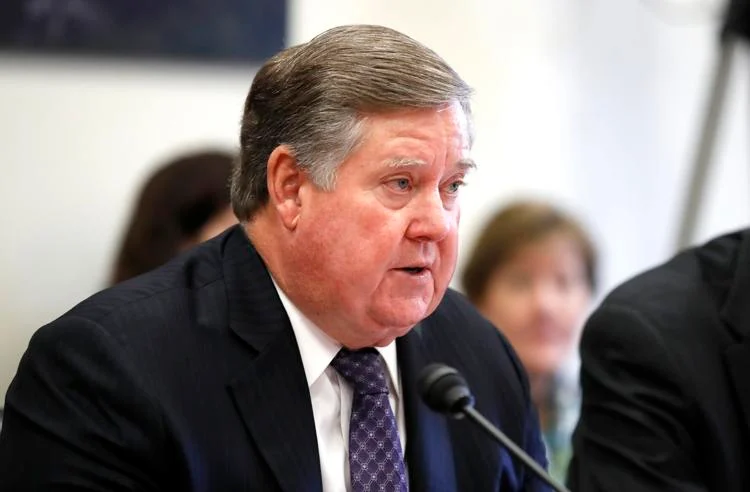
Labeling the smuggling of illicit fentanyl into the U.S. from Mexico “a national crisis,” a group of lawmakers has formed a bipartisan caucus to address the issue. Led by Republican California Reps. Ken Calvert and Darrell Issa and Democratic Reps. Joe Neguse of Colorado and Madeleine Dean of Pennsylvania, the Bipartisan Fentanyl Prevention Caucus was formed to “coordinate with members from both sides of the aisle to combat the nationwide spike in fentanyl-related overdoses and drug poisonings.” The group says it will work with federal and state law enforcement and “to educate the public and the Congress, in cooperation with prevention and awareness groups to better understand the ongoing threat of fentanyl in communities across America.” “Fentanyl is devastating the lives of Americans in every corner of our country. With fentanyl-related deaths climbing every year, we need new solutions to stop this alarming trend,” Calvert said. “This is not a partisan issue – it’s a national crisis.” Rather than pledging to end the fentanyl crisis, Calvert said he hoped the caucus would “educate Americans on the dangers of fentanyl and provide real solutions that will stop the destruction of this deadly drug.” “Fentanyl is not a new danger. But the deadly threat it poses has now reached every corner of our country, and no community is being spared,” Issa said. “The stakes could not be more clear: If we don’t win the fentanyl fight, we’re not going to just lose my community or my neighbor’s. Or any one of my colleagues. We’re going to lose this country. This caucus is needed now as we tell the truth, develop solutions, and save lives.” When announcing its formation, the caucus didn’t call on the president or Secretary of State Antony Blinken to declare Mexican cartels as Foreign Terrorist Organizations, as Texas Gov. Greg Abbott and 21 attorneys general have repeatedly done. Last September, Abbott issued an executive order designating the Sinaloa Cartel, the Jalisco New Generation Cartel, and any similarly situated Mexican drug cartels as foreign terrorist organizations” under Section 219 of the Immigration and Nationality Act. He also requested President Joe Biden do likewise, the second time he’d made the request since April 2021. In his September 21, 2022 letter, Abbott said since then, “There was no action, no response.” He’s still received no response, his office has told The Center Square. Last week, Blinken told Congress he’d consider designating cartels as FTOs. Two weeks prior, the White House said it didn’t have any intention of doing so. Republican U.S. Sens. Rick Scott of Florida and Roger Marshall of Kansas introduced the Drug Cartel Terrorist Designation Act, which Florida Attorney General Ashley Moody said will “do the job Biden refuses to do – protect the American people.” The caucus also hasn’t demanded the president designate fentanyl as a weapon of mass destruction, as 18 attorneys general have done led by Moody. Fentanyl poisoning remains the leading cause of death among adults between the ages of 18 and 45. Two milligrams, the weight of a mosquito, is lethal. In fiscal years 2021 and 2022, CBP agents confiscated enough fentanyl to kill nearly 5 billion people. Since March 2021, Texas Operation Lone Star officers have seized over 373 million lethal doses of fentanyl. Florida law enforcement officers in a few month’s time last year seized enough fentanyl to kill everyone in Florida. The U.S. Drug Enforcement Administration has issued several public alerts warning Americans about the dangers of fentanyl. Most recently it issued another public alert about the “sharp increase in the trafficking of fentanyl mixed with Xylazine,” an animal tranquilizer referred to on the streets as “Tranq.” It did so after the FDA, CDC, and multiple state agencies issued warnings about Xyzaline being detected in an increasing number of illicit drug mixtures and a growing number of overdose deaths nationwide. “Xylazine is making the deadliest drug threat our country has ever faced, fentanyl, even deadlier,” DEA Administrator Anne Milgram said. DEA has so far seized Xylazine and fentanyl mixtures in 48 of 50 states. Caucus members also include Angie Craig (D-MN), Chris Pappas (D-NH), Raja Krishnamoorthi (D-IL), Melanie Stansbury (D-NM), Chrissy Houlahan (D-PA), Ruben Gallego (D-TX), Nikki Budzinski (D-IL), Marc Veasey (D-TX), Sheila Jackson Lee (D-TX), Raúl Grijalva (D-AZ), Doug Lamborn (R-CO), Sharice Davids (D-KS), Don Bacon (R-NE), Claudia Tenney (R-NY), Andre Carson (D-IN), Ralph Norman (R-SC), Chris Smith (R-NJ), Lance Gooden (R-TX), Bob Latta (R-OH), Andy Biggs (R-AZ), Jake LaTurner (R-KS), Barry Moore (R-AL), David Valadao (R-CA), and Robert Aderholt (R-AL). Republished with the permission of The Center Square.
