
Tommy Tuberville cosponsors the Prevent Government Shutdowns Act
U.S. Senator Tommy Tuberville (R-Alabama) joined Senator James Lankford (R-Oklahoma) in cosponsoring bipartisan legislation titled the Prevent Government Shutdowns Act of 2023. This legislation would take government shutdowns off the table and force Congress to stay in town until the budgets are passed. “Shutdowns don’t accomplish anything,” said Sen. Tuberville. “Where I come from, you stay at work until you get the job done. Congress should be forced to stay in D.C. until we pass a responsible, fiscally conservative budget.” Lankford said that the problem is out-of-control federal spending. “If you go back 20 years ago to 2003, our total spending was just over $2 trillion,” Sen. Lankford said. “If you go back to 2013, ten years ago, our total spending was less than $3.5 trillion. Our spending this year will be right at $6.5 trillion. So, in the past 20 years, our spending has increased from just over $2 trillion to $6.5 trillion. To again set this in context, the revenue that’s coming into the federal Treasury this year is estimated at $4.8 trillion–$4.8 trillion. We’re spending an estimated $6.4 trillion.” “This is not going to be a simple process to be able to come out of,” Lankford continued. “This is not going to be two Administrations in a row making agreements to be able to get back to balance. This is going to take decades. And my concern is, is that many here are not willing to start the first year of decades of work to be able to get us out. So we have work to do on this.” Lankford said that he and Sen. Maggie Hassan (D-New Hampshire) crafted the bill to end future government shutdowns. “So Senator Hassan and I came up with a simple proposal,” Lankford said. “If we get to the end of the fiscal year, and the appropriations work is not done, like it is this year, we stay in session seven days a week, and the only bills that can actually come up that actually can be called up during that time period are appropriations bills. The second part of it is there is no travel for anyone, so we couldn’t fly home and fly back. So, no official or campaign funds could be used to be able to travel. So we’re in session seven days a week. The only bills that are allowed to be brought up are Appropriations bills. There is no travel. And the next part of it is simple. There’s what’s called a Continuing Resolution to maintain the government to be open so that the American people and federal workers are held harmless. It puts the pressure on this room, not on federal workers that are working for FAA, not on people that are working for the Housing Administration, not on our Border Patrol. Those individuals don’t get a vote on this. They should not feel the pressure of a government shutdown.” The Prevent Government Shutdowns Act is supported by the Committee for a Responsible Federal Budget, Council for Citizens Against Government Waste, FreedomWorks, National Taxpayers Union, Americans for Prosperity, America First Policy Institute, and Americans for Tax Reform. The Prevent Government Shutdowns Act would require all Members of Congress to stay in Washington and work until spending bills are completed. The bill would prevent a government-wide shutdown and continue critical services while Congress completes the legally required appropriations process. In addition, under the bill, no other votes would be in order in the House or Senate unless they pertain to the passage of appropriations bills or mandatory quorum calls in the Senate. However, after 30 days under the automatic C.R., certain expiring authorization bills and executive calendar nominations would be eligible for consideration on the Senate floor, including a nomination for a Justice of the Supreme Court or a Cabinet Secretary, and narrow reauthorization legislation for programs operating under an authorization that has already expired or will expire within the next 30 days. These restrictions can be waived by a two-thirds vote in either chamber, but not for longer than seven days. Additionally, the bill provides for expedited consideration of bipartisan funding bills if appropriations have not been enacted 30 days after the start of the fiscal year. This would further incentivize Congress to process bipartisan spending bills and fund the government on time. Congress would not be subject to these restrictions if they pass the necessary legislation but await the President’s signature. However, if the President vetoes any of the funding bills, then the restrictions on congressional travel and floor consideration would be re-imposed. Sen. Katie Britt (R-Alabama) is also a cosponsor of this legislation. There are only three days left in the current fiscal year, and Congress has not passed the budget for the fiscal year that begins at midnight Saturday while Congress is mired in partisan inertia. The Alabama Legislature, by comparison, passed with bipartisan support, and Alabama Governor Kay Ivey signed both of its budgets back in May. The budgets are balanced, and the state is expected to roll a surplus into the fiscal year, which begins on Sunday. The federal budget deficit is bigger than the entire budget during the Clinton years. Tommy Tuberville represents Alabama in the United States Senate and is a member of the Senate Armed Services, Agriculture, Veterans Affairs, and HELP Committees. To connect with the author of this story or to comment, email brandonmreporter@gmail.com.
Katie Britt cosponsors bipartisan bill to permanently end budget brinkmanship
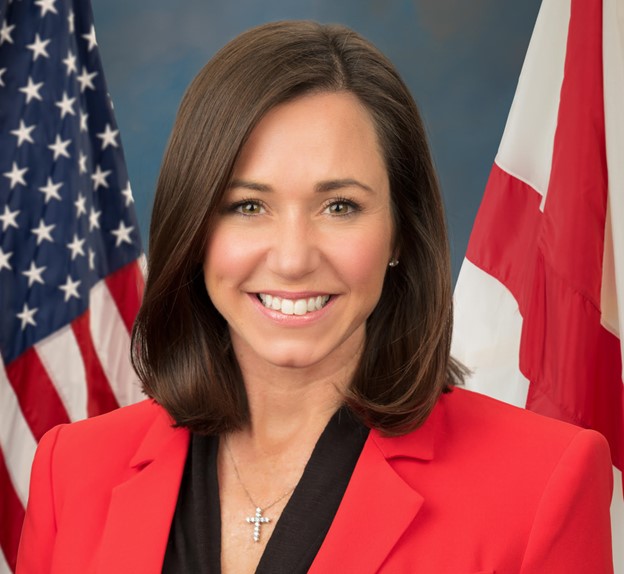
On Wednesday, U.S. Senator Katie Britt (R-Alabama) joined a bipartisan group of 11 colleagues as a co-sponsor of Senator James Lankford’s (R-Oklahoma) Prevent Government Shutdowns Act of 2023. This legislation would permanently end the practice of shutting down the federal government and disrupting critical services if Congress fails to enact spending bills by the start of the next fiscal year. Under the bill’s provisions, if Congress does not enact all 12 appropriations on time, an automatic 14-day Continuing Resolution (CR) would be triggered and keep funding at the previous fiscal year’s levels. If there is no resolution at the end of two weeks, automatic 14-day CRs would go into effect on a rolling basis until either all appropriations bills are enacted or a long-term CR is enacted. “The American people are tired of seeing critical government services being held hostage while Congress irresponsibly pushes to pass massive spending bills at the last minute,” said Sen. Britt. “Taxpayers shouldn’t be forced to keep paying the price for this budgetary political brinksmanship. This commonsense bill would ensure we have a fail-safe mechanism in place that will take these drastic options off the table, so members of the Senate and the House have time to draft the best bills possible in a transparent, accountable, and judicious manner.” While the federal government is operating under the automatic CRs, the legislation would require Congress to meet every day, including weekends, and members of Congress could not use any official funds for travel. They also could not consider any other measures other than appropriations bills. The travel restrictions would also apply to congressional staff and officials from the White House Office of Management and Budget (OMB). Lankford said that restraint is needed to balance the budget. Lankford said, “To put this in context, with the record revenue that’s coming in this year at about $4.8 trillion, if we were spending the same this year as we did in 2018, a short five years ago. If we were spending the same this year as we were in 2018 prior to COVID, we would have a $700 billion surplus this year rather than an almost $2 trillion deficit—this year—because the record amount of revenue coming in this year compared to what our spending was five years ago, we would have been in surplus this year. But we’re not, and it’s at $1.5 trillion over that. We have a very serious issue. We should have very hard conversations about our revenue, about our spending, about the direction that we’re actually heading, and about how do we get out of a $33 trillion debt.” In addition to Senator Britt, co-sponsors of Senator Lankford’s bill include Senators Maggie Hassan (D-New Hampshire), Ron Johnson (R-Wisconsin), Angus King (I-Maine), Rick Scott (R-Florida), Mark Kelly (D-Arizona), Steve Daines (R-Montana), Kyrsten Sinema (I-Arizona), Bill Cassidy (R-Louisiana), Mike Braun (R-Indiana), John Barrasso (R-Wyoming), Chuck Grassley (R-Iowa), and Cynthia Lummis (R-Wyoming). Senator Britt is also a co-sponsor of Senator Braun’s No Budget, No Pay Act. That legislation would bar members of Congress from getting paid until they passed a budget. President Joe Biden has not submitted a balanced budget since entering the White House. Katie Britt was elected to the U.S. Senate in 2022. She serves on the Appropriations Committee tasked with passing each of the 12 appropriations bills. CRs go around the committee by a handful of powerful Senators who craft the CR with the White House to keep the government funded. Often, those CR writers are able to insert earmarks and other language into a CR or omnibus spending bill that is never vetted by committee. To connect with the author of this story or to comment, email brandonmreporter@gmail.com.
Katie Britt backs bipartisan legislation to solidify American sanctions on Iran
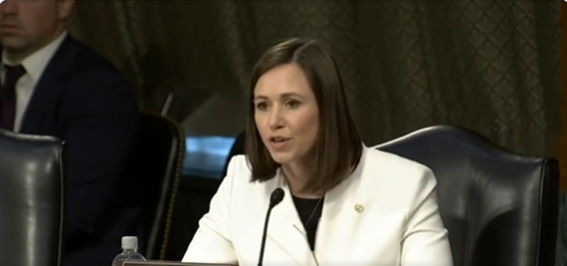
U.S. Senator Katie Britt recently joined Presidential candidate U.S. Senator Tim Scott (R-South Carolina) and Senators Maggie Hassan (D-New Hampshire), Bill Hagerty (R-Tennessee), and Jacky Rosen (D-Nevada) in cosponsoring the Solidify Iran Sanctions Act (SISA) to make permanent the Iran Sanctions Act of 1996. “This legislation sends an important bipartisan message to Iran that the United States will not tolerate continued threats to American national security,” said Sen. Britt. “Peace is achieved through strength. We must stand firm against bad actors and ensure that, first and foremost, our homeland is protected against aggression. I will always fight for America’s safety, and this act is a strong step to safeguard our nation’s future.” “As evidenced by the recent Iranian-backed drone strike in Syria that tragically killed South Carolinian Scott Dubis and the recent seizure of a U.S.-bound oil tanker, it is clear that Iran continues to engage in destabilizing activities that threaten the safety of America, Israel, and our other partners in the region,” Sen. Scott said. “Cementing these sanctions will apply pressure on Iran and help restrain this regime from developing weapons that threaten safety and security around the world.” “We must do everything that we can to prevent Iran from building a nuclear weapon and stop its support of terrorism,” said Sen. Hassan. Cementing these sanctions would advance national security by restraining Iran from engaging in malign activities that threaten the United States and its allies. SISA would also ensure that America’s sanctions regime continues to apply pressure on Iran amid its continuing dangerous nuclear escalation. In 1996, Congress passed the Iran Sanctions Act (ISA), which allowed the president to impose secondary sanctions on Iran’s energy sector. Throughout the years, ISA provisions were expanded to include other Iranian industries. ISA consists of “triggers” that place sanctions on firms or entities that violate U.S. sanctions under this law. As Iran continues its nuclear enrichment towards a weapons-grade level, it is essential that the United States solidifies its pivotal sanctions to apply pressure toward the rogue regime. The Solidify Iran Sanctions Act removes the sunset provision in the ISA and signals that the U.S. remains firmly committed to sanctioning the regime until it changes its malign behavior. A companion bill was introduced in the House of Representatives by Rep. Michelle Steel (R-California), Rep. Michael McCaul (R-Texas), the Chairman of the House Committee on Foreign Affairs, and Rep. Susie Lee (D-Nevada). There were international sanctions on Iran, but those went away in the Iran nuclear deal negotiated during the Obama administration. President Donald Trump reimposed U.S. sanctions, but the rest of the international community did not follow America’s lead. President Joe Biden has made some overtures towards negotiating a new deal with Iran, but Iran has not been receptive. U.S. Secretary of State Antony Blinken said on Wednesday that there was no nuclear deal with Iran on the table. “There is no agreement in the offing, even as we continue to be willing to explore diplomatic paths,” Blinken said at the Council on Foreign Relations in New York. “We’ll see by their actions.” Blinken called on Iran to “not take actions that further escalate the tensions” with the United States and the Middle East. Katie Britt was elected to the U.S. Senate in 2022 To connect with the author of this story or to comment, email brandonmreporter@gmail.com.
GOP nudges closer to House win; Senate could hinge on runoff

Republicans inched closer to a narrow House majority Wednesday, while control of the Senate hinged on a few tight races in a midterm election that defied expectations of sweeping conservative victories driven by frustration over inflation and President Joe Biden’s leadership. Either party could secure a Senate majority with wins in both Nevada and Arizona — where the races were too early to call. But there was a strong possibility that, for the second time in two years, the Senate majority could come down to a runoff in Georgia next month, with Democratic Sen. Raphael Warnock and Herschel Walker failing to earn enough votes to win outright. In the House, Republicans on Wednesday night were within a dozen seats of the 218 needed to take control, while Democrats kept seats in districts from Virginia to Pennsylvania to Kansas, and many West Coast contests were still too early to call. In a particularly symbolic victory for the GOP, Sean Patrick Maloney of New York, the House Democratic campaign chief, lost his bid for a sixth term. Control of Congress will decide how the next two years of Biden’s term play out and whether he is able to achieve more of his agenda or will see it blocked by a new GOP majority. Republicans are likely to launch a spate of investigations into Biden, his family, and his administration if they take power, while a GOP takeover of the Senate would hobble the president’s ability to appoint judges. “Regardless of what the final tally of these elections show, and there’s still some counting going on, I’m prepared to work with my Republican colleagues,” Biden said Wednesday in his first public remarks since the polls closed. “The American people have made clear, I think, that they expect Republicans to be prepared to work with me as well.” Democrats did better than history suggested they would. The party in power almost always suffers losses in the president’s first midterm elections, though even if the GOP ultimately wins the House, it won’t be by a margin as large as during other midterm cycles. Democrats gained a net of 41 House seats under then-President Donald Trump in 2018, President Barack Obama saw the GOP gain 63 in 2010, and Republicans gained 54 seats during President Bill Clinton’s first midterm. A small majority in the House would pose a great challenge for the GOP and especially California Rep. Kevin McCarthy, who is in line to be House speaker and would have little room for error in navigating a chamber of members eager to leverage their votes to advance their own agenda. In the fight for Senate control, Pennsylvania was a bright spot for Democrats. Lt. Gov. John Fetterman, who suffered a stroke five months ago, flipped a Republican-controlled Senate seat, topping Trump-endorsed Republican Dr. Mehmet Oz. Georgia, meanwhile, was set for yet another runoff on December 6. In 2021, Warnock used a runoff to win his seat, as did Democratic Sen. Jon Ossoff — which gave Democrats control of the Senate. Both Warnock and Walker were already fundraising off the race, stretching into a second round. Both Republican and Democratic incumbents maintained key Senate seats. In Wisconsin, Republican Sen. Ron Johnson prevailed over Democratic Lt. Gov. Mandela Barnes, while in New Hampshire, Democratic Sen. Maggie Hassan beat Don Bolduc, a retired Army general who had initially promoted Trump’s lies about the 2020 election but tried to shift away those views closer to Election Day. AP VoteCast, a broad survey of the national electorate, showed that high inflation and concerns about the fragility of democracy were heavily influencing voters. Half of voters said inflation factored significantly, with groceries, gasoline, housing, and other costs that have shot up in the past year. Slightly fewer — 44% — said the future of democracy was their primary consideration. Biden didn’t entirely shoulder the blame for inflation, with close to half of voters saying the higher-than-usual prices were more because of factors outside of his control. And despite the president bearing criticism from a pessimistic electorate, some of those voters backed Democratic candidates. Democrats counted on a midterm boost from the Supreme Court’s decision to gut abortion rights, which they thought might energize their voters, and the bet paid off. In four states where the issue was on the ballot, voters backed abortion rights. VoteCast showed that 7 in 10 national voters said overturning the 1973 Roe v. Wade decision was an important factor in their midterm decisions. It also showed the reversal was broadly unpopular. And roughly 6 in 10 said they favor a law guaranteeing access to legal abortion nationwide. In the first national election since the January 6 insurrection, some who participated in or were in the vicinity of the attack on the U.S. Capitol were poised to win elected office. One of those Republican candidates, Derrick Van Orden in Wisconsin — who was outside the Capitol during the deadly riot — won a House seat. Another, J.R. Majewski, lost to Ohio Democratic Rep. Marcy Kaptur. Republicans had sought to make inroads in liberal New England but were shut out of House contests, with one Maine race still set to be determined by ranked-choice voting. Governors’ races took on outsized significance this year, particularly in battleground states that could help decide the results of the 2024 presidential election. Democrats held on to governors’ mansions in Wisconsin, Michigan, and Pennsylvania, defeating Republicans who promoted Trump’s lies about a stolen 2020 election. Republicans held on to governors’ mansions in Florida, Texas, and Georgia, another battleground state Biden narrowly won two years ago. Trump found some success as well. He lifted Republican Senate candidates to victory in Ohio and North Carolina. JD Vance, the bestselling author of “Hillbilly Elegy,” defeated 10-term congressman Tim Ryan, while Rep. Ted Budd beat Cheri Beasley, the former chief justice of the state Supreme Court. Trump had endorsed more than 300 candidates across the country, hoping the night would end in a red wave he could ride to the 2024 Republican presidential nomination. After summoning reporters
U.S. Senate is focus of politicos across the country
In Alabama, with hours left in the 2022 election cycle, the Republican nominee for U.S. Senate, Katie Britt, appears to be a prohibitive favorite over Democratic nominee Dr. Will Boyd and Libertarian nominee John Sophocleus for the open U.S. Senate seat, currently held by the retiring Richard Shelby. Nationally, though, there is intense speculation over what could happen on election day on Tuesday and which party will control the next Congress. Polling shows Republicans with growing momentum, and it appears almost a certainty that the GOP will take control of the U.S. House of Representatives after four years of Nancy Pelosi’s leadership, and it does not appear to even be close. Real Clear Politics does not see any of Alabama’s Seven Congressional Districts as even being in play in this election. With the House effectively lost to them, Democrats have focused their efforts on maintaining their narrow control of the U.S. Senate, which for the past two years has been tied 50 to 50; but Vice President Kamala Harris gives the Democrats control of the body. Democrats had staked their hopes on the Select Committee on January 6, and the abortion issue to energize their base. That has not happened. Instead, Republicans are running on inflation, crime, the border, and economic issues, and that strategy appears to be playing well with voters. It is too close to call who will control the Senate before the votes are counted, but clearly, the trend has been moving in favor of the GOP in the last three weeks. The best opportunity for a Republican pickup appears to be Nevada. There, the Republican challenger, former state Attorney General Adam Laxalt, is leading Democratic incumbent Sen. Catharine Masto in recent polling. The latest Real Clear Politics rolling poll average has Laxalt leading Masto by 1.9 points. The best opportunity for a Democratic pickup appears to be Pennsylvania, where Republican incumbent Sen. Pat Toomey is retiring even though he is only 60 years old. Toomey’s controversial vote in 2021 to convict former President Donald Trump of inciting the January 6 insurrection made his ability to win a Republican primary unlikely. Democratic lieutenant Governor John Fetterman had appeared to have an insurmountable lead over Republican nominee television host Dr. Mehmet Oz, but that lead has evaporated. The race is now a tossup, but Oz has the momentum after clearly besting Fetterman in the debate. Presidents Barack Obama and Joe Biden are both campaigning hard for Fetterman, and Trump is campaigning for Oz. Both parties recognize that there is little chance of the Democrats holding on to the Senate if Pennsylvania falls to the GOP. Georgia is a tossup between Democratic incumbent Sen. Raphael Warnock and college football star Republican challenger Hershel Walker, but Walker clearly has the momentum in this race. Due to Georgia’s election rules, however, this race will likely go to a December runoff. Warnock is being dragged down in the general election by the terrible performance of Democratic gubernatorial candidate Stacey Abrams. Brian Kemp is sure to best Abrams on Tuesday. If Walker faces Warnock again on December 6, however, will those Kemp voters come out to help the Republicans lift Walker over Warnock? The trifecta of Pennsylvania, Nevada, and Georgia likely decide the Senate, but there are other races where Democratic incumbents are fighting for their political lives. In New Hampshire, Democratic incumbent Sen. Maggie Hassan is leading Republican challenger Dan Bolduc, but this race is much closer at this point than politicos expected this summer. If there really is a Republican “red wave” where GOP voters come out to the polls on Tuesday with more enthusiasm than Democrats, then the Granite state could easily swing to the GOP. According to the latest Real Clear Politics rolling poll average, Hassan has a lead of just .8 – well inside the margin of error and trending in the wrong direction for Hassan. Another state where a “red wave” could unseat a Democratic incumbent is Arizona. This summer, it appeared that incumbent former astronaut and the husband of former Congresswoman Gabby Giffords, Sen. Mark Kelly, would win easy reelection by more than ten points. Now this race is much closer than even the most enthusiastic GOP supporters thought possible. Republican nominee Blake Masters has won over a lot of voters. If the GOP candidate for Governor wins and wins big, Arizona could be a surprise U.S. Senate pickup for the GOP. This race has been a tie in two of the last 5 polls, with Kelly’s best performance being plus three in a Marist poll. Both Remington and Fox News have Kelly leading by just one point. If Republicans flip Arizona, there is little likelihood of the Democrats holding on to the Senate. In the summer, the Democrats believed that Republican incumbent Ron Johnson in Wisconsin was very vulnerable. Those hopes are fading fast as Johnson is surging in the polls over Democratic challenger Lt. Gov. Mandela Barnes. Senate colleague Bernie Sanders is on the ground campaigning for Barnes this weekend. Johnson leads Barnes by 3.2 points in the most recent Real Clear Politics rolling average. If there is no GOP wave, this could be closer than the polls indicate, and a Barnes upset win is still not outside the realm of possibility. In Washington state, even Republicans were expecting incumbent Sen. Patty Murray to coast to another easy re-election. That race is now much closer than anyone had previously thought possible. Republican challenger Tiffany Smiley has pushed Murray far harder than anyone could have anticipated in this blue state. Murray was consistently polling nine points or more in September, but recent polling has shown her lead shrink to just 1 to 4 points. The Real Clear Politics still has Murray up by 3.0 points in their most recent polling average, but that has dropped from 9 points just four weeks ago. This would still be an unlikely pickup for Republicans in a state that Biden won by 19.2 points just two years ago. That said, a Smiley victory is now within the margin of error in some recent polling. Murray holding on to her seat remains the most likely outcome, but that is now far from certain. In North Carolina, Republican incumbent Sen. Richard Burr is retiring. This seemed to be an opportunity for Democrats to flip this red seat blue, and Civitas/Cygnal had the race between Republican Ted Budd and Democratic nominee Cheri Beasley tied as recently as September 26, but Budd appears to
Tommy Tuberville praises Hoover’s National Computer Forensics Institute
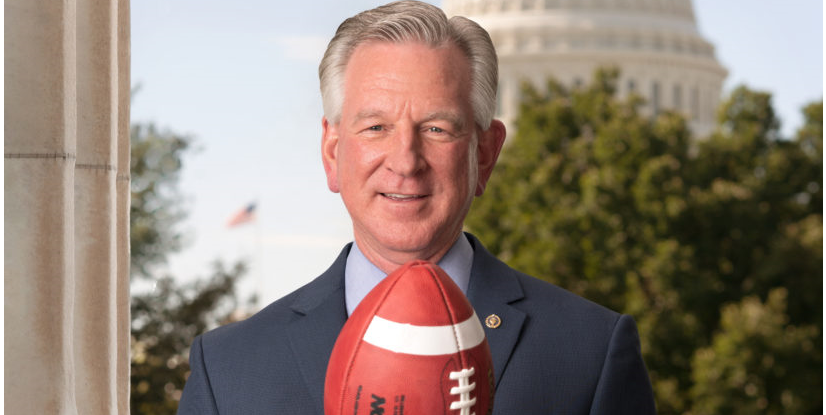
U.S. Senator Tommy Tuberville praised Hoover’s National Computer Forensics Institute (NCFI) in a speech on the floor of the Senate, highlighting the importance of the NCFI and its impact on officers and public safety. Tuberville helped pass the reauthorization bill to support the NCFI, where law enforcement officers come to Alabama from across the country to receive cybercrime training. The Senate passed bipartisan legislation, the National Computer Forensics Institute Reauthorization Act, which reauthorizes the operation of the Alabama-based NCFI. The bill also approves resources for federal officers to attend the law enforcement training center, which has previously only been available for local and state officials. Sens. Tuberville and Richard Shelby (R-Alabama) cosponsored the legislation along with Sens. John Cornyn (R-Texas), Chuck Grassley (R-Iowa), Dianne Feinstein (D-California), Maggie Hassan (D-New Hampshire), Amy Klobuchar (D-Minnesota), and Sheldon Whitehouse (D-Rhode Island). “Cybercriminals can hack pipelines and other key infrastructure systems that are crucial to our daily lives and pertains to our national security,” Sen. Tuberville said. “Officials trained at NCFI are a part of our front line of defense against these attacks. That front line — our local police officers, district attorneys, and state officials — know the people they serve best. I want those protecting my home and my state trained to identify and combat the latest threats — and I’m sure you do as well.” “Earlier this year, after a madman terrorized shoppers at a grocery store in Buffalo, New York, NCFI-trained graduates were able to act quickly and support the police response,” Tuberville continued. “They used what they learned to conduct a forensic exam of a Go-Pro camera and a cell phone used by the shooter. That crucial video evidence is currently being used in the prosecution.” “Brave men and women in law enforcement across the country are willing and able to protect Americans from all crime, including cybercrime, but they need the tools and resources to continue to do so effectively,” Tuberville added. “While some in Congress and the current administration have worked to shrink the size and strength of our law enforcement, I am unapologetic with my support for the men and women in blue. We must continue to provide specialized resources that all of them need to do their jobs. That’s why I joined a group of colleagues from both sides of the aisle to introduce the National Computer Forensics Institute Reauthorization Act.” “The National Computer Forensics Institute is an example of a state’s ingenuity and foresight — a group of individuals identifying a gap that needed to be filled and providing a service with national benefits,” Tuberville explained. “The success of the Institute represents the impact state leaders, and Congress can have on the entire country when we work together to support innovative and pragmatic solutions to our biggest problems. Alabama is proud of the National Computer Forensics Institute, and we’re proud to provide cutting-edge training to many Americans and our brave law enforcement.” In 2006, the Alabama Office of Prosecution Services and the Alabama District Attorneys Association saw the need for a more coordinated effort to train law enforcement officers, prosecutors, and judges in digital evidence. Those agencies outlined a plan to bring that training to more of our law enforcement officials — and formed a unique and important partnership with the U.S. Secret Service to create a center for forensics education for state and local law enforcement officials. NCFI opened in 2008 under a roof provided by the City of Hoover. The NCFI opened with a $4 million budget and just 264 students. The 40,000 square-foot NCFI facility now taps into a $13 million annual budget to train more than 4,000 students from across the country annually. To date, more than 19,000 state and local officers, prosecutors, and judges representing all 50 states have been trained at the institute in the heart of Alabama. The NCFI focuses on teaching officials how to investigate cyber and electronic crime — always accounting for emerging tech and novel digital capabilities — to prepare graduates to combat cyber-attacks and personal data theft. The skills learned at the NCFI also prepare law enforcement officers to identify and utilize key digital data during criminal investigations. The reauthorization will allow the NCFI to keep training thousands of officers a year in Alabama to keep communities across the country safe. Graduates have reported utilizing their training in more than 578,000 digital forensics exams. The NCFI seeks to educate state, local, tribal, and territorial law enforcement officers, prosecutors, and judges in the continually evolving cyber and electronic crime-related threats, and educate, train, and equip them with the tools necessary for forensic examinations to combat those crimes. Sen. Tuberville was elected to his first term in the Senate in 2020 after a career in football coaching. To connect with the author of this story, or to comment, email brandonmreporter@gmail.com.
Growing number of Democrats call on Joe Biden to reverse plan to end Title 42
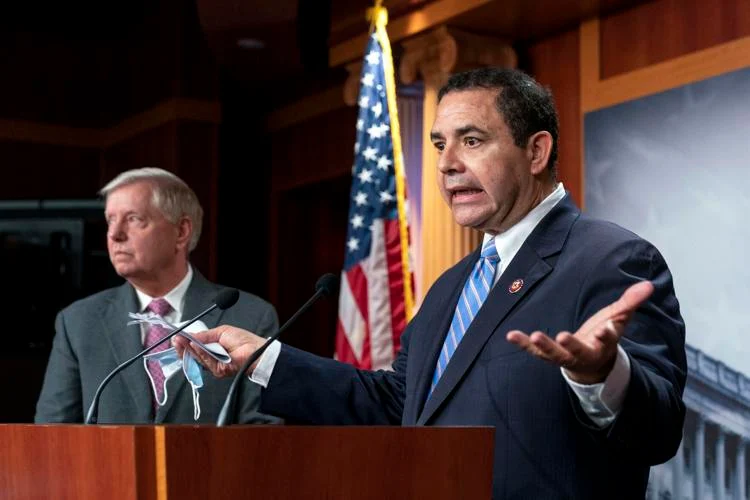
A Democratic governor and several Democrats in Congress are calling on President Joe Biden to reverse the U.S. Centers for Disease Control and Prevention’s decision to end Title 42. Title 42, a public health authority that enables federal agents to quickly expel illegal immigrants during a public health emergency, has been in effect since March 2020. On April 1, the CDC announced it was terminating it on May 23. U.S. Rep. Henry Cuellar, a Democrat from the border town of Laredo, Texas, told Fox News Sunday that Biden was listening to immigration activists, not border communities or their representatives such as himself. “But my question is, who’s listening to the men and women in green and in blue?” he asked, referring to Customs and Border Protection and Border Patrol agents. “And more importantly, who’s listening to the border communities, the sheriffs, the landowners, the rest of the people that live on the border?” he asked. Cuellar is facing a tough runoff election May 24 and, if he wins, a tough general election in November. “How can we have the federal public emergency extended to July 15 and say there’s a pandemic going on in the United States, but at the border, everything’s fine, and just let people into the United States,” he said, adding, “Those are mixed messages.” He also addressed the administration’s mixed messages when it comes to mandates. “How can you ask for international travelers to make sure … they’re vaccinated or even show their COVID-19 negative tests if they fly in?” Cueller asked, referring to vaccine mandates imposed on legal travelers when no such requirements exist for those who’ve entered the U.S. illegally and are then released into the U.S. by the Biden administration. Cuellar also posted pictures of existing overcrowded holding facilities at the border with Title 42 in place. “Title 42 is critical to ensuring the health and safety of migrants, law enforcement, and border residents,” he said. Democratic Nevada Gov. Steve Sisolak wrote Biden late last week expressing concerns about Title 42 ending. He asked him “to reconsider any intentions of undoing Title 42 until there is a comprehensive plan for how the United States can avoid the humanitarian crisis this policy change would spark.” The CDC issued a statement on April 1 announcing it was ending Title 42 due to “an increased availability of tools to fight COVID-19 (such as highly effective vaccines and therapeutics)” and said, “suspending the right to introduce migrants into the United States is no longer necessary.” Instead, the Department of Homeland Security was implementing “appropriate COVID-19 mitigation protocols, such as scaling up a program to provide COVID-19 vaccinations to migrants and prepare for resumption of regular migration under Title 8,” the CDC said. But on April 12, Health and Human Services Secretary Xavier Becerra announced he was renewing the national public health emergency order “as a result of the continued consequences of the Coronavirus Disease 2019 (COVID-19) pandemic.” He said the public health emergency “exists and has existed since January 27, 2020, nationwide,” and was renewed by the Trump and Biden administrations eight times. Set to expire April 15, it was renewed effective April 16 for an additional 90 days. Arizona Democratic U.S. Sen. Krysten Sinema argues extending the public health emergency “proves the need to delay lifting Title 42 to protect the health and safety of Arizona communities and migrants.” In a statement, she said she would “keep pushing for transparency and accountability from the administration to help secure the border, keep Arizona communities safe, and ensure migrants are treated fairly and humanely.” Earlier this month, she joined a bipartisan effort to prevent Title 42’s end until after the national public health emergency order ends. Sen. Mark Kelly, D-Ariz., the lead Democratic cosponsor, filed the Public Health and Border Security Act of 2022. Joining him as Democratic cosponsors were Sinema and Sens. Joe Manchin from West Virginia, Jon Tester from Montana, and Maggie Hassan from New Hampshire. U.S. Rep. Jared Goldman, D-Maine, was the lead Democratic cosponsor of the companion bill in the House. Joining him were Democratic cosponsors, Reps. Tom O’Halleran and Greg Stanton of Arizona, Chris Pappas of New Hampshire, Stephanie Murphy of Florida, Abigail Spanberger of Virginia, and Tim Ryan of Ohio. The bill isn’t likely to pass the House even if it were to pass the Senate. So far, 22 states have sued to stop the administration from halting Title 42 in two separate lawsuits. Unless the Biden administration is stopped by the courts, DHS announced last month measures it was putting in place to prepare for up to 18,000 people a day expected to enter U.S. custody once Title 42 is lifted. This estimate is in addition to the roughly 2 million people who were apprehended or encountered by Border Patrol agents in Biden’s first year in office while Title 42 was in place. All encounter numbers exclude “gotaways,” those who evade capture and don’t surrender at ports of entry. Republished with the permission of The Center Square.
Tommy Tuberville joins other leaders to change sexual assault investigations in the military
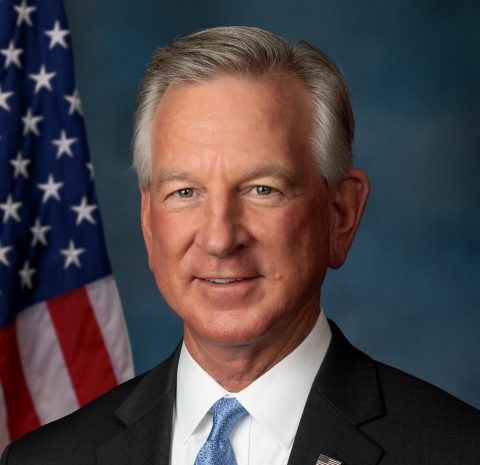
U.S. Senator Tommy Tuberville has joined a bipartisan group of senators to support a bill that will change the way the military conducts sexual assault investigations and prosecutions. Tuberville, a member of the Senate Armed Services Committee Subcommittee on Personnel, joined U.S. Senators Kirsten Gillibrand (D-NY), Chuck Grassley (R-IA), Joni Ernst (R-IA), Richard Blumenthal (D-CT), Ted Cruz (R-TX), Jeanne Shaheen (D-NH), Mark Kelly (D-AZ), and 28 other Senators to introduce the Military Justice Improvement and Increasing Prevention Act. According to the press release, the legislation “keeps the prosecution of sexual assault crimes within the military but moves the decision to prosecute to independent, trained, professional military prosecutors, and provides for several new prevention provisions such as better training for commanders and increased physical security measures, while ensuring that commanders still have the ability to provide strong leadership and ensure a successful command climate.” Tuberville stated, “Our men and women in uniform sacrifice every day to keep us safe, often working in some pretty unsafe places around the world. The last thing they should be worrying about is whether they’re unsafe within their ranks, and they certainly shouldn’t have to fear retaliation if they report a sexual assault. This bill is what happens when a bipartisan group of senators come together to get something done. I’m thankful that Senator Gillibrand and Senator Ernst have led the charge, and I’m glad to join my colleagues in support of this bill that will help improve the way the military handles sexual assaults so survivors can get the justice they deserve.” The bill was introduced in 2019, but did not receive a vote. Specifically, the legislation would: Move the decision on whether to prosecute serious crimes to independent, trained, and professional military prosecutors, while leaving misdemeanors and uniquely military crimes within the chain of command. Ensure the Department of Defense supports criminal investigators and military prosecutors through the development of unique skills needed to properly handle investigations and cases related to sexual assault and domestic violence. Require the Secretary of Defense to survey and improve the physical security of military installations– including locks, security cameras, and other passive security measures – to increase safety in lodging and living spaces for service members. Increase, and improve training and education on military sexual assault throughout our armed services. Kirsten Gillibrand stated on Twitter, “Here’s a bipartisan mission we can all support: Survivors of military sexual assault deserve justice. I’m proud to have @JoniErnst join me this week to introduce our new, improved bill to reform the military justice system and invest in prevention.” Here’s a bipartisan mission we can all support: Survivors of military sexual assault deserve justice. I’m proud to have @joniernst join me this week to introduce our new, improved bill to reform the military justice system and invest in prevention. https://t.co/pYYUL6IRyA — Kirsten Gillibrand (@SenGillibrand) April 27, 2021 The legislation is cosponsored by U.S. Senators Kirsten Gillibrand (D-NY), Chuck Grassley (R-IA), Joni Ernst (R-IA), Richard Blumenthal (D-CT), Ted Cruz (R-TX), Jeanne Shaheen (D-NH), Tammy Baldwin (D-WI), Chris Van Hollen (D-MD), Angus King (I-ME), Michael Braun (R-IN), Dick Durbin (D-IL), Tammy Duckworth (D-IL), Michael Bennet (D-CO), Rand Paul (R-KY), Chris Coons (D-DE), Mark Kelly (D-AZ), Sherrod Brown (D-OH), Bob Casey Jr. (D-PA), Maggie Hassan (D-NH), Mazie K. Hirono (D-HI), Amy Klobuchar (D-MN), Patrick Leahy (D-VT),Elizabeth Warren (D-MA), Ron Wyden (D-OR), Cynthia Lummis (R-WY), Dianne Feinstein (D-CA), Catherine Cortez Masto (D-NV), Raphael Warnock (D-GA), Alex Padilla (D-CA), Shelley Moore Capito (R-WV), Gary C. Peters (D-MI), Tim Kaine (D-VA), Tina Smith (D-MN), Bob Menendez (D-NJ), and Martin Heinrich (D-NM).
Joe Biden commits to picking woman as running mate if nominated

Biden made that assertion during Sunday night’s debate with Sen. Bernie Sanders.
After close vote, panel sends Mike Pompeo nomination to Senate
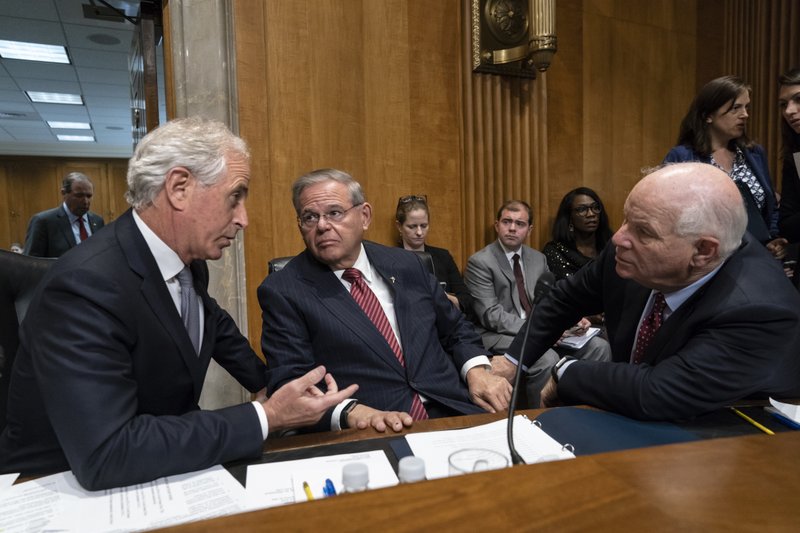
Mike Pompeo, President Donald Trump’s choice for secretary of state, avoided a rare rebuke Monday as the Senate Foreign Relations Committee narrowly recommended him, but the vote served as a warning shot to the White House as nominees to lead the CIA and Veterans Affairs are hitting stiff resistance. Pompeo, who’s now CIA director, received the panel’s approval only after Trump’s last-minute overtures to Sen. Rand Paul, R-Ky. Pompeo’s nomination now goes to the full Senate, where votes are tallying in his favor and Senate Majority Leader Mitch McConnell said he looks forward to voting to confirm him later this week. Trump has been quick to fire his top cabinet secretaries, but Senate Democrats are not so fast to confirm replacements. A grilling is expected Wednesday of Ronny Jackson, the White House physician nominated to head the VA, and Pompeo’s potential replacement at the CIA, Gina Haspel, is also facing scrutiny. It’s also a reminder of how tough it could be to replace Deputy Attorney General Rod Rosenstein. Trump has publicly mused about firing Rosenstein, who is overseeing special counsel Robert Mueller’s investigation into Russian interference in the 2016 election. “Hard to believe,” Trump tweeted Monday about what he called “obstruction.” ″The Dems will not approve hundreds of good people… They are maxing out the time on approval process for all, never happened before. Need more Republicans!” Republicans hold just a slim Senate majority, 50-49, with the prolonged absence of Sen. John McCain, R-Ariz. Pompeo’s bid to become the nation’s top diplomat was in the hands of a few senators, but received a boost Monday when two Democrats, Sen. Joe Manchin of West Virginia and Sen. Joe of Indiana, announced their support. Pressure is mounting on senators from all sides. White House allies are unloading ad campaigns against Democrats from Trump-won states, but progressive groups are pounding senators’ offices in opposition. As soon as Sen. Heidi Heitkamp, D-N.D., announced her support for Pompeo, one group called on her to switch. Ahead of the Foreign Relations Committee’s vote, chairman Bob Corker, R-Tenn., said of the full Senate, “It does appear Mike Pompeo has the votes to be secretary of state.” Supporters point to Pompeo’s resume as a West Point and Harvard Law School graduate who has the president’s confidence, particularly on North Korea. Opponents are focusing on his hawkish foreign policy views and negative comments about gay marriage and Muslims. Paul’s earlier objections to Pompeo, along with overwhelming opposition from Democrats, had set the secretary of state nominee on track to be the first since 1925, when the committee started keeping records, not to receive a favorable recommendation. But Trump and Paul talked repeatedly, including a chat just moments before the vote. “I have changed my mind,” Paul said, explaining he received reassurances that Pompeo agrees with the president that the Iraq war was a “mistake” and that it is time for U.S. troops to leave Afghanistan. Paul’s office said he “got a win” — the promise that Pompeo sides with Trump on those issues — out of the situation, but declined to provide details. “I want Trump to be Trump,” Paul said. Asked about Paul’s change of heart, Trump said, “He’s a good man.” Senators are anxious to have Pompeo in place before international meetings scheduled for later this week and ahead of North Korea talks. Republicans blamed partisan politics for opposition, saying Pompeo is just as qualified as past secretaries of state nominees Hillary Clinton or John Kerry, both of whom received overwhelming support. “A majority of Democrats continue their pointless obstruction to score cheap political points with their base as a willful attempt to undermine American diplomacy,” said White House spokeswoman Sarah Huckabee Sanders. But Democrats resisted easy confirmation of the nation’s top diplomat, and support peeled. Sen. Maggie Hassan, D-N.H., who had been among more than a dozen Democrats who supported Pompeo for CIA director, announced her no vote Monday. “I am concerned that Mr. Pompeo has not demonstrated an understanding that the Secretary of State has an obligation to the American people to stand up for our core values,” she said. Sen. Chris Coons, D-Del., who was among the last Democrats on the foreign relations panel to announce his no vote, said he is concerned that Pompeo “will embolden, rather than moderate or restrain” Trump’s “most belligerent and dangerous instincts.” In a late setback Monday, the panel was short one Republican vote needed for a favorable recommendation because Sen. Johnny Isakson was delivering a eulogy in his home state of Georgia. Rather than postpone voting until his return very late Monday, Coons agreed to allowed his vote to be recorded as “present” so the committee could finish its work. Republished with the permission of the Associated Press.
Mike Pompeo facing rare opposition from Senate panel
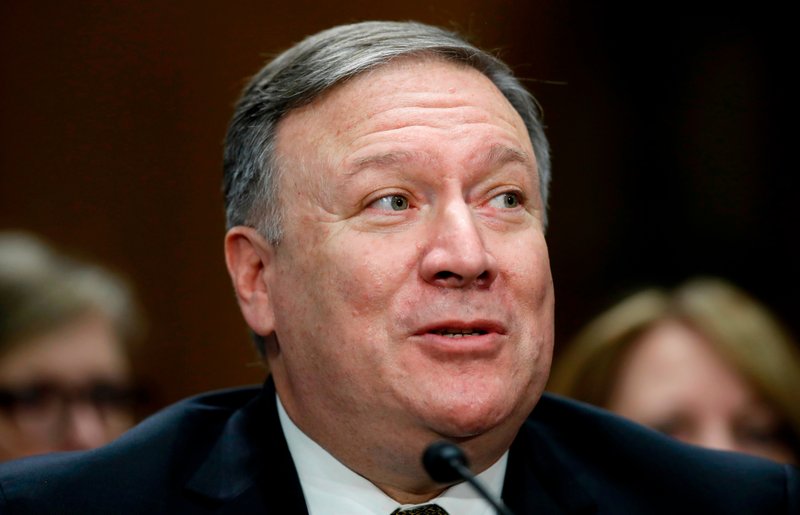
President Donald Trump’s nominee for secretary of state, Mike Pompeo, is facing serious opposition before the Senate Foreign Relations Committee, which may not have enough votes to recommend him for confirmation because all Democrats, and at least one Republican, have said they will oppose him. The full Senate is still expected to consider Pompeo’s nomination later this week. But the rare rebuke expected from the panel Monday, even after Pompeo’s recent visit with North Korean leader Kim Jong Un, would be the first time in years that a nominee for the high-level Cabinet position did not receive a favorable committee vote. Sen. Bob Corker, R-Tenn., the chairman of the committee, blamed partisan politics for opposition to Pompeo, now the CIA director, saying Pompeo is just as qualified as past secretaries of state nominees Hillary Clinton or John Kerry, both of whom received overwhelming support. “We are in an era where somebody like this, who is qualified, unfortunately, is likely to be voted out without recommendation or with a negative recommendation,” Corker said Sunday on “State of the Union” on CNN. “It’s just sad that our nation has devolved politically to this point.” Pompeo’s confirmation before the full Senate now hangs in balance, with the votes of just a handful of senators determining whether he becomes the nation’s top diplomat after Trump fired Rex Tillerson last month. Key Democrats, including some who had voted for Pompeo as CIA director last year, are peeling away, and Republican Sen. Rand Paul of Kentucky remains opposed, despite personal overtures from the president. Pressure is mounting on senators from both sides. White House allies are unloading ad campaigns against Democrats from Trump-won states, including North Dakota, Indiana and Missouri, to vote for the president’s nominee. But progressive groups are pounding senators’ offices in opposition to Pompeo’s hawkish foreign policy views and negative comments about gay marriage and Muslims. As soon as Sen. Heidi Heitkamp, D-N.D., announced her support last week, one group called on her to switch. “I don’t agree with every position he’s taken or every word he has spoken,” Sen. Susan Collins, R-Maine, said Sunday on “Meet the Press” on NBC. “But I believe he has an extensive knowledge of world affairs that has been enhanced by his time at the CIA.” Sen. Maggie Hassan, D-N.H., who met with the nominee last week, “has concerns about Mr. Pompeo’s nomination to serve as secretary of state,” said spokesperson Ricki Eshman. The senator “is reviewing his record before making a final decision.” In the committee, the opposition has been building ahead of Monday’s session. Sen. Chris Coons, D-Del., who was among the last Democrats on the panel to announce his no vote, said he’s is concerned that Pompeo “will embolden, rather than moderate or restrain” Trump’s “most belligerent and dangerous instincts.” “I do not make this decision lightly or without reservations,” Coons said in a statement Friday. “However, I remain concerned that Director Pompeo will not challenge the President in critical moments. On vital decisions facing our country, Director Pompeo seems less concerned with rule of law and partnership with our allies and more inclined to emphasize unilateral action and the use of force.” Rather than allow an unfavorable vote on the panel, where Republicans have a one-seat majority, senators could choose not to issue a recommendation if Pompeo cannot find enough backing. The committee action won’t necessarily stall Pompeo’s confirmation before the full Senate, but it would be an unusual setback not seen since the panel took a pass on John Bolton, President George W. Bush’s pick for ambassador to the United Nations. Sen. Tom Cotton, R-Ark., who has been among Pompeo’s most vocal champions in the Senate, lambasted his colleagues ahead of voting. “Democrats, especially on the Foreign Relations Committee, are really engaged in shameful political behavior,” Cotton said Sunday on CBS’ “Face the Nation.” But several Democratic senators who supported Pompeo for CIA director say Pompeo’s views are not reflective of those they want in the top diplomat. Republished with the permission of the Associated Press.
Activists predict abortion will be a hot issue in campaigns
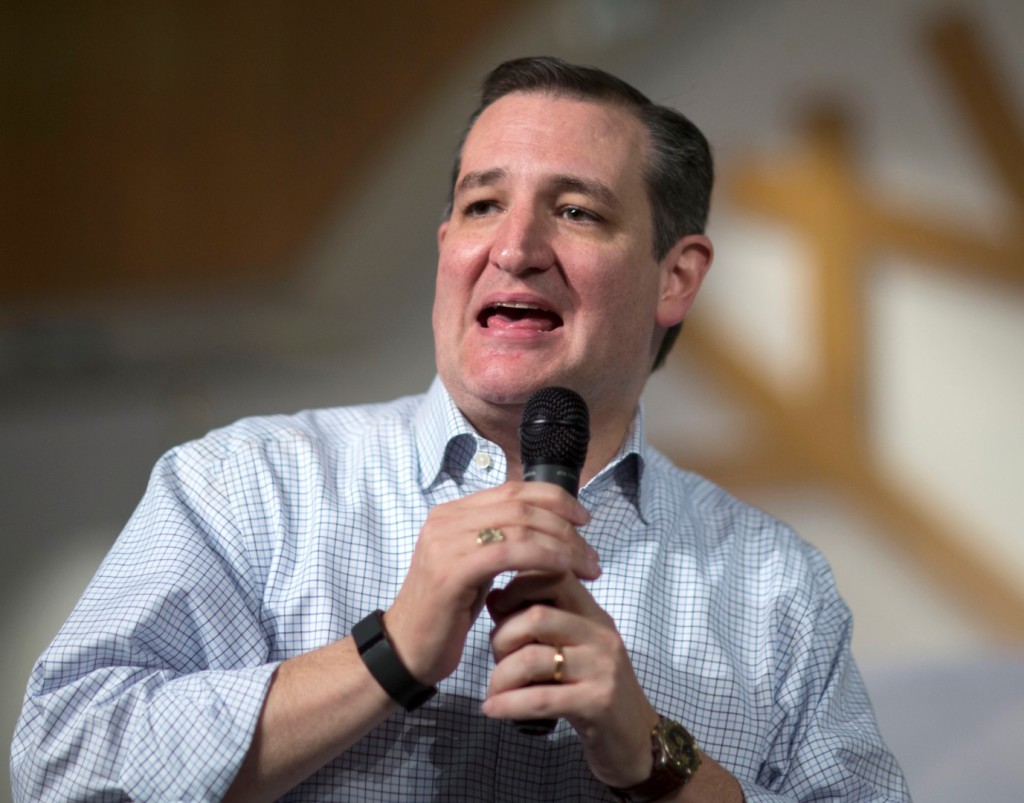
With a deeper-than-ever split between Republicans and Democrats over abortion, activists on both sides of the debate foresee a 2016 presidential campaign in which the nominees tackle the volatile topic more aggressively than in past elections. Friction over the issue also is likely to surface in key Senate races. And the opposing camps will be further energized by Republican-led congressional investigations of Planned Parenthood and by Supreme Court consideration of tough anti-abortion laws in Texas. “It’s an amazing convergence of events,” said Charmaine Yoest, CEO of the anti-abortion group Americans United for Life. “We haven’t seen a moment like this for 40 years.” In the presidential race, Democratic front-runner Hillary Clinton is a longtime defender of abortion rights and has voiced strong support for Planned Parenthood — a major provider of abortions, health screenings and contraceptives — as it is assailed by anti-abortion activists and Republican officeholders. In contrast, nearly all of the GOP candidates favor overturning the Supreme Court’s 1973 Roe v. Wade decision that legalized abortion nationwide. Some of the top contenders — including Sens. Ted Cruz and Marco Rubio — disapprove of abortions even in cases of rape and incest. “We may very well have the most extreme Republican presidential nominee since Roe — a nominee who’s not in favor of abortion in any possible way,” said Stephanie Schriock, president of EMILY’s List. The organization, which supports female candidates who back abortion rights, says it is en route to breaking its fundraising records. A similar claim is made by some anti-abortion political action groups. What’s changed for this election? One factor is the increased polarization of the two major parties. Only a handful of anti-abortion Democrats and abortion-rights Republicans remain in Congress, and recent votes attempting to ban late-term abortions and halt federal funding to Planned Parenthood closely followed party lines. Another difference: Republicans in the presidential field and in Congress seem more willing than in past campaigns to take the offensive on abortion-related issues. Past nominees George W. Bush, John McCain and Mitt Romney opposed abortion but were not as outspoken as some of the current GOP candidates. “Abortion will bubble over into the general election,” said Marjorie Dannenfelser, president of the Susan B. Anthony List, which supports female candidates opposed to abortion. “If you don’t know how to handle this issue, you will be eviscerated.” As the campaign unfolds, other factors will help keep the abortion debate in the spotlight. The Supreme Court will be hearing arguments, probably in March, regarding a Texas law enacted in 2013 that would force numerous abortion clinics to close. One contested provision requires abortion facilities to be constructed like surgical centers; another says doctors performing abortions at clinics must have admitting privileges at a local hospital. The Texas dispute will have echoes in other states as social conservatives lobby for more laws restricting abortion. Americans United for Life plans a multistate push for a package of bills called the Infants’ Protection Project; one measure would ban abortions performed because of fetal abnormalities such as Down syndrome while another would ban abortions after five months of pregnancy. Also unfolding during the campaign will be a new investigation launched by House Republicans to examine the practices of Planned Parenthood and other major abortion providers. The panel’s chair, Rep. Marsha Blackburn of Tennessee, says its work will likely continue past Election Day. The investigation — denounced by Democrats as a partisan witch hunt — is among several congressional and state probes resulting from the release of undercover videos made by anti-abortion activists. They claim the videos show Planned Parenthood officials negotiating the sale of fetal tissue in violation of federal law; Planned Parenthood denies any wrongdoing and says the programs in question at a handful of its clinics entailed legal donations of fetal tissue. Cruz is among many Republicans who have already passed judgment on Planned Parenthood, calling it “an ongoing criminal enterprise.” He welcomed the endorsement of anti-abortion activist Troy Newman, who helped orchestrate the undercover video operation. Donald Trump, who leads the GOP presidential polls, has been harder to pin down on the issue. He describes himself as “pro-life” and open to defunding Planned Parenthood, while acknowledging that he held different views in the past. Planned Parenthood’s leaders say a majority of U.S. voters oppose efforts to cut off its federal funding, most of which subsidizes non-abortion health services for patients on Medicaid. Planned Parenthood’s political action fund hopes to spend a record amount — more than $15 million — on election-related advocacy. The fund’s executive vice president, Dawn Laguens, contends that some GOP presidential hopefuls, including Cruz and Rubio, may have hurt their general election prospects by making strong bids for anti-abortion votes in the primaries. “They’ve gone so far out on the limb that they won’t be able to crawl back,” she said. National polls over the years show the American public deeply divided on abortion. An Associated Press-GfK poll released Dec. 22 found 58 percent of U.S. adults saying abortion should be legal in most or all cases, and 39 percent saying it should be illegal in most or all cases. Forty-five percent viewed Planned Parenthood favorably; 30 percent unfavorably. Abortion and Planned Parenthood are likely to surface as divisive issues in several of the races that will decide control of the Senate. New Hampshire features an intriguing race between two women. Democratic Gov. Maggie Hassan, a supporter of abortion rights, hopes to unseat GOP incumbent Kelly Ayotte, who is endorsed by anti-abortion groups and favors halting Planned Parenthood’s federal funding. Other key Senate races likely to feature sharp divisions over abortion include those in Pennsylvania, Nevada, Wisconsin and the crucial presidential battleground of Ohio, where GOP incumbent Rob Portman is expected to be challenged by former Democratic Gov. Ted Strickland. Republished with permission of the Associated Press.
