
Donald Trump’s ‘war with the media’ raises questions of trust
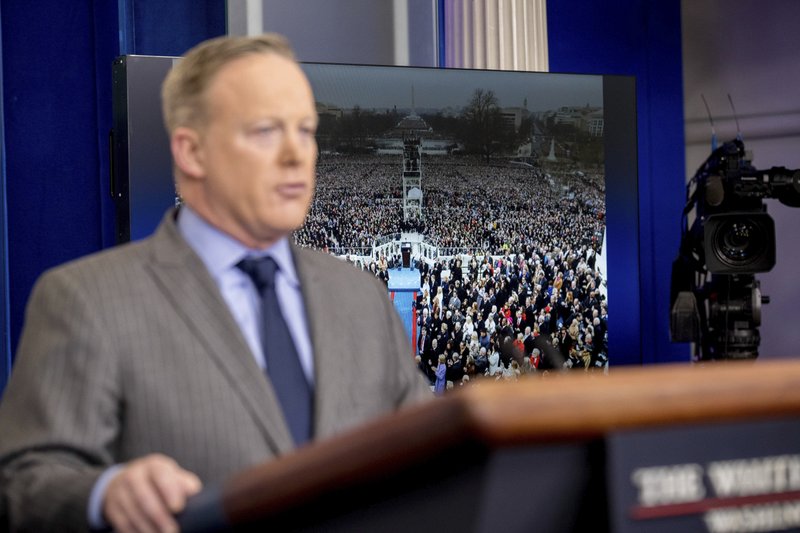
Donald Trump‘s “running war” on the media is continuing into his presidency, with statements over the weekend calling into question the extent to which information from the White House can be trusted. White House Press Secretary Sean Spicer on Monday will hold his first daily press briefing at which he could face questions about a statement Saturday night that included demonstrably false assertions about the crowd size at Friday’s inauguration and a promise by the new administration that “we’re going to hold the press accountable.” Some Trump supporters will no doubt cheer the continued antagonism toward the media that was central to the Republican’s campaign for president. Now the stakes are higher. Press secretaries have been lied to by their bosses, or misled reporters through the omission of information, but veteran journalist Dan Rather said Sunday it was the first time he could recall false material being delivered in this way. “I hope that people will stop, pull back for what we in television call a wide shot and see what is happening,” Rather said. “This is a deliberate propaganda campaign.” Longtime Republican operative Spicer, who most recently was the spokesman for the Republican National Committee and also worked for President George W. Bush, is known for fighting tenaciously for his employers. His briefing on Saturday followed a Trump appearance at the CIA where the president criticized the media for its reporting his criticisms of the intelligence community and took exception to stories saying the crowd for his inauguration was smaller than those for predecessor Barack Obama. Trump declared that journalists are “the most dishonest human beings on Earth,” saying “I have a running war with the media.” Spicer made two unprovable statements in his briefing: that photographs of the audience at Trump’s inaugural were intentionally framed to minimize the appearance of support, and that Trump drew the largest audience ever to witness an inauguration. But he also made statements that were quickly disproven: that the Washington Metro system recorded more riders on the day of Trump’s inaugural than when Obama was sworn in for his second term, that Friday marked the first time that white floor covering was used on the Washington Mall that amplified empty spaces, and it was the first time spectators were required to pass through magnetometers to enter the Mall. Spicer’s briefing, during which he did not take questions from reporters, was televised live on Fox News Channel and MSNBC. CNN did not air the session but showed highlights later. Trump’s first press conference after he was elected, on Jan. 11, also took aim at the media. Coming hours after news reports revealed intelligence officials had presented Trump with unsubstantiated and salacious allegations regarding his relationship to Russia, Trump and his team condemned news organizations that disclosed details, calling out CNN and BuzzFeed as “disgraceful” and refusing to take questions from a CNN reporter. Confronted by “Meet the Press” host Chuck Todd on Sunday with “falsehoods” stated by Spicer, Trump adviser Kellyanne Conway called them “alternative facts.” She accused Todd of laughing at her and said he symbolizes how Trump has been treated by the media. One person who has been in Spicer’s position, former White House Press Secretary Ari Fleischer, said it seemed clear to him that Spicer was acting on orders from his boss. Press secretaries have to walk a fine line between reflecting the thinking and wishes of the president while trying to help the people covering him do their jobs, said Fleischer, who, like Spicer, worked for Bush. Fleischer said he never knowingly delivered false information to the press while at the White House. “You can’t do that,” he said. “It will shorten your career.” When Spicer faces the press on Monday, he needs to elaborate on his argument, “take the hard questions and demonstrate reasonableness,” Fleischer said. The conservative web site breitbart.com led its site with an article headlined: “White House Press Secretary Sean Spicer blasts media’s ‘deliberately false reporting.’” The article said that Spicer’s “criticism of the media’s fake news reporting resulted in a media meltdown on social media.” Yet it’s a crucial time for Spicer’s reputation. A press secretary whose word can’t be trusted has no value to anyone, said Terence Hunt, a longtime White House correspondent and editor for The Associated Press who recently retired. “You can’t tell lies in the White House,” Hunt said. “Somebody will smoke you out, on issues large and small. The president’s integrity and credibility are at stake in everything you say, so be super careful.” If the White House can’t be trusted to tell the truth on a relatively trivial matter like crowd size, the public will wonder about the reliability of information on important topics like terrorism or the nuclear capabilities of North Korea, said Ben Mullin, a managing editor at the Poynter Institute who does a podcast on the relationship between Trump and the press. Former CBS anchor Rather, who famously tangled with the Nixon White House during the Watergate era, said the situation saddened him. “I don’t think the American people as a whole, whether they supported Donald Trump or not, want a situation where the press secretary to the president comes out and knowingly tells a lie,” he said. Republished with permission of the Associated Press.
Bob Sparks: Mainstream media not the only Trump enablers
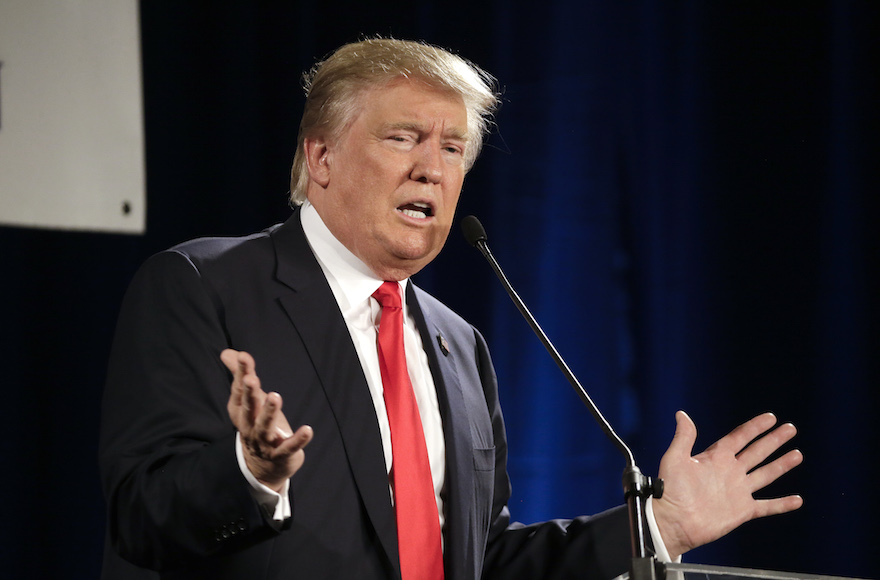
Our country has some serious issues to deal with. The next president must finally confront terrorism both overseas and within our borders. The latest tragic example came on Wednesday in San Bernardino, California. We cannot get this choice wrong. For those of us who believe the best candidates are on the Republican side, GOP voters are far from settled on who they want to face Hillary Clinton. Those tuning in to television political news hear things like “Donald Trump is flying high” or “Trump’s message resonates with frustrated Republicans.” As if they are casual bystanders, commentators proclaim “Trump is dominating nearly every news cycle.” At least until Wednesday. That pretty well describes what poses for analysis on the GOP side. Every day is like the movie “Groundhog Day.” This is how it works: A new day dawns and Trump has a rally or he gives a reporter or personality an audience at Trump Tower. He skillfully exercises his free speech rights to say something brash about someone or something. To end the day, talking heads or a panel then discuss what Trump did and said earlier. A new day dawns and Trump has a rally … You get the picture. Jeb Bush summed it up perfectly when he said Trump is playing the media “like a fiddle.” The differences come on the few occasions when he fudges the truth. The best example came when Trump said Bush was uttering a falsehood by pointing out Trump had personally lobbied for casinos in Florida. The Bush version was proven to be undeniably true. Honesty does not matter to far too many of those truly committed to Trump. An example from talk radio is useful. Preston Scott hosts a local Tallahassee program called “The Morning Show.” Scott, a bona fide conservative, informed his audience after Trump’s false statement that he could not support someone who lies. Trump and Clinton were disqualified for that reason. Scott then took listeners’ calls and one in particular stood out. When Scott prompted the caller to reveal whom he supports, the caller proudly said “Donald Trump.” He was asked why. “Because he tells it like it is,” the caller said proudly. When Scott reminded him of Trump’s false statement, the caller said it did not matter to him, then repeated his affinity for Trump because he “tells it like it is.” How do you discuss facts and policy with someone whose favorite philosopher is probably Yogi Berra? For those of us who thought Trump would have faded by now, we must admit we were wrong. This leaves us to ponder how he has managed to maintain a plurality. Most of us do not equate bombast with leadership. It is always easy to blame the “mainstream” media, but this time they deserve their fair share of it. Trump, the quote factory/fiddler, makes it too easy for them. Perhaps a bigger reason he continues to be relevant is his treatment from the conservative media, even Fox News commentators. Listen to Eric Bolling of “The Five” defend Trump some time. Rush Limbaugh, perhaps the most trusted voice among conservatives, has basically been an enabler for the charade. He has not officially endorsed Trump, but has not called him out for his shortcomings, either. Trump routinely disparages those who disagree with him in a manner similar to that of President Obama. Trump is telegraphing how he would govern. Conservative media, and in some cases the mainstream, has rightfully criticized the divisive rhetoric coming from our president during the past seven years. Why the silence now? Limbaugh is far from alone among enablers, but he carries the most clout with GOP primary voters. With conservative media demanding precious little accountability, who is there to speak to the huge majority of those who do not support Trump? Perhaps the Trump act will finally wear thin and those chronicling the election of the next leader of the free world will take things more seriously. We get it that left-leaning media celebrates every day Trump is on top, but the events of Wednesday reaffirm that we must focus on real issues. How many sensational headlines or “did you hear what Trump said” blogs or stand-ups from Trump Tower will finally be enough? Hopefully, those deciding what news is will not wait until March before becoming bored with the circus. Did you hear that Trump, registered 27 percent in the Quinnipiac poll this week? It’s true. He is ahead, but three out of four voters either don’t care or want someone else, but one would be hard pressed to hear that reality described in the analysis. “Trump soars … in latest Quinnipiac poll” reads one headline from a Florida paper. “Trump builds his lead” declares a mainstream national publication. Enablers to the right of us; enablers to the left of us. Bob Sparks is a business and political consultant based in Tallahassee.
CBS hopes debate coverage will boost streaming service
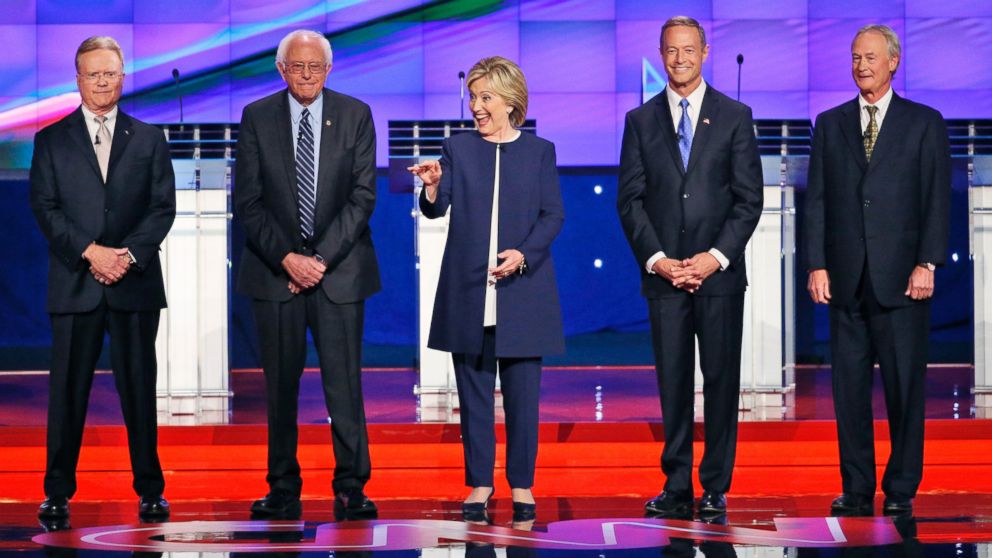
CBS News sees its coverage of Saturday’s Democratic presidential debate as a key moment in helping to establish CBSN, the streaming service that just celebrated its first birthday. Political reporter Major Garrett will host a preview of the debate an hour before it begins on CBSN. The free service will stream the debate live, accompanied by data and tweets provided by Twitter, with Garrett stepping in with reactions during commercial breaks of the televised contest. It is also being shown on the broadcast television network. CBSN, which launched Nov. 6, 2014, provides a continuous newscast and also allows users to click on streams of individual stories. It is available on the CBS News website, on the network’s mobile apps and through services like Apple TV, Roku and Android TV. Starting this week, it can also be seen on Xbox One. “What this has to be to be a success if to be completely ubiquitous, that everybody who is delivering live news content has to be distributing us,” said CBS News President David Rhodes. CBS views it as the future of video news, a generation removed from cable news networks. The average age of a CBSN viewer is just under 40, considerably younger than the traditional television news demographic, the Nielsen company said. It is younger by three years for people watching on Internet-connected televisions. For now, the service is unique to CBS. Rhodes said he believes competitors like CNN, Fox News and MSNBC are reluctant to try something similar because potential users would be put off by having to go through cable companies to use the service. “If we make a go of this and it becomes a commercial success, I think you will see others try to get into it,” he said. “I think we would welcome that because it’s a validation of our strategy.” While the network does not say how many people use CBSN, Rhodes said he expected it will get more views Saturday night than ever before. Usage tends to spike around major news events, he said. Oddly, the service has done well before, during and after previous presidential debates, which Rhodes found surprising considering CBSN did not stream them. The service has offered ongoing discussions about the debates while they were happening with occasional highlights, and Rhodes speculated it appeals to cord-cutters who have no traditional TV service. This Saturday, network executives anticipate CBSN will be used as a second screen for many people already watching the debate on the broadcast network. Garrett said he’ll be helping to curate the Twitter feed that will appear on the CBSN screen. “That’s part of the experiment,” he said. “Everyone associated with social media is trying to figure out — how do you make it meaningful and not just noisy?” Because of social media, the “spin room” that existed after debates is now in operation while the event is still going on. Garrett will use the broadcast commercial breaks to show how campaign aides are trying to shape the stories. Garrett, who worked at both CNN and Fox News Channel, had anticipated a more structured environment at CBS with newscasts in the morning and evening broadcasts. CBSN takes him back to his cable days where there is much more time to fill; fewer commercials mean discussions can go even longer at CBSN. His children — ages 20, 19 and 15 — provide him with a daily reminder of the importance of CBSN. Their dad works in TV but they rarely see him there. They catch him in clips that are linked on social media. “The digital platform is essential for the fate of broadcast network news,” he said. “We have to be in that space.” Republished with permission of The Associated Press.
