
Steve Flowers: Women and young folks prevail in 2022
In my observations of Alabama politics, every election year brings an underlying election year surprise or two. The underlying prevailing theme emerging from the Alabama political arena this year is that women have arrived politically in the Heart of Dixie. Governor Kay Ivey is only the second female elected Governor of Alabama, Lurleen Wallace being the first in 1966. Governor Ivey won a decisive second-term nomination as the Republican nominee in May. She will face another female Democratic nominee, Yolanda Flowers, in the November General Election. This is the first time two women will face each other for governor. In fact, the first and second place finishers in both the Republican and Democratic primaries were women. Governor Ivey was followed by Lindy Blanchard, who finished second in the GOP primary. Dr. Yolanda Flowers, a retired Birmingham educator, was in a runoff with second place Democratic female State Senator Malika Sanders Fortier in the Democratic primary. Katie Britt emerged victoriously from the Republican U.S. Senate contest, and if elected in November, as is expected, she will be the first female elected to the U.S. Senate from Alabama. Katie Britt is the brightest young star in Alabama politics. She is the new rock star of the state. Not only will she be the first female senator, but she is also the headliner for the second theme of 2022. That is, we have a pair of new youthful stars arriving on the scene as the dust settles from the June 21 runoffs. Wes Allen and Andrew Sorrell have become the new stars on the scene. Wes Allen defeated veteran politico Jim Ziegler in the Secretary of State race. Andrew Sorrell bested Stan Cooke and Rusty Glover to become State Auditor. Both Sorrell and Allen were about to become freshmen members of the Alabama House this time four years ago. Now, they are the new stars on the statewide political block. They will be joining Lieutenant Governor Will Ainsworth as young constitutional officeholders with a future. You have four young stars on the horizon in the state. Rockstar Katie Britt is 40, superstar Will Ainsworth is 41, star Wes Allen is 46, and star Andrew Sorrell is 36. Another young superstar has arrived on the behind-the-scenes political consulting arena in Alabama politics. Twenty-seven-year-old Sean Ross ran the Katie Britt campaign masterfully. He is absolutely brilliant. He ran one of Twinkle Cavanaugh’s campaigns four years ago when he was just graduating from the University of Alabama. Katie did a good day’s work when she acquired his services with a recommendation from Twinkle. He is the hottest item in Alabama political consulting. There were four vacancies in the Alabama State Senate. State Representative Merika Coleman, a Bessemer attorney, won a very impressive victory for the seat of retiring Priscilla Dunn. She is young and brilliant and is going to be a star in the Alabama State Senate. Lance Bell won the seat of retiring state Senator Jim McClendon. Bell beat his opponent 73% to 27% in this Republican seat. Keith Kelley emerged victorious over Wendy Ghee Draper, in the Anniston-based Republican seat of retiring veteran state Senator Del Marsh. In probably the biggest upset surprise of the 2022 primary season was the victory of Josh Carnley to fill the Republican Southeast Alabama Senate Seat held for decades by the powerful and popular Jimmy Holley. This district is comprised of Coffee, Covington, Pike, and part of Dale counties. Twelve-year veteran State House member Mike Jones of Andalusia was expected to waltz to victory having every business group’s endorsement. Carnley carried his home county of Coffee overwhelmingly, and veteran political consultant David Mowery did a masterful job with Carnley’s ads. Popular first-term state senator, Dan Roberts, was challenged by a self-financed urologist in Roberts’ silk stocking Jefferson/Shelby district, but Roberts won handily. For the first time in 40 years, there will not be a Sanders representing the Black Belt in the Alabama Senate. Veteran Senator Hank Sanders failed in his bid to take back his seat he loaned to his daughter, the aforementioned Malika Sanders Fortier. Hank Sanders had served nine terms as the Black Belt’s senator. He was defeated by Robert Stewart of Selma. Jay Hovey won the coveted Lee/Tallapoosa/Russell County State Senate seat, prevailing over incumbent Tom Whatley by one vote. For the most part, the powerful 35-member State Senate will return intact with only a few new faces. See you next week. Steve Flowers is Alabama’s leading political columnist. His weekly column appears in over 60 Alabama newspapers. He served 16 years in the state legislature. Steve may be reached at www.steveflowers.us.
Wes Allen wins GOP nomination for Secretary of State, Dem gubernatorial nominations set
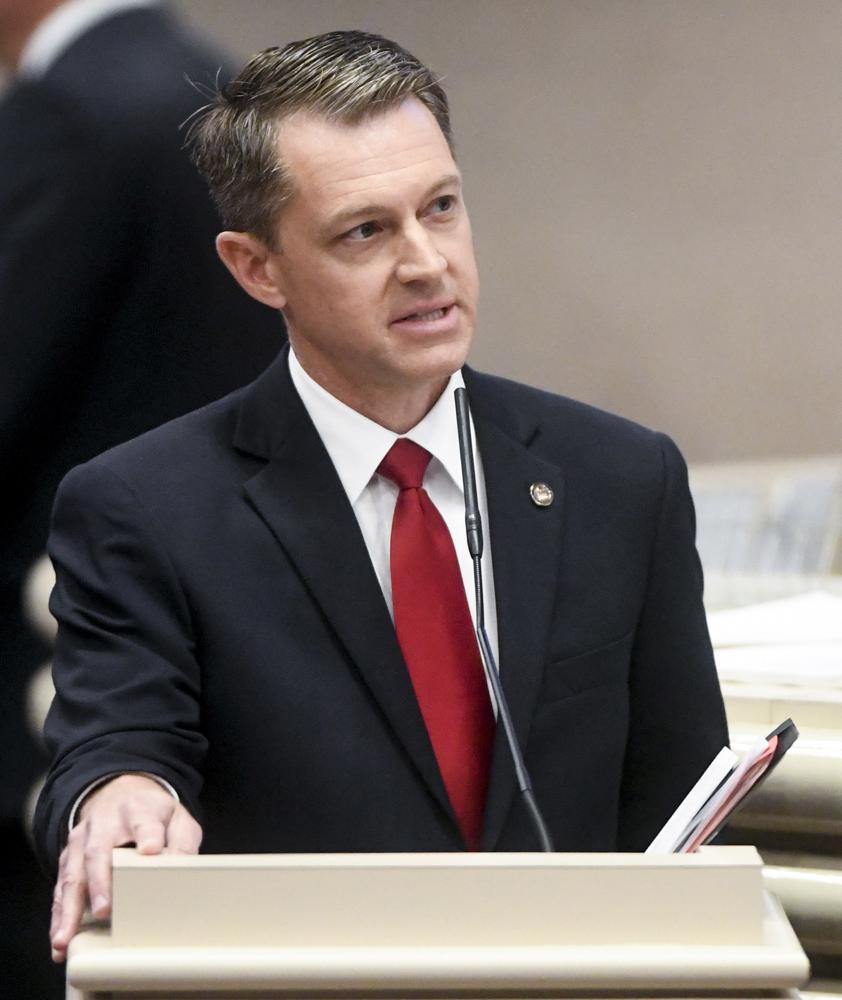
Voters selected the Republican nominee for Alabama’s top election official in the runoff Tuesday, and the general election race for governor was set as Democratic voters picked their gubernatorial nominee. Three other statewide races plus a U.S. House nomination also were on the ballot. Here is a look at the races: SECRETARY OF STATE State Rep. Wes Allen won the Republican nomination for secretary of state on Tuesday in contest that featured both candidates promoting the need to tighten election security in harmony with former President Donald Trump’s false claims that he lost the 2020 presidential race because of fraud. Allen defeated outgoing State Auditor Jim Zeigler and will face Democrat Pamela J. Laffitte, an Air Force veteran and corrections supervisor in Mobile County, in the general election to become Alabama’s top election official. Zeigler received the most votes among four candidates in the primary election in May, but Allen overcame the deficit. Allen, from Troy, previously served as probate judge in Pike County. Citing the potential for fraud, he opposed early voting and no-excuse absentee balloting and sponsored a law that barred “curbside” voting meant in part to make it easier for people with disabilities to cast a ballot. During the campaign, Zeigler dubbed himself a “watchman” against ballot fraud, so-called “ballot harvesting” and voting by mail. Trump has blamed all those and more for his loss to Democratic President Joe Biden, and many GOP voters believe him despite a lack of evidence. The current secretary of state, Republican John Merrill, couldn’t run again because of term limits, and the GOP nominee will be a heavy favorite to win in November. GOVERNOR Yolanda Rochelle Flowers defeated state Sen. Malika Sanders Fortier in the Democratic race for governor to become the first Black person to win a major party’s gubernatorial nomination in Alabama. Flowers, a career educator from Birmingham, narrowly led a six-person field in the May primary. In what will be the state’s first all-female gubernatorial race, she will be a decided underdog against Gov. Kay Ivey, who vanquished eight challengers to win the GOP primary without a runoff. Almost four times as many people voted in the Republican primary as the Democratic primary in May, and Republicans hold every statewide office. Flowers ran on a platform of “reconstructing” Alabama by rebuilding its economy and systems for education, health care, and criminal justice. Among other things, she advocated for a state lottery and a state minimum wage of $15. Fortier, a state lawmaker from Selma, campaigned on the theme of building the biblical “beloved community” promoted by the Rev. Martin Luther King Jr. by improving the state’s economy, schools, and health care. She is the daughter of former state Sen. Hank Sanders and attorney Faya Rose Toure. STATE AUDITOR Andrew Sorrell claimed the GOP nomination for state auditor by defeating Stan Cooke, a win that was tantamount to election since there’s no Democratic contender for the office. Sorrell, a state representative from Colbert County who led balloting in the May primary, tried to make election security a prime issue, saying a strong auditor is needed to appoint county registrars who will keep voter rolls clean. Cooke, a pastor from the Jefferson County town of Kimberly, claimed Alabama is at a crossroads where it could remain a conservative state or come under the control of liberal Democrats. Echoing Trump’s false claims of election theft, he highlighted the auditor’s role in appointing county election officials who can prevent Democrats from stealing elections. The current auditor, Republican Jim Zeigler, was barred from seeking another term. U.S. HOUSE Madison County Commission chair Dale Strong won the only runoff among the state’s seven U.S. House seats, claiming the Republican nomination for an open position in north Alabama’s 5th District. Strong defeated Casey Wardynski, a former Huntsville school superintendent. Strong handily led a six-candidate field with about 45% of the primary vote in May but couldn’t avoid a runoff. Strong will face Democrat Kathy Warner-Stanton of Decatur in the mostly Republican Tennessee Valley district in November. The seat was given up by U.S. Rep. Mo Brooks, who lost a runoff race with former business lobby leader Katie Britt for the seat being vacated by U.S. Sen. Richard Shelby. ALABAMA PUBLIC SERVICE COMMISSION Two Republican incumbents on the Alabama Public Service Commission faced challenges to keep their jobs on the utility-regulating board, and at least one won. Chip Beeker, a former Greene County commissioner first elected to the PSC in 2014, defeated Robert L. McCollum to win the GOP nomination for Place 2. Beeker portrayed himself as an opponent of Democratic environmental policies, while McCollum, a small business owner from Tallapoosa County, argued the commission is too close to Alabama Power Co. Jeremy Oden, a former state legislator from Cullman seeking his third term on the three-member commission, cast himself as a conservative bulwark against liberal environmental policies. He received the most votes in May in a four-way race for the Place 1 seat that saw attorney Brent Woodall, a PSC staffer, and Republican activist, come in second. No Democrat qualified for either position, making a victory in the Republican runoff tantamount to election. Republished with the permission of The Associated Press.
A look at nominations for five statewide offices
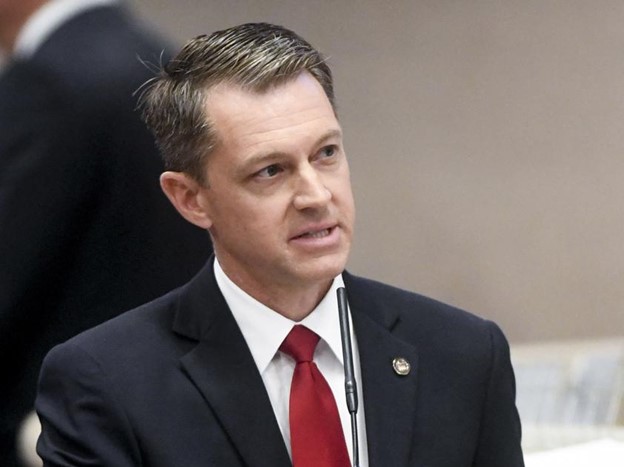
The party nominations for five statewide offices, including secretary of state on the Republican side and governor on the Democratic ticket are on the ballot in Tuesday’s primary runoff election in Alabama. The GOP nomination for a lone congressional seat also will be decided. Here is a look at the races: SECRETARY OF STATE With many Republican voters embracing former President Donald Trump’s false claims that fraud cost him the 2020 presidential election, the two remaining GOP candidates to become Alabama’s top elections official, secretary of state, campaigned on themes of tightening election security. Jim Zeigler, who was barred from seeking another four years as state auditor because of term limits, dubbed himself a “watchman” against ballot fraud, so-called “ballot harvesting,” and voting by mail. Trump has blamed all those and more for his loss to Democratic President Joe Biden, and many GOP voters believe him despite a lack of evidence. Rep. Wes Allen is a state representative from Troy who previously served as probate judge in Pike County. Citing the potential for fraud, he opposes early voting and no-excuse absentee balloting and sponsored a law that barred “curbside” voting meant in part to make it easier for people with disabilities to cast a ballot. The Republican nominee will face Democrat Pamela J. Laffitte, an Air Force veteran and corrections supervisor in Mobile County, in November. The current secretary of state, Republican John Merrill, couldn’t run again because of term limits. GOVERNOR Either Yolanda Rochelle Flowers or state Sen. Malika Sanders Fortier will become the first Black person to win a major party’s gubernatorial nomination in Alabama in the Democratic runoff for governor. Flowers, a career educator from Birmingham, narrowly led a six-person field in the May primary. She ran on a platform of “reconstructing” Alabama by rebuilding its economy and systems for education, health care, and criminal justice. Among other things, she has advocated for a state lottery and a state minimum wage of $15. Fortier, a state lawmaker from Selma, campaigned on the theme of building the biblical “beloved community” promoted by the Rev. Martin Luther King Jr. by improving the state’s economy, schools, and health care. She is the daughter of former state Sen. Hank Sanders and attorney Faya Rose Toure. The eventual winner face Gov. Kay Ivey, who vanquished eight challengers to win the GOP primary without a runoff. Nearly four times as many people voted in the Republican primary as the Democratic primary in May, and Republicans hold every statewide office. STATE AUDITOR Stan Cooke and Andrew Sorrell are vying for the Republican nomination to succeed Zeigler as state auditor. Cooke, a pastor from the Jefferson County town of Kimberly, claims Alabama is at a crossroads where it could remain a conservative state or come under the control of liberal Democrats. Echoing former President Donald Trump’s false claims of election theft, he is highlighting the auditor’s role in appointing county election officials who can prevent Democrats from stealing elections. Sorrell, a state representative from Colbert County who led balloting in the May primary, also tried to make election security a prime issue, saying a strong auditor is needed to appoint county registrars who will keep voter rolls clean. The eventual nominee will not have a Democratic opponent in the fall. U.S. HOUSE North Alabama’s 5th District features the only runoff for one of the state’s seven U.S. House seats. In the Tennessee Valley region, Madison County Commission chair Dale Strong and Casey Wardynski, a former Huntsville school superintendent, advanced to a runoff from a field of six candidates in May. Strong led easily with about 45% of the vote but couldn’t avoid a runoff. The winner will face Democrat Kathy Warner-Stanton of Decatur. The 5th District seat is being given up by U.S. Rep. Mo Brooks, who is in a runoff with former business lobby leader Katie Britt for the seat being vacated by U.S. Sen. Richard Shelby. ALABAMA PUBLIC SERVICE COMMISSION Two Republican incumbents on the Alabama Public Service Commission face runoff challenges to keep their jobs on the utility-regulating board. Jeremy Oden, a former state legislator from Cullman seeking his third term on the three-member commission, cast himself as a conservative bulwark against liberal environmental policies. He received the most votes in May in a four-way race for the Place 1 seat that saw attorney Brent Woodall, a PSC staffer, and Republican activist, come in second. First elected to the PSC in 2014, former Greene County Commissioner Chip Beeker also portrayed himself as an opponent of Democratic environmental policies in his campaign to retain the Place 2 seat. Beeker, who led the primary vote, is opposed by Robert L. McCollum, a small business owner from Tallapoosa County who contends the commission is too close to Alabama Power Co. No Democrat qualified for either position, making a victory in the Republican runoff tantamount to election.
Hank Sanders running again for longtime Senate seat
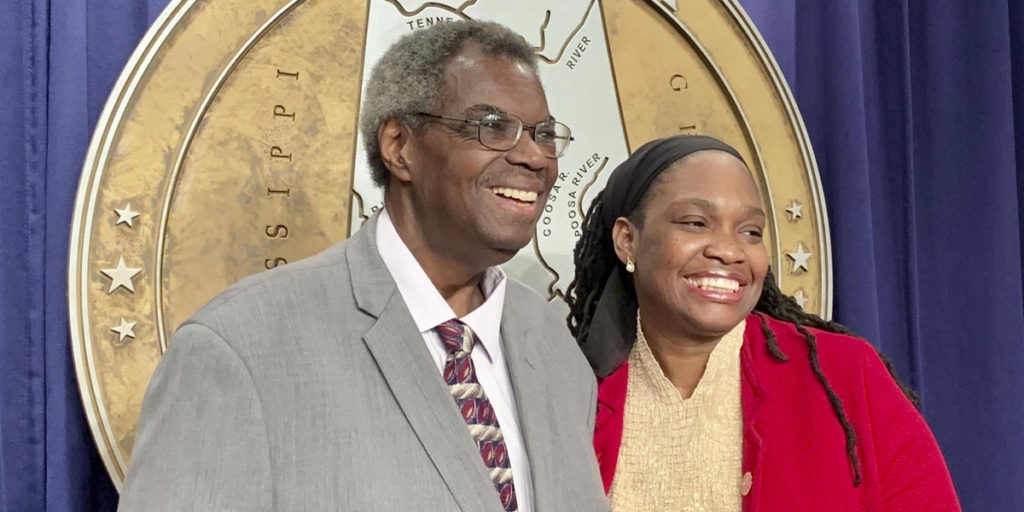
Former state legislator Hank Sanders announced Tuesday he is once again running for the Alabama Seat he held for nearly 40 years. The Senate seat is currently held by Sanders’ daughter, Malika Sanders Fortier, who has decided she is not running again, Sanders said. Sanders announced his retirement in 2018, paving the way for his daughter to run for the seat that represents Selma and surrounding areas. But Sanders said in a statement he has “unfinished business” in Montgomery, including pushing for Alabama to expand its Medicaid program to provide health care coverage to more people. “When I served in the Alabama Senate expansion of Medicaid was a critical focus for me. … I will work on this and other critical issues from elected office if I am elected again,” Sanders said. Sanders filed qualifying paperwork Tuesday with the Alabama Democratic Party, and the primary is in May. Sanders grew up in poverty as one of 13 children. He is a graduate of Harvard Law School who was first elected to the Alabama Senate in 1983. Republished with the permission of the Associated Press.
Alabama Senate committee advances lottery, casino bill

A lottery and casino bill cleared its first hurdle in the Alabama Legislature as supporters push to get the issue of gambling before voters for the first time since 1999. The Senate Tourism and Marketing Committee unanimously voted to advance the legislation to the full Alabama Senate. Sponsor Sen. Del Marsh said he anticipates the Senate will discuss the bill Thursday, but he will not seek a vote until lawmakers return from a planned weeklong break. “I firmly believe the people of Alabama want to address this issue once and for all,” Marsh said during the committee voting. The bill proposes a state lottery as well as five casinos offering table games, sports betting and slot machines. The casinos would be located at four existing dog tracks plus a fifth site in north Alabama that would be run by the Poarch Band of Creek Indians, the state’s only federally recognized, Native American tribe. The proposal also would encourage the governor to negotiate with the Poarch Band for a compact involving their three other sites which currently have electronic bingo machines. The proposal would have to be approved by a three-fifths majority of each chamber of the Alabama Legislature and then a majority of voters in a statewide vote. The bill will need 21 yes votes to clear the Alabama Senate. Sen. Jabo Waggoner, R-Vestavia Hills, said he was undecided on the bill because of the casino portion. Waggoner said he believes most voters support a lottery, but he was uncertain about allowing casinos in the state. “I’ve got to think about casinos a long time, but I think lottery would be an easy sale to the Legislature and to the public. There is going to be debate on opening up Alabama to casinos,” Waggoner said. The Legislative Services Agency estimated the lottery would generate $194-$279 million annually for college scholarships awarded on a mix of need, merit, and workforce needs in the state. The agency estimated the casinos would generate $260-$393 million annually from the 20% tax on gaming revenues as authorized by this amendment. Marsh is proposing to use casino revenue to help expand broadband access in the state as well as to fund mental and rural health services. Alabamians last voted on gambling in 1999 when they defeated a lottery proposed by then-Gov. Don Siegelman. Gambling bills introduced since 1999 have fallen short under a mix of conservative opposition to gambling as a revenue source and a turf war over which entities could offer casino games or electronic bingo machines, which resemble slot machines. Marsh said the location the tribe would operate would be located in either Jackson or DeKalb counties. The other four would be at VictoryLand dog track in Macon County, Greenetrack in Green County, the racecourse in Birmingham, and the racecourse in Mobile, which is owned by the Poarch Band. Sharon Wheeler, a lobbyist representing the Whitehall Entertainment Center, a smaller electronic bingo operator in Lowndes County, said it was unfair to exclude the smaller site that provides jobs in one of the most impoverished areas of the state while allowing cities and north Alabama to have casinos and the jobs they create. Sen. Malika Sanders Fortier, who represents the area, sent a letter to the committee asking her colleagues to include the site. The bill was approved by committee with little discussion, but Marsh said he expects lawmakers will discuss the bill during the break. Republished with the permission of the Associated Press.
