
Joe Biden signs bill making lynching a federal hate crime

Presidents typically say a few words before they turn legislation into law. But Joe Biden flipped the script Tuesday when it came time to put his signature on the Emmett Till Anti-Lynching Act. He signed the bill at a desk in the White House Rose Garden. Then he spoke. “All right. It’s law,” said the president, who was surrounded by Vice President Kamala Harris, members of Congress, and top Justice Department officials. He was also joined by a descendant of Ida B. Wells, a Black journalist who reported on lynchings, and Rev. Wheeler Parker, a cousin of Till. Biden said it’s “a little unusual to do the bill signing, not say anything and then speak. But that’s how we set it up.” He thanked the audience of civil rights leaders, Congressional Black Caucus members, and other guests who kept pushing for the law for “never giving up, never ever giving up.” Congress first considered anti-lynching legislation more than 120 years ago. Until March of this year, it had failed to pass such legislation nearly 200 times, beginning with a bill introduced in 1900 by North Carolina Rep. George Henry White, the only Black member of Congress at the time. Harris was a prime sponsor of the bill when she was in the Senate. The Emmett Till Anti-Lynching Act is named for the Black teenager whose killing in Mississippi in the summer of 1955 became a galvanizing moment in the civil rights era. His grieving mother insisted on an open casket to show everyone how her son had been brutalized. “It’s a long time coming,” said Parker, who was onstage with Biden when the president signed the bill. Parker, two years older than Till, was with his cousin at their relatives’ home in Mississippi and witnessed Till’s kidnapping. In his remarks, Biden acknowledged the struggle to get a law on the books and spoke about how lynchings were used to terrorize and intimidate Blacks in the United States. More than 4,400 Blacks died by lynching between 1877 and 1950, mostly in the South, he said. “Lynching was pure terror, to enforce the lie that not everyone, not everyone belongs in America, not everyone is created equal,” he said. Biden, who has many Black men and women in key positions throughout his administration, stressed that forms of racial terror continue in the United States, demonstrating the need for an anti-lynching statute. “Racial hate isn’t an old problem — it’s a persistent problem,” Biden said. “Hate never goes away. It only hides.” The new law makes it possible to prosecute a crime as a lynching when a conspiracy to commit a hate crime leads to death or serious bodily injury, according to the bill’s champion, Rep. Bobby Rush, D-Ill. The law lays out a maximum sentence of 30 years in prison and fines. The House approved the bill 422-3 on March 7, with eight members not voting, after it cleared the Senate by unanimous consent. Rush had introduced a bill in January 2019, but it stalled in the Senate after the House passed by a vote of 410-4. The NAACP began lobbying for anti-lynching legislation in the 1920s. A federal hate crime law was passed and signed into law in the 1990s, decades after the civil rights movement. “Today we are gathered to do unfinished business,” Harris said, “to acknowledge the horror and this part of our history, to state unequivocally that lynching is and has always been a hate crime, and to make clear that the federal government may now prosecute these crimes as such.” “Lynching is not a relic of the past,” she added. “Racial acts of terror still occur in our nation, and when they do, we must all have the courage to name them and hold the perpetrators to account.” Till, 14, had traveled from his Chicago home to visit relatives in Mississippi in 1955 when it was alleged that he whistled at a white woman. He was kidnapped, beaten, and shot in the head. A large metal fan was tied to his neck with barbed wire, and his body was thrown into a river. His mother, Mamie Till, insisted on an open casket at the funeral to show the brutality he had suffered. Two white men, Roy Bryant and his half-brother J.W. Milam were accused but acquitted by an all-white-male jury. Bryant and Milam later told a reporter that they kidnapped and killed Till. During a video interview after the bill signing, Parker credited current events for helping the anti-lynching bill move through Congress and to Biden’s desk. Parker specifically mentioned the police killing of George Floyd by a Minneapolis police officer in May 2020, which sparked months of protests in the United States and other countries after videotape of the officer’s actions circulated. He drew a connection between Floyd and Till, saying, “That’s what caused Rosa Parks to not give her seat up, and that sparked the civil rights movement because she thought about Emmett Till.” Republished with the permission of the Associated Press.
Government reopens probe of Emmett Till slaying
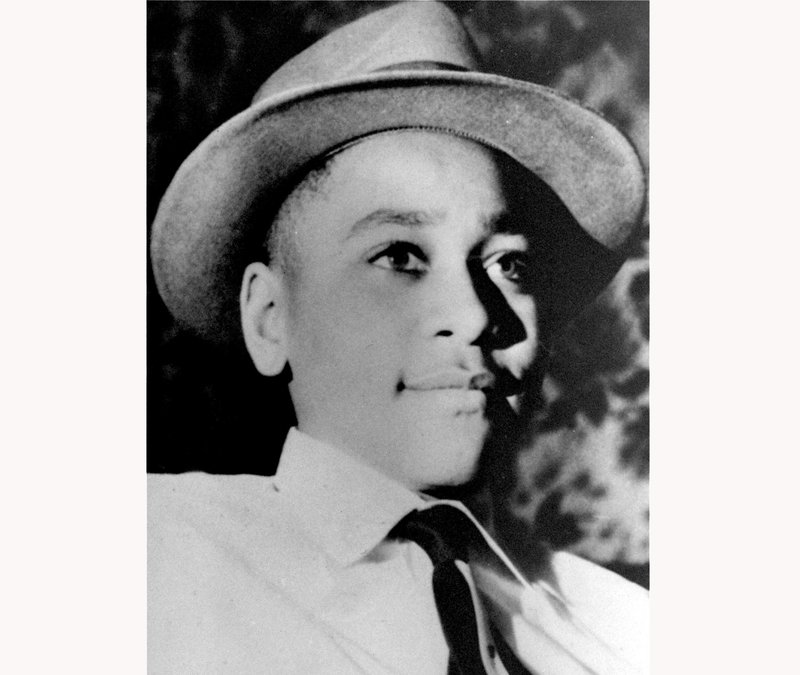
The federal government has reopened its investigation into the slaying of Emmett Till, the black teenager whose brutal killing in Mississippi shocked the world and helped inspire the civil rights movement more than 60 years ago. The Justice Department told Congress in a report in March it is reinvestigating Till’s slaying in Money, Mississippi, in 1955 after receiving “new information.” The case was closed in 2007 with authorities saying the suspects were dead; a state grand jury didn’t file any new charges. Deborah Watts, a cousin of Till, said she was unaware the case had been reopened until contacted by The Associated Press on Wednesday. The federal report, sent annually to lawmakers under a law that bears Till’s name, does not indicate what the new information might be. But it was issued in late March following the publication last year of “The Blood of Emmett Till,” a book that says a key figure in the case acknowledged lying about events preceding the slaying of the 14-year-old youth from Chicago. The book, by Timothy B. Tyson, quotes a white woman, Carolyn Donham, as acknowledging during a 2008 interview that she wasn’t truthful when she testified that Till grabbed her, whistled and made sexual advances at a store in 1955. Two white men — Donham’s then-husband Roy Bryant and his half-brother J.W. Milam — were charged with murder but acquitted in the slaying of Till, who had been staying with relatives in northern Mississippi at the time. The men later confessed to the crime in a magazine interview, but weren’t retried. Both are now dead. Donham, who turns 84 this month, lives in Raleigh, North Carolina. A man who came to the door at her residence declined to comment about the FBI reopening the investigation. “We don’t want to talk to you,” the man said before going back inside. Paula Johnson, co-director of an academic group that reviews unsolved civil rights slayings, said she can’t think of anything other than Tyson’s book that could have prompted the Justice Department to reopen the Till investigation. “We’re happy to have that be the case so that ultimately or finally someone can be held responsible for his murder,” said Johnson, who leads the Cold Case Justice Initiative at Syracuse University. The Justice Department declined to comment on the status of the probe. Watts, Till’s cousin and co-founder of the Emmett Till Legacy Foundation, said it’s “wonderful” that the killing is getting another look, but didn’t want to discuss details. “None of us wants to do anything that jeopardizes any investigation or impedes, but we are also very interested in justice being done,” she said. Abducted from the home where he was staying, Till was beaten and shot, and his body was found weighted down with a cotton gin fan in the Tallahatchie River. His mother, Mamie Till, had his casket left open. Images of his mutilated body gave witness to the depth of racial hatred in the Deep South and helped build momentum for subsequent civil rights campaigns. Relatives of Till pushed Attorney General Jeff Sessions to reopen the case last year following publication of the book. `Donham, then known as Carolyn Bryant and 21 years old at the time, testified in 1955 as a prospective defense witness in the trial of Bryant and Milam. With jurors out of the courtroom, she said a “nigger man” she didn’t know took her by the arm. “Just what did he say when he grabbed your hand?” defense attorney Sidney Carlton asked, according to a trial transcript released by the FBI a decade ago. “He said, ‘How about a date, baby?’” she testified. Bryant said she pulled away, and moments later the young man “caught me at the cash register,” grasping her around the waist with both hands and pulling her toward him. “He said, ’What’s the matter baby, can’t you take it?’” she testified. Bryant also said he told her “you don’t need to be afraid of me,” claiming that he used an obscenity and mentioned something he had done “with white women before.” A judge ruled the testimony inadmissible. An all-white jury freed her husband and the other man even without it. Testimony indicated a woman might have been in a car with Bryant and Milam when they abducted Till, but no one else was ever charged. In the book, author Tyson wrote that Donham told him her testimony about Till accosting her wasn’t true. “Nothing that boy did could ever justify what happened to him,” the book quotes her as saying. Sen. Doug Jones, D-Alabama, introduced legislation this week that would make the government release information about unsolved civil rights killings. In an interview, Jones said the Till killing or any other case likely wouldn’t be covered by this legislation if authorities were actively investigating. “You’d have to leave it to the judgment of some of law enforcement agencies that are involved or the commission that would be created” to consider materials for release, Jones said. Republished with the permission of the Associated Press.
