
State Auditor Andrew Sorrell addresses East Alabama Republican Assembly
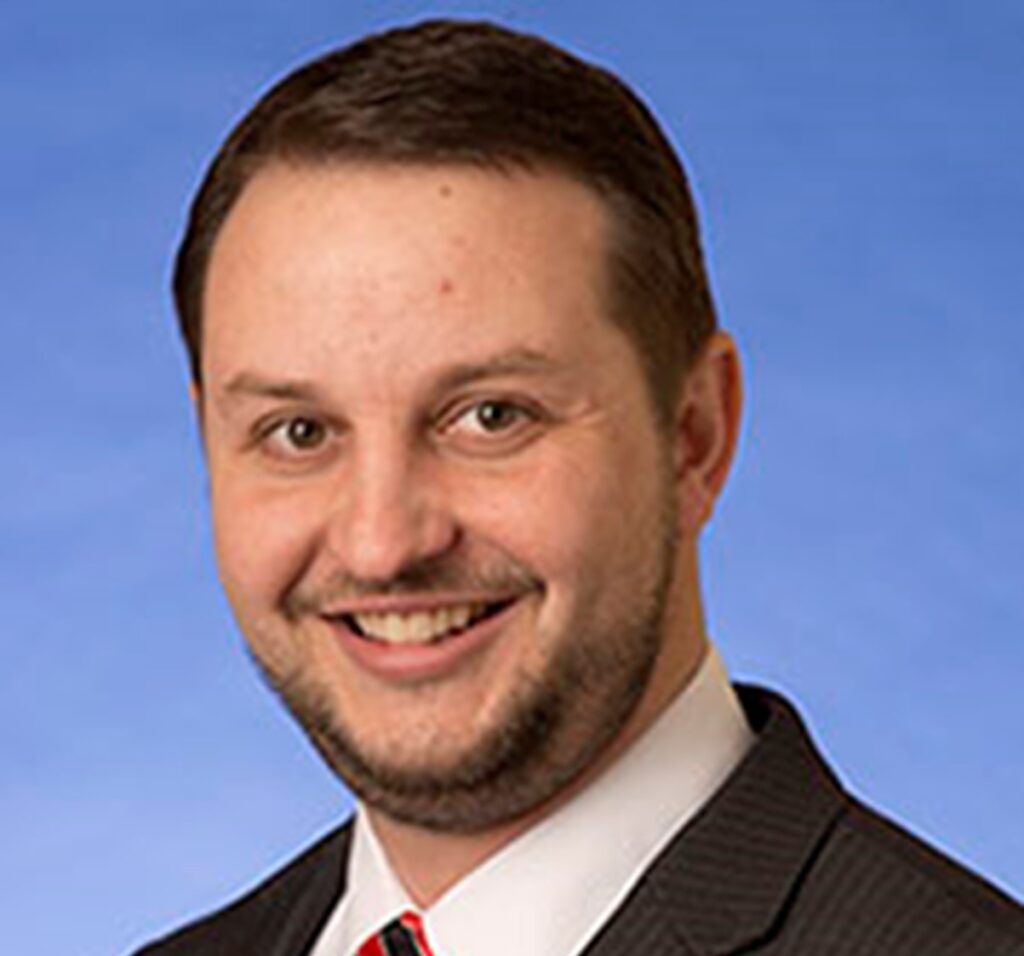
Alabama State Auditor Andrew Sorrell was in Opelika on Monday to address the East Alabama Republican Assembly. Sorrell served in the Alabama House of Representatives from 2018 to 2022, prior to his election last year as state Auditor. “In my first four years in the Legislature, I was the most conservative one down there,” Sorrell said, citing the ranking of members by the American Conservative Union and Club for Growth. “And it wasn’t even close. On every conservative scorecard, I was either number one or tied for number one.” “They said I was too conservative to get elected statewide,” Sorrell said. “I got the highest percentage of any candidate on the ballot in November.” “I was born in California, but I got out of there as quick as I could,” Sorrell said. “I was only there six weeks. We were there because Dad was a preacher at a Church there. If there is one thing that California needs, it’s more preachers. Dad took a job teaching Greek at a college in Wisconsin. I lived there until I was six years old. Dad got laid off from that job.” Sorrel’s father was laid off at the college and worked as a truck driver until finally; he was offered a job as pastor of a Church in Muscle Shoals, so the family moved to Alabama. ” There is nowhere I would rather be,” Sorrell said. Sorrell and his wife have one daughter and are expecting another. “We are going to home-school our children,” Sorrell said. “I got a good education at Muscle Shoals,” Sorrell said. “I can’t believe what has happened to the schools. There is a transgender kid in Muscle Shoals. When I was growing up, all my teachers were Christians.” Sorrell said that he became an entrepreneur growing up. His brother, Matthew, went to college at the University of North Alabama and received a $200 scholarship, so he thought his books were paid for. “That only bought one book,” Sorrell said. Then when that course was over, the bookstore would only pay $50. His brother decided to buy books on Amazon for substantial cost savings. He wanted to buy books and then sell them for a profit but had no money, so he formed a 50:50 partnership with Andrew because Andrew could front the $2000 in startup capital. “He came back home with a basket full of textbooks and $2500,” Sorrell said. They began offering cash for textbooks at the end of the semester to resell them at the beginning. “We were the book guys on campus. At one point, we bought 856 books in four days.” “We started buying hundreds of textbooks a day,” Sorrell said. Before selling the company, Andrew and his brother had grown the company to forty employees and over a million dollars in revenue. Next, Sorrell decided to go into the pawn shop business to sell guns. “It took two and a half years,” to open the store, Sorrell said. “Then I opened a second one – Gold, Guns, & Guitars. I also have eight rentals around the state.” “I am not in politics to make money – in fact, I am losing money,” Sorrell said. “Most of them (legislators) are losing money. Dr. [Larry] Stutts – I guarantee you that he is losing money in the legislature instead of delivering babies.” The Sorrell brothers became involved in local GOP campaigns, but all the candidates they helped lost their races. “Andrew, we are doing something wrong,” Matthew Sorrell said that his brother told him. “There are schools that teach you how to learn to run campaigns.” So they spent a week at a D.C. event learning how to run campaigns, and things changed. “We learned how to be campaign managers,” Sorrell said. After that, they found growing success. Sorrell said that Republican dominance has brought its own unique problem. “A big problem we have in the state is if you can’t run as a Democrat, you run in the Republican primary,” Sorrell said. “That is why we need party registration. I know you have a large problem with that down here with that.” Sorrell ran for House District 3 when he could not recruit a candidate to challenge incumbent Rep. Marcel Black (D-Tuscumbia). Black ultimately decided not to run again. “I narrowly won,” Sorrell said. “The gentleman that replaced me got 64% where I just got 52%. Part of that is redistricting made it a lot more fair, but it is also a lot more acceptable to vote Republican in Colbert County than it was.” Sorrell said one of his greatest legislative accomplishments was seeing constitutional carry law passed. That removed the requirement that gun owners purchase a pistol permit from their sheriff to carry their handguns concealed. “The guy that had it before I got elected got elected as a circuit judge, so I agreed to carry it,” Sorrell said. “I only had seven cosponsors,” Sorrell said that first year. That second year State Rep. Connie Rowe, a member of the leadership, “Stuck her neck on it” and agreed to cosponsor the bill after 22 members had signed on to cosponsor. “That took it to 26 or 27.” That third year, “I got it up to 28 or 29 (cosponsors),” Sorrell said. The bill would not come to the floor, so Sorrell decided to add it as an amendment to the lifetime permit bill to force a House floor vote on the legislation. Sorrell said that the Speaker of the House asked him to not bring that amendment and agreed to cosponsor the bill and bring it to the floor in 2022 if he would agree. “I decided to take the deal,” Sorrell said. “Fortunately for me, the Speaker kept his word.” Sorrell said that the decision by Mobile Sheriff Sam Cochran to fire State Rep. Shane Stringer as a deputy in the 2021 session over his support for constitutional carry was a key moment in passing the bill because legislators who weren’t fans of constitutional carry liked Stringer. “I wanted to introduce an amendment to name it the
Alabamians to vote on Ten Commandments ballot proposal in Nov.

Alabamians will have the chance to vote on wether to allow state properties, such as schools, to display the Ten Commandments in a November election ballot initiative. Voters will cast their ballot for or against SB181, which if approved by the voters would add an amendment to the state constitution that would give properties belonging to the state the option to display the Ten Commandments. The state may not use its money to fund displays, funding must come from private entities. The House of Representatives passed the ballot provision 66-19 on Thursday. The proposal was approved by the Senate last month, and since it’s a Constitutional amendment, it does not need to be signed by Gov. Kay Ivey. Republicans supporters of the proposal say it will reaffirm religious liberty, which is already under law. “I wish and pray that we get to a point where people would be free to express faith without fear of being sued,” said Trussville-Republican state Rep. Danny Garrett. Democratic opponents of the proposal think it would end up doing more harm than good; that it violates the separation of church and state, and would motivate federal lawsuits that could cost the state money. “The Supreme Court and federal courts already ruled. We are going to get sued,” Russell County-Democrat state Rep. Berry Forte, told the Associated Press. “I’m opposed to the bill because it’s unconstitutional and I’m trying to be fiscally conservative to try to save the state and courts money if they put it up there and it gets struck down,” said Lauderdale County-Democrat state Rep. Marcel Black in the same report. “This constitutional amendment is done for feel-good and political purposes.” Black also told AL.com the he believes “the proposal is ‘an old trick’ intended to help draw Republican voters to the polls.” Mobile-Democrat state Rep. Adline Clarke questioned whether people from other religions who displayed similar texts in public places would receive the same treatment, “public places belong to all people regardless of religion,” she told the Associated Press. The proposal’s —sponsored by Lineville-Republican state Sen. Gerald Dial — final fate will be determined by Alabama voters in November.
Push for greater equality: Adline Clarke proposes ‘gender pay gap’ bill

It’s a fact: women earn less than men. According to the U.S. Department of Labor, women who worked full-time, year-round in 2014 earned on average, 79% of men’s median annual earnings. That’s not sitting well with one Alabama lawmaker who’s hoping her gender pay gap legislation makes it across the finish line as the 2018 legislative session nears its close. HB368, sponsored by Mobile-Democrat State Rep. Adline Clarke, would prohibit employers from paying their employees less than the wage they would pay a member of the opposite sex for a similar job or responsibilities when viewed as a composite of skill, effort, and responsibility, as specified. Alabama is one of only two states, along with Mississippi, without an equal pay law. “Nearly every state has a law prohibiting employers differently based solely on gender. I’m disappointed. I would have thought we would have passed a long long before now,” Clarke told AL.com “Timing is everything.” However, HB368, also known as the “Gender Pay Gap,” would not just make wage inequality illegal, but would also add several provisions to the law including: Requires an employer to affirmatively demonstrate that a wage differential is based upon one or more specified factors Prohibits an employer from discharging, or in any manner discriminating against. or retaliating against an employee for the enforcement of these provisions Provides for enforcement of the bill Provides that an employer may not prohibit an employee from disclosing the employee’s own wages, discussing the wages of others, inquiring about another employee’s wages, or aiding or encouraging any other employee to exercise his or her rights under these provisions And requires an employer to maintain a record of wages paid to his 15 or her employee for a certain amount of time. The proposal, filed on Feb. 1, is scheduled to appear before the Alabama House State Government Committee on March 21. Alexander City-Republican State Rep. Mark Tuggle, the committee’s chairman, hopes to have Clarke’s proposal on the committee agenda next week. The bill currently has 26 co-sponsors, both Republicans and Democrats: Autauga County-Democrat Kelvin Lawrence Mobile County-Democrat Barbara Drummond Barbour County-Democrat Barry Forte Perry County-Democrat Prince Chestnut Jefferson County-Democrat Rolanda Hollis Madison County-Democrat Anthony Daniels Jefferson County-Democrat Rod Scott Tallapoosa County-Democrat Pebblin Warren Choctaw County-Democrat Elaine Beech Madison County-Democrat Laura Hall Jefferson County-Democrat Merika Coleman Jefferson County-Democrat Mary Moore Mobile County-Democrat Napolean Bracy Blount County-Republican Connie Rowe Shelby County-Republican April Weaver Talladega County-Democrat Barbara Boyd Jefferson County-Democrat Juandalynn Givan Etowah County-Republican Becky Nordgren Morgan County-Republican Terri Collins Montgomery County-Democrat John F. Knight Montgomery County-Democrat Thad McClammy Tuscaloosa County-Democrat Artis McCampbell Mobile County-Democrat James Buskey Bibb County-Democrat Ralph Howard Lauderdale County-Democrat Marcel Black Houston County-Democrat Dexter Grimsley
Republican Andrew Sorrell to challenge Marcel Black in HD 3
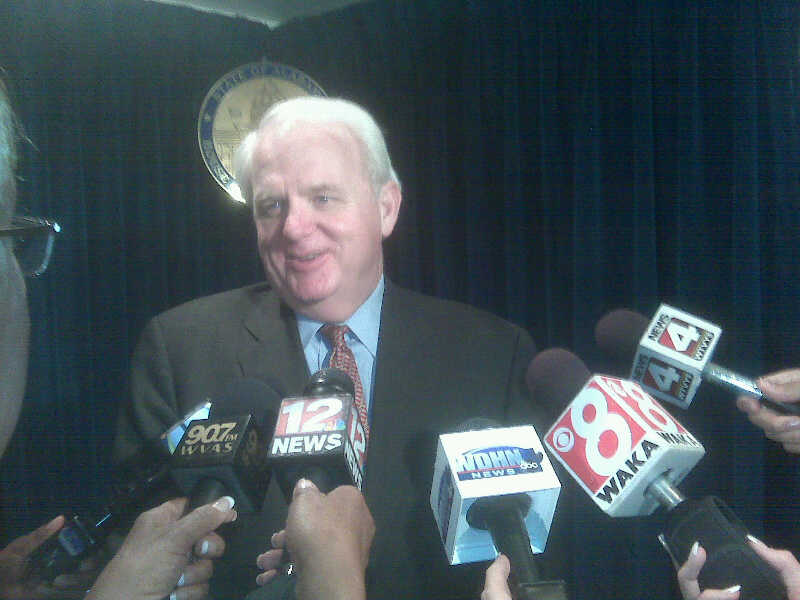
A 31-year-old Republican newcomer is filing a challenge for longtime Alabama State Rep. Marcel Black. Justin Andrew Sorrell is seeking the House District 3 seat held by Black, a Tuscumbia Democrat, since 1990. Sorrell is a well-known anti-tax activist and entrepreneur who received a bachelor’s degree in Business Management from the University of North Alabama in 2006. “I decided to run for this office to give the voters of House District 3 a clear choice this election cycle: a choice between a liberal Democrat and a conservative Republican. I believe my positions on issues and my conservative upbringing reflect the positions and upbringing of the majority of my district,” Sorrell said in a statement to the Alabama Political Reporter Friday. “With the amount of job loss in Colbert and Lawrence counties, District 3 needs a conservative, a Christian small-business man who knows how to create jobs and fight higher taxes,” he added. With his brother Mathew, Andrew Sorrell launched Infinity College Textbooks – selling more than 400,000 college textbooks online, employing 27 people. In April 2015, Sorrell also founded the pawnshop Gold, Guns and Guitars, Inc., sold 3,000 guns since opening. Andrew also began buying rental real estate at age 19 and owns multiple rental properties, both commercial and residential. Sorrell lives in Muscle Shoals with his fiancée, Hannah and plans to be married June 30. Black has not yet decided on hit a re-election bid. “I will make an announcement of future election plans at a time of my choosing,” Black told the Reporter. “I feel my record shows that I am experienced, have been effective and reasonable during my tenure. Of course, the ultimate decider is the electorate and they will have an opportunity at the ballot box to decide if they agree. That is what elections are for.” HD 3 covers Muscle Shoals, Tuscumbia, Sheffield, Town Creek, Hillsboro, North Courtland and parts of Florence. Alabama holds primary elections June 5, 2018; the general election is Nov. 5, 2018.
Distracted-driving bill stalls in House
Distractions by pets, cellphones and personal grooming would earn motorists at least a $25 fine and two points on their license based on legislation considered in the House on Thursday. House Bill 198, known as Bryant’s Law, expands the definition of distracted driving to include reading, writing, personal grooming, and caring for pets in addition to using a cellphone or mobile device. The bill failed to pass a House procedural vote on Thursday. It could reappear later in the session. Existing law makes it illegal to write or send texts while driving. Bryant’s Law would bar drivers from any activity that causes inattention or distraction. The bill would also allow law enforcement officers to treat a distracted driving violation as the primary or sole reason for issuing a citation. The fine for a first offense is $25; $50 for a second violation; and $75 for a third or subsequent violation. Each violation would add two points to the driver’s license. Rep. Marcel Black, a former lawyer, raised concerns that the bill would lead to unintended consequences and lawsuits: “Anything can be distracting. What’s going to happen is that there will be a lawsuit on every car wreck in this state.” Bryant’s Law is named for Bryant Lavender, an Alabama teen killed in a distracted-driving accident. Students at a Pickens County high school pitched the bill to legislators as part of a school project to educate their peers about the dangers of distracted driving.
