
Marco Rubio’s “Obama problem,” Jeb Bush “dynasty” could be issues in primary, insiders say

Lack of national experience could be a factor in the GOP presidential primary for Marco Rubio, particularly in light of seven years of President Barack Obama, a first-term senator when he began his campaign for the White House. So says the POLITICO Caucus, a weekly bipartisan analysis by a panel of political operatives and activists in the early primary states of Iowa and New Hampshire. The comparison between Florida’s junior U.S. senator and Obama doesn’t end there: Both men have superior speaking skills and a captivating personal narrative. Each has a similar experience; moving from the state House to the U.S. Senate, and mounting a presidential campaign before completing his first term. National experience might develop as an issue in 2016: A poll found 61 percent of Republicans, as well as 63 percent of Democrats, saying experience – or the lack of it – could be a problem. In Iowa, the topic is slightly more significant: 63 percent of Iowa Republican voters surveyed say it is an issue, as does 57 percent of New Hampshire Republicans. “He’ll have to offer more than one really great speech because voters are looking for more than inspiration,” one anonymous Iowa Republican told pollsters. “We’ve had plenty of that with Obama. Voters are looking for accomplishment and experience as well.” POLITICO reports another unidentified New Hampshire Republican said, “Every election selects the candidate that corrects the perceived deficiencies of the current occupant of the White House. After seven years of an eloquent, one-term senator, the GOP is going to look for something different.” “Without a doubt, when push comes to shove later this year, Rubio will be faced with being too young without enough experience,” said another. The experience critique can also be leveled against fellow candidates Ted Cruz and Rand Paul, but insiders say Rubio is the bigger threat to presumptive frontrunners Jeb Bush and Hillary Clinton. In the 2008 election cycle, Republicans — and Clinton — regularly pointed out the “experience” argument against Obama. That led a New Hampshire GOP voter to wonder why an entirely “valid critique” of Obama does not apply in these cases. “We can’t out-Obama Obama,” another Iowa Republican said, according to the POLITICO Caucus. “There is only one shot for a flash-in-the-pan candidate like that. And, by the way, it hasn’t turned out so well.” Experience may be an obstacle, insiders said, but not insurmountable. Rubio is a former Florida House speaker with foreign policy experience through his seat on the Senate Foreign Relations Committee. “Rubio’s relative lack of federal experience is fair game for his rivals, but he had significantly more state legislative experience than Obama,” one Iowa voter said. “The only way the experience question hurts him is if he comes across as inexperienced. So far, that hasn’t been an issue.” On the other hand, a fresh face, even without a wealth of experience, could be an asset for many primary voters. Although Bush and Clinton made visits to early primary states this week, much of the attention was on the “dynasty” talk inherent in a Bush-Clinton race. But for POLITICO Caucus insiders, the challenge is bigger for Bush than Clinton: That was the overwhelming view of Republicans (97 percent) and Democrats (92 percent). “Passing a presidency from father to son, like an inheritance is not the same as a wife building her own career and running based on her own accomplishments,” a Democratic insider from New Hampshire said. “It’s actually insulting to compare the two scenarios. Hillary has faced more challenges from being married to Bill Clinton and from being a wife. “Lots of sexism at play. On the other hand, the Bushes have a tradition of entitlement in their family.” Gender differences aside, respondents also expressed concern over having three presidents from the same family. According to one New Hampshire Republican, if it came down to families of Bill Clinton and George W. Bush, Clinton would win. “It’s on Jeb’s team to not allow that to happen,” the insider added. “President Bush 43’s numbers have bounced back since he left office in 2009, but they’re still not at President Clinton’s level.” But the issue is a challenge for both, even though it may hurt Bush a little more. “It’s very bad for both of them,” one Democrat said. “Many people really want another choice. But in Bush’s case, there really are alternatives.” More insights from the POLITICO Caucus, as well as a list of participants, is available here.
Presidential TV ad roundup: June 16 edition
Jeb Bush: Title: Making a difference Published: June 14 Tone: Heartfelt on record as governor Rick Perry: Title: Hilary goes to the movies Published: June 14 Tone: Negative ad on Hillary Clinton Title: Where I came from Published: June 8 Tone: Positive; Reflecting on roots and record Title: Iowa Published: June 8 Tone: Focused on Iowa voters Rand Paul: Title: Standing Strong Published: June 1 Tone: Positive with donate request Title: Not going to take it Published: June 4 Tone: Passionate floor remarks Marco Rubio: Title: Yesterday is still over Published: June 13 Tone: Split, opens with Hillary then goes to positive message about future Hillary Rodham Clinton: Title: Fighter Published: June 12 Tone: Positive on background (5 minutes long)
Jeb Bush has optimistic message, faces challenges in ’16 bid
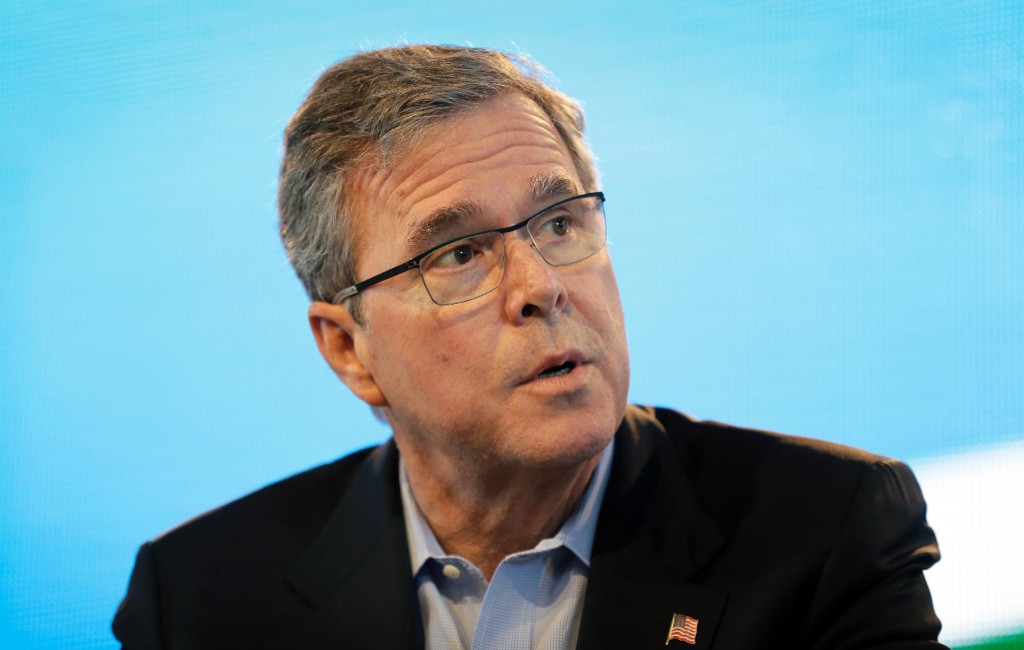
Jeb Bush launched a Republican presidential bid months in the making Monday with a vow to get Washington “out of the business of causing problems” and to stay true to his beliefs: easier said than done in a bristling primary contest where his conservative credentials will be sharply challenged. “I will campaign as I would serve, going everywhere, speaking to everyone, keeping my word, facing the issues without flinching,” Bush said, opening his campaign at a rally near his south Florida home at Miami Dade College, where the institution’s large and diverse student body symbolizes the nation he seeks to lead. The former Florida governor, whose wife is Mexican-born, addressed the packed college arena in English and Spanish, an unusual twist for a political speech aimed at a national audience. “In any language,” Bush said, “my message will be an optimistic one because I am certain that we can make the decades just ahead in America the greatest time ever to be alive in this world.” Bush enters a 2016 Republican contest that will test both his vision of conservatism and his ability to distance himself from family. Neither his father, former President George H.W. Bush, nor his brother, former President George W. Bush, attended Monday’s announcement. The family was represented instead by Jeb Bush’s mother and former first lady, Barbara Bush, who once said that the country didn’t need yet another Bush as president, and by his son George P. Bush, recently elected Texas land commissioner. Before the event, the Bush campaign came out with a new logo, Jeb!, that conspicuously leaves out the Bush surname. And in his speech, he took on critics in both parties, particularly Hillary Rodham Clinton, the overwhelming favorite in the race for the Democratic presidential nomination. “The party now in the White House is planning a no-suspense primary, for a no-change election,” Bush said. “The presidency should not be passed on from one liberal to the next.” He later called out Clinton by name, and indirectly jabbed fellow Republicans, including his political protegé Florida Sen. Marco Rubio, who welcomed Bush into the 2016 contest earlier in the day. “We are not going to clean up the mess in Washington by electing the people who either helped create it or have proven incapable of fixing it,” Bush said. Bush joins the race in progress in some ways in a commanding position, in part because of his family connections. He has probably raised a record amount of money to support his candidacy and conceived of a new approach on how to structure his campaign, both aimed at allowing him to make a deep run into the GOP primaries. But on other measures, early public opinion polls among them, he has yet to break out. While unquestionably one of the top-tier candidates in the GOP race, he is also only one of several in a large and capable Republican field that does not have a true front-runner. In the past six months, Bush has made clear he will remain committed to his core beliefs in the campaign to come, even if his positions on immigration and education standards are deeply unpopular among the conservative base of the party that plays an outsized role in the GOP primaries. Tea Party leader Mark Meckler on Monday said Bush’s positions on education and immigration are “a nonstarter with many conservatives.” “There are two political dynasties eyeing 2016,” said Meckler, a co-founder of the Tea Party Patriots, one of the movement’s largest organizations, and now leader of Citizens for Self-Governance. “And before conservatives try to beat Hillary, they first need to beat Bush.” Yet a defiant Bush has showed little willingness to placate his party’s right wing. Instead, he aimed his message on Monday at the broader swath of the electorate that will ultimately decide the November 2016 general election. Minority voters, in particular, have fueled Democratic victories in the past two presidential elections. Of the five people on the speaking program before Bush, just one was a white male. Bush is one of 11 major Republicans in the hunt for the nomination. Wisconsin Gov. Scott Walker and Ohio Gov. John Kasich are among those still deciding whether to join a field that could end up just shy of 20. Bush’s critics in both parties have criticized him as aggressively as they would if he were the clear Republican favorite. Kentucky Sen. Rand Paul said Monday there’s “Bush-Clinton fatigue” in America. “I think some people have had enough Bushes and enough Clintons,” Paul said in an interview with The Associated Press. After touring four early-voting states, Bush quickly launches a private fundraising tour with stops in at least 11 cities before the end of the month. Two events alone, a reception at Union Station in Washington on Friday and a breakfast the following week on Seventh Avenue in New York, will account for almost $2 million in new campaign cash, according to invitations that list more than 75 already committed donors. Republished with permission of The Associated Press.
Jeb Bush still with much to prove in leaderless GOP 2016 race
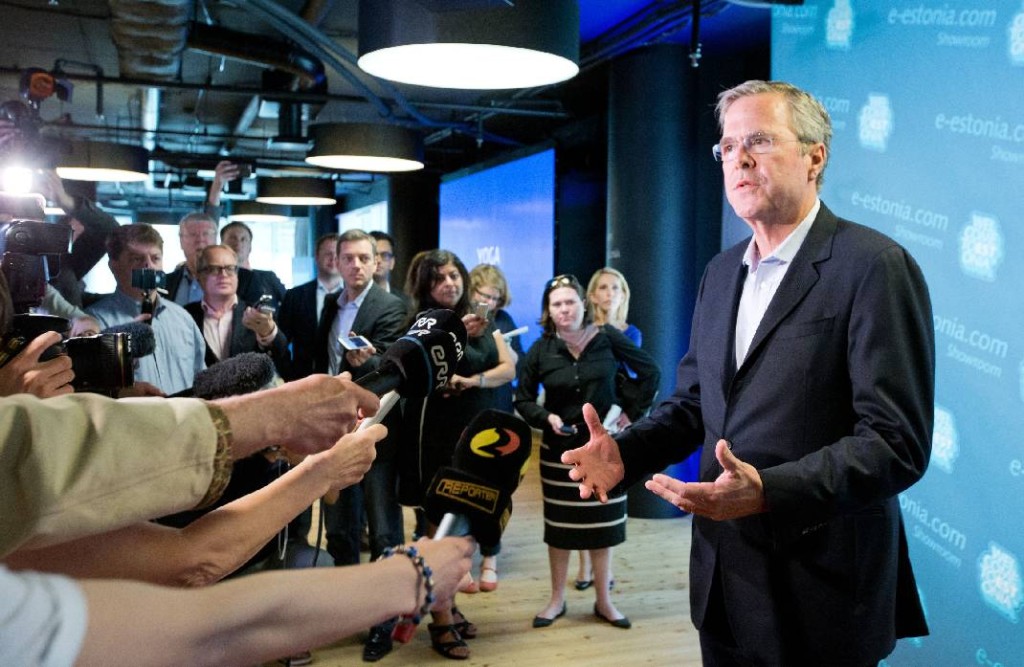
When Jeb Bush finally says on Monday that he’s running for president, he’ll begin the campaign with much to prove. Back in December, the former Florida governor said he was exploring a 2016 run, an announcement that by itself had the power to kick off the campaign. In the six months since, Bush probably has shattered a fundraising record as well as pioneering a new approach to White House campaigning. He has just completed a well-reviewed trip through Europe. Supporters had hoped that this son of one president and brother of another would by now hold a commanding position in an unwieldy Republican field. Yet he has not broken away from the pack. “I know that I’m going to have to go earn this,” Bush said this past week. “It’s a lot of work and I’m excited about the prospects of this. It’s a long haul. You start wherever you start, and you end a long way away from where we are today, so I just urge everybody to be a little more patient about this.” Bush, 62, planned to make his candidacy official during a Monday afternoon speech and rally at Miami Dade College, the nation’s largest university. He has failed to scare any potential rival from the race, except perhaps 2012 nominee Mitt Romney. He is unpopular among some of his party’s most passionate voters and little known beyond his home state despite the Bush name. “I thought Jeb would take up all the oxygen,” said Ohio Gov. John Kasich. “He hasn’t.” Emboldened by Bush’s slow rise, Kasich acknowledged this weekend that he is stepping up preparations for a possible campaign. Bush is one of 11 major Republicans in the hunt for the nomination. Kasich and a few others are still deciding whether to join a field that could end up just shy of 20. But few among them entered the race with such a high expectations of success as did Bush. Those expectations have seemed a burden at times. Take, for example, the question of whether Bush will report raising $100 million for his campaign in the first six months of the year. Lost amid the “will he or won’t he” is that Bush probably will have taken in far more than anyone else. Romney said Saturday it would not surprise him to learn that Bush had scooped up twice that of all the other GOP candidates combined. “By all appearances, he’s raised a lot of money,” Romney said, praising Bush’s “experienced and capable team.” ”At this stage, that’s a very important thing to do.” Even if he does not reach the $100 million mark, Bush will have amassed more in six months than Romney and his allies at a super political action committee raised for the entire year before the 2012 election. By contrast, a senior adviser to Wisconsin Gov. Scott Walker, considered along with Bush among the few top-tier 2016 contenders, expects he will raise roughly $25 million through the end of June. The adviser spoke on the condition of anonymity to share internal fundraising details. Romney’s former fundraising chief, Spencer Zwick, said despite Bush likely commanding lead in the fundraising race, it’s not clear how much of an advantage he will hold over the field. “You don’t need $100 million to run a primary,” Zwick said. He suggested that multiple candidates would have the resources “to go the distance,” adding that “it doesn’t feel like anybody owns the dominant position.” Bush took lots of questions this past week about a supposed shake-up at campaign headquarters, even though only one member of his senior team — who remains on Bush’s staff — was affected. The attention exasperated Bush: “It’s June, for crying out loud,” he told reporters while in Berlin. “We’ve got a long way to go.” Still, Bush’s first six months back in politics since leaving the governor’s office in 2007 have been underwhelming at times. His low-key speaking style often leaves something to be desired, particularly when compared with some opponents. He sometimes gets snippy during long campaign days. While detailed policy questions are often his strength, he struggled for several days last month to answer a predictable question about the war in Iraq that his brother, former President George W. Bush, waged. “He would be an excellent president no doubt, but how far he can go in the process remains to be seen,” said John Rakolta Jr., the CEO of a Michigan construction company and a leading Romney donor. In his speech Monday, Bush planned to make the case that those involved in creating Washington’s problems cannot fix them. The point is designed to jab the Republican senators — including political protégé in Florida, Marco Rubio — in the race. Meanwhile, an allied super PAC fueled by Bush’s fundraising haul is developing an advertising strategy that will promote Bush’s record in Florida and attack his rivals. Illinois-based businessman Todd Ricketts, a Walker supporter, said it’s far too early to draw any conclusions about Bush or the rest of the field. “Once there’s a debate, we’ll have a clearer picture of who appears to be ready,” he said. Republished with permission of the Associated Press.
Marco Rubio’s real estate dealings often a drag on his finances
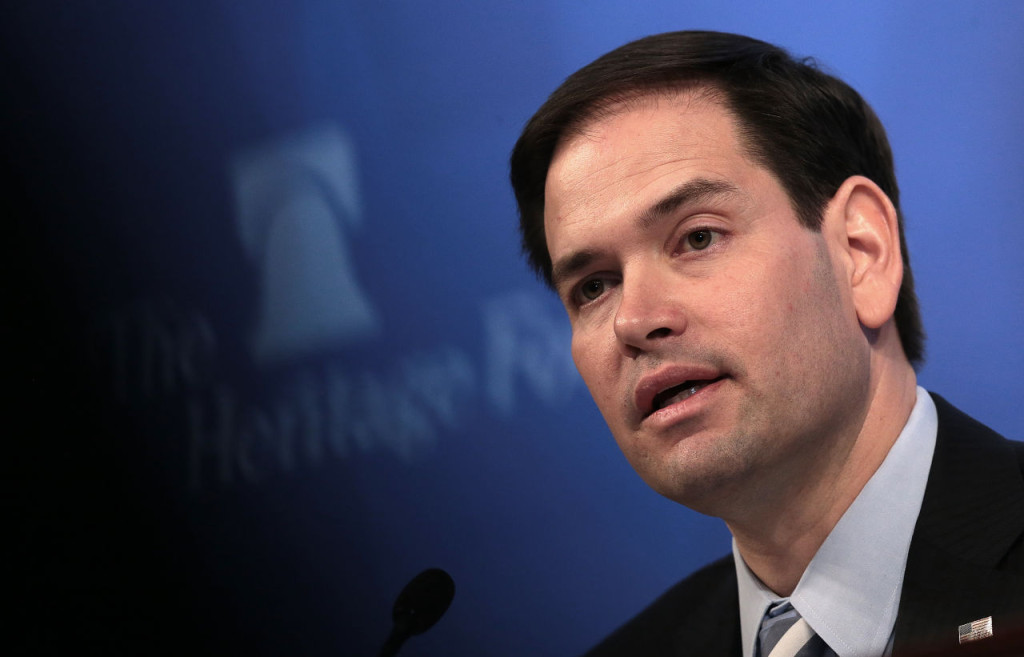
During Marco Rubio‘s first year in the Florida Legislature in 2000, the 29-year-old lawmaker filled out the required forms detailing his personal finances. On the line listing his net worth, Rubio wrote: “0.” Since then, he has risen to lead the state House as speaker, won election to the U.S. Senate and earned at least $4.5 million at a series of six-figure jobs and by writing a best-selling memoir. Yet his net worth has improved only modestly. Like many Americans in the days since the recession, Rubio and his family — he has four children — have struggled in the housing market. Factor in questionable moves with money and a hefty load of student loans, and it’s clear that the Republican presidential candidate’s real estate dealings often have been a drag on his finances despite an income most would relish. “He’s like any normal American with four kids that has a mortgage,” said Bernie Navarro, a past president of the Miami-based Latin Builders Association, who has advised Rubio on his real estate transactions. “He goes through what any normal family goes through, living with a salary, and he has to make adjustments.” Rubio made two in the past few weeks: He sold a home in Tallahassee, Fla., that he owned with a former colleague. That freed Rubio from a monthly payment on an interest-only loan and the cost of upkeep. But he lost money on the deal. He consolidated the debt on his primary residence in West Miami, Fla. The original mortgage required only payments of interest on the principal in its first decade. Rubio has only paid off about 4 percent of overall principal since buying the house. At the end of last year, Rubio was worth no more than $355,000, according to an analysis of his personal financial disclosures records filed with the Senate. That does not include any equity he may have in his West Miami home or proceeds expected from his second book, published in December. Rubio, 44, has written and spoken of being torn between a drive for public service and the need to support his family. At times, he has made decisions that put politics ahead of his personal comfort or financial security. He and his wife, Jeanette, moved in with his mother-in-law to make ends meet at the start of his career. Late last year, he liquidated a retirement account, saying he might need the cash for everything from a new refrigerator to college for his eldest daughter. At other points, Rubio’s political connections have helped financially. One of Rubio’s biggest political backers, Miami billionaire Norman Braman, hired Rubio as his lawyer after Rubio left the Florida Legislature in 2008, and Braman funded a teaching position at Florida International University that Rubio still holds. Braman’s foundation also pays Rubio’s wife to advise it on charitable giving. Rubio isn’t shy about his relative lack of wealth, which is a far cry from the financial standing of his fellow Floridian and rival for the Republican nomination, former Gov. Jeb Bush. Rubio told conservative activists in Nevada last week that “the latest one I’ve heard now from some is I’m not rich enough to be president.” In an interview, Rubio said, “The cost of living goes up, and you can just imagine how people who make a quarter of what I do face today.” Rubio’s career began in politics, and he rarely has not held office or worked for those who do. After graduating from the University of Miami’s law school in 1996, the then-25-year-old worked as the South Florida coordinator for Bob Dole‘s presidential campaign. Dole lost soundly to President Bill Clinton, but Rubio impressed Florida GOP power brokers: One, Al Cardenas, offered him a job. Rubio had planned to join a local prosecutor’s office after the election, but the job paid less than $30,000. Cardenas was offering $57,000. Rubio wrote in “An American Son,” his 2012 memoir: “I wanted to be a prosecutor. I wanted to gain courtroom experience. I relished the excitement of trying cases and had little interest in the land use and zoning law that Al practiced. But I had student loans to repay. I wanted to get married. And I wanted to help support my family so my father could at last retire.” Despite the financial incentive, the job at Cardenas’ firm couldn’t hold Rubio’s interest. Less than two years later, he was running for office, winning a seat on the West Miami City Commission and landing a job at another law firm. About a year after that, he moved up to the Florida House, but his new firm deducted Rubio’s $27,000-a-year lawmaker’s salary from his paycheck. In his book, Rubio said he was unsure he could keep his full-time job while spending months at the state Capitol. In 2000, he listed the value of his household furnishings at $5,000 on state records but reported more than $160,000 in student loan debt plus $30,000 in “assorted credit + retail debt.” To save $1,500 a month in rent, Rubio and his wife moved in with her mother. He was climbing the GOP ranks, but, “I imagined telling my children someday that I had been the majority whip of the Florida House but … had to leave politics to make a living,” he wrote in his book. A headhunter helped Rubio land a new job, this one with a $93,000 salary at a law firm that wouldn’t hold his time in Tallahassee against him. It was enough for the Rubios, who had their first child in 2000, to buy a 1,200-square-foot three-bedroom house in the working-class West Miami neighborhood where Rubio grew up. The Rubios would sell that house near the peak of the Florida real estate bubble for more than twice what they paid for it. The buyer was the mother of a neighbor: a chiropractor who unsuccessfully lobbied Rubio to extend a state insurance provision and was later prosecuted for violating campaign finance laws unrelated to Rubio. A few
Jeb Bush joins unwieldy race as new phase of GOP campaign begins

Jeb Bush stepped into the Republican race for president on Thursday, finally taking his place — after months of hints and relentless fundraising — amid an unwieldy field of GOP candidates unlike any in recent memory. The son of one president and brother of another, the former Florida governor has the rank of front-runner and the donors to match. He now has eight months before the first votes are cast in the Iowa caucuses to prove he’s worthy of both. “It’s as wide-open a race as we’ve seen in a long time,” said Republican strategist Kevin Madden, who described Bush as the “technical front-runner” in a field that stands at 11 major declared candidates. Among them: former Texas Gov. Rick Perry, who returned Thursday to presidential politics four years after his 2012 presidential bid ended in disaster, vowing during his own campaign kickoff to “end an era of failed leadership.” While both men were widely expected to enter the race, which got its unofficial start when Bush said in December he was exploring whether to seek the Republican nomination, the confirmation from aides that Bush will indeed run is nonetheless a defining moment for the GOP. The son of George H.W. Bush and younger brother of George W. Bush, he is a favorite of the Republican establishment, the experienced and well-connected party faithful who have showered the 62-year-old with money, staffing talent and encouragement in recent months. His decision ensures the possibility of a general election showdown between two political dynasties as Hillary Rodham Clinton seeks the Democratic nomination. Senior aides confirmed that Bush, who left the Florida governor’s mansion in 2007, will enter the race June 15 during an event at Miami Dade College. They spoke on condition of anonymity so as not to take the edge off his formal announcement. “I want to be the guy to beat,” a confident Bush said while campaigning in Florida earlier this week. The GOP contest now features candidates of different generations, races and genders, whose policy prescriptions are far from monolithic and whose personalities often clash. There are more to come: four sitting governors — Wisconsin’s Scott Walker and New Jersey’s Chris Christie, among them — are likely to join the race before the GOP’s first presidential debate in August. “Everyone is bunched together in the polls, and no one candidate in particular has emerged as a clear leader in the early state contests,” Madden said. Perry opened his campaign in a fight for relevancy among the many Republicans trying to knock Bush from his front-runner position. Despite his record as Texas’ longest-serving governor, Perry may struggle to reach the polling threshold that will decide the 10 candidates who will take part in the party’s first debate on Aug. 6. He announced his candidacy in a humid airport hangar alongside a C-130 cargo plane, like one he flew for the Air Force, and wasted little time in trying to distinguish himself from the swarm of Republican contenders not named Bush. “Leadership is not a speech on the Senate floor,” he declared in an apparent swipe at the four Republican senators in the race: Marco Rubio of Florida, Rand Paul of Florida, Ted Cruz of Texas and Lindsey Graham of South Carolina. “It’s not what you say. It’s what you do.” Madden, who previously worked for Mitt Romney, predicted that Bush’s entry would prompt “more obvious head-to-head engagements among the candidates” as they jockey for position. Eight current and former governors could ultimately be in the race, along with five current and former senators, a former neurosurgeon and two business executives. The only woman in the Republican field, Carly Fiorina, has never held elected office, yet the former technology executive appears to be gaining momentum as she campaigns across early voting states including New Hampshire and South Carolina. There are two Hispanic candidates — Cruz and Rubio — while Bush is married to a Mexican native and speaks fluent Spanish. Perhaps more than any of his rivals, Bush has refused so far to bend to his party’s conservative base, sticking to unpopular positions on illegal immigration and education testing standards. And he regularly proclaims loyalty and love for his brother, George W. Bush, whom he lists as a trusted adviser. “Jeb Bush has a good record as a conservative governor, but Common Core and immigration are two huge obstacles he is going to have to overcome,” said Amy Kremer, past president of the Tea Party Express. “It will be interesting to see if he listens to the American people or doubles down on his positions. He has fierce competition. Republished with permission of the Associated Press.
Jeb Bush says announcement coming June 15
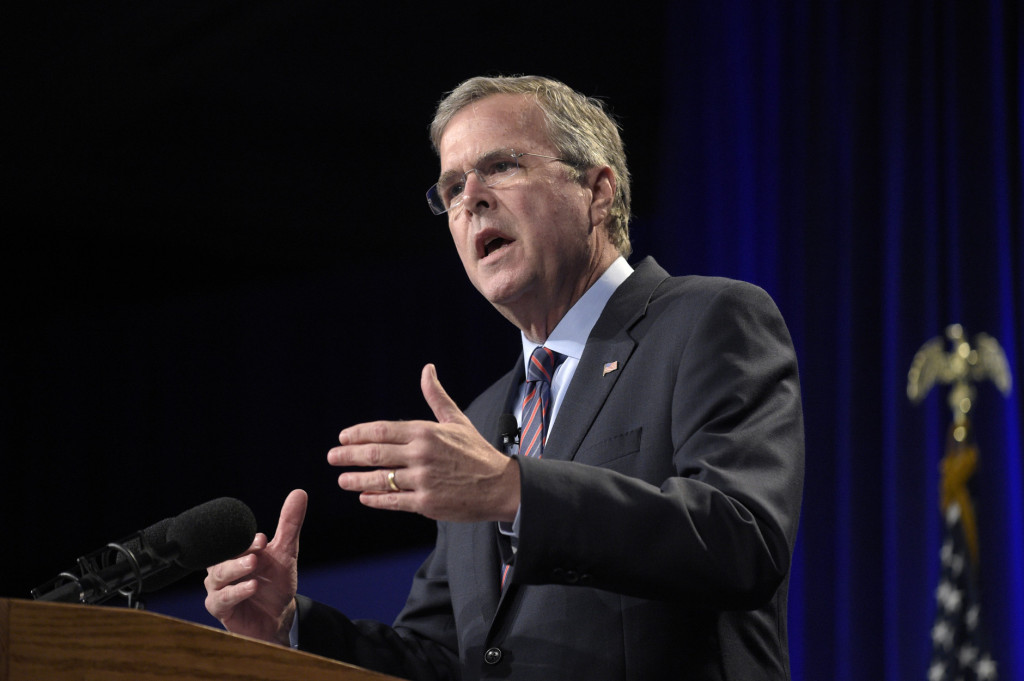
Jeb Bush is giving a strong indication that he’ll join the presidential campaign this month, tweeting that an announcement is coming on June 15. The former Florida governor, widely expected to run for the GOP nomination, tweeted “coming soon” with a link to the website jebannouncement.com. On that page, the date 06.15.15 was listed, followed by the tease, “BE THE FIRST TO KNOW. RSVP NOW!” Visitors to the site could enter their name and email address. Bush also tweeted it in Spanish, “Próximamente 6.15.15.” Bush would enter a crowded primary that includes Sens. Rand Paul, Marco Rubio and Ted Cruz, among others. Former Texas Gov. Rick Perry is expected to announce his bid on Thursday. Republished with permission of The Associated Press.
High stakes for Jeb Bush, Marco Rubio in Florida presidential primary
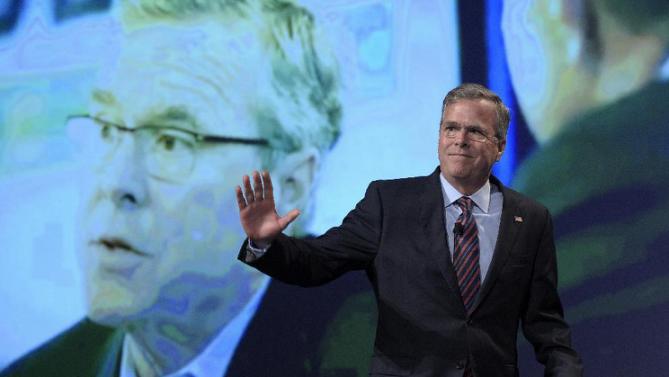
Leading Republican presidential prospects faced off at an event Tuesday in battleground Florida, a state that could prove pivotal to the Florida heavyweights seeking the nomination, not to mention any rival who manages to win here instead. Jeb Bush, a former two-term Florida governor, and Florida’s junior Sen. Marco Rubio, were the home-state stars at a GOP economic gathering that drew a half dozen White House hopefuls to a Disney World convention center – Rubio, tied up by Senate business, appeared by video. They are so heavily favored in the March 15 primary next year that some rivals are considering bypassing Florida’s race. But they showed up Tuesday. Rubio offered the audience an indirect but unmistakable barb at Bush, who spoke later. “While our economy is transforming, our policies and our leaders are not,” Rubio said. “Our outdated leaders continue to cling to outdated ideas.” The 44-year-old Republican did not name Bush or Democrat Hillary Rodham Clinton. But the implication was clear in a 2016 campaign that contrasts a group of younger political leaders and the two older figures whose families have dominated national politics for decades. “It’s kind of hard to imagine that my good friend, Marco, would be critical of his good friend, Jeb,” a sarcastic Bush said with a smile after acknowledging to reporters there would be “elbows and knees” thrown in the race. “This isn’t Tiddlywinks we’re playing.” He continued: “If I’m a candidate, I want to be the guy to beat.” Tuesday’s speaking program also featured former Arkansas Gov. Mike Huckabee, former Texas Gov. Rick Perry, Wisconsin Gov. Scott Walker, New Jersey Gov. Chris Christie and Louisiana Gov. Bobby Jindal. Despite their appearance, many campaigns are weighing whether to spend time and money in the state Bush and Rubio call home. Other than the Florida pair, none who showed up Tuesday has begun to establish teams of operatives and activists on the ground in Florida. Many are already working to temper expectations, while realizing they cannot ignore Florida altogether – both for its abundance of wealthy donors and its status as a must-win swing state in the general election. Wisconsin Gov. Scott Walker tried to walk back recent comments he might avoid the Florida primary should he run for president. Bush and Rubio “certainly would have a competitive advantage,” he said. “But if I didn’t think I could compete, I wouldn’t be here today.” He ticked off a list of personal and political connections to Florida. Florida could be decisive in the Republican race. The Florida Legislature recently moved the state’s primary to March 15, the earliest date the Republican National Committee allows for states that award all of their delegates to the primary winner. States voting before then must award their delegates proportionately. The shift was seen as a move to help Bush or Rubio, one of whom would claim the state’s trove of delegates by winning Florida. Even so, with other states voting first, nearly half of the delegates needed to clinch the nomination will have already been awarded by the time Florida voters weigh in. That makes Florida particularly important for Bush or Rubio. Other contenders, Perry and Huckabee among them, are shaping a strategy focused on early-voting states such as Iowa and South Carolina, hoping to build momentum that could translate down the line in Florida. Bush and Rubio are by no means guaranteed a Florida victory. They face strong competition in the earlier states. And Brian Ballard, who led Florida fundraising for John McCain and Mitt Romney, said “a lot of guys are in striking distance” of Rubio and Bush even in Florida. The demands of competing in Florida will require tough choices by the larger field. It costs about $1.5 million a week to run statewide television ads, far more than in New Hampshire, Iowa and South Carolina. “Florida’s an expensive state, it’s a winner-take-all state, and how much of your resources you dedicate to it is a nightmare decision for the operatives and those who advise the candidates,” said former Florida GOP chairman Al Cardenas, now a Bush supporter. Yet, as Tuesday’s event showed, top-tier candidates will not ignore Florida altogether in the coming months. Huckabee reminded Florida voters that Bush and Rubio aren’t the only Florida residents in the race. The former Arkansas governor now lives in the Panhandle, and referred to himself as “someone who is like a lot of other people in America – now a Floridian.” He also heaped praised on Gov. Rick Scott‘s economic leadership, acknowledging an ulterior motive: “Anything I could do to suck up to him and his donors by God I’m going to do,” Huckabee said with a smile. Republished with permission of the Associated Press.
Who is in, and about to get in, the GOP race for President
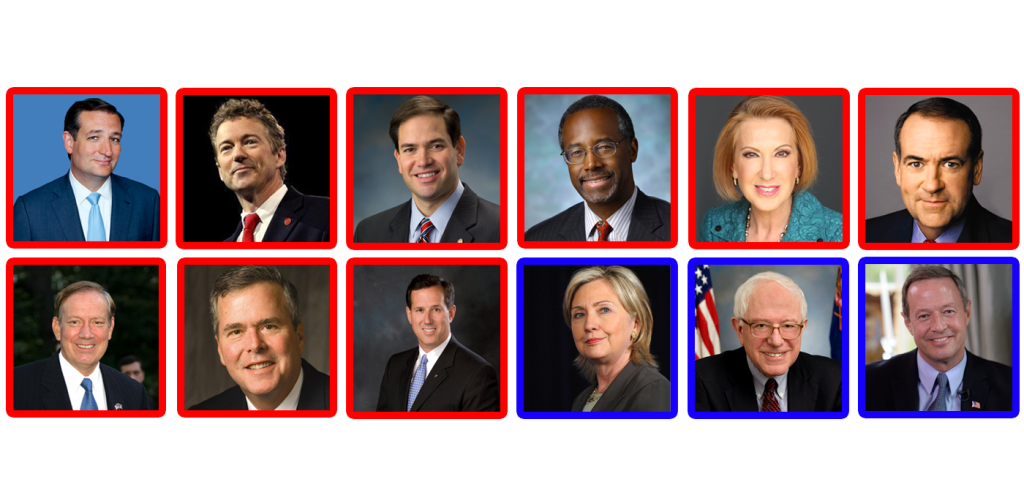
South Carolina Sen. Lindsey Graham is the ninth major Republican to enter the party’s 2016 presidential primary contest. Another half dozen or so are likely to get into the race later this summer, including former Texas Gov. Rick Perry later this week. Here’s a look at the GOP field: Who’s in, who’s almost in, and who’s still waiting for the right moment. IN THE RACE: Ted Cruz The first major Republican to get into the race, the Texas senator began his campaign March 23 at Liberty University in Lynchburg, Va. “I believe in you. I believe in the power of millions of courageous conservatives rising up to re-ignite the promise of America,” he said. Rand Paul The Kentucky senator launched his campaign April 7 in Louisville, where he told a hotel ballroom full of supporters, “I have a message, a message that is loud and clear and does not mince words: We have come to take our country back.” Marco Rubio In a speech April 13 in Miami, the senator from Florida called his candidacy for president a way for the country to break free of ideas “stuck in the 20th century.” He said, “This election is not just about what laws we are going to pass. It is a generational choice about what kind of country we will be.” Carly Fiorina The former tech executive chose social media and a nationally broadcast morning TV network show to launch her campaign on May 4, and she quickly went after Democratic front-runner Hillary Rodham Clinton. “I have a lot of admiration for Hillary Clinton, but she clearly is not trustworthy,” she said. Ben Carson The retired pediatric neurosurgeon got into the race the same day as Fiorina with an announcement speech in his native Detroit. “It’s time for people to rise up and take the government back. The political class won’t like me saying things like that. The political class comes from both parties.” Mike Huckabee The former Arkansas governor and runner-up in the 2008 GOP presidential primaries kicked off his second White House campaign May 5 in the hometown he shares with former President Bill Clinton — Hope, Ark. “Power, money and political influence have left a lot of Americans behind,” he said. Rick Santorum The runner-up to Mitt Romney in 2012, Santorum began his return engagement to presidential politics May 27 in his western Pennsylvania hometown of Cabot. “The last race, we changed the debate. This race, with your help and God’s grace, we can change this nation,” he said. George Pataki A former three-term governor of New York, who previously considered presidential campaigns in 2008 and 2012, Pataki got his campaign started on May 28 in Exeter, N.H. “While I saw the horrors of Sept. 11 first hand, in the days, weeks and months that followed, I also saw the strength of America on display. … I completely reject the idea that we can only come together in adversity.” Lindsay Graham After all but confirming the week before that he was in, the senior senator from South Carolina made it official Monday with a speech in his hometown of Central, S.C., that cast the foreign threats to America in dark terms. “Simply put, radical Islam is running wild. They have more safe havens, more money, more weapons and more capability to strike our homeland than any time since 9/11. They are large, they are rich, and they’re entrenched.” ALMOST THERE: Bobby Jindal The governor of Louisiana took his latest step toward running for president on May 18, announcing a campaign exploratory committee. “Economic collapse is much closer to the door than people realize, our culture is decaying at a rapid rate and our standing in a dangerous world is at an all-time low.” Rick Perry The former Texas governor is expected to announce his 2016 presidential bid on Thursday at an airfield outside Dallas, surrounded by prominent veterans — including the widow of Chris Kyle of “American Sniper” fame. WAITING FOR THEIR MOMENT: Jeb Bush The former Florida governor created a political action committee and super PAC in December and has been raising many millions for the groups expected to support his likely candidacy. Bush has begun visiting early-voting states, has a foreign policy trip to Europe planned for June and is expected to announce his plans shortly after returning. Chris Christie He says he hasn’t decided whether he’s running yet, but the New Jersey governor looks an awful lot like a candidate, making frequent trips to early-voting states, delivering a series of policy speeches and raising money for a political action committee and super PAC created by his backers. John Kasich The former congressman and current Ohio governor is hinting to donors and voters he’s likely to get into the race. His political organization, New Day for America, announced Monday his plans to travel to Iowa later this month. Donald Trump The real estate mogul and reality television star has launched a presidential exploratory committee and is still debating on whether to get into the race. Never short of self-confidence, he said last month he’d be a force to reckon with in the GOP debates. “Selfishly, the networks would put me on because I get great ratings,” Trump said. Scott Walker The Wisconsin governor says he will announce his decision after signing the state budget, which is expected to pass the Republican-controlled state Legislature in late June. Walker has already created a nonprofit group, Our American Revival, to help promote his expected candidacy, and a super PAC led by his close advisers is also up and running. Republished with permission of The Associated Press.
Presidential primary brief: 526 days until Election Day
Welcome to a new Monday presidential primary brief provided by Alabama Today. Every week you can find your latest headlines on the presidential primary races as we count down the days until Election Day. 273 days until AL Presidential Primary 526 days until Election Day Convention Dates: Republican July 18-21 2016, Democratic July 25-28 2016 Weekly Headlines: Lincoln Chafee to announce presidential run on June 3 Rick Santorum runs for White House again George Pataki announces 2016 presidential bid For more polling data visit RealClearPolitics. Press Clips: Pro-‐Rand Paul group gets ready to rumble with anti-‐NSA ad (Politico 5/29/15) A super PAC supporting Sen. Rand Paul (R-‐Ky.) for president has released an ad that treats Sunday’s legislative battle over the Patriot Act more like a monster-‐truck rally or a Wrestle-mania tournament. “Get ready America,” the voiceover in the video says as a bald eagle breathes Gire, a bomb explodes and lightning strikes, “for the biggest brawl for liberty of the century.” Nate Silver: What to watch for in 2016 election (Detroit Free Press 5/29/15) Here are several lessons for the 2016 presidential elections from prognosticator Nate Silver, founder of the phenomenally accurate FiveThirtyEight.com. He spoke Thursday at the Mackinac Policy Conference. The nomination of Democrat Hillary Clinton is inevitable, but the general election will be a toss-‐up. Democrats have a weak bench and Republicans have a Give-‐ring circus of overlapping candidates between moderate, establishment, Christian conservative, tea party and Libertarian. “It’s a real tight for space.” New Jersey Gov. Chris Christie is definitely in trouble and former Florida Gov. Jeb Bush is possibly in trouble. “Its very difficult to win the primary when most of the voters don’t like you,” Silver said of Christie. Ben Carson wins Southern Republican straw poll ahead of 2016 presidential election (Christian Today 5/29/15) Doctor-‐turned-‐politician Ben Carson easily won the Southern Republican Leadership Conference straw poll held in Oklahoma on Saturday in the first major survey on the popularity of at least 17 declared or prospective candidates for the Republican Party’s nomination for the November 2016 election. Carson, a popular social conservative who is a Gierce opponent of Obamacare, won 25.4 percent of the vote. Also getting considerable shares of the vote were Wisconsin Gov. Scott Walker and Texas Sen. Ted Cruz who received 20.5 percent and 16.6 percent of the vote, respectively. Sanders wants to debate Republicans (Politico 5/31/15) Bernie Sanders on Sunday called for a more robust debate schedule beginning this summer. The Vermont senator, challenging front-‐runner Hillary Clinton for the Democratic nomination, also proposed on NBC’s “Meet the Press” some debates with Republican White House hopefuls. “We need a lot more debates in this campaign,” Sanders said. “I hope very much that we can begin with the Democratic candidate debates as early as July and have some Republicans in those debates as well.” Ohio Gov. Kasich looks to announce 2016 presidential bid this summer (WaPo 5/27/15) Ohio Gov. John Kasich, who has been actively gauging reactions to a possible campaign for president in 2016, is now moving rapidly to assemble the staff and financial resources for such a bid and is looking to declare his candidacy sometime after June 30, according to knowledgeable Republicans. The two-‐term governor and former House member is running through a checklist before formally entering the race, but strategists close to Kasich and other longtime friends say there is no doubt that he will soon join the crowded Gield of those vying for the GOP nomination. Marco Rubio won’t compete in Iowa Straw Poll (Politico 5/30/15) Sen. Marco Rubio will not participate in the Iowa Straw Poll, his campaign team confirmed Saturday. The Florida senator and 2016 hopeful’s decision marks the latest blow to the August event long considered a staple on the Republican road to the presidential nomination. Jeb Bush, Sen. Lindsey Graham and Mike Huckabee have all said they won’t participate this cycle. Many, including Gov. Scott Walker and Sens. Rand Paul and Ted Cruz have yet to signal whether they will attend. What impact will frustrated veterans have on 2016 election? (Haaretz 5/25/15) Memorial Day in America moves me to predict that one of the stories to watch is the growing bitterness of the veterans of Iraq and Afghanistan. The Associated Press had a piece of this story over the weekend, when it reported that GIs or ex-‐GIs who fought in Iraq “have been watching in frustration” as “Republican presidential contenders distance themselves from the decision their party enthusiastically supported to invade that country.” O’Malley’s long-‐shot bid gets complicated start (Politico 5/30/15) Martin O’Malley’s presidential bid has always been a long-‐shot, but the odds looked even longer Saturday as he officially kicked off his campaign from Federal Hill Park. The run-‐up to his launch here could hardly have been worse, complicated in recent weeks by unrest in the city where he served as mayor and the unexpected early momentum of another Hillary Clinton challenger: Bernie Sanders. At one time, O’Malley figured to be Clinton’s default rival for the Democratic nomination. He won two terms as governor of Maryland, winning by wide margins, and honed his national fundraising chops as chairman of the Democratic Governors Association. Bernie Sanders facing ‘uphill battle’ in Iowa (USA Today 5/29/15) Sen. Bernie Sanders, (I-VT), began his first visit to Iowa since announcing his run in the Democratic presidential primary with a standing-‐room-‐only crowd in the eastern city of Davenport. The Thursday night turnout was more than even the organizers expected. Kevin Perkins, a Davenport resident and planner of the event, said that the auditorium at St. Ambrose University had been set up to seat 300 people. As people poured in, Perkins and other organizers opened up an adjacent room. Perkins estimated that 750 people showed up in total.
Starting his 2016 campaign, Lindsey Graham is blunt on Middle East
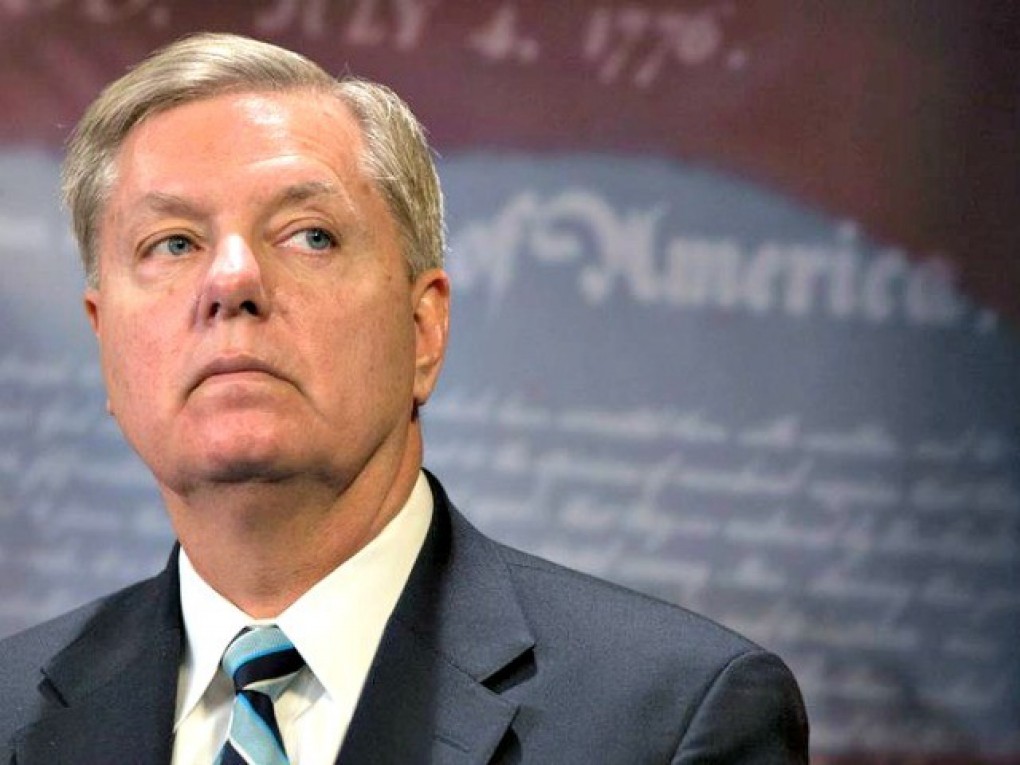
Lindsey Graham will formally launch his bid for president in the small South Carolina town where he grew up. His White House ambitions are rooted half a world away in the Middle East. When kicking off his campaign Monday, South Carolina’s senior senator is sure to blast President Barack Obama‘s withdrawal of troops from Iraq, insist on the need to strong-arm Iran over its nuclear program and work to subdue the violent Islamic State militants who have gained footholds in Iraq and Syria. Yet in the early days of the 2016 campaign for president, Graham has already gone further than most of his rivals for the GOP nomination in saying how he would tackle such problems, while acknowledging the potential costs of his strategy. Graham wants to put an additional 10,000-plus U.S. troops into Iraq, adding to the several thousand there now working as trainers and advisers only. He says it could take even more troops to stabilize the Middle East over time, adding “more American soldiers will die in Iraq and eventually in Syria to protect our homeland.” The Islamic State militants, Graham argued at a recent campaign stop, “want to purify their religion and they want to destroy ours and blow up Israel. Every day they get stronger over there, the more likely we are to get hit over here.” He added, “I don’t know how to defend this nation, ladies and gentlemen, with all of us sitting here at home.” It’s a calculated risk for the 59-year-old three-term senator and retired Air Force lawyer who surprised many when he began to hint earlier this year he would run for president. A February poll conducted by the Pew Research Center found 63 percent of adults backed some kind of military campaign against the Islamic State group, compared to 30 percent who disapprove. When asked about using ground troops, support dropped to 47 percent – with 49 percent opposed. Further, the same survey found Americans almost evenly divided on whether military force is “the best way to defeat terrorism” or whether it “creates hatred that leads to more terrorism.” Graham’s hawkish approach stands in stark contrast to his fellow U.S. senator and presidential candidate, Kentucky’s Rand Paul, who favors less military intervention abroad. It’s also notable for its specifics, especially his warning that U.S. troops are likely to perish in the Middle East as part of his approach. While New Jersey Gov. Chris Christie said in a recent speech in Georgia that “we should work with our allies that want to stand against ISIS,” he’s described that role as helping with the “weapons, equipment and training” needed for a “long fight.” Wisconsin Gov. Scott Walker says he’d “take the fight to them before they take the fight to us,” but he has yet to detail what that entails. Florida Sen. Marco Rubio, writing over the weekend in The Washington Post, said the U.S. should increase the number of American troops in Iraq, but unlike Graham, didn’t say how many ought to deploy. While Graham barely registers now in national polls that will be used to determine which candidates are invited to the GOP’s presidential primary debates beginning this summer, he argues Republican voters will reward him for his blunt talk about future American casualties. “Look, I know from polling that (national security) is the No. 1 issue in Iowa and New Hampshire” among likely GOP voters, he said. “And I’ve been more right than wrong,” he adds, noting that he was an early supporter of the troop “surge” in Iraq under President George W. Bush and was always critical of Obama’s effort to reduce the U.S. presence in Iraq. Graham hammers Obama for not playing a more active role in establishing a functioning, democratic government in Libya after revolutionaries toppled Moammar Gadhafi in 2011. And he insists that Obama’s work to reach a nuclear accord with Iran is in vain, because the Iranians are “liars” who won’t stick to whatever inspections and restrictions make up an eventual deal. “To the Iranians: You want a piece of a nuclear power program, you can have it,” Graham says as part of his standard campaign speech. “If you want a bomb, you’re not going to get it. If you want a war, you’re going to lose it.” After a pause, he adds, “There’s no other way to talk in the Mideast.” Republished with permission of The Associated Press.
Marco Rubio latest GOP hopeful to bow out of Iowa Straw Poll
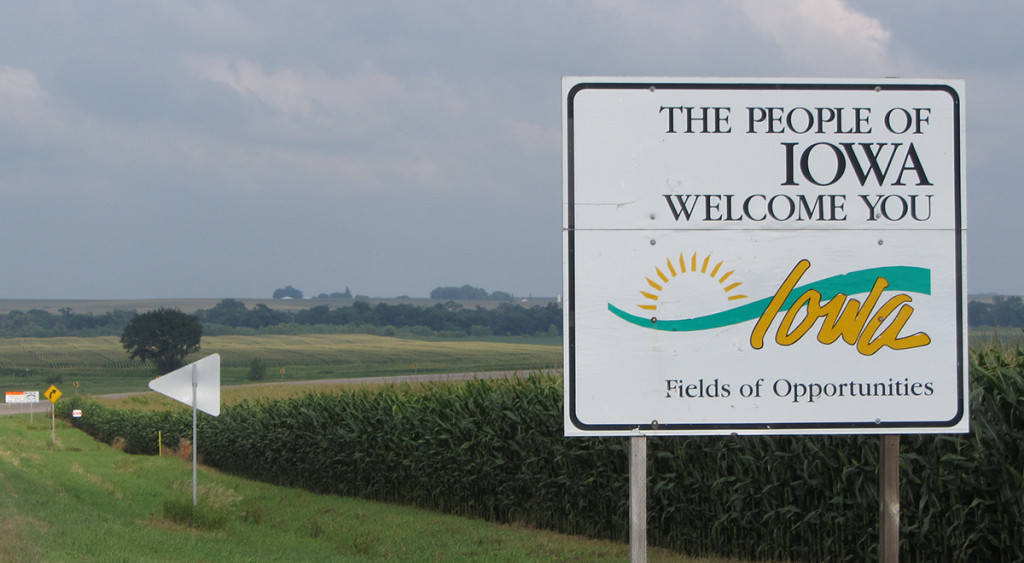
Sen. Marco Rubio will not be taking part in this year’s Iowa Straw Poll. The Florida Senator and announced Republican presidential candidate is joining Jeb Bush, Sen. Lindsey Graham and Mike Huckabee in bowing out of the once-prominent presidential campaign event. POLITICO reports that Rubio’s decision, confirmed by his campaign on Saturday, is just the latest blow to the event which had been a mainstay for the Republican presidential nomination process. Several other candidates, such as Gov. Scott Walker, Sens. Rand Paul and Ted Cruz, have not yet indicated whether they will take part in the poll, which is in early August. Alluding to the need to run a “lean campaign,” Alex Conant, Rubio’s communications director, told POLITICO they “will only spend money on contests that award delegates.” Bush also cited the “large financial costs” when he told reporters his campaign “doesn’t do straw polls.” In the latest Bloomberg Politics/Des Moines Register poll published on Saturday, about 17 percent of likely Republican caucus-goers favor Walker, with Paul and Ben Carson next at 10 percent each. Bush and Huckabee follow at 9 percent. Next are Rubio and Rick Santorum with 6 percent each. Both eventual GOP presidential nominees John McCain in 2008 and Mitt Romney in 2012 passed on the straw poll. The Iowa poll is two days after the first GOP debate in Cleveland and overlaps with the Atlanta RedState Gathering set for Aug. 6 to 9.
