
Super PACs rise in influence in 2016 campaign
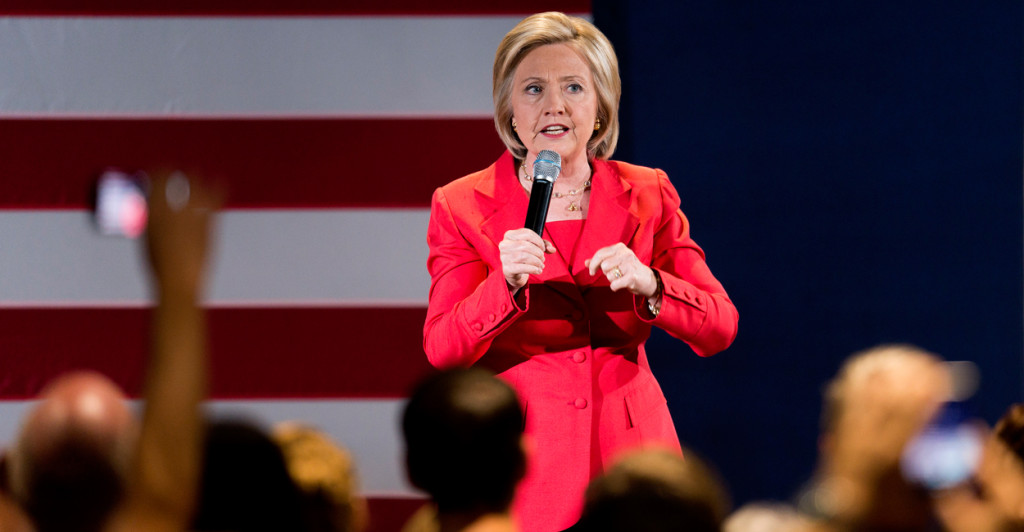
When Hillary Rodham Clinton takes the stage at fundraisers thrown by a group that wants to elect her president, she’s not presented as a White House candidate. She’s a “special guest.” When Jeb Bush raises money for a group preparing to run major parts of his all-but-certain presidential campaign, he doesn’t ask for the cash himself. And the hundreds of millions these groups will raise? They have to spend it without talking strategy with the candidates and campaigns they support. The groups are called super PACs, and their influence in selecting the next president will be without precedent. Born out of two Supreme Court decisions in 2010, they are governed by rules some see as a game of winks and nods, enforced by an agency bedeviled by partisan gridlock. As with most things in Washington, there’s not even agreement on whether they are a problem to solve, or are a solution to celebrate. “What’s really going on largely is a breakdown of the enforcement system of the campaign finance laws,” said Craig Holman of the left-leaning consumer group Public Citizen. “The Federal Election Commission is just broken.” Countered David Keating of the right-leaning Center for Competitive Politics, “I think this is overblown. The line has been drawn: It’s the First Amendment. So if people want to speak, let them.” The primary benefit for campaigns of the super PACs is that they can raise and spend unlimited amounts of money to advocate for and against candidates, with only a few rules holding them back. Among the rules is a ban on campaigns and super PACs working together. They cannot discuss political strategy or share key information such as internal polling. While candidates can attend super PAC events, they cannot technically ask for the unlimited donations that make the groups such a powerful force. “Most of these super PACs that are going to be spending millions of dollars, I think they have a good understanding of what the law is,” Keating said. But even should they break the rules, there are questions about what price they might pay. The six commissioners of the Federal Election Commission are split evenly between Republicans and Democrats, and they have only once cited someone for breaking the rules. In February, the campaign manager for a failed Virginia Republican congressional candidate pleaded guilty to funneling money illegally from a super PAC to bolster his campaign. Clinton has decried the existence of “unaccounted money” in politics and has suggested a constitutional amendment to overturn the case that helped usher in the new system. Yet during a California fundraising trip last week, she took her first steps to embrace Priorities USA Action, a Democratic super PAC that helped support President Barack Obama in 2012. Like other candidates, Clinton cannot legally ask donors to give more than $5,000 to the group. But she can appear as a “special guest.” Her husband, former President Bill Clinton, has headlined Priorities events in the past. On the Republican side, Bush is taking it even further. The former Florida governor is preparing to delegate many of the operations of his expected campaign to his allied Right to Rise super PAC, using the group to produce campaign ads, conduct voter data analysis and run get-out-the-vote efforts. Mike Murphy, one of Bush’s closest political advisers, is expected to lead the super PAC and is intimately involved in Bush’s current operation, where he guides staffing decisions, courts donors and shapes political strategy. Bush takes care to say he’s not yet a candidate, allowing him to work with Murphy and the super PAC in a way that won’t be allowed once he’s in the race. A dozen White House prospects are already benefiting from allied super PACs, frequently led by former political advisers and business partners. For example, Kentucky Sen. Rand Paul will benefit from a super PAC run by his former campaign manager, who is also married to Paul’s niece. Texas Sen. Ted Cruz‘s college roommate is working prominently in a network of four allied super PACs, while a longtime friend and financial backer, Dathan Voelter, is the treasurer. Voelter said the pro-Cruz groups have already raised more than $31 million. During his run for re-election in 2012, Obama never really warmed up to the super PAC world and the group supporting him, Priorities USA Action. He declined to appear at fundraising events even though his opponent, Republican Mitt Romney, frequently attended gatherings held by Restore Our Future, a pro-Romney super PAC. Seeking to succeed Obama in the White House, Clinton and her allies have taken steps recently to strengthen Priorities USA Action. Among them: She will appear at the group’s events and reach out to potential donors, something Obama declined to do. The group is also bringing aboard Guy Cecil, a former staff member of Clinton’s 2008 presidential campaign who remains close to Bill Clinton and previously worked for a firm stocked with longtime Clinton advisers. Republished with permission of The Associated Press.
GOP candidates divided over renewing USA Patriot Act
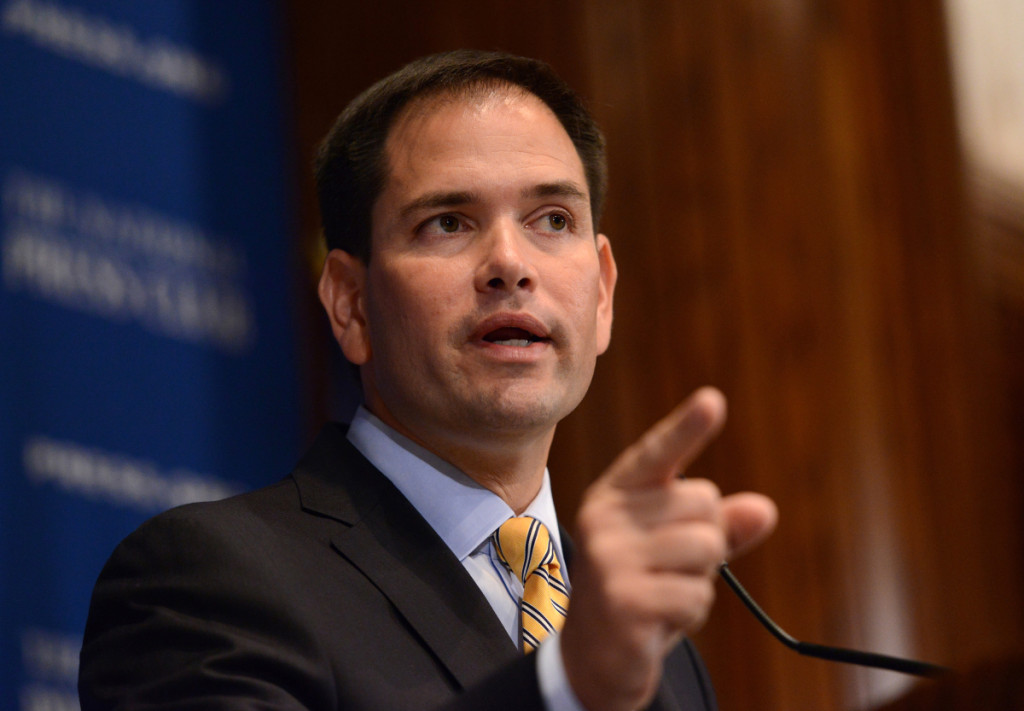
Republican senators eyeing the presidency split over the renewal of the USA Patriot Act surveillance law, with civil libertarians at odds with traditional defense hawks who back tough spying powers in the fight against terrorism. The political divide will be on stark display this month as Congress debates reauthorization of the post-Sept. 11 law ahead of a June 1 deadline. The broader question of privacy rights has gained attention since a former National Security Agency systems administrator, Edward Snowden, disclosed in 2013 that the NSA had been collecting and storing data on nearly every American’s phone calls for years. On one side, Sens. Marco Rubio of Florida and Lindsey Graham of South Carolina want Congress to permanently reauthorize parts of the law, giving the NSA much of its surveillance authority. If there were another attack, “the first question out of everyone’s mouth is going to be, `why didn’t we know about it?’” Rubio said this week in a speech on the Senate floor. “And the answer better not be, `because this Congress failed to authorize a program that might have helped us know about it.’” The rise of Islamic State militants, the continued threat from al-Qaida and the ongoing civil war in Syria have pushed national security to the forefront in the 2016 race for the GOP nomination, with some candidates determined to show their toughness. On NSA surveillance, however, Americans are wary of government intrusion. Sens. Ted Cruz of Texas and Rand Paul of Kentucky say the law infringes on citizens’ privacy. “They want nothing more than to keep the national security spy state growing until it tracks, traces and catalogues virtually every detail about every aspect of our lives,” Paul said in a campaign email to his supporters. “Once government bureaucrats know every aspect of our lives – what we watch, what we buy, what we eat, where we worship – it won’t be long until they try to run them `for our own good.’” Under the law, the NSA collects information on the number called and the date and time of the call, then stores it in a database that it queries using phone numbers associated with terrorists overseas. Officials say they don’t use the information for any other purpose, and that the legal powers that enable the program are essential to the hunt for terrorists. Opponents say the seizure and search of telephone company records violates Americans’ expectations of privacy under the Fourth Amendment. Adding a wrinkle to the debate was Thursday’s federal appeals court ruling that the bulk collection of Americans’ phone records is illegal. The court all but pleaded for Congress to sharpen the boundaries between security and privacy rights. The House is slated to vote next week on a bill to reauthorize the law while also ending the government’s dragnet collection of records, and Cruz has endorsed the measure, saying it “strikes the right balance between privacy rights and national security interests.” But Senate leaders, including Majority Leader Mitch McConnell, R-Ky., and Sen. Richard Burr, R-N.C., the chairman of the Intelligence Committee, have spoken forcefully for a competing measure to reauthorize the law as-is. Across Congress, the political divisions cut along complex lines. Libertarian-leaning Republicans like Cruz and Paul are aligned with many liberal Democrats, insisting that a secret intelligence agency should not be storing the records of every American phone call. But other Democrats and Republicans say the program is needed now more than ever given the Islamic State group’s determination to inspire terrorist attacks on American soil. Graham, the only one of the four who has not formally announced his candidacy, is siding with Rubio in favor of the NSA’s spy powers but competing with him for support among defense hawks. “I’m open-minded to doing reforms,” Graham told reporters Thursday. “I just don’t want to diminish the capacity of the program to prevent another 9/11. I believe if the program were in operation before 9/11, we probably would have prevented 9/11.” Sen. John McCain, the GOP’s 2008 presidential nominee, previewed one likely argument. He cited the incident in Texas last Sunday in which two gunmen were shot dead while trying to attack a provocative event that featured cartoon images of the Prophet Muhammad. In the aftermath, authorities described an alarming trend involving potential homegrown extremists with access to social media and possible exposure to Islamic State group propaganda. “We must do everything in our power to stop these attacks before they happen,” McCain, the Senate Armed Services Committee chairman, said. FBI Director James Comey said Thursday that although the bureau had opened a new investigation into one of the gunmen, Elton Simpson, agents had no reason to believe he was going to attack the event. Republished with permission of the Associated Press.
In South Carolina, a Republican scramble to stand-out
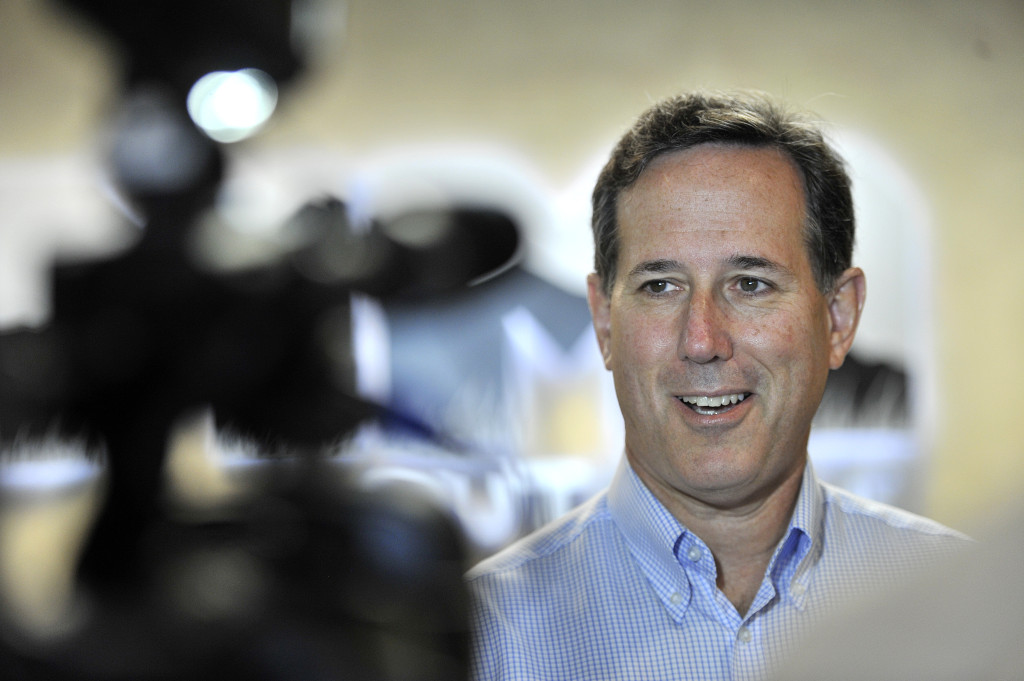
Republicans making their pitch to be the party’s 2016 presidential nominee aimed to out-do each other Saturday in arguing that President Barack Obama is a failed leader. But hitting Obama with the usual critiques – from his 2010 health care overhaul to allegations of missteps on foreign policy to the rise in the national debt during his time in office – also made it hard for the gaggle of White House aspirants to stand out during a forum in South Carolina hosted by the conservative group Citizens United. Wisconsin Gov. Scott Walker tried by touting his ability to beat whomever is nominated by the Democratic Party, reminding activists that he won three statewide elections in four years in a state twice carried by Obama. “The last time a Republican carried the state for president was 1984,” he said. “That’s a tough state.” He even took the crowd back to his decision to run for county executive in heavily Democratic Milwaukee County. “Never ever had there been a Republican in that spot before,” he said. Carly Fiorina, the former Hewlett-Packard CEO, continued her tactic of going straight at Hillary Rodham Clinton, the Democratic favorite for 2016. “She is not trustworthy, and she does not have a record of accomplishment,” Fiorina said. In an interview before his turn on stage, Louisiana Gov. Bobby Jindal pointed to his work on policy, saying he’s the only potential candidate in the field who has “spent the last 18 months coming up with detailed ideas on health care, on foreign policy, on energy.” Once on stage, Jindal spent considerable time touting his credentials as a social conservative, including his pushback against criticism from some in the business community over “religious liberty” laws that have become a flashpoint in the national debate over same-sex marriage. “Don’t even waste your breath trying to bully the governor of Louisiana,” Jindal said, repeating what he said was his message to corporate leaders. Rick Santorum, who won the Iowa caucuses in 2012 before fizzling out against eventual nominee Mitt Romney, warned that Republicans eager to retake the White House after Obama’s two terms in office must stay focused on reaching working-class voters. “We have to be a pro-worker party,” he said. “We have to be the party for a rising tide lifting all boats. There are millions and millions of Americans who have holes in those boats.” Florida Sen. Marco Rubio took a hard line on foreign policy, saying the nation must get tougher with terrorists. Adapting a line from the movie “Taken,” he said: “We will look for you. We will find you. And we will kill you.” Texas Sen. Ted Cruz trumpeted his unapologetic approach on Capitol Hill, where he helped engineer a partial government shutdown in 2013. And he told activists that they should compare his style with his rivals, all of whom insist they are conservative. “Have you had anyone up here today say, `I’m an establishment moderate who stands for nothing?’” he said. “So how do you tell the difference? The scriptures tell us, `You shall know them by their fruits.” That means, he said, asking candidates, “You say you believe these principles. When have you fought for them?” Former Texas Gov. Rick Perry let loose a series of broadsides at Obama and his policies, drawing cheers from the crowd for a withering critique that covered immigration, the Affordable Care Act, the Islamic State militant group and the federal budget. His bottom line: “We’ve seen gross incompetence. We’re here to declare that we’re not going to take it anymore.” Ben Carson, the retired neurosurgeon who, like Fiorina, announced his candidacy earlier this week, is running as the outsider. “I’m not a politician,” he said. “That’s what sets me apart.” Those not in South Carolina on Saturday included former Florida Gov. Jeb Bush, who delivered the commencement address at Liberty University in Virginia; Kentucky Sen. Rand Paul, who was campaigning in northern California; and former Arkansas Gov. Mike Huckabee, who was in South Carolina on Friday. Citizens United President David Bossie dismissed the idea that the large number of GOP candidates muddled their messages and called the wide field an advantage. “These men and women all believe in American exceptionalism,” Bossie said. He added that along with criticizing Obama, Republicans should focus their ire on Clinton – a point on which many in the crowd agreed. “Any one of them would be better than the disaster we’ve got now,” said Gary Gunderson of Abbeville, South Carolina. His wife, Margaret, chimed in: “Or Hillary.” Republished with permission of the Associated Press.
In South Carolina, a Republican scramble to stand out
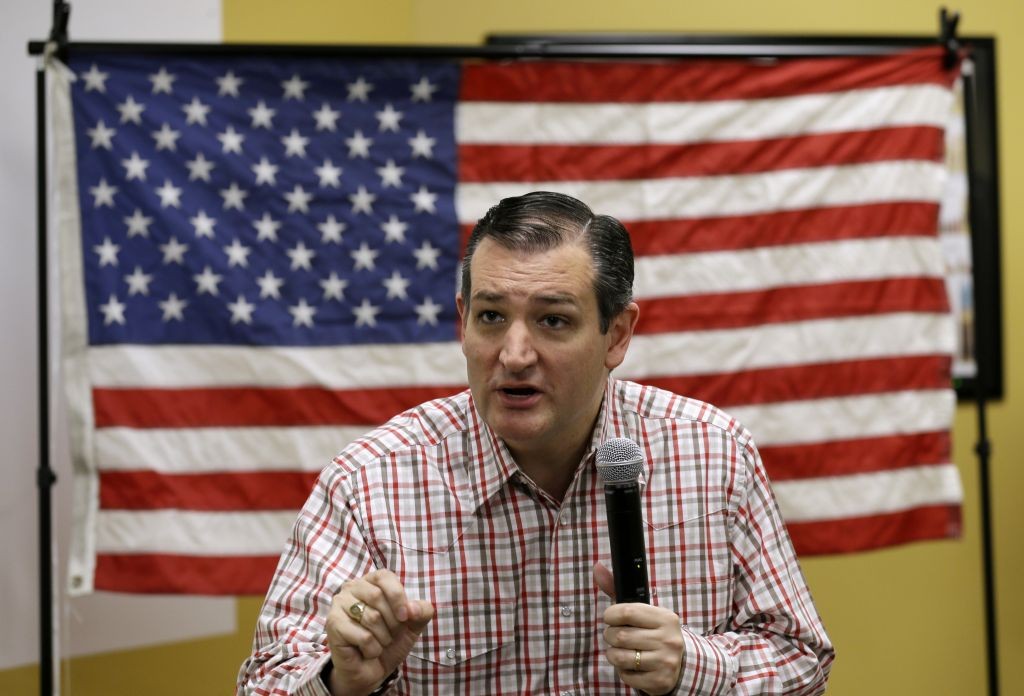
Republicans making their pitch to be the party’s 2016 presidential nominee aimed to out-do each other Saturday in arguing that President Barack Obama is a failed leader. But hitting Obama with the usual critiques — from his 2010 health care overhaul to allegations of missteps on foreign policy to the rise in the national debt during his time in office — also made it hard for the gaggle of White House aspirants to stand out during a forum in South Carolina hosted by the conservative group Citizens United. Wisconsin Gov. Scott Walker tried by touting his ability to beat whomever is nominated by the Democratic Party, reminding activists that he won three statewide elections in four years in a state twice carried by Obama. “The last time a Republican carried the state for president was 1984,” he said. “That’s a tough state.” He even took the crowd back to his decision to run for county executive in heavily Democratic Milwaukee County. “Never ever had there been a Republican in that spot before,” he said. Carly Fiorina, the former Hewlett-Packard CEO, continued her tactic of going straight at Hillary Rodham Clinton, the Democratic favorite for 2016. “She is not trustworthy, and she does not have a record of accomplishment,” Fiorina said. In an interview before his turn on stage, Louisiana Gov. Bobby Jindal pointed to his work on policy, saying he’s the only potential candidate in the field who has “spent the last 18 months coming up with detailed ideas on health care, on foreign policy, on energy.” Once on stage, Jindal spent considerable time touting his credentials as a social conservative, including his pushback against criticism from some in the business community over “religious liberty” laws that have become a flashpoint in the national debate over same-sex marriage. “Don’t even waste your breath trying to bully the governor of Louisiana,” Jindal said, repeating what he said was his message to corporate leaders. Rick Santorum, who won the Iowa caucuses in 2012 before fizzling out against eventual nominee Mitt Romney, warned that Republicans eager to retake the White House after Obama’s two terms in office must stay focused on reaching working-class voters. “We have to be a pro-worker party,” he said. “We have to be the party for a rising tide lifting all boats. There are millions and millions of Americans who have holes in those boats.” Florida Sen. Marco Rubio took a hard line on foreign policy, saying the nation must get tougher with terrorists. Adapting a line from the movie “Taken,” he said: “We will look for you. We will find you. And we will kill you.” Texas Sen. Ted Cruz trumpeted his unapologetic approach on Capitol Hill, where he helped engineer a partial government shutdown in 2013. And he told activists that they should compare his style with his rivals, all of whom insist they are conservative. “Have you had anyone up here today say, ‘I’m an establishment moderate who stands for nothing?’” he said. “So how do you tell the difference? The scriptures tell us, ‘You shall know them by their fruits.” That means, he said, asking candidates, “You say you believe these principles. When have you fought for them?” Former Texas Gov. Rick Perry let loose a series of broadsides at Obama and his policies, drawing cheers from the crowd for a withering critique that covered immigration, the Affordable Care Act, the Islamic State militant group and the federal budget. His bottom line: “We’ve seen gross incompetence. We’re here to declare that we’re not going to take it anymore.” Ben Carson, the retired neurosurgeon who, like Fiorina, announced his candidacy earlier this week, is running as the outsider. “I’m not a politician,” he said. “That’s what sets me apart.” Those not in South Carolina on Saturday included former Florida Gov. Jeb Bush, who delivered the commencement address at Liberty University in Virginia; Kentucky Sen. Rand Paul, who was campaigning in northern California; and former Arkansas Gov. Mike Huckabee, who was in South Carolina on Friday. Citizens United President David Bossie dismissed the idea that the large number of GOP candidates muddled their messages and called the wide field an advantage. “These men and women all believe in American exceptionalism,” Bossie said. He added that along with criticizing Obama, Republicans should focus their ire on Clinton — a point on which many in the crowd agreed. “Any one of them would be better than the disaster we’ve got now,” said Gary Gunderson of Abbeville, South Carolina. His wife, Margaret, chimed in: “Or Hillary.” Republished with permission of the Associated Press.
Mitt Romney Utah retreat to draw GOP presidential candidates
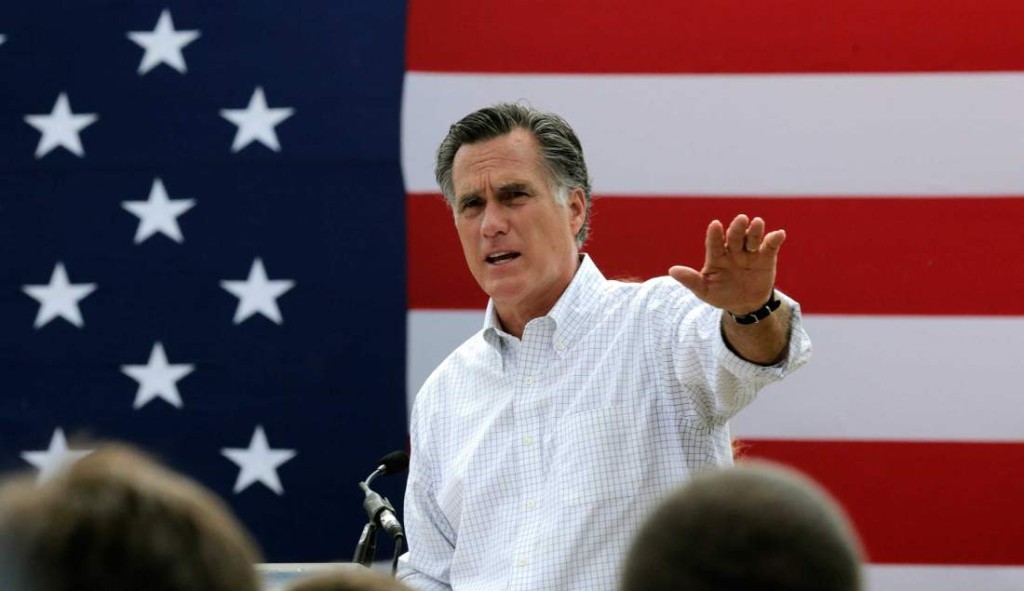
Former Republican presidential candidate Mitt Romney will again host a retreat in Utah for high-profile political figures, business leaders and campaign donors. Romney’s team sent out invitations Thursday for the fourth Experts and Enthusiasts Summit that will be held June 11-13 at the Deer Valley resort in Park City. The Salt Lake Tribune reports among confirmed attendees are five current or potential Republican presidential candidates: Florida Sen. Marco Rubio, Wisconsin Gov. Scott Walker, New Jersey Gov. Chris Christie, Ohio Gov. John Kasich and South Carolina Sen. Lindsey Graham. A summit staff member said former Florida Gov. Jeb Bush was invited, but was unable to make it because of an earlier scheduled trip to Europe. Romney launched the summit to maintain his political network after the 2012 presidential election. Republished with permission of The Associated Press.
Social conservatives a la Rick Santorum, Mike Huckabee stand to win Alabama in 2016
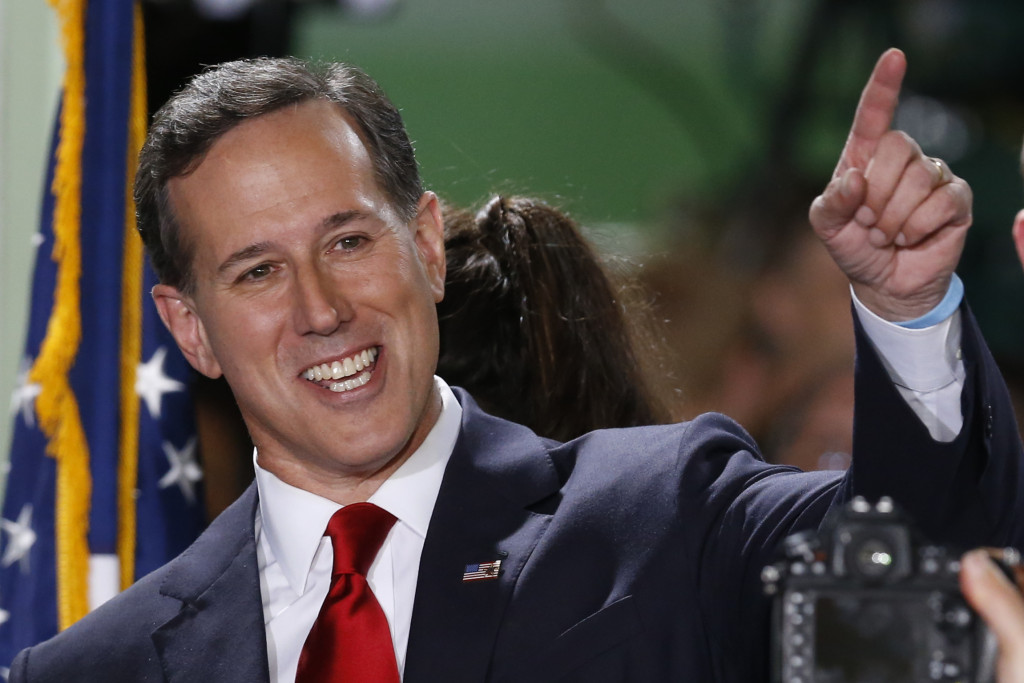
While top-tier candidates Marco Rubio, Jeb Bush and Scott Walker have never before faced the Alabama electorate, it’s safe to say that more socially conservative alternatives to the frontrunners stand to do well here in the 2016 Republican presidential primary, if history is any indication. In 2012 it was Rick Santorum who won the hearts and minds of Alabama’s GOP primary voters, capturing fully 35 of the state’s 67 counties on his way to a 6-point victory over runners-up Newt Gingrich and Mitt Romney, who each took 29 percent of the vote to Santorum’s 35. Santorum has yet to make up his mind another bid for the White House. If he opts not to, the natural beneficiaries would likely be former Arkansas Gov. Mike Huckabee and retired neurosurgeon Ben Carson, both darlings of the conservative radio and press outlets that are often decisive in Deep South presidential politics. The relatively low totals Alabama voters gave Romney, a heavy favorite to win the nomination by the state’s late-ish March 13 primary, represented a rejection of the “establishment” candidate, a mantle especially likely to fall to Walker or Bush. Despite a controversial open primary system throughout the state, 80 percent of Alabama primary voters in 2012 indicated they were supportive of the Tea Party, a trait strongly tied to success for Santorum’s campaign that year. The former Pennsylvania Senator also took home a plurality of 2012 convention delegates in Kansas, North Dakota, Tennessee, Oklahoma and Mississippi. Kentucky Sen. Rand Paul‘s campaign has been careful to keep his father Ron Paul at some distance, likely a wise choice here in Alabama: Congressman Paul pulled in just 5 percent of ballots cast in the state in 2012, around half his national average among all primary states. Three quarters of 2012 state primary voters also identified as “white evangelical or white born-again Christians,” a demographic in which strongly pro-life and pro-gun candidates like Huckabee and Santorum excel. Should Santorum announce he would be considered a frontrunner here, though the dynamics of who would win which slice of an ever-shifting GOP body politic is still very much an open question.
GOP field grows: Carly Fiorina, Ben Carson to launch presidential bids
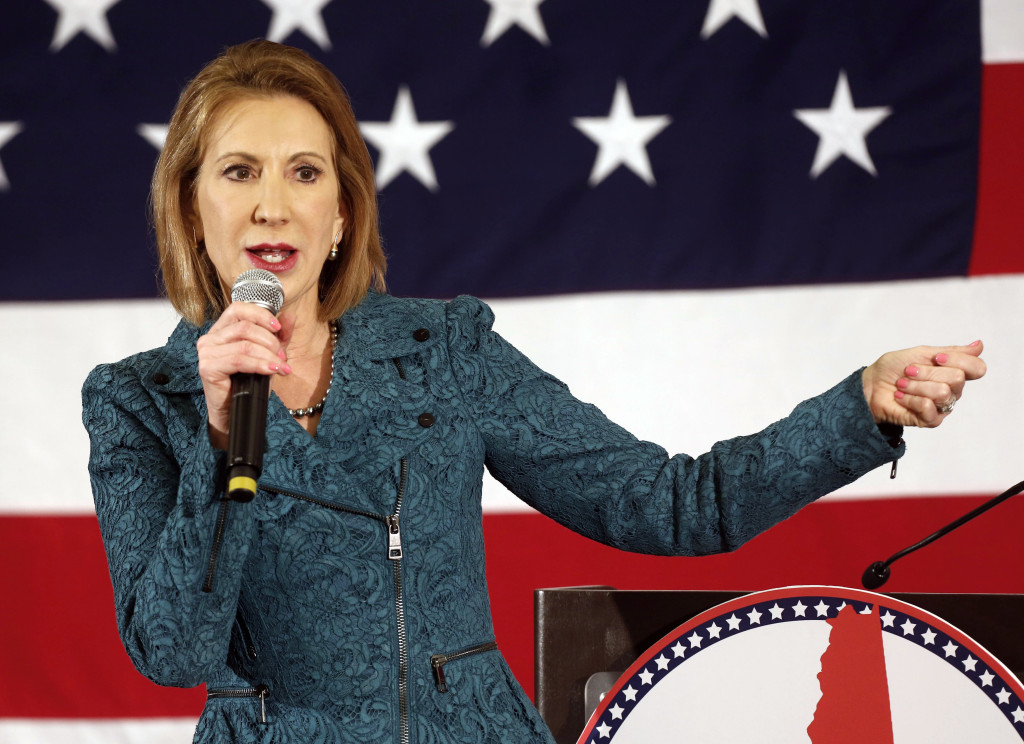
Former technology executive Carly Fiorina and retired neurosurgeon Ben Carson are set to launch their runs for president on Monday, each with the potential to help the Republican Party win over a more diverse group of supporters in 2016. Fiorina is likely to be the only prominent woman to seek the GOP nomination, with Carson the only likely African-American. They are both also political outsiders in a field likely to be dominated by governors, former governors and senators. The two are not considered political allies and the timing of their announcements, planned weeks ago, is coincidental. Carson also got ahead of himself on Sunday, confirming his plans to run in an interview that aired on an Ohio television station. “I’m willing to be part of the equation and therefore, I’m announcing my candidacy for president of the United States of America,” he told WKRC-TV in Cincinnati. Carson, 63, is scheduled to make his formal announcement Monday in a speech from his native Detroit shortly after having breakfast at a local museum of African-American history. Fiorina, 60, will enter the race Monday morning in a video posted online. Both candidates begin the race as underdogs in a campaign expected to feature several seasoned politicians, among them former Florida Gov. Jeb Bush, Wisconsin Gov. Scott Walker, along with Florida Sen. Marco Rubio and Texas Sen. Ted Cruz. Yet while they have claimed much of the early attention and favor from donors, the GOP race is a wide-open contest that could ultimately feature as many as two dozen major candidates. The Republican field is already more diverse than it was four years ago. Fiorina and Carson will compete against Republican counterparts Rubio and Cruz, each vying to become the first Hispanic president. And most of the candidates are in their 40s and 50s. Still, the Republican National Committee has acknowledged a pressing need to broaden the party’s appeal beyond its traditional base of older, white men. President Barack Obama won re-election in 2012 with the strong support of women and ethnic minorities, who are becoming a larger portion of the American electorate. Raised in Detroit by a single mother, Carson practiced medicine and served as the head of pediatric neurosurgery for close to three decades at Baltimore’s Johns Hopkins Children’s Center. He gained national renown in conservative politics after condemning Obama’s health care law at the 2013 national prayer breakfast. He has established a strong base of vocal support among Tea Party-backers, some of whom launched an effort to push Carson into the race before he set up an exploratory committee earlier this year. Yet he has stumbled at times in the glare of national politics. He has suggested the Affordable Care Act is the worst thing since slavery, compared present-day America to Nazi Germany, and called problems at the nation’s Veterans Affairs hospitals “a gift from God” because they revealed holes in country’s effort to care for former members of the military. Fiorina, meanwhile, has a resume more likely to draw support among the Republican establishment. The former chief executive of Hewlett-Packard Co., she became a prominent figure in Republican politics in 2010, when she ran for Senate in California and lost to incumbent Sen. Barbara Boxer by 10 points. In the past several months, she has emerged as a fierce critic of Hillary Rodham Clinton, the front-runner for the Democratic nomination, whose potential to become the nation’s first female president is a centerpiece of her political brand. Both Carson and Fiorina immediately launch national tours in early voting states. Carson is scheduled to spend the first three days of his presidential campaign in Iowa, before heading to South Carolina at the end of the week and New Hampshire and Nevada the next. Fiorina’s first post-announcement public event is scheduled for Tuesday in New York City, although she will campaign in Iowa, New Hampshire and South Carolina by week’s end. Republished with permission of The Associated Press. Photo Credit: Jim Cole, AP
Problems facing poor inch into 2016 presidential race

In a presidential campaign where candidates are jockeying to be champions of the middle class and asking wealthy people for money, the problems facing the poor are inching into the debate. Tensions in places such as Baltimore and Ferguson, Mo., have prompted candidates to explore the complicated relationship between poor communities and the police, and the deep-seated issues that have trapped many of the 45 million people who live in poverty in the United States. But addressing the long-running economic, education and security troubles in underprivileged neighborhoods is a challenge with few easily agreed-upon solutions. A frustrated President Barack Obama challenged the nation to do “some soul-searching” after riots in Baltimore followed the death of 25-year-old Freddie Gray in police custody. There have been other deadly altercations between police and black men or boys in Ferguson, New York’s Staten Island, Cleveland and North Charleston, S.C. “I’m under no illusion that out of this Congress we’re going to get massive investments in urban communities,” Obama said. “But if we really want to solve the problem, if our society really wanted to solve the problem, we could.” To some of the Republicans running to replace Obama, his call for spending more money in poor areas underscores the problem with many current anti-poverty programs. The GOP largely opposes new domestic spending and party officials often say federally run programs are bloated and inefficient. “At what point do you have to conclude that the top-down government poverty programs have failed?” said Jeb Bush, the former Florida governor and expected presidential candidate. “I think we need to be engaged in this debate as conservatives and say that there’s a bottom-up approach.” Republicans have struggled in recent years to overcome the perception that the party has little interest in the plight of the poor. Mitt Romney, the GOP presidential nominee in 2012, was criticized for saying he was “not concerned about the very poor” and that it was not his job to worry about the 47 percent of Americans who he said “believe that government has a responsibility to care for them.” More than 60 percent of voters who made less than $30,000 per year backed Obama over Romney in that campaign, according to exit polls. Blacks and Hispanics, who overwhelmingly backed Obama in the past two presidential elections, are most likely to be poor. According to the census, about 27 percent of blacks and 25 percent of Hispanics were poor in 2012, compared with 12.7 percent of whites. Bush has been among the most vocal Republicans discussing the need to lift the poor out of poverty and reduce income inequality, though he has yet to flesh out many of his policy proposals. He has been most specific about the need for greater educational choices and opportunities. Bush frequently cites his work in Florida, where he expanded charter schools, backed voucher programs and promoted high testing standards. Kentucky Republican Sen. Rand Paul has long called for overhauling criminal sentencing procedures that he says disproportionately imprison low-income black men. He has promoted “economic freedom zones” where taxes would be lowered in areas with high long-term unemployment in order to stimulate growth and development. Paul, who has made a point of reaching out to black communities, has drawn criticism for comments he made during the Baltimore unrest. In a radio interview, Paul said he had been on a train that went through the city and was “glad the train didn’t stop.” Sen. Marco Rubio of Florida also has talked frequently about the poor. His anti-poverty proposals include consolidating many federal programs to help the poor into a “flex fund” that states would then manage. Democrats, too, are trying to incorporate plans for tackling poverty into economic campaign messages that otherwise center on the middle class. After the Baltimore turmoil, Hillary Rodham Clinton made a plea for criminal justice changes that could aid urban communities. Among her ideas: equipping every police department with body cameras for officers. She said the unrest was a “symptom, not a cause” of what ails poor communities and she called for a broader discussion of the issues. Former Maryland Gov. Martin O’Malley, who is expected to challenge Clinton for the Democratic nomination, has been at the center of the discussions about Baltimore’s issues. He was mayor from 1999 to 2007 and enacted tough-on-crime policies. While O’Malley is not backing away from those practices, he is trying to put criminal justice issues in a larger context. He wrote in an op-ed that the problem in Baltimore and elsewhere is as much about policing and race as it has about “declining wages and the lack of opportunity in our country today.” In some places that have dealt with recent unrest, residents say they welcome the campaign discussions on poverty and policing, but hope the issues will not fade away when the next big campaign focus arises. “Hopefully these protests are something they’ll wrap themselves around, and we can make sure these issues get addressed,” said Thavy Bullis, a Baltimore college student. Republished with permission of The Associated Press. Photo Credit: Wiki Commons
In S.C., Jeb Bush and other GOP hopefuls run against Obama, terrorism
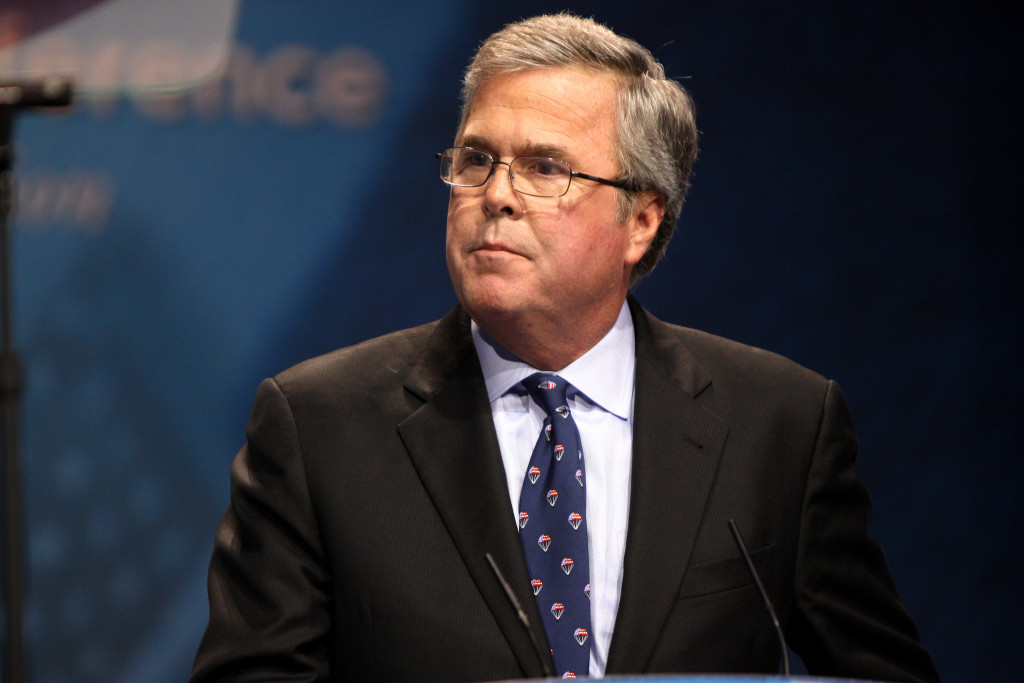
Republican presidential hopefuls eventually will have to start running against each other. But, for now, many are content to run against President Barack Obama, Iran and Middle East extremists. At the South Carolina Republican convention, Jeb Bush, the former Florida governor, called the president’s international stewardship “an unmitigated disaster. Former Pennsylvania Sen. Rick Santorum called Obama “weak.” Rick Perry, Texas’ former governor, blasted “vacillation” by the administration. Sen. Lindsey Graham of South Carolina called the president “feckless” on the world stage. And Graham and Sen. Ted Cruz of Texas echoed each other as they accused Obama of “leading from behind.” All five pledged loyalty to Israel and expressed varying levels of disdain for Iran. The rhetoric — similar to what other potential GOP nominees are saying in early voting states — plays well at GOP venues where Obama is a reviled figure: the audience whooped, hollers and occasionally shouted “Amen” in response to the candidates. The approach also allows potential Republican nominees an easy transition into attacking former Secretary of State Hillary Rodham Clinton, the favorite for the Democratic nomination. “Hillary Clinton is not going to be the person to lead us to a more stable future,” Bush said. “She has her fingerprints on all these foreign policy disasters.” The question, eight months before voters in Iowa, New Hampshire and South Carolina start the nomination process, is whether any candidate can use promises of an aggressive foreign policy to distinguish themselves in a crowded field. They certainly tried, as they spoke over two days to hundreds of activists who will help shape the primary outcome here. Several couched their pitches in religion, particularly in their condemnation of the Islamic State group. “The great issue of our time is a battle between western values of freedom and this totalitarian world view of Islamic fanatics,” Perry said. Graham, at a breakfast he hosted for delegates, said, “They want to purify their religion and they want to destroy ours.” Santorum went further, noting the public killings broadcast by Islamic State militants. “This is not a modern Islam,” he said. “It’s a 7th century Islam. So I have a suggestion: Let’s bomb them back to the 7th century.” Bush didn’t explicitly mention religion but played up his support for Israel, which many conservative American Christians view as the modern inheritors of the Old Testament covenant between the Judeo-Christian God and the ancient Israelites. “The basic policy should be our friends know we have their back over the long haul, and our enemies need to fear us again,” Bush said. Graham, the home-state senator who has surprised many local supporters by considering a presidential bid, argued that the distinguishing component of the GOP’s foreign policy discussions will be experience and past leadership. He noted that he was an outspoken proponent of the troop surge in Iraq under President George W. Bush and that he criticized troop reductions in the region under Obama, saying the president was “fulfilling a political promise that never made sense.” “I’ve been to Afghanistan 23 times since 9/11,” Graham said, adding that he would “listen to the commanders on the ground” rather than “pollsters.” Already having clashed with Kentucky Sen. Rand Paul, who takes a more skeptical view of American involvement abroad, Graham said he will continue pushing an aggressive, specific foreign and military policy debate within the party. He stopped short, however, of saying that the governors and former governors in the race are too inexperienced in world affairs. Florida Sen. Marco Rubio, who has already launched his formal campaign, had created a stir in recent days when he told the Des Moines (Iowa) Register that governors can “read about foreign policy” but aren’t as actively engaged in it as senators. Republished with permission of the Associated Press.
Jeb Bush, Hillary Clinton on different paths for early fundraising
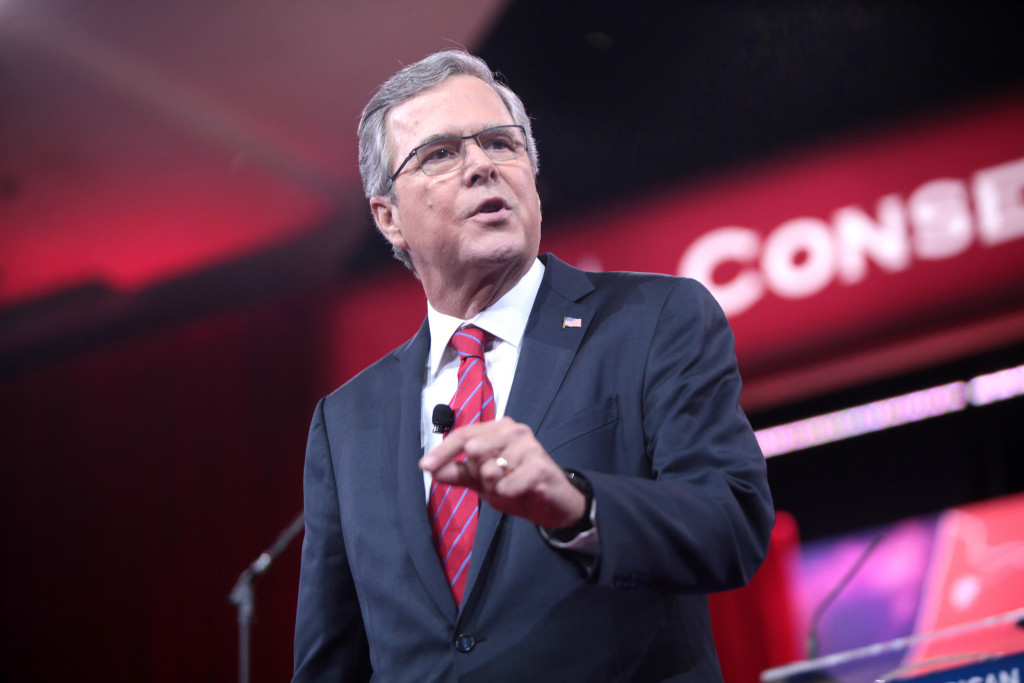
Jeb Bush wants Republicans to know he’s breaking fundraising records. Hillary Rodham Clinton wants Democrats to think she won’t. While many Republicans expect Bush to have raised $100 million by the time he declares his candidacy, Clinton advisers say that’s their modest goal for the entire primary season. The reality is that both campaigns will be flush with high-dollar donors. Bush and Clinton could each pull in more than $1 billion if they become their party’s nominee. But the disparate early signals Bush and Clinton are sending about campaign cash underscore the contrasting ways the heirs to two political families are positioning themselves in the 2016 presidential contest. For Bush, building a fundraising juggernaut is seen as a way to surge ahead of rivals while ensuring he has the money to stay competitive if the race drags on into next spring or summer. The former Florida governor isn’t expected to launch his campaign until at least June, giving him more time to raise money aggressively for his Right to Rise super PAC before he’s legally barred from coordinating with the organization. For Clinton, who so far faces no serious primary competition, lowering fundraising expectations is a bid to dispel the notion that she is her party’s inevitable nominee. She’s holding a smattering of lower dollar campaign fundraisers, with tickets running $2,700 per person, during the next two weeks. Clinton had originally planned to wait until May to start fundraising, but told advisers she was concerned about the prowess of Bush’s money operation and wanted to start sooner, according to a person familiar with the campaign plans. That person was not authorized to discuss the campaign’s plans and insisted on anonymity. Clinton has so far taken no direct action to bolster the Democratic super PAC, Priorities USA Action, nor has she signaled to supporters that they should be funneling money to it. Instead, the Clinton campaign is trying to infuse its fundraising operation with more of a grassroots feel. Top donors are being asked to call and email their contacts, then track their contributions on personalized fundraising pages. There’s a greater emphasis on attracting smaller donors, something President Barack Obama did effectively during his two campaigns. “It’s good politics,” said Ira Leesfield, a Miami lawyer and longtime Clinton financial backer. “If a person sends 100 bucks, 50 bucks, they’re probably going to go out and vote.” Another benefit for skipping opulent fundraising parties? “No one has to hire a caterer,” Leesfield quipped. Bush invited more than 300 donors to Miami’s glamorous South Beach this week for a private two-day retreat at an eco-friendly seaside hotel. Donors received policy briefings from Bush advisers and mingled at a rooftop cocktail party. Bush, who has headlined more than 60 fundraisers this year, told donors he had set a record for Republican political fundraising. Right to Rise doesn’t plan to release any fundraising numbers until July and Bush did not provide donors a figure to back up his assertion. Advisers said Bush was comparing his current totals with the $37 million his brother George W. Bush raised in the first four months of the 2000 campaign, before the era of super PACs and unlimited donations. It appears likely Bush will hit $100 million by the time his super PAC releases figures this summer. While most Republican strategists expect Bush to lead his rivals in the early fundraising race, it’s unclear how significant his advantage will be. Sens. Marco Rubio of Florida, Ted Cruz of Texas and Rand Paul of Kentucky have all displayed fundraising prowess. And some billionaire donors are yet to commit to a candidate. Without the big gang of rivals, Clinton sees little incentive in focusing on fundraising at this stage, at least publicly. Her finance team has set a $100 million goal for the primary and does not plan to take general election money initially. During her failed 2008 race against Obama, Clinton raised $229 million before bowing out of the primary, though some of that money was allocated for the general election. Clinton’s first campaign predated the 2010 Supreme Court decision clearing the way for super PACs to collect unlimited donations. Priorities USA raised about $75 million for Obama’s re-election, significantly less than Republican outside groups. But it attracted attention for aggressive advertisements criticizing Republican nominee Mitt Romney‘s business record, sometimes relying on cheaper online ad buys or free media, rather than purchasing extensive — and expensive — TV time. Priorities USA officials say they expect the organization to keep a narrow focus on television and digital advertisements during the 2016 contest. Bush, meanwhile, is considering a plan that would shift some core campaign functions to his super PAC. Republished with permission of The Associated Press.
Democrats’ edge among younger voters shrinking, Harvard poll finds
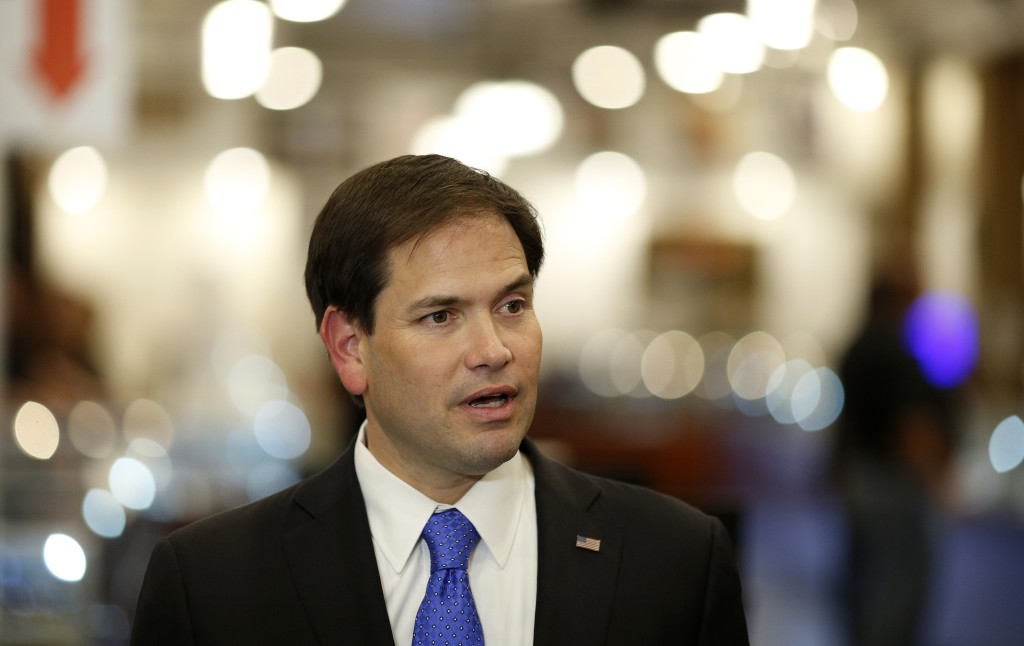
When it comes to building winning electoral coalitions, everybody knows people under 40 are among the most reliable voters Democrats have in their pockets. Republicans often don’t even even waste their time trying to cultivate support there, instead focusing on programs like Social Security and “tough on crime” law-and-order issues. That increasingly isn’t the case anymore, though. A new poll conducted by Harvard University social scientists shows that while Democrats’ edge among young people persists, it has shrunk considerably. And trends indicate it will continue to do so. Writes Nick Corasaniti in The New York Times: Indeed, 55 percent of those polled, which included likely voters from ages 18 to 29, preferred a Democrat to maintain control of the White House in 2016, compared to 40 percent who wanted a Republican. But that is a far cry from the 67 percent of millennials who voted for President Obama in 2012. The I.O.P. nationwide poll was conducted online by GfK March 18 to April 1 with a random sample of 3,034 adults aged 18 to 29. The margin of sampling error is plus or minus 3 percentage points. “The margin at the moment looks much more like the 2004 race than the Obama campaigns,” said John Della Volpe, the director of polling at the Institute of Politics at Harvard. “If Republicans can hold the Democrat nominee to less than 60 percent of the young vote nationally, their chances are dramatically improved for a Republican electoral college win, in my opinion. While that doesn’t mean Jeb Bush or Marco Rubio is going to cobble together a majority led by young voters, it does mean that the issue arrangement of candidates around hot button issues is likely to shift in unorthodox ways in the near future. And for Democrats, it means running a full court press during the 2016 cycle to tighten the screws on their big tent for millennials, with an emphasis on Obama for America style get-out-the-vote efforts. Writes Corasaniti: Thirty-six percent said they “don’t know” who would be their top choice, and no candidate or potential candidate was able to get more than 10 percent of the millennials surveyed to name them as their top choice. Hillary Rodham Clinton is a favorite among young Democrats, with 47 percent calling her their top choice, although 28 percent also remain undecided. Turning these voters out will be a crucial to Mrs. Clinton as she seeks to build upon the coalition that propelled Mr. Obama to two victories. A study after the 2012 election by Tufts University found that the youth vote helped drive Mr. Obama to victory particularly in four critical swing states: Florida, Ohio, Pennsylvania and Virginia. Had Mr. Romney split the youth vote in those states, he could have won each of them.
Jeb Bush: Give 11 million immigrants chance to stay
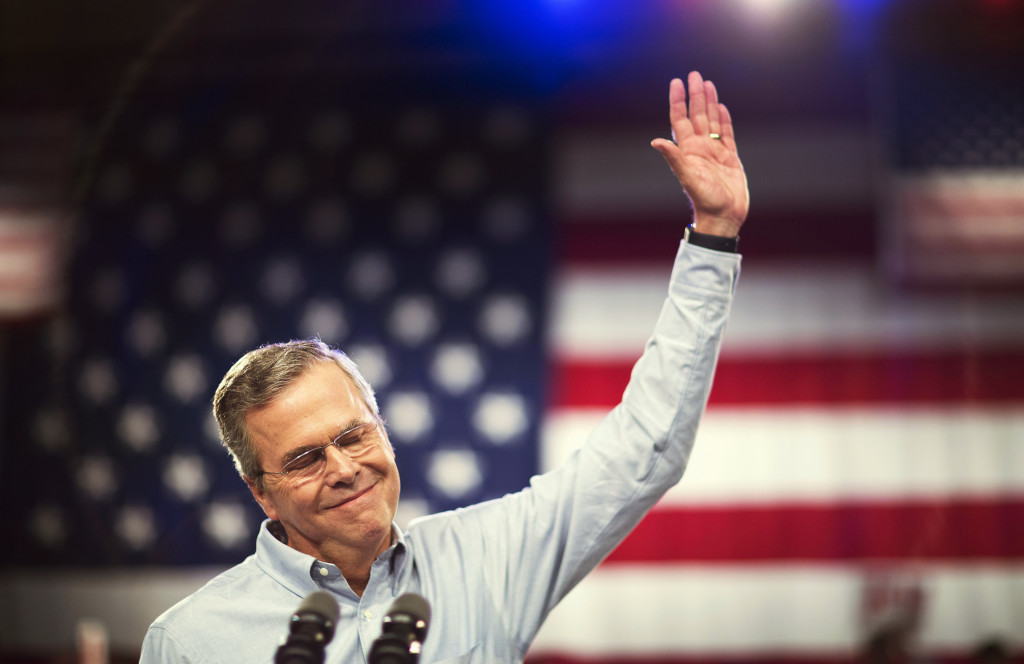
Former Florida Gov. Jeb Bush declared Wednesday that 11 million immigrants in the country illegally should have an opportunity to stay, wading yet again into his party’s contentious immigrant debate. In tone and substance, Bush stands out among the many Republicans lining up for the GOP’s next presidential primary, where conservatives who oppose an immigration overhaul often hold outsized influence. As he moves toward a presidential campaign, the brother and son of former presidents has not backed away from his defense of immigrants in the country illegally and a policy that would allow them to attain legal status under certain conditions. “We’re a nation of immigrants,” Bush said at the National Christian Hispanic Leadership Conference that brought several hundred Hispanic evangelical leaders to Houston this week. “This is not the time to abandon something that makes us special and unique.” A successful immigration overhaul is more than simply strengthening the border, Bush said, referring to “11 million people that should come out from the shadows and receive earned legal status.” He said such immigrants should be required to pay taxes, work and not receive government benefits. Republicans have struggled to win over the nation’s surging Hispanic population in recent years. Not since the 2004 re-election campaign of President George W. Bush, Jeb Bush’s older brother, has a Republican presidential candidate earned as much as 40 percent of the Hispanic vote. Mitt Romney earned a dismal 27 percent in losing what was widely considered a winnable 2012 contest. Bush’s mother and father, former President George. H.W. Bush and first lady Barbara Bush, were on hand for the speech. It was Jeb Bush’s second Hispanic outreach event this week. He spent Tuesday campaigning in Puerto Rico, a U.S. territory that will hold a presidential primary contest, yet is not included in the Electoral College that decides the general election. At both stops, Bush moved seamlessly from English to Spanish in remarks that highlighted his deep personal connections to Hispanic culture. He opened his Houston speech in Spanish, referring to the crowd of Hispanic Christians as “the hope of this country.” And as he often does in public appearances, Bush recounted the story of meeting his Mexican-born wife, Columba, while studying in Mexico. It was Columba’s influence, he said, that pushed him to obtain a degree in Latin American studies and later spend about two years living in Venezuela early in his business career. Bush converted to Catholicism after moving to Miami. The Democratic allied group, EMILY’s List, issued a statement shortly before Bush’s appearance charging that his platform “hinders the ability for Latinas to make personal health choices and their economic security.” Bush, his advisers said, say he supports efforts to strip federal financing from Planned Parenthood because of its connection to abortion services. To be sure, Bush is not completely in step with activists who want accommodations made for people illegally in the U.S. Like other Republican presidential prospects, he has said he would overturn President Barack Obama‘s executive order shielding millions of immigrants from deportation. Yet Bush was received warmly by the Hispanic crowd in Houston. He was introduced as someone who understands Hispanic culture and literally speaks its language. Of the large field of likely Republican White House prospects, only Florida Sen. Marco Rubio also speaks fluent Spanish. Bush said the nation’s economy depends on a restructured immigration system. “This country does not do well when people lurk in the shadows,” Bush said. “This country does spectacularly well when everybody can pursue their God-given abilities.” Organizers say Rubio was invited to address the conference, but declined because of a scheduling conflict. Former Arkansas Gov. Mike Huckabee was scheduled to appear Wednesday night. Republished with permission from The Associated Press.
