
Lawmakers struggling to develop a response to Donald Trump, Vladimir Putin
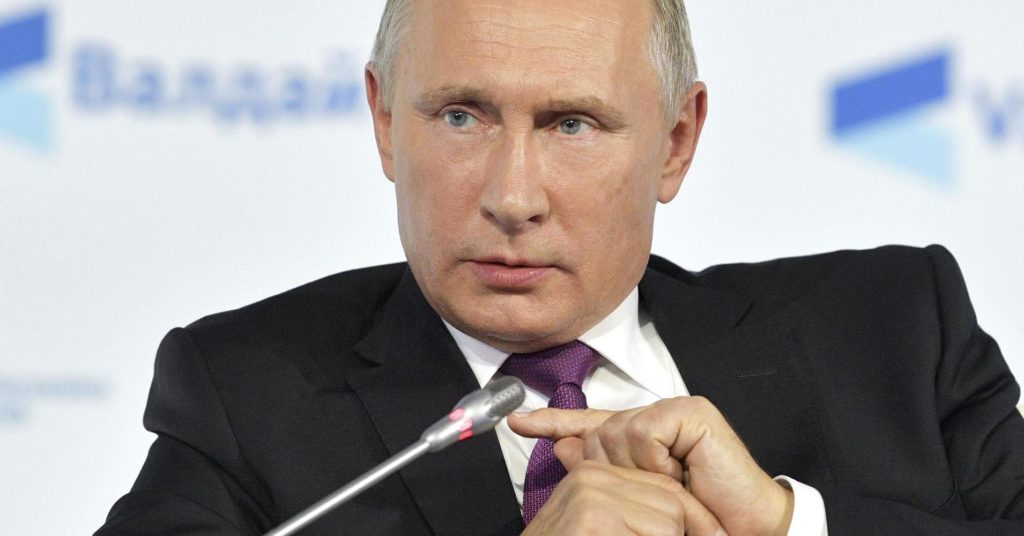
Congress is producing an unusual outpouring of bills, resolutions and new sanctions proposals to push back at President Donald Trump’s approach to Vladimir Putin, shore up relations with NATO allies and prevent Russian interference in the midterm election. But it remains uncertain if any of their efforts will yield results. Lawmakers are struggling with internal party divisions as well as their own onslaught of proposals as they try to move beyond a symbolic rebuke of Trump’s interactions with the Russian president and exert influence both at home and abroad. And while many Democrats are eager for quick votes, some Republicans prefer none at all. As Trump and Putin weigh another face-to-face meeting, lawmakers in both parties — particularly in the Senate — appear motivated to act. Senate Majority Leader Mitch McConnell issued a rare warning that Russia “better quit messing around” in U.S. elections as he tasked two Senate committees to start working on sanctions-related legislation and other measures to deter Russia. In the House, Speaker Paul Ryan joined McConnell in saying that Putin would not be welcome on Capitol Hill, though he did not push forward any Russia-related legislation before his chamber recessed for August. Still, the past few weeks have been one of the rare moments in the Trump era that Republicans and Democrats have jointly asserted the role of Congress as a counterweight to the administration. “You look at the action of Congress since the summit in Helsinki, you find Democrats and Republicans both standing up and saying no,” said Sen. Ben Cardin, D-Md., in an interview on C-SPAN with The Associated Press and The Washington Post. For starters, there’s a bipartisan push from Sen. John McCain, R-Ariz., Sen. Tim Kaine, D-Va., and others to “explicitly prohibit” the president from withdrawing from NATO without Senate approval. Other senators are debating action to prevent meddling in the midterm election. Sen. Lindsey Graham, R-S.C., and Sen. Amy Klobuchar, D-Minn., call the protection of the election system a “national security priority.” Graham said it’s “extremely important that Congress recognize the threat to our electoral system coming from Russia and act in a decisive way.” In addition, legislation from McCain and Cardin would require approval from Congress before Trump could reverse sanctions issued under the Sergei Magnitsky Act, which bans visas for travel and freezes assets of key Russians involved in alleged human rights abuses. Russia’s displeasure at the 2012 Magnitsky Act played into what Trump initially called an “incredible offer” from Putin at the summit to allow U.S. questioning of Russians indicted by the Justice Department for hacking Democratic emails. In return, Putin requested the ability to investigate Americans involved in the Magnitsky Act. McCain called it a “perverse proposal” and Trump has since backed away from it. With some 100 days before the midterm election, some say Congress is not acting fast enough. One bill that has been given a go-ahead nod from McConnell is legislation from Sen. Marco Rubio, R-Fla., and Sen. Chris Van Hollen, D-Md., that attempts to warn Putin off more election interference by setting up tough new sanctions on Russia if it does try to intervene. The measure is slowly making its way through the Senate Banking Committee, but some lawmakers in the House and Senate have raised concerns it casts too wide a net and could cause problems for allied nations that do business with Russia. Rubio says he’s willing to adjust the legislation to meet concerns, but says the goal is for Russia to understand there will be a price to pay for further election interference. He adds the legislation was introduced months before the Helsinki summit and isn’t intended to embarrass or attack the president. “I’m deeply concerned about their ability to interfere in our politics,” Rubio said in an interview. “We want them to know what the price is going to be to make that choice.” The legislation would likely see overwhelming support, lawmakers in both parties say. But a vote is not scheduled. Some symbolic measures on Russia have failed to make it out of the starting gate. Already, the Senate has blocked a symbolic resolution from Sen. Jeff Flake, R-Ariz., and Sen. Chris Coons, D-Del., to reaffirm the findings of the American intelligence community that Russia interfered in the 2016 election. Twice over the past two weeks, Republicans objected to motions to advance the measure, saying they prefer a more strategic approach that goes beyond symbolic resolutions. House Democrats were similarly thwarted in their attempts to slap new sanctions on anyone who has interfered in U.S. elections and bolster election security funds to the states as Republicans blocked those votes. Key Republicans are panning more federal spending on election security. The GOP chairman of the Senate Appropriations Committee, Alabama Sen. Richard Shelby, said Monday that he worried federal funds would come with “strings attached” that would interfere with elections operations he believes should be left to the states. Ryan says the U.S. has “learned a great deal” about Russian interference. “So, I think we’re far better prepared today than we were just a couple of years ago.” But the Speaker added there’s more for Congress to do. Republished with the permission of the Associated Press.
GOP lawmakers floated for Trump’s Supreme Court opening

As President Donald Trump considers his next Supreme Court pick, some Republicans in Congress want him to consider pulling from their ranks on Capitol Hill. GOP Sen. Ted Cruz of Texas suggests his conservative ally, Sen. Mike Lee of Utah, would be “the single best choice” Trump could make to fill the vacancy. Republican Sen. Tim Scott is making a pitch for his best friend in Congress, Rep. Trey Gowdy, a fellow South Carolinian. “I hope that the president will be open to that,” Scott said on CNN. Nominating a lawmaker and seeing him or her confirmed would be unusual. A veteran of either the House or the Senate hasn’t joined the court for nearly 70 years. Only a couple dozen members of Congress also served on the court in its history. But for now, only one lawmaker — Lee — is on the list of 25 names Trump is working from to fill the seat of retiring Justice Anthony Kennedy. Cruz says unlike other Republican nominees who have proven to be liberal “train wrecks,” he’s confident Lee, among his favorite colleagues in the Senate, “would be faithful to the Constitution and the Bill of Rights.” Lee is also staunchly opposed to abortion. But even though Lee is championed by conservatives as a strict constitutionalist, he could face obstacles to winning the president’s favor. Chief among them is that he never backed Trump for president during the 2016 campaign. There have been no indications from the White House that Lee is among the handful of top names receiving serious consideration. The same goes for his brother, the Utah Supreme Court justice Thomas Lee, who was also on Trump’s initial list of possible court nominees. Trump on Monday interviewed four prospective nominees for the court and said he expected to speak with a few more. The White House did not provide their names. The president said the candidates he met with are “outstanding people and they are really incredible people in so many different ways, academically and in every other way.” Sen. Lee’s office would not say if he was among the candidates who met with the president. Nevertheless, Lee, who started watching court proceedings on TV as a 10-year old and went on to clerk for Justice Samuel A. Alito, has made clear he wouldn’t dismiss an overture to join the court. “If somebody asked me if I would consider that, I would not say no,” he said. Trump plans to announce his nominee on July 9. The quick timetable could help Senate Republicans confirm a justice before the court’s term begins in October. While Lee has been floated as a nominee for some time, the same cannot be said for Gowdy, who is chairman of the House Oversight Committee. Scott, in making the case for Gowdy, said the former prosecutor is so fair that he has angered both Democrats and Republicans. “A guy who will call balls and strikes and not choose a side, even when he’s an elected member at this time in our nation’s history, that’s hard to find,” Scott said. Scott and Gowdy are close friends who have dinner together several nights a week. They also wrote a book about their friendship, “Unified,” that was released earlier this year. Gowdy led the congressional investigation into Hillary Clinton’s handling of the Benghazi attack in Libya and more recently distanced himself from Trump’s characterization of the Russia probe into election interference as “spygate.” Fellow lawmakers are rooting for their Capitol Hill colleagues. Sen. Marco Rubio, R-Fla., told reporters last week he was personally hoping Trump chooses Lee. “He’d be great,” Rubio said. Republished with the permission of the Associated Press.
Babies of senators now welcome in Senate chamber
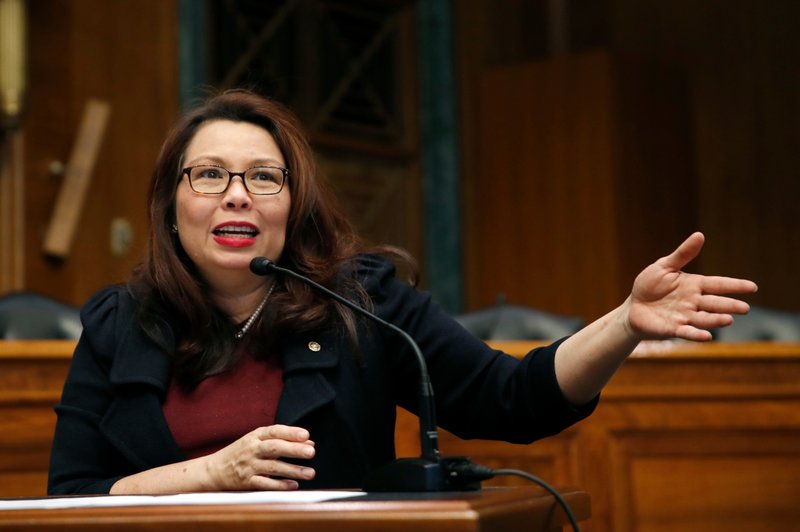
Who doesn’t like babies? No one in the Senate, apparently — at least not enough to block a historic rules change that passed Wednesday allowing the newborns of members into the chamber. Its passage without objection came despite plenty of concern, some privately aired, among senators of both parties about the threat the tiny humans pose to the Senate’s cherished decorum. “I’m not going to object to anything like that, not in this day and age,” said Sen. Pat Roberts, R-Kan., father of three and grandfather of six. He then noted that a person can stand in the door of the cloakroom, a lounge just off the chamber, and vote. “I’ve done it,” he said. Allowing babies on the Senate floor, he said, “I don’t think is necessary.” Sen. Orrin Hatch, the father of six, grandfather of 14 and great-grandfather of 23, said he had “no problem” with such a rules change. “But what if there are 10 babies on the floor of the Senate?” he asked. The inspiration for the new rule is a small bundle named Maile Pearl, born April 9 to Illinois Democrat Tammy Duckworth —the only sitting senator in U.S. history to give birth. In a statement, Duckworth thanked her colleagues for “helping bring the Senate into the 21st Century by recognizing that sometimes new parents also have responsibilities at work.” Their concerns and more were shared by Republicans and Democrats, according to interviews Wednesday. “It is a big change,” Sen. Amy Klobuchar, D-Minn., said in a telephone interview, as leaders of both parties sought to clear the new rule without objection, or public discussion. The private reassurances to members of both parties, she said, have “been going on for weeks.” Teleworking is not an option in the Senate, which requires members to vote in person. So Duckworth raised a rare question that split her colleagues more along generational lines than well-worn partisan ones. Duckworth proposed changing the rules to allow senators with newborns — not just Duckworth, and not just women — to bring their babies onto the floor of the Senate. This, recalled Klobuchar, did not go entirely smoothly for the two months she privately took questions about the idea and its potential consequences — diaper changes, fussing and, notably, nursing. Sen. Tom Cotton, father of two, said he has no problem with the rule change. But the Arkansas Republican acknowledged that some of his colleagues do, “so the cloakroom might be a good compromise.” Klobuchar’s answer to that suggestion noted that Duckworth lost both legs and partial use of an arm in Iraq, and mostly gets around by wheelchair. “Yes, you can vote from the doorway of the cloakroom, but how is she going to get to the cloakroom when it’s not wheelchair accessible?” she asked. Some senators proposed making an exception for Duckworth. But her allies said the Senate should make work easier for new parents. “We believe strongly, and she did, that it should be a permanent rules change.” Having 10 babies on the Senate floor, as Hatch suggested, “would be a delight,” Klobuchar said. “We could only wish we had 10 babies on the floor. That would be a delight,” retorted Klobuchar, noting that such a conflagration would probably mean more young senators had been elected in a body where the average age of members tops 60. There was more, voiced privately, Klobuchar said — including whether Duckworth intended to change Maile’s diaper or nurse her new baby on the Senate floor. Most senators, though, were supportive, Klobuchar said. Majority Leader Mitch McConnell, R-Ky., and Rules Committee Chairman Roy Blunt, R-Mo., both fathers, helped or did not stand in the way. McConnell did not answer a reporter’s question Wednesday about whether he had any concerns about babies on the Senate floor. Several others were happy to voice support for the rules change, and could not resist taking a jab at their colleagues. “Why would I object to it? We have plenty of babies on the floor,” joked Sen. Marco Rubio, R-Fla. But there still was some confusion. Just after the unanimous vote, Sen. Dick Durbin, D-Ill., said it would do the tradition-bound Senate some good to see “a diaper bag next to one of these brass spittoons, which sit on the floor, thank goodness, never used.” Oklahoma Republican James Inhofe took issue with that, saying: “They don’t use diaper bags anymore. They’re disposable diapers.” Diaper bags are generally used to carry clean diapers and other supplies when parents and babies go out. Sometimes, they hold dirty naps until they can be disposed of. Republished with the permission of the Associated Press.
Daylight saving time should be eliminated, say officials

For those dazed and confused by changing their clocks twice a year, some elected officials have proposed a solution: make daylight saving time permanent. Economists have bandied the idea over the years but in recent weeks it has gotten genuine momentum in both state capitals and Washington D.C. “I’d be extremely happy to not go home in the dark,” said Rusty Glover, a Republican state senator from Mobile, Alabama. “And I think we’d all see a little more productivity, too.” Mr. Glover sponsored a resolution this month in the Alabama legislature to keep the state on the same time all year. It breezed through both chambers and now awaits Republican Gov. Kay Ivey’s signature. “And it’s very popular, so she’d better sign it since she’s running for re-election,” Mr. Glover quipped. Indeed, the idea’s popularity extends beyond Alabama. Last week in Florida, Republican Gov. Rick Scott signed a bill that asks Washington to allow the Sunshine State to maximize its sunshine — by moving to daylight saving time permanently. Florida lawmakers beyond Tallahassee are also involved, as Sen. Marco Rubio has filed two bills in Washington: one asks that Florida’s request be approved, the second calls for the whole nation to stop changing clocks twice a year and stay on daylight saving time. Mr. Rubio made it all sound simple. “Reflecting the will of the Sunshine State, I introduced these bills that would approve Florida’s will and, if made nationally, would also ensure Florida is not out of sync with the rest of the nation,” he wrote in an email. Of course, no one can change the number of minutes the sun shines on a given slice of the planet each day. But the clock can help it seem that way. Ever since the U.S. adopted daylight saving time in March 1918, people have dealt with “springing forward” in spring and “falling back” in fall. Or, as most people understand it, losing or gaining an hour of sleep. Federal law allows states to remain on standard time year-round, and Arizona — with the exception of the Navajo Nation — spends all 12 months on Mountain Standard Time, which effectively becomes Pacific Daylight Time for the summer months. The closer one gets to the equator the more consistent the hours of sunshine are and the less changing the clocks matters, which is one reason why Hawaii and U.S. territories such as Puerto Rico and Guam leave their clocks alone. On the other hand, under the terms of the grandiosely named “Uniform Time Act of 1966,” states can only go to daylight saving time year round with Washington’s permission, a quixotic arrangement indeed. “It does seem like it’s been set up a little bit arbitrarily,” said Canadian economist Lisa Kramer. “It’s sort of a weird historical tic.” Ms. Kramer, a professor of management at the University of Toronto, said the rest of North America is in a similar situation. In Canada, Saskatchewan is the only province to keep clocks the same year-round, although Alberta, like Alabama and Florida, is seeking to go with permanent daylight saving time. There’s a movement in New England, too, toward permanent daylight saving time, Ms. Kramer said, although the tight hodgepodge of states there makes it necessary to have most or all of the states make the move at the same time. “People commute from one state to another and it wouldn’t be easy for business to be jumping from one hour to another as people moved,” she said. There are sound reasons beyond making everyone more rested for locking in daylight saving time, according to Ms. Kramer and others. Mr. Glover said he sponsored his resolution after talking with realtors and UPS and FedEx people who all favor extended sunshine as better for business. Daylight saving time has been shown to reduce traffic accident fatalities because pedestrians and cyclists, who are more prominent after work, remain easily seen longer, Ms. Kramer said. In addition to expanded commerce, some studies have shown a modest improvement in productivity, she said. Conventional wisdom holds government started tinkering with the clocks to help farmers or to save energy. But the former is mostly rural legend and studies have shown the impact on the latter to be minute. What’s more, the harm of changing clocks are linked to things like our “circadian rhythms,” and “sleep desynchronosis” — fancy terms for “internal clock.” It’s the fact there’s a difference, more than the difference itself that creates issues. Consequently, sticking to either daylight saving time or standard time obviates that problem and it makes sense to choose the longer day-sunlight option. Mr. Scott, the Florida governor, cited even more economic benefits when he signed the bill. “During my time in office, Florida has created nearly 1.5 million private-sector jobs,” he said. “A large part of this success is Florida’s booming tourism industry. Last year, a record 116.5 million visitors came to Florida. The Sunshine Protection Act allows Floridians and our visitors the ability to enjoy everything our beautiful state has to offer later in the day.” Republished with the permission of the Associated Press.
DC officials cite gun control hypocrisy in condemning Marco Rubio
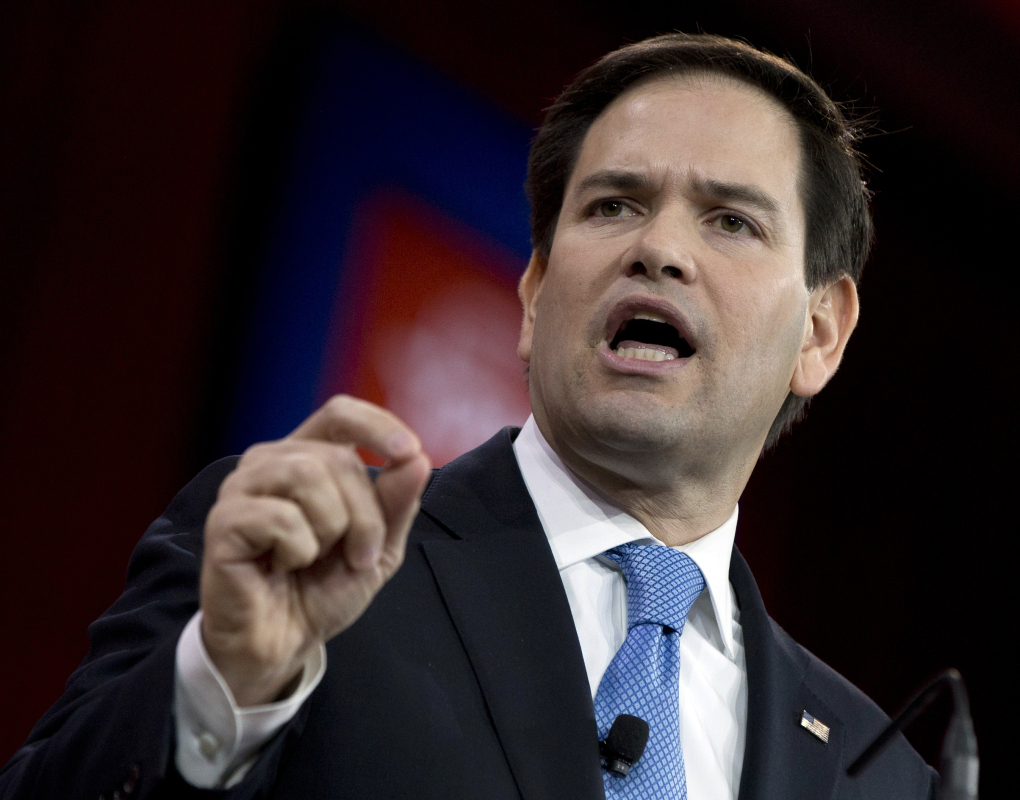
It was one week after the fatal shootings at a Parkland, Florida, high school, and Republican Sen. Marco Rubio was looking to show solidarity with an angry crowd of parents and students in his home state. He told them — and a national television audience — that 18-year-olds should not be able to buy a rifle and said, “I will support a law that takes that right away.” About 1,000 miles (1,600 kilometers) north, District of Columbia officials could only shake their heads in disbelief. The city already had a law barring 18-year-olds from buying rifles, yet Rubio was the main senator pushing legislation to end that ban, as well as D.C.’s prohibition of assault weapons. “Rubio’s gun bill should be a public embarrassment as well as a personal embarrassment to him,” said Eleanor Holmes Norton, Washington’s nonvoting delegate in Congress. Gun control has long been a sore point in relations between officials in this heavily Democratic city, home to some of the nation’s toughest gun control laws, and Republicans, who as the congressional majority have power over D.C.’s laws. The strong feelings have intensified with the nation at a crossroads moment in the gun control debate after the Feb. 14 shootings at Marjory Stoneman Douglas High School and a subsequent “March for Our Lives” gun-control rally in Washington. Rubio, in particular, is seen as the villain. City officials accuse him of playing cynical political games with the lives of Washington residents to curry favor with the National Rifle Association. Following the town hall, Washington Mayor Muriel Bowser challenged Rubio to withdraw his bill. Rubio sent her a letter saying that he and Bowser “share a common goal” and that his bill seeks only to bring Washington “in line with federal law.” If federal law changes —which Rubio said is his goal — then Washington’s laws would change as well. Bowser, a Democrat, posted the letter on Twitter with her handwritten notes and objections written in the margins. Those notes include Bowser calling Rubio’s stance “the epitome of hypocrisy.” “He’s just using it to boost his NRA score,” Bowser said in an interview with The Associated Press. “What we think Marco Rubio should be focused on is his job.” Asked for comment by The Associated Press, Rubio staffers responded by providing the Rubio letter that Bowser had posted. Rubio introduced the bill, known as the Second Amendment Enforcement Act, in 2015 and again in 2017. According to the NRA website, Rubio has an A-plus rating. Among its list of Rubio accomplishments is that he “sponsored legislation that would repeal Washington, D.C.’s draconian gun control laws and restore the right of self-defense to law-abiding individuals in our nation’s capital.” Norton said she’s been fighting off similar bills in Congress for years. Another one, sponsored by Virginia Republican Tom Garrett, exists in the House. Neither of them has much chance of passing because the Republican majorities in Congress wouldn’t hold together on such a divisive issue, she said. “The worst part is why he did it. Why would a senator from Florida take on this issue?” Norton asked. “He’s coming back every year for his NRA payoff.” According to public records, Rubio received just under $10,000 directly from the NRA during the 2016 election. However the nonpartisan Center for Responsive Politics, which combines direct contributions from the NRA with contributions from like-minded affiliates, super PACs and money spent on campaign ads on behalf of the candidate, estimates that Rubio has received more than $3.3 million over the course of his career, making him the 6th-highest recipient in Congress. The Washington government has bristled for years under what officials call the heavy-handed and arrogant oversight of Congress, which has the right to alter or spike all Washington laws. Washington has long fought to defend its strict gun control. A 2008 Supreme Court ruling declared Washington’s blanket ban on handgun ownership unconstitutional. Washington restrictions such as preventing gun owners from registering more than one gun per month and requiring re-registration every three years also have been struck down by the courts. The issues of Washington’s autonomy and its gun control laws are deeply intertwined. The closest Washington has come in recent years to having a vote in Congress unraveled over gun control. Republicans have opposed statehood for the District of Columbia, which would boost Democratic power in Congress. Despite the Republican Party’s general opposition to federal interference in state issues, the official GOP platform stance on D.C. statehood is that it can only be achieved via constitutional amendment. The platform states that “the nation’s capital city is a special responsibility of the federal government because it belongs both to its residents and to all Americans.” A 2009 compromise proposed creating a new congressional district in heavily Republican Utah. In exchange, Washington’s House delegate seat would be upgraded to full voting status. However, as the D.C. Voting Rights Act worked its way through Congress, Republican Nevada Sen. John Ensign attached a rider that would have required Washington to abolish most of its gun-ownership restrictions. The city government concluded it was too high a price to pay and the bill was shelved. Republished with the permission of the Associated Press.
Senators: Allow feds to keep guns from people deemed threat

Senators from both parties are proposing to let federal courts keep guns away from people who show warning signs of violence in response to the deadly school shooting in Florida. South Carolina Republican Sen. Lindsey Graham and Connecticut Democrat Richard Blumenthal said Thursday their bill is a common-sense proposal to save lives. At a news conference, Graham said the government encourages people who see something suspicious to “say something” to authorities. He asked, “Isn’t it incumbent on government to do something” to prevent gun violence? The bill is modeled on state “red flag laws” that let officials take guns away from people who are judged to pose an imminent danger to themselves or others. A federal law would fill gaps in state laws, Graham said, noting that only a handful of states allow gun-violence restraining orders. “Guns and shooters cross borders,” Blumenthal said. “That’s why a federal solution is important.” A federal red-flag law “will save lives,” he said. Police and the FBI received numerous warnings about the accused Florida shooter but did not move to take away his guns. Graham and Blumenthal said they were motivated not just by the Feb. 14 shooting that killed 17 people in Parkland, Florida, but also by high-profile shootings in their home states — a 2015 massacre at a Charleston, South Carolina, church that killed nine people and a 2012 shooting that killed 20 school children and six adults in Newtown, Connecticut. “I’m 62 years old. I’m tired of going home and telling people we just can’t do anything,” Graham said. Blumenthal said he is frequently asked in Connecticut why Congress can’t stop dangerous people from having guns. “An aroused and outraged public” will be able to overcome opposition from the National Rifle Association and other gun-rights groups, he said. Oregon Gov. Kate Brown signed a law this week prohibiting domestic abusers and people under restraining orders from owning firearms. Florida lawmakers, meantime, have approved a bill would let law enforcement officers petition a court for a risk protection order for individuals that show signs of harming themselves or others. Republican Gov. Rick Scott has not said whether he’ll sign it. Florida Sens. Marco Rubio and Bill Nelson have introduced a bipartisan bill to encourage states to adopt red-flag laws, with federal grants conditioned on meeting a series of requirements. Rubio is a Republican, and Nelson is a Democrat. Republished with the permission of the Associated Press.
Will Davis: AMEXIT — It’s time to ditch the U.N.
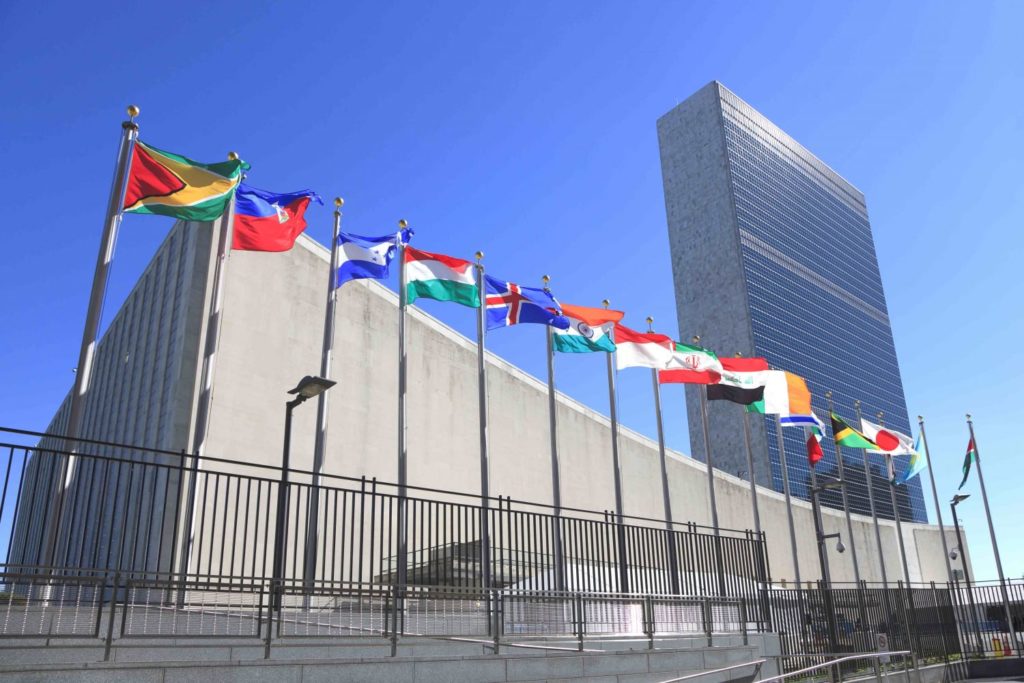
“A forum for anti-semitism & anti-americanism.” Florida Senator Marco Rubio, a former presidential candidate, and one of the country’s leading voices on foreign policy had these harsh words for the United Nations in a Tweet back in February. Rubio also questioned the continued funding for an organization that treats America and her allies with such hostility. This followed a general assembly vote 128-9 to condemn the U.S. decision to recognize Jerusalem as the capital of Israel. Now it’s time for Rubio and his GOP colleagues to put their money where there mouth is and cease funds to this wretched organization. Make no mistake, I am not an advocate of isolationism, and alliances with countries that we can count on are of the upmost important. But, it is now clear that the United Nations has outlived it’s purpose. Today, the institution that was created to prevent war has done more to inspire it. The institution that was created to promote freedom and democracy now promotes tyranny and authoritarianism. Nearly half of the security council’s recent condemnations have focused on Israel, while ripping the U.S’s relationship with them. Since Israel was officially recognized as a state in 1948, the security council has issued 225 resolutions against the democratic state, while by comparison, ignoring the theocratic, terror-supporting states that surround them. This is the exact opposite of what the U.N. was created to do. It is time for the U.S. to ditch this failed institution and form coalitions with countries that we can count on. Countries that share our values. The communist, socialist, and radical islamic states that dominate the discourse at the U.N. can find a forum elsewhere, but there is no reason that forum should be on our soil. Last year, the people of Great Britain stood up for their sovereignty and against unaccountable Bureaucracy, leaving the corrupt European Union. This year, it’s time for the United States to do the same. It’s time for our own Brexit. Our Amexit. ••• William Davis is a sophomore at the University of Alabama. There he is involved in various conservative groups and organizations.
Donald Trump drawing criticism for not explicitly rebuking white supremacists
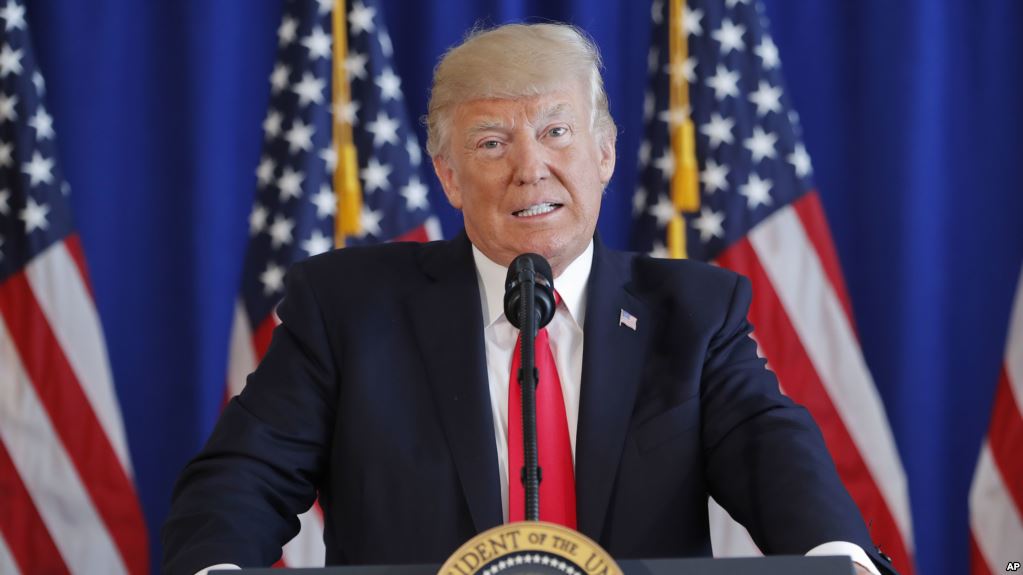
President Donald Trump is drawing criticism from Republicans and Democrats for not explicitly denouncing white supremacists in the aftermath of violent clashes in Virginia, with lawmakers saying he needs to take a public stand against groups that espouse racism and hate. Trump, while on a working vacation at his New Jersey golf club, addressed the nation Saturday soon after a car plowed into a group of anti-racist counter-protesters in Charlottesville, a college town where neo-Nazis and white nationalists had assembled for march. The president did not single out any group, instead blaming “many sides” for the violence. “Hate and the division must stop, and must stop right now,” he said. “We have to come together as Americans with love for our nation and … true affection for each other.” Trump condemned “in the strongest possible terms this egregious display of hatred, bigotry and violence on many sides, on many sides.” He added: “It’s been going on for a long time in our country. Not Donald Trump. Not Barack Obama. It’s been going on for a long, long time.” He did not answer questions from reporters about whether he rejected the support of white nationalists or whether he believed the car crash was an example of domestic terrorism. Aides who appeared on the Sunday news shows said the White House did believe those things, but many fellow Republicans demanded that Trump personally denounce the white supremacists. Sen. Cory Gardner, R-Colo., tweeted: “Mr. President – we must call evil by its name. These were white supremacists and this was domestic terrorism.” Added Sen. Marco Rubio, R-Fla.: “Nothing patriotic about #Nazis,the #KKK or #WhiteSupremacists It’s the direct opposite of what #America seeks to be.” GOP Chris Christie of New Jersey, a staunch Trump supporter, wrote: “We reject the racism and violence of white nationalists like the ones acting out in Charlottesville. Everyone in leadership must speak out.” On the Democrat side, Senate Minority Leader Charles Schumer of New York said “of course we condemn ALL that hate stands for. Until @POTUS specifically condemns alt-right action in Charlottesville, he hasn’t done his job.” The president’s only public statement early Sunday was a retweet saluting two Virginia state police officers killed in helicopter crash after being dispatched to monitor the Charlottesville clashes. The previous day, Trump tweeted condolences to those officers soon after the helicopter crashed. His tweet sending condolences to the woman killed in the protests came more than five hours after the incident. Trump’s national security adviser, H.R. McMaster, said Sunday that he considered the attack in Charlottesville to be terrorism: “I certainly think anytime that you commit an attack against people to incite fear, it is terrorism,” McMaster told ABC’s “This Week.” “It meets the definition of terrorism. But what this is, what you see here, is you see someone who is a criminal, who is committing a criminal act against fellow Americans.” The president’s homeland security adviser, Tom Bossert, defended the president’s statement by suggesting that some of the counter-protesters were violent too. When pressed, he specifically condemned the racist groups. The president’s daughter and White House aide, Ivanka Trump, tweeted Sunday morning: “There should be no place in society for racism, white supremacy and neo-nazis.” White nationalists had assembled in Charlottesville to vent their frustration against the city’s plans to take down a statue of Confederal Gen. Robert E. Lee. Counter-protesters massed in opposition. A few hours after violent encounters between the two groups, a car drove into a crowd of people peacefully protesting the rally. The driver was later taken into custody. Alt-right leader Richard Spencer and former Ku Klux Klan member David Duke attended the demonstrations. Duke told reporters that the white nationalists were working to “fulfill the promises of Donald Trump.” Trump’s speech also drew praise from the neo-Nazi website Daily Stormer, which wrote: “Trump comments were good. He didn’t attack us. He just said the nation should come together. Nothing specific against us. … No condemnation at all.” The website had been promoting the Charlottesville demonstration as part of its “Summer of Hate” edition. Mayor Michael Signer, a Democrat, said he was disgusted that the white nationalists had come to his town and blamed Trump for inflaming racial prejudices with his campaign last year. “I’m not going to make any bones about it. I place the blame for a lot of what you’re seeing in American today right at the doorstep of the White House and the people around the president,” he said. Trump, as a candidate, frequently came under scrutiny for being slow to offer his condemnation of white supremacists. His strongest denunciation of the movement has not come voluntarily, only when asked, and he occasionally trafficked in retweets of racist social media posts during his campaign. His chief strategist, Steve Bannon, once declared that his former news site, Breitbart, was “the platform for the alt-right.” Republished with permission of The Associated Press.
Capitol Hill Buzz: Marco Rubio joke-investigates Ivanka Trump hug

Sometimes all you can do is surrender to Twitter. Florida Sen. Marco Rubio probably started out his day Tuesday thinking about paid family leave, child care tax credits and other deep issues. But when Twitter went wild over an awkward photo of him leaning in for a hug with Ivanka Trump when she arrived for a Capitol Hill meeting, Rubio was smart enough to play along. The photo, taken by an Associated Press congressional reporter with an iPhone, appears to show Trump declining to hug Rubio back as the two greet one another just outside the Capitol. Twitter users dissected the seemingly awkward moment endlessly. They compared Rubio to Ralph Wiggum from “The Simpsons” when he doesn’t get a Valentine’s Day card, and to Dr. Evil from “Austin Powers” asking his son for a hug. Rubio responded in a series of joking tweets late Tuesday, announcing that he would be investigating what he termed the “alleged failed hug.” “We believe we have our own unclassified photographic evidence that will shed greater details on this incident,” the Republican senator said, adding, “We are also attempting to acquire multi-angle video which we believe will provide greater insight into this important matter.” Rubio then posted a blurry photo, taken at a different moment, showing Trump’s hand on Rubio’s shoulder as he smiles. “New photo emerges providing more insight into alleged failed hug. (Faces blurred for security purposes),” was the accompanying caption. Several minutes later that was followed up by another photo showing Trump with her hand on Rubio’s shoulder, and the caption “BREAKING NEWS: Additional photo from moments right after today’s alleged failed hug provide new details to this developing story.” Trump herself joined in Tuesday evening, tweeting: “Anonymous sources say @marcorubio planned the alleged failed hug. I have no comment (but I would have hugged him anyway!)” She then added: “Fake news! Marco is an excellent hugger.” The Associated Press stands by its photo. Republished with permission of The Associated Press.
Donald Trump restores some Cuba penalties, rejecting ‘oppressors’
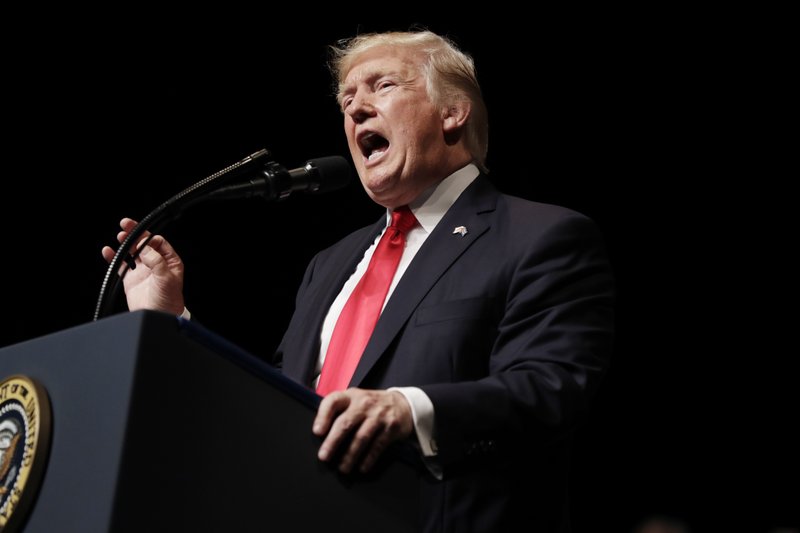
President Donald Trump declared Friday he was restoring some travel and economic restrictions on Cuba that were lifted as part of the Obama administration’s historic easing. He challenged the communist government of Raul Castro to negotiate a better deal for Cubans and Cuban-Americans. Announcing the rollback of President Barack Obama’s diplomatic opening during a speech in Miami, Trump said Cuba had secured far too many concessions from the U.S. in the “misguided” deal but “now those days are over.” He said penalties on Cuba would remain in place until its government releases political prisoners, stops abusing dissidents and respects freedom of expression. “America has rejected the Cuban people’s oppressors,” Trump said in a crowded, sweltering auditorium. “They are rejected officially today — rejected.” Though Trump’s announcement stops short of a full reversal of the Cuba rapprochement, it targets the travel and economic engagement between the countries that has blossomed in the short time since relations were restored. The goal is to halt the flow of U.S. cash to the country’s military and security services in a bid to increase pressure on Cuba’s government. Embassies in Havana and Washington will remain open. U.S. airlines and cruise ships will still be allowed to serve the island 90 miles south of Florida. The “wet foot, dry foot” policy, which once let most Cuban migrants stay if they made it to U.S. soil but was terminated under Obama, will remain terminated. Remittances to Cuba won’t be cut off. But individual “people-to-people” trips by Americans to Cuba, allowed by Obama for the first time in decades, will again be prohibited. And the U.S. government will police other such trips to ensure there’s a tour group representative along making sure travelers are pursuing a “full-time schedule of educational exchange activities.” Trump described his move as an effort to ramp up pressure to create a “free Cuba” after more than half a century of communism. “I do believe that end is in the very near future,” he said. Trump’s move was a direct rebuke to Obama, for whom the diplomatic opening with Cuba was a central accomplishment of his presidency. The new president’s action is broadly opposed by American business groups. “U.S. private sector engagement can be a positive force for the kind of change we all wish to see in Cuba,” said Myron Brilliant, the U.S. Chamber of Commerce executive vice president and head of international affairs. “Unfortunately, today’s moves actually limit the possibility for positive change on the island and risk ceding growth opportunities to other countries that, frankly, may not share America’s interest in a free and democratic Cuba that respects human rights.” In Cuba, Granma, the official organ of the nation’s Communist Party, covered Friday’s speech in a real-time blog, saying “Trump’s declarations are a return to imperialist rhetoric and unilateral demands, sending relations between Havana and Washington back into the freezer.” On the stage in Miami, Rep. Mario Diaz-Balart, R-Fla., said the U.S. would no longer have to witness the “embarrassing spectacle” of an American president glad-handing with a dictator. “President Trump will treat the Castro regime as a malevolent dictatorship that it is,” Diaz-Balart said. “Thank you, President Trump, for keeping your commitments. You have not betrayed us — you kept your promise.” Obama announced in December 2014 that he and Cuban leader Raul Castro were restoring diplomatic ties between their countries, arguing that a new approach was needed because the policy the U.S. had pursued for decades had failed to democratize the island. Less than a year later, the U.S. Embassy in Havana re-opened. The U.S. severed ties with Cuba in 1961 after Fidel Castro’s revolution, and spent subsequent decades trying to either overthrow the Cuban government or isolate the island, including by toughening an economic embargo first imposed by President Dwight D. Eisenhower. The trade embargo remains in place under Trump. Only the U.S. Congress can lift it, and lawmakers, especially those of Cuban heritage, like Sen. Marco Rubio, another Florida Republican, have shown no interest in doing so. Rubio staunchly opposed Obama’s re-engagement with Cuba, and he lauded Trump as he took the stage. “Today, a new president lands in Miami to reach out his hand to the people of Cuba,” Rubio said. Republished with permission of The Associated Press.
Donald Trump boasts of hiring only the best, but picks haunt him

President Donald Trump likes to boast that he hires only the best people. But his personnel choices keep coming back to haunt him. One of the people Trump hired for the White House was working as a foreign agent while advising him during the election. His campaign chairman caught the Justice Department’s attention for similarly surreptitious work. And a third campaign adviser was reportedly surveilled by the FBI as part of an investigation into whether or not he was a Russian spy. The tales of Michael Flynn, Paul Manafort and Carter Page — none of whom still work for Trump — have created a steady drip of allegations that have clouded Trump’s early presidency and raised persistent questions about his judgment. At worst, Trump’s personnel picks appear to have left his campaign — and perhaps his White House — vulnerable to the influence of foreign powers. At best, they expose the long-term implications of his understaffed and inexperienced campaign organization and undermine his promises to surround himself with top-notch talent. “Vetting new hires is standard procedure for presidential campaigns for exactly this reason,” said Alex Conant, who advised Sen. Marco Rubio‘s 2016 presidential campaign. “Every employee is also a potential liability on a presidential campaign.” During the campaign, Trump said he hired “top, top people” and would fill his administration “with only the best and most serious people.” Yet Manafort, Flynn and Page have indeed become political liabilities for Trump that he can’t shake in the White House. All three are being scrutinized as part of the FBI and congressional investigations into whether Trump associates helped Russia meddle in the 2016 election. The president has denied any nefarious ties to Russia and says he has no knowledge that his advisers were working with Moscow during the election. The president’s culpability appears greatest with Flynn, a retired U.S. Army lieutenant general who traveled with Trump frequently during the campaign and was tapped as national security adviser after the election. Flynn had been lobbying for a company with ties to Turkey during the 2016 election and even wrote an editorial on behalf of his client that was published on Election Day. “No one expects them to do the equivalent of an FBI background check, but a simple Google search could have solved a lot of these problems,” Dan Pfeiffer, who served as senior adviser to President Barack Obama, said of Trump’s team. After Trump’s victory, Flynn’s lawyers alerted the transition team that he may have to register as a lobbying for a foreign entity, according to a person with knowledge of those discussions. The White House hired him anyway. After the inauguration, Flynn’s lawyers told the White House counsel’s office that the national security adviser would indeed have to move forward with that filing. Flynn was fired in February after the White House said he misled Vice President Mike Pence and other top officials about his conversations with Russia’s ambassador to the United States. Lobbying for foreign interests is legal and lucrative. Both Republican and Democratic operatives offer their services to overseas clients. But the Justice Department requires Americans working on behalf of foreign interests to register, disclosing the nature of their work, the foreigners they dealt with and the amount of money they made. Willful failure to register for foreign lobbying work can carry up to a five-year prison sentence, but the Justice Department rarely brings criminal charges and instead urges violators to register. On Wednesday, a spokesman for former Trump campaign chairman Manafort said that he, too, under pressure from the Justice Department, would formally file for prior foreign lobbying. Manafort’s work for political interests in Ukraine occurred before he was hired as Trump’s campaign chairman, spokesman Jason Maloni said, though the U.S. government raised questions about his activities after he was hired by Trump. Manafort was pushed out of Trump’s campaign in August after The Associated Press reported that his consulting firm had orchestrated a covert Washington lobbying operation on behalf of Ukraine’s ruling political party without disclosing that work to the U.S. government. The White House did not respond to questions Wednesday about when Trump learned about Manafort’s foreign lobbying work and his discussions with the U.S. government about registering as a foreign agent. The questions surrounding Page are perhaps the most serious. On Tuesday, The Washington Post reported that the Justice Department obtained a highly secretive warrant to monitor his communications because there was reason to believe he was working as a Russian spy. In March, Trump personally announced Page as part of a newly minted foreign policy advisory team. But as questions began swirling about Page’s ties to Russia, the campaign started moving away from the little-known investment banker. Trump has since said he has no relationship with him. The New York Times reported Wednesday that the Justice Department only obtained the warrant after the campaign distanced itself from Page. In an interview Thursday with ABC’s “Good Morning America,” Page described his affiliation with the Trump campaign as having served as “an informal member of a committee which was put together — a team of individuals who were looking at various foreign policy issues.” Chris Ashby, a Republican elections lawyer, said that while it’s easy to blame Trump for missing red flags about his campaign advisers, it’s not always possible to dig up details that potential hires aren’t willing to disclose on their own. “In the ideal world, you could rely on paid background checks, but you’d have to have the money and the time,” Ashby said. “The farther down the ranks you go and certainly when you reach the ranks of unpaid advisers, that becomes impractical.” Republished with permission of The Associated Press.
Marco Rubio says next step in Syria is negotiating regime change

Sen. Marco Rubio says the next step in Syria should be to work with Sunni governments to discuss “an alternative” government in Syria. Rubio is a Florida Republican and onetime rival of President Donald Trump. The conservative tells NBC’s “Today” show that Trump should reach out to Saudi Arabia and the United Arab Emirates, as well as Turkey, to discuss ways to get Syrian President Bashar Assad to step down and create a new regime. Assad has not responded to diplomatic pressure in the past, but Rubio says the military strikes could change that. He says, “We need to now move forward through a combination of diplomacy and, quite frankly, the support of groups on ground, particularly non-jihadist Sunni groups, to create alternatives to the Assad regime.” Republished with permission of The Associated Press.
