
U.S. has enough COVID-19 vaccines for boosters, kids’ shots
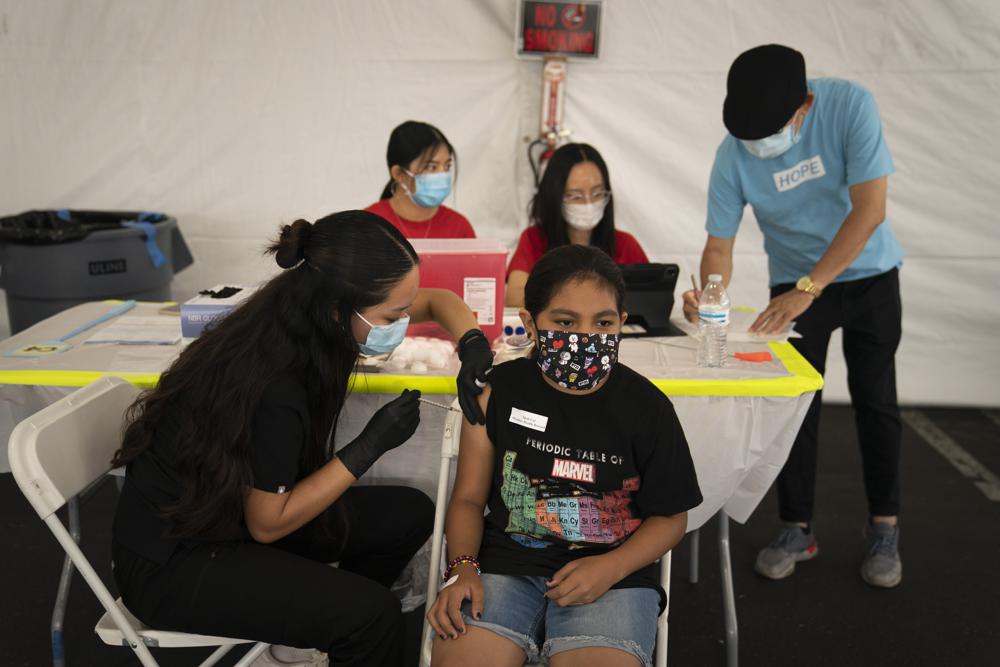
With more than 40 million doses of coronavirus vaccines available, U.S. health authorities said they’re confident there will be enough for both qualified older Americans seeking booster shots and the young children for whom initial vaccines are expected to be approved in the not-too-distant future. The spike in demand — expected following last week’s federal recommendation on booster shots — would be the first significant jump in months. More than 70 million Americans remain unvaccinated despite the enticement of lottery prizes, free food or gifts, and pleas from exhausted health care workers as the average number of deaths per day climbed to more than 1,900 in recent weeks. Federal and state health authorities said the current supply and steady production of more doses can easily accommodate those seeking boosters or initial vaccination, avoiding a repeat of the frustratingly slow rollout of COVID-19 vaccines across the country early this year. “I hope that we have the level of interest in the booster … that we need more vaccines,” Colorado Gov. Jared Polis said Tuesday. “That’s simply not where we are today. We have plenty of vaccines.” Robust supply in the U.S enabled President Joe Biden this week to promise an additional 500 million of Pfizer’s COVID-19 shots to share with the world, doubling the United States’ global contribution. Aid groups and health organizations have pushed the U.S. and other countries to improve vaccine access in countries where even the most vulnerable people haven’t had a shot. Among the challenges states face is not ordering too many doses and letting them go to waste. Several states with low vaccination rates, including Idaho and Kansas, have reported throwing away thousands of expired doses or are struggling to use vaccines nearing expiration this fall. While most vaccines can stay on the shelf unopened for months, once a vial is opened the clock starts ticking. Vaccines are only usable for six to 12 hours, depending on the manufacturer, according to the U.S. Food and Drug Administration. Moderna vaccines come in vials containing 11 to 15 doses. Pfizer vials contain up to six doses and Johnson & Johnson vials five doses. “We are going to see more doses that go unused over time,” said Wisconsin’s health secretary, Karen Timberlake. “They come in multidose files. They don’t come in nice, tidy individual single-serving packages.” State health officials said they have tried to request only what health care providers and pharmacies expect to need from the federal supply. Those numbers have dwindled since the vaccines became widely available in early spring. But U.S. officials — holding out hope that some of the unvaccinated will change their minds — are trying to keep enough vaccines in stock so all Americans can get them. That balancing act is tricky and can lead to consternation around the globe as the U.S. sits on unused vaccines while many countries in places such as Africa can’t get enough vaccines. “Somebody sitting in a country with few resources to access vaccines, seeing people in the U.S. able to walk into a pharmacy and get that vaccine and choosing not to, I’m sure that’s causing heartache,” said Jen Kates, senior vice president and director of global health and HIV policy for the Kaiser Family Foundation. Dr. Marcus Plescia, chief medical officer of the Association of State and Territorial Health Officials, which represents the public health agencies of all 50 U.S. states, the District of Columbia, and U.S. territories, said officials anticipate that on-hand doses of COVID-19 vaccines and manufacturers’ ability to supply more will meet needs across the country. “I think states have tried to plan as if everybody’s going to be offered a booster,” he said, suggesting they will be overprepared for the more narrow recommendations issued by the FDA and the Centers for Disease Control and Prevention. California, for example, estimated earlier this month that it would need to administer an extra 63 million doses by the end of 2022 — if initial shots for children under 12 were approved and boosters were open to everyone. U.S. health officials late Thursday endorsed booster shots of the Pfizer vaccine for all Americans 65 and older — along with tens of millions of younger people who are at higher risk from the coronavirus because of health conditions or their jobs. California, with nearly 40 million residents, has the lowest transmission rate of any state and nearly 70% of eligible residents are fully vaccinated. That leaves nearly 12 million people not vaccinated or not fully vaccinated. Dr. Mark Ghaly, California’s health secretary, said the state will rely largely on pharmacies and primary care providers to give boosters to seniors while some large counties and health care groups will use mass vaccination sites. In Pennsylvania, more than 67% of residents older than 18 are fully vaccinated. Alison Beam, acting secretary of health, said health authorities now have “two missions”: Continuing to persuade people to get vaccinated and serving those eager to receive a booster or initial shots. “Pennsylvania is going to be prepared,” Beam said. “And we’re going to have the right level of vaccine and vaccinators to be able to meet that demand.” Republished with the permission of the Associated Press.
Rapid COVID-19 vaccine rollout backfired in some states
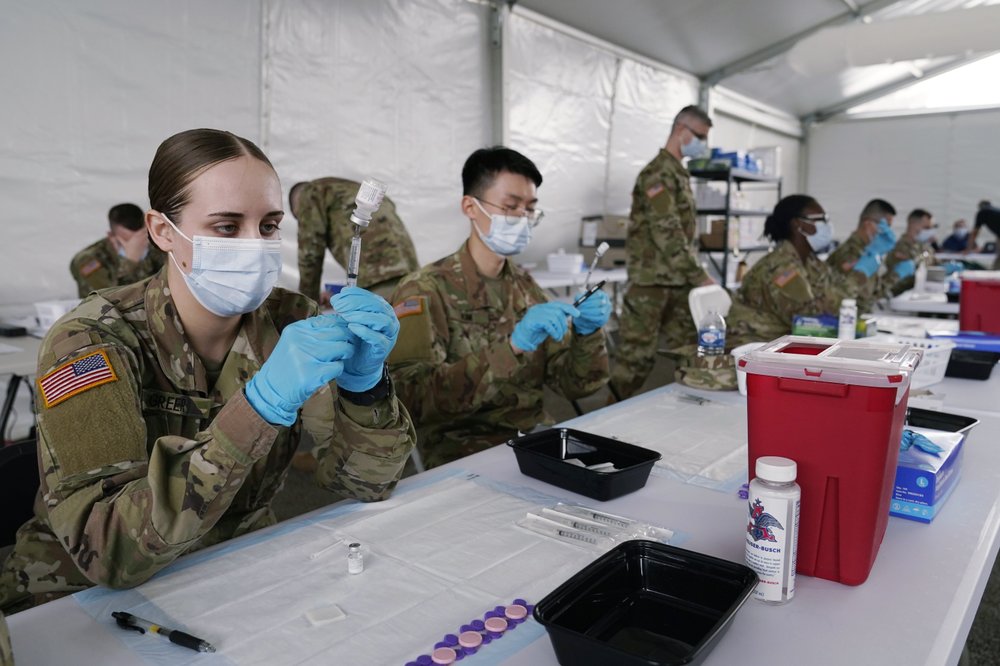
Despite the clamor to speed up the U.S. vaccination drive against COVID-19 and get the country back to normal, the first three months of the rollout suggest faster is not necessarily better. A surprising new analysis found that states such as South Carolina and Florida that raced ahead of others to offer the vaccine to ever-larger groups of people have vaccinated smaller shares of their population than those that moved more slowly and methodically, such as Hawaii and Connecticut. The explanation, as experts see it, is that the rapid expansion of eligibility caused a surge in demand too big for some states to handle and led to serious disarray. Vaccine supplies proved insufficient or unpredictable, websites crashed and phone lines became jammed, spreading confusion, frustration, and resignation among many people. “The infrastructure just wasn’t ready. It kind of backfired,” said Dr. Rebecca Wurtz, an infectious disease physician and health data specialist at the University of Minnesota’s School of Public Health. She added: “In the rush to satisfy everyone, governors satisfied few and frustrated many.” The findings could contain an important go-slow lesson for the nation’s governors, many of whom have announced dramatic expansions in their rollouts over the past few days after being challenged by President Joe Biden to make all adults eligible for vaccination by May 1. “If you’re more targeted and more focused, you can do a better job,” said Sema Sgaier, executive director of Surgo Ventures, a nonprofit health-data organization that conducted the analysis in collaboration with The Associated Press. “You can open it up — if you have set up the infrastructure to vaccinate all those people fast.” Numerous factors stymied state vaccination performance. Conspiracy theories, poor communication, and undependable shipments slowed efforts after the first vials of precious vaccine arrived Dec. 14. But the size of the eligible population was always within the control of state officials, who made widely varying decisions about how many people they invited to get in line when there wasn’t enough vaccine to go around. When the drive began, most states put health care workers and nursing home residents at the front of the line. In doing so, states were abiding by national recommendations from experts who also suggested doing everything possible to reach everyone in those two groups before moving on to the next categories. But faced with political pressure and a clamor from the public, governors rushed ahead. Both the outgoing Trump administration and the incoming Biden team urged opening vaccinations to older Americans. By late January, more than half the states had opened up to older adults — some 75 and above, others 65 and up. That’s when the real problems started. South Carolina expanded eligibility to people in Steven Kite’s age group Jan. 13. Kite, 71, immediately booked a vaccination at a hospital. But the next day, his appointment was canceled along with thousands of others because of a shortage of vaccine. “It was frustrating at first,” Kite said. After a week of uncertainty, he rescheduled. He and his wife are now vaccinated. “It ended up working out fine. I know they’ve had other problems. The delivery of the doses has been very unreliable.” In Missouri, where more than half of adults were eligible for shots, big-city shortages sent vaccine seekers driving hundreds of miles to rural towns. Dr. Elizabeth Bergamini, a pediatrician in suburban St. Louis, drove about 30 people to often out-of-the-way vaccination events after the state opened eligibility to those 65 and older Jan. 18 and then expanded further. “We went from needing to vaccinate several hundred thousand people in the St. Louis area to an additional half-million people, but we still hadn’t vaccinated that first group, so it has been this mad dash,” Bergamini said. “It has just been a whole hot mess.” “It got a little chaotic,” said Dr. Marcus Plescia, chief medical officer of the Association of State and Territorial Health Officials. “We created far more demand than there was supply. That stressed the system and that may have left the system less efficient.” Plescia said the analysis suggests that “a more methodical, measured, judicious, priority-based approach — despite people’s perception — actually can be as efficient, or more efficient, than opening things up and making it available to more people.” In retrospect, health workers and nursing home residents were the easy groups to vaccinate. Doses could be delivered to them where they lived and worked. “We knew where they were and we knew who they were,” Wurtz said. As soon as states went beyond those populations, it got harder to find the right people. Nursing home residents live in nursing homes. People 65 and older live everywhere. West Virginia bucked the trend with both high numbers of eligible residents and high vaccination rates in early March, but the state started slow and built its capacity before expanding eligibility. Similarly, Alaska maintained a high vaccination rate with a smaller eligible population, then threw shots open to everyone 16 and older March 9. This big increase in eligible adults near the end of the period studied led the AP and Surgo Ventures to omit Alaska from the analysis. The analysis found that as of March 10, Hawaii had the lowest percentage of its adult population eligible for vaccination, at about 26%. Yet Hawaii had administered 42,614 doses per 100,000 adults, the eighth-highest rate in the country. Thirty percent of Connecticut’s adult population was eligible as of the same date, and it had administered doses at the fourth-highest rate in the country. In contrast, Mississippi had the sixth-largest percentage of its adult population eligible at about 83%. Yet, Mississippi had administered only 35,174 total doses per 100,000 adults, ranking 43rd among states. Missouri, with 61% of its population eligible, had dispensed 35,341 doses per 100,000 adults. Seven states in the bottom 10 for overall vaccination performance — Georgia, Tennessee, Texas, Florida, Mississippi, South Carolina, and Missouri — had larger-than-average shares of their residents eligible for shots. Among high-performing states, five in
