
Governor Kay Ivey: Sheriff John Williams shot, killed in line of duty
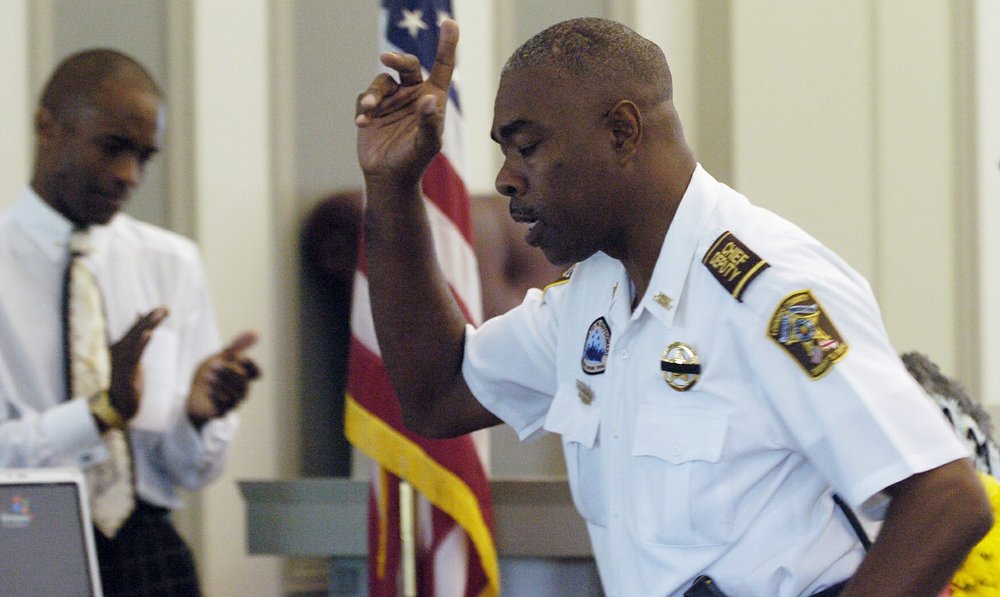
An Alabama sheriff was fatally shot Saturday evening in a community near the state’s capital, authorities announced, later saying they were seeking a man considered to be a “serious risk” who may be traveling on foot. Gov. Kay Ivey tweeted that Lowndes County Sheriff John Williams had been “tragically killed” in the line of duty and that she offered her prayers and sympathy to his family and the Lowndes County Sheriff’s Department. Montgomery County Sheriff Derrick Cunningham told news outlets that Williams was shot at a gas station in the community of Hayneville, about 20 miles (32 kilometers) southwest of Montgomery. Details remained sketchy as law enforcement agents converged on the community. Video from WSFA-TV showed a heavy law enforcement presence late Saturday outside a QV gas station. Alabama Law Enforcement Agency spokesman Cpl. Jess Thornton told reporters the State Bureau of Investigation was en route to the scene. Meanwhile, the state issued what it called an “emergency BLUE alert” that it was seeking an 18-year-old white man last seen at a QV gas station in the area at 8:15 p.m., the time of the reported shooting. The statement made no mention of the shooting or a possible connection to the man. The tall sheriff was known as “Big John.” Ivey paid tribute to him online, writing that in his years of service in the U.S. Marine Corps and “his many years working in law enforcement, he dedicated his life to keeping other people safe.” The sheriff was first elected in 2010, running as a Democrat. He was a Lowndes County native who started volunteering as a reserve deputy in 1978. He also worked for Hayneville police before joining the sheriff’s department full-time in 1987 and being appointed chief deputy in 1990. “Sheriff Williams always wanted to make a difference in his community and felt there was no better way to help his community than to protect and serve them in law enforcement,” the biography read. Lowndes County is predominantly black. It had a population of around 11,000 in the 2010 census. In 2007, more than 60 people gathered at the Lowndes County Courthouse to protest then-Gov. Bob Riley’s appointment of a white law enforcement officer to replace the county’s deceased sheriff. At the time, the county commission president said all five commissioners and other elected officials had recommended Williams, who is black, for the position. During his decades long career with the sheriff’s office, Williams notably in 2000 was the arresting officer of Jamil Abdullah Al-Amin, a 1960s black militant who was known as H. Rap Brown before converting to Islam. Al-Amin was wanted and later convicted in the fatal 2000 shooting of a Fulton County sheriff’s deputy in Atlanta. Republished with the permission of the Associated Press.
Donald Trump to visit Marine base in Yuma before Phoenix rally
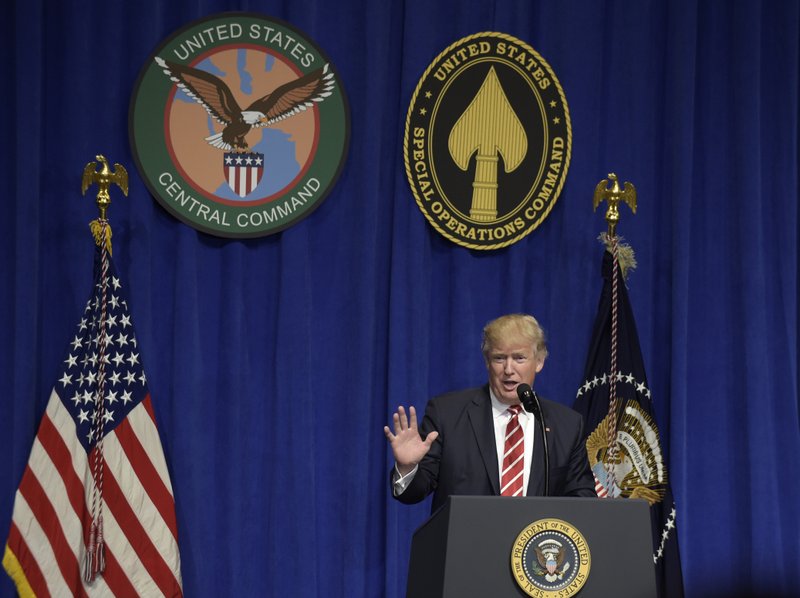
The White House says President Donald Trump is scheduled to visit a Marine Corps base in Arizona along the U.S.-Mexico border. Trump is set to visit Marine Air Station Yuma on Tuesday afternoon before he travels to Phoenix to hold a rally. Yuma’s location along the U.S.-Mexico border touches on one of Trump’s signature issues: his call for putting up a border wall to stem illegal immigration from Mexico. The rally in Phoenix will take place at the city’s convention center. Trump tweeted about the event last week with a link for ticket availability. The president has been holding campaign-style events in Trump-friendly areas since he took office. The rally will be his first in the West. Republished with permission of The Associated Press.
Battered by scandal, Marines issue new social media policy
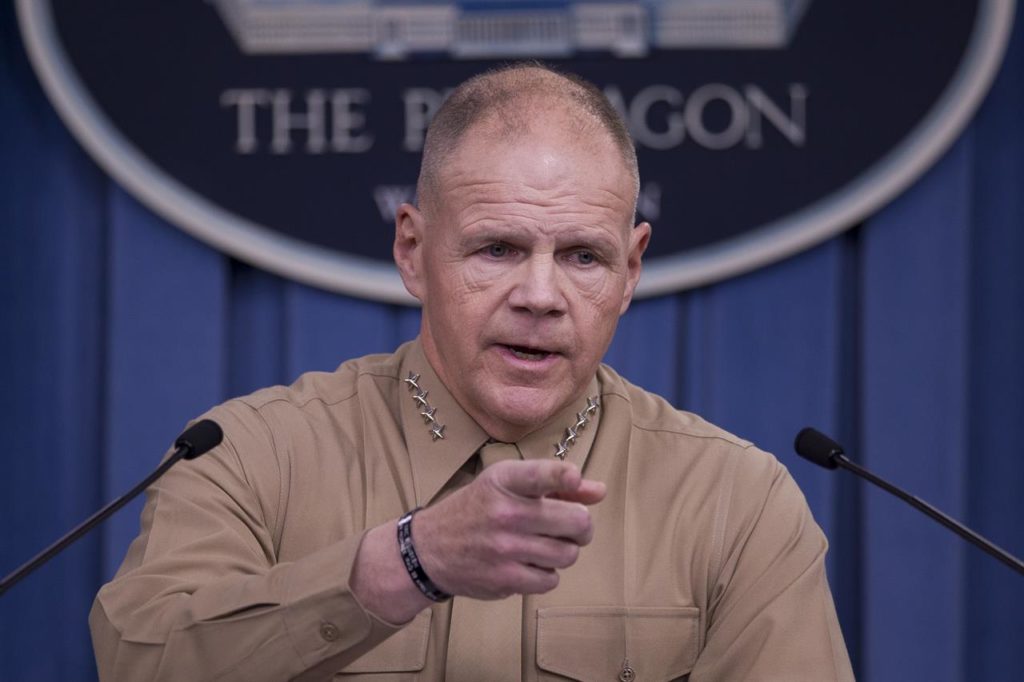
Battered by a nude photo-sharing scandal, the Marine Corps has issued a longer and more detailed social media policy that lays out the professional and legal ramifications for service members culpable of online misconduct. Among the coming changes: a requirement that all Marines sign a statement acknowledging they have read and understand the new guidelines. The adjustments are designed to give leaders more leeway in prosecuting or punishing offenders. Former and current female Marines have reported their photographs and those of women in other services being posted on social media pages without their consent. Investigators are also looking into threatening and obscene comments Marines wrote accompanying the images. The new policy makes it clear how existing rules and the Uniform Code of Military Justice can be used to prosecute offensive, indecent or disrespectful online activities. But it creates no new laws, underscoring the legal quagmire posed by the internet and the constraints on military leaders posed by privacy laws and the First Amendment right of free speech. Released in recent days by Gen. Robert Neller, the Marine commandant, the Corps’ new guidance is one result of the ongoing criminal investigation. “Marines should think twice before engaging in questionable online activities, and must avoid actions online that threaten the morale, operational readiness and security, or public standing of their units, or that compromise our core values,” the policy states, addressing any content or comments that are deemed defamatory, threatening, harassing or discriminating on the basis of race, color, sex, gender, age, religion, national origin, sexual orientation or other criteria. It makes clear that bad behavior can be punished under the military code. The Marine Corps isn’t the only service making changes. The Army is sending out a new message to its force, signed by senior leaders including Gen. Mark Milley, the Army chief of staff, and warning soldiers that online misconduct is unacceptable and passive tolerance of bad behavior by others is also wrong. The Army has routinely updated its social media policy to emphasize treating soldiers with dignity and respect, including in February before the Marine scandal surfaced. The services are urging any victims of improper photo-sharing to come forward. The Naval Criminal Investigative Service said it is getting more tips every day, but investigators acknowledge the legal hurdles in finding and prosecuting offenders. Twenty women have reported that they’re victims. The probe has expanded in the last two weeks, as services beyond the Marines examine if their members are involved. So far, they say no victims from the other services have come forward. No men have said they were victimized. One problem for investigations is that photos were shared by Marines and others on a private Facebook page that was members-only and men-only. And they were mainly housed on a Google Drive linked to the page. The Facebook page has been taken down and that Google drive link is also gone, although officials say the photos likely migrated to other sites. Because the page is gone, investigators must rely on screenshots showing the screen names of military members, as well as reports from victims who heard about or saw the images. Tracking offenders is difficult because many may not use real names. Another challenge: The bulk of the photos are selfies. Many were likely provided willingly by the person in the picture to someone else, or possibly posted on Instagram or another such site. The question then becomes whether sharing an explicit photo that was provided willingly is a crime. A number of states have laws prohibiting so-called revenge pornography, and the military is looking at making a similar addition to its code, a change several senators are suggesting. But such a law may require prosecutors to prove the posting’s intent was to harm the individual and that it had an impact. Both can be difficult to prove. Officials also have to tread carefully to avoid restricting free speech. As an example, attempting to prohibit anyone from looking at or posting a nude photo on the internet would be difficult to do and nearly impossible to enforce. The military, however, has greater ability to punish service members beyond strictly legal violations. Officers can be charged with conduct unbecoming an officer, and service members can be punished for harming the good order and discipline of their unit, or their military service. These broader categories give commanders greater flexibility in ordering administrative punishment or even forcing service members to leave the military. Republished with permission of The Associated Press.
Donald Trump targets F-35, but aircraft means jobs in 45 states

President-elect Donald Trump is vowing to corral the “out of control” cost of the F-35 Joint Strike Fighter. But congressional Republicans and Democrats, aware of the tens of thousands of jobs the aircraft generates in 45 states, will be wary of any plans by Trump to cut the program. A Monday morning tweet from Trump targeting the F-35 doesn’t explain exactly how he’ll save billions of dollars in military purchases while also honoring a campaign vow to rebuild the armed forces. Once Trump is in office, he can propose deep cuts to the F-35 or even elect to cancel the program altogether. But Congress, not the president, controls the government’s purse strings and makes the final decisions about the budget. Built by defense giant Lockheed Martin, the nearly $400 billion price tag for the F-35 makes the program the Pentagon’s most expensive weapons acquisition ever. Despite the huge cost, the program has strong bipartisan support in Congress, where lawmakers view the aircraft as essential to national security. After Trump’s tweet, Lockheed Martin’s shares tumbled, wiping out nearly $4 billion of the company’s market value. The F-35 program made up 20 percent of Lockheed’s total 2015 revenue of $46.1 billion. U.S. government orders made up 78 percent of its revenue last year. “Whoever has this airplane will have the most advanced air force in the world. That’s why we’re building the F35. That’s why it’s important to not only the U.S., our partners and our partners like the Israeli Air force to have this airplane,” said Jeff Babione, general manager of the F-35 program, at a base in Israel. Israel and several other U.S. allies are also buying the F-35, expanding the program’s international footprint. Defense Secretary Ash Carter visited Israel on Monday as Tel Aviv received the first two next-generation F-35 fighter jets that will help preserve the country’s military edge in the volatile Mideast. The F-35, which uses stealth technology to avoid being detected by radar, is being built in different configurations to be used by the Air Force, Navy and Marine Corps. The Navy’s version, for example, is designed to take off and land on an aircraft carrier. Current plans call for the United States to buy nearly 2,500 F-35s. Close to $13 billion will be needed annually between 2016 and 2038 to hit that procurement number, according to the Government Accountability Office. While the F-35 had massive budget overruns early on, the cost has stabilized and even dropped a bit following tough negotiations between the Pentagon and Lockheed Martin, according to Todd Harrison, a defense budget expert at the Center for Strategic and International Studies. “Trump is unlikely to squeeze more blood out of this rock,” Harrison said. Lockheed said that it has worked to lower the price of the F-35 by 60 percent and expected the aircraft to cost $85 million each in 2019 and 2020. But the company’s estimate appears to omit the price of the engine and the cost of development. When those elements are added in, the cost per F-35 in current-year dollars is closer to $138 million, according to Harrison. Companies from 45 states are involved in the F-35’s production, with Texas, Georgia, California, Arizona and Florida playing the leading roles in testing and manufacturing the jet fighter. The company is teamed with more than 1,250 domestic suppliers to produce thousands of components ranging from highly sophisticated radar sensors to parts of the aircraft’s fuselage, according to Lockheed Martin. Overall, the F-35 program is responsible for more than 146,000 U.S. jobs, the company said. The Lockheed Martin plant where the F-35 is being built is located in Texas Republican Rep. Kay Granger‘s district. She’s vice chair of the defense appropriations subcommittee. Rep. Mac Thornberry, the Republican chairman of the House Armed Services Committee, represents the district next door to Granger’s. In a statement Monday, Granger hailed the F-35 delivery to Israel, calling the aircraft “what we need to keep our two countries safe in these dangerous times.” Thornberry’s committee has supported buying more F-35s than the Obama administration had asked for in its budget request. The F-35 will replace an aging inventory of U.S. aircraft that many lawmakers believe are becoming increasingly unsafe to fly. Claude Chafin, a committee spokesman, said Thornberry “shares the president-elect’s determination to have the Pentagon get weapons in the hands of our troops faster, while being better stewards of the taxpayer dollar.” The tweet on the F-35 marks the second time in a week Trump has blasted U.S. aircraft spending. Last week, he tweeted that costs to build new presidential planes by Boeing Corp. were “out of control” and ended the tweet with “Cancel order!” Republished with permission of The Associated Press.
GOP-led House moves ahead with bill to boost military budget
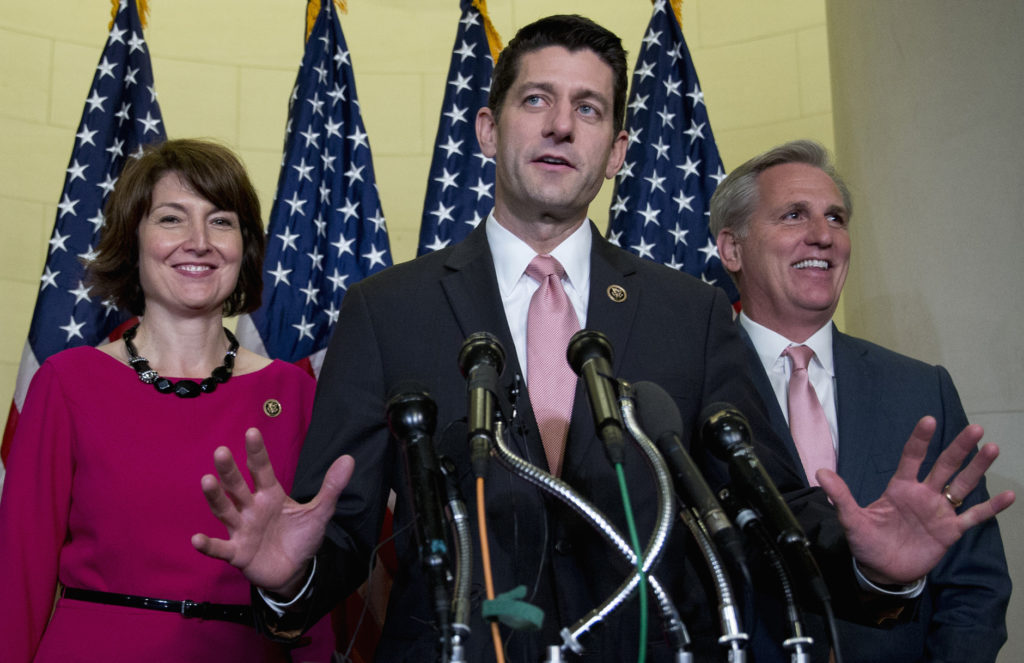
Defying a veto threat, the GOP-led House is pressing ahead with debate on a $602 billion defense policy bill that seeks to halt an erosion of the U.S. military’s combat readiness by purchasing more weapons and forbidding further cuts in troop levels. The legislation also proposes greater oversight of the White House’s National Security Council, prohibits prisoners held at the Guantanamo Bay, Cuba, detention facility from being moved to the U.S., and gives U.S. service members a higher pay raise than the Pentagon recommended. A vote on the bill is expected Wednesday. In a 17-page statement on the policy bill, the White House detailed its objections to numerous provisions and said President Barack Obama would reject the legislation if it reached his desk. Among the measures the Obama administration opposes is a Republican plan to shift $18 billion in wartime spending to pay for additional ships, jet fighters, helicopters and more that the Pentagon didn’t request. To make up for the shortfall in the wartime account, Obama’s successor would submit a supplemental budget to Congress in early 2017, according to U.S. Rep. Mac Thornberry, R-Texas, the plan’s architect and the chairman of the House Armed Services Committee. He and other proponents of the spending increase say it is essential to halt a decline in the military’s ability to respond to global threats that has worsened on Obama’s watch. But Defense Secretary Ash Carter has called the plan a “road to nowhere” that actually degrades combat readiness by retaining troops and buying equipment that can’t be sustained, effectively creating a hollowed out force. In a speech Tuesday, Carter said that the proposal “risks stability and gambles with war funding, jeopardizes readiness, and rejects key judgments of the (Defense) Department.” The House bill would block reductions in the number of active-duty troops by prohibiting the Army from falling below 480,000 active-duty soldiers and adding 7,000 service members to the Air Force and Marine Corps. The legislation also approves a 2.1 percent pay raise for the troops — a half-percentage point higher than the Pentagon asked for in its budget submission. Republicans sidestepped a thorny debate over whether women should be required to sign up for a potential draft after the House Rules Committee stripped from the bill a provision to erase Selective Service gender restrictions. In its place was a measure to study whether the Selective Service is even needed at a time when the armed forces get plenty of qualified volunteers, making the possibility of a draft remote. The U.S. has not had a military draft since 1973, in the waning years of the Vietnam War era. A growing number of lawmakers have suggested abolishing the Selective Service, which costs $23 million a year to operate. “It’s like rethinking dinosaurs,” said U.S. Sen. John McCain, R-Ariz., the chairman of the Senate Armed Services Committee. “They’re not coming back. The draft is not coming back.” Republicans approved an amendment authored by Thornberry to curb what they say is micromanagement of military operations by National Security Council staff. Thornberry said he has personally heard from troops in combat who have received intimidating calls from junior White House staffers even though their role is to coordinate policy and advise the president. To increase oversight and accountability, Senate confirmation of the president’s national security adviser would be required if the size of the National Security Council staff exceeds 100 employees, according to the amendment. Republicans have inserted into the bill a longstanding ban on moving prisoners held at Guantanamo Bay to the United States. The embargo has kept Obama from fulfilling a campaign pledge to shutter the facility. The White House said the restrictions interfere with the executive branch’s authority to decide when and where to prosecute prisoners. The legislation also rejects the Pentagon’s request for another base closure round and adds money to restore and modernize military facilities. The Defense Department wants to shutter excess bases and installations and use the savings to strengthen the armed forces. Republished with permission of The Associated Press.
U.S. Senate candidate Jonathan McConnell releases first statewide radio ad
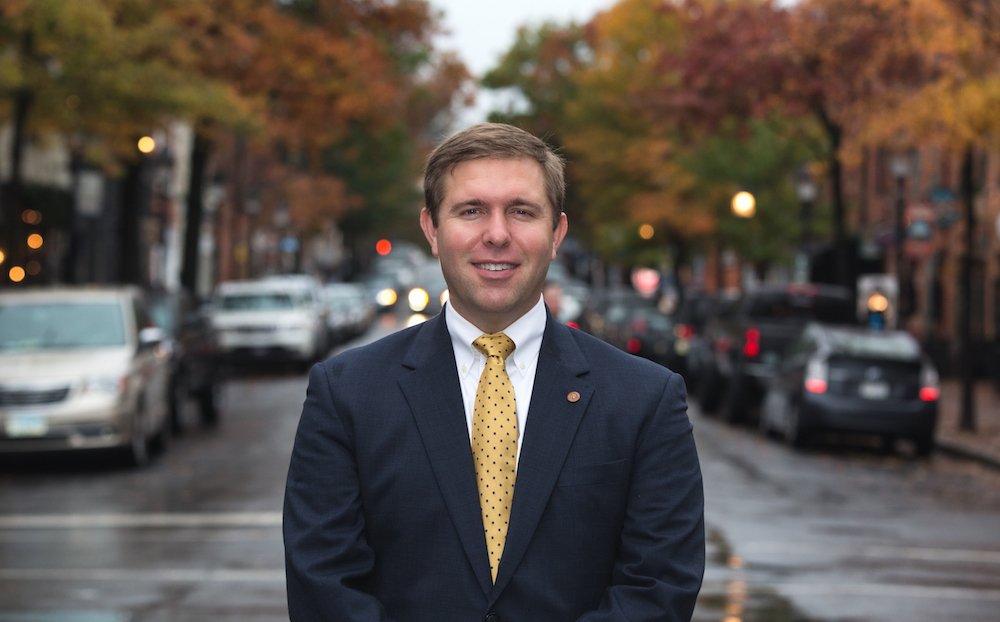
Republican candidate and conservative businessman Jonathan McConnell released his first statewide radio ad Thursday as he makes a run to represent Alabama in the U.S. Senate. In the 1-minute, six-second ad is being emailed and shared with supporters and donors across the state. In it, the former Captain in the United States Marine Corps vows to “keep [America] safe from ISIS terrorists” and will “say no to unchecked Syrian immigrants on American soil.” McConnell is challenging incumbent Richard Shelby (R-AL) for the GOP nomination in next November’s general election for the Senate seat, claiming Shelby has “abused [his] power for profit, and Alabama has paid the price.” Listen to the McConnell ad below: Ad transcript: ANNOUNCER: Small businessman, Marine, outsider, that’s conservative Republican Jonathan McConnell. Captain Jonathan McConnell led over a hundred Marines in Iraq. Later he founded a security company that protects American ships from pirates and terrorists. JONATHAN MCCONNELL: Hi, I’m Jonathan McConnell. For over 40 years Senator Shelby and career politicians like him have abused their power for profit, and Alabama has paid the price. While our debt skyrockets politicians continue to put their interests ahead of ours. Enough is enough. America’s in crisis, but Washington’s career politicians only know how to protect themselves. As your senator, I’ll focus on protecting you and your family. I’ll work to eliminate the debt, and illegal immigration, repeal Obamacare, and keep us safe from ISIS terrorists and I’ll say no to unchecked Syrian immigrants on American soil. I’m Jonathan McConnell. I approve this message because we need leaders who will fight for the people of Alabama, not themselves. ANNOUNCER: Captain Jonathan McConnell, the tough tested conservative Christian Republican for U.S. Senate. Paid for by Friends of Jonathan McConnell.
