
Election skeptics slow to get sweeping changes in GOP states
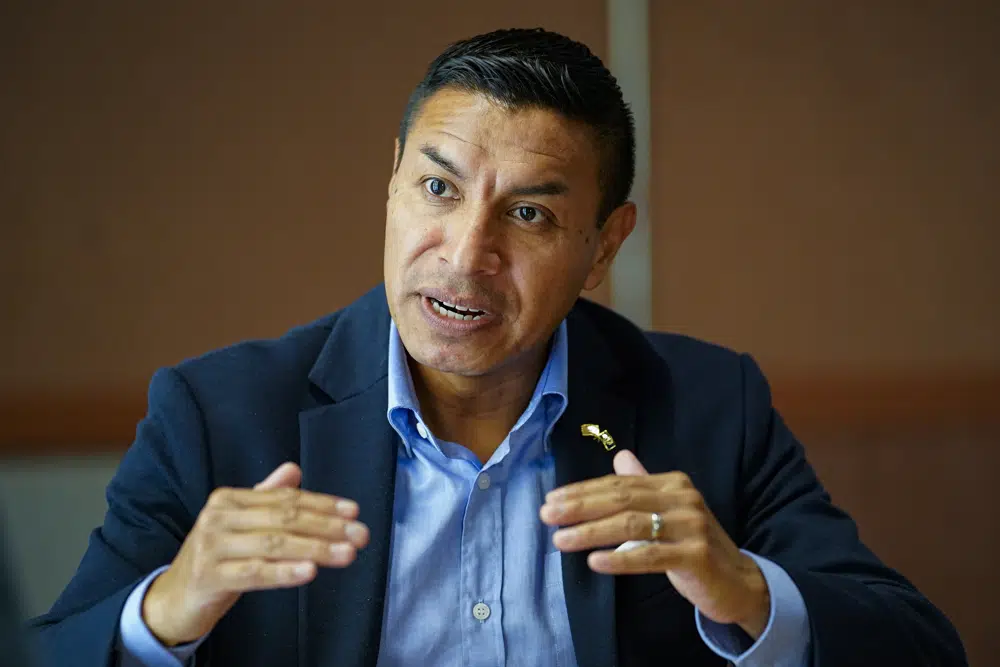
Republicans in some heavily conservative states won their campaigns for secretary of state last year after claiming they would make sweeping changes aimed at keeping fraud out of elections. So far, their efforts to make good on their promises are mixed, in some cases because their rhetoric has bumped up against skepticism from members of their own party. Voters in politically pivotal swing states such as Arizona, Michigan, and Nevada rejected candidates seeking to oversee elections who had echoed former President Donald Trump’s false claims about the 2020 presidential election. But newly elected secretaries of state in Alabama, Indiana, and Wyoming who had questioned the legitimacy of that election won easily in those Republican-dominated states. They are now facing the task of backing up their campaign pledges in states where Republicans have already set strict election laws. In Indiana, Secretary of State Diego Morales has been relatively quiet. He has not been making the rounds at the Statehouse trying to persuade lawmakers to embrace the wide-ranging tightening of voting rules he promoted as a candidate. After defeating the incumbent secretary of state for the Republican nomination last summer, Morales dialed back his description of Joe Biden’s 2020 presidential election as a “scam” and his calls for tighter voting laws. That push included cutting Indiana’s 28-day early voting period in half and requiring new voters to prove their U.S. citizenship when registering. No bills for such steps were introduced for this year’s legislative session. Morales, who was an aide to Mike Pence when the former vice president was governor, also did not seek any money in his budget request to lawmakers for creating an “election task force,” which he had discussed as a candidate, that would investigate voting “shenanigans” around the state. A concept backed by Morales for requiring voters to include a copy of their driver’s license with a mail-in ballot application is being sponsored by a Republican lawmaker, but he said he wasn’t working with Morales on the proposal. Morales’ office has declined interview requests from The Associated Press since he took office on January 1. Kegan Prentice, the office’s legislative director, said Morales was “currently focused on the ongoing transition.” During remarks at an early January inaugural ceremony, Morales continued his campaign theme of promoting “election integrity” without giving specifics. “My priority is to make Indiana a national model for election confidence and integrity,” he said. Indiana House Speaker Todd Huston, also a Republican, said recently he had talked with Morales and told him he was “comfortable” with the state’s election laws. “I think our election laws are as good as any in the country,” Huston said. Morales was among the otherwise unsuccessful candidates associated with the America First Secretary of State Coalition, which called for large-scale changes to elections with candidates aligned with Trump’s views. The group supported losing candidates in several battleground states. They claimed widespread fraud and manipulation of voting machines, but there has been no evidence of either as exhaustive reviews in states lost by Trump have not revealed wrongdoing. That hasn’t stopped Republican candidates, particularly in contested primaries, from parroting the false claims that have taken hold among the party’s supporters. A large segment of Republicans, 58%, still believe Biden’s 2020 victory was not legitimate, according to an October poll by The Associated Press-NORC Center for Public Affairs Research. While Alabama’s Wes Allen and Wyoming’s Chuck Gray were not on the America First coalition’s candidate list, they also raised doubts about the 2020 vote. Allen repeated a debunked claim calling the 31-state Electronic Registration Information Center organization a “Soros-funded, leftist group,” a reference to liberal billionaire George Soros. The voter registration data-sharing partnership is designed to maintain accurate voter rolls by identifying people who have moved or died. It’s funded by states after receiving initial startup support from The Pew Charitable Trusts. Allen’s first official act was to withdraw Alabama from the group, citing privacy concerns. Indiana and Wyoming weren’t part of the organization. Even though Wyoming gave Trump his widest victory margins in 2016 and 2020, Gray’s election denials worried some of his fellow Republicans. The former state legislator and right-wing radio host often showed “2000 Mules,” a film that made unsubstantiated claims about ballot fraud, during his campaign events last year. He solidly beat a fellow Republican lawmaker who said the 2020 presidential outcome wasn’t in doubt. A few Republicans questioned whether Gray should be stripped of his election oversight role given his views, but that idea has received little support. Instead, he has received a warm welcome from Wyoming lawmakers considering several election bills that are moving ahead. One would prohibit “ballot harvesting,” or gathering others’ completed ballots for delivery, while another would implement new requirements for voting machines that would, in part, ensure they could not be connected to the internet. But so far, there is no legislation to follow through on Gray’s campaign proposals to ban ballot drop boxes or electronic voting machines, which despite mainly paper balloting in Wyoming, are available in every county to help voters with disabilities. That reflects the reality of trying to implement the most far-reaching election campaign promises in a heavily Republican state. In January, Gov. Mark Gordon made a point in his state of the state speech of saying that Wyoming counts on election integrity because of its “professional and dedicated” county clerks. But going off-script, Gordon hinted at Gray’s challenges ahead: “And I’m thrilled that our secretary of state takes that charge very seriously.” Republished with the permission of The Associated Press.
25 GOP governors ask Biden administration to hit pause on broader clean water rule

Twenty-five Republican governors oppose a revised federal rule regulating U.S. waterways, citing uncertainty from an undecided U.S. Supreme Court case related to the rule. The governors sent a letter to the Biden administration on Monday asking it to delay the implementation of the revised Waters of the United States rule since the U.S. Supreme Court is currently considering Sackett v. EPA. The revised WOTUS rule, released on Dec. 30, reinstates pre-2015 water protections under the federal Clean Water Act. The rule was scaled back under the Trump administration, which triggered lawsuits from environmental groups. “The substance of the rule hinders State governments as we seek to give clarity and consistency to businesses, farms, and individuals regarding the regulatory framework for water,” the 25 GOP governors wrote. “The broad definitions used in the 514- page document only add to the confusing and complicated history of WOTUS. In fact, it appears that the EPA is seeking to regulate private ponds, ditches, and other small water features.” The U.S. Environmental Protection Agency said in December the revised rule applies to “traditional navigable waters, the territorial seas, interstate waters, as well as upstream water resources that significantly affect those waters.” “When Congress passed the Clean Water Act 50 years ago, it recognized that protecting our waters is essential to ensuring healthy communities and a thriving economy,” EPA Administrator Michael Regan said in a statement. “Following extensive stakeholder engagement, and building on what we’ve learned from previous rules, EPA is working to deliver a durable definition of WOTUS that safeguards our nation’s waters, strengthens economic opportunity, and protects people’s health while providing greater certainty for farmers, ranchers, and landowners.” The governors also questioned the timing of the new rule, given ongoing inflation. “Another burdensome and overbroad regulation from the federal government could not come at a worse time for America,” they wrote. “Having already squandered much of America’s energy independence, you should not increase costs for consumers by tying up energy production with even more red tape.” Environmental groups praised the Biden administration’s revised WOTUS rule. “This comes at a time when we’re seeing unprecedented attacks on federal clean water protections by polluters and their allies,” Jon Devine, director of federal water policy for the Natural Resources Defense Council, said in a statement last month. “While the nation still has significant work to do to fully protect important waters, it’s encouraging to see the country taking a step in the right direction to protect the waters we need for everyone’s health and the environment.” The letter was signed by Idaho Gov. Brad Little, Alabama Gov. Kay Ivey, Alaska Gov. Mike Dunleavy, Arkansas Gov. Sarah Sanders, Florida Gov. Ron DeSantis, Georgia Gov. Brian Kemp, Indiana Gov. Eric Holcomb, Iowa Gov. Kim Reynolds, Mississippi Gov. Tate Reeves, Missouri Gov. Mike Parson, Montana Gov. Greg Gianforte, Nebraska Gov. Jim Pillen, Nevada Gov. Joe Lombardo, New Hampshire Gov. Chris Sununu, North Dakota Gov. Doug Burgum, Ohio Gov. Mike DeWine, Oklahoma Gov. Kevin Stitt, South Carolina Gov. Henry McMaster, South Dakota Gov. Kristi Noem, Tennessee Gov. Bill Lee, Texas Gov. Greg Abbott, Utah Gov. Spencer Cox, Virginia Gov. Glenn Youngkin, West Virginia Gov. Jim Justice, and Wyoming Gov. Mark Gordon. Republished with the permission of The Center Square.
GOP governors to Joe Biden: Student loan plan will be costly for American taxpayers
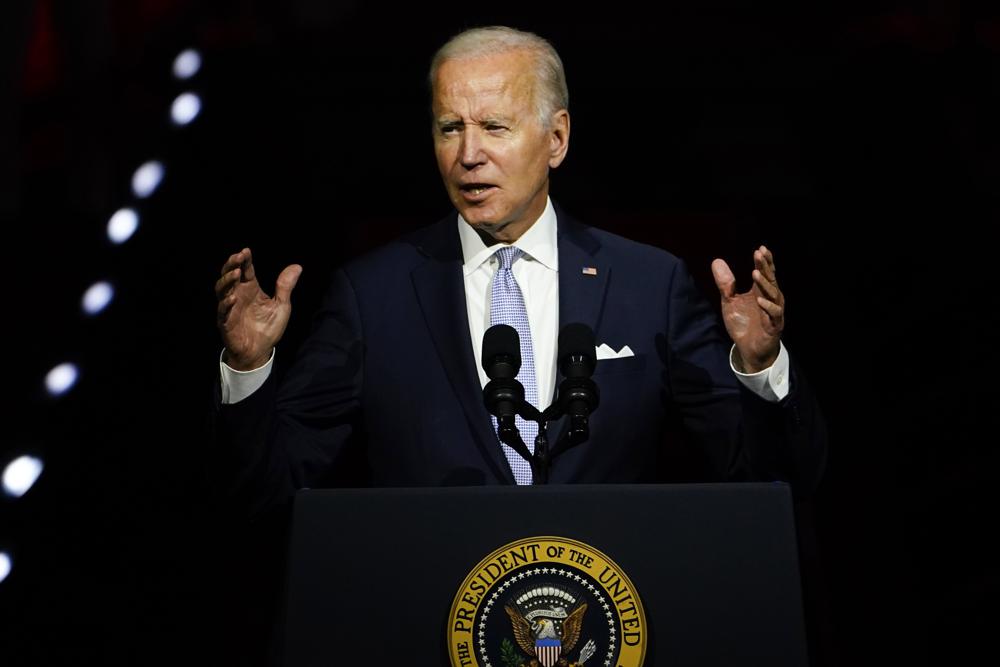
President Joe Biden’s student loan forgiveness plan will be costly for American taxpayers, a coalition of GOP governors said in a letter sent Monday to the White House. The letter, signed by 22 GOP governors, tells Biden to “withdraw” the plan, citing cost estimates of up to $600 billion, or $2,000 per American taxpayer. “As governors, we support making higher education more affordable and accessible for students in our states, but we fundamentally oppose your plan to force American taxpayers to pay off the student loan debt of an elite few,” the coalition wrote. The coalition includes Alabama Gov. Kay Ivey, Alaska Gov. Mike Dunleavy, Arizona Gov. Doug Ducey, Arkansas Gov. Asa Hutchinson, Florida Gov. Ron DeSantis, Georgia Gov. Brian Kemp, Idaho Gov. Brad Little, Iowa Gov. Kim Reynolds, Maryland Gov. Larry Hogan, Missouri Gov. Mike Parson, Montana Gov. Greg Gianforte, Nebraska Gov. Pete Ricketts, New Hampshire Gov. Chris Sununu, North Dakota Gov. Doug Burgum, Ohio Gov. Mike DeWine, Oklahoma Gov. Kevin Stitt, South Carolina Gov. Henry McMaster, South Dakota Gov. Kristi Noem, Tennessee Gov. Bill Lee, Texas Gov. Greg Abbott, Utah Gov. Spencer Cox, and Wyoming Gov. Mark Gordon. “At a time when inflation is sky high due to your unprecedented tax-and-spend agenda, your plan will encourage more student borrowing, incentivize higher tuition rates, and drive-up inflation even further, negatively impacting every American,” the governors added. Biden announced the plan last month during an address from the White House. “Many people – many people can’t qualify for a mortgage or buy a home because the debt they continue to carry,” Biden said. “A lot of folks are even putting off starting families because of the cost, and the dream of starting or owning your business is just way off in the distance with a debt that’s – that so many are saddled with.” The plan forgives $10,000 in federal student loan debt for those who make less than $125,000 annually, while federal Pell Grant recipients will be forgiven $20,000. The Committee for a Responsible Federal Budget has estimated that the plan’s total cost would be $440 to $600 billion. Republished with the permission of The Center Square.
Republican governors call Democrat spending bill “reckless”

Twenty-one Republican governors called the Inflation Reduction Act “another reckless tax and spending spree” in a joint statement released Thursday. The legislation, dubbed the “Democrats spending bill” by Republicans, would reduce the federal deficit, Senate Democrats said in a summary. But the $740 billion bill would hurt all Americans, the Republican governors said. “While denying recession, Democrats want to raise taxes on businesses and manufacturers, which will force higher costs onto consumers, worsen inflation, and aggravate shortages,” they said in the letter. “With sky-high prices at the pump, the last thing Americans need is for Democrats to punish energy producers, which will ultimately hurt working families struggling to pay for gas, goods, food, and utilities.” Democrats maintain the measure would reduce inflation by investing taxpayer dollars into domestic energy production and manufacturing and lowering carbon emissions by 40% by 2030. Republicans have maintained that Biden’s policies hindered energy production in the oil and gas industry, leading to record high gas prices this summer, which in part contributed to 40-year high inflation. They point to the president’s executive orders ending new leases for oil production on federal lands, ending the Keystone Pipeline construction, and other restrictions on the industry. Democrats say their bill also would allow Medicaid to negotiate prescription drug prices, something critics say will discourage investment in new treatments. The Affordable Care Act also would be extended for three years under Democrats’ plans. The bill also includes up to $7,500 in tax credits on the purchase of an electric or fuel cell vehicle made in America. Large corporations would be required to pay a minimum 15% tax, and the measure would not raise taxes on Americans making less than $400,000 a year, according to remarks by President Joe Biden. The joint statement opposing the Inflation Reduction Act was made by South Carolina Gov. Henry McMaster, Georgia Gov. Brian Kemp, Alabama Gov. Kay Ivey, Arizona Gov. Doug Ducey, Arkansas Gov. Asa Hutchinson, Florida Gov. Ron DeSantis, Idaho Gov. Brad Little, Indiana Gov. Eric Holcomb, Iowa Gov. Kim Reynolds, Mississippi Governor Tate Reeves, Missouri Gov Mike Parson, Montana Gov. Greg Gianforte, Nebraska Gov. Pete Ricketts, North Dakota Gov. Doug Burgum, New Hampshire Gov. Chris Sununu, Oklahoma Gov. Kevin Stitt, Tennessee Gov. Bill Lee, Texas Gov. Greg Abbott, Utah Gov. Spencer Cox, Virginia Gov. Glenn Younkin, and Wyoming Gov. Mark Gordon. Republished with the permission of The Center Square.
Despite push, states slow to make Juneteenth a paid holiday

Recognition of Juneteenth, the effective end of slavery in the U.S., gained traction after the police killing of George Floyd in 2020. But after an initial burst of action, the movement to have it recognized as an official holiday in the states has largely stalled. Although almost every state recognizes Juneteenth in some fashion, many have been slow to do more than issue a proclamation or resolution, even as some continue to commemorate the Confederacy. Lawmakers in Alabama, Mississippi, South Carolina, Tennessee, and other states failed to advance proposals this year that would have closed state offices and given most of their public employees paid time off for the June 19 holiday. That trend infuriates Black leaders and community organizers who view making Juneteenth a paid holiday the bare minimum state officials can do to help honor an often overlooked and ignored piece of American history. “Juneteenth marks the date of major significance in American history. It represents the ways in which freedom for Black people have been delayed,” said Democratic Rep. Anthony Nolan, who is Black, while arguing in favor of making Juneteenth a paid holiday in Connecticut on the House floor. “And if we delay this, it’s a smack in the face to Black folks.” Juneteenth commemorates when Union soldiers brought the news of freedom to enslaved Black people in Galveston, Texas, in 1865, two months after the Confederacy had surrendered in the Civil War and about 2 1/2 years after the Emancipation Proclamation freed slaves in Southern states. Last year, Congress and President Joe Biden moved swiftly to make Juneteenth a national holiday. It was the first time the federal government had designated a new national holiday since approving Martin Luther King Jr. Day in 1983. Yet the move didn’t result in an automatic adoption from most states. In Alabama, Republican Gov. Kay Ivey issued another proclamation marking Juneteenth a state holiday earlier this week after state lawmakers refused to take action on a bill during their legislative session even after she voiced strong support for making it a permanent holiday back in 2021. The state closes down for Confederate Memorial Days in April. Similarly, Wyoming’s Republican Gov. Mark Gordon issued a statement last June saying he would work with lawmakers to make it a state holiday, but no legislation was filed during the 2022 session. In Tennessee, Republican Gov. Bill Lee quietly tucked enough funding — roughly $700,000 — to make Juneteenth a state-paid holiday in his initial spending plan for the upcoming year. Despite the bill gaining traction in the state Senate, GOP legislative leaders maintained there wasn’t enough support for the idea even as Tennessee law currently designates special observances for Robert E. Lee Day, Confederate Decoration Day, and Nathan Bedford Forrest Day. “I asked many people in my district over the last few days, well over 100 people, if they knew what Juneteenth was, and only two of them knew,” said Republican Sen. Joey Hensley, who is white and voted against the proposal. “I just think we’re putting the cart before the horse making a holiday that people don’t know about.” In South Carolina, instead of working to approve Juneteenth as a holiday, Senate lawmakers unanimously advanced a bill that would allow state employees to choose any day they want to take off instead of the Confederate Memorial Day, currently enshrined as a paid holiday in state law. However, the House sent the bill to a committee, where it died without a hearing when the Legislature adjourned for the session. At the same time, many of these Republican-led areas have advanced bills limiting what can be taught about systematic racism in classrooms while also spiking proposals aimed at expanding voting rights and police reform. This year, nearly 20 states are expected to close state offices and give most of their public employees time off. At least six states officially adopted the holiday over the past few months, including Connecticut, Colorado, Georgia, Maryland, South Dakota, Utah, and Washington. A bill introduced in California passed the Assembly and moved to the Senate this month, and individual cities such as Los Angeles have already signed proclamations making Juneteenth official. “Becoming a state holiday will not merely give employees a day off; it will also give residents a day to think about the future that we want, while remembering the inequities of the past,” said Democratic Del. Andrea Harrison, who sponsored the Juneteenth legislation in Maryland this year. “It will help us to reflect how far we’ve come as a nation, how much more we need to do as humankind.” Attempts to give Juneteenth the same deference as Memorial Day or July Fourth didn’t begin to gain traction until 2020 when protests sparked a nationwide push to address race after the police killing of George Floyd in Minneapolis and the deaths of other Black people by police officers. “George Floyd protests against police brutality brought awareness to Juneteenth because there were people of all races learning about its significance for the first time following a public push to self-educate and learn more about Black history, culture and injustices,” said Tremaine Jasper, a resident and business owner in Phoenix who has attended Juneteenth celebrations across Arizona with his family. Some cities in Arizona, including Phoenix, have declared Juneteenth an official holiday, paying city employees and closing municipal buildings. However, lawmakers are not currently considering statewide recognition. “There are so many other important issues that we need to tackle — education, political issues, reparations — before we prioritize making Juneteenth a statewide holiday,” Jasper said, noting that those looking to celebrate know where to go. Jasper, who was born and raised in Arizona, said it is going to be an “uphill battle” to get the state to recognize Juneteenth because there is not a large enough Black population outside of its largest cities to make the push. Arizona was also slow in recognizing Martin Luther King Jr. Day, not doing so until 1992. It was one of the last states to officially recognize the civil rights leader. Republished with the permission of The
Governors pan SEC climate disclosure proposal as unprecedented federal overreach
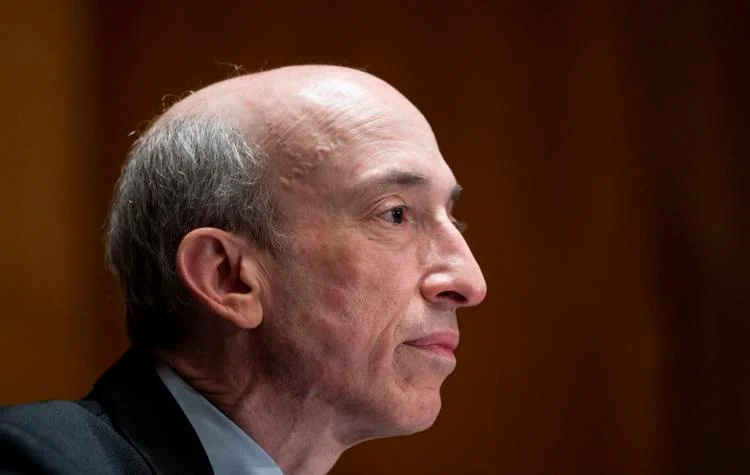
Sixteen Republican governors are asking the Biden administration to withdraw a proposed rule by the U.S. Securities and Exchange Commission that would require companies to disclose some climate-related investment information in annual reports and registration. The governors called the move an “unprecedented level of federal overreach” in a letter sent Tuesday to President Joe Biden and SEC Commissioner Gary Gensler. “The proposed rule will harm businesses and investors in our states by increasing compliance costs and by larding disclosure statements with uncertain and immaterial information that the federal government – let alone the SEC – is not equipped to judge,” the governors said in their letter. The governors said it’s OK for companies to disclose the information voluntarily. “However, since climate change models vary dramatically, the notion of evaluating investment risk based on such uncertain variables is inherently subjective and unreliable,” they wrote. “Moreover, such disclosures would serve to confuse investors as to how to judge true financial risk, significantly reducing market efficiency. It is precisely the type of question where government should not impose its own judgments of what constitutes material risk in place of managers.” The rule “appears part of an ongoing effort across the federal government to penalize companies involved in traditional energy development,” the governors said. “Until recently, the Biden administration explicitly refused to issue new oil and gas leases on federal lands and is now considering only a fraction of the lands that should be available,” they wrote. “In addition, the Council on Environmental Quality is rolling back reforms to the environmental review process, the President has denied key pipeline and other permitting applications, and officials throughout the Biden Administration are rhetorically discouraging investment in oil and gas development.” SEC officials said companies are interested in climate-related information. “The results of multiple recent surveys indicate that climate risks are among the most important priorities for a broad set of large asset managers,” the SEC said in its 140-page report. “PWC reported in their Annual Global CEO Survey that in 2016, only 39% of asset and wealth management CEOs reported that they were concerned about the threats posed by physical risks brought about by climate change, whereas this figure increased to 70% in 2021.” The SEC extended the comment period on the proposed rule from May 20 to June 17. The commission is accepting electronic comments. The letter is signed by Kay Ivey of Alabama, Mike Dunleavy of Alaska, Doug Ducey of Arizona, Asa Hutchinson of Arkansas, Brad Little of Idaho, Kim Reynolds of Iowa, Tate Reeves of Mississippi, Mike Parson of Missouri, Greg Gianforte of Montana, Pete Ricketts of Nebraska, Doug Burgum of North Dakota, Kevin Stitt of Oklahoma, Kristi Noem of South Dakota, Greg Abbott of Texas, Spencer Cox of Utah and Mark Gordon of Wyoming. Republished with the permission of The Center Square.
Kay Ivey signs on to joint U.S.-Canada letter in support of protesting truck drivers
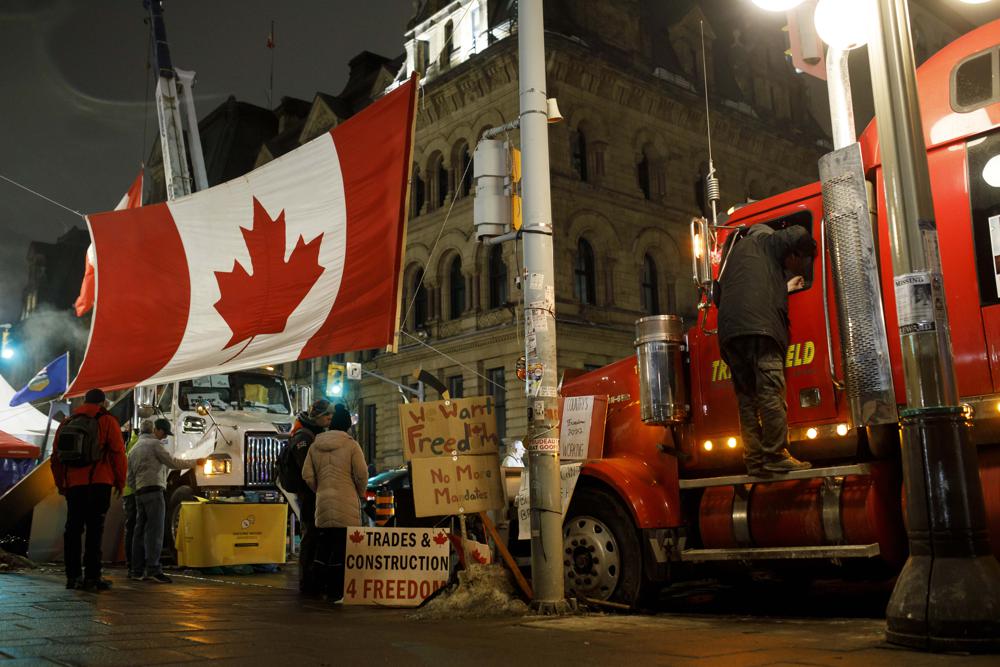
Governor Kay Ivey, along with 15 other governors, has signed on to a letter to Prime Minister Justin Trudeau and President Joe Biden asking them to immediately reinstate the vaccine and quarantine exemptions available to cross border truck drivers. Since late January, Canadian truckers have blocked some of the busiest border crossings between Canada and the U.S. The demonstrations initially focused on Canada’s vaccine requirement for truckers entering the country but quickly became a broad attack on COVID-19 precautions and Trudeau himself. Demonstrations and blockades have shut down border crossings into the U.S. and inflicted economic damage on both countries. Ivey stated on Twitter, “The truck drivers we’ve seen peacefully protesting in Canada simply want common sense reinstated & freedoms protected. I support them and am joining my fellow governors in calling Prime Minister Trudeau & @POTUS to immediately allow exemptions for cross border truck drivers. These types of unnecessary mandates would continue to exacerbate supply chain and economic issues.” The letter emphasizes the need for the border to remain open because of COVID-19 supply chain issues. The letter states, “The timing of your decision to terminate the vaccine and quarantine exemptions could not have been worse, as North America already faces grave supply chain constraints. These constraints, combined with increasing inflation, place significant burdens on the residents of Canada and the United States. Furthermore, transportation associations have informed us that the lack of exemptions will force thousands of drivers out of the trucking industry, which is already facing a significant workforce shortage. The removal of these exemptions is ultimately unnecessary, and we cannot afford to lose any more truck drivers who transport food and other vital supplies across the border.” Last week, the White House stated, “The two leaders agreed that the actions of the individuals who are obstructing travel and commerce between our two countries are having significant direct impacts on citizens’ lives and livelihoods.” Other governors who signed the letter include Greg Gianforte (MT), Mike Dunleavy (AK), Asa Hutchinson (AR), Brian Kemp (GA), Brad Little (ID), Kim Reynolds (IA), Tate Reeves (MS), Mike Parson (MO), Pete Ricketts (NE), Doug Burgum (ND), Henry McMaster (SC), Kristi Noem (SD), Bill Lee (TN), Spencer Cox (UT), and Mark Gordon (WY).
Lloyd Austin to governors: Guard troops must get COVID-19 vaccine

Defense Secretary Lloyd Austin, in letters to seven governors, is reaffirming the need for members of their states’ Army and Air National Guards to get the mandatory COVID-19 vaccine or lose their Guard status. In nearly identical letters signed late last week, Austin tells the governors that the virus “takes our service members out of the fight, temporarily or permanently, and jeopardizes our ability to meet mission requirements,” according to copies obtained Monday by The Associated Press. The letters, which have not been publicly released, come as the military services begin to ramp up the number of active-duty troops being discharged for refusing the vaccine. Nearly 600 Marines, airmen, and sailors have been thrown out of the military or dismissed from entry-level training at boot camps as of last week. Two of the letters — to Alaska and Texas state leaders — note that they have an ongoing lawsuit over the vaccine and that, Austin said, limited his ability to comment further on their concerns. Texas, Oklahoma, and Alaska filed lawsuits challenging the military’s vaccine mandate, but a federal judge has already rejected the Oklahoma challenge. The Alaska governor was one of five Republican state leaders who sent a letter to Austin asking him not to enforce the mandate on National Guard troops. The other four were governors from Wyoming, Mississippi, Iowa, and Nebraska. The latest letters were to those five governors along with Idaho and Texas. Austin’s response to them mirrors the letter he sent in late November to Oklahoma Gov. Kevin Stitt, defending the department’s vaccine mandate as necessary to maintain military readiness and the health of the force. At the time, he warned that failure to get the vaccine “may lead to a prohibition on the member’s participation in drills and training” and could “jeopardize the member’s status in the National Guard.” In the new letters, Austin changed a keyword in that sentence, telling the governors that failure to get the vaccine “will” lead to prohibiting members from participating in drills and jeopardize their status. “To ensure that we maintain a healthy and ready military force capable of accomplishing our mission to defend this Nation and to protect the American people, vaccination against COVID-19 is an essential military readiness requirement for all components and units of the military,” including the Guard, he said. The governors getting the letters were: Wyoming Gov. Mark Gordon, Alaska Gov. Mike Dunleavy, Mississippi Gov. Tate Reeves, Nebraska Gov. Pete Ricketts, Iowa Gov. Kim Reynolds, Idaho Gov. Brad Little, and Texas Gov. Greg Abbott, all Republicans. Alaska joined the lawsuit filed by Texas Attorney General Ken Paxton. Texas has more than 20,000 National Guard members, the largest contingent of any state. About 40% of its Army National Guard are currently refusing to receive the COVID-19 vaccination “for either religious accommodation needs or otherwise,” according to the lawsuit filed in a federal court in East Texas. It added that more than 200 airmen in the Texas Guard are also refusing the vaccine. The deadline for Air Guard members to get the shots has passed, but Army Guard members have until this June. Thousands of members of the active-duty military and the reserves are seeking medical, administrative, or religious exemptions or refusing the shots. But overall, the percentage of troops, particularly active duty members, who quickly got the vaccine is high – with at least 97% in each service getting at least one shot as of last week. According to the Centers for Disease Control and Prevention, nearly 87% of the U.S. population age 18 or older has gotten at least one shot. Republished with the permission of the Associated Press.
Kay Ivey wants Joe Biden to prioritize getting states 2020 Census data
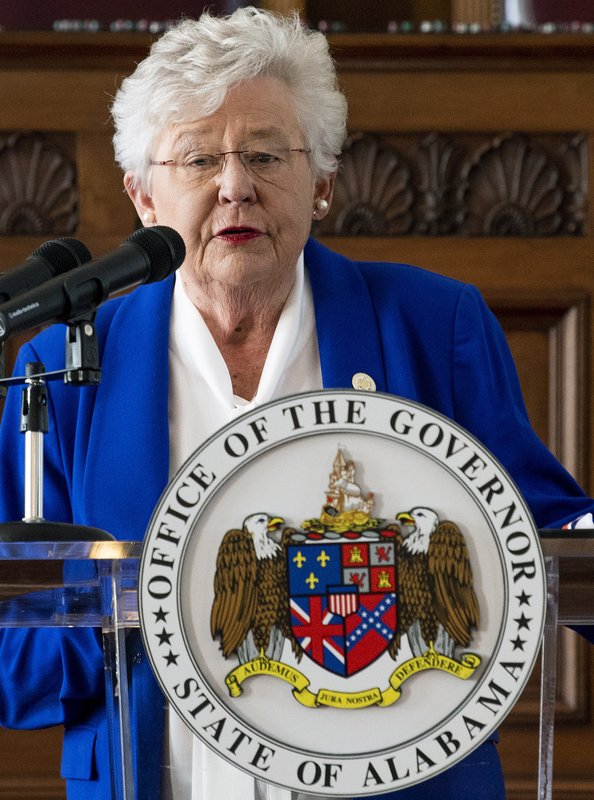
Gov. Kay Ivey and fourteen other governors wrote a joint letter to Secretary of Commerce Gina Raimondo urging a swift release of the census redistricting information. The letter addresses the main issue: the delay in releasing the data has made state legislatures unable to redraw district lines before the 2022 election cycle. The letter stated, “While we recognize the difficulties associated with completing a decennial census amid a pandemic, the ongoing delay in the release of 2020 Census redistricting data places our states in a nearly impossible situation to redraw lines prior to the 2022 election cycle. Consequently, we urge you to release redistricting data this month or as soon as possible prior to the delayed release date of September 30, 2021, and the release of the “legacy format” data on August 16, 2021.” The 2020 Census became a challenge to complete during the pandemic. In July 2020, Ivey warned the state’s current participation rate was 59.8%, or two percentage points behind the national average. At the time, Alabama was in danger of losing House seats because of a lack of participation. On Twitter, Ivey commented, “The stakes were high for Alabama in the #2020Census, and because of our efforts on the local and state levels, we succeeded. I’m proud to join fellow governors in urging the Biden Administration to not further delay the release of the redistricting data.” The stakes were high for Alabama in the #2020Census, and because of our efforts on the local and state levels, we succeeded. I’m proud to join fellow governors in urging the Biden Administration to not further delay the release of the redistricting data. #alpolitics @SecRaimondo pic.twitter.com/oMxsIodsoK — Governor Kay Ivey (@GovernorKayIvey) June 22, 2021 The letter continued, “Districts for the U.S. House of Representatives cannot be drawn until the data has been released. Districts for state legislatures also cannot be drawn until this data has been released. Districts for county, parish, township and municipal governing bodies cannot be drawn until states have had the opportunity to draw congressional and state legislative districts. Lastly, districts for school district seats cannot be drawn until county, parish, township, and municipal governing bodies have had the opportunity to draw their own respective districts. As a result of such negative impacts to our constitutional responsibilities, we seek the release of redistricting data as soon as possible—and in line with traditional timelines—so that states may begin to perform important redistricting tasks on behalf of our constituents.” Other governors signing the letter were Asa Hutchinson (AR), Brian Kemp (GA), Ron DeSantis (FL), Doug Ducey (AZ), Kim Reynolds (IA), Mike Parson (MO), Pete Ricketts (NE), Greg Gianforte (MT), Mike DeWine (OH), Henry McMaster (SC), Bill Lee (TN), Greg Abbott (TX), and Mark Gordon (WY), Doug Burgum (ND).
Kay Ivey joins 19 other governors urging action at the U.S. border
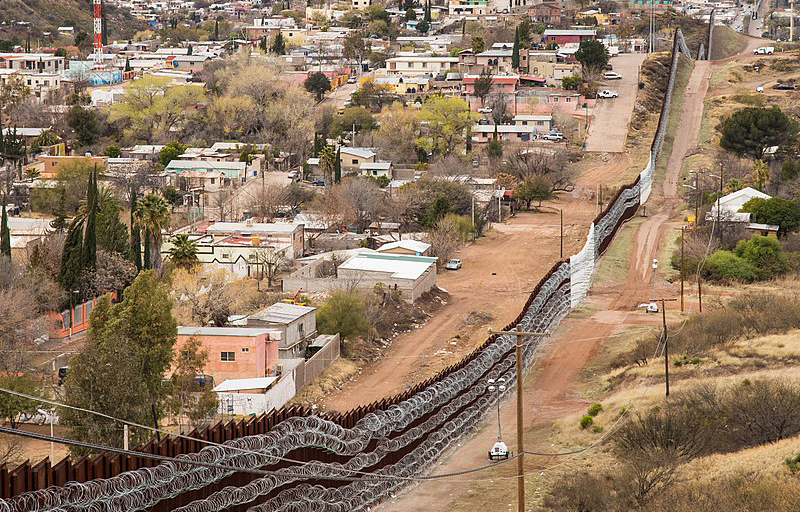
Today Gov. Kay Ivey joined 19 other governors in a call for Joe Biden to take action and reverse their policies regarding the U.S. border. The group wrote a letter to President Biden and Vice-President Kamala Harris describing worsening conditions at the border. In April, Arizona’s governor Doug Ducey declared a state of emergency at the southern border and deployed the Arizona National Guard to support law enforcement agencies in border regions. In May, the Associated Press reported that the State Emergency Council voted to allocate approximately $2.5 million to help pay for the deployment of 250 National Guard personnel to free up law enforcement officers in border towns along the Arizona-Mexico border. Part of the letter states, “This Administration has enticed a rush of migrants to our border and incentivized an influx of illegalcrossings by using irresponsible rhetoric and reversing a slew of policies—from halting border wall construction to eliminating asylum agreements to refusing to enforce immigration laws.” The letter concluded, stating, “At a time when our country is trying to recover from a once-in-a-generation pandemic, the last thing weneed is a self-created crisis that exploits families, undermines public safety, and threatens our national security. We urge you to take action to end the humanitarian crisis and secure our southern border immediately.” Gov. Ivey stated on Twitter, “I’m proud to sign on to this letter with fellow governors urging @POTUS & @VP to take immediate action on the crisis happening at America’s southern border. The crisis is too big to ignore & is now spilling over the border of all of our states.” I’m proud to sign on to this letter with fellow governors urging @POTUS & @VP to take immediate action on the crisis happening at America’s southern border. The crisis is too big to ignore & is now spilling over the border of all of our states. #alpolitics @WhiteHouse pic.twitter.com/lyX6AQsyaE — Governor Kay Ivey (@GovernorKayIvey) May 11, 2021 Other governors who signed the letter are Governors Bill Lee, Tennessee; Doug Ducey, Arizona; Asa Hutchinson, Arkansas; Brian Kemp, Georgia; Brad Little, Idaho; Eric Holcomb, Indiana; Kim Reynolds, Iowa; Tate Reeves, Mississippi; Mike Parson, Missouri; Greg Gianforte, Montana; Pete Ricketts, Nebraska; Chris Sununu, New Hampshire; Doug Burgum, North Dakota; Kevin Stitt, Oklahoma; Henry McMaster, South Carolina; Kristi Noem, South Dakota; Greg Abbott, Texas; Spencer Cox, Utah; and Mark Gordon, Wyoming.
