
Mark Mix: Big Labor fights dirty over control of Southeast port jobs
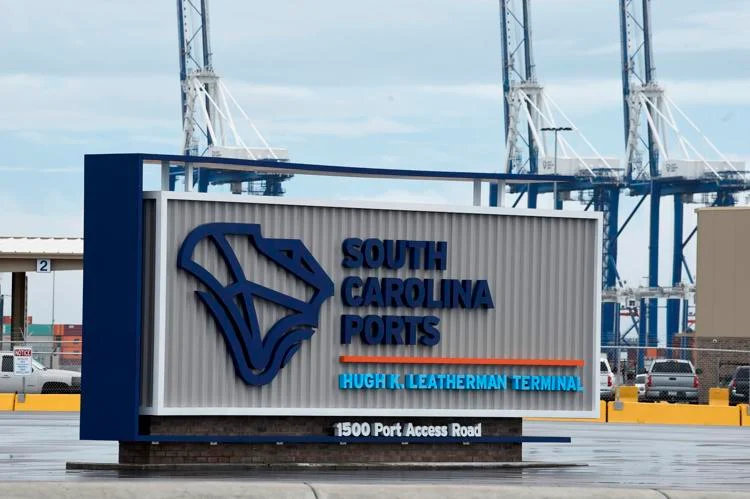
One might suppose that even the reflexively pro-Big Labor Biden Administration would want to keep its distance from International Longshoremen’s Association (ILA) union President Harold Daggett. For decades, ILA bosses like Daggett have, as the New York Daily News recently noted, “held a tight grip on who is hired” at seaports all along the East and Gulf Coasts of the U.S. And today, Daggett and his cohorts are allegedly wielding their substantial control over prime port jobs to benefit people with “direct connections to crime families or high-ranking ILA officials,” as reporter Clayton Guse wrote for the Daily News on March 13. A case in point are the “special deals” extracted from the New York Shipping Association by ILA negotiators on behalf of more than 200 longshoremen in New York and New Jersey, enabling them to be paid for up to 27 hours of “work” a day, seven days a week, if they show up for a total of 40 hours a week. Of course, terminal operators and shipping companies pass on the cost of such exorbitant and inequitable deals to ordinary consumers across the U.S. (Can you spell I-N-F-L-A-T-I-O-N?) Even worse, according to law enforcement sources who communicated with the Daily News, most of the longshoremen who rake in $400,000 a year or more thanks to “special deals” are relatives or cronies of mobsters and ILA kingpins. For example, according to payroll records obtained by the Daily News, one of the “highest-paid New York-area longshoremen” is Ralph Gigante Jr. – the nephew of deceased Genovese crime boss Vincent “The Chin” Gigante. In 2019, Gigante Jr. made more than $423,000 as a port maintenance man! Daggett, who personally has been accused, but never convicted, of “fraud, extortion, and other mob-related charges,” sees no problem with allegedly Organized Crime-connected ILA union bosses determining who gets the plummiest jobs at seaports located from Maine to Texas and who doesn’t. And he detests laws and policies that curtail union bosses’ power to reward their friends and punish their enemies. That’s why the “hybrid” work models that have long been in place at the ports of Wilmington, Charleston, and Savannah, located respectively in Right to Work North Carolina, South Carolina, and Georgia, are on the ILA hit list. At “hybrid” port terminals, union-free state employees operate ship-to-shore cranes and other heavy-lift equipment, even as other front-line jobs are performed by workers who are subject to ILA control. With the clear aim of ultimately driving all nonunion heavy-equipment operators out of the Wilmington, Charleston, and Savannah ports, the ILA is currently threatening to sue any carriers that dock at Charleston’s new Hugh K. Leatherman Terminal for hundreds of millions of dollars for supposedly violating the union’s contract with them. Rather than risk being hauled into court, most carriers are refusing to load and unload shipments at Leatherman. Consequently, roughly a year after its opening, the terminal stands mostly idle. And ILA officials gloat that it will stay that way until the South Carolina Ports Authority (SCPA) caves in and turns Leatherman’s heavy-lift equipment jobs over to the ILA union. But port officials who don’t want their entire front-line workforce to be corralled under union monopoly bargaining have ample reason to believe the law is on their side. Last September, National Labor Relations Board (NLRB) Administrative Law Judge Andrew Gollin rejected union lawyers’ claims and branded the Leatherman power grab as a bid to “acquire work not traditionally performed by unit employees,” which constitutes “unlawful, secondary activity.” Union officials are challenging Gollin’s ruling but have little legal ground to stand on. Meanwhile, the SCPA continues to press the NLRB to put an end to the illegal boycott of the Leatherman Terminal. Daggett and Co. are counting on pro-forced unionism bureaucrat Lauren McFerran, whom President Joe Biden elevated to the NLRB chairmanship last year, and two other NLRB members selected by Biden last year to sit on this case while they continue to break the law. If top ILA union bosses turn out to be right about the NLRB, then the hybrid work model that has greatly enhanced the competitiveness of the major North Carolina, South Carolina, and Georgia ports will be in grave jeopardy. Mark Mix is President of the National Right to Work Committee.
Three Alabama congressmen support Right to Work Act

Three Alabama congressmen have co-sponsored a bill called the National Right to Work Act. Mo Brooks, Gary Palmer, and Jerry Carl all support the bill. South Carolina congressman Joe Wilson, along with Rand Paul, reintroduced the bill in February. According to the congressional summary, the bill “repeals those provisions of the National Labor Relations Act and the Railway Labor Act that permit employers to make an agreement with a labor union to require employees to join such union as a condition of employment.” Wilson stated in a press release, “I, along with over 80 percent of the American people, believe that every worker should have the power to decide whether or not to negotiate for themselves with their employer. This bill is about giving freedom to hard-working Americans. As one of twenty-seven right-to-work states, South Carolina has seen firsthand the job creation when we protect freedoms for American workers, with Michelin, BMW, and Boeing, among many others. I look forward to continuing to protect expanded freedom and promote jobs in the 117th Congress.” Brooks posted on Twitter, “I’ve cosponsored @ReJoeWilson’s National Right to Work Act. As evidenced by last week’s vote against unionization at Amazon, Alabamians understand Alabama’s right to work reputation is a major reason for Alabama’s success in recruiting job creators.” I’ve cosponsored @RepJoeWilson‘s National Right to Work Act. As evidenced by last week’s vote against unionization at Amazon, Alabamians understand Alabama’s Right to Work reputation is a major reason for Alabama’s success in recruiting job creators. https://t.co/4EvrXYnD99 — Mo Brooks (@RepMoBrooks) April 13, 2021 Gary Palmer posted on Twitter in February, stating “I’m proud to support the National #RightToWork Act. No one should be force to pay union fees simply to find a job or keep a job. It’s time for Congress to listen to the 80% of Americans who oppose forced unionization. Thanks @RepJoeWilson for your great work on this issue!” I’m proud to support the National #RightToWork Act. No one should be forced to pay union fees simply to find a job or keep a job. It’s time for Congress to listen to the 80% of Americans who oppose forced unionization. Thanks @RepJoeWilson for your great work on this issue! https://t.co/9ORjinSuMD — Gary Palmer (@USRepGaryPalmer) February 24, 2021 Mark Mix, president of the National Right to Work Committee (NRTWC), praised the bill. “We’re extremely pleased that Senator Rand Paul and Congressman Joe Wilson have introduced the National Right to Work Act, intensifying a growing debate about Big Labor’s coercive power to keep American workers in chains. This legislation would enshrine the common-sense principle – already enforced in more than half of U.S. states – that no worker should be compelled to join or pay dues to a union just to get or keep a job.”
