
Facebook removes Donald Trump campaign ads with symbols once used by Nazis

The company said in a statement Thursday that the ads violated “our policy against organized hate.”
Donald Trump escalates war on Twitter, social media protections
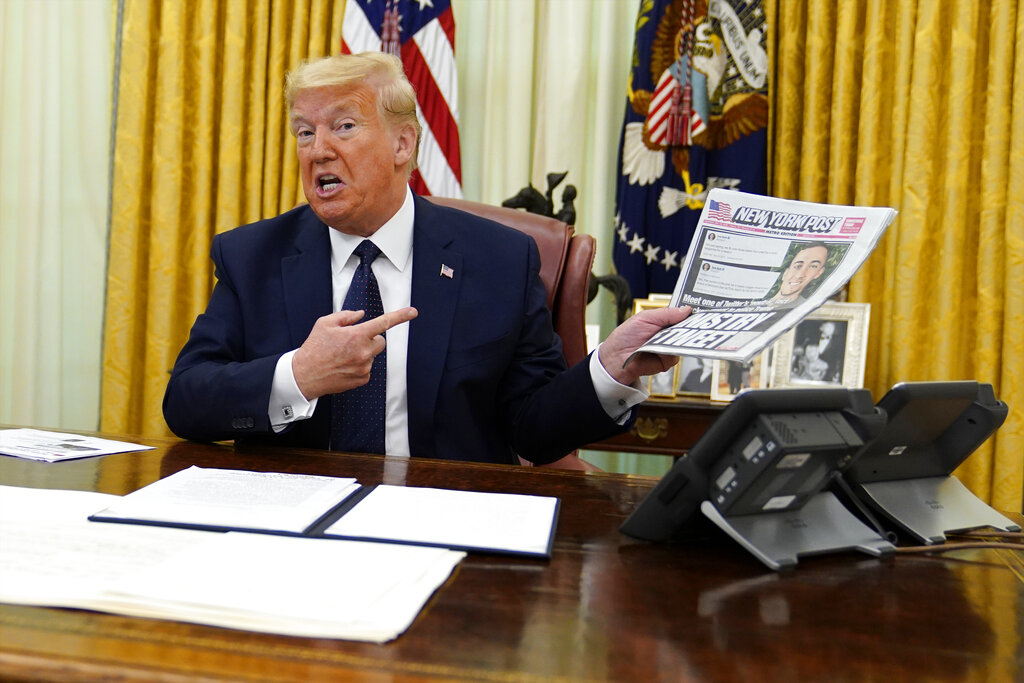
Announced with fanfare, the president’s action yet appeared to be more about politics than substance.
Facebook Refuses to Ban Political Ads, Even False Ones
The decision follows action by Google and Twitter to restrict or ban political ads on their respective social media platforms.
From toast of town to toxic: Mark Zuckerberg on outs with democrats
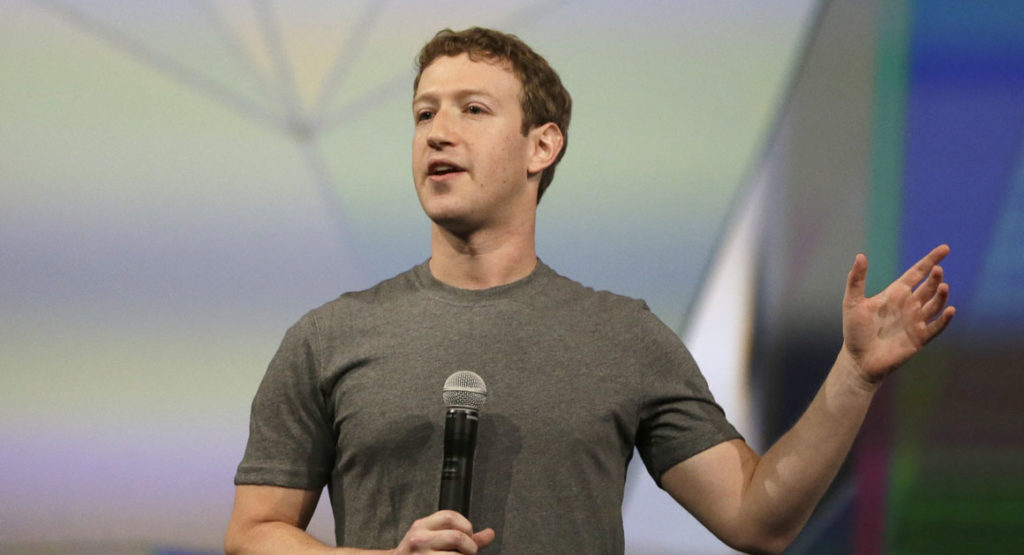
Mark Zuckerberg’s social network in Washington is shrinking. Bipartisan hostility against Facebook has been building for months, fueled by a series of privacy scandals, the site’s role in Russian meddling in the 2016 presidential campaign and accusations that Facebook crushes competitors. Now, with the 2020 elections approaching, Democrats especially are homing in on the conduct of the social media giant and its refusal to fact-check political ads and remove false ones. “When you’re the No. 1 monopoly, people are going to come after you,” says John Feehery, a veteran Republican communications strategist. The challenge for Democrats, as he sees it: “They’re facing a base that is very angry and restive. So they have to be much more aggressive in taking on corporations.” Zuckerberg enjoyed a cozy relationship with the Obama administration. But in the face of growing public outrage, the co-founder of the upstart born under the motto “Move fast and break things” is learning the art of smoothing over and piecing back together. His new strategy: a personal blitz featuring serial private meetings in Washington with key lawmakers of both parties and President Donald Trump; small, off-the-record dinners at his California home with conservative journalists and opinion makers; and the occasional public address or TV interview. Addressing criticisms from Democratic lawmakers and civil rights groups over Facebook’s track record on fighting discrimination, Zuckerberg and Chief Operating Officer Sheryl Sandberg planned to host a dinner Monday night with civil rights leaders. The two executives want to hear the leaders’ “direct perspective and feedback,” the company said. The Rev. Al Sharpton said last week that Zuckerberg would meet with him and others to discuss concerns such as Facebook’s handling of political messages. Misinformation on the platform can contribute to the suppression of voting by African Americans and other minorities, civil rights leaders say. Zuckerberg has become lobbyist-in-chief for a tech giant that has about 60 people officially playing that role. The company spent an estimated $12.6 million on federal influencing last year. The political ad issue hits close to home for Democrats. Facebook, as well as Twitter and Google, refused in September to remove a misleading video ad from Trump’s reelection campaign that targeted top-tier Democratic candidate Joe Biden. Sen. Elizabeth Warren, another top Democratic contender, chose to hit back by running her own ad and making it personal by falsely claiming that Zuckerberg had endorsed Trump for 2020. Warren, who has called for breaking up Facebook and other tech giants, acknowledged the ad’s deliberate falsity to make her point. Then came Zuckerberg’s speech last month at Georgetown University in which he promoted free expression as the foundation for Facebook’s refusal to take down content it deems newsworthy, even if the material violates company standards. The next week, during prickly questioning by Democratic lawmakers at a televised House hearing, Zuckerberg dug in on not fact-checking politicians’ speech and the handling of hate speech and potential incitements to violence. “This really is not about money,” Zuckerberg insisted. “It is important that people can see for themselves what politicians are saying.” Facebook says political advertising accounts for less than half of 1 percent of its total revenue. Separately from political advertising, Facebook has policies and improved technology that it says now enables it to more efficiently detect terrorist content in many languages. Following the mass shooting in New Zealand last spring, for example, Facebook now prohibits livestreaming by people who have violated rules covering organizations and individuals deemed dangerous and potentially violent. In the lambasting from Democrats, Rep. Joyce Beatty of Ohio, the vice chair of the Congressional Black Caucus, focused on Facebook’s track record on civil rights and diversity. She told Zuckerberg that he had “ruined the lives of many people, discriminated against them.” As part of a legal settlement with civil rights groups, Facebook changed its ad-targeting systems this year to prevent discrimination in housing, credit and employment ads. It previously had allowed such ads to be targeted to people based on age, sex or race, which is illegal. At some points, friendlier Republican members of the House Financial Services Committee asked Zuckerberg how he was holding up through the six-hour hearing. “I’m doing OK,” replied the 35-year-old co-founder, chairman and CEO. He’s one of the world’s richest individuals, with a net worth currently estimated at $71 billion. Summing up, Rep. Maxine Waters, the California Democrat who leads the committee, told Zuckerberg, “You have opened up a discussion about whether Facebook should be broken up.” A mandated breakup would be the worst-case scenario for Facebook and the other big tech companies. Facebook says splitting up large tech corporations would make the election system more vulnerable to interference because the companies wouldn’t be able to work together to prevent it. For Zuckerberg and the Democrats, “it may be a nasty divorce,” said James Thurber, a professor of government at American University who founded its Center for Congressional and Presidential Studies. “He clearly has taken a stand that’s really quite unpopular.” Thurber called Zuckerberg’s backstage celebrity approach to lobbying efforts “very dangerous.” “You’ve got to be very careful about that, if you think you can do it yourself,” he said. Rep. David Cicilline, a senior House Democrat who leads the Judiciary Committee’s investigation into the market dominance of big tech companies, is working on legislation that may target the profits made by Facebook from political ads it knows are false. The measure likely would also apply to social media rivals Twitter and Google. Last Wednesday, Twitter made the unexpected announcement that it will ban all political advertising from its service. “This is a good first step,” Cicilline tweeted. “Your move, Google/Facebook.” Zuckerberg’s quick riposte, during Facebook’s quarterly conference call on earnings, was to reaffirm the company’s commitment to the value of free speech, including for politicians. It’s a sharp reversal of fortune for Facebook from the days of the Obama administration, when the company was hailed as an exemplar of innovation and an engine of economic growth. Campaign money flowed to the
The pressure is now on Facebook to ban political ads
Twitter’s ban on political advertising is ratcheting up pressure on Facebook and Mark Zuckerberg to follow suit. But so far, that doesn’t appear likely to happen. Facebook’s policy is to accept paid political ads from candidates without fact-checking them or censoring them, even if they contain lies. And Zuckerberg doubled down on that stand Wednesday following Twitter’s announcement, reiterating that “political speech is important” and that Facebook is loath to interfere with it. Twitter, Facebook and other social media sites have come under fire over Russia’s use of such platforms to spread misinformation and sow political division in the U.S. during the 2016 presidential campaign. That debate has heated up again in recent weeks along with the 2020 race for the White house. Twitter chose to respond with a ban on all political advertising , suggesting that social media is so powerful that false or misleading messages pose a risk to democracy.The timing of the announcement, the same day as Facebook’s quarterly earnings report, seemed designed to goad Zuckerberg. “The pressure is going to be extremely strong on Facebook to do something similar, and if they don’t, the criticism of Facebook will only increase,” said Tim Bajarin, president of consultancy Creative Strategies. In fact, some of the Democratic presidential candidates immediately suggested Facebook follow Twitter’s lead. Montana Gov. Steve Bullock tweeted: “Good. Your turn, Facebook.” And Pete Buttigieg said, “I think other online platforms would do well to either accept their responsibility for truth or question whether they should be in the business at all.” But Zuckerberg stood firm. “This is complex stuff. Anyone who says the answer is simple hasn’t thought about the nuances and downstream challenges,” the Facebook CEO said. “I don’t think anyone can say that we are not doing what we believe or we haven’t thought hard about these issues.”As for refusing to fact-check political ads, Facebook has said it wants to provide politicians with a “level playing field” for communication and not intervene when they speak, regardless of what they’re saying. Banning political ads has its own challenges, starting with defining what exactly is political. For example, Greenpeace might not be able to buy an ad urging people to support legislation to fight climate change. But what if an oil company wanted to run an ad for its products that also seemed to come out against such legislation? Twitter and Facebook already take steps to prevent political manipulation by verifying the identities of political advertisers — measures prompted by the furor over Moscow’s interference. But the verifying systems, which rely on both humans and automated systems, have not been perfect. In one case, Facebook mistakenly took down ads for Bush’s baked beans because they contained the word “Bush” and the food company was not registered with Facebook as a political advertiser. Media organizations have also seen their ads flagged for review when they promoted news stories about candidates or important issues. And then there’s the question of what to do with individual posts from politicians or other opinion makers, which can carry political messages and be shared widely even though they are not paid ads. Details about Twitter’s new policy won’t be released until Nov. 15, a week before it takes effect. But Twitter does call for removing not just campaign advertisements but also ads on issues of legislative importance. That could include such topics as climate change, gun control and immigration. EMarketer analyst Debra Aho Williamson said Zuckerberg’s stance probably isn’t a financial decision, since political ads aren’t big moneymakers. Facebook, which had 2018 revenue of $55.8 billion, said Wednesday that it expects ads from politicians to account for less than 0.5% of its revenue next year. Twitter, which had revenue last year of about $3 billion, is thought to make even less from the ads; it said it brought in only $3 million from political ads during the 2018 midterms. “It is a really complicated decision,” Williamson said. “I think that Mark Zuckerberg is truly struggling with figuring out what is the best thing to do for the company and Facebook users.” Wedbush Securities managing director Michael Pachter likewise said the Facebook founder is trying to pull off a tricky balancing act. “Zuckerberg is trying to satisfy investors by growing revenues and satisfy regulators and legislators by cracking down on false and misleading ads, while maintaining the virtuous stance of being a defender of free speech,” Pachter said. Daniel Kreiss, a journalism professor at the University of North Carolina, said that a middle ground for Twitter and Facebook might be to allow political ads but to prohibit targeting, or showing them only to specific groups of people. If campaigns aren’t allowed to target, he said, messages will become broader and perhaps less misleading. Laura Packard, a partner at PowerThru, a digital consulting firm that works with left-of-center campaigns and advocacy groups, said Twitter’s ban was the right decision for voters.“This might make my work harder,” she said. “But in general, I think that if any platform cannot police misinformation and lies, then they shouldn’t offer paid advertising.” By Mae Anderson and Rachel Lerman AP Technology Writers AP reporter David Klepper in Providence, Rhode Island, contributed to this report. Mae Anderson reported from Atlanta. Republished with the permission of the Associated Press.
Over 1,800 immigrant children reunited by deadline
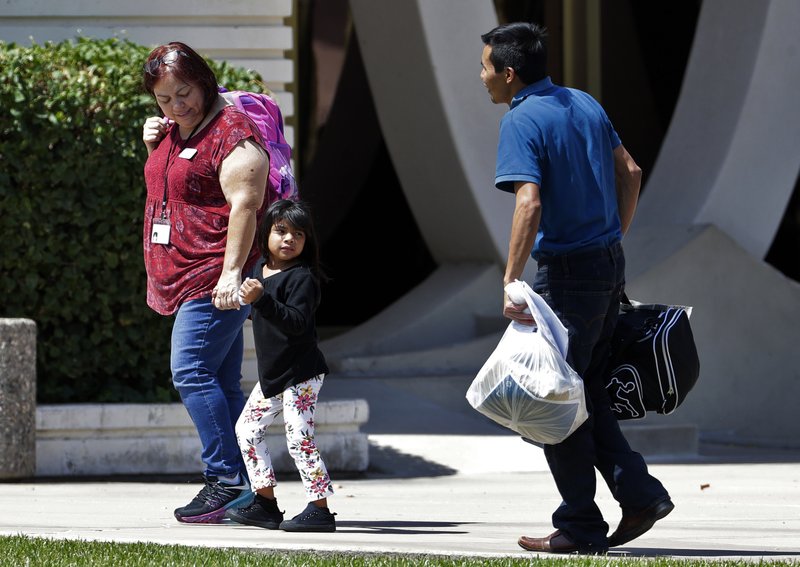
Shy children were given a meal and a plane or bus ticket to locations around the U.S. as nonprofit groups tried to smooth the way for kids reunited with their parents following their separations at the U.S. Mexico border. The Trump administration said Thursday that more than 1,800 children 5 years and older had been reunited with parents or sponsors hours before the deadline. That included 1,442 children who were returned to parents who were in U.S. Immigration and Customs Enforcement custody, and another 378 who were released under a variety of other circumstances. But about 700 more remain separated, including 431 whose parents were deported, officials say. Those reunions take more time, effort and paperwork as authorities fly children back to Guatemala, El Salvador and Honduras. On Friday morning, Homeland Security officials said they had reunified all eligible parents with children — but noted many others were not eligible because they have been released from immigration custody, are in their home countries or chose not to be reunited. Updated figures were not made public, but new data was expected to be released Friday at a court hearing in San Diego held by the judge overseeing the reunification process. “The administration will continue to make every effort to reunify eligible adults with their children,” a Homeland Security statement said. Now the federal judge in San Diego who ordered the reunifications must decide how to address the hundreds of still-separated children whose parents have been deported, as well as how much time, if any, reunified parents should be allowed to file asylum claims. Lee Gelernt, an attorney for the American Civil Liberties Union representing separated parents, said Thursday it was unclear how long it might take to find the parents returned to their homelands. “I think it’s just going to be really hard detective work and hopefully we’re going to find them,” he said. U.S. District Judge Dana Sabraw will also consider the ACLU’s request to give reunified parents at least a week to consider if they wish to seek asylum. The government opposes the waiting period, and Sabraw has put a hold on deporting reunified families while the issue is decided. On a parallel legal front over treatment of immigrant children, U.S. District Judge Dolly Gee in Los Angeles will be asked Friday to appoint a special monitor to oversee detention facilities. Children described horrid conditions in a voluminous report filed this month over whether the Trump administration is meeting its obligations under a long-standing settlement governing how young immigrants should be treated in custody. As the deadline neared, small groups of children were led in and out of Lutheran Social Services in Phoenix all day Thursday, sometimes holding hands with a worker from the center. Children and parents wore matching hospital-like identification bracelets and carried belongings in white plastic bags. The men sported shoes without laces that were taken away while in immigration detention. Support worker Julisa Zaragoza said some kids were so afraid of losing their parents again they didn’t want to go to the bathroom alone. “These families have been through a lot,” she said. The federal government was supposed to reunify more than 2,500 children who were separated from their parents under a new immigration policy designed to deter immigrants from coming here illegally, but the policy backfired amid global outrage over crying children taken from their parents. President Donald Trump ended the practice of taking children from parents and Sabraw ordered the government to reunite all the families by the end of Thursday, nevertheless indicating some flexibility given the enormity of the effort. Chris Meekins, the head of the office of the assistant secretary for preparedness and response for Health and Human Services, said the government would continue to reunify families with eligible parents throughout the evening. In most cases the families are released and the parents typically get ankle-monitoring bracelets and court dates to appear before an immigration judge. Faith-based and other groups have provided meals, clothing, legal advice, plane and bus tickets and even new shoe laces. A charitable organization called FWD.US, founded by technology leaders including Microsoft founder Bill Gates, Facebook CEO Mark Zuckerberg and Dropbox founder Drew Houston was paying for the airline tickets, the bus tickets and the lodging for all the families newly reunited in the Phoenix area to get them to relatives living all over the United States, said Connie Phillips of Lutheran Social Services. She said a phone company donated 500 mobile phones for the migrants, each with six months of free service. There were scattered reunions in various locations Thursday, including about 15 in Phoenix, said Phillips. The main immigrant-assistance center in El Paso, Texas, has been receiving about 25 reunified families daily. Some children who had not seen their parents in weeks or months seemed slow to accept that they would not be abandoned again. Jose Dolores Munoz, 36, from El Salvador, was reunited with his 7-year-old daughter last Friday, nearly two months after they were separated, but he said his daughter cries when he leaves the house. “She is afraid,” Munoz said. “Yesterday I left her crying, she is telling me, ‘You are not coming back.’” Those who remain separated from their children include Lourdes de Leon of Guatemala. She surrendered to authorities at the border and was deported on June 7, while her 6-year-old son, Leo, remained in the U.S. De Leon said Guatemalan consular officials told her signing a deportation order would be the easiest way to reunite with Leo. “He is in a shelter in New York,” de Leon said. “My baby already had his hearing with a judge who signed his deportation eight days ago. But I still do not know when they are going to return him to me.” At the Lutheran center, Phillips said the parents and kids have opened up as they go through an assessment process with workers. She said the outpouring of donations has been comforting. “We have seen a lot of people come
Parker Snider: A guide to fake news
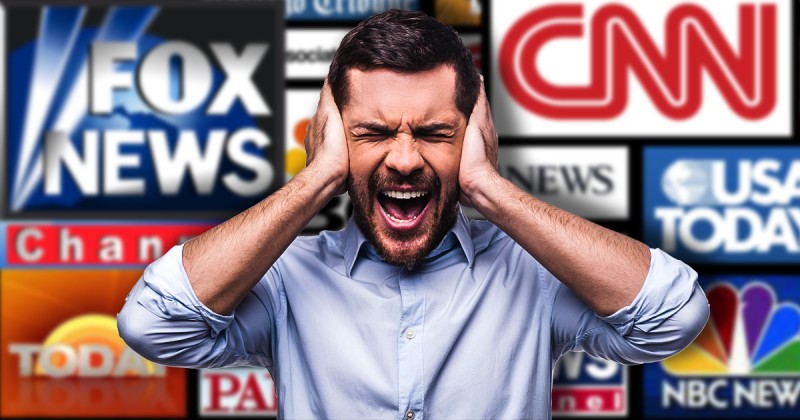
More than once every day. That’s how often President Donald Trump publicly calls something “fake”—be it a story, poll, or news organization. Just this week, Facebook CEO and Founder Mark Zuckerberg testified before Congress about, among other things, the proliferation of falsities on his social media platform, including in Alabama’s special election for U.S. Senate last year. We see the term everywhere, hear it lobbied daily on cable news, and use it ourselves (although perhaps often in jest). But what really is fake news and how do we spot it? The term “fake news” is often used to describe three very distinct and separate entities. First, the reporting of reputable national organizations (think press that have a seat in the White House briefing room, especially those in the first few rows) is often labeled as “fake news”. Although many would argue otherwise, the fact is that outright lies by the news divisions of these organizations are rare. When reporting failures do occur, news organizations hold their reporters accountable and publicly apologize and correct the story. The suspension of ABC’s Brian Ross after incorrectly reporting that Trump had directed Michael Flynn to contact Russian officials before the 2016 election is one example. This doesn’t mean, however, that print or televised media are free from falsehoods. They’re not. That’s because newspapers and news channels aren’t just publishing journalism—no, their business requires something else—opinion and commentary, the second bearer of the “fake news” label. Fox News’ Chief News Anchor Shephard Smith isn’t shy about rebutting the unsubstantiated claims of his primetime opinion counterparts. Why? In his words, “We serve different masters.” In his interview with Time, he goes on to say, “They don’t really have rules on the opinion side…some of our opinion programming is there strictly to be entertaining.” Nevertheless, false news and misrepresentation is most onerous and rampant, not on television or in newspapers, but on social media, the third and most appropriately labeled agent of “fake news”. Facebook and its competitors are places where claims, no matter how ridiculous, baseless, and unproven, spread like wildfire. It’s where we see a supposed ‘Friends’ reunion, that President Obama was a Black Panther, that Pope Francis cancelled the Bible, and that Snopes, a useful fact checking website, has ties to George Soros. Even so, Facebook is a major source of news for many people. Thanks to this and increased cries of “fake news”, I’ve found a few practices helpful in maneuvering this volatile news environment. As NPR’s Anya Kamenetz suggests, I begin with a gut check. Does what I’m reading affirm my biases, my hopes, and my expectations? If so, I should adopt a healthy level of suspicion. Second, I automatically reject any news in the form of a meme or screenshot. These easily sharable images often have incendiary captions, outlandish claims, and lack sources. They are designed to go viral—like the emails of yesteryear that promise a free vacation if you simply forward to ten friends—and they are rarely factual. Political memes and screenshots are one way Russians fostered division in 2016, and they are genuinely worthless. Third, I check the source. Does the website, newspaper, or cable news channel have a history of deceptive practices or falsehoods? Are they well-known and given access to government officials, or do they have a strange web address, an unknown name, or a homepage full of inflammatory headlines? Fourth, I look to see if other sources are corroborating the report. If not and the news is a credible exclusive, I expect the reporting organization to include their sources in the article. Fifth, I determine whether the author is a journalist or a commentator. As described earlier, commentators and journalists are very different, as are their standards. Finally, before reposting or sharing, I consider my own credibility. Do I want to be someone who shares unsubstantiated news and memes, or do I want to ensure its accuracy, and therefore my own? I’ve found these methods helpful, and I hope you do as well. ••• Parker Snider is Policy Relations Manager at the Alabama Policy Institute (API). API is an independent, nonpartisan, nonprofit research and educational organization dedicated to strengthening free enterprise, defending limited government, and championing strong families. If you would like to speak with the author, please e-mail communications@alabamapolicy.org or call (205) 870-9900.
Facebook’s Mark Zuckerberg: ‘significant number’ of fake news attempts in Ala. special election
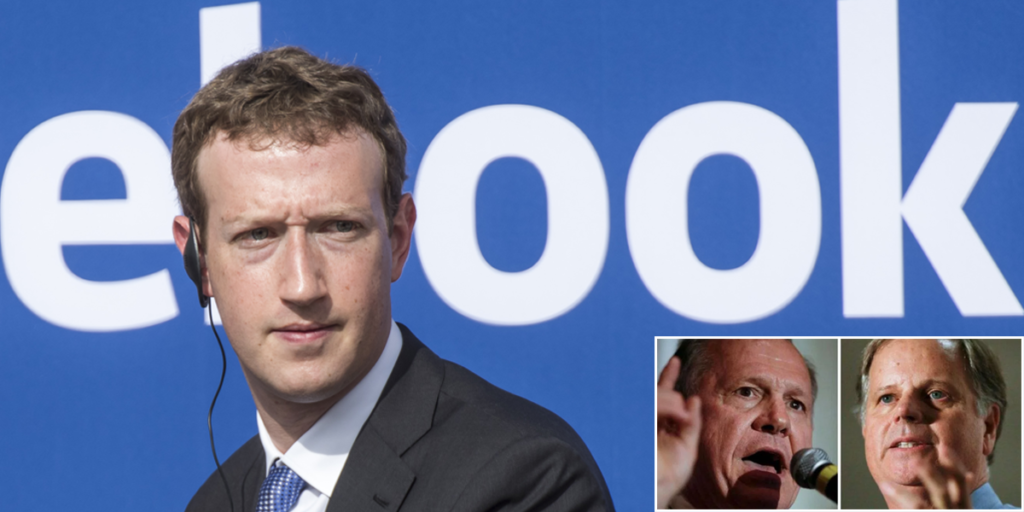
During an interview with The New York Times on Wednesday Facebook CEO Mark Zuckerberg, said the popular platform worked to shut down “fake news” during Alabama’s contentious special election in December between Republican Roy Moore and Democrat Doug Jones. Zuckerberg explained a number of Macedonian accounts attempted to the influence the outcome of the race. “In last year, in 2017 with the special election in Alabama, we deployed some new (artificial intelligence) tools to identify fake accounts and false news, and we found a significant number of Macedonian accounts that were trying to spread false news, and were able to eliminate those,” Zuckerberg said to The Times. “And that, actually, is something I haven’t talked about publicly before, so you’re the first people I’m telling about that.” Ultimately, Jones bested Moore in the race and went on to become Alabama’s junior U.S. Senator replacing Jeff Sessions who vacated the seat to become the U.S. Attorney General under President Donald Trump. Kayla Moore, Moore’s wife, posted on Facebook Thursday that they did not know about the Macedonian efforts. The were “news to us” she said. “The entire world was watching the race so there’s no telling what went on, but we were simply trying to run an Alabama campaign with the help of conservatives all across the state and the nation,” said Kayla.
Facebook may be facing an ‘era of accountability’

The problems keep piling up for Facebook, and it’s unclear how long the internet giant will be able to brush them aside as it barrels toward acquiring its next billion users. The world’s biggest social network has unwittingly allowed groups backed by the Russian government to target users with ads. That’s after it took months to acknowledge its outsized role in influencing the U.S. election by allowing the spread of fake news – though before news emerged that it let advertisers target messages to “Jew-haters.” Now Facebook is under siege, facing questions from lawmakers and others seeking to rein in its enormous power. The company has turned over information on the Russia-backed ads to federal authorities investigating Russian interference in the U.S. presidential election. Critics say the company also needs to tell its users how they might have been influenced by outside meddlers. Speculation is rife that Facebook executives, perhaps including CEO Mark Zuckerberg, could be called to testify before Congress. Hearings might lead to new regulations on the company. “Facebook appears to have been used as an accomplice in a foreign government’s effort to undermine democratic self-governance in the United States,” writes Trevor Potter, former chairman of the Federal Election Commission and now head of a nonpartisan election-law group, in a letter to Zuckerberg. “ERA OF ACCOUNTABILITY” Potter’s group, the Campaign Legal Center, wants Facebook to make the Russian-sponsored ads public. The company has so far declined to do so, citing the ongoing investigations. It has provided the ads and other information to Robert Mueller, the special counsel in charge of the Russia investigation, Facebook said in a statement, although it declined to elaborate. The company that nudges its users to reveal intimate details about their lives, it turns out, isn’t all that comfortable doing the same. That’s true for everything from the secret algorithms that recommend “people you might know” to data on its attempts to clamp down on the spread of false news shared across its network. The company justifies its secrecy in many ways, having variously claimed legal restrictions, business secrets, security and privacy protections to excuse its opacity. But Jonathan Albright, whose late 2016 research on the “fake news” propaganda ecosystem outlined how propaganda websites track and target users, thinks the current moment may be a turning point for online giants like Facebook. “Now that it has run directly into something that possibly affected the outcome of the election – but they can’t determine how – this may be their era of accountability,” said Albright, the director of research at the Tow Center for Digital Journalism at Columbia University. There has been no other company on the planet, Albright added, that can provide access to as many real people as Facebook. POWER GAMES AND NEW RULES Facebook prefers to think of itself as an online platform, but in many respects it’s also a modern sort of media company, if for no other reason than that so many people rely on it as a source of news and information. In its early years, Facebook even described itself as a “social utility.” Now the question is whether it should be regulated as one – and if so, how. There aren’t many straightforward answers, even where political ads already subject to government rules are concerned. It’s already illegal for foreign nationals to spend money in connection with a U.S. federal election, whether on or off of Facebook. And campaign law requires people who spend money on another person’s website to disclose that fact in the ad itself. Broadcast-era election law, however, can be a poor fit for the Internet Age. Attempts to sway political sentiment on Facebook can be targeted to small groups who share a common background or attitudes, making them difficult to track from the outside. And many such efforts might not resemble traditional advertisements at all. The goal of many Facebook marketing campaigns is to generate posts that regular people will spread widely for free; political persuasion campaigns can work the same way. “As a practical matter, it is extremely difficult for the U.S. government to regulate content on the internet that may have an effect on the U.S. election,” said Nathaniel Persily, a professor at Stanford Law School. “If a teenager in his mother’s basement in Moscow wants to put up a YouTube video, it’s not clear what the U.S. will be able to do about that.” Difficult doesn’t mean impossible. Persily, for instance, thinks that Facebook could use its AI technology to flag election-related ads that don’t bear the disclosures required by existing law. Companies like Facebook could also be required to do some kind of due diligence on who is spending money on their platforms on behalf of candidates, he added. Keeping an online repository of all candidate-related ads within six months of an election, identified by their backers, could also provide an additional check on illegal attempts to sway elections. Republished with permission from the Associated Press.
Facebook co-founder, CEO Mark Zuckerberg kicks-off nationwide tour with visit to Alabama
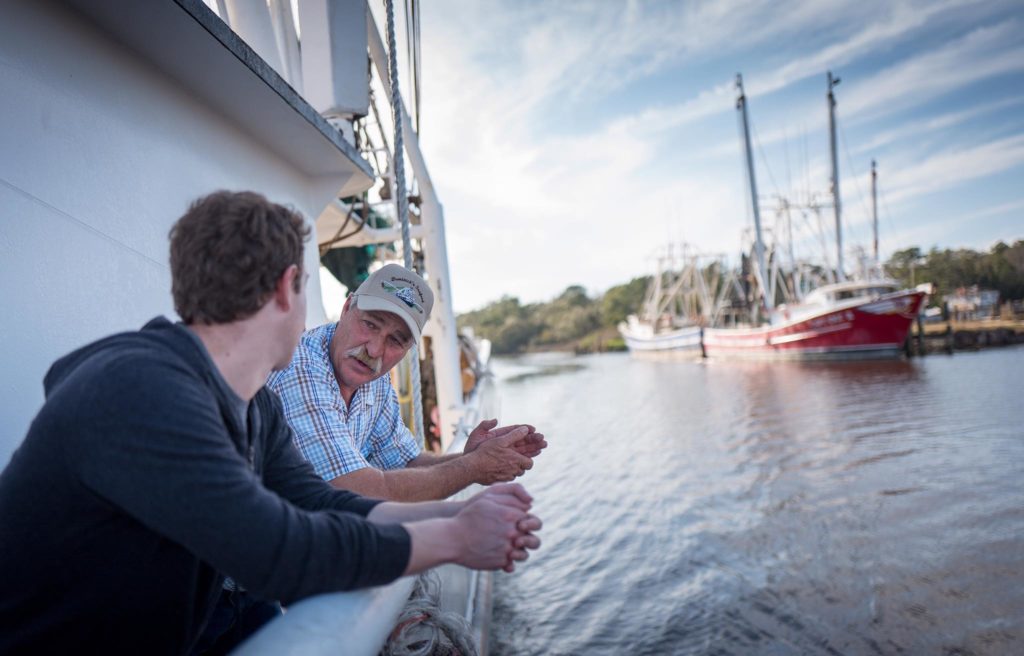
The founder of Facebook made a special visit to Alabama over the weekend. Mark Zuckerberg, 32, passed through the Yellowhammer State a road trip across the country as part of a challenge to visit all 50 states with his wife Priscilla Chan. This week they’re touring the South. While in the Yellowhammer State, the couple spent their time eating shrimp, listening to stories from local business owners, fishermen, oyster farmers on Saturday, and even taking attending a local church service in downtown Mobile on Sunday. They also watched the Mobile Mardi Gras parade and talked to families affected by the BP oil spill and Hurricane Katrina. “We had lunch with Dominick Ficarino, a fourth generation shrimper, and workers from the local fishing business right on the dock… One of the families we met were the Zirlotts — they run an oyster farm and are succeeding by using Facebook and Instagram to show their product directly to chefs,” the digital media mogul said on his personal Facebook page. He concluded, “We are all part of many communities. The strength of these local communities is what makes up our social fabric and that’s what enables us to come together as a global community as well.” On Monday, Zuckerberg continued his ventures in Selma where he checked out the Selma Time-Journal building. Zuckerberg’s US-trip has many across the country scratching their heads, asking themselves once again if the media mogul is gearing up for a 2020 presidential run against incumbent President Donald Trump. Zuckerberg shot down similar rumors in late January, saying he’s “focused on building our community at Facebook and working on the Chan Zuckerberg Initiative,” which funds science and education. Only time will tell if that sticks.
From protests to ‘pussy hats,’ Donald Trump resistance brews online
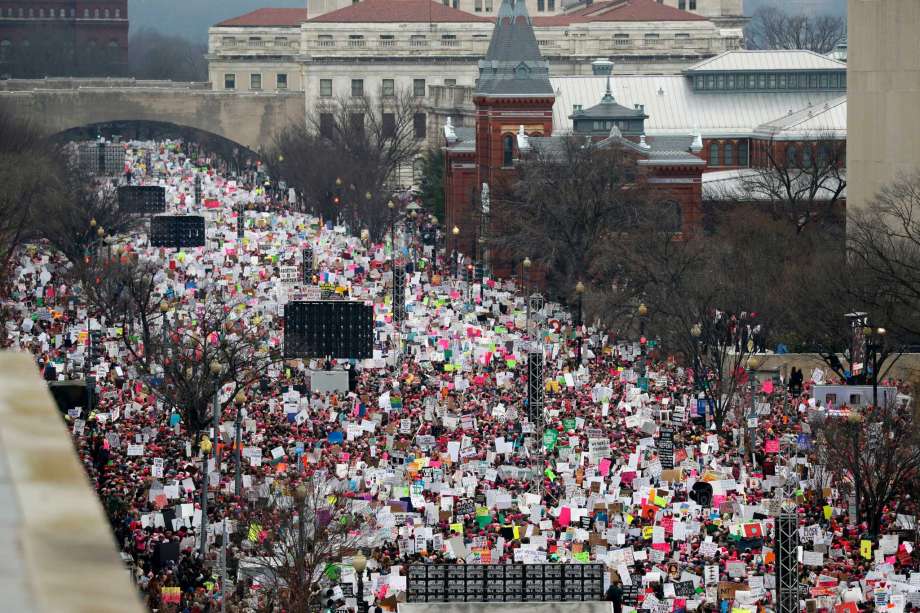
The revolution may not be televised — but it apparently will be tweeted. And Facebooked. And Instagrammed. Not long after President Donald Trump temporarily barred most people from seven majority-Muslim countries from entering the U.S., social activist Dex Torricke-Barton took to Facebook. “I’m thinking of organizing a rally,” he posted. Within a few hours, more than 1,000 people expressed interest. The resulting protest a week later, in front of San Francisco’s City Hall, drew thousands more. Torricke-Barton is far from alone. From organizing protests on the fly to raising money for refugee and immigrant rights groups, people have been using social media to fuel the resistance against Trump in ways their organizing predecessors from the 1960s could have hardly imagined. ROOTS OF PROTEST In Queens, New York, for instance, a group of 27 women met up to write postcards to their state and local representatives during a “Postcard-Writing Happy Hour” organized through Facebook. And on Ravelry, the social network for knitters and crocheters, members have been trading advice and knitting patterns for the pink “pussy hats” that emerged as a symbol during the Women’s March on Washington and similar protests elsewhere after Trump’s inauguration. “This is an incredible project because it’s mixed between digital and physical,” says Jayna Zweiman, one of the founders of the Pussyhat Project. “We harnessed social media for good.” In 1969, activists planned massive marches around the U.S. to protests the war in Vietnam. The protests, called the Moratorium, drew millions of people around the world. But “it took months, a lot of effort, a national office of the organization to get it off the ground,” says Christopher Huff, a Beacon College professor focused on social movements of the 1960s. “The women’s march was achieved at a much larger scale at a fraction of the time.” This immediacy is both an asset and a disadvantage. While online networks help people rally quickly around a cause, Huff says, they don’t necessarily help people grasp the “long-term effort” required to sustain a movement. ONLINE, THEN OFF In Silicon Valley and across the tech world, Trump’s travel ban created a stir that went well beyond the industry’s usual calls for deregulation and more coding classes for kids. Between aggregating donations, issuing fiery statements, and walking out of work in protest, tech company executives and employees took up the anti-Trump cause at a scale not seen in other industries. New York-based Meetup, for instance, broke with nearly 15 years of helping people form and join interest groups on a non-partisan basis. “We’re vital plumbing for democracy,” the company wrote in a Medium post this week. “But after Donald Trump’s order to block people on the basis of nationality and religion, a line had been crossed.” So Meetup held a company-wide “resist-a-thon” — a riff on the hackathons tech companies hold to devise new technologies — to help people get involved in the anti-Trump movement known as “the resistance.” It then unveiled more than 1,000 new “#resist” Meetup groups that people can join for free (it’s normally $15 a month to run a group). As of Wednesday, some 35,000 people had joined the #resist Meetup groups, and scheduled 625 events around the world. Torricke-Barton, who in earlier incarnations wrote speeches for Facebook CEO Mark Zuckerberg and Alphabet Chairman Eric Schmidt, said he and two sisters of Iranian descent organized their last-minute protest using Facebook groups and Messenger. That’s quite a contrast with Torricke-Barton’s earlier experience protesting violence in Darfur more than a decade ago. Back then, “lawyers, marketers, communications people would help you get (the protests) off the ground … networks had to be created in advance,” he said. “Now, protests can start without any kind of infrastructure.” FOLLOW THE MONEY Shortly after Trump’s order, the venture capitalist Bijan Sabet tweeted a link to the fundraising platform Crowdrise alongside an explanation of his support for the American Civil Liberties Union— and then asked his followers to do the same. Sabet figured it might take as long as two months to reach his $50,000 goal. It took three days. That weekend, the ACLU raised $24 million, far more than the $4 million it receives in a typical year. Sabet, whose father is from Iran, says he’s seeing civic involvement “level up,” and that social media is pushing that along. Previously, he said, people would maybe say, “yeah, I’m a bit frustrated, but I don’t have all the information, I don’t know how to get involved.” Now, there’s no excuse. LITTLE THINGS The effects of social media aren’t limited to huge efforts. A week or so after the election, Marisa Frantz, an art director in Cerrillos, New Mexico, created a private Facebook group called “America is Watching.” To join, all people had to do was comment “yes.” If they then posted their zip code in comments, Frantz would send them contact information for their senators and representative, Frantz’s sister-in-law, Sarah Bailey Hogarty, explained in an email. “Like many of us, I was floundering around feeling terrible and afraid,” said Hogarty, a digital producer for the San Francisco Museum of Modern Art. “I wanted to do something, but I had no idea where to start.” Hogarty called the group her “foothold to resistance.” Now, the group has more than 1,000 members across the U.S. and organizes weekly “calls to action,” such as contacting senators and representatives about a particular issue determined by a poll of the group. Groups like this demonstrate how social media has helped “lower the barrier to entry” into social activism, in the words of Tarun Banerjee, a sociology professor at the University of Pittsburgh. “What social media can do really well is spread awareness,” Banerjee said. “Can people make President Trump back down because of social media? Probably not. But it can shine the light.” Republished with permission of the Associated Press.
Who are the 8 richest people? All men, mostly Americans
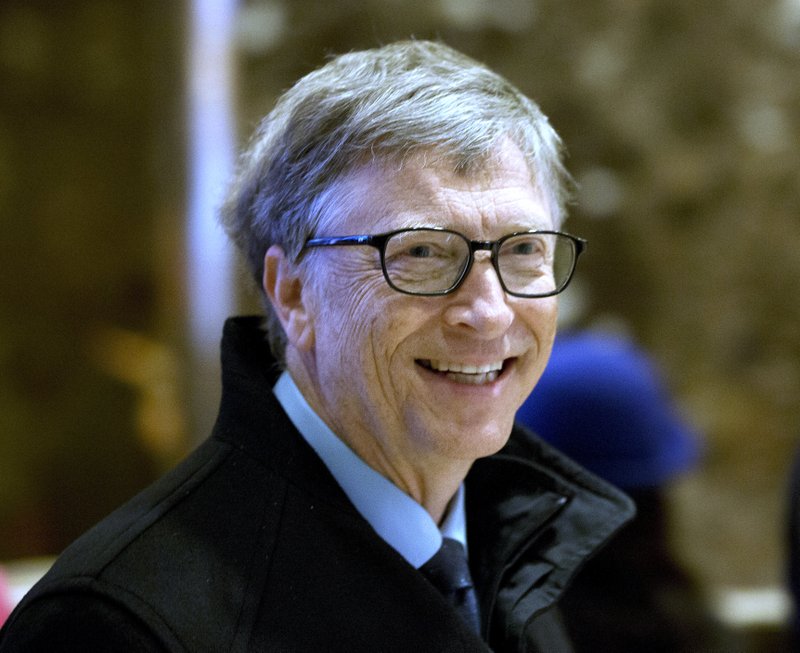
The eight individuals who own as much as half of the rest of the planet are all men, and have largely made their fortunes in technology. Most are American, with one European and one Mexican in the mix. Several have pledged to give it all to charity. The eight tycoons’ net worth, as calculated by Forbes magazine, was cited Monday by anti-poverty activists Oxfam in a report highlighting income inequality. Although most of them will not be joining the annual meeting of business and political elites in the Swiss town of Davos this week, the extraordinary individual wealth they typify will be part of the gathering’s discussions on inequality. Here’s a look at who they are. ___ Bill Gates: $75 billion The man whose name is a byword for billionaire. Gates co-founded Microsoft in the mid-70s, growing it into the world’s biggest software company and helping to make computers a household item. He quit as CEO in 2000 and pledged to devote his fortune to his philanthropic activities in the Bill and Melinda Gates Foundation. He has gradually reduced his ownership in Microsoft to less than 3 percent, with the bulk of his wealth in a private firm. He’s the only one on the list who’s a regular at Davos. ___ Amancio Ortega: $67 billion The richest person in Europe, Ortega opened the first Zara fashion shop in 1975. Now, the chain, part of Ortega’s Inditex group, has 7,000 shops globally. Its boom in popularity is largely due to a low cost model that competes with the likes of H&M. As Zara and Inditex grew in size, Ortega, a Spaniard, held on to a majority stake of 59 percent in the company, which has a market value of over 97 billion euros ($102 billion). ___ Warren Buffett: $60.8 billion The Oracle of Omaha, as he’s known for the way his every investment decision is followed by thousands. Buffett began investing as a teenager in the 1940s and gradually grew his firm, Berkshire Hathaway. Buffett, 86, is notoriously frugal and favors investing in companies with proven business models over new industries, such as in technology. He’s said he will give away the bulk of his wealth to philanthropy. Since 2006, he’s been donating blocks of Berkshire stock to the Bill and Melinda Gates Foundation. ___ Carlos Slim Helu: $50 billion The Mexican tycoon owes his fortune to a major ownership in America Movil, a telecommunications multinational worth $42 billion. He personally owns about 7 percent in the company while his broader family retains a 37 percent stake. He was ranked as the richest person three years ago, but saw his net worth hit by a downturn in Latin American economies. U.S. President-elect Donald Trump‘s threats to scrap free trade deals and build a wall on the U.S.-Mexico border have also hurt shares in his business interests. Forbes estimates his net worth dropped $5 billion in the four days after Trump’s election. ___ Jeff Bezos: $45.2 billion The founder and CEO of Amazon.com helped revolutionize the retail industry by popularizing online shopping. What was initially an online book shop now sells pretty much anything. Bezos has reached beyond Amazon, in which he holds a 17 percent stake, to try his hand in other industries. He’s bought the Washington Post and set up an aerospace company, Blue Origin, that aims to make space accessible to tourists and paying customers. ___ Mark Zuckerberg: $44.6 billion He founded Facebook in 2004 while a college student to connect other Harvard students. The company went on to become popular globally and listed its shares publicly in 2012, making Zuckerberg, now 32, a multibillionaire. He’s managed to make Facebook profitable where rivals like Twitter have lagged, and expanded it with targeted acquisitions. He and his wife have pledged to sell 99 percent of their holdings in Facebook — over 400 million shares, worth about $50 billion — to support philanthropic causes. ___ Larry Ellison: $43.6 billion As a young programmer in the ’70s, Ellison’s first big client was the CIA. The name of the project was “Oracle.” In 1977, Ellison and associates used that name for their company, which creates software that helps manage databases and has since become an industry standard. Ellison has recently focused more on cloud computing, in which data is stored and managed across a network of computers. His fortune comes from the 27 percent stake he still owns in Oracle, a company worth $160 billion. ___ Michael Bloomberg: $40 billion Created the eponymous financial information provider in 1981 after getting laid off from an investment bank. Bloomberg made it a lucrative business in particular by selling data terminals to financial services firms. The multi-screen terminals became essential tools in the industry, incorporating real-time market information with a news service. Bloomberg, who reportedly retains an 88 percent stake in the privately held company, turned to politics in 2001, becoming mayor of New York City for three terms. Republished with permission of The Associated Press.
