
Debate commission says it will make changes to format
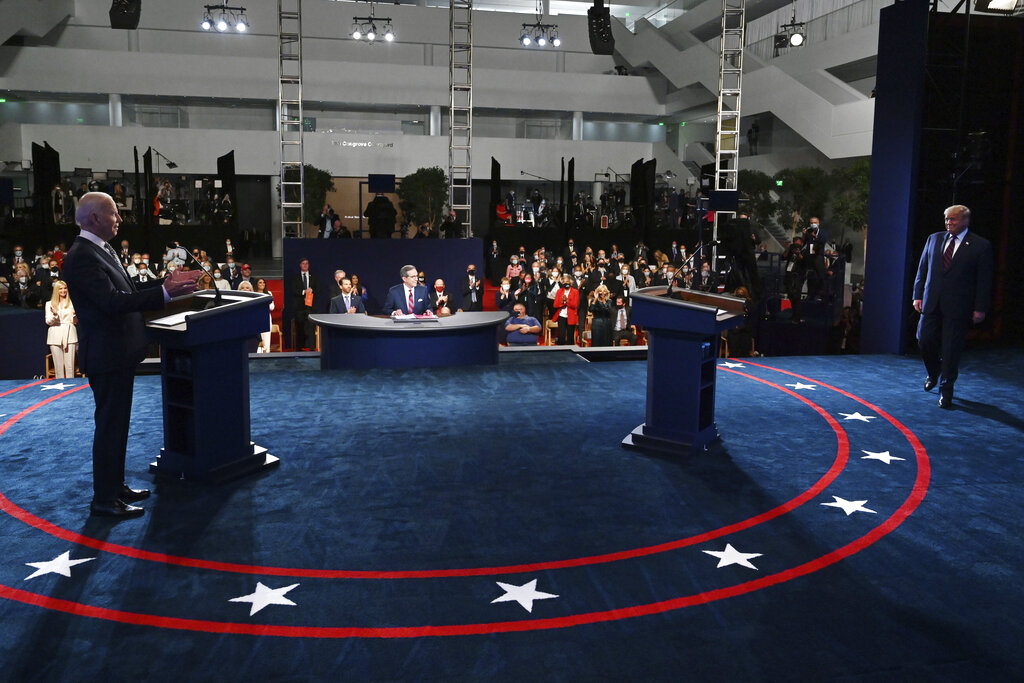
The commission said Wednesday that the debate “made clear that additional structure should be added to the format of the remaining debates to ensure a more orderly discussion of the issues.”
Unlike first, second debate doesn’t set viewership record
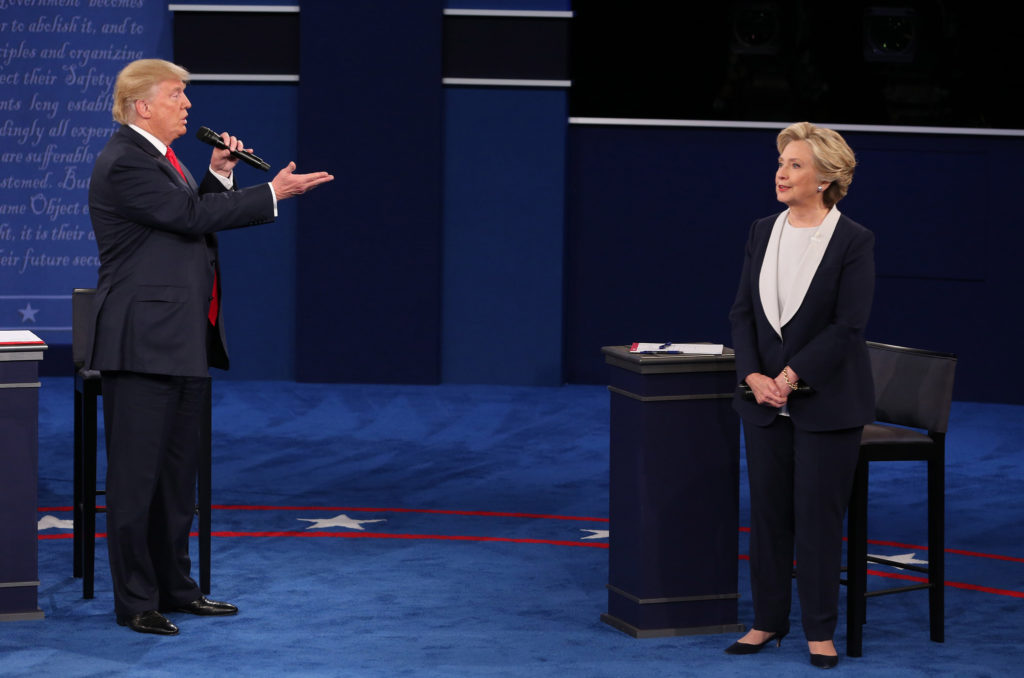
An estimated 66.5 million people watched the second debate between Hillary Clinton and Donald Trump, down from the record-setting audience who saw their first match but on par with the Obama-Romney contests four years ago. The first debate reached a total of 84 million viewers, more than for any other presidential debate on record, the Nielsen company said on Monday. The previous record of 80.6 million had been set for the only debate between Jimmy Carter and Ronald Reagan in 1980. In 2012, an estimated 65.6 million people watched the second debate between President Obama and Republican challenger Mitt Romney, after 67.2 million saw their first debate. On Sunday, the two candidates were competing against the NFL’s prime-time contest between the Green Bay Packers and the New York Giants, which was seen by 16.6 million people on NBC. A football game aired opposite the first debate, too, but it was on cable’s ESPN and reached only 8 million people. Sunday’s debate, moderated tightly by CNN’s Anderson Cooper and ABC News’ Martha Raddatz, was dominated early by questions surrounding Trump’s lewd conversation with Billy Bush in a recently resurfaced “Access Hollywood” outtake. In another clip getting wide airplay on Monday, Trump tells Clinton that “you’d be in jail” if he were elected. Raddatz on Monday said she could feel the tension in the room from the start. “When they came together at the beginning and didn’t shake hands, you knew you were in for a long evening,” she said on “Good Morning America” on Monday. The candidates shook hands at the end, following a disarming question from an audience member, who asked each candidate if they could think of one thing positive to say about the other. Raddatz and Cooper received generally good reviews for their sharp questioning and attempts to keep the candidates in line. Trump complained at times about not being treated fairly. At one point, when Trump objected to the Obama administration signaling in advance about an attack on ISIS positions in Iraq, Raddatz interjected with possible reasons for this tactic, including warning civilians to get out of harm’s way. CBS withdrawal from the political competition. CNN had 11.2 million viewers and Fox News Channel had 9.9 million, essentially flip-flopping their positions from the first debate. While that may be a reflection of a CNN personality serving as a moderator Sunday, it may also be an ominous sign of growing disinterest in the contest among Fox’s Republican-dominated fan base. A Fox personality, Chris Wallace, moderates the scheduled third and final debate Oct. 19. Republish with permission of the Associated Press.
Joe Henderson: 5 post-debate points to ponder
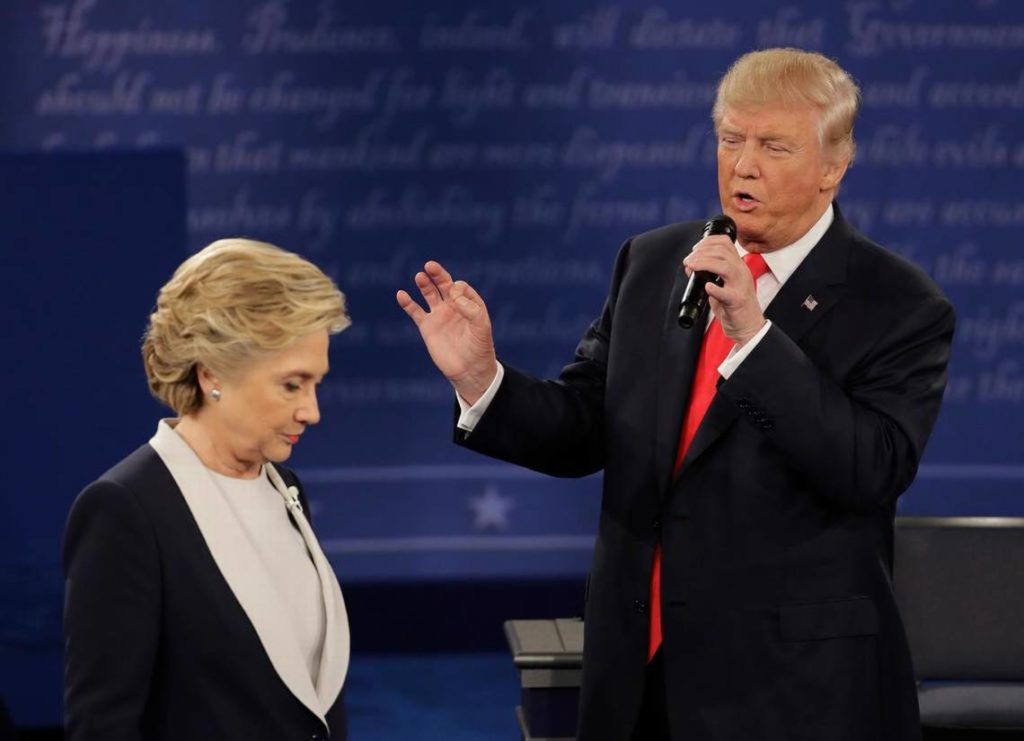
The unmoving needle: It generally is conceded that Donald Trump’s fervent base will be ecstatic with his performance. Breitbart.com, for instance, declared in a giant headline on its home page – Clinton Crash: Trump dominates. It highlighted a quote from Rudy Giuliani declaring, “Biggest knockout I’ve seen in a presidential debate.” Breitbart ran one of those quick-click polls asking “Which debate moderator was more shameful?” When I checked Monday morning, there were 50,744 votes. Martha Raddatz, if you’re curious, was the runaway “winner.” But Brietbart and, I’ll wager, the people who favor that site aren’t the ones who needed to be convinced about Trump. By repeating the same stuff he has been saying for weeks on the campaign trail, what did we really learn about Trump – or Hillary Clinton, for that matter? Well, Trump did say he would appoint a special prosecutor to look into Clinton’s alleged misdeeds. The base loved that, I am sure. Clinton, though, seemed prepared for this flurry of punches from an opponent trailing badly on points in the late rounds. If there is a bombshell out there about Clinton that could mitigate some of the nuclear fallout from his widely reported vulgar comments over the weekend, Trump probably should consider rolling it out very, very soon. The real takeaway from Sunday night is that Clinton got one day closer to being elected president. Numbers don’t lie: NBC ran a collage Monday morning of high-level Republican lawmakers and party leaders who rebuked or abandoned the party’s nominee after those remarks. It was a striking image that was overwhelmingly white and male. Of the 76 headshots on the screen, I counted two people of color and 12 women. The rest were white males. That has been the GOP’s problem all along, especially with a flame-throwing, race-baiting candidate like Trump. Sure, those Republicans – especially those on the November ballot – are condemning Trump. That’s because they understand the electorate is large, diversified, and can translate the code words coming from Trump’s base about immigration and crime. If Republicans don’t understand that after the beating it looks like they’re about to take in November, they never will. They love to talk about the “base” of each party. The GOP’s core ideal is lower taxes, less regulation, and smaller government. That message has been obliterated in a waterfall of hate, misogyny, and lies. We’re not electing a debater-in-chief: Debates are important and it can be rationally argued that Sunday was a draw. Trump played the only card he could, essentially turning the evening into a misdirection play to obscure his own real problems related to the now-infamous audio tape he dismisses as “locker room talk.” For what it’s worth, I have been in a lot of locker rooms and they can be places where the faint of heart should not tread. But I also remember a high school coach from my small Ohio town who would have had his players running until their tongues dropped if he heard the kind of chatter that has landed Trump in trouble. Back on point though, as a nation (and media), we are obsessed with “winners” and “losers” in settings like this. It generally was conceded that Clinton “won” the first debate. The bounce seemed to help her in the polls. It still should be more about policy, though, and less about debate skills. One of these two persons is going to be president of the United States. When that day comes, we won’t care about how they did in the debates Oh dear! They don’t like each other: Much was made about that the candidates didn’t shake hands after being introduced. It set Twitter afire. The honor of the best tweet in my highly unofficial survey (based solely on my reaction) goes to POLITICO Chief White House Correspondent Mike Allen: “No handshake! … Overheard: “Even Ali and Frazier touched gloves” #FightNight. They did shake hands briefly afterward, but put it this way: The moment was about as warm as New England Patriots coach Bill Belichick after losing to Rex Ryan. One final question to ponder: After all this, do we really need the third and (yes!) final debate on Oct. 19? I suppose if there is a big news story between now and then that one candidate or the other has to address (WikiLeaks maybe?), it could be intriguing to see what happens on the stage. The format will be the same as the first debate. At this point though, Trump looks to be trailing by two touchdowns, out of timeouts, and Clinton has the ball. Absentee and mail ballots have already been distributed in many states, so millions of Americans may already have voted by the time the two candidates meet again. Oh well. The pundits need something to do, I guess. ___ Joe Henderson has had a 45-year career in newspapers, including the last nearly 42 years at The Tampa Tribune. He covered a large variety of things, primarily in sports but also including hard news. The two intertwined in the decade-long search to bring Major League Baseball to the area. Henderson was also City Hall reporter for two years and covered all sides of the sales tax issue that ultimately led to the construction of Raymond James Stadium. He served as a full-time sports columnist for about 10 years before moving to the metro news columnist for the last 4 ½ years. Henderson has numerous local, state and national writing awards. He has been married to his wife, Elaine, for nearly 35 years and has two grown sons – Ben and Patrick.
Second presidential debate featured tough moderators
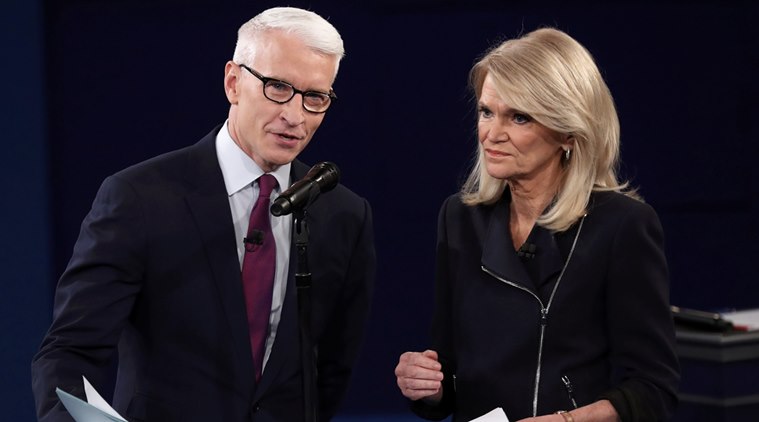
Moderators Anderson Cooper and Martha Raddatz teamed to ask sharp questions of Donald Trump and Hillary Clinton and to keep them corralled during many contentious exchanges during the second presidential debate. Sometimes those efforts drew the ire of Trump. “Nice,” he said. “One on three.” That signal to his supporters on Sunday night is sure to subject Cooper, of CNN, and ABC’s Raddatz to partisan criticism. But it seemed the dual moderators were determined to take a more active role than NBC’s Lester Holt during the first debate, seen by a record 84 million people. They took questions from audience members and viewers in the town hall-style debate, and frequently interjected tough follow-ups. After an opening question about whether the two candidates were modeling appropriate behavior, Cooper jumped in with a question to Trump about the 2005 “Access Hollywood” tape released on Friday where he was caught making crude remarks about women. “You’ve bragged that you sexually assaulted women,” Cooper said. “Do you understand that?” He later asked Trump if he had done the things that he talked about on the tape, coming on to women by groping and kissing them. “When you walked off that bus you were 59?” Raddatz later said. “Were you a different man, or did that behavior continue until just recently?” A direct question from Cooper also compelled Trump to admit he had not paid federal income taxes in nearly 20 years. Clinton, for her part, was questioned about her use of a private email server while secretary of state, an issue that prompted investigators to conclude she had put some top secret material at risk, although federal prosecution was not recommended. “You don’t call that extremely careless?” Raddatz said. The ABC newswoman also pointed to the leaked release of speeches Clinton had made to private corporations after serving as President Obama’s chief diplomat. Raddatz noted that Clinton once said a politician needed a private and public position sometimes on issues. “Is it OK for a politician to be two-faced?” Raddatz asked. The moderators frequently tried to hush the candidates by noting when they had gone past their allotted time. Clinton sometimes bulled past the stop sign and at other times, quickly wound down her answer. When Trump was unhappy, he complained of unfair treatment. “She goes one minute over and you don’t stop her,” Trump said about his opponent. “I go a second over and you come after me.” Raddatz replied: “You’ve had many answers.” Trump objected to Cooper looking to move on to a different subject during a discussion of Clinton’s email issues. “I’d like to know, Anderson, why can’t you bring up the emails. I’d like to know,” Trump said. Raddatz had asked the initial question on the subject. “We brought up the emails,” Cooper answered. “It hasn’t, it hasn’t,” Trump said. “And it hasn’t been finished at all.” Trump has been critical of the news media, and particularly CNN, in tweets in the weeks leading up to the debate. Cooper brought up Trump’s late nights on Twitter, particularly when he attacked in the wee hours last month a former beauty pageant contestant who had criticized him. Cooper asked whether it was the sign of a disciplined leader. Raddatz sharply drew out Trump when he was answering a question about how to deal with Syria’s civil war. She pointed out that a position stated by Trump countered that of one outlined by running mate Mike Pence. Trump noted that he hadn’t spoken with Pence on the topic and that he disagreed with him. In what felt a little like a first debate rerun, the two candidates argued over whether Trump had initially expressed support for the Iraq war. Trump has denied it despite audio evidence, which Clinton again pointed out. Raddatz noted that the topic had been fact-checked. Toward the end of the debate, the two moderators almost seemed like schoolteachers admonishing their students to be quiet and in asking the candidates to wrap things up so they can get to more questions. “Thank you very much, both of you,” Raddatz said when they quieted down, to the audience’s laughter. Cooper and Raddatz seemed anxious to get in one last audience question. A man asked whether each of the candidates could think of one positive thing to say about the other – a query that proved particularly disarming after 90 minutes of cutting insults. Clinton said she respected Trump’s children, and Trump said he admired that his opponent was a fighter. Chris Wallace of Fox News is scheduled to moderate the third and final presidential debate, scheduled for Oct. 19 in Las Vegas. Republished with permission of the Associated Press.
Moderator Lester Holt under scrutiny during debate
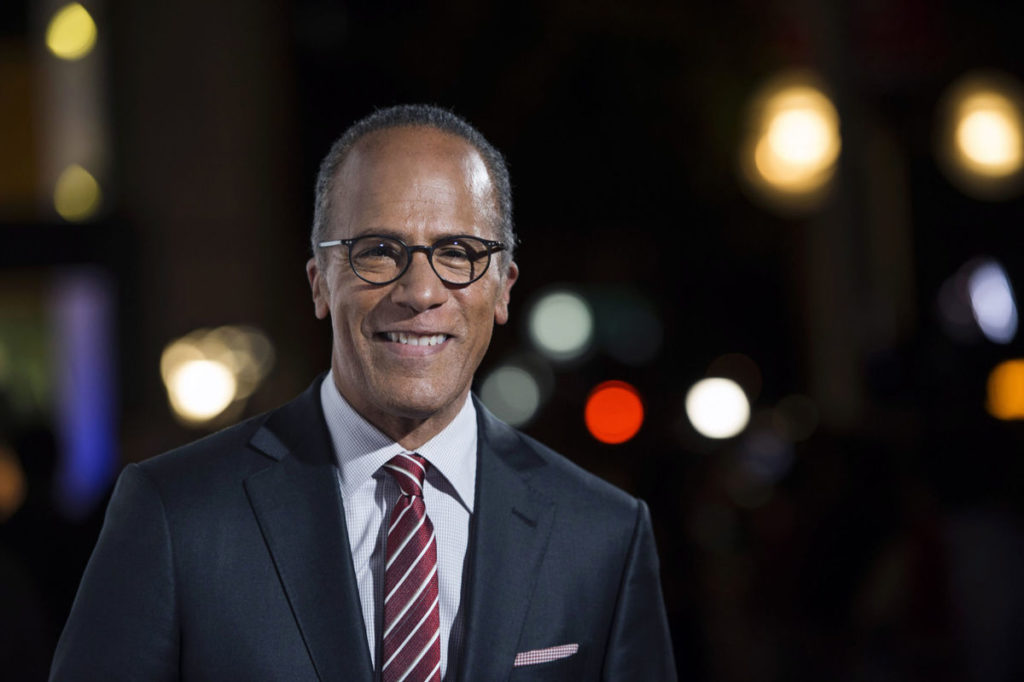
Everyone’s aware of the stakes for Hillary Clinton and Donald Trump during the first presidential debate, but there’s a third person in the equation who faces a different pressure: Lester Holt. The NBC News veteran is moderating his first general election debate, making him solely responsible for the questions asked each candidate and for steering the conversation. His performance will be closely watched, particularly in light of a dispute over the extent to which he should call politicians out for making untrue statements. Holt, 57, has kept quiet about his preparations. The NBC “Nightly News” anchor took over his job last year after predecessor Brian Williams was found to have lied about his role in news stories. Like the moderators for all three presidential debates this fall, it’s Holt’s first time in that role for a general election debate. He hosted a Democratic primary forum in January, and has interviewed Clinton and Trump three times each during the campaign. In a reflection of the attention that will be paid to Holt, his voter registration became an issue last week. “Lester is a Democrat,” Trump said in a Fox News Channel interview. “It’s a phony system. They are all Democrats.” Holt, however, is a registered Republican, according to New York state voting records. Asked about the misstatement on Monday, Trump campaign manager Kellyanne Conway said on MSNBC that it wasn’t a lie because Trump didn’t know Holt’s voter registration. Voting records show that Anderson Cooper of CNN, who is moderating the Oct. 5 debate, is registered unaffiliated with a party in New York and Chris Wallace of Fox News, the moderator on Oct. 19, is a registered Democrat in Washington, D.C. Martha Raddatz, who will join Cooper, lives in Virginia, which doesn’t register voters by party, and ABC would not discuss her affiliation. That illustrates on a small scale the issue of to what extent moderators, and journalists covering the debate, should point it out when a candidate says something untrue. It became part of the pre-debate discussion when Holt’s NBC colleague, Matt Lauer, was criticized for not confronting Trump earlier this month when the Republican falsely claimed he had not expressed support for the war in Iraq during a forum between the two candidates. The Clinton campaign says moderators should police false statements. Trump’s campaign says it’s not their role. Among journalists, there’s no consensus. Janet Brown, executive director of the Commission on Presidential Debates, said on CNN Sunday that in past debates moderators have generally believed the candidates should call their opponents out when something false is said. “I don’t think it’s a good idea to get the moderator into essentially serving as the Encyclopedia Britannica,” Brown said. Television networks were skittish Monday in discussing their fact-checking plans in advance. None admitted in advance to plans of flashing graphics onscreen to identify a false statement; that hasn’t been done in the past. NBC News said it is teaming with PolitiFact for digital fact-checking. CBS said it will assign fact-checkers that will provide context during the debate on the CBSNews.com website. In past years, some networks have assigned reporters post-debate to examine the accuracy of particular statements. The television industry will be watching to see if Monday’s debate can smash the previous record for the biggest presidential debate audience, the 80.6 million people who watched the only debate of the 1980 campaign between Jimmy Carter and Ronald Reagan. The most-watched debate this century was the first between Barack Obama and Mitt Romney in 2012, with 67.2 million voters, the Nielsen company said. During his television journalism career, Holt has been known more for hard work than flashiness. He was a news anchor in Chicago for 14 years before coming to NBC in 2000, and logged long hours on MSNBC during the Iraq War. The bass guitar is his off-screen passion. Last week he set aside debate prep to play during a Manhattan rooftop party for “Dateline NBC,” joining some fellow NBC employees running through songs by Alabama Shakes, Billy Squier and Jefferson Starship. Republished with permission of the Associated Press.
