
Tommy Tuberville and Bill Cassidy demand answers of Joe Biden’s nominee for Labor Secretary
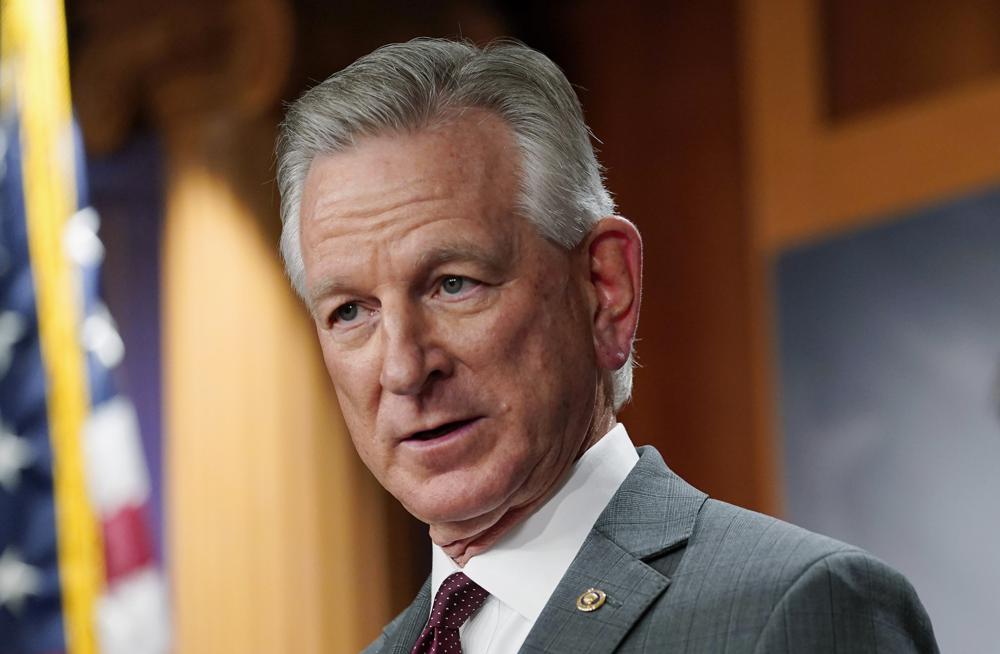
U.S. Senator Tommy Tuberville and Sen. Bill Cassidy, M.D. demanded answers from California regarding Julie Su, President Joe Biden’s nominee to be secretary of the U.S. Department of Labor (DOL), about her previous alleged obstruction of immigration officials. “As part of the Committee’s vetting process for presidentially-appointed nominees, it has come to our attention that, in July 2017, as California State Labor Commissioner, Julie Su issued a memorandum to her staff which allegedly instructed them to refuse entry to U.S. Immigration Customs and Enforcement (ICE) agents who visited state labor offices,” wrote the senators. “In response to her questions for the record, and in response to Senator Tuberville requesting the production of this memorandum, Julie Su stated that she ‘does not have access to this reported memo and do[es] not recall its precise contents. Therefore, pursuant to our constitutional responsibilities, we request that your office produce a copy of the 2017 memorandum issued by Julie Su to the Committee by May 8, 2023.” Public reports indicate that Su, while chief of California’s Division of Labor Standards Enforcement (DLSE), ordered DLSE employees to obstruct requests from ICE. Su’s nomination was approved in the HELP Committee on an 11 to 10 vote on Wednesday. She now faces consideration by the full Senate. Tuberville, Cassidy, and all the other Republicans voted against confirming Su. During last week’s nomination hearing before the HELP Committee, Tuberville asked Su about the existence of a memorandum from July 2017 instructing DLSE staff to tell ICE agents “to leave our office” and to demand a search warrant signed by a judge before allowing them onto the premises. Su responded that she neither had a copy of the memo nor could she provide one. When Senator Tuberville submitted a Question for the Record (QFR) asking for the memo after the hearing, Su again failed to provide a copy. On Monday, Senators Tuberville and Cassidy requested the California Labor and Workforce Development Agency (LWDA) provide the memo Su admitted during the hearing. The two Senators wrote, “Under Article II, § 2 of the U.S. Constitution, the Senate has the responsibility to advise the president about presidentially-appointed nominees and the authority to consent to those nominations.1 On April 20, 2023, the Senate Health, Education, Labor and Pensions (HELP) Committee held a confirmation hearing for Julie Su, President Biden’s nominee for the Department of Labor (DOL) in Washington, D.C.2 As part of the Committee’s vetting process for presidentially-appointed nominees, it has come to our attention that, in July 2017, as California State Labor Commissioner, Julie Su issued a memorandum to her staff which allegedly instructed them to refuse entry to U.S. Immigration Customs and Enforcement (ICE) agents who visited state labor offices.3 The memorandum also allegedly directs staff to tell ICE agents “to leave our office” and to demand a search warrant signed by a judge before allowing them onto the premise.” “In response to her questions for the record, and in response to Senator Tuberville requesting the production of this memorandum, Julie Su stated that she “does not have access to this reported memo and do[es] not recall its precise contents.” Therefore, pursuant to our constitutional responsibilities, we request that your office produce a copy of the 2017 memorandum issued by Julie Su to the Committee by May 8, 2023.” President Joe Biden is defending the nomination. “Julie knows in her bones as well the people who get up every morning and go to work and bust their necks just to make an honest living deserve something — someone to fight on their side to give them an even shot,” President Biden said. “Just a — just a shot so they don’t get stiffed. Well, that’s been happening to too many workers for much too long. Fighting to make sure they have a fair shot is — and no one is left behind. Julie has spent her life fighting for that vision, her entire professional career. “ “And as a civil rights lawyer and a leader of California’s state labor department, the biggest in the entire country, Julie spent two years [decades] representing workers — many without college degrees, many who didn’t speak English but who worked long, long hours at low pay and were just looking for a little bit of dignity — just a little bit of dignity for themselves and their families,” Biden said. “She’s increased the minimum wage, cracked down on wage theft, protrec- — protected trafficked workers, established and enforced workplace safety standards, and so much more.” “Born in Wisconsin, she’s the daughter of Chinese immigrants,” Biden continued. “Mom of a union worker — her mom was a union worker, and her dad was a small-business owner. She went on to law school, served the people of California. Julie is the American Dream. And she is what the American Dream is about. More importantly — I think even more importantly, she is committed to making sure that dream is within the reach of every American. Every American. That’s what she’s all about. She is going to make sure it happens as the fourth Asian American woman in my Cabinet.” Su is the Acting Secretary of Labor following Secretary Marty Walsh’s having left the administration. Su was deputy labor secretary prior to Walsh’s leaving the cabinet. “We have an extraordinary opportunity to build an economy where no one feels invisible, where every individual and community not only gets to benefit from the President’s transformative vision for America but also gets to help make it real,” Su said. “So let’s build together.” Tuberville serves on the Senate Health, Education, Labor, and Pensions (HELP) Committee. Cassidy is the Ranking Member. Tuberville is also a member of the Senate Armed Services, Agriculture, and Veterans’ Affairs Committees. To connect with the author of this story or to comment, email brandonmreporter@gmail.com.
U.S. unemployment drops to lowest since 1969
On Friday, the U.S. Department of Labor reported that the U.S. economy added 517,000 jobs in January – far exceeding expectations and indicating that a recession in the near term is increasingly unlikely. The unemployment rate is at its lowest rate since 1969. The report showed that the economy added 401,000 jobs a month in 2022. The U.S. economy added nearly 5 million jobs in 2022 after adding 7 million jobs in 2021. “Today, the Bureau of Labor Statistics reported that the American economy added 517,000 jobs in the month of January, and the unemployment rate ticked down to 3.4 percent, the lowest rate since May of 1969,” said Labor Secretary Marty Walsh. “With 12.1 million jobs added since President Biden took office and a monthly average of 356,000 jobs over the past three months, we began 2023 with more strong, steady job growth that benefits workers and their families.” The news was welcomed by the White House. “Americans have been through a tough few years, but I am optimistic about our country’s economic prospects,” President Joe Biden wrote. “Americans’ resilience has helped us recover from the economic crisis created by the COVID-19 pandemic, families are finally getting more breathing room, and my economic plan is making the United States a powerhouse for innovation and manufacturing once again.” “The economy has created more than 10 million jobs since I took office, and the unemployment rate is near a 50-year low,” Biden continued. “The unemployment rate for Black Americans and Hispanic Americans is near historic lows. The number of Americans filing for bankruptcy is half its pre-pandemic rate. 2021 and 2022 are on track to be the best and second-best years for small business applications on record.” President Biden admitted that despite the progress on jobs, inflation is still too high. “It’s going to take time to get inflation back to normal levels, and we may see setbacks along the way,” Biden said. “The Federal Reserve has a primary responsibility to control inflation, and I have appointed highly qualified people to lead that institution, given the critical importance of its dual mandate of maximum employment and stable prices. But Americans should have confidence that my plan is working.” Alabama’s preliminary, seasonally adjusted December unemployment rate was 2.8 percent. That was down from December 2021’s rate of 3.1%. “As we close out our economic reporting for 2022, I’m pleased to say that Alabama has recovered well from the pandemic and has maintained positive momentum throughout the year,” said Governor Kay Ivey. “We broke records all year long, reminding everyone that Alabama is the best place to live, to work, and open a business. Our wages are up, jobs are plentiful and still growing, and we’re seeing some of our highest employment in major sectors in more than a decade. I couldn’t be more proud of the progress we’ve made.” It will be at least another week for Alabama’s January unemployment to be announced. With record job growth, inflation appearing to be slowing, and economic growth strong in the fourth quarter, there is growing optimism that the economy is not going into recession. To connect with the author of this story or to comment, email brandonmreporter@gmail.com.
Congress votes to avert rail strike amid dire warnings

Legislation to avert what could have been an economically ruinous freight rail strike won final approval in Congress on Thursday as lawmakers responded quickly to President Joe Biden’s call for federal intervention in a long-running labor dispute. The Senate passed a bill to bind rail companies and workers to a proposed settlement that was reached between the rail companies and union leaders in September. That settlement had been rejected by four of the 12 unions involved, creating the possibility of a strike beginning December 9. The Senate vote was 80-15. It came one day after the House voted to impose the agreement. The measure now goes to Biden’s desk for his signature. “Communities will maintain access to clean drinking water. Farmers and ranchers will continue to be able to bring food to market and feed their livestock. And hundreds of thousands of Americans in a number of industries will keep their jobs,” Biden said after the vote. “I will sign the bill into law as soon as Congress sends it to my desk.” The Senate voted shortly after Labor Secretary Marty Walsh and Transportation Secretary Pete Buttigieg emphasized to Democratic senators at a Capitol meeting that rail companies would begin shutting down operations well before a potential strike would begin. The administration wanted the bill on Biden’s desk by the weekend. Shortly before Thursday’s votes, Biden defended the contract that four of the unions had rejected, noting the wage increases it contains. “I negotiated a contract no one else could negotiate,” Biden said at a news briefing with French President Emmanuel Macron. “What was negotiated was so much better than anything they ever had.” Critics say the contract that did not receive backing from enough union members lacked sufficient levels of paid sick leave for rail workers. Biden said he wants paid leave for “everybody” so that it wouldn’t have to be negotiated in employment contracts, but Republican lawmakers have blocked measures to require time off work for medical and family reasons. The president said Congress should impose the contract now to avoid a strike that he said could cause 750,000 job losses and a recession. Railways say halting rail service would cause a devastating $2 billion-per-day hit to the economy. A freight rail strike also would have a big potential impact on passenger rail, with Amtrak and many commuter railroads relying on tracks owned by the freight railroads. The rail companies and unions have been engaged in high-stakes negotiations. The Biden administration helped broker deals between the railroads and union leaders in September, but four of the unions rejected the deals. Eight others approved five-year deals and are getting back pay for their workers for the 24% raises that are retroactive to 2020. With a strike looming, Biden called on Congress to impose the tentative agreement reached in September. Congress has the authority to do so and has enacted legislation in the past to delay or prohibit railway and airline strikes. But most lawmakers would prefer the parties work out their differences on their own. The Senate took a series of three votes. The first was on a measure by Sen. Dan Sullivan, R-Alaska, that would have sent both parties back to the negotiating table. But union groups opposed an extension, as did the Biden administration. The proposal was roundly rejected, with 25 senators in support and 70 opposed. “An extension would simply allow the railroads to maintain their status quo operations while prolonging the workforce’s suffering,” leaders of the Transportation Trades Department of the AFL-CIO said. The second vote the Senate took would have followed the path the House narrowly adopted the day before, which was to add seven days of paid sick leave to the tentative agreement. But that measure fell eight votes short of the 60-vote threshold needed for passage. The final vote was the measure binding the two parties to the September agreement. It passed with broad bipartisan support, as it had in the House. While lawmakers voiced consternation about having to weigh in, the economic stakes outweighed those concerns. “A strike of that magnitude would have a painful impact on our economy, and that is an unacceptable scenario as inflation continues to squeeze West Virginians and Americans heading into the holiday season,” said Sen. Joe Manchin, D-W.Va. Democrats have traditionally aligned themselves with the politically powerful labor unions that criticized Biden’s move to intervene and block a strike. House Speaker Nancy Pelosi told Democratic colleagues it was “with great reluctance” that Congress needed to bypass the standard ratification process for union contracts. She did, however, hold an additional vote that would have added the seven days of paid sick leave that union workers wanted. That gave Democratic lawmakers in both chambers the ability to show their support for paid sick leave for rail workers while also avoiding a crippling strike. The call for paid sick leave was a major sticking point in the talks, along with other quality-of-life concerns. The railroads say the unions have agreed in negotiations over the decades to forgo paid sick time in favor of higher wages and strong short-term disability benefits. The unions maintain that railroads can easily afford to add paid sick time when they are recording record profits. Several of the big railroads involved in these contract talks reported more than $1 billion profit in the third quarter. The Association of American Railroads trade group praised the Senate vote to impose the compromise deal that includes the biggest raises in more than four decades. Still, CEO Ian Jefferies acknowledged that many workers remain unhappy with working conditions. “Without a doubt, there is more to be done to further address our employees’ work-life balance concerns, but it is clear this agreement maintains rail’s place among the best jobs in our nation,” Jefferies said. Union groups were unhappy with the final result. “The Senate just failed to pass seven days of paid sick leave for rail workers. We are grateful to the 52 Senators who voted YES and stood with rail workers,” tweeted the Transportation Trades
Joe Biden’s ‘Jobs Cabinet’ to sell infrastructure
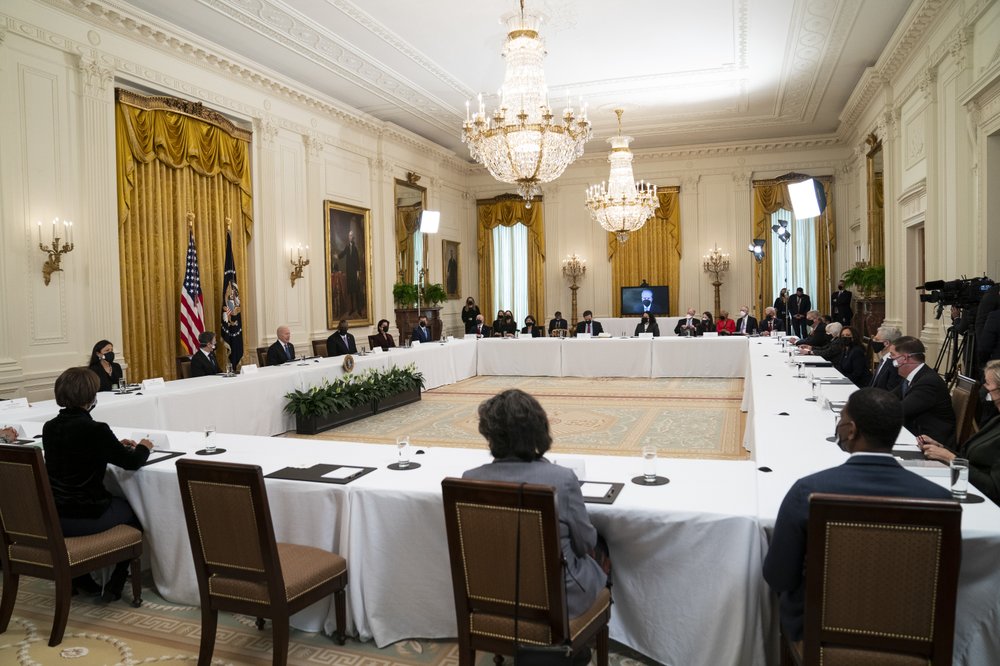
President Joe Biden set about convincing America it needs his $2.3 trillion infrastructure plan on Thursday, deputizing a five-member “jobs Cabinet” to help in the effort. But the enormity of his task was clear as Senate Minority Leader Mitch McConnell’s vowed to oppose the plan “every step of the way.” Speaking in Kentucky, McConnell said he personally likes Biden, and they’ve been friends a long time. But the president will get no cooperation from the GOP, which objects to the corporate tax increases in the plan and says they would hurt America’s ability to compete in a global economy. “We have some big philosophical differences, and that’s going to make it more and more difficult for us to reach bipartisan agreements,” the Republican leader said. White House chief of staff Ron Klain said the key to any outreach is that the proposal’s ideas are already popular. Americans want smooth roads, safe bridges, reliable public transit, electric vehicles, drinkable water, new schools, and investments in manufacturing, among the plan’s many components, he said. “We kind of think it’s just right,” Klain said in a televised interview with the news organization Politico. “But we’re happy to have a conversation with people, less about the price tag, more about what are the elements that should be in the plan that people think are missing.” Those conversations could be limited to Democrats as McConnell declared: “I’m going to fight them every step of the way.” Biden told his Cabinet at its first meeting that he is enlisting several of them to help with the push: Transportation Secretary Pete Buttigieg, Energy Secretary Jennifer Granholm, Housing and Urban Development Secretary Marcia Fudge, Labor Secretary Marty Walsh, and Commerce Secretary Gina Raimondo. “Working with my team here at the White House, each Cabinet member will represent me in dealings with Congress, engage the public in selling the plan and help organize the details as we refine it and move forward,” Biden said. The task will involve lots of salesmanship for a legacy-making piece of legislation that Biden announced in a Wednesday speech. His administration must sway Congress. It needs to rally voters. It’s also looking to outside economists to back the plan. It’s monitoring Wall Street for any celebrations or jitters. It’s forming alliances with advocates while dealing with critics of the plan’s corporate tax hikes and project details. And Biden’s administration also intends, per the plan, to cajole other nations to stop slashing their own tax rates in what has been a race-to-the-bottom to attract and retain multinational businesses. Biden’s vehicle for financing his infrastructure plans is a key dividing line. Republicans object to raising the corporate tax rate to 28% from 21%, one of the many changes so that business taxes would fund infrastructure. Republicans had cut the corporate rate from 35% in 2017, a hallmark policy achievement of Donald Trump’s presidency. Within Washington and corporate board rooms, the administration is attracting its share of accolades and rebukes on his proposal. In Biden’s own party, liberal Democrats in Congress want him to go bigger. And Democrats representing high-tax states want to remove a 2017 tax code change that limited deductions of state and local taxes for individuals. House Speaker Nancy Pelosi expressed no qualms about the proposal’s scope. “It was in the tradition of America — to think big,” Pelosi said at a press conference Thursday. “And now, in this century, President Biden is undertaking something in the tradition of thinking big, being transformational, and creating jobs for America.” While many leading business groups oppose the higher taxes, some major companies see reason for optimism because of the innovations that would be encouraged by the plan. Automakers Ford, General Motors, and Toyota endorsed the general concepts of Biden’s plan, which calls for the construction of 500,000 electric vehicle charging stations by 2030 in what would be a shift away from gasoline-powered cars. But some environmentalists said the plan’s shift away from fossil fuels that cause climate change was not substantial enough. “Biden has pledged to cut carbon emissions 50% and decarbonize our electricity sector, but this proposal won’t even come close,” said Brett Hartl, government affairs director at the Center for Biological Diversity. The White House was quick to address the climate change concerns. Climate adviser Gina McCarthy said the administration expects the infrastructure package to include Biden’s pledge to set a national standard requiring utilities to produce 100% carbon-free electricity by 2035. The proposed electricity standard “is going to be fairly robust, and it’s going to be inclusive,” McCarthy said. “I think we can get to the results that we’re looking for in a number of different ways. If a clean energy standard can be done, we think it should be done.’’ For every criticism of the plan’s details, there were also plaudits for its broader approach. Harvard University economist Larry Summers, a former treasury secretary, endorsed Biden’s plan after previously criticizing the $1.9 trillion coronavirus relief plan because of its size and debt-based financing. He downplayed any risks from corporate tax hikes since low-interest rates mean the costs of obtaining capital are already low for many companies. “I am excited,” Summers said on Twitter. “The economy’s capacity will go up.” The plan also carries a political dimension as organized labor is mobilizing to get the package passed, an important push given the steady recent Republican gains among working-class voters. Biden’s plan, with its focus on construction and manufacturing jobs, has the potential to reverse some of that slide — and the unions that backed him in 2020 are promising to help deliver votes on infrastructure. “Our members are an army a half-million strong, that will make calls, visit members of Congress and rally for good jobs building our nation’s infrastructure,” said Terry O’Sullivan, general president of Laborers International Union of North America, one of the largest construction trades unions. “We did it with boots on the ground to get President Biden elected.” Republished with the permission of the Associated Press.
Hillary Clinton proposes $275 billion in new infrastructure spending

Hillary Rodham Clinton called for hundreds of billions in new federal spending on infrastructure on Sunday, kicking off what her campaign says will be a month-long focus on job creation. Standing before a backdrop of union workers and students, the Democratic presidential frontrunner vowed to rebuild “ladders of opportunity” and give a greater number of Americans a “middle-class lifestyle.” “Investing infrastructure makes our economy more productive and competitive,” she said at the launch of “Hard Hats for Hillary,” a new effort by her campaign to mobilize union workers. “To build a strong economy for our future, we must start by building strong infrastructure today.” Clinton was joined by Boston Mayor Marty Walsh, who recently endorsed her campaign, and a number of labor unions backing her bid. “Get your sledgehammers ready because we have a glass ceiling to demolish,” Walsh told a cheering audience crowded into historic Faneuil Hall. The new infrastructure proposals make up the most expensive portion of Clinton’s economic agenda, which her campaign said would exceed the $350 billion she’s already proposed for a college affordability plan. Along with the $275 billion in infrastructure funds, she plans to call for new investments in manufacturing and research in the coming weeks. Her announcement comes as Clinton faces down challenges from Vermont Sen. Bernie Sanders and former Maryland Gov. Martin O’Malley, who’ve both stressed the need to increase direct federal spending. Sanders has proposed legislation that would provide more than $1 trillion in new infrastructure spending over the next five years, paid for by raising taxes on the wealthy and corporations. Clinton’s campaign said she would allocate $250 billion to direct investment by the federal government in crumbling roads, bridges, public transit and airports. An additional $25 billion would fund a national infrastructure bank, an idea unveiled by President Barack Obama in his first term that has been blocked repeatedly by congressional Republicans. The bank would support $225 billion in loans intended to spur private investment in struggling projects, adding a total of $500 billion in new infrastructure funds into the economy, her campaign estimates. Her campaign says their plans would create “good-paying, middle-class jobs,” citing a recent study that found wages for infrastructure workers at $38,810, several thousand dollars higher than the national median. The new federal spending would be paid for by closing corporate loopholes, according to her campaign, which did not detail which tax breaks would be targeted. The Republican National Committee accused Clinton of treating American tax dollars like “every day is black Friday.” “The real reason Hillary Clinton isn’t saying how she’ll pay for her trillion-dollar spending increase is because she knows it means raising taxes on the middle class,” said spokesman Michael Short. Clinton’s campaign says she would limit her tax increases to wealthy Americans. They argue that her chief Democratic rival, Sanders, would require middle-class Americans to pay higher taxes to fund his single-payer health care plan — a charge his campaign disputes. “I’m the only Democrat in this race pledged to raise your income, not your taxes,” Clinton said, in a subtle swipe at Sanders. Sanders’ campaign says that his single-payer health system would save taxpayers money in the long run because it would eliminate wasteful health spending. Republished with permission of the Associated Press.
