
Mike Hubbard prosecutor Matt Hart resigns from Attorney General’s office
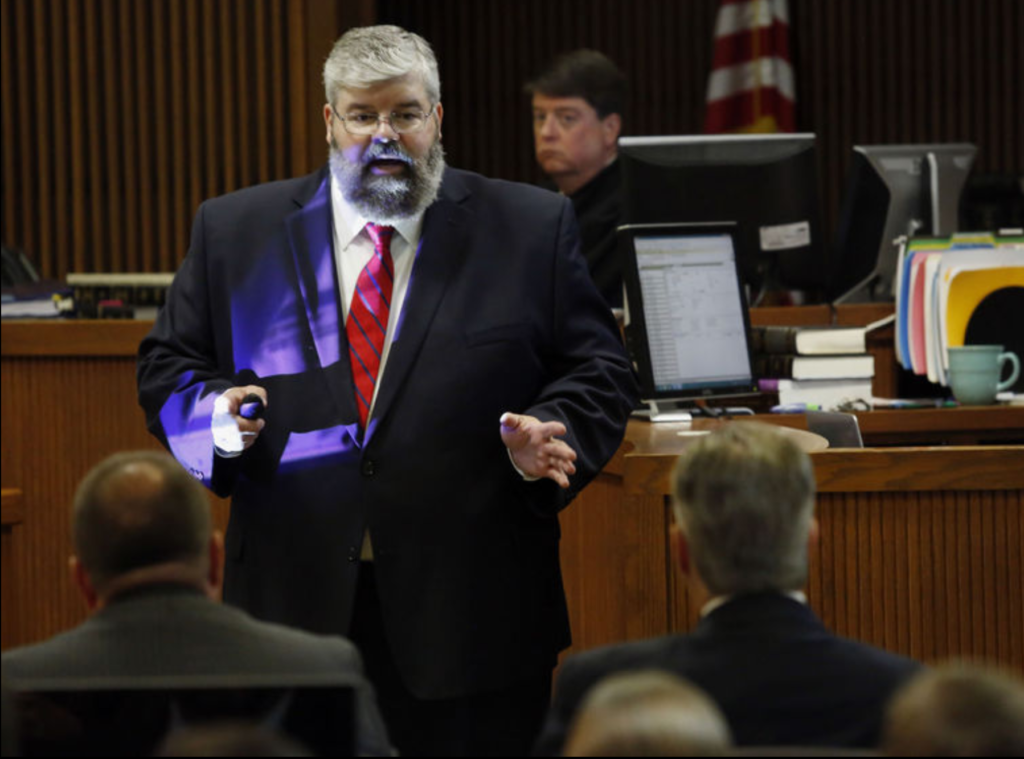
Prosecutor Matt Hart resigned from the Alabama Attorney General’s office Monday morning, the office has confirmed. “The Attorney General accepted Mr. Hart’s resignation today and thanked him for his service to the State. It is the policy of this office to refrain from comment about personnel matters, so we will have no further statement,” said Mike Lewis, spokesman for the Attorney General’s office. Hart is most known for the prosecution and conviction of former House Speaker Mike Hubbard. This story is breaking and will be updated.
Robert Bentley called before special grand jury
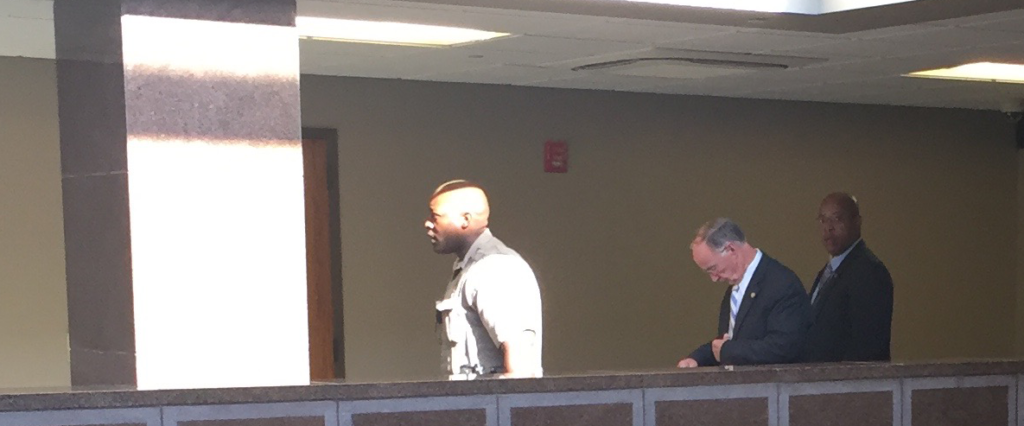
Acting on orders from Alabama Attorney General Luther Strange, Montgomery County Circuit Judge Gene Reese ordered a special grand jury to convene this week to investigate the firing of former Alabama Law Enforcement Agency Secretary Spencer Collier by Governor Robert Bentley. Collier was fired by Bentley in March for allegedly misusing funds in his role as ALEA secretary. The special grand jury was impaneled on Monday, July 11. Multiple sources confirm, Ray Lewis, the former head of Bentley’s security detail, testified Monday and Tuesday. Bentley himself testified to the grand jury Wednesday, followed by Hal Taylor, the former Chief of Staff to former Alabama Law Enforcement Agency Secretary Spencer Collier and current ALEA head Stan Stabler. “At 8:39 am, Wednesday, Gov. Robert Bentley walked into the Special Grand Jury being held in Montgomery County as Alabama Political Reporter reported yesterday. Bentley’s entourage included legal counsel David Byrne and one of his personal attorneys, Bill Espy,” the Alabama Political Reporter reported in an article published on Thursday. The Attorney General’s Special Prosecutions Division, under the direction of Division Chief Matt Hart — who most recently made headlines for successfully prosecuting and convicting former House Speaker Mike Hubbard — is handling the investigation.
Mike Hubbard trial day 12: Defense rests case, closing arguments begin
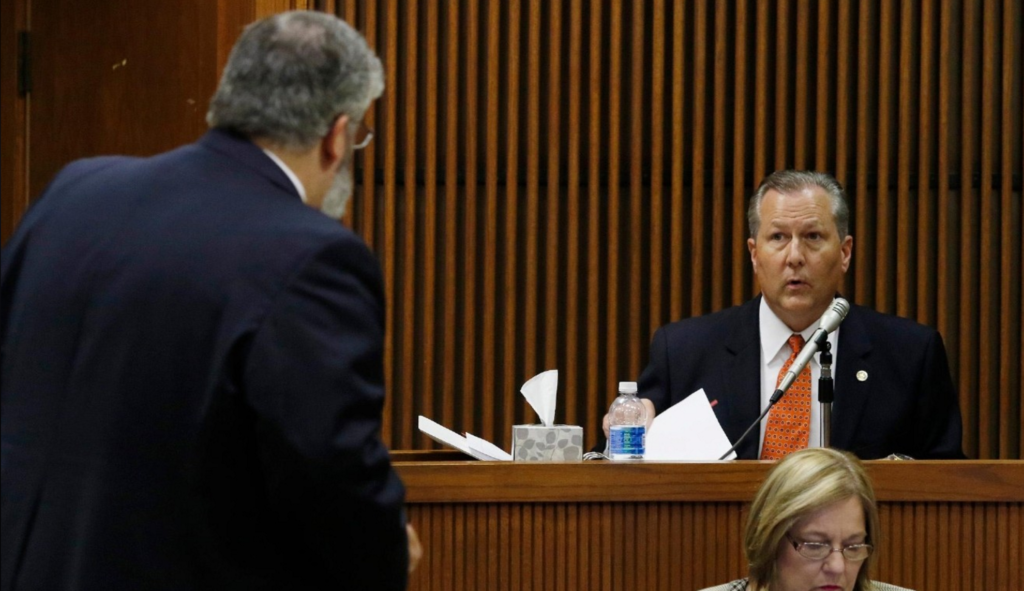
After nearly three weeks of testimony from witnesses including high-profile names such as Gov. Robert Bentley, former Gov. Bob Riley, Senate President Pro Tem Del Marsh, the defense rested its case against Alabama House Speaker Mike Hubbard Thursday morning after calling but one witness — Hubbard himself. Hubbard spent little more than an hour Thursday morning testifying, hoping to prove his innocence. Early Thursday, prosecutor Matt Hart brought up an email Hubbard sent to Michael Mitchell, a Publix representative, asking to set up a meeting about Capitol Cups – a company Hubbard had a consulting contract with that paid $10,000 a month. In the email, Hart told the courtroom that Hubbard called Capital Cups a constituent and even signed the email with his Alabama House Speaker title. The defense argued this was an automatically generated email signature. Hart prodded Hubbard, asking if he mentioned in the email to Mitchell that he was working as a consultant for Capital Cups. “No sir. Didn’t think it was relevant,” Hubbard replied. Hubbard went on to testify that Mitchell was a friend who sadly died a few years ago of an aneurysm. Hart quickly pointed out that Mitchell must not have been that good of a friend, as he just spoke with him a few days ago. “Well I must have him confused with someone else,” Hubbard explained to the courtroom. That was the last thing he was asked on the stand. Closing arguments got underway in Hubbard’s trial shortly before 3 p.m. with the Deputy Attorney General Mike Duffy presenting for the prosecution and finishing in roughly an hour and a half. Duffy’s main argument was Hubbard’s actions clearly violated the Alabama Ethics Law, saying that Hubbard “knew where the line was, and he crossed it.” “The cornerstone of the ethics law is that public officials should not be able to make money off their offices,” said Duffy. Hubbard “diminished the integrity of our government … because he wanted to make some money,” Duffy continued arguing that while chair of the Alabama Republican Party Hubbard intentionally directed business to his companies Craftmaster Printers and the Auburn Network. “What matters is he asked for something he’s not allowed to ask for, and he took things he’s not allowed to take,” Duffy said before he asked the jury to told Hubbard accountable. “I’m going to ask you to find this defendant accountable and find him guilty,” he said. Next attorney Lance Bell began the closing arguments for the defense, where he made it roughly 45 minutes of the allotted two hours. He will wrap-up Friday morning. Hubbard was indicted in October 2013 on 23 felony ethics charges of using his political office for personal gain. If convicted, he faces a maximum penalty of two to 20 years incarceration and fines of up to $30,000 for each count. He would be removed from office if convicted of any of the 23 charges. Hubbard has since maintained his innocence and continued to serve as Speaker of the Alabama House during the 2016 legislative session.
Mike Hubbard finishes testimony in his own ethics trial
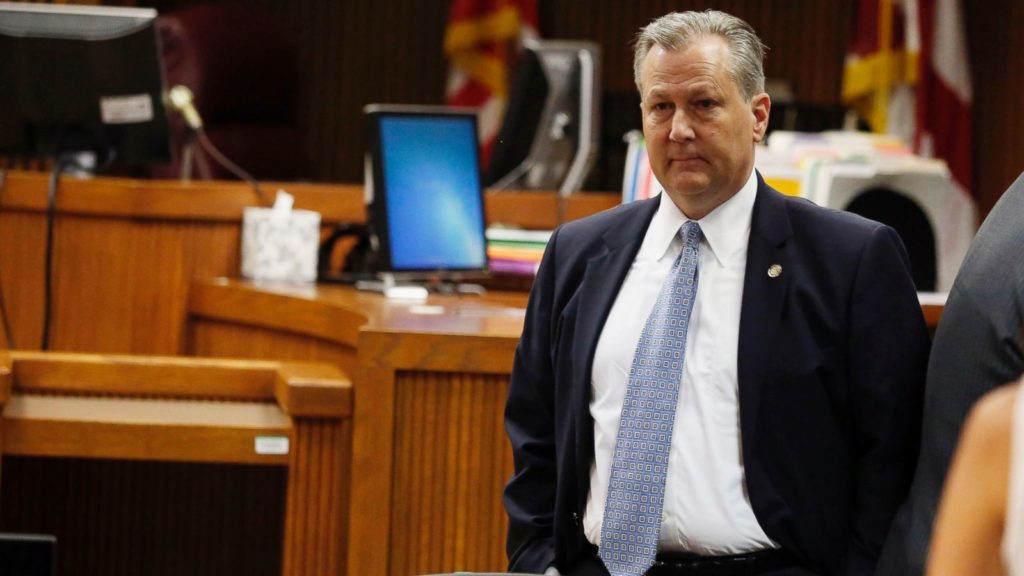
The Latest on the ethics trial of Alabama House Speaker Mike Hubbard (all times local): 10:30 a.m. Alabama House Speaker Mike Hubbard has finished testifying in his ethics trial. Prosecutor Matt Hart on Thursday morning showed jurors an email that Hubbard sent to a Publix lobbyist trying to arrange for company executives to meet with a drinking cup manufacturer in his district. The email was signed, “speaker of the house” and did not disclose that a related company was also paying Hubbard $10,000-a-month. Hubbard later explained it was an automatic signature generated by his email at his business, the Auburn Network. However, Hubbard’s defense took a stumble when he described the email as a request for advice to a longtime friend. Hubbard said the man recently died of an aneurysm. However, Hart noted the man was still alive. Hubbard admitted he must have confused him with someone else. ___ 5:24 a.m. Alabama House Speaker Mike Hubbard is returning to the witness stand for the third day in his ethics trial. A state prosecutor will resume his cross-examination of the Republican speaker Thursday morning. Prosecutor Matt Hart on Wednesday quizzed Hubbard on $2.3 million in contracts, party campaign business and investments his companies received. He also questioned Hubbard about an email he sent former Gov. Bob Riley, who is now a lobbyist, seeking employment help. Hubbard faces 23 felony ethics charges accusing him of using his political positions as Speaker and party chair to make money and solicit jobs and financial favors from lobbyists. Hubbard has maintained his innocence and said he took precautions to obey the state ethics law. Republished with permission of The Associated Press.
Mike Hubbard trial day 11: Hubbard returns to the witness stand
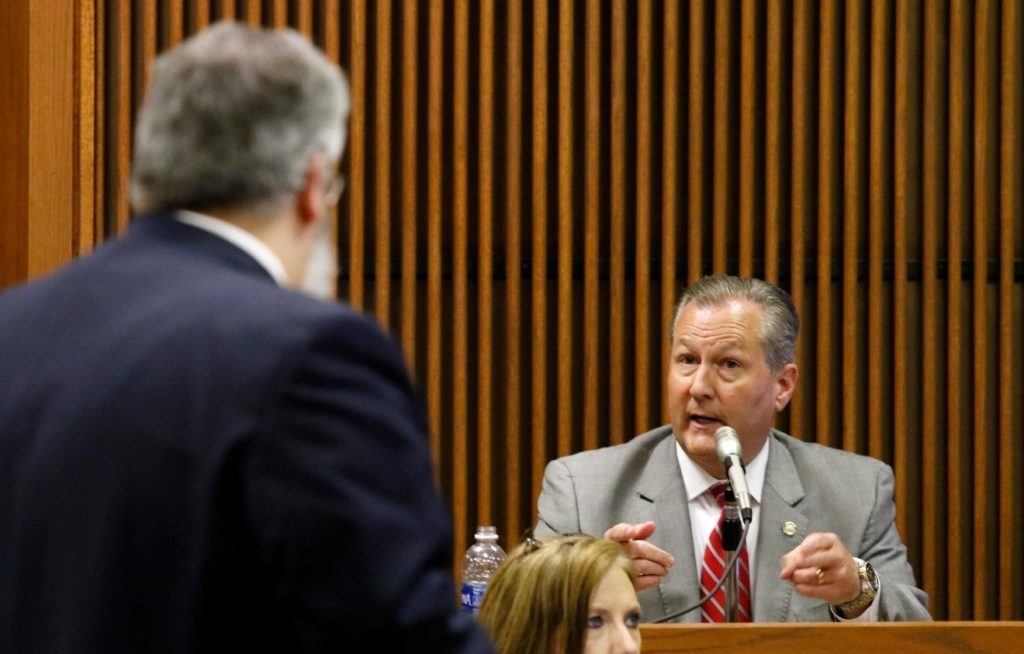
Alabama House Speaker Mike Hubbard continued his testimony on the witness stand Wednesday. There, he adamantly denied intentionally violating any laws, claiming he is “absolutely not” before the courtroom. The defense spent much of the day focused on Hubbard’s consulting work, allowing him the opportunity to explain why his actions were legal in his eyes. During this hourlong testimony before cross-examination, Hubbard often contradicted prior witnesses’ testimony. Before turning Hubbard over for cross-examination, the defense pointedly asked, “Did you ever intend to violate the law?” “Never,” Hubbard answered decisively. The defense went further, “Did you ever knowingly violate the law within these counts?” Hubbard repeated, “Never.” Hubbard was then turned over for cross-examination just after 3 p.m. where Deputy Attorney General Matt Hart questioned Hubbard about his relationship with former Alabama Governor, and current lobbyist, Bob Riley. Earlier Wednesday, Hubbard testified Riley was not only a close personal friend, but he was also like a father to him, which is why he went to the former governor about financial problems with his business. Hart clarified, “He’s a lobbyist, and you’re Speaker of the House.” Hubbard shot back, “He’s my friend.” To drive the point home, Hart referred to the former governor as ‘your friend, the lobbyist’ when speaking to Hubbard the remainder of the day. Repeatedly, Hubbard shot back “my friend, Bob Riley.” Hubbard said he did seek advice from Riley, “but not in my role as speaker.” Hubbard will take the stand again Thursday morning, where cross-examination will continue. He has testified a total of roughly five hours thus far. Hubbard was indicted in October 2013 on 23 felony ethics charges of using his political office for personal gain. If convicted, he faces a maximum penalty of two to 20 years imprisonment and fines of up to $30,000 for each count. He would be removed from office if convicted of any of the 23 charges. Hubbard has since maintained his innocence and continued to serve as Speaker of the Alabama House during the 2016 legislative session.
Mike Hubbard trial: Alabama House speaker continues testimony in own defense
The latest on the public corruption trial of House Speaker Mike Hubbard (all times local): 4:50 p.m. Alabama House Speaker Mike Hubbard squared off with a state prosecutor over consulting contracts and other money the Republican’s companies received. Hubbard and prosecutor Matt Hart exchanged testy remarks Wednesday during the first day of a contentious cross-examination at Hubbard’s ethics trial. Hart questioned Hubbard about $2.3 million his companies received and emails he sent former Gov. Bob Riley, now a lobbyist, seeking help finding a job. Hart referred to Riley as a lobbyist. Hubbard in his responses referenced Riley as “my friend.” Hubbard faces 23 felony ethics charges accusing him of using his political positions to obtain $2.3 million in work and investments for his companies. His defense has argued the transactions fall within exemptions for longstanding friendships and normal business dealings. He returns to the witness stand Thursday. ___ 4:00 p.m. Alabama House Speaker Mike Hubbard returned to the witness stand in his public corruption trial, denying accusations that he used his office to make money and help his business clients. Hubbard on Wednesday said he never knowingly violated the ethics law. Hubbard at several points contradicted testimony from prior witnesses. Hubbard said he had not seen language in a 2013 budget that could have benefited one of his clients until shortly before the House vote. He also denied asking a lobbyist for a $150,000 investment in his printing company. The Republican said calls to a patent office he made on behalf of another client, the owner of a drinking cup company, was because he was a constituent and employer in his district. The company was also paying Hubbard $10,000 a month. Hubbard said the company hired him because of his connections to college sports. ___ 3:35 a.m. Alabama House Speaker Mike Hubbard is testifying in his own defense at his ethics trial. Hubbard will return to the witness stand Wednesday afternoon as he offers jurors his explanation of contracts his companies received and emails he sent seeking work. Hubbard faces 23 felony ethics charges accusing him of using his political positions to obtain $2.3 million in work and investments for his companies. The Republican speaker testified Tuesday that he took precautions to obey the law and sought input from the director of the state ethics commission before accepting contracts. The speaker said he sought advice from friends after being laid off and he vented his financial stress in emails to former Gov. Bob Riley. Prosecutors will get a chance to question Hubbard later. Republished with permission of The Associated Press.
Consultant: ‘No choice’ but to subcontract to Mike Hubbard
A Florida political consultant testified Thursday that he believed he had no choice but to subcontract Alabama Republican Party campaign printing work back to a firm owned by the party’s chair. The chair at the time was Alabama House Speaker Mike Hubbard, now on trial for ethics violations. On Thursday, jurors heard that about party campaign work that was sent to Hubbard’s company, and conflicting evidence about Hubbard’s role in that. Prosecutors have accused Hubbard of using his political positions as speaker and Republican Party chair to make money and solicit favors such as investments from lobbyists. Defense lawyers argue that the transactions were above board. Randy Kammerdiner, co-owner of Majority Strategies, designed glossy direct mail pieces for the Republicans’ 2010 campaign to take over the Alabama Legislature. He testified that he believed party officials wanted the fliers printed at Craftmaster, where Hubbard was a co-owner. Prosecutor Matt Hart asked Kammerdiner if he felt he had any other option but Craftmaster for the printing work. “No,” Kammerdiner replied. Prosecutors also showed jurors a 2010 email from Kammerdiner to a state party employee, which said: “Per Mike, we’re printing at Craftmaster and just passing the actual charges on to you all.” However, under cross-examination by defense lawyer Lance Bell, Kammerdiner said Hubbard never directed him to use his firm. “I never had a specific conversation with Mike Hubbard saying I had to use Craftmaster.” Kammerdiner said. The political consultant also testified that the firm had previously used Craftmaster before Hubbard became party chair and the party was probably getting a “better deal” because they avoided the normal markup Majority Strategies applies to printing costs. Republished with permission of The Associated Press.
Mike Hubbard trial day 2: Hubbard’s businesses and consulting contracts
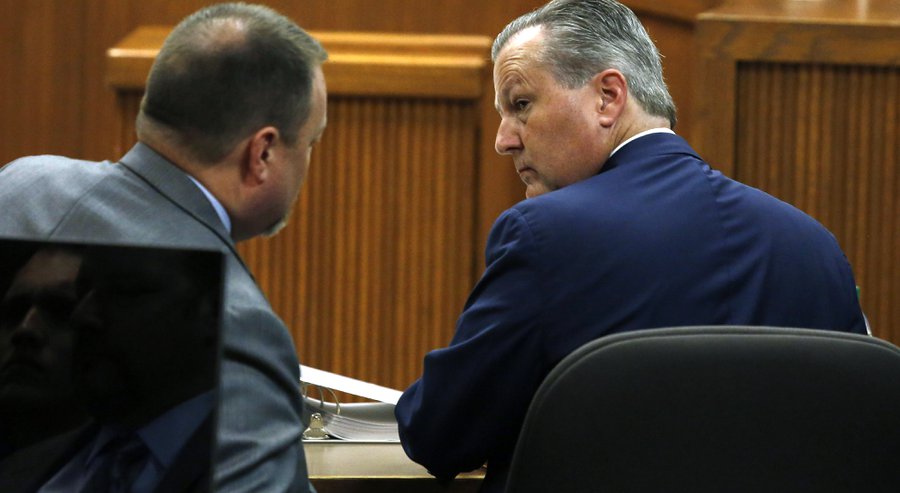
The ethics trial of embattled Alabama House Speaker Mike Hubbard continued Wednesday as his associates and employees, past and present, took the witness stand. Day two focused on Hubbard’s businesses and his consulting contracts with several companies, as the State tried to prove Hubbard used his previous position as chairman of the Alabama Republican Party to bring in money and business to his companies, Craftmaster Printers and Auburn Network. Up first was the president and co-owner of Craftmaster Printers, Barry Whatley, who bought the company along with Hubbard in 2000. “It’s been like raising the Titanic. It’s been a struggle since day one,” Whatley said of the company that was $8.8 million in debt at the time of initial purchase. The majority of Whatley’s testimony focused on Craftmasters’ relationship with a Florida-based political marketing company called Majority Strategies. Majority Strategies has used Craftmasters for printing and mailing for political campaigns, in a relationship Whatley likened to that of a “roller coaster.” Next to the stand was Chris Hines, the former senior vice president of Auburn Network. Hines testified that company documents listed Hubbard as the sole shareholder and an employee of the Auburn Network whose salary was listed at $132,000 in September of 2013. Under questioning from prosecutors, Hines testified he was aware that Mike Hubbard brought in a number of consulting contracts — with Southeast Alabama Gas District, Robert Abrams with CV Holdings, Edgenuity, and the American Pharmacy Cooperative Inc. — that each paid from $5,000 to $12,000 per month in consulting fees. Hines went on to explain he didn’t know exactly what Hubbard did for these companies, simply that he provided them with consulting services. Prosecutors introduced a check for $7,500 listed as being for “lobbying services from one the companies to the Auburn Network into evidence. Defense attorney Bill Baxley made clear during cross-examination all but one of the contracts were intentionally arranged so that no consulting work could be done in the state of Alabama, to avoid ethics violations. The third witness of day two was the clerk of the Alabama House of Representatives Jeff Woodard, whose testimony focused on a bill from the 2013 legislative session as Hubbard is accused of voting for SB 143 knowingly having a conflict of interest. Woodard testified that Hubbard voted yes for the bill in question, which included language that would give American Pharmacy Cooperative Inc. (APCI), one of the businesses the Auburn Network had a contract with, a monopoly on Medicaid prescriptions in the state. During cross-examination, Woodard testified the version of the budget, which ultimately became law, didn’t include all of the additional language that benefited Hubbard. Among the final two witnesses of the day was Josh Blades, Hubbard’s former chief of staff in 2013, who at many times got emotional on the stand. Blade testified during the 2013 legislative session he was involved in meetings and discussions about adding the APCI language to the general fund budget but did not know that Hubbard had a contract with the company until the day of the actual vote. According to Blades when he asked Hubbard about the contract, Hubbard explained it was only for work outside of the state. Blades went on to advise Hubbard to vote against the budget, but according to Blades, Hubbard said not voting would raise too many “red flags.” “We told him it was a problem, and we didn’t think he should move forward with the language in the budget because it looked bad,” said Blades. “I told Mr. Hubbard he should not vote on the budget.” “He said it would raise too many red flags if the speaker did not vote on his own budget,” Blades continued, explaining Hubbard’s intent was to fix it later by removing the language. “I was upset that I had played a role in what transpired that day, and that I had played a role unknowingly,” Blades said on the stand, adding that he was “afraid that there might be legal implications after all this transpired.” The language was later removed from the legislation. The fifth and final witness of the day was another former 2013 employee in the speaker’s office, Jason Isbell. Isbell, current vice president of legal and governmental affairs, in-house attorney and lobbyist for the Alabama Banker’s Association was chief counsel to Hubbard in 2013. Isbell’s testimony focused on the specific language added to the 2013 budget. He explained that despite drafting the ACPI language for the 2014 budget he did not know of Hubbard was consulting for APCI at the time. “I was an attorney in the speaker’s office; I wasn’t the speaker’s attorney,” Isbell said. If convicted, Hubbard faces a maximum penalty of two to 20 years imprisonment and fines of up to $30,000 for each count. He would be removed from office if convicted of any of the 23 charges. Witnesses expected on Thursday: Randy Kammerdiener: co-owner of Majority Strategies co-owner Don Williamson: former Alabama Medicaid Agency Director Mary Lawrence: legislative fiscal analyst of Health and Social Services Rachel Riddle: Legislative Fiscal Office, Senate Fiscal Officer, Deputy Director Norris Green: former Director of the Alabama Legislative Fiscal Office Steve Clouse: Alabama Representative, Chair of the House Ways and Means Committee
Mike Hubbard trial Day 1: Opening statements & first witnesses
Nineteen months in the making, after a grand jury charged him with 23 felony ethics violations, Alabama House Speaker Mike Hubbard finally had his day in court on Tuesday. Whether he wanted it or not. The day began at 9 a.m. as the courtroom began to fill with reporters and interested observers. At 10 a.m. the jury was seated. Prosecutor Matt Hart has arrived in courtroom. Hubbard and defense team have stepped out. Not sure when this will start. #alpolitics — Mike Cason (@MikeCasonAL) May 24, 2016 Shortly after the Attorney General’s Special Prosecution Division Chief, Matt Hart, gave opening statements for the prosecution, where he gave a detailed lesson on how the Alabama state government works, what are ethics laws and why they exist, followed by a charge-by-charge explanation of charges against Hubbard. His opening took approximately one hour and 40 minutes. Deputy Attorney General Matt Hart opens the case against Speaker Mike Hubbard in court on Tuesday, May 24, 2016, in Opelika, Ala. Hart is facing Mike Hubbard, right, and attorney Lance Bell, left. [Photo Credit: Todd Van Emst] “Mr. Hubbard asked things he was not allowed to ask and took things he was not allowed to take,” Hart said in his opening arguments. Hubbard faces a 23-count indictment on felony ethics charges alleging he used his office for personal gain and used his position as Speaker of the House, and formerly as chair of the Alabama Republican Party, to solicit jobs and investments in businesses with which he was involved. Hart went on to explain that before the 2010 election, as the Party chairman, Hubbard directed Party business to a printing company he owned, Craftmaster, as well as a media company Hubbard founded, the Auburn Network. According to Hart’s opening statement, Hubbard directed Party officials to send $101,925 in business directly to Craftmaster and $41,835 to Auburn Network. “If you just saw a check going to Majority Strategies, you wouldn’t know,” Hart explained. Following Hart, former Attorney General Bill Baxley presented the opening statements for the Defense for roughly an hour and 15 minutes, where he called the charges against Hubbard “gobbledy-goop” and “mumbo jumbo.” Hubbard attorney Bill Baxley attacked the Speaker’s indictment as “unintelligible,” “mumbo-jumbo” and “gobbledygook.” (2) #alpolitics — Brian Lyman (@lyman_brian) May 24, 2016 Baxley claimed Hubbard went out of his way to make sure he followed ethics laws by actively seeking guidance from the Ethics Commission. “He tried to follow every part. He tried to get them to tell him to make sure he knew where the line was,” Baxley told the courtroom. After the opening remarks, jurors heard testimony from the first two witnesses in the case, John Ross and Tim Howe, both former state GOP officials who are now partners in the Montgomery-based lobbying firm of Swatek, Howe and Ross. Testimony resumes at 9 a.m. on Wednesday. Witnesses expected on Wednesday: Barry Whatley: president of Craftmaster Josh Blades: Hubbard’s former Chief of Staff Jason Isbell: Hubbard’s former legal adviser Jeff Woodard: clerk of the House Steve Clouse: Alabama representative, Chair of the House Ways and Means Committee
Update: Hubbard, state lawyers lay out opening statements in corruption case
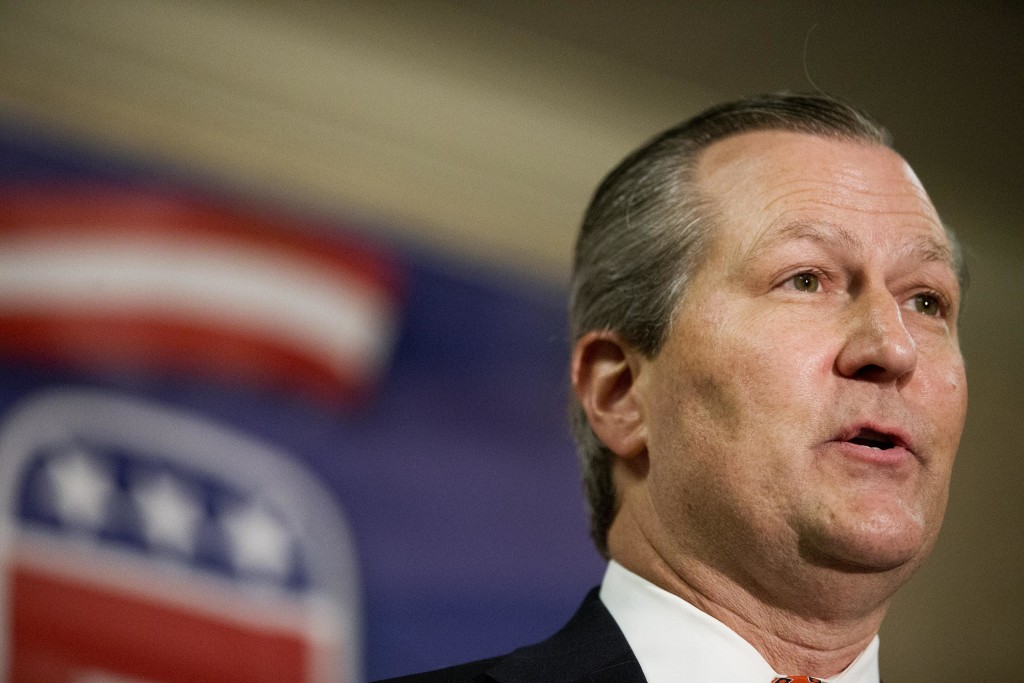
The Latest on the Alabama House speaker’s trial (all times local): 12:40 p.m. The defense is denying prosecutors’ claims that Alabama House Speaker Mike Hubbard wrongfully made more than $2.3 million from his powerful legislative position. Hubbard attorney Bill Baxley told jurors in opening statements Tuesday that Hubbard has done nothing wrong. Baxley says a 23-count felony indictment against Hubbard is “mumbo jumbo.” And he says Alabama’s ethics law contains exemptions that cover things like normal business dealings and friendships. The state claims Hubbard used his elected office and former position as state GOP chair to illegally receive contracts, investments and business totalling nearly $2.3 million. Hubbard’s trial comes at a tough time for Alabama Republicans. Gov. Robert Bentley faces possible impeachment over a sexually charged scandal. Supreme Court Chief Justice Roy Moore is suspended and faces possible removal for allegedly violating judicial ethics. — 11:25 am. Prosecutors are laying out their case against indicted Alabama House Speaker Mike Hubbard. In opening statements Tuesday, prosecutor Matt Hart told jurors that Hubbard took contracts worth tens of thousands of dollars each month from companies that wanted to influence legislation. Hart said Hubbard needed the money because he was losing a job with the company that broadcasts Auburn University sports, and his printing company was failing. Hubbard denies any wrongdoing. Defense lawyers will talk to jurors later Tuesday. Prosecutors say Hubbard used his office and past position as chair of the Alabama GOP to solicit business for himself and his companies. Republished with the permission of The Associated Press.
Mike Hubbard set to go to trial in May
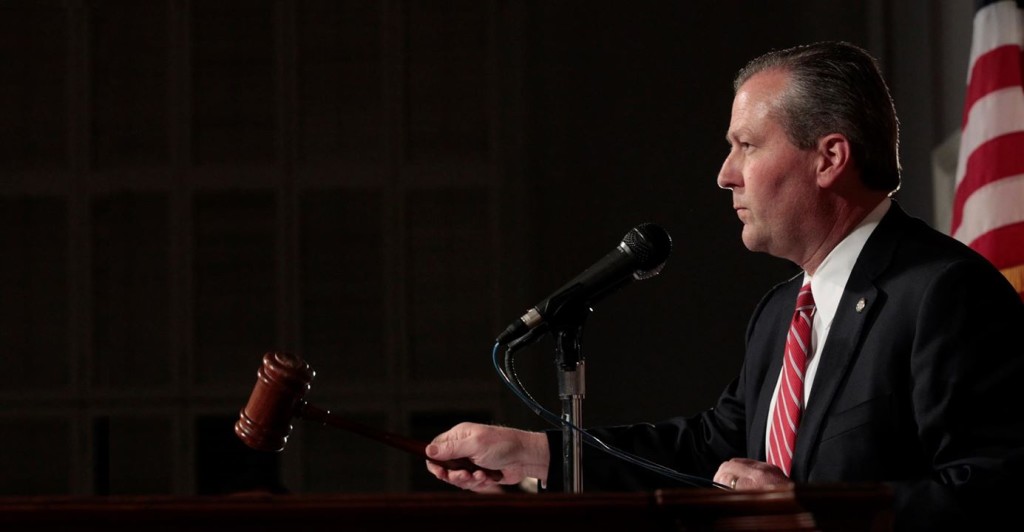
Embattled House Speaker Mike Hubbard had earlier called for his ethics case to be dismissed due to prosecutorial misconduct, but Lee County Circuit Court Judge Jacob Walker flatly denied the request Tuesday and told Hubbard to be ready for trial May 9. Hubbard’s case was basing its argument on recent revelations that Matt Hart, a lawyer in the Attorney General’s office, had provided a Hubbard opponent with “confidential grand jury information” in an effort to sully the Speaker’s name. In his decision, Walker concluded that those allegations did not constitute “prosecutorial misconduct.” Further, Walker dismissed arguments that Hart had leaked grand jury information to the media and motions to dismiss based on “vindictive prosecution.” Walker also dismissed motions requesting that Hart testify. Despite the leak allegations not being enough for a dismissal, the judge did say that those allegations could be discussed in the upcoming trial. Hubbard currently faces 23 felony charges of using his office for personal gain. He has been accused of using his position as Speaker of the House, and formerly as chairman of the Alabama Republican Party, to solicit jobs and investments in businesses with which he was involved. Further, Hubbard is accused of lobbying members of the executive branch for consulting clients and aiding in the inclusion of General Fund language to benefit a client. Hubbard has maintained his innocence and was reelected despite the felony allegations.
State prosecutors gaining ground in Speaker Mike Hubbard’s ethics case
A judge presiding over the suit over alleged violations of state ethics laws by House Speaker Mike Hubbard shook things up with a pair of judicial orders on Wednesday. Lee County Circuit Court Judge Jacob A. Walker III ruled Wednesday that after nearly two years of delays pursued by Hubbard’s defense counsel, all briefs to be considered in the case must be submitted by Jan. 12. The move shortens the timeline for Hubbard, whose trial is set to start in March, to maneuver to bolster his defense. The judge also threw out subpoenas Hubbard’s lawyers sought for Assistant Attorney General William Lisenby as well as Sandy McLure, a special assistant and scheduler for Attorney General Luther Strange. Hubbard recently filed for a motion to dismiss the case, alleging prosecutorial misconduct by Strange and state prosecutors, saying the prosecution is selectively targeting the Republican lawmaker for political reasons. That motion was jettisoned by the court. Judge Walker’s ruling will likely help take the sting out of those charges as Hubbard mounts his defense. “I am aware that the defendant Michael Hubbard contends that I maintained a notebook, journal or diary about Deputy Attorney General Hart’s alleged violations of professional responsibilities or ethics. I keep notes on many things. I have no notes that reflect violations of rules of professional responsibility or ethics on the part of Matt Hart,” Lisenby stated in an affidavit. “If I had evidence that Deputy Attorney General Hart violated rules of professional responsibility or ethics, I would report the violation to a court or to the Alabama Bar. I have made no such report,” Lisenby said. The judge apparently deemed the affidavit sufficient to quash the requested subpoena for Lisenby. Likewise, an affidavit from McClure stating she had no significant involvement in the effort to investigate and prosecute Hubbard was received favorably by Walker, so she will not be forced to testify either. The rulings comprise a blow to Hubbard, who professes his innocence on charges he illicitly profited from his chairmanship of the Alabama Republican Party among other ethics charges, though he has focused his defense thus far on impugning the motives of the prosecution.
