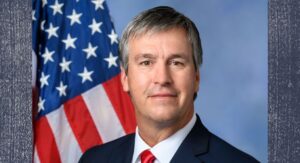
Several U.S. Senate and House races remain too close to call as vote counts trickle in
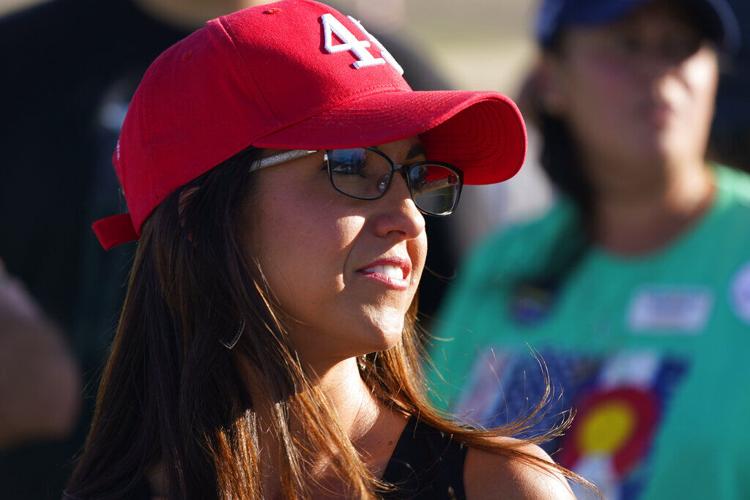
Two days after Election Day, several races are still too close to call, leaving the fate of the U.S. House and Senate hanging in the balance. FiveThirtyEight currently has 210 Republican House seats compared to 200 for Democrats, leaving both short of the 218 needed to control that chamber. The House is still leaning toward Republicans, though, with expected House Speaker Rep. Kevin McCarthy, R-Calif., declaring Republican control. Nancy Pelosi has not publicly weighed in, even as many wait to see if she will retire from leadership. In fact, some races are separated by only a handful of votes. Outspoken supporter of former President Donald Trump, Rep. Lauren Boebert, R-Colo., is leading her opponent by fewer than 400 votes at time of publication. Arizona, California, Nevada, and other states also have close House races. Control of the Senate is still undecided and may come down to a Dec. 6 Georgia runoff between Republican Herschel Walker and Democrat Raphael Warnock. Arizona’s Senate race is not called, though Democrat Mark Kelly leads Republican Blake Masters roughly 51.4% to 46.4%. The Arizona Secretary of State’s website indicates 100% of precincts reporting, but Maricopa County is still reportedly working through hundreds of thousands of mail-in ballots turned in on Tuesday. In Nevada’s uncalled Senate race, Republican Adam Laxalt leads Democrat Catherine Cortez Masto 49.4% to 47.6%, with 83% reporting. Gubernatorial races are tight as well. The closely watched governor’s race in Arizona has Republican Kari Lake behind Democrat Katie Hobbs by about 13,000 votes as counts continue Thursday. Overall, election night disappointed many Republicans who hoped for the “red wave.” “So after all the analysis, it is clear the most likely case is both houses of Congress will go Red and the mega states of TX and FL go redder,” Matt Schlapp, chair of the Conservative Political Action Committee, wrote on Twitter. “We lost too many close races, but all in all, I go back to VA very pleased.” Former President Donald Trump has taken criticism after many of the candidates he backed did not fare well, but he pushed back against those critiques in a string of posts on Truth Social Wednesday and Thursday. “Incredible how dishonest the Fake News Media is,” he wrote. “The Failing New York Times has gone crazy. So many of the people I Endorsed went on to victory on Tuesday Night, nobody was even close, and they literally make up a story refusing to write the facts, and only quoting enemies and losers. Almost all of the people I endorsed WON, yet if you read the story from two Trump hating writers (who only do as they are told!), you would not even recognize the truth.” Speaking at a press conference Wednesday, President Joe Biden said he always expected Democrats to do “fine” and wants to work with Republicans going forward. “While we don’t know all of the results yet – at least, I don’t know them all yet – here’s what we do know,” he said. “While the press and the pundits are predicting a giant red wave, it didn’t happen. And I know you were somewhat miffed by my – my [sic] optimism, but I felt good during the whole process. I thought we were going to do fine. “The American people have made clear, I think, that they expect Republicans to be prepared to work with me as well,” he added. Republished with the permission of The Center Square.
Donald Trump reasserts GOP dominance as others focus on midterms
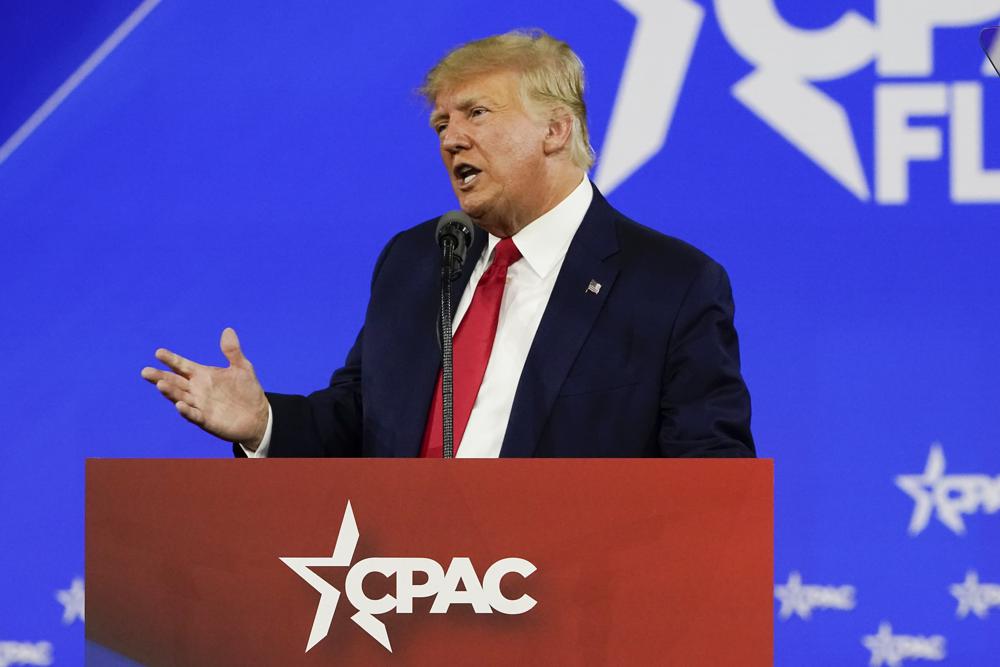
Leading Republicans spent much of three days avoiding Donald Trump’s chief grievances or ignoring him altogether as they unified behind a midterm message designed to win back the voters the polarizing former president alienated while in office. But by the end of the four-day Conservative Political Action Conference, Trump had reminded those who want to move on that he remains the most powerful voice in Republican politics. In his keynote address Saturday night, Trump indicated he planned to run for president a third time in 2024. He falsely blamed his 2020 election loss on widespread voter fraud, for which there is no evidence. And on Sunday, he was the overwhelming winner of a presidential preference straw poll of conference attendees. “We did it twice, and we’ll do it again,” Trump said of running in 2024. Even so, he has teased about a 2024 campaign before, and his vow this time was not necessarily ironclad. As invading Russian troops battled with Ukrainian forces, Trump also described Russian President Vladimir Putin as “smart.” “Of course he’s smart,” Trump said in his remarks Saturday, doubling down on praise of the Russian leader that many other Republicans have avoided after the invasion. “But the real problem is our leaders are dumb. Dumb. So dumb.” While Trump expressed support for the Ukrainian people and called the country’s president, Volodymyr Zelenskyy, a “brave man,” he also noted his ties with other leading autocrats. He specifically pointed to his friendly relationships with Xi Jinping of China and North Korean leader Kim Jong Un. Up until Trump’s appearance, lies about election fraud, the focus of last year’s conference, had been an afterthought among the top speakers. No one parroted Trump’s approving rhetoric toward Putin. And some leading Republicans didn’t even mention Trump’s name. Instead, those most likely to seek the GOP’s 2024 presidential nomination not named Trump united behind an agenda that includes more parental control of schools, opposition to pandemic-related mandates, and a fierce rejection of “woke” culture. The message from more than a half-dozen elected officials, delivered to thousands of mostly white activists at an event that usually celebrates far-right rhetoric, does not mean the party has turned its back on Trumpism. Far from it. The former president was a frequent topic among some of the conference’s lower-profile speakers. T-shirts proclaiming “Trump won” were being sold in the hallways. And in the straw poll of 2,574 conference attendees, Trump earned 59%, followed by Florida Gov. Ron DeSantis with 28%. No one else had more than 2%. When asked for their preference should Trump not run in 2024, DeSantis earned 61%, with no one else earning more than 6% of the vote. The straw poll only measured the opinion of those at the conference, not broader Republican sentiment. Aside from Trump, Florida Gov. Ron DeSantis was a crowd favorite throughout the four-day conference. Audience members applauded almost every time his name was mentioned, or his picture appeared on big screens. Conference organizer Matt Schlapp said Trump remains a dominant force, but he does not have a lock on the party’s base. “No. 1 is, Does he run again? And it’s overwhelming that people want him to,” Schlapp said. “But there’s a diversity of opinion.” And while Trump’s most controversial supporters were generally given lower-profile speaking slots over the four-day program, they were not excluded. Rep. Majorie Taylor Greene, R-Ga., appeared on a Saturday morning panel hours after being featured at a conference of pro-Trump white nationalists. Trump offered Taylor Greene a particularly warm shoutout during his speech as he ticked down the Republican officials in attendance. “I refuse to shut up,” Taylor Greene said earlier in the day during a brief appearance as she railed against “Democrat communists.” Despite Trump’s dominant place at the head of the Republican Party, other party leaders are increasingly optimistic they have found a forward-looking strategy to overcome pro-Trump extremism and expand the party’s appeal with control of Congress at stake in November. It’s essentially the same playbook that Virginia’s Republican Gov. Glenn Youngkin used last fall when he won in the swing state by avoiding Trump and his biggest grievances, including the false notion that the 2020 presidential election was plagued by mass voter fraud. “There are people that perhaps have never voted the same way any of you have in a presidential race, and they’re really angry,” Florida Sen. Marco Rubio said Friday. “And that’s why I believe that for all the negative we’ve heard, the pendulum is swinging.” Democrats are clinging to paper-thin majorities in the House and Senate, and voter sentiment has swung in an ominous direction for them since President Joe Biden took office in January 2021. In an AP-NORC poll conducted Feb. 18-21, 70% of Americans said the country was headed in the wrong direction. As few as 44% said the same in April 2021. Some leading Republicans seemed intent at CPAC on not helping Democrats by embracing Trump. Missouri Sen. Josh Hawley, who tried to block the certification of Biden’s electoral victory after the Jan. 6 Capitol attack, sidestepped a question about whether he would challenge Trump in a 2024 prospective matchup. “I’ve said I’m not planning to run for president,” Hawley said. He also declined to say whether he wants Trump to run again in 2024: “I never give him advice, including on this.” Hawley also said it was a mistake for Republicans like Trump to offer soft praise for Putin: “Putin is our enemy. Let’s be clear about that.” DeSantis, who has also refused to rule out a 2024 presidential bid should Trump run, did not mention the former president in his 20-minute address, focusing instead on his resistance to mask and vaccine mandates. Trump’s former secretary of state, Mike Pompeo, spoke about his work in the Trump administration, but he did not repeat his own recent flattering comments about Putin, in which he called the Russian leader “very capable” and said he has “enormous respect for him.” South Dakota Gov. Kristi
Conservative gathering to feature Donald Trump’s false fraud claims

A gathering of conservatives this weekend in Florida will serve as an unabashed endorsement of former President Donald Trump’s desire to remain the leader of the Republican Party — and as a forum to fan his false claim that he lost the November election only because of widespread voter fraud. Matt Schlapp, chairman of the Conservative Political Action Conference and a Trump ally, said discussion panels on election integrity would highlight “huge” evidence of illegal voting in Georgia, Nevada, and elsewhere that ultimately swung the election for Democrat Joe Biden. Such baseless claims fueled the Jan. 6 attack on the U.S. Capitol and have been repeatedly dismissed by the courts, the Trump administration’s leading security officials, and senior Republicans in Congress, including Senate Minority Leader Mitch McConnell of Kentucky. The conference marks the first significant gathering of Republicans since the election and its aftermath as the party reckons with the faction that continues to support Trump as its leader and those who think the GOP needs to move quickly beyond the turbulent era of his presidency. Conference organizers, representing the first camp, did not invite any of the 17 Republican members of Congress who voted to support Trump’s second impeachment or any major Trump critics. McConnell, a regular at the annual conference, will not be on the program after publicly chastising Trump for inciting last month’s deadly insurrection at the Capitol. McConnell and his allies are worried that Trump will undermine the party’s political future should the former president and his conspiracy theories continue to dominate Republican politics. But at the conference, which will feature Trump along with most of the GOP’s leading 2024 presidential prospects, organizers say election fraud will be a major theme. “Because we pretty much wiped away scrutiny in a lot of these important swing states, you had a lot more illegal voting. That is not an opinion, that is fact,” Schlapp told The Associated Press before the conference’s kickoff Thursday evening. But in five dozen court cases around the country after the election, no such evidence was presented, and Trump’s then-attorney general, William Barr, said the Justice Department also had found none. At the conference, though, those fact-based assessments are likely to be few, if any. Trump himself is headlining the three-day session in a Sunday speech that will be his first public appearance since leaving the White House on Jan. 20. The event is being held in central Florida, having been blocked from meeting at its usual Maryland hotel by coronavirus restrictions in that state. Trump has been keeping a relatively low profile since he moved from the White House to Palm Beach a month ago. He is expected to use his speech to assert his standing as the head of the party, as well as to harshly criticize Biden’s first month in office, including the new president’s efforts to undo Trump’s immigration policies. “I think the broader point will be: Here’s where the Republican Party and conservative movement and the America First movement goes from here,” said senior Trump adviser Jason Miller. “In many ways, this will be a throwback to 2016, where the president ran against Washington. Here we’ll see the president address the fact that the only divide in the Republican Party is between the elites and the conservative grassroots in the party.” Trump has begun to wade back into the public, calling into friendly news outlets after the death of conservative commentator Rush Limbaugh and after golfer Tiger Woods’ serious car accident. His aides have been meeting this week to set benchmarks for fundraising and organization for candidates seeking his endorsement as he tries to plot a future that will include backing those who will challenge lawmakers who voted for his impeachment and whom he deems insufficiently loyal. “They need to show that they’re going to be serious candidates before asking the president to get out there for them,” Miller said. Arkansas Sen. Tom Cotton, among several scheduled speakers who are contemplating a 2024 presidential run, declined to describe Trump as the outright leader of the GOP. “In opposition, when you don’t have the White House, there are many more voices that lead the party,” Cotton said in an interview. The event will feature a seven-part series on “Protecting Elections,” including one titled “Why Judges & Media Refused to Look at the Evidence,” featuring Rep. Mo Brooks, R-Ala. The conservative congressman addressed the rally near the White House just before the Jan. 6 Capitol attack, telling the crowd, “Today is the day American patriots start taking down names and kicking ass.” Others who attended “Stop the Steal” rallies and participated in efforts to overturn the results will also be featured alongside panelists bemoaning China’s power, “Cancel Culture,” and “California Socialism.” Trump has a long history with CPAC, which played a key role in his emergence as a force in conservative politics. He attended the conference every year he served as president. While he is mulling running again four years from now, the event will feature speakers thought to be considering their own runs in 2024, including former Secretary of State Mike Pompeo, Sens. Ted Cruz of Texas and Josh Hawley of Missouri, and Gov. Ron DeSantis of Florida and Kristi Noem of South Dakota. In the interview, Cotton refused to say there was widespread election fraud in the 2020 election. In an implicit nod to those who do, he encouraged efforts by Republican officials in various states to strengthen election security. Voting rights groups fear that such efforts will make it more difficult for many people, especially nonwhite voters, to cast ballots. “I don’t want election procedures that were adopted in the middle of a pandemic to become the normal practice,” Cotton told the AP. “Especially when those procedures are — just as a factual matter — more susceptible to potential fraud.” Among those who will not be in attendance this weekend: Former Vice President Mike Pence, who has maintained a low profile since leaving the White House and
Welcome to the partisan fury, Michelle Wolf
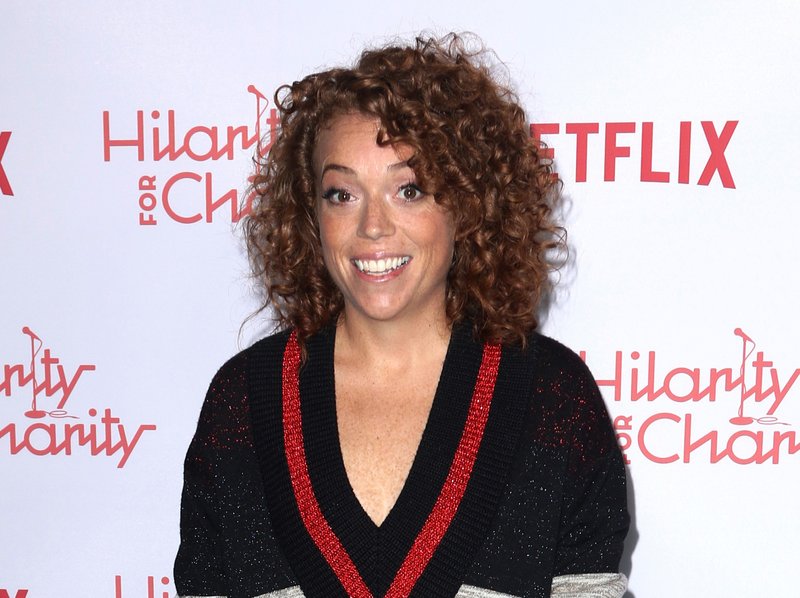
White House Correspondents Association roaster Michelle Wolf joins a club with likes of Kathy Griffin, Khizr Khan, Stormy Daniels and David Hogg — little-known or unknown figures who suddenly became surrogates for the hyper-partisan rhetorical warfare of the Trump era. President Trump tweeted his disgust at Wolf’s weekend routine on Monday, she was a hot topic on “The View” and the subject of a long and loud CNN exchange between Chris Cuomo and a conservative official. Journalists wondered if the annual WHCA dinner should be changed or ditched. A backlash quickly surfaced. Wolf had become a political symbol, much like Parkland student Hogg when he spoke out on gun restrictions, Khan when he spoke against Trump at the Democratic National Convention, Griffin when she posted a picture of herself with a mock-up of Trump’s severed head. Trump’s supporters took up the cause. Cuomo interviewed Matt Schlapp, chairman of the American Conservative Union, who tweeted that he and his wife, Mercedes Schlapp, director of strategic communications at the White House, walked out of the dinner. A “Fox & Friends” chyron read: “Should all women be critical of Wolf’s jokes?” Former White House press secretary Sean Spicer called it a disgrace, to which Wolf tweeted: “Thank you.” But a backlash to the criticism quickly developed, with some wondering why the correspondents should be surprised to get edgy comedy from an edgy comedian. “The comedian did her job,” said Sara Haines on “The View” Monday. “She is there to push the envelope.” Don’t like it? “Hire a juggler next year,” ABC’s Jimmy Kimmel tweeted. In his interview with Schlapp, Cuomo pressed the point that many Trump opponents made: how can you be insulted by Wolf’s routine and not by some of the things that Trump has said or done? While Wolf’s performance was vulgar and unseemly, “the three-year performance of candidate and president Donald Trump has been vulgar, unseemly and infinitely more damaging to our civil discourse,” tweeted conservative commentator Bill Kristol. The White House quickly sniffed an opportunity. Trump, who held a rally in Michigan at the same time as the dinner, asked aides for an update soon after leaving the stage. When he watched it being talked about on cable TV the next day, he called several outside advisers to bash the comedian, saying she was unfunny and mean-spirited. He told at least one confidante that it again proved he can’t get a fair shake from the media and he was certain his base would agree with him Wolf, who begins a Netflix show later this month and is best known for work on Comedy Central’s “The Daily Show,” was not made available to The Associated Press on Monday. She tweeted a few replies to critics. Her routine directed barbs at Congress, Democrats and the media. But the jokes that targeted Trump, his daughter Ivanka and press aides Sarah Huckabee Sanders and Kellyanne Conway attracted the most negative attention. Her comedy was risque; C-SPAN radio cut away from her routine over what its management called an “abundance of caution” about whether she’d violate FCC indecency guidelines. Wolf joked that Ivanka Trump had proven as useful to women as “a box of empty tampons.” She wished for a tree to fall on Conway, not so she’d get hurt — just stuck. Wolf suggested Sanders burns facts and uses the ashes to create perfect eye makeup. Margaret Talev, president of the reporters’ organization that puts on the dinner, said in a statement that she’d heard from members who expressed dismay with Wolf’s monologue. The WHCA wanted to honor free press and great reporting, “not to divide people,” Talev said. “Unfortunately, the entertainer’s monologue was not in the spirit of that mission.” Some reporters, notably Maggie Haberman of The New York Times in expressing support for Sanders, made their feelings known publicly. It’s not the first time comics have made people uneasy at the event, particularly since it has been televised across the country: Don Imus, Stephen Colbert and Larry Wilmore all had their critics. Trump’s absence magnified the reaction to Wolf, since no one took to the podium to punch back. Trump did so on Twitter. “The White House Correspondents’ Dinner is DEAD as we know it,” he tweeted Monday. “This was a total disaster and an embarrassment to our great Country and all that it stands for. FAKE NEWS is alive and well and beautifully represented on Saturday night!” Republished with the permission of the Associated Press.
Trump gives thumbs-down to comic who roasted his spokeswoman
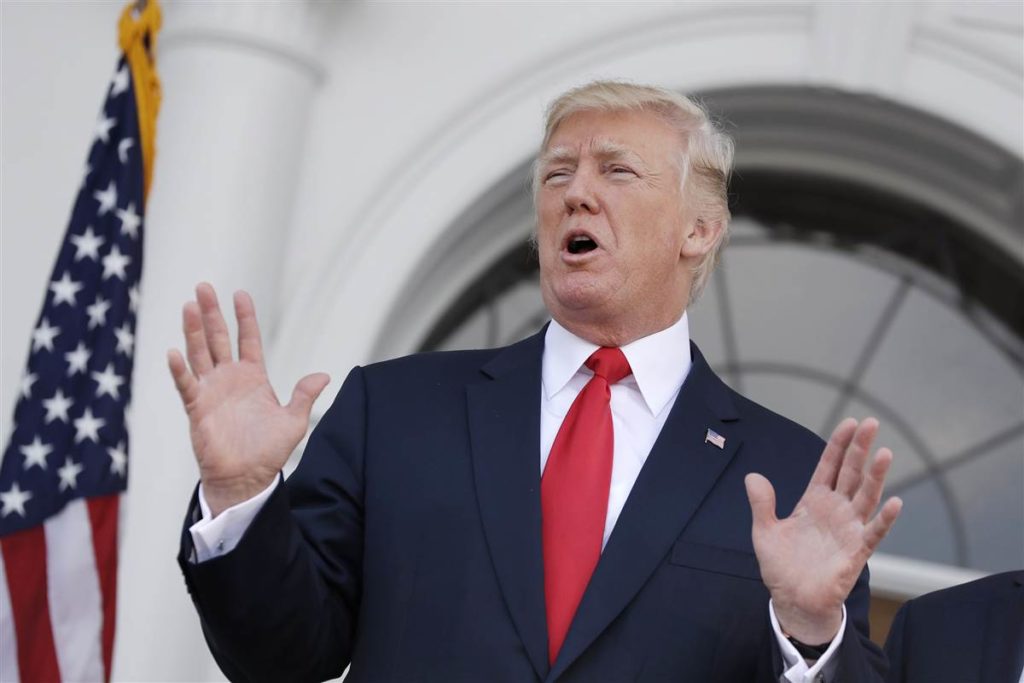
The reviews are in: President Donald Trump gave a thumbs-down Sunday to the comedian who roasted his chief spokeswoman at the annual White House Correspondents’ Association dinner, offending present and past members of his administration, including one who walked out in protest. The organization’s leader said she regretted that Michelle Wolf’s routine may end up defining an evening that was designed to rally around journalism. WHCA President Margaret Talev said she has “heard from members expressing dismay with the entertainer’s monologue and concerns about how it reflects on our mission.” She said she will work with the incoming president of the group and take comments from members on their views “on the format of the dinner going forward.” Trump joined in the criticism. “Everyone is talking about the fact that the White House Correspondents Dinner was a very big, boring bust…the so-called comedian really ‘bombed,’” Trump tweeted Sunday. The president, who regularly lobs sharp attacks at the news media, including individual news organizations and reporters, declined to attend the journalism awards dinner for the second consecutive year. He instead held a campaign rally in Michigan. Wolf is known as a contributor on Comedy Central’s “The Daily Show With Trevor Noah.” But some of her jokes, particularly a series of barbs about White House press secretary Sarah Huckabee Sanders as Sanders sat just feet away, seemed to spark the most outrage. Sean Spicer, who preceded Sanders at the White House lectern, tweeted after dinner that the night “was a disgrace.” Others, including Ed Henry, chief national correspondent for Fox News and a former association president, and MSNBC’s “Morning Joe” co-host Mika Brzezinski, called on the association to apologize to Sanders. Brzezinski has been the subject of personal attacks by Trump. Henry also called on Wolf to apologize. Matt Schlapp, chairman of the American Conservative Union, tweeted that he and his wife, Mercedes Schlapp, director of strategic communications at the White House, walked out of the dinner. “Enough of elites mocking all of us,” he said. Talev, Bloomberg News’ senior White House correspondent, said she didn’t want a dinner celebrating the constitutional right to free speech to be overshadowed by the ensuing uproar over Wolf’s jokes. “My only regret is that to some extent those 15 minutes are now defining four hours of what was a really wonderful unifying night and I don’t want the cause of unity to be undercut,” Talev said Sunday on CNN’s “Reliable Sources.” Talev said she spoke to Sanders after Wolf’s routine and “I told her that I knew that this was a big decision whether or not to attend the dinner, whether to sit at the head table and that I really appreciated her being there.” “I thought it sent an important message about the role of government and the press and being able to communicate with one another and work together,” Talev added. No Trump administration officials attended the dinner last year after Trump decided to skip it. Many were in the audience Saturday night, however, including counselor Kellyanne Conway, herself a target of Wolf, and Commerce Secretary Wilbur Ross. Sanders sat at the head table with association board members. Talev said that, by tradition, the association does not review the comedian’s monologue before it is delivered. “We don’t censor it. We don’t even see it,” she said. Wolf tweeted “thank you” to Spicer. As he did last year, Trump flew to a Republican-friendly district to rally supporters in an attempt to counter the dinner. He assured the audience in Washington Township, Michigan, a state he won in 2016, that he’d rather be there than at “that phony Washington White House Correspondents’ Dinner.” Wolf’s act, which also included abortion jokes, had some in the audience laughing. Others sat in stony silence. Among Wolf’s less off-color one-liners: —“Just a reminder to everyone, I’m here to make jokes, I have no agenda, I’m not trying to get anything accomplished, so everyone that’s here from Congress you should feel right at home.” —“It is kinda crazy that the Trump campaign was in contact with Russia when the Hillary campaign wasn’t even in contact with Michigan.” —“He wants to give teachers guns, and I support that because then they can sell them for things they need like supplies.” Wolf closed by saying, “Flint still doesn’t have clean water,” a reference to the Michigan city where lead-tainted tap water flowed into homes for 18 months before a disaster was declared in 2015. The state recently decided to end distribution of free bottled water in Flint, saying the tap water was now as “good or better” than in many communities. Republished with the permission of the Associated Press.
Five members of Alabama delegation receive award for conservative excellence
The American Conservative Union Foundation (ACUF) on Monday released its 47th Annual Federal Ratings of Congress. Five members of the Alabama delegation were awarded the ACUF’s Award for Conservative Excellence based on their voting records. Annually the ACUF — the sister organization of the American Conservative Union (ACU), the nation’s original conservative organization. For more than fifty years the ACU has educated and activated the conservative movement through its ratings programs, policy centers and educational events such as the Conservative Political Action Conference (CPAC), the largest annual gathering of conservatives in the nation — produces a scorecard for members of both the U.S. Senate and House of Representatives based on their voting records. All members of Congress are issued a score while only members who received a score of 80 percent or higher receive an award. Awards were presented to — 1st District U.S. Rep. Bradley Bryne (92.15%); 4th District U.S. Rep. Robert Aderholt (83.6%); 5th District U.S. Rep. Mo Brooks (90.13%); 6th District U.S. Rep. Gary Palmer (100%); as well as former U.S. Sen. Luther Strange (81.82%) for his brief stint in the U.S. “In the 2017 session, we saw Republicans come together to pass the most important corporate tax reform in decades, confirm a true conservative in Neil Gorsuch to the Supreme Court, and repeal the Obamacare individual mandate,” said ACU Chairman Matt Schlapp. “But conservatives must not rest on their laurels. This is not the time for four corners defense. Congress must pass a rescissions bill to eliminate wasteful spending in the omnibus and finally confirm highly qualified presidential nominees to critical positions.” This year some of the key issues ACU Foundation scored include: confirmation of Neil Gorsuch to the Supreme Court repeal of Obamacare passage of comprehensive tax reform defunding of Planned Parenthood repeal of Dodd-Frank and key presidential nominations to cabinet positions. Widely regarded as the “gold standard” of conservative scoring, the ACU “Ratings of Congress” evaluated 21 key votes in the U.S. Senate and 25 key votes in the U.S. House of Representatives. The bills are selected cover a variety of issues and are designed to reflect how each individual views the role of government in another individual’s life. Some of the bill topics included are social and cultural, fiscal and economic, and national security. This year marks the ACU’s 47th year of rating key votes in Congress. Read each member’s individual score and breakdown below:
5 Alabama delegation members noted for conservative records
The Washington, D.C.-based American Conservative Union, the oldest active conservative lobbying and activism organization in the United States, has released its 44th annual congressional scorecard. It ranks all members of the 114th Congress based on their votes concerning a cross-section of issues important to pro-business, traditionalist influencers. “For 44 years, our ACU Ratings have been considered the gold standard in determining a member of Congress’ courage to stand up to big government liberals and to stand strongly in favor of policy positions important to conservatives,” said ACU Chairman Matt Schlapp, a former aide to the George W. Bush administration and Koch Industries. “Our award-winning senators and congressmen are fighting to protect the rights and freedom of all Americans by honoring President [Ronald] Reagan’s three-legged stool of economic, national security, and cultural conservative issues.” The Alabama delegation scored higher on the ACU’s scale — where 100 is “most conservative” and zero is “most liberal” — than most other states’ by far. Members whose voting records rank in the top 20 percent, a score of 80 and above, were awarded the the ACU Award for Conservative Achievement. Sen. Jeff Sessions was rated the most conservative of all Alabama members with a 96 rating, up from 88 a year ago. Sen. Richard Shelby posted an 88 this year, up from last year’s 76. The House delegation was especially interesting, because it gave a look into the political calculus Alabama members use to legislate while stumping for re-election on a near-constant basis. U.S. Rep. Bradley Byrne nearly aced the ACU exam on his first try: The freshman scored a delegation-best 88. U.S. Rep. Mike Rogers jumped 24 points from last year to achieve an 84, while U.S. Rep. Mike Rogers finished out the top three by holding steady at 84. U.S. Rep. Martha Roby, whose district includes parts of centrist-leaning Montgomery, scored 56, down from last year’s 64; U.S. Rep. Robert Aderholdt scored a 61, slightly down from 67; and U.S. Rep. Gary Palmer as a freshman was not scored. All are Republicans. Democrat Terri Sewell, who largely ignores the group’s advocacy, scored an 8, down from last year’s 12.5. Here’s a list of some of the key votes scored by ACU, according to its website: In favor of HR 7 (Roll Call 30) Taxpayer Funding of Abortion. This bill would have permanently prohibited the use of federal funding, facilities or staff to provide abortion coverage and services with exceptions for rape and incest and to save the life of the mother. Opposing HR 3590 (Roll Call 38) Federal Land Use. The DeFazio amendment would have defeated the purpose of a bill to open more federal land for recreational hunting, fishing and shooting by requiring a lengthy environmental review of each area of land affected. In favor of H Con Res 96 (Roll Call 175) Conservative Budget. The Woodall amendment to the budget bill presented a conservative alternative that would have balanced the budget in four years by freezing domestic spending at $60 billion below current levels, reformed entitlement programs, and eliminated wasteful programs. Brooks/Roby/Sewell voted against it. In favor of HR 4435 (Roll Call 231) Defense Spending. The McKinley amendment to the National Defense Authorization bill bars the use of federal funding to conduct climate change assessments and reports. In favor of HR 4745 (Roll Call 290) Housing Programs. The Schock amendment to the Transportation and Housing Appropriations bill to reduce the power of the HUD Secretary to hand out Section 8 vouchers above the authorized limit, in some cases valued at $4,000 a month, while keeping others on a waiting list for any type of affordable housing. In favor of HR 5016 (Roll Call 425) Second Amendment. The Massie amendment to the Financial Services Appropriations bill that would prohibit the District of Columbia from taking any action to prevent law-abiding citizens from possessing, using or transporting a firearm. Opposing HR 5272 (Roll Call 479) Immigration. This bill reverses President Obama’s executive order deferring action on some illegal immigrants but not others. The full list of scored votes is available here.